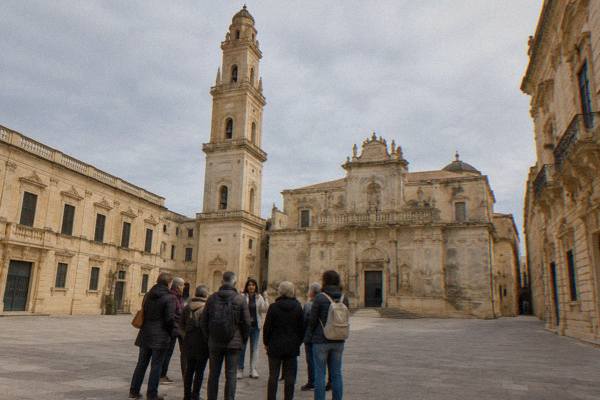
Museo Castromediano: The Oldest Museum In Puglia
The Museo Castromediano on Lecce's Viale Gallipoli holds the province's archaeological collections in the Polo Biblio-museale. Entry is reported as free and the museum opens Tuesday to Sunday. Here is what the sources say about hours, tickets and how to plan a visit.
Short answer
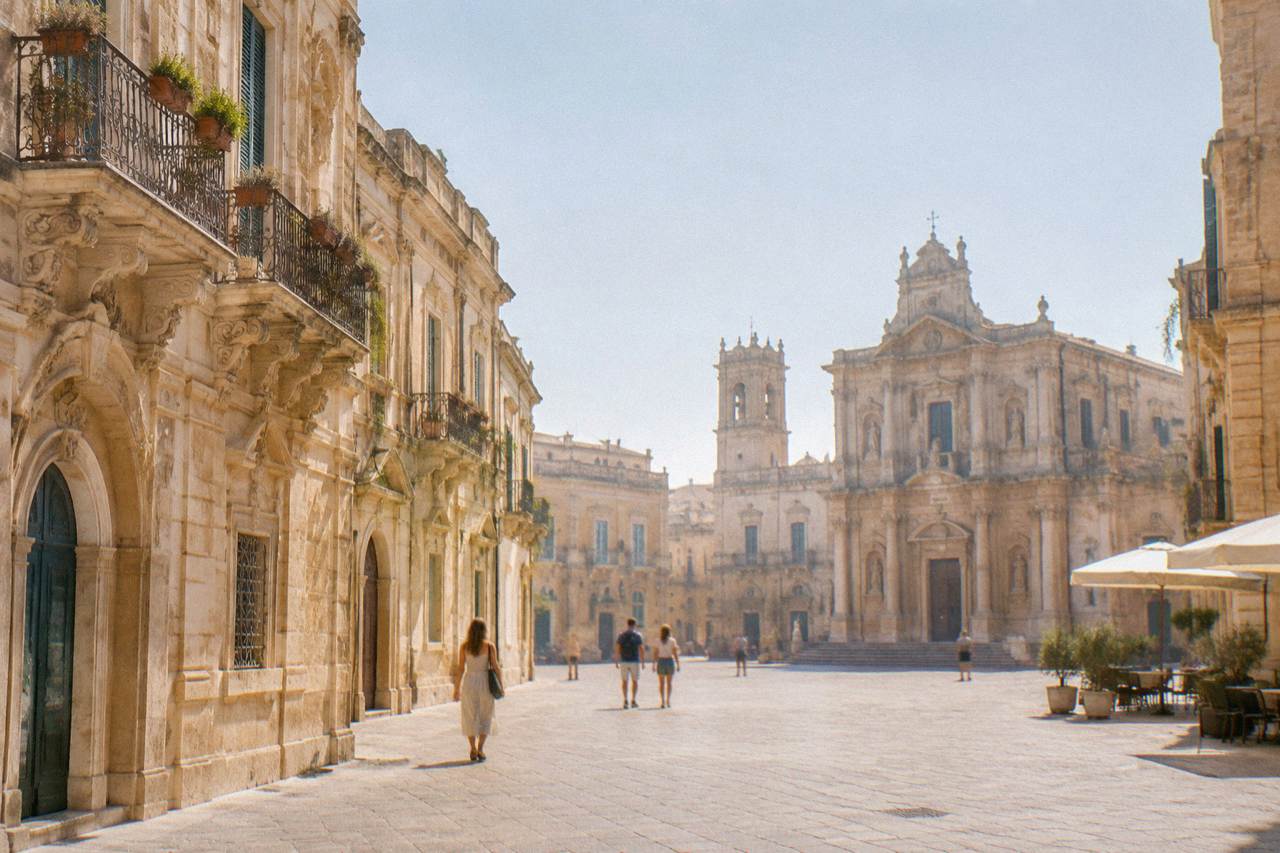
The Museo Castromediano in Lecce opens Tuesday to Sunday, with winter hours of 9:00 to 19:00 reported by cultura.gov.it. Entry is reported as free by secondary sources, so confirm at the desk. It sits on Viale Gallipoli in the Polo Biblio-museale, about a short walk outside the baroque centre, and is closed on Mondays.
Lecce, in Puglia, southern Italy, is known for its baroque facades carved from pietra leccese, but the city also keeps a quieter record of the peninsula's deeper past. That record lives in the Museo Castromediano, the provincial archaeological museum that stands on Viale Gallipoli, slightly outside the ring of churches and palaces that draws the crowds. The museum is named for Sigismondo Castromediano, and it is billed as the oldest museum in Puglia, a description carried in its own reputation rather than in a claim this page needs to prove. Cultura.gov.it lists it as Tue to Sun, winter 9:00 to 19:00, with summer hours extending later; entry is reported as free by secondary sources, and the desk will confirm. This guide sets out what the sources say about the museum, how it compares with Lecce's other museums, and how to fold it into a day that also takes in the baroque centre, all reported by the Lecce Travel Guide editorial desk.
What Is The Museo Castromediano In Lecce?
The Museo Castromediano is Lecce's provincial archaeological museum, the institution that holds the material record of the Salento peninsula from prehistory through Messapian and Roman times, and it is billed as the oldest museum in Puglia. It is part of the Polo Biblio-museale on Viale Gallipoli, a cultural complex that also houses the provincial library, a few minutes outside the historic centre.
That placement matters. Lecce's headline sights, the Basilica di Santa Croce, the Duomo, the Roman Amphitheatre in Piazza Sant'Oronzo, all sit inside the old city. The Castromediano stands just beyond it, on the road that leads toward Gallipoli, which means a visit takes a small deliberate detour rather than happening by accident. The museum shares its building with the biblioteca provinciale, and the complex is described by cultura.gov.it as part of the regional Polo Biblio-museale network.
What the museum holds follows from its role. A provincial archaeology museum in Salento collects what the territory produces: Messapian material from the indigenous settlements that preceded Roman rule, Roman-era finds from the cities and villas of the peninsula, and the long sequence of stone, ceramic and metal objects that a landscape like this yields from ploughing and construction. The nearby Parco archeologico di Rudiae, the Messapian-and-Roman site just outside Lecce, is the kind of territory a museum like this interprets, and the Rudiae archaeological park is worth reading about if the deep past of Salento is what draws you here.
The "oldest museum in Puglia" label deserves one honest note. Treat the label as a billing, not a dated fact, and enjoy the museum for what it shows rather than for the superlative.
What Are The Museo Castromediano Opening Hours And Ticket Prices?
The Museo Castromediano opens Tuesday to Sunday and closes on Mondays, with winter hours of 9:00 to 19:00 listed by cultura.gov.it and summer hours reported to run later, up to 22:00 in the June to September period. Entry is reported as free by secondary sources; no official ticket price is published in the sources available here, so confirm at the desk before you plan around it.
Hours and prices for museums in Italy shift with the seasons, and Lecce is no exception. The pattern reported across the city's sites is a winter schedule from October through the spring and an extended summer schedule when the Salento tourist season is at its height. The Castromediano follows that pattern: cultura.gov.it gives Tue to Sun, winter 9:00 to 19:00, and secondary reporting extends the hours to 20:00 or 22:00 in the summer months from June to September. The safest planning move is to treat the museum as a morning or late-afternoon stop and check the posted hours for the week you are there.
The free-entry report also needs care. The listing that describes the museum as free is a secondary source, not the museum's own tariff page, and provincial museums in Italy sometimes introduce charges, special-exhibition tickets or cumulative passes without much notice. Say "reported as free" to yourself, ask at the desk, and budget nothing until confirmed. If a charge has appeared by the time you visit, the comparison table below shows what Lecce's other museums charge, which gives a sense of the local scale.
| Item | Reported detail | Source basis |
|---|---|---|
| Days open | Tuesday to Sunday | cultura.gov.it |
| Closed | Monday | cultura.gov.it |
| Winter hours | 9:00 to 19:00 | cultura.gov.it |
| Summer hours | 9:00 to 20:00 or 22:00 (Jun to Sep) | Secondary reporting |
| Entry | Reported as free | Secondary source, confirm at desk |
| Location | Viale Gallipoli, Polo Biblio-museale | Official listing |
| Address context | South-west edge of the centre, on the Gallipoli road | Official listing |
One more seasonal note. Lecce's climate, per the ERA5 reanalysis 1991 to 2020, has mean daily highs of about 31 C in July and August, and November carries the highest monthly rainfall at 93.7 mm. A museum is the obvious shelter in both cases, and the Castromediano's late summer hours mean an early-evening visit is a realistic way to dodge the afternoon heat.
What Can You See Inside The Museo Castromediano?
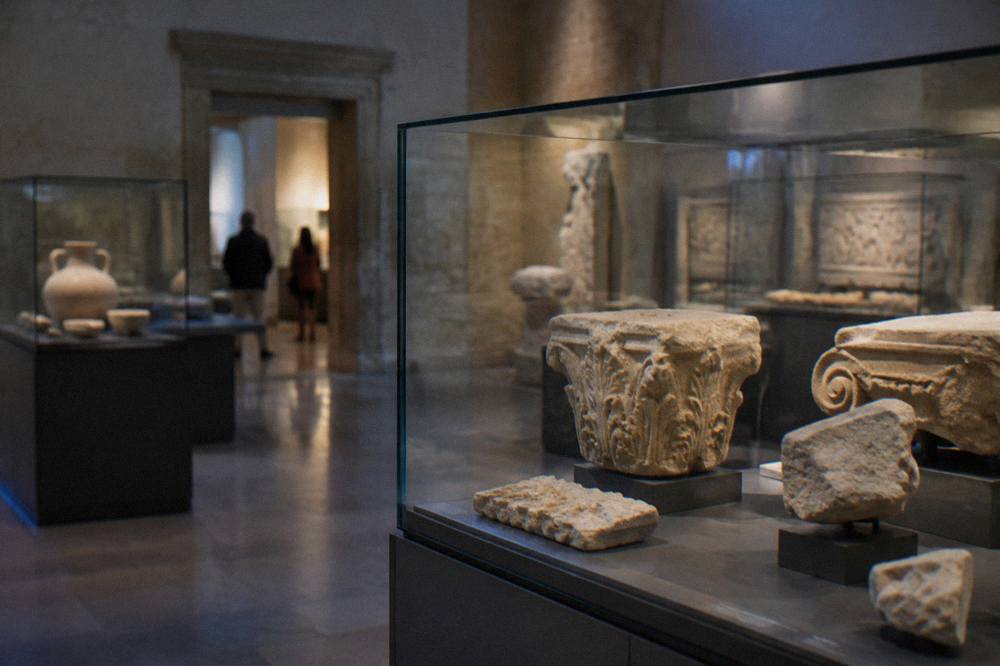
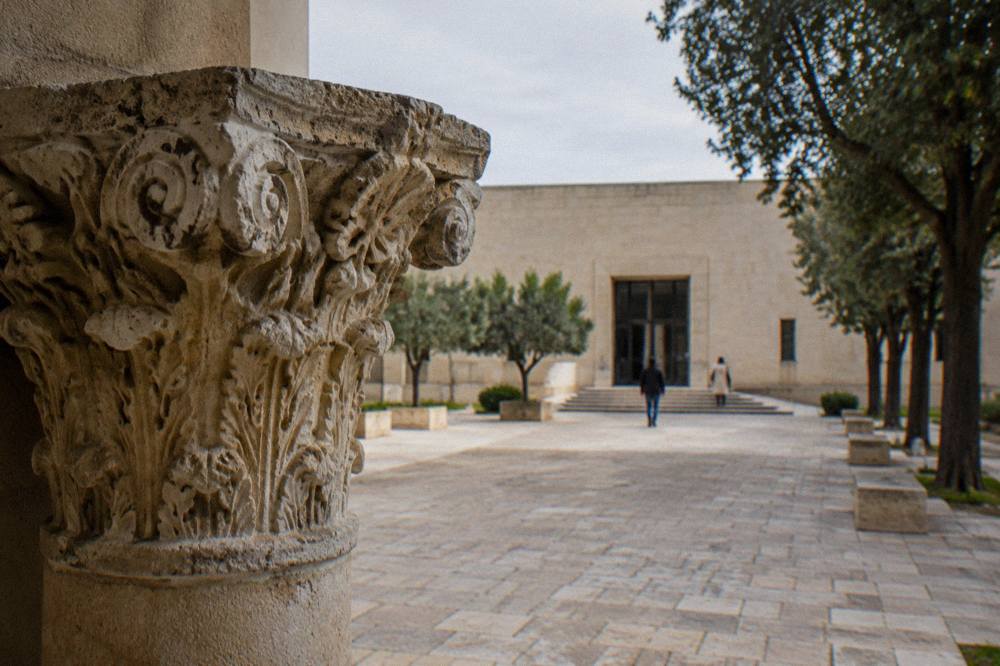
The museum's collections cover the archaeology of the Salento peninsula: prehistoric material, Messapian finds from the indigenous communities of the region, and Roman-era objects, displayed in the galleries of the Polo Biblio-museale on Viale Gallipoli. Cultura.gov.it and the comune's own museum pages describe it as the provincial archaeological museum, and the display follows that brief rather than the art-historical one the baroque churches carry.
Put plainly, this is the museum that answers a different question from the one Lecce's churches answer. The churches show what the city built in pietra leccese in the centuries of the baroque; the Castromediano shows what was under the city and around it for the thousands of years before that. The Messapian world is the distinctive part. The Messapians were the pre-Roman people of Salento, and their settlements, tombs and inscriptions are the region's own archaeological signature in a way Roman material, however fine, is not unique to the heel of Italy.
The Roman layer connects directly to what you can still see standing in the streets. The Roman Amphitheatre in Piazza Sant'Oronzo and the Roman Theatre in the old city are the visible monuments; a provincial museum is where the small finds, the sculpture, the ceramics and the coins from that same world are kept and interpreted. Visiting the museum before the monuments, or the day after, gives the stones a context they do not supply on their own.
For depth, pair the museum with the outlying park. Rudiae, the Messapian-and-Roman site associated with the poet Ennius in the classical tradition, runs weekend guided visits and weekday visits by booking, at 5 euro full and 4 reduced, under 7 free, per the comune's pages. The museum and the park are two halves of one story about who lived in this peninsula before the leccesi.
Visitors with a craft interest should also note that Lecce's papier-mache tradition, the cartapesta that fills the workshops near Santa Croce, has its own dedicated museum inside the Castello Carlo V, covered in the Lecce papier mache guide.
After the galleries, the temptation is to head straight back to the baroque centre, but the coast is closer than it feels. San Cataldo, the nearest beach to Lecce, is about 13 km away, and the summer boat trips along the Salento shores give a completely different view of the peninsula the museum documents. The listing says a group boat tour to the caves of Santa Maria di Leuca runs from the far south of the region: Check availability if the sea leg of Salento appeals after the stone one.
How Does The Museo Castromediano Compare With Lecce's Other Museums?
Lecce's museum landscape splits cleanly between the Castromediano's archaeology and a set of small, sharply themed institutions: the Museo Faggiano's underground stratigraphy at 5 euro, the MUST's city history at 5.50 euro, the Roman Amphitheatre at 5 euro, the Museo Ebraico's guided visits at 5 euro and MuDAS at 1 to 4 euro. The Castromediano is the only one covering the whole provincial territory and the only one reported as free.
The comparison is worth making because Lecce's museums are individually small enough that a determined visitor can see several in a day, and each answers a different question. The Faggiano is the city's famous stratigraphy: a palazzo whose basement opens onto layers of Roman, medieval and later remains, open every day 9:30 to 20:00, 5 euro full, ages 0 to 8 free and 8 to 16 at 3 euro, per the museum's own tariff page. The MUST, the city history museum, runs Tue to Thu 9:00 to 19:00 and Fri to Sun 9:00 to 20:00 in winter, closed Monday, at 5.50 full and 3.50 reduced, free under 10. The Amphitheatre keeps winter hours of 10:00 to 17:00, Tuesday to Sunday, at 5 euro full and 2 reduced.
| Museum or site | Reported hours | Reported ticket | Closed |
|---|---|---|---|
| Museo Castromediano | Tue to Sun, winter 9:00 to 19:00 | Reported free (secondary) | Monday |
| Museo Faggiano | Every day 9:30 to 20:00 | 5 euro; 8 to 16 yrs 3 euro; under 8 free | None |
| MUST | Tue to Thu 9:00 to 19:00, Fri to Sun 9:00 to 20:00 (winter) | 5.50 / 3.50 euro; free under 10 | Monday |
| Roman Amphitheatre | Tue to Sun, winter 10:00 to 17:00 | 5 / 2 euro | Monday |
| Museo del Teatro Romano | Mon to Sat 9:30 to 13:00, afternoons on request | About 3 euro | Sunday |
| Museo Ebraico | Guided visits, weekday daytime | 5 / 4 euro | Varies |
| MuDAS (Diocesan) | Seasonal | 1 euro cloister, 4 euro museum | Varies |
| Palazzo Vernazza | Daily 15:30 to 21:00 | 10 / 8 euro | None |
Two patterns stand out. First, Monday is the city's museum-closing day almost across the board, the Faggiano and Palazzo Vernazza being the notable exceptions, so Monday is the day to give to churches, squares and the LeccEcclesiae circuit rather than to museums. Second, the ticket scale is modest: even a full museum day in Lecce costs less than a single dinner in many Italian cities, and the reported free entry at the Castromediano makes it the natural first stop for anyone budget-conscious. There is also a Lecce Artwork City Pass reported at 29 euro for 7 days covering the LeccEcclesiae church circuit including the bell tower plus extras, though it is a churches-and-palaces product rather than a museums one.
If the pairing question is which single museum besides the Castromediano to choose, the answer depends on the question you want answered. For the ground beneath Lecce, it is the Museo Faggiano. For the city's own history, the MUST. For the Jewish history of the Giudecca quarter, the Museo Ebraico, visited by guided tour only. The Castromediano's provincial brief covers the ground between all of them.
Where Is The Museo Castromediano And How Do You Get There?
The Museo Castromediano stands on Viale Gallipoli in Lecce, in the Polo Biblio-museale complex on the south-western edge of the centre, outside the restricted historic core and on the road that leads toward Gallipoli. It is reachable on foot from the old city in a short walk, and it sits away from the camera-policed ZTL, which matters if you are driving.
The geography is simple. The historic centre of Lecce, the centro storico, is a compact web of lanes inside the line of the old walls, with Porta Napoli and Porta Rudiae marking its western and south-western approaches. Viale Gallipoli is the broad avenue that continues outward from that side of the city toward the coast road. The museum's position there means it is outside the ZTL, the limited traffic zone whose cameras operate on weekdays on a reported schedule and around the clock on Sundays and holidays, with fines of 83 to 332 euro. Anyone driving should park outside the restricted area, ask their accommodation about plate registration if they hold an authorisation, and treat the museum's side of the city as the easier parking side.
Public transport in Lecce is the SGM network, with a 60-minute ticket at about 1.20 euro bought in advance or 1.50 on board, and a day ticket at about 3 euro, per the operator's tariff pages. For a visitor staying in or near the centre, though, the practical answer is walking: Lecce is flat, compact and, as the Lecce walking tour guide shows, best experienced on foot anyway.
| Way to reach the museum | Reported detail |
|---|---|
| On foot from the centre | Short walk from the western edge of the centro storico along Viale Gallipoli |
| City bus | SGM network; 60-min ticket about 1.20 euro, day about 3 euro |
| By car | Outside the ZTL core; use peripheral parking, e.g. Park Liberty, 466 spaces near the centre |
| From the station | Lecce train station sits north of the centre; walk or one short bus hop |
| ZTL note | Cameras weekdays on a reported schedule, Sundays 24h; fines 83 to 332 euro |
Cyclists have a further option. The listing says a guided city highlights tour by bike covers Lecce's main sights with a local guide, which is a way to see the museum's neighbourhood in the same loop as the baroque centre: Check availability for dates and meeting points.
Is The Museo Castromediano Worth Visiting With Kids?
The Museo Castromediano suits curious children old enough for display cases, mainly because entry is reported as free, so a short visit costs nothing to abandon, and the subject matter, tombs, pottery, sculpture and the pre-Roman Messapians, is the genuinely engaging kind of archaeology. Plan a morning stop of an hour or so and pair it with an outdoor anchor such as the Villa Comunale or the amphitheatre.
Free reported entry changes the arithmetic for families. When a museum carries no ticket, there is no pressure to extract value from a full two hours; a child who lasts forty minutes among the Messapian and Roman cases has had a complete visit. Lecce's other family-friendly museums have their own pricing that is generous anyway, the Faggiano is free under 8 and 3 euro from 8 to 16, the MUST is free under 10, and Rudiae's park is free under 7, so a child's museum day in Lecce is close to costless everywhere.
The outdoor pairings nearby work well. The Villa Comunale, the public gardens, is open space with no ticket, and the Piazza Sant'Oronzo with its amphitheatre view is free public space where the Roman past is visible from above without entering anything. The amphitheatre itself, after its 1,500,000 euro PNRR restoration and reopening with an accessible entrance, charges 5 euro full and 2 reduced in winter, Tuesday to Sunday.
For a full-family day out beyond the city, the four-town Salento tour is the listing to look at, since it covers Otranto, Leuca, Gallipoli and Galatina in one loop from Lecce: Check availability if a museum morning followed by a coast day is the shape of your trip.
What Else Is Near The Museo Castromediano In Lecce?
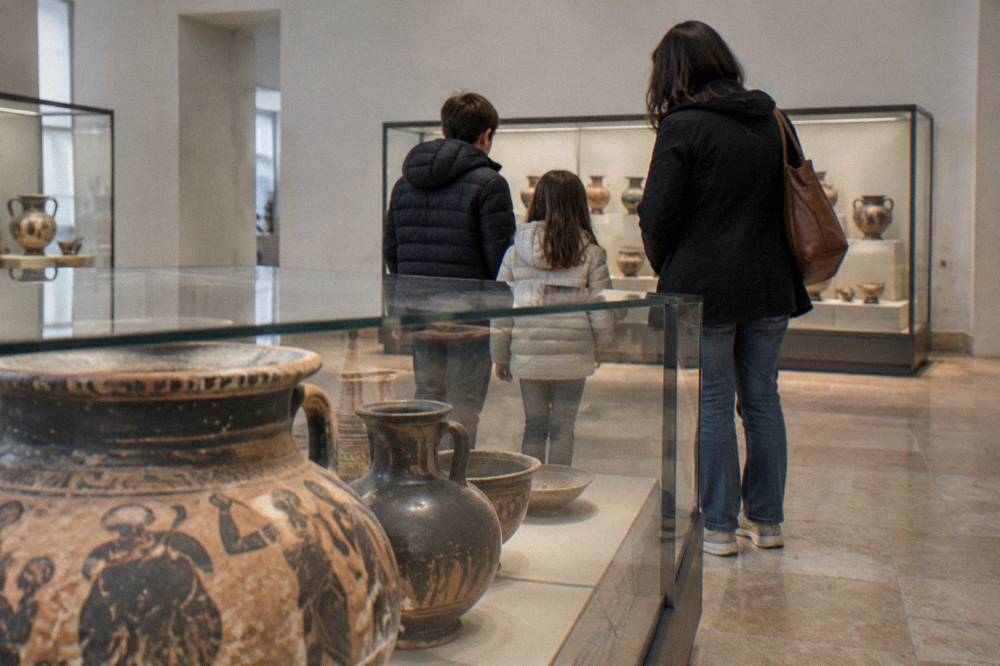
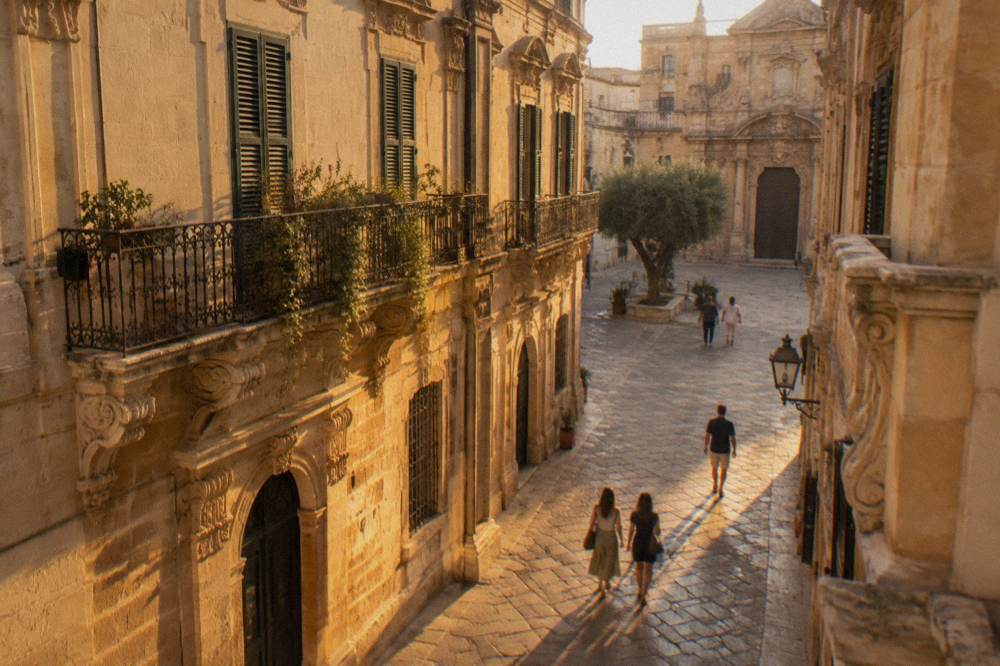
Within a short walk of the museum you reach the western edge of the centro storico: Porta Rudiae, the monumental gate on that side of the city, then the lanes toward Piazza Sant'Oronzo, the Roman Amphitheatre, the Duomo complex and the Basilica di Santa Croce. The whole baroque core of Lecce lies within comfortable walking distance of Viale Gallipoli.
A workable walking arc starts at the museum, heads into the centre through Porta Rudiae, and unfolds across the standard sequence of Lecce's sights. Piazza Sant'Oronzo holds the column of the patron saint and the amphitheatre; the Piazza del Duomo holds the cathedral, its bell tower and the Seminary; the Basilica di Santa Croce is the supreme statement of Lecce Baroque; and the Palazzo dei Celestini closes the square beside it. All of these are reachable on foot in a morning or an afternoon, and the church circuit is covered by the LeccEcclesiae combined ticket at 11 euro standard, valid 15 days, under 12 free, per chieselecce.it.
| Stop near the museum | What it is | Reported ticket |
|---|---|---|
| Porta Rudiae | Monumental gate on the western side of the centre | Free public space |
| Piazza Sant'Oronzo and amphitheatre view | Main square, Roman Amphitheatre visible from above | Free; amphitheatre interior 5 / 2 euro |
| Piazza del Duomo | Cathedral, bell tower, seminary | LeccEcclesiae 11 euro standard, 21 with tower |
| Basilica di Santa Croce | The signature Lecce Baroque church | LeccEcclesiae combined ticket |
| Palazzo dei Celestini | Prefecture seat, courtyard access | Courtyard reported free |
| Villa Comunale | Public gardens | Free public space |
The museum's own side of the city has its uses too. Viale Gallipoli is the road out toward the Ionian coast, and the FSE railway that serves Gallipoli, Otranto via Maglie and Galatina runs from the Lecce station area on the other side of the centre, so the museum sits conveniently close to the axis visitors use when they leave town for the coast.
How To Plan A Full Day Around The Museo Castromediano In Lecce
A practical shape is museum first, centre second: start at the Castromediano for its reported-free morning hours, walk in through Porta Rudiae, spend the middle of the day among the baroque sights and the LeccEcclesiae churches, and close with an evening passata or an aperitivo in the old lanes. On Mondays the museum shuts, so reverse the plan and keep that day for the churches and open spaces.
The logic is partly about hours. The Castromediano opens at 9:00 in winter per cultura.gov.it, earlier than several ticketed sites, and the amphitheatre and MUST do not open until 10:00 in winter. A 9:00 start at the museum, an hour among the cases, and a walk into the centre lands you at Piazza Sant'Oronzo just as the rest of the city opens. Lunch in the centro storico, the afternoon under the LeccEcclesiae ticket across the Duomo, Santa Croce, San Matteo, Santa Chiara and the seminary, and the evening in the lanes around Chiesa di San Matteo gives a full baroque day built around an archaeological morning.
The reverse day, museum-free, is the Monday plan. The Faggiano opens every day, the LeccEcclesiae churches run daily, and the open spaces, Porta Napoli, the villa comunale, the squares, carry no schedule at all. A fuller sequence for the whole city is set out in the things to do in Lecce page, which places the museum in the wider list.
For a second day, the peninsula calls. The drive times from Piazza Sant'Oronzo, computed for free-flow traffic, put the whole of Salento within reach: Otranto at about 44 minutes, Gallipoli at about 41, Galatina at about 29, Santa Maria di Leuca at about 78. The train alternatives run too, FSE direct to Gallipoli in about 1h18 to 1h43, to Galatina in about 38 to 55 minutes, and to Otranto with a change at Maglie in about 1h33 to 2h or more. The listing says a private four-town tour covers Otranto, Leuca, Gallipoli and Galatina in a single loop: Check availability for pickup details.
| Salento destination | Drive time from Piazza Sant'Oronzo | Reported train alternative |
|---|---|---|
| Galatina | About 29 min | FSE direct, about 38 to 55 min |
| Gallipoli | About 41 min | FSE direct, about 1h18 to 1h43 |
| Otranto | About 44 min | FSE via Maglie, about 1h33 to 2h+ |
| Castro | About 48 min | Not reported |
| Santa Maria di Leuca | About 78 min | Summer buses reported, about 2h to 2h15 |
What Practical Details Should You Know Before Visiting The Museo Castromediano?
Bring confirmation habits rather than a ticket budget: entry is reported as free but the report is secondary, hours are seasonal with a Monday closure, the museum is a short walk outside the centre on Viale Gallipoli, and the visit itself runs an hour to ninety minutes at museum pace. Dress and behaviour rules are lighter than the churches impose, since this is a secular museum, not an active place of worship.
A few specifics help. The contrast with the church circuit is the useful one: the LeccEcclesiae sites require shoulders and knees covered and pause tourist visits during services, per chieselecce.it, while a provincial archaeology museum imposes ordinary museum rules only. Photography policies vary by institution, so ask at the desk. Luggage is not an issue specific to this museum, but Lecce generally has app-based luggage storage near the station reported at about 2.50 to 3.50 euro per day if a checkout day leaves bags in the way.
The ZTL question returns for drivers. The museum's position outside the camera ring makes it one of the easier cultural stops to drive to, but the reported ZTL hours, weekdays with varchi active in the early afternoon and overnight windows, and 24 hours on Sundays and holidays, plus the standing closure of Porta Napoli, mean the advice from the driving and parking guidance applies: park peripheral, walk in, and ask your accommodation about authorisations.
Season matters less here than for outdoor sights, which is the museum's virtue. The ERA5 reanalysis 1991 to 2020 for Lecce gives a January mean low of 6.7 C and an August mean high of 31.3 C, with November the wettest month at 93.7 mm; the Castromediano is viable in all of them, which cannot be said of a beach day at San Cataldo or a boat trip down the coast.
Common Questions About The Museo Castromediano In Lecce
Is the Museo Castromediano in Lecce free?
Entry is reported as free by secondary sources, but no official tariff page is cited in the sources available here. Confirm at the desk when you arrive, and budget a small amount in case a charge or special-exhibition ticket has been introduced.
What are the Museo Castromediano opening hours?
Cultura.gov.it lists Tuesday to Sunday, winter 9:00 to 19:00, with secondary reporting of extended summer hours up to 20:00 or 22:00 from June to September. The museum is closed on Mondays. Check the posted hours for the week of your visit.
Is the Museo Castromediano open on Monday?
No. Monday is the reported closing day, as it is for the MUST, the Roman Amphitheatre and much of Lecce's museum roster. Use Monday for the churches, the LeccEcclesiae circuit and the open squares instead.
How long does a visit to the Museo Castromediano take?
A provincial archaeological museum of this scale suits an hour to ninety minutes at a steady pace. Because entry is reported as free, a shorter visit with children or a focused look at the Messapian and Roman galleries costs nothing to cut short.
How do I get to the Museo Castromediano from Lecce's historic centre?
Walk. The museum stands on Viale Gallipoli in the Polo Biblio-museale, a short walk beyond the western edge of the centro storico, outside the restricted ZTL core. SGM city buses also serve the city, with a 60-minute ticket at about 1.20 euro.
Is the Museo Castromediano worth visiting?
For anyone interested in the pre-baroque Salento, yes: it is the institution that holds and interprets the peninsula's archaeology, from Messapian material to Roman finds, and it is billed as the oldest museum in Puglia. Pair it with the Roman Amphitheatre in the centre or the Rudiae archaeological park for the full picture.
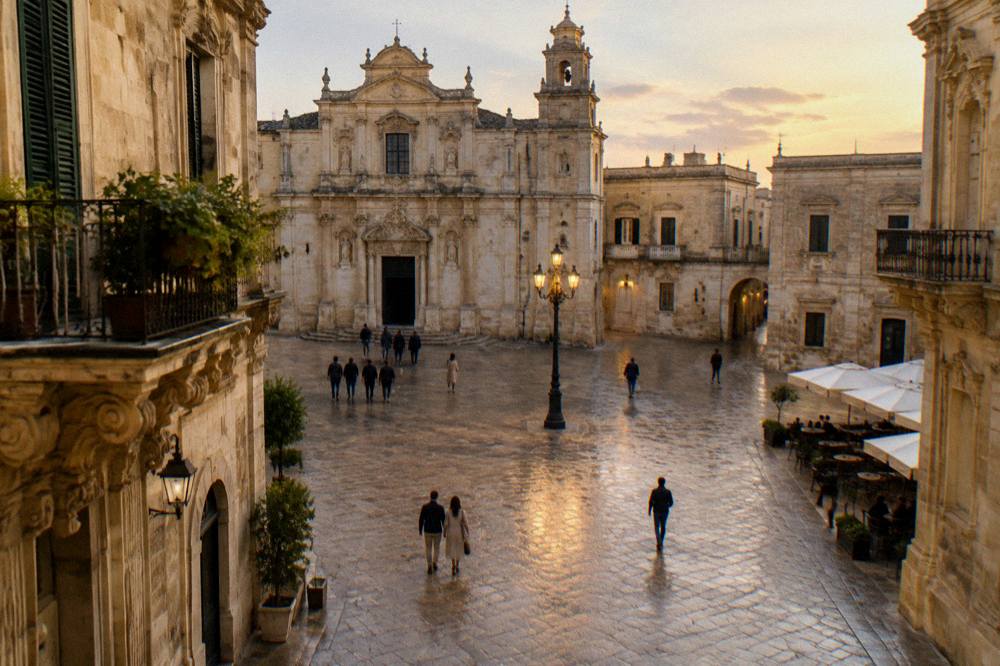
The Museo Castromediano is the quiet counterweight to Lecce's baroque theatre: the one institution in the city that explains who was here before the facades, and, at a reported free entry and a short walk from the centre, it asks almost nothing of the visitor in exchange.