Museo Faggiano: 2,000 Years Under A Private House
Beneath an unassuming house in Lecce's historic centre lies one of southern Italy's strangest archaeological sites, a vertical stack of layers that runs from ancient foundations to a modern drainage pipe.
Short answer
Museo Faggiano in Lecce is open every day from 9:30 to 20:00 and costs 5 euro full, 3 euro for ages 8 to 16, free under 8, per the museum's own tariff page.
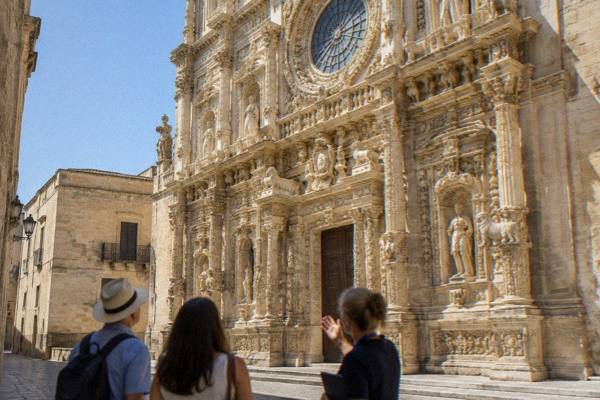
Lecce, the baroque capital of Salento in Puglia, southern Italy, is famous for what sits above ground: honey-coloured facades carved from pietra leccese, church fronts stacked with cherubs and garlands, squares laid out in warm limestone. Museo Faggiano delivers the opposite experience. It is a vertical dig, a private house in the historic centre whose floor was lifted, layer by layer, and never put back. What the excavation exposed is a compressed cross-section of the city's past, and the museum's own tariff page lists the essentials plainly: open every day, a full ticket at 5 euro, and reduced rates for children. This guide sets out what the sources say about the site, the tickets, the opening hours, and how to fit it into a wider Lecce itinerary.
What Is Museo Faggiano In Lecce?
Museo Faggiano is a private archaeological museum inside a historic house in Lecce's old town, in Puglia, southern Italy, where an excavation beneath the building exposed layer upon layer of the city's buried past. The museum is open to the public as an independent attraction, separate from the church and castle ticket systems, and its own tariff page lists a 5 euro full ticket with daily opening from 9:30 to 20:00.
The story of the site is unusually domestic. The building on Via Ascanio Grandi began as a family house, and the works that opened the ground beneath it started as a repair job rather than a research project. When the floors came up, the layers below kept going down, and what had been a home became a standing excavation. The museum today lets visitors walk through that stack, from the modern street level to the deepest workings, past cisterns, passages and foundations cut into the soft local limestone.
That softness matters. Pietra leccese, the Miocene limestone that gives Lecce its golden colour, is easy to cut when freshly quarried and hardens with exposure, which is why generations of builders, well-diggers and tunnellers could carve so much into the ground under the city. Museo Faggiano is the place where that underground inheritance is most visible to a visitor. For the wider picture of how the city grew around such ground, the Lecce history guide on this site sets the chronology, and for the deep background on the stone itself there is a dedicated page on pietra leccese and Lecce Baroque, the style the stone made possible.
How Much Do Museo Faggiano Tickets Cost In Lecce?
A full ticket to Museo Faggiano costs 5 euro, with children aged 0 to 8 free and ages 8 to 16 paying 3 euro, according to the museum's own tariff page. The museum is open every day from 9:30 to 20:00, with no Monday closure, which distinguishes it from several of Lecce's state and civic museums that shut at the start of the week.
Those family bands are the detail worth reading closely, because the two child rates meet at age 8. An 8-year-old pays the 3 euro reduced rate; a 7-year-old pays nothing. A family of four with two children in the reduced band therefore pays 16 euro in total, and the same family with two children under 8 pays 10 euro. The museum's daily hours, running to 20:00 year-round per the sources, also make it one of the more flexible sights in the city: it fits an early-evening slot after the churches have begun to close their ticketed access.
| Ticket type | Price | Notes |
|---|---|---|
| Full (adult) | 5 euro | Listed on the museum's tariff page |
| Reduced, ages 8 to 16 | 3 euro | Child rate as published |
| Children aged 0 to 8 | Free | As published |
| Opening hours | 9:30 to 20:00 | Every day, per the tariff page |
Prices and schedules can change, so treat the table as the reported position and confirm at the desk or on the museum's own site before relying on it, especially around public holidays.
If the plan is to build a fuller day around the museum rather than visit it alone, a guided circuit of the city pairs naturally with it. The bike highlights tour below covers the surface city while Museo Faggiano covers what lies beneath it.
What Will You Actually See Inside Museo Faggiano?
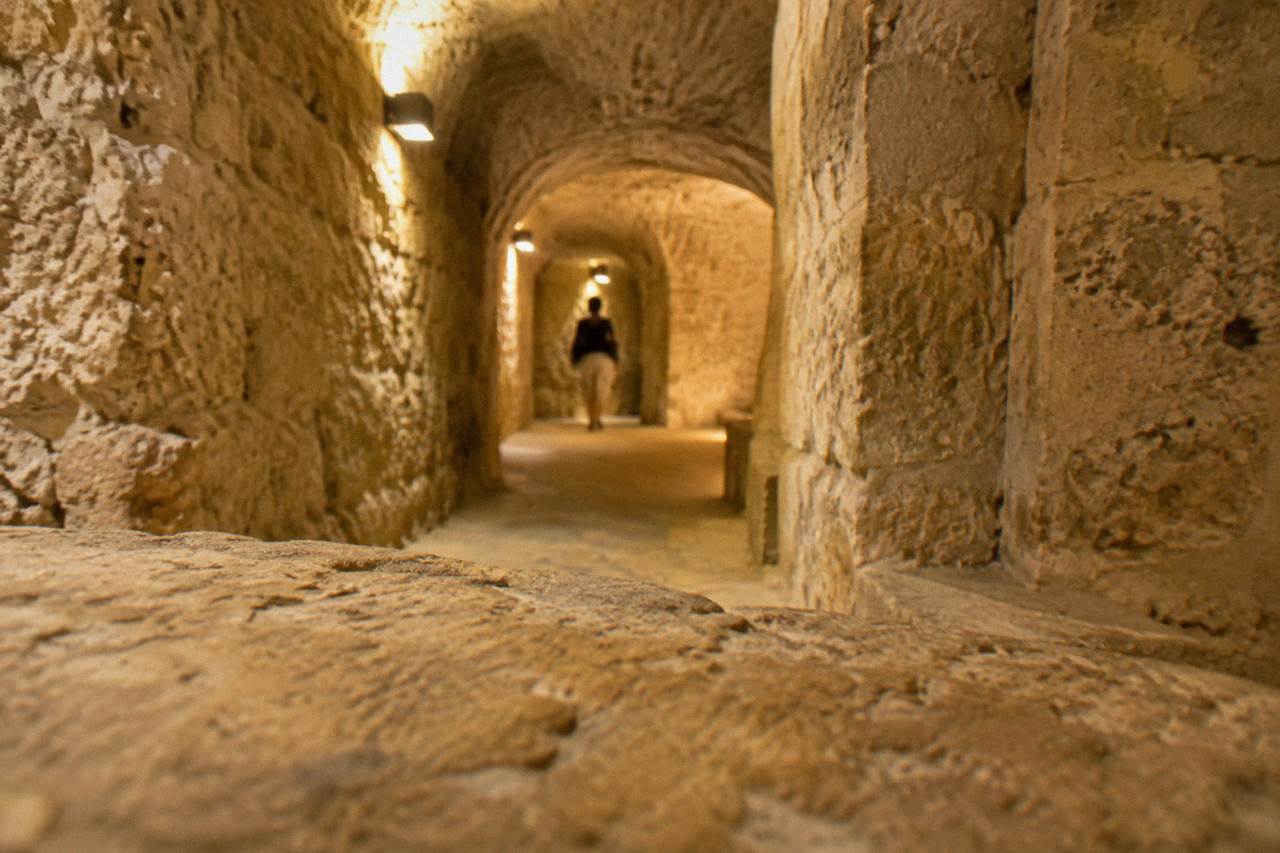
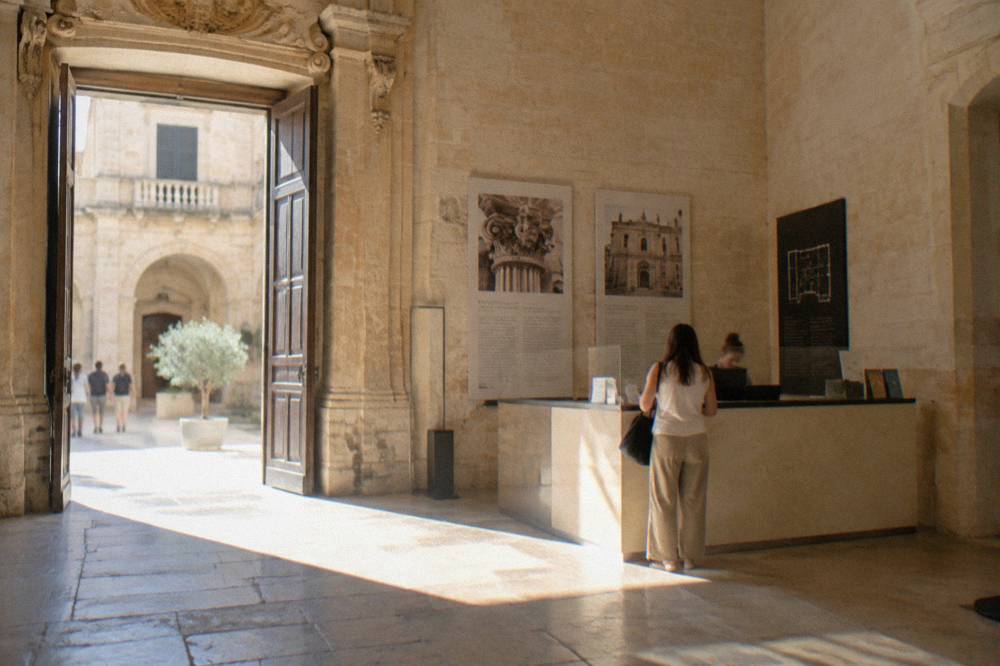
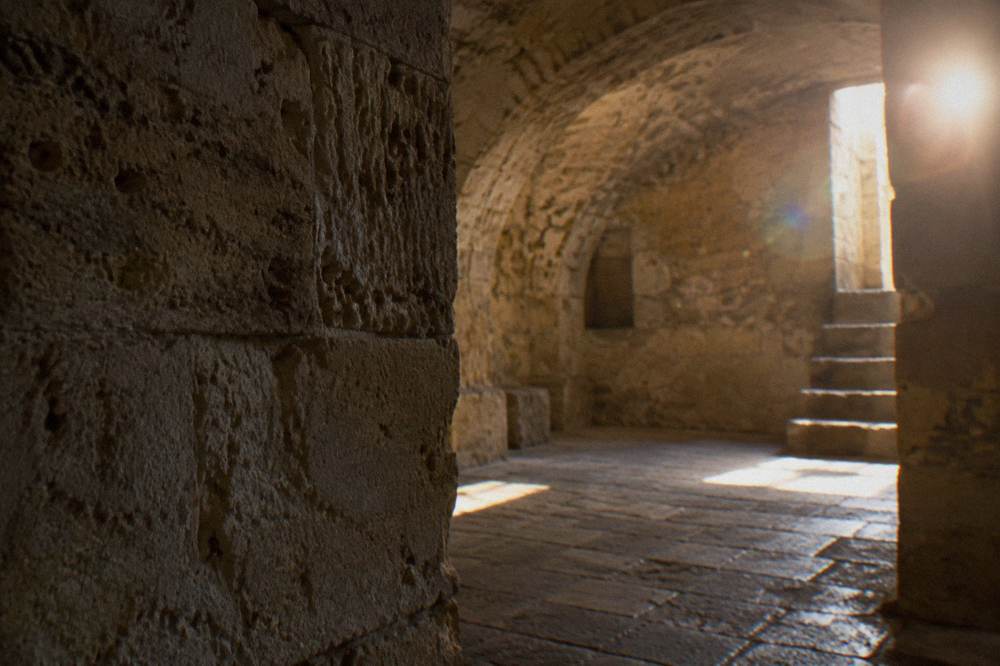
Inside Museo Faggiano visitors walk down through a sequence of excavated levels beneath one historic house: foundations, water systems, passages and cavities cut into Lecce's soft limestone, stacked so that each era's remains sit physically below or beside the next. The museum presents the dig itself as the exhibit, rather than a collection of objects in cases, and the descent is the visit.
That distinction is what sets the place apart from a conventional museum. In the civic and church museums of Lecce, such as MUST or the sacred-art collections, the display logic is object-based: paintings, finds and furnishings arranged for viewing. At Museo Faggiano the logic is stratigraphic. You move through space that was floor, then cellar, then cistern, then older foundation, and the interpretive panels explain what each level is thought to represent. The effect is that the city's history is experienced as depth rather than as a timeline on a wall.
The ground does most of the talking. Lecce's subsoil is pietra leccese, soft enough when first cut that wells, channels and rooms could be excavated with hand tools, and the museum's lower levels show exactly that workability in the finished cavities. Water management recurs through the site: cisterns and drainage features appear at more than one level, which is consistent with a city where storing and moving water underground was a long-running preoccupation of every household built on the stone.
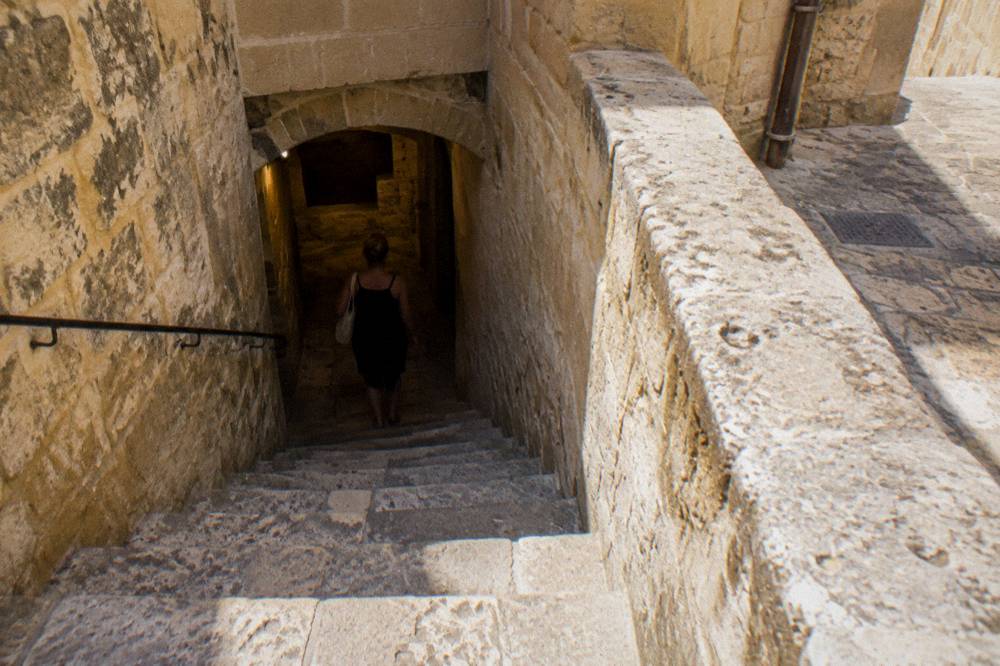
Visitors with mobility constraints should note that the visit is, by definition, a descent and a climb back up, through narrow passages and over uneven old surfaces, and anyone unsure should ask at the desk about which levels are reachable. Sturdy shoes serve better than sandals. The site is compact, dim in places, and cool, which makes it a reasonable refuge in the early afternoon heat of a Salento summer, when the ERA5 reanalysis for Lecce, 1991-2020, puts the mean daily high at about 31 C in July and August.
A reasonable question at this point is whether to fold the museum into a guided visit of the city at large. The related tour on this page does exactly that kind of pairing.
What Are The Opening Hours Of Museo Faggiano?
Museo Faggiano is open every day from 9:30 to 20:00, according to the museum's own tariff page, with no scheduled weekday closure. That makes it unusual among Lecce's museums: the Roman Amphitheatre, MUST and the Castello Carlo V's guided-tour operation all close on Mondays, so the Faggiano is the reliable fallback on the day the others shut.
The long daily window shapes how it fits an itinerary. The churches on the LeccEcclesiae combined ticket run winter hours of 9:00 to 18:00 from October to March, per the chieselecce.it listing, and ticketed access pauses during services. The Faggiano's 20:00 close gives it two extra evening hours in winter and makes it one of the last cultural stops in the old town still selling tickets. In practice that makes it a natural end-of-day visit, or a stop when a church visit has been cut short.
| Sight | Reported schedule | Monday |
|---|---|---|
| Museo Faggiano | Every day 9:30 to 20:00 | Open |
| Roman Amphitheatre | Winter Tue to Sun 10:00 to 17:00; summer split hours | Closed |
| MUST | Winter Tue to Thu 9:00 to 19:00, Fri to Sun 9:00 to 20:00 | Closed |
| Castello Carlo V | Guided tours Tue to Sun, timed slots | Closed |
| LeccEcclesiae churches | Daily, winter 9:00 to 18:00 | Open, services permitting |
Schedules are as reported by each site's own channels and can change seasonally, so confirm before structuring a whole day around them. The evening dimension of the city has its own page: Lecce at night covers what stays open and lit after the ticket desks wind down.
How Long Does A Visit To Museo Faggiano Take?
A visit to Museo Faggiano is a short one by museum standards: the site is a single house with excavated levels beneath it, and the sources describe a compact walk-through rather than a gallery circuit. Planning roughly half an hour to an hour on site fits the scale of the building, with more time only if reading every panel in detail.
The comparison with Lecce's other underground-flavoured attractions is instructive. The walking tours of the city's underground rooms and the synagogue basement visit, both bookable experiences on this site's tour pages, cover comparable subterranean material in the old town but spread across several locations. The Faggiano concentrates everything under one roof. That concentration is its strength on a tight schedule and its limit on a slow one. The rest of the planning pages sit on Lecce Travel Guide.
For a two-day plan that balances it against the headline sights, the Lecce in two days itinerary slots the museum into a route that also takes in the Duomo square, the Basilica di Santa Croce and the amphitheatre. The sequencing logic is simple: the Faggiano is close to the centre, needs no booking for an independent visit, and stays open into the evening, so it can absorb whatever slack the day produces.
How Does Museo Faggiano Compare With Lecce's Other Museums?
Museo Faggiano differs from Lecce's other museums in kind, not just quality: it is a stratified excavation under a private house, while the civic and provincial museums are object-based collections. Its 5 euro ticket also sits at the accessible end of the city's sightseeing costs, below the LeccEcclesiae combined church ticket at 11 euro standard and the Castello Carlo V guided tour at 10 euro.
The table below sets the reported basics side by side. Each figure comes from the site's own listing as reported; confirm current positions directly.
| Museum | Focus | Reported entry | Reported schedule |
|---|---|---|---|
| Museo Faggiano | In-situ excavation under a house | 5 euro; 3 euro ages 8 to 16; under 8 free | Daily 9:30 to 20:00 |
| MUST | City history and art | 5.50 / 3.50 euro; under 10 free | Closed Mondays |
| Museo Castromediano | Provincial archaeology and art | Reported free | Tue to Sun, winter 9:00 to 19:00 |
| Museo Ebraico | Jewish Lecce, guided visits | 5 / 4 euro | Guided visits only |
| Museo del Teatro Romano | Roman theatre finds | About 3 euro | Mon to Sat mornings |
| Castello Carlo V (tour) | Castle and cartapesta museum | 10 / 6 euro | Timed guided tours, closed Mon |
Two of those institutions deserve a cross-reference. The Museo Castromediano holds the provincial collections and is the classic object-based counterpart to the Faggiano's in-situ dig. The Museo Ebraico covers the Jewish history of the same streets, and its guided-visit-only format is the closest thing in the city to the Faggiano's guided-by-context approach. Together the three museums give Lecce a deeper historical register than its baroque surface suggests, and each tells a part of the story the church facades do not.
For travellers planning to cover several paid sights, one further reported option exists: a 7-day city pass at 29 euro that bundles the LeccEcclesiae sites, the bell tower and additional extras, per the listing that describes it. Whether it pays off depends on how many of the included sites a given trip will actually enter, so price the individual tickets against the plan rather than assuming a saving.
Is Museo Faggiano Good For Children?
Yes, on the reported evidence: children under 8 enter free and ages 8 to 16 pay 3 euro, per the museum's tariff page, and the visit format, a real descent through real underground spaces, is the kind of exhibit that tends to hold a child's attention more firmly than glass cases. The constraints are physical: narrow passages, uneven stone underfoot and dim lighting.
The pricing structure is the strongest signal. A museum that sets a dedicated child band at half the adult rate, and waives it entirely below age 8, is built with families in mind. The subject matter also works downward in age: hidden rooms, wells and tunnels have an obvious appeal that a room of labelled pottery does not, and the scale of the site means a visit does not outlast a child's patience.
Practical notes for families: the stairs and low sections mean baby carriers work better than pushchairs, and an adult should go first on the descents. Anyone combining the museum with the rest of the city's sights will find more family-angle material in the wider set of things to do in Lecce, which ranges the paid and free options across the old town and the coast.
Where Is Museo Faggiano And How Do You Get There?
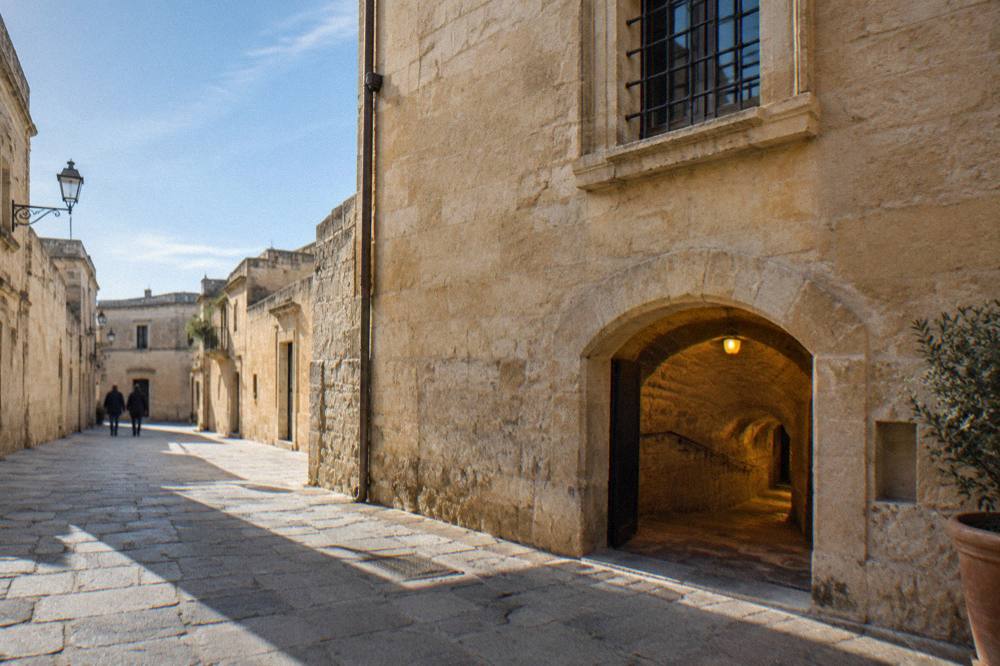
Museo Faggiano stands inside Lecce's historic centre, the compact walled core of the city in Puglia, and the old town is small enough that the museum is a short walk from the main squares rather than a transport question. Lecce itself is reached by train to the city's station, or via Brindisi airport, the nearest commercial airport, with a direct airport bus taking about 40 minutes.
Once in the centre, everything is on foot. The ZTL, the camera-policed limited traffic zone covering the historic core, means arriving drivers park outside and walk in; Park Liberty, an underground car park with 466 spaces near the centre, is one reported option. From the station side, the walk into the old town passes the city walls and delivers you into the street network the museum sits within.
Distances inside the centre are trivial. The Roman Amphitheatre in Piazza Sant'Oronzo, the Teatro Romano with its own small museum, and the Piazza del Duomo are all within an easy stroll of each other, and the Faggiano belongs to that same walking radius. For the mechanics of arriving in the city and the ZTL rules in detail, this site carries a full page on the historic centre and the parking picture; the headline rule from the sources is to ask your accommodation about registering your plate, since the cameras operate on weekdays and around the clock on Sundays and holidays.
Can You Visit Museo Faggiano As Part Of A Guided Tour Of Lecce?
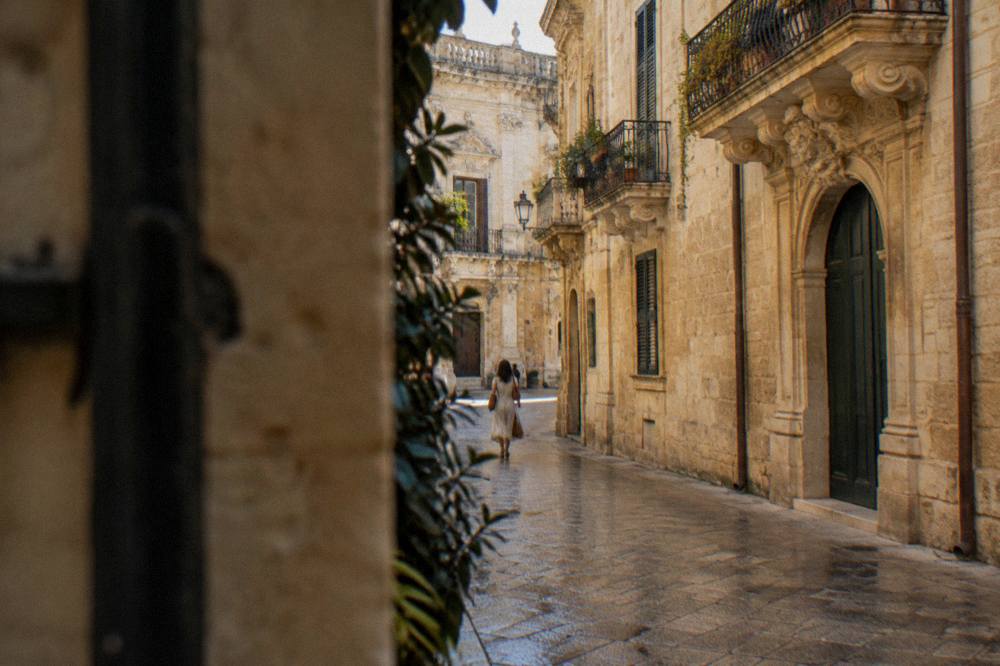
The museum itself is visited independently and is not part of a combined ticket with the city's churches or castle, but it sits inside the standard footprint of Lecce's guided city tours, and several bookable walks cover the underground theme across multiple locations. The bike highlights tour featured on this page is one such option for covering the surface city before descending on your own.
The division of labour is worth being clear about. A guided walking or bike tour of Lecce delivers the narrative and the route above ground, and some underground-focused walks include subterranean rooms elsewhere in the old town. Museo Faggiano then works as the self-guided deep dive, where the exhibit is the hole in the ground itself. Doing both, a circuit of the city followed by an independent descent, covers the two registers of Lecce in one day, and the museum's 20:00 close means the order can run either way.
The pairing also suits the rhythm of a Salento day. The sources describe hot summer afternoons, with the ERA5 reanalysis for Lecce, 1991-2020, putting mean daily highs around 31 C in July and August, and the museum's cool underground levels are a rational place to spend the warmest hours, with the guided circuit reserved for morning or evening.
What Else Is Near Museo Faggiano?
Within a short walk of Museo Faggiano lie the anchors of Lecce's old town: Piazza Sant'Oronzo with the Roman Amphitheatre, Piazza del Duomo with its cathedral and bell tower, the Basilica di Santa Croce, the Castello Carlo V and the excavations at Rudiae beyond the walls, all of them connected by lanes of the same honey-coloured stone that lies beneath the museum itself.
A sensible cluster for one day runs like this: the Duomo square and its church ticket in the morning, the walk down Via Giuseppe Libertini to the amphitheatre and Piazza Sant'Oronzo at midday, and the Faggiano in the early afternoon or evening when the churches' ticketed access has wound down. The Castello Carlo V can fill a timed-tour slot on a second day, and the archaeological park at Rudiae, visited on weekend guided tours by the reported arrangement, extends the ancient-Lecce story beyond the walls.
| Nearby sight | Reported entry | Walking relationship to the museum |
|---|---|---|
| Piazza Sant'Oronzo and amphitheatre view | Free from the square | Central, short stroll |
| Roman Amphitheatre interior | 5 / 2 euro | Same square, timed winter hours |
| LeccEcclesiae churches | 11 euro standard, 15-day validity | Clustered at the Duomo end |
| Basilica di Santa Croce | On the LeccEcclesiae ticket | Central, on the main axis |
| Castello Carlo V | 10 euro guided tour | South edge of the centre |
| Parco archeologico di Rudiae | 5 / 4 euro, weekend visits | Beyond the western walls |
Beyond the city, the museum's underground theme has a coastal echo. The karst landscape of Salento is famous for its caves and freshwater sinkholes, and boat trips along the cliffs south of Santa Maria di Leuca visit sea caves cut into the same limestone geology that made Lecce's underground dig possible. For a trip that pairs a Lecce base with the coast, the day-trip options below are the reported favourites.
For those who prefer the sea itself to the towns above it, the cave boat trips out of Leuca run on the same cliff-line geology, with swimming stops and an aperitif on the water.
Common Questions About Museo Faggiano
How much does Museo Faggiano cost?
A full ticket costs 5 euro, with ages 8 to 16 paying 3 euro and children under 8 free, per the museum's own tariff page. Confirm at the desk in case of changes.
What are Museo Faggiano's opening hours?
The museum is open every day from 9:30 to 20:00, according to its tariff page, with no Monday closure, unlike several other museums in Lecce.
Is Museo Faggiano in Lecce?
Yes. The museum stands inside the historic centre of Lecce, the baroque capital of Salento in Puglia, southern Italy, a few kilometres inland from the Adriatic coast.
How long should I spend at Museo Faggiano?
The site is a single excavated house, so a walk-through typically takes roughly half an hour to an hour, with longer only for reading every interpretive panel.
Is Museo Faggiano suitable for children?
Children under 8 enter free and ages 8 to 16 pay a reduced 3 euro, and the underground passages are a natural draw for children, though the stairs, low sections and uneven floors require adult supervision.
Do I need to book Museo Faggiano in advance?
The sources describe an independent, ticket-on-arrival visit rather than timed slots, but the desk or the museum's own site is the place to confirm current arrangements before travelling in peak season.