Santa Maria Di Leuca: The Lighthouse At The End Of The Heel
Santa Maria Di Leuca sits where Salento ends and the two seas meet, about an hour and twenty minutes south of Lecce by car. This guide covers the basilica, the lighthouse, the sea caves by boat, the beaches nearby, and every verified way of getting there without a car.
Short answer
**Santa Maria Di Leuca is the southern tip of the Salento peninsula, about 83 km from Lecce by road, where the Adriatic and the Ionian seas meet under a lighthouse and the Basilica De Finibus Terrae. The basilica is free to enter, the sea caves are the reason to take a boat, and the drive from Lecce takes about 78 minutes in free-flowing traffic.**
Santa Maria Di Leuca is the town at the very bottom of Italy's heel, in the province of Lecce, in Puglia, and everything about it follows from that geography. The Adriatic runs down one side of the Salento peninsula, the Ionian down the other, and they meet almost exactly at the promontory below the town, marked by a lighthouse and by the Basilica De Finibus Terrae, whose Latin name means, plainly, the sanctuary at the ends of the earth. It is a day trip from Lecce, the baroque capital of Salento a few kilometres inland, and it pairs the church-and-harbour town at the top of the cape with a coastline of sea caves that can only be seen properly from a boat.
This guide from the Lecce Travel Guide editorial desk covers what the sources actually say: the basilica's hours and free entry, what the lighthouse does and does not allow, the boat trips into the caves, the sandy Ionian beaches a short hop north, and every verified transport figure for getting there from Lecce with or without a car.
What Is Santa Maria Di Leuca, And Why Go From Lecce?
Santa Maria Di Leuca is the coastal town at the southern tip of the Salento peninsula in the province of Lecce, where the Adriatic and Ionian seas converge beneath a lighthouse and the Basilica De Finibus Terrae. It is a classic day trip from Lecce, about 83 km south by road, combining a sanctuary town, a small harbour and a cliff-and-cave coastline that boat tours explore from the water.
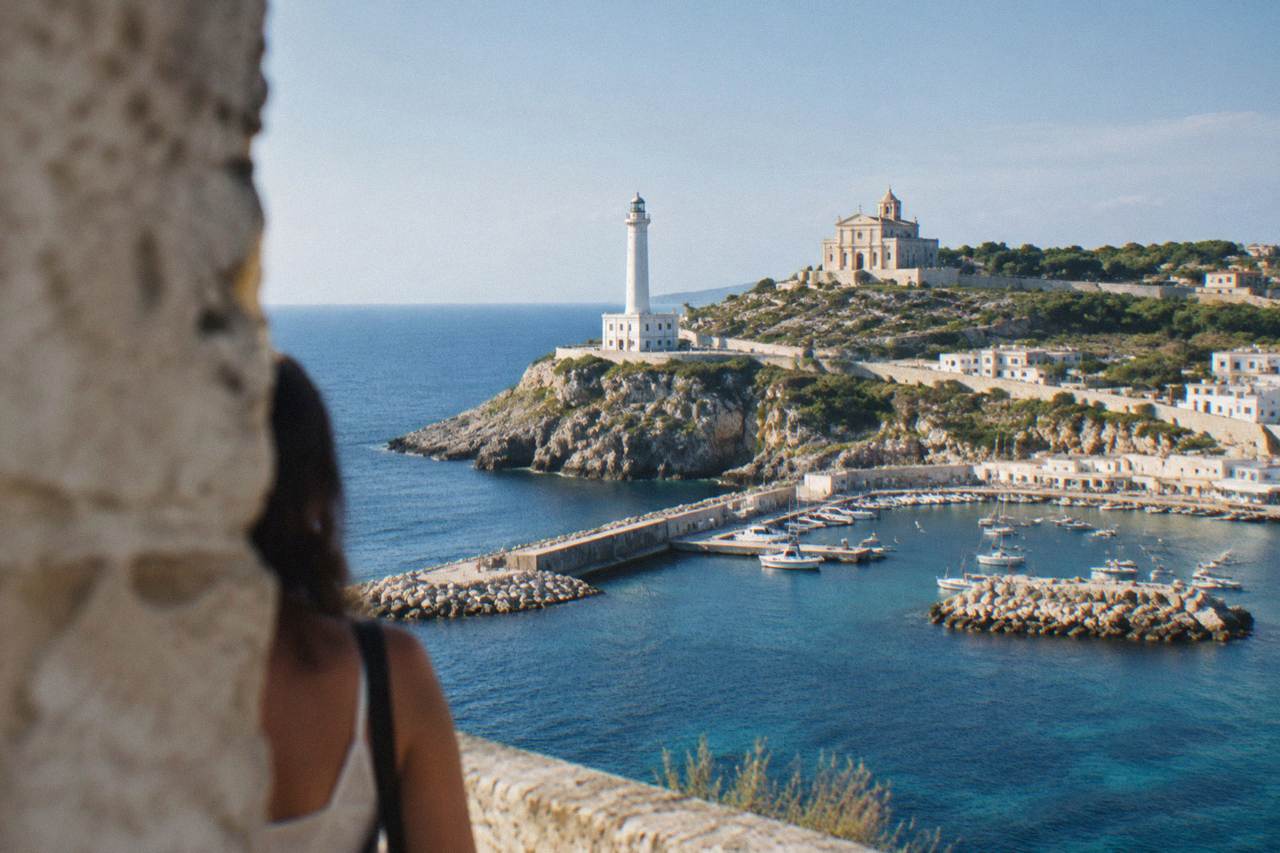
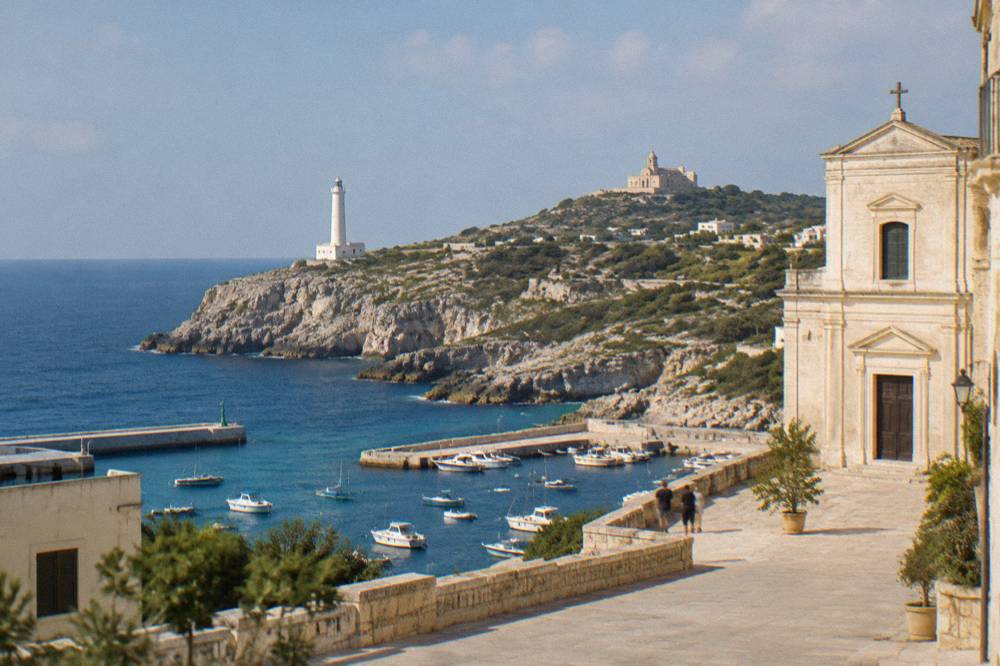
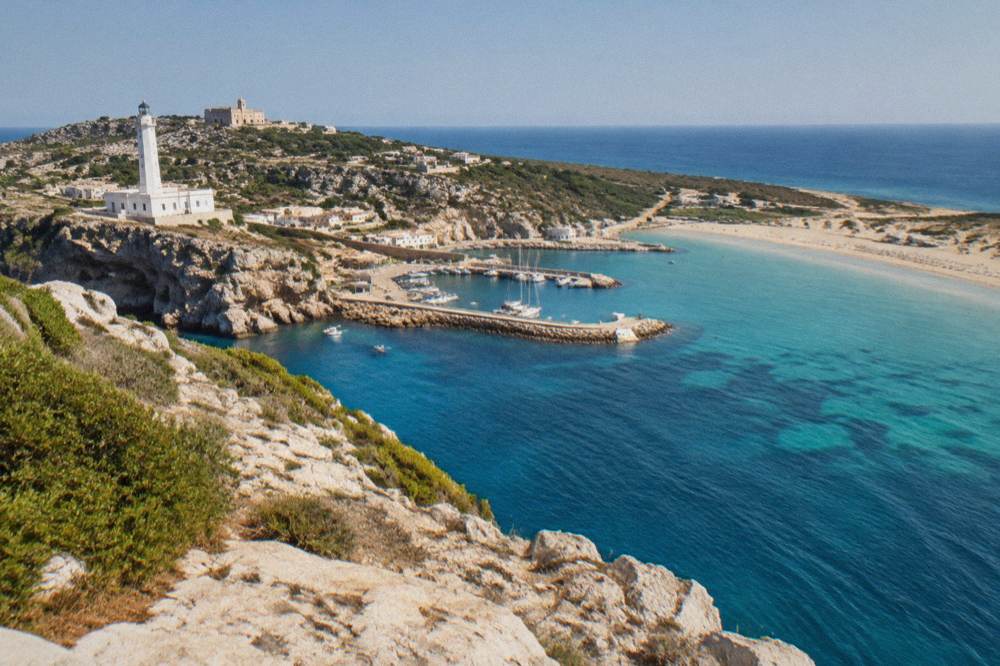
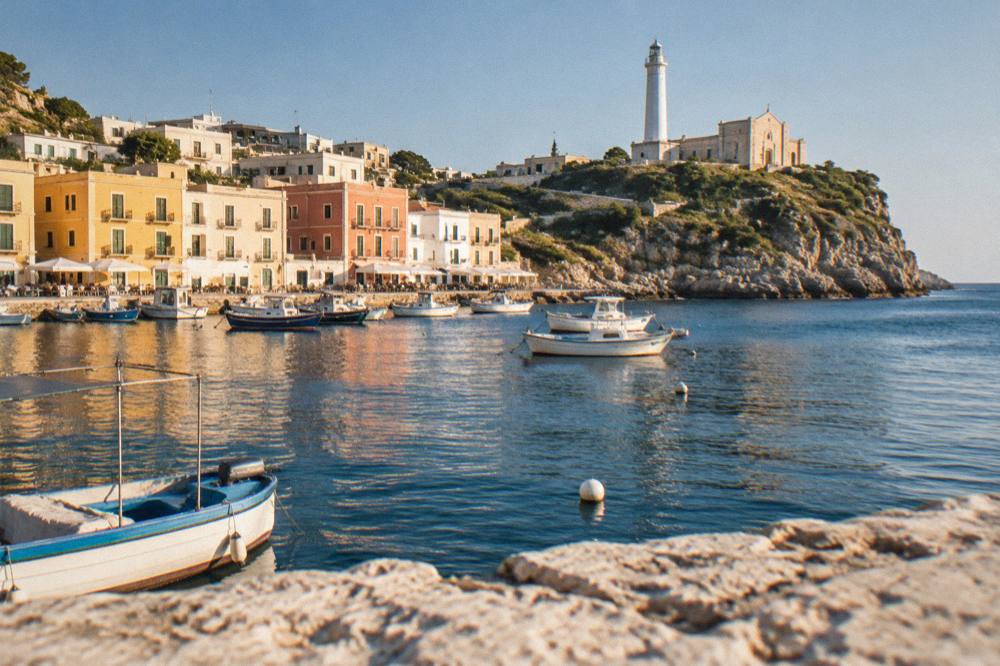
The town divides into two halves. The upper town, Leuca Alta, grew around the basilica on the flat top of the promontory; the lower town, Leuca Marina, is the harbour quarter at sea level, joined to the upper town by a monumental staircase, with grand seaside villas lining the seafront. The basilica itself sits on the site of much older places of worship, and its terrace looks out over the meeting of the two seas, the single most photographed view in the town.
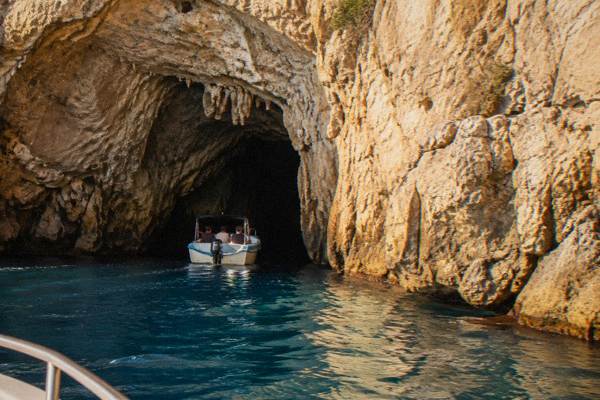
The other half of a Leuca visit is the coast. South and east of the promontory the Adriatic side runs in limestone cliffs pierced by sea caves, and the standard way to see them is by boat from the harbour, on tours that thread into the grottoes and stop for swims in the coves between them. The Ionian side to the northwest, by contrast, is the sandy, shallower shore of Salento, and it carries the big beaches, including Pescoluse, the one called the "Maldives of Salento", which held a Blue Flag in 2026 (per puglia.info). The two characters of the peninsula are, in effect, both visible from Leuca.
For visitors basing themselves in Lecce, Leuca is the far end of the peninsula and the natural southern turn of any Salento itinerary. It can be done by car, by bus, or as one stop on a longer loop with Otranto and Gallipoli. Note one thing before anything else: there is no commercial airport in Lecce and none in Leuca either; Brindisi (BDS) is the gateway airport for the whole peninsula.
How Do You Get From Lecce To Santa Maria Di Leuca?
By car, the drive from Piazza Sant'Oronzo in Lecce to Santa Maria Di Leuca is 83.2 km and takes about 78 minutes in free-flowing traffic, per OSRM routing data. By public transport, direct buses from Lecce take about 2 hours to 2 hours 15 minutes with fares from about 4 to 10 euro, and in summer the Salento in Bus shuttle lines 107 and 108 serve Leuca from Lecce.
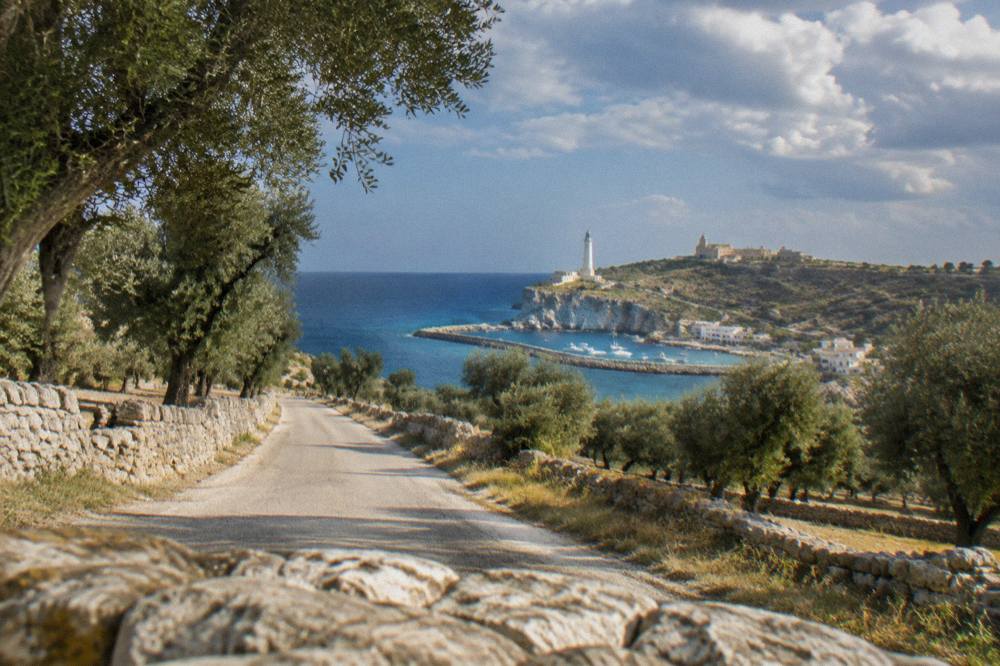
The car route is the simple one: it is the same road south through the interior of the peninsula, and the free-flow figure of about 78 minutes is a computed routing time, not a promise about August traffic. Many travellers treat Leuca not as a single destination but as one leg of a loop, pairing it with Otranto on the Adriatic side or Gallipoli on the Ionian side on the way back, which spreads the driving across the day.
By public transport the picture splits by season. In summer, the Salento in Bus network ran from 13 June to 13 September in 2026, with lines 107 and 108 connecting Lecce to Santa Maria Di Leuca and Gallipoli; fares on the network run from 1.10 to 5 euro, kilometre-based, bought through the Cotrap app or site with a 1 euro surcharge on board, and children under 10 travel free. The 2027 dates had not been announced, and the service is summer-only, so outside that window the year-round buses from Lecce take about 2 hours to 2 hours 15 minutes at fares from about 4 to 10 euro. There is no train to Leuca: the FSE rail network ends well short of it, and the train is only useful for getting partway, for example to Gallipoli or Galatina.
| Journey | Mode | Time | Fare |
|---|---|---|---|
| Lecce to Santa Maria Di Leuca | Car (free-flow, OSRM) | about 78 min | 83.2 km |
| Lecce to Leuca | Direct bus | about 2h to 2h15 | from about 4 to 10 euro |
| Lecce to Leuca | Salento in Bus 107/108 (summer only) | seasonal schedules | 1.10 to 5 euro, +1 euro on board |
| Lecce to Otranto | Car (free-flow, OSRM) | about 44 min | 46.7 km |
| Lecce to Gallipoli | FSE train, direct | about 1h18 to 1h43 | from about 5 euro |
| Lecce to Otranto | FSE train via Maglie | about 1h33 to 2h+ | from about 4 to 5 euro |
Drivers should remember two Lecce-specific points before setting off. The historic centre of Lecce is a camera-policed ZTL, so the car should be left at a peripheral car park such as Park Liberty (466 spaces near the centre) rather than driven to the door of the hotel; and the tourist tax, collected by accommodation in Lecce, runs to a top reported rate of 5 euro per night in high season, to be confirmed at booking. Full details are in the site's Lecce ZTL and parking guide sibling coverage on the same verified sources.
Guided transport exists for visitors who would rather not drive the peninsula at all. A van day tour from Lecce covering Otranto, Castro, Leuca and Gallipoli in one loop is one option, and boat-focused day trips based at Leuca itself are another:
For a fuller comparison of car-free day trips from the city, the site's guide to day trips from Lecce without a car lists the verified train and bus options for the whole peninsula.
What Can You See In Santa Maria Di Leuca Itself?
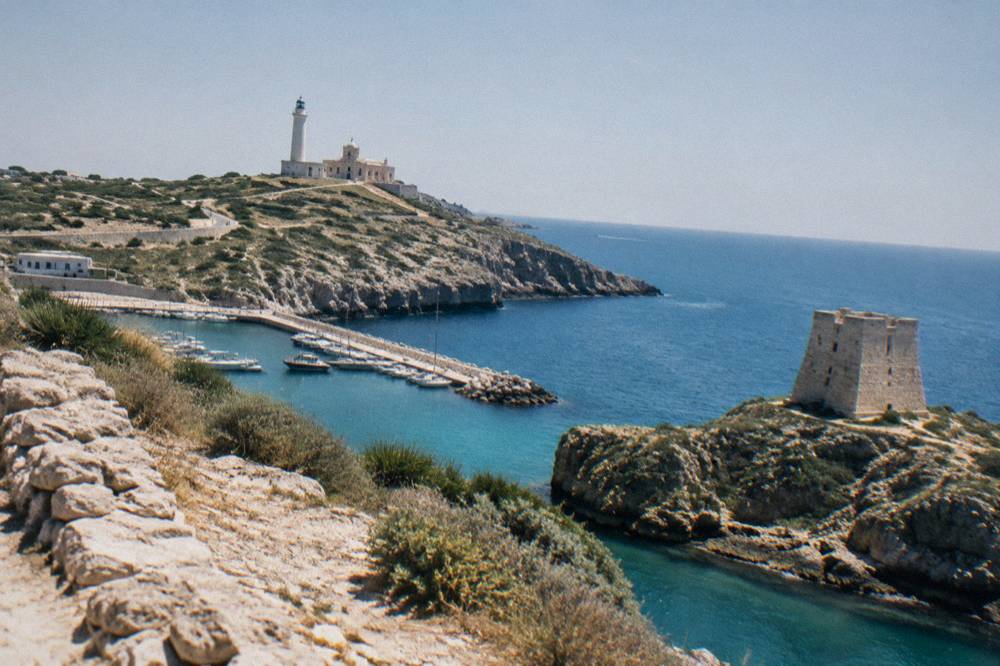
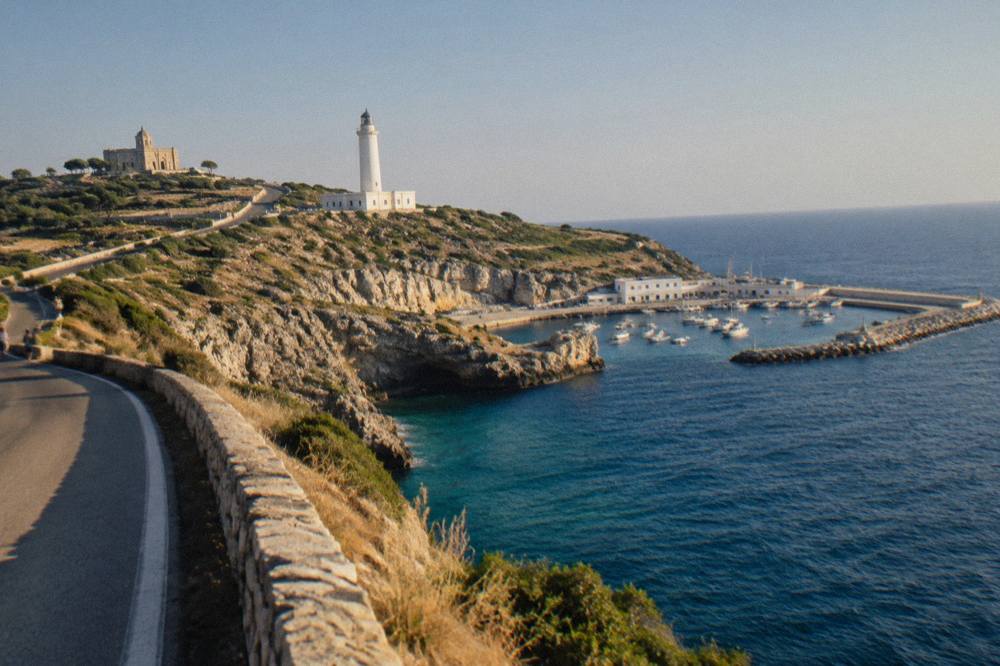
The two landmarks of Santa Maria Di Leuca are the Basilica De Finibus Terrae at the top of the promontory, free to enter and open daily roughly 7:30 to 12:30 and 15:30 to 19:00 with summer extensions, and the white lighthouse beside it, whose exterior can be seen but whose interior is not open to the public. The harbour below and the monumental staircase joining the two levels complete the town itself.
The basilica is the anchor of a visit and costs nothing. Per the reported hours, it opens in a split daily pattern, mornings from about 7:30 or 8:00 to about 12:30, afternoons from about 15:30 or 16:00 to about 19:00, with longer summer evenings. The site has been a place of worship since long before the present church, and the name De Finibus Terrae, the ends of the earth, is the whole story of the place in three words. Dress as you would in any working Italian church: shoulders and knees covered.
The lighthouse stands next to the basilica at the top of the steps. Reports are consistent on one point: the exterior is freely visible, the interior is not open to the public, so plan the visit around the view from the terrace and the seafront rather than an ascent. The staircase down to the marina, and the array of eclectic villas along the water, are the remaining sights of the town proper, and they cost nothing either.
| Sight in Leuca | Entry | Reported hours | Notes |
|---|---|---|---|
| Basilica De Finibus Terrae | free | daily about 7:30-12:30 and 15:30-19:00, summer extended | dress code applies |
| Lighthouse | exterior only | always visible from outside | interior not open to the public |
| Monumental staircase and harbour | free | open public space | joins Leuca Alta to the marina |
| Seafront villas | free, from the street | always visible | eclectic facades |
| Sea caves | by boat tour | seasonal, from the harbour | the main paid activity |
A practical note on timing: the middle of the day in July and August, when the mean daily high per the ERA5 reanalysis, 1991-2020, is about 31 C, is hot work on the unshaded terrace. The basilica's split hours suit exactly that, an early visit, a long shaded lunch in the marina, and a return for the late-afternoon light on the water.
Are The Boat Trips To The Caves Of Santa Maria Di Leuca Worth It?
The boat trips from Leuca harbour are the only practical way to see the sea caves that riddle the cliffs south of the promontory, since the grottoes open at water level and have no access from land, and the tours combine cave passages with swimming stops in the coves between them. Local listings carry several operators with aperitifs and swim breaks included; prices and durations are on each operator's live listing.
The coastline the boats run is the reason Leuca has a marine reputation at all. The caves, with names known locally for their shapes and colours, open along the base of the cliff, and a small boat can pass close enough to read the water line on the rock. Tours from the harbour typically circuit the caves of the southern promontory and pause in coves for swimming where conditions allow; several listings include an aperitif on board. Because no landing or path exists, the sea is genuinely the only route, which is why the boat is the one paid activity in Leuca that competes with the free sights above.
The featured trip on this site is a group boat tour to the caves of Santa Maria Di Leuca, which covers the cave circuit from the water and is described fully, with pricing and reviews rendered from its verified listing, on the tour's own page. Two similar options from the same harbour, a cave tour with swimming breaks and an aperitif and a ride with apéritif and swim stops, appear below. As always on this site, availability and meeting point come from the operator's live listing, and the button to check both is the one that matters.
Swimming from the tour boats is subject to conditions and to the crew's judgement, and readers should also note the wider Salento rule changes of 2026: at Grotta della Poesia on the Adriatic coast, bathing and diving were banned outright from summer 2026 and a 5 euro ticket applied to non-residents of Melendugno. Rules on protected sites in Puglia do move, so treat any swim stop as conditional and follow the operator's instructions on the day.
Which Beaches Are Near Santa Maria Di Leuca?
The beaches near Leuca split exactly along the peninsula's two coasts: the Adriatic side southeast of the town is cliff and rock with coves reached by paths and boats, while the Ionian side to the northwest carries the sand, most famously Pescoluse, the "Maldives of Salento", a long stretch of fine white sand and shallow turquoise water at Marina di Salve that held a Blue Flag in 2026.
Pescoluse is the headline Ionian beach and it is north of Leuca, on the way back toward Gallipoli. Per puglia.info, it offers a long stretch of fine white sand, shallow turquoise water and dunes, with free sections alongside lidos, and parking near Largo dei Gigli or on the litoranea, the coast road. Further up the same coast, Porto Cesareo continues the sandy, shallow pattern, and the area's lido prices reflect the demand: the 2026 surveys (Corriere Salentino / Udicon) put Ionian lidos higher than the Adriatic ones.
On the Adriatic side, the coast from Torre dell'Orso down through Otranto toward Castro and Leuca is the cliffier shore, with the sea caves and rocky coves. Grotta Zinzulusa at Castro, north of Leuca on this coast, runs year-round guided visits at 7 euro full and 4 euro reduced, per its own site. Baia dei Turchi near Otranto, a protected pinewood beach, works on a park-and-walk basis: parking on the SP366 at about 4 to 8 euro a day in high season and a 10 to 15 minute walk through the pines, per idealista.it. Readers planning a combined trip can find the full picture in the site's Salento beaches guide.
| Beach | Coast | Character | Reported 2026 figures |
|---|---|---|---|
| Pescoluse (Marina di Salve) | Ionian | fine white sand, shallow water, dunes | Blue Flag 2026; free sections plus lidos |
| Baia dei Turchi (Otranto) | Adriatic | protected pinewood beach | parking SP366 about 4-8 euro/day, walk 10-15 min |
| Grotta Zinzulusa (Castro) | Adriatic | sea cave, guided visits | 7 euro full, 4 euro reduced, year-round |
| Torre dell'Orso / San Foca lidos | Adriatic | sandy beach with lidos | umbrella + 2 beds: 25-35 euro June, 50-60 euro August |
| Otranto lidos | Adriatic | town beaches | 20-50 euro per day |
| Ionian lidos generally | Ionian | sandy, shallow | higher than the Adriatic side (Udicon survey) |
Lido prices, the surveys stress, move year by year, and the 2026 Adoc reporting noted a 25 per cent rise over the previous five years, so treat the table as planning ranges and check at the lido itself.
Can You Combine Leuca With Otranto, Gallipoli Or Castro In One Day?
Yes, and it is the standard way to drive the peninsula from Lecce: a loop taking in Otranto (46.7 km, about 44 minutes from Lecce), Castro (47.4 km, about 48 minutes) and Leuca (83.2 km, about 78 minutes) on the Adriatic side, returning via Gallipoli (41.0 km, about 41 minutes from Lecce) on the Ionian side, is a full but feasible day by car or on a guided van tour.
The classic loop runs Lecce to Otranto first, along the Adriatic, then down the coast road through Castro and its cave to Leuca for the basilica and the boat, then back up the Ionian side, optionally stopping at Galatina for the free Basilica di Santa Caterina d'Alessandria or continuing to Gallipoli, whose old town sits on a limestone island linked to the mainland by a bridge. Drive times between the individual towns are short because the peninsula narrows toward Leuca: every leg of the loop is under an hour in free-flow conditions.
By public transport the loop is harder, because the coastal legs run on seasonal or infrequent buses. The realistic car-free version pairs the train to Otranto (via Maglie, about 1h33 to 2 hours or more, from about 4 to 5 euro) or to Gallipoli (direct FSE, about 1h18 to 1h43, from about 5 euro) and treats Leuca as a summer-only bus extension on Salento in Bus lines 107/108. Otranto deserves the stop regardless: its cathedral's floor mosaic, dated 1163 to 1165 by the priest Pantaleone, is one of the largest in Europe, and the Otranto day-trip guide on this site covers the 2026 access rules, under which independent visitors enter free while groups and guided visitors pay 2 euro.
| Stop | Distance from Lecce | Free-flow drive time | Rail alternative |
|---|---|---|---|
| Otranto | 46.7 km | about 44 min | FSE via Maglie, about 1h33 to 2h+ |
| Castro | 47.4 km | about 48 min | no direct line |
| Santa Maria Di Leuca | 83.2 km | about 78 min | no rail; bus about 2h to 2h15 |
| Gallipoli | 41.0 km | about 41 min | direct FSE, about 1h18 to 1h43 |
| Galatina | 25.7 km | about 29 min | direct FSE, about 38 to 55 min |
For visitors who would rather not drive, guided van tours from Lecce cover exactly this loop, and the boat-focused traveller can instead ride out to the caves directly:
When Is The Best Time Of Year To Visit Santa Maria Di Leuca?
The warm, dry months from May through September fit a Leuca day trip best: the ERA5 reanalysis, 1991-2020, gives Lecce mean daily highs of about 23 C in May, 28 C in June and about 31 C in July and August, with monthly rainfall of 40 mm in May falling to 15 mm in July, while the sea runs about 22.5 C in June and 25 to 27 C at the August peak, per seatemperature.org data for the region.
The trade-off is the shape of every Salento summer: July and August bring the heat, the crowds and the full seasonal economy, everything open, boats running constantly, lidos at their August prices, while June and September sit slightly cooler with the sea still swimmable, about 24 to 25 C in September. October is a different trip: the sea is still about 20 to 22 C, but the mean daily high drops to about 22 C, rainfall rises to 91 mm in the month, and the summer bus network and much of the boat availability scale back. The Salento in Bus service, for reference, ran only from 13 June to 13 September in 2026.
| Month | Mean high (ERA5 1991-2020) | Rain mm | Sea temp (regional) |
|---|---|---|---|
| May | 23.4 C | 39.9 | warming toward summer |
| June | 28.2 C | 18.0 | about 22.5 C |
| July | 31.0 C | 15.3 | about 25-26 C |
| August | 31.3 C | 18.1 | 25 to 27 C (peak) |
| September | 26.4 C | 58.9 | about 24-25 C |
| October | 21.8 C | 91.3 | 20 to 22 C |
Off-season travellers should also know what closes. The boat economy is seasonal, the summer buses stop in mid-September, and the basilica keeps its split hours year-round while everything else around it quiets down. November is the month to avoid on the numbers alone: the ERA5 reanalysis gives it the highest monthly rainfall of the year at 93.7 mm. There is also a summer calendar to aim at if the timing is flexible: the Notte della Taranta Concertone at Melpignano, in the interior south of Lecce, was held on 22 August 2026 in its 29th edition, and the whole interior comes alive with pizzica music in the weeks around it.
Where Should You Eat And Drink Around Leuca?
The food around Leuca is Salento food: fish at the harbour, pasticciotto from the pastry shops of the interior, and the iced coffee with almond milk, caffè in ghiaccio con latte di mandorla, that Lecce gave to the whole peninsula, credited to Antonio Quarta of Quarta Caffè in Lecce in the 1940s to 1950s and added to Italy's PAT traditional-products list in 2026.
A day trip south from Lecce is a day of eating through the peninsula's standard repertoire. The savoury side runs through the rustico leccese, a puff-pastry parcel of béchamel, mozzarella and tomato whose origins are uncertain but certainly not medieval, and through frisa and puccia, the hard bread rusks and the flat pocket bread of the Salento table. The sweet side is the pasticciotto, custard and shortcrust, whose 1745 invention date is the claim of Pasticceria Ascalone in Galatina, not Lecce, and is disputed by historians, so treat the story as legend rather than record. Galatina, on the loop back up the Ionian side, is the natural place to engage with that legend directly.
The drink is the easiest habit to pick up. Caffè in ghiaccio con latte di mandorla, espresso poured over ice with almond milk syrup, is a Lecce invention that has spread across Puglia, and in the Leuca August heat it is less a delicacy than a survival technique. The site's guide to caffè in ghiaccio covers the history, and the what to eat in Lecce guide covers the rest of the table, including the Salice Salentino DOC wines, established in 1976 and built on the Negroamaro grape of the peninsula, which is what the local rosato and rosso in the harbour restaurants generally are.
This site prints no restaurant recommendations for Leuca itself: no venue there carries a verified entry in the sources, so the honest advice is fish near the harbour in Leuca Marina, pasticciotto in Galatina on the way back, and menus checked on the spot.
What Should You Know Before You Go?
Three practical points carry most of the risk: the drive from Lecce is about 78 minutes in free flow but longer in season, the ZTL cameras in Lecce's centre mean the car must be parked outside it before and after, and there is no train to Leuca at all, so car-free visitors depend on the year-round bus, about 2 to 2h15 from about 4 euro, or the summer-only Salento in Bus lines 107 and 108.
Money first. Italy uses the euro, and the paid items on a Leuca day are few: the basilica is free, the lighthouse exterior is free, the boat trip is the main spend (prices on each operator's live listing), and any lido on the Ionian beaches runs at the surveyed 2026 ranges above. Back in Lecce, the tourist tax is collected by the accommodation at the reported top rate of 5 euro per person per night in high season, to be confirmed at booking. The emergency number across Italy is 112.
Timing second. The basilica's split hours, roughly 7:30 to 12:30 and 15:30 to 19:00, reward a morning arrival; the boats concentrate in the middle of the day; and the light on the two seas from the terrace is at its best late. A loop that reaches Leuca by mid-morning, boats around noon, swims or caves after, and returns up the Ionian side in the evening is the standard shape of the day.
Booking third. The featured cave boat tour, the van loop and the alternatives above all render their live prices and availability from their own listings, and the operator's cancellation terms are on the same page:
For visitors extending beyond the day, Leuca sits naturally at the southern end of a longer Puglia road trip, with Alberobello and Ostuni to the north and Gallipoli and Nardo on the Ionian side of the peninsula, all reachable on the verified train and bus figures in this site's transport guides.
Common Questions About Santa Maria Di Leu
How far is Santa Maria Di Leuca from Lecce?
By car it is 83.2 km from Piazza Sant'Oronzo in Lecce, about 78 minutes in free-flow traffic per OSRM routing data. By direct bus it is about 2 hours to 2 hours 15 minutes, with fares from about 4 to 10 euro.
Is the Basilica De Finibus Terrae free?
Yes, entry is free. Reported hours are daily in a split pattern, roughly 7:30 to 12:30 and 15:30 to 19:00, with summer extensions. Shoulders and knees must be covered, as in any working Italian church.
Can you climb the lighthouse at Santa Maria Di Leuca?
No. The lighthouse exterior is freely visible next to the basilica, but the interior is not open to the public, per the available reports, so plan around the terrace view rather than an ascent.
Can you get to Santa Maria Di Leuca by train?
No. There is no rail line to Leuca. The FSE network reaches Gallipoli and Galatina directly and Otranto with a change at Maglie, but the final leg to Leuca is by bus, year-round at about 2 to 2h15, or on the summer-only Salento in Bus lines 107 and 108.
What is the sea temperature at Leuca?
Regional sea temperatures per seatemperature.org run about 22.5 C in June, 25 to 27 C at the August peak, about 24 to 25 C in September and 20 to 22 C in October, with a February low around 14 C.
Which sea is at Santa Maria Di Leuca, the Adriatic or the Ionian?
Both. Leuca sits at the southern tip of the Salento peninsula where the Adriatic, which runs down the cliffy east side, meets the Ionian, which runs down the sandy west side; the meeting point is visible from the basilica terrace.
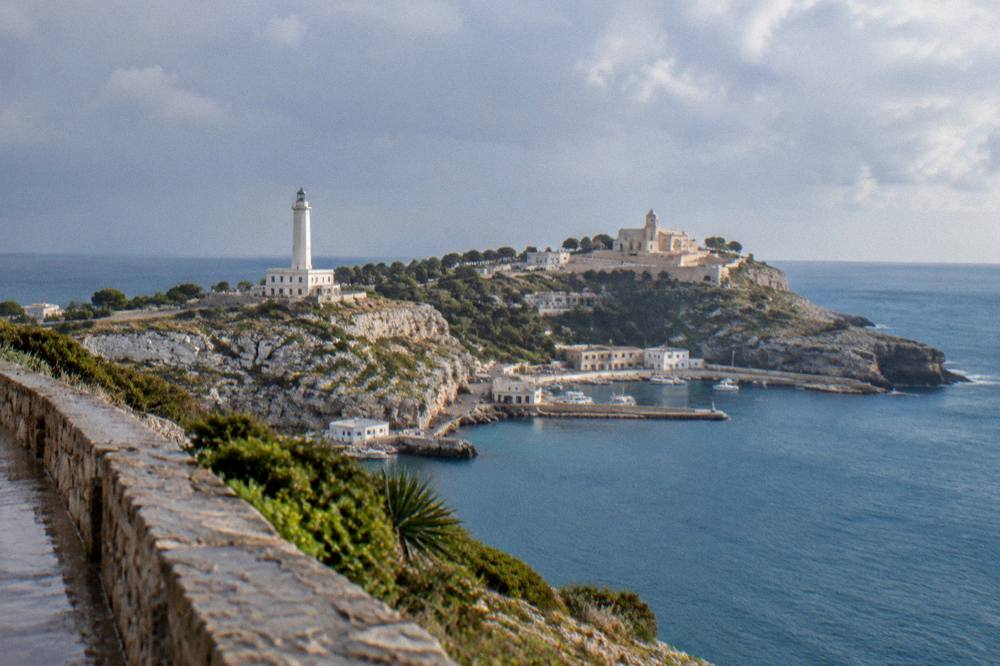
Santa Maria Di Leuca rewards exactly the kind of day it looks like it should: an early basilica, a boat into the caves at midday, a swim on the Ionian sand on the way north, and a pasticciotto in Galatina before the drive back to Lecce's baroque centre.