Salento: The Heel Of Italy From A Lecce Base
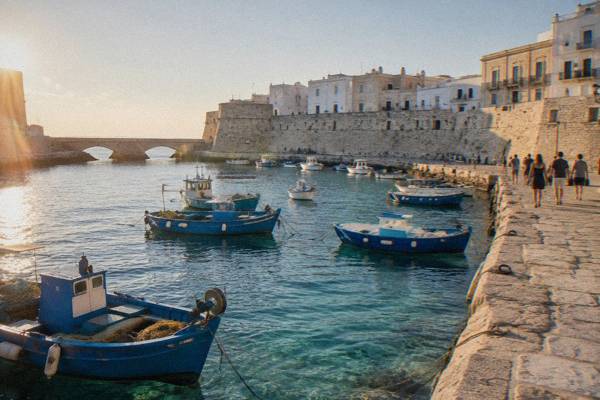
Salento is the flat limestone heel of Italy, two coasts of sand and low cliffs gathered around Lecce, its baroque capital. This guide lays out the towns, the beaches, the transport and the food, all planned from a base in Lecce.
Short answer
Salento is the southernmost part of Puglia, between the Adriatic and the Ionian, with Lecce as its capital and cultural centre. Base yourself in Lecce, use FSE trains and the summer Salento in Bus network to reach Otranto, Gallipoli, Leuca and the beaches, and plan on at least four days for the peninsula.
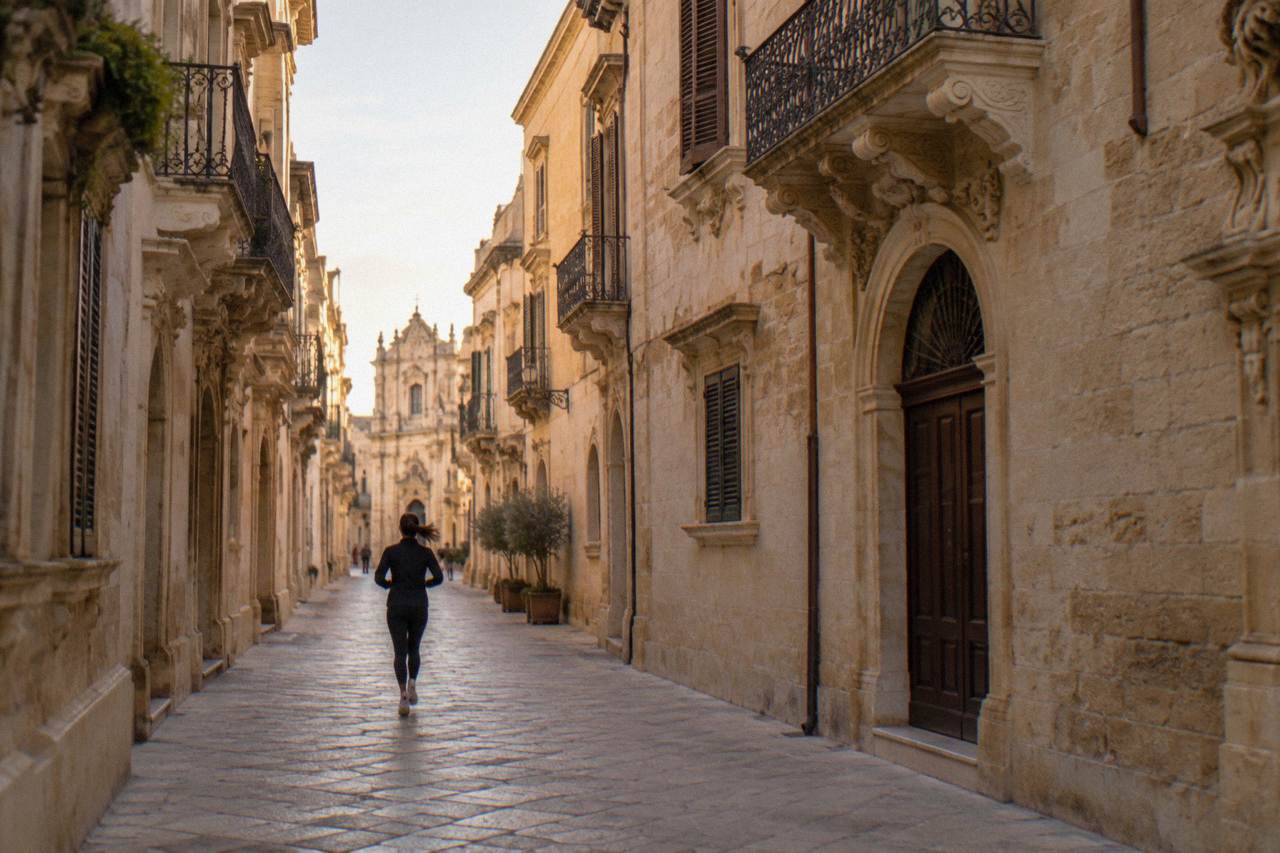
Salento is the southernmost stretch of Puglia, in southern Italy: the flattish limestone heel of the Italian boot, with the Adriatic Sea on the east coast and the Ionian on the west, and with Lecce, the baroque capital of the peninsula, sitting a few kilometres inland near its neck. The city gives the region its name in practice as well as administration, and this guide treats Lecce as the base from which the whole peninsula opens up. San Cataldo, the nearest beach to Lecce, lies about 13 km east, so nothing here is far.
What Is Salento, And Where Does It Sit Within Puglia?
Salento is the southern sub-region of Puglia (Apulia), covering the provinces of Lecce and parts of Brindisi and Taranto, bounded by the Adriatic Sea to the east and the Ionian Sea to the west and ending at Santa Maria di Leuca, where the two seas meet. Lecce, with a population of 94,387 as of 1 January 2026, is its capital city and its cultural and transport hub, standing inland rather than on the coast.
The land is low and limestone-based. The same pietra leccese, the Miocene limestone that is soft when quarried and hardens with exposure, that built Lecce's baroque facades also shaped the peninsula's masserie, dry-stone walls and watchtowers. Two facts often get garbled in other guides and are worth setting straight here. Lecce is not a UNESCO World Heritage Site: "Salento and the Barocco Leccese" sits on Italy's Tentative List, placed there in 2006, and nothing more. And Lecce has no commercial airport; Brindisi (BDS), about 47.6 km and roughly 43 minutes by road from Piazza Sant'Oronzo, is the gateway, a connection covered in detail on the Brindisi airport transfer guide.
Geographically the peninsula rewards slow travel rather than checklist travel. Distances are short, roads are flat, and the FSE rail network plus seasonal buses stitch the coasts together. The Lecce Travel Guide exists because the city is the natural pivot: nearly every town and beach below is under 90 minutes away. For a route plan, the Salento itinerary page sequences the same stops day by day.
Why Is Lecce The Sensible Base For Exploring Salento?
Lecce works as a base because it is the region's rail and bus hub, its largest city, and its densest concentration of sights, all within a compact, walkable historic centre. Trenitalia terminates here from Bari, Brindisi and Rome, FSE trains fan out to Gallipoli, Galatina and, with a change at Maglie, Otranto, and the summer Salento in Bus network starts from Lecce. The city itself holds the Duomo, Basilica di Santa Croce and Castello Carlo V.
The hub logic matters more than any single sight. FSE, Ferrovie del Sud Est, runs the peninsula's lines: Lecce to Gallipoli direct in about 1h18 to 1h43 from about 5 euro, Lecce to Galatina direct in about 38 to 55 minutes from about 3 euro, and Lecce to Otranto with a change at Maglie in about 1h33 to 2 hours from about 4 to 5 euro. Trenitalia handles the long legs: Lecce to Bari Centrale fastest in about 1h19 to 1h24, Lecce to Brindisi in 18 to 24 minutes from about 3.40 euro, and direct trains to Rome in about 6 hours from about 32 euro. Full schedules and fares are on the operators' own sites.
Accommodation, food and evening life also concentrate in Lecce. The tourist tax, collected by the accommodation, runs up to a top reported rate of 5 euro per person per night for five-star high-season stays from 1 April 2026, with lower rates for other categories; confirm the exact amount at booking. Where to sleep is covered on the where to stay in Lecce guide, and the eating case for the city is made on the best restaurants page. A fuller version of the base-versus-beach argument, including Otranto and Gallipoli as alternatives, sits on the page on which Puglia town works best as a base.
Which Salento Towns Should You Visit, And How Far Are They From Lecce?
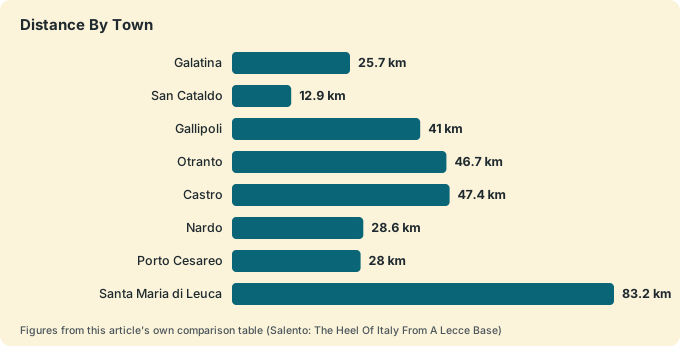
The four anchor towns are Otranto, Gallipoli, Santa Maria di Leuca and Galatina, at free-flow drive times of about 44, 41, 78 and 29 minutes from Piazza Sant'Oronzo respectively, with Castro, Nardo and Specchia as strong second-tier stops. Otranto and Gallipoli are on the coast, Leuca sits at the very tip of the heel, and Galatina holds the peninsula's finest frescoed basilica inland.
The table below gives the verified free-flow drive times and distances from Piazza Sant'Oronzo, computed from routing data. They are planning figures: summer traffic on the coastal roads can slow them considerably.
| Town | Distance | Drive time | Direction |
|---|---|---|---|
| Galatina | 25.7 km | 29 min | Inland south |
| San Cataldo | 12.9 km | 14 min | East, coast |
| Gallipoli | 41.0 km | 41 min | Southwest, Ionian |
| Otranto | 46.7 km | 44 min | Southeast, Adriatic |
| Castro | 47.4 km | 48 min | South, Adriatic |
| Nardo | 28.6 km | 29 min | Southwest, inland |
| Porto Cesareo | 28.0 km | 34 min | West, Ionian |
| Santa Maria di Leuca | 83.2 km | 78 min | Southern tip |
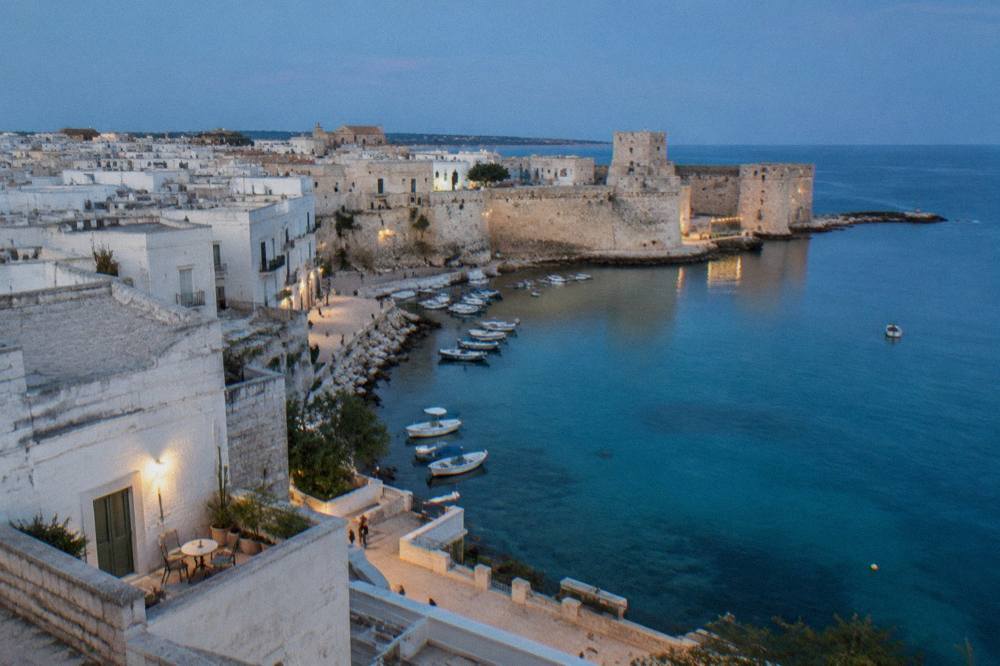
Otranto is the historic heavyweight. Its cathedral floor mosaic, laid between 1163 and 1165 by the priest Pantaleone, is one of the largest medieval mosaics in Europe, a tree of life spreading across the whole nave. The Diocese of Otranto's notice states that the cathedral is free for independent visitors, but since 1 March 2026 groups and visitors with a licensed guide pay 2 euro per person; the Museo Diocesano is 3 euro, San Pietro is 3 euro, and the combined cathedral, museum and San Pietro ticket is 5 euro. The Castello Aragonese runs seasonal tickets of about 6 euro in low season to about 12 euro in high season.
Gallipoli's old town stands on a limestone island joined to the mainland by a bridge, a fish-canals-and-golden-stone core that reads best in the late afternoon. The Castello di Gallipoli's ticket price is not published in the sources: confirm on arrival. Galatina, inland, holds the Basilica of Santa Caterina d'Alessandria, free to enter with split morning and afternoon hours, its walls covered in frescoes, and the town is also where the pasticciotto claim lives: Pasticceria Ascalone says it invented the custard pastry there in 1745, a date historians dispute, so treat it as the shop's own story. The drive out, with stops and a pasta lunch, is exactly what the related day trip below covers.
What Beaches And Coastline Does Salento Offer From Lecce?
Salento offers two distinct coasts within an hour of Lecce: the Adriatic side, with low cliffs, caves and sandy coves at San Cataldo, Torre dell'Orso and Otranto, and the Ionian side, with long shallow sandy beaches at Porto Cesareo, Punta Prosciutto and Pescoluse. Sea temperatures run about 22.5 C in June, 25 to 27 C at the August peak, 20 to 22 C in October and about 14 C in February, per seatemperature.org data.
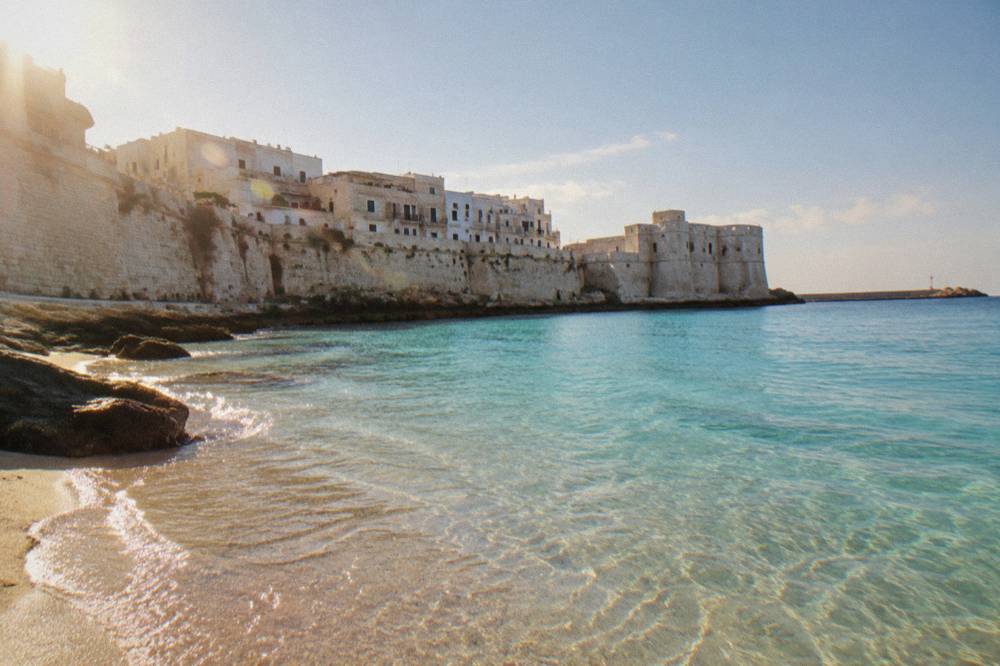
The nearest beach to Lecce is San Cataldo, about 13 km east on the Adriatic, reachable on SGM bus line 32 from the City Terminal in about 20 minutes. Going south on the same coast, Torre dell'Orso, about 32 minutes by car, sits among pine woods and the twin sandy inlets of the Due Sorelle rocks. At Roca Vecchia lies Grotta della Poesia, and here the rules changed: since summer 2026 bathing and diving are banned, and non-residents of Melendugno paid a 5 euro ticket in the 2026 season, viewing from paths only. The 2027 rules had not been announced; check locally before planning a swim.
On the Adriatic between Castro and Leuca, Grotta Zinzulusa in Castro is open for guided visits year-round at 7 euro full and 4 euro reduced, per the cave's own site. On the Ionian side, Pescoluse, billed as the "Maldives of Salento", holds a Blue Flag for 2026 with dunes and long fine sand, and Baia dei Turchi near Otranto is a protected pinewood bay where you park on the SP366, 4 to 8 euro per day in high season, and walk 10 to 15 minutes in. Lido prices in 2026, for an umbrella plus two beds per day, ran 15 to 25 euro at San Cataldo in June rising to 33 to 35 euro in August, and 25 to 35 euro rising to 50 to 60 euro at Torre dell'Orso and San Foca, per consumer-association surveys. More detail sits on the Salento beaches guide.
| Beach area | Coast | 2026 lido range (umbrella + 2 beds) |
|---|---|---|
| San Cataldo | Adriatic | 15-25 EUR June, 33-35 EUR August |
| Torre dell'Orso / San Foca | Adriatic | 25-35 EUR June, 50-60 EUR August |
| Otranto | Adriatic | 20-30 EUR low, 30-50 EUR high |
| Porto Cesareo / Gallipoli | Ionian | Higher, 40-70 EUR at peaks |
How Do You Get Around Salento Without A Car?
Without a car you get around Salento on FSE regional trains, the Salento in Bus summer network and local SGM buses: FSE runs direct Lecce-Gallipoli and Lecce-Galatina trains with a change at Maglie for Otranto, Salento in Bus ran 13 June to 13 September 2026 with lines 101, 104 and 107/108 from Lecce to the coasts at fares of 1.10 to 5 euro, and SGM covers the city and San Cataldo. A car helps for the inland villages and the southern tip.
Salento in Bus is the seasonal spine: run by Cotrap with provincial partners, it operated from 13 June to 13 September 2026, with full frequency from 1 July to 31 August. Line 101 served Lecce, Torre dell'Orso and Otranto; line 104 linked Lecce, Porto Cesareo and Gallipoli; lines 107 and 108 ran down to Santa Maria di Leuca. Fares are kilometre-based, 1.10 to 5 euro, bought through the Itineris platform or the operator's app, with a 1 euro surcharge on board and free travel for children under 10. The 2027 dates had not been announced: it is a summer-only service. The full picture, including night runs, is on the Salento in Bus guide and the general getting around Lecce page.
Off-season, the trains carry the load and the coastal buses thin out. Driving is the alternative: the roads are flat and quiet outside August, but Lecce's ZTL, the camera-policed limited traffic zone over the historic centre, is a trap for the unwary, and the car-rental questions, tolls and parking are covered in the driving guide. If you drive in from Bari or Rome, the rail legs are documented on the Bari to Lecce and Rome to Lecce pages.
What Food And Wine Is Salento Known For?
Salento's table is built on Negroamaro and Primitivo wines, pasticciotto and rustico pastries, iced coffee with almond milk, and pulse-and-pasta peasant dishes such as ciceri e tria, with Salice Salentino DOC, established in 1976 on a Negroamaro base across the Lecce and Brindisi provinces, as the flagship appellation. The signature drink is the caffe in ghiaccio con latte di mandorla, espresso over ice with almond milk syrup, credited to Antonio Quarta of Quarta Caffe in Lecce in the 1940s to 1950s.
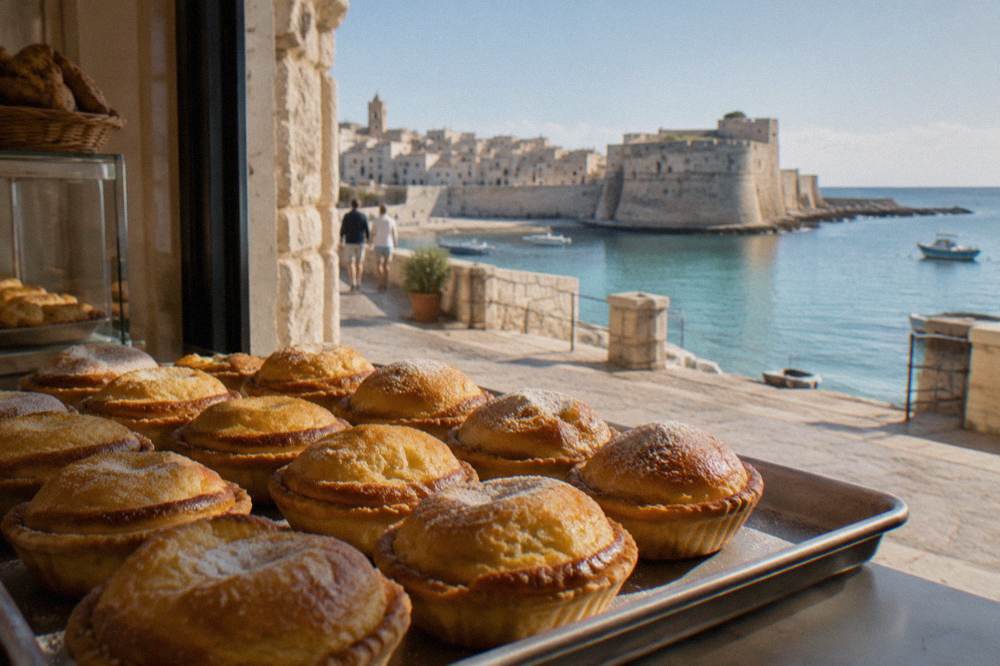
The pasticciotto, shortcrust filled with custard, carries the contested 1745 Galatina origin story above. The rustico leccese is the savoury sibling: puff pastry filled with bechamel, mozzarella and tomato, likely a late eighteenth or nineteenth-century invention rather than anything older. The iced coffee entered Italy's PAT traditional-products list around 2026. Long-standing institutions anchor the city scene: Caffe Alvino on Piazza Sant'Oronzo has roots to about 1880, and Pasticceria Natale has been family-run since 1978, with its "Santo Pasticciotto" listed at 2.20 euro. Bread is its own subject, covered on the frisa and puccia page, and the wider regional table on the Puglia food guide.
| Product | What it is | Status or figure |
|---|---|---|
| Salice Salentino DOC | Negroamaro-based red and rose, Lecce and Brindisi provinces | DOC since 1976 |
| Caffe in ghiaccio con latte di mandorla | Espresso over ice with almond milk syrup | Credited to Quarta Caffe, 1940s-1950s; PAT-listed around 2026 |
| Pasticciotto | Shortcrust custard pastry | 1745 Galatina claim, disputed |
| Santo Pasticciotto at Natale | Bakery version | 2.20 EUR listed |
| Rustico leccese | Puff pastry, bechamel, mozzarella, tomato | Origins uncertain, likely 18th-19th century |
Wine country sits on both flanks of the peninsula. Manduria, home of Primitivo di Manduria DOC, lies just over the provincial line towards Taranto, while the Negroamaro heartland runs from Salice Salentino down towards Gallipoli. Details on grapes, appellations and where to taste are gathered on the Salento wine guide, and a guided tasting in town is the low-effort version:
What Events Fill The Salento Summer Calendar?
Salento's summer runs on pizzica music and patronal feasts: the Notte della Taranta Concertone at Melpignano drew its 29th edition on 22 August 2026, Lecce's Festa dei Santi Patroni Oronzo, Giusto and Fortunato ran 23 to 26 August 2026, and the Festa di San Rocco at Torrepaduli ran 14 to 17 August 2026, while Lecce's Fiera dei Pupi papier-mache Christmas fair follows an early-to-24-December pattern. The 2027 dates had not been announced for any of them.
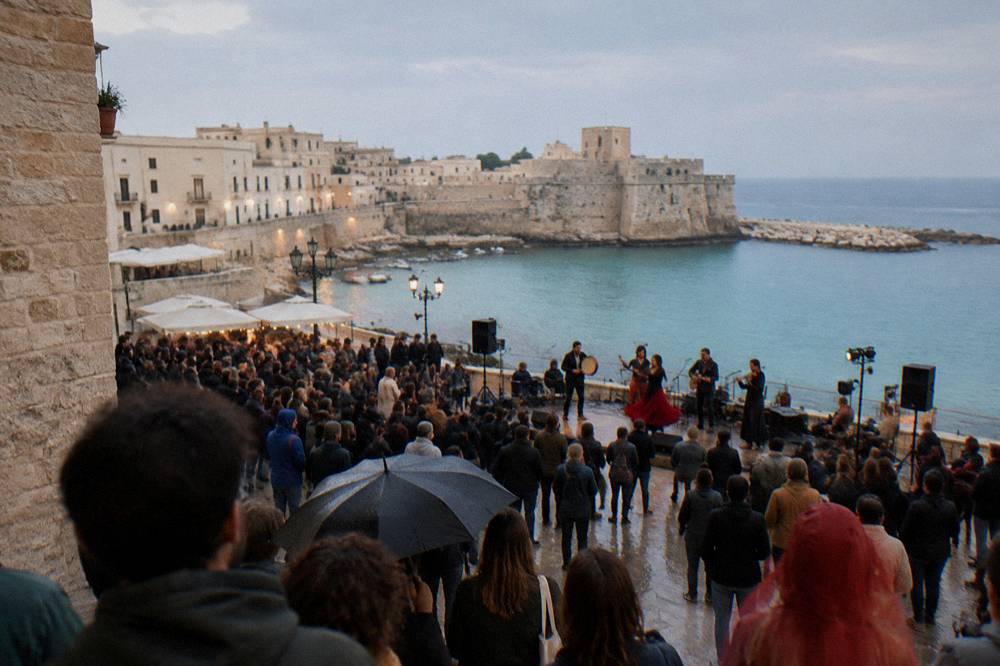
The Notte della Taranta is the peninsula's biggest single night: a tarantella-rooted concert in the small town of Melpignano, about half an hour inland from Lecce, closing weeks of touring concerts across Salento villages. The music and the tarantism culture behind it have their own explanation on the pizzica and tarantismo page. In Lecce itself, the patronal feast of Sant'Oronzo fills late August with processions, luminarie and concerts, per the comune's own programme. Torrepaduli's San Rocco feast is the folk version, famous for the night-time ronda and the pizzica-scherma dance duel.
| Event | Latest edition | 2027 status |
|---|---|---|
| Notte della Taranta, Melpignano | 22 August 2026, 29th edition | Not announced |
| Festa dei Santi Patroni, Lecce | 23 to 26 August 2026 | Not announced |
| Festa di San Rocco, Torrepaduli | 14 to 17 August 2026 | Not announced |
| Fiera dei Pupi, Lecce | Early to 24 December (2025 pattern) | Not published |
| Holy Week processions, Lecce | Follows the Easter calendar | Not announced |
Timing a trip around these dates needs the best time to visit Lecce guide, because August combines the festivals with peak lido prices and full buses. The climate record matters too: ERA5 reanalysis, 1991-2020, puts the mean daily high at about 31 C in July and 31.3 C in August, with November the wettest month at 93.7 mm and July the driest at 15.3 mm. The month-by-month breakdown is on the Lecce weather page.
| Month | Mean high C | Mean low C | Rain mm |
|---|---|---|---|
| May | 23.4 | 14.7 | 39.9 |
| June | 28.2 | 19.1 | 18.0 |
| July | 31.0 | 21.7 | 15.3 |
| August | 31.3 | 22.2 | 18.1 |
| September | 26.4 | 19.0 | 58.9 |
| October | 21.8 | 15.4 | 91.3 |
How Many Days Do You Need For Salento?
Salento needs at least four days from a Lecce base: one for Lecce itself, one each for the Adriatic coast with Otranto and the Ionian coast with Gallipoli, and one for the southern tip around Leuca or the inland villages like Specchia, with five or more days allowing beach time and a wine stop. Trying to compress the peninsula into a weekend leaves you with transport legs and little coastline.
The sequencing argument, day by day with routes, is made on the Salento itinerary page, and the broader regional version on the Puglia itinerary. The short answer to the pacing question is argued on how many days are needed for Salento. For the evenings, is it safe to walk around Salento at night covers the practicalities: the region reports low violent crime, with petty theft the main concern, in line with the sources on Lecce itself.
What Are The Hidden Corners Of Salento Beyond The Famous Names?
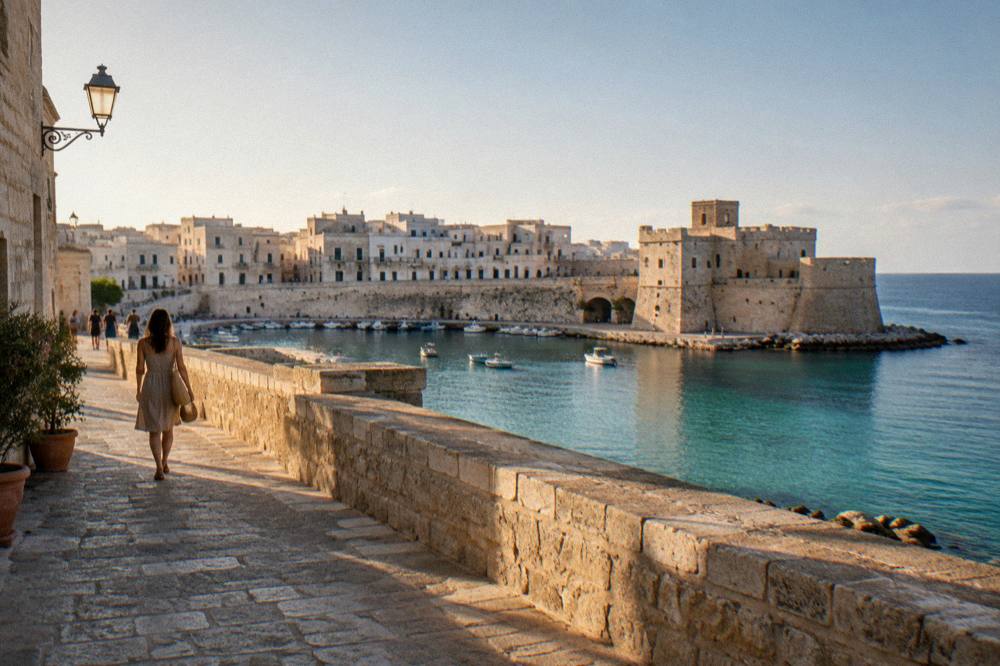
Beyond Otranto, Gallipoli and Leuca, Salento's quieter corners include Specchia, one of the inland borghi listed among Italy's small historic villages, Castro with its Zinzulusa cave and clifftop old town, the paperi-mache and stone villages around Galatina, and the Marine di Lecce, the city's own string of coastal frazioni from San Cataldo south. All sit inside a 50 km radius of Lecce and all are reachable by car in under an hour.
Specchia, about 29 minutes from Nardo and inland from the Ionian coast, is the inland pick, its stacked stone centre built for defense. The details are on the Specchia page, and the Ionian sands near it on the Pescoluse page. Leuca, where the basilica of Santa Maria de Finibus Terrae stands at the peninsula's tip with the lighthouse beside it, gets its own treatment on the Santa Maria di Leuca guide. Boat tours from Leuca to the sea caves were not found in the sources: confirm locally at the port.
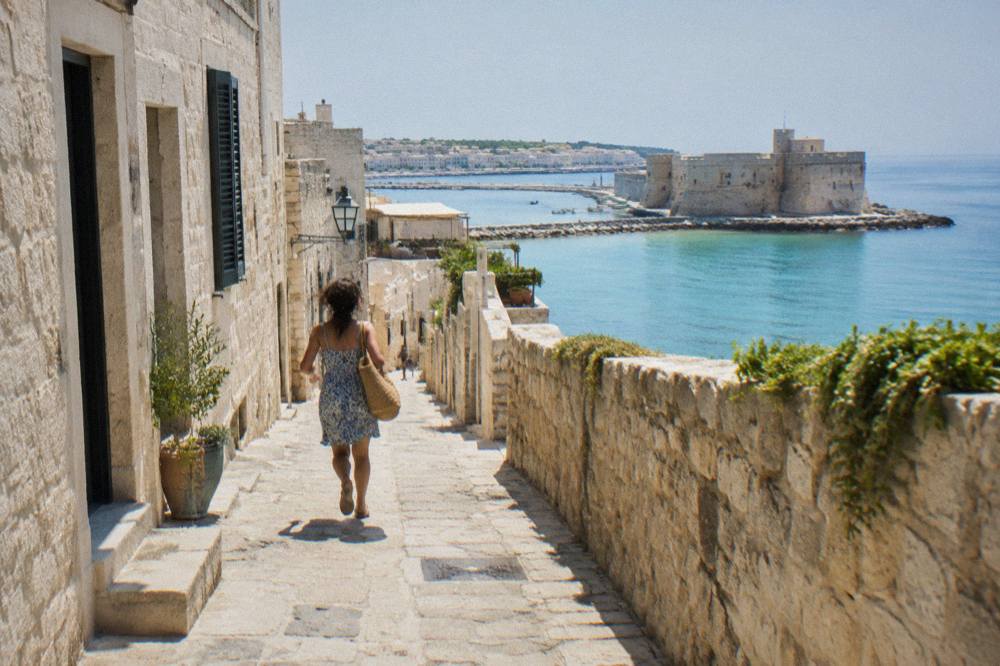
The e-bike option deserves a line of its own: the flat terrain and the olive-grove lanes between Lecce, Galatina and the coast make two wheels genuinely practical here, and a guided ride is one of the trio above. Check availability on the operator's live listing if that suits your pace. The same flatness, plus the offshore caves and snorkel stops of the Adriatic, explains why the boat and canoe trips around Leuca and San Foca are the other big product category; Check availability for the day-trip version if you want the whole peninsula handled.
Common Questions About Salento
Is Salento the same as Puglia?
No. Puglia (Apulia) is the whole region, running from the Gargano promontory down the Adriatic. Salento is its southern sub-region, the heel, covering the province of Lecce and parts of Brindisi and Taranto, with Lecce as its capital.
Do you need a car in Salento?
Not in summer if you base in Lecce: FSE trains reach Gallipoli, Galatina and Otranto (with a change at Maglie), and the Salento in Bus network, which ran 13 June to 13 September 2026, links Lecce to the main beaches and Leuca. A car helps for inland villages like Specchia and for the southern tip outside the summer window.
Which is the best side of Salento, Adriatic or Ionian?
They differ rather than rank. The Adriatic side has cliffs, caves and coves around Otranto, Castro and Torre dell'Orso; the Ionian side has long, shallow sandy beaches around Porto Cesareo, Punta Prosciutto and Pescoluse. Sea temperatures peak at 25 to 27 C in August on both.
How many days are needed for Salento?
Four days is a realistic minimum from a Lecce base: one for Lecce, one per coast, and one for the southern tip or the inland villages. Five or more lets you add beach days and a wine stop.
What is Salento famous for?
Lecce Baroque architecture in pietra leccese, the Notte della Taranta and pizzica music, Negroamaro and Primitivo wines, pasticciotto, and beaches on two seas within an hour of the regional capital.
When does Salento in Bus run?
It is a summer-only service: in 2026 it ran 13 June to 13 September, with full frequency from 1 July to 31 August. The 2027 dates had not been announced, so confirm before planning an off-season trip around it.
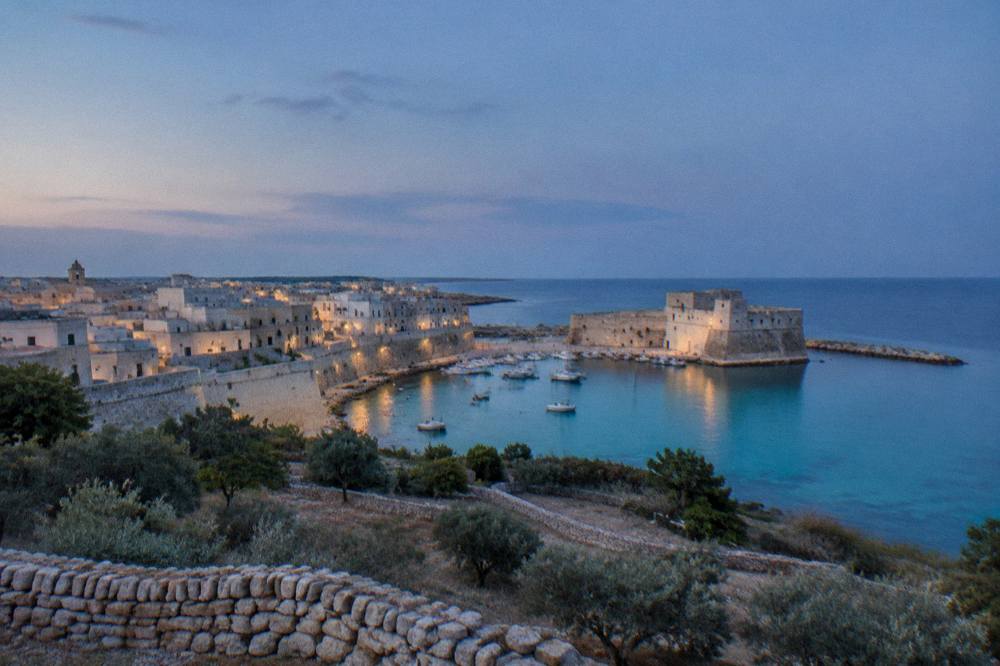
Salento rewards exactly the kind of trip Lecce makes easy: a baroque base city, two coastlines inside an hour, trains and seasonal buses instead of motorways, and a food and wine culture dense enough that the peninsula feels larger on the plate than it does on the map. Plan the days, book the few things worth booking, and let the flat roads do the rest.