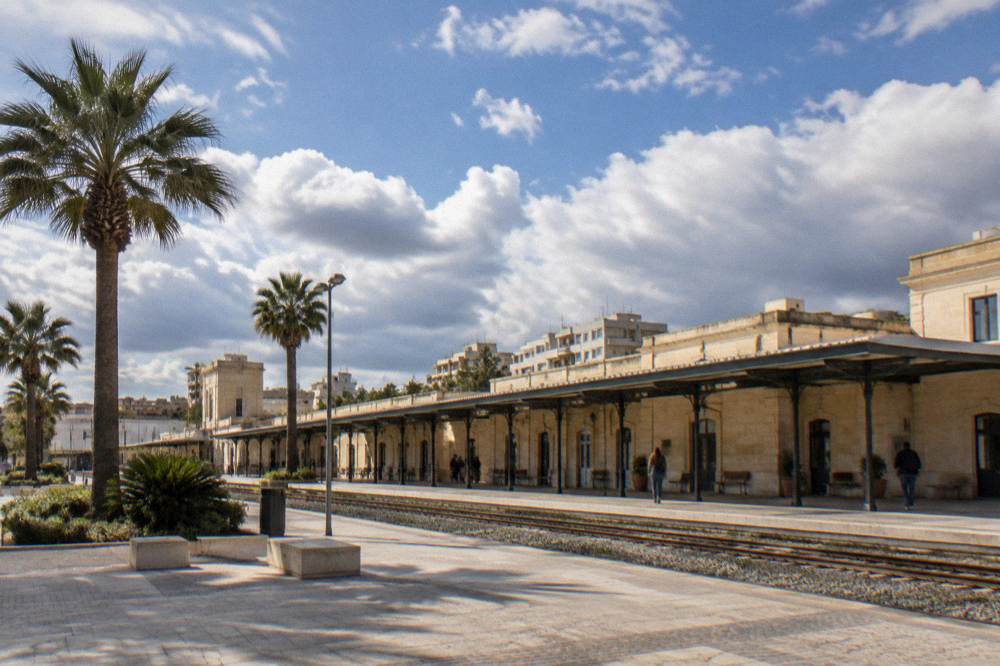
Rome To Lecce: Train, Flight Or Overnight Bus
Rome sits at the top of Italy and Lecce sits near the bottom of the heel, so the journey between them is a real one. Here is how the train, the flight via Brindisi, the bus and the car each handle it, with reported times and fares for every option.
Short answer
The direct Rome to Lecce train takes about 6 hours from about 32 euro, reported by rail booking services. Flying into Brindisi and taking the 6.50 euro Terravision bus cuts the travel time sharply but adds airport hours at both ends. Lecce itself has no airport, so every option ends on a road or a rail line into Puglia.
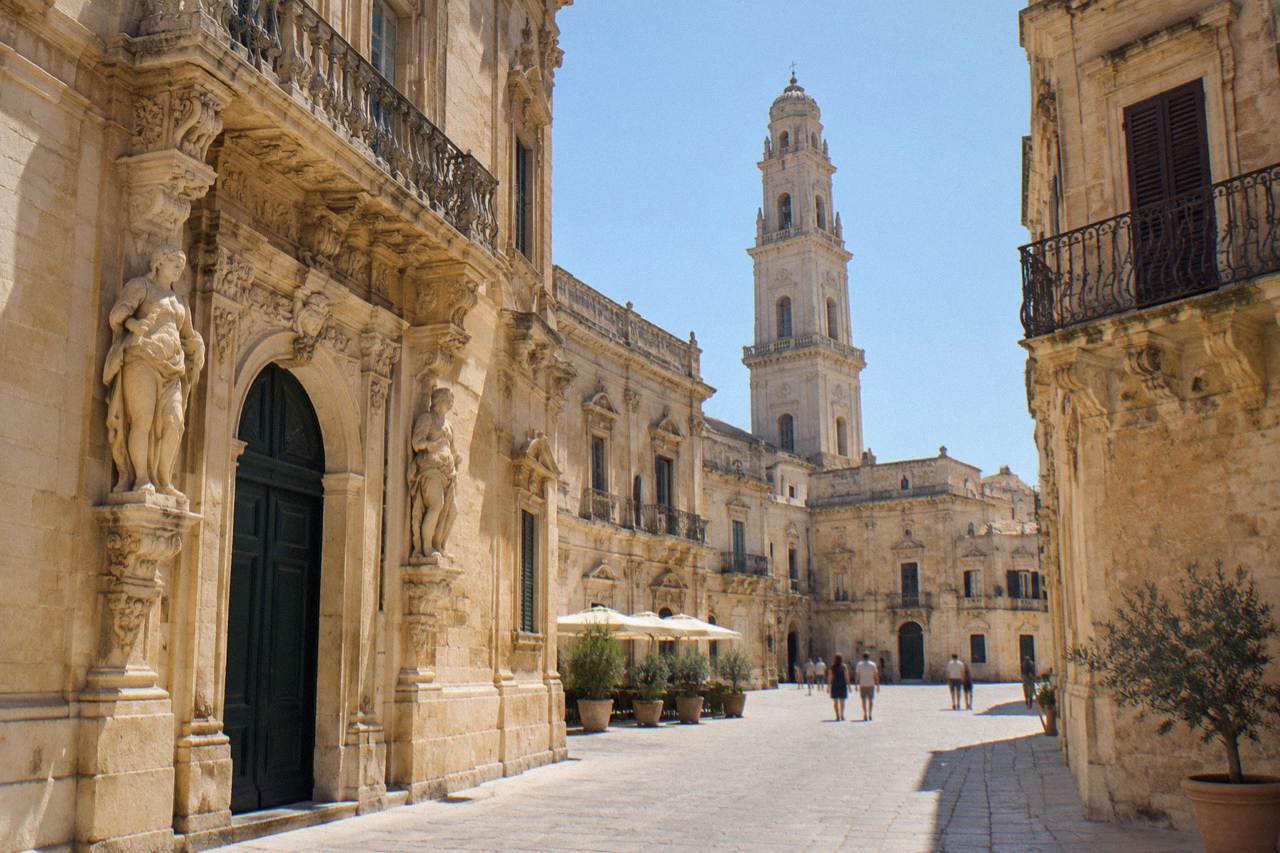
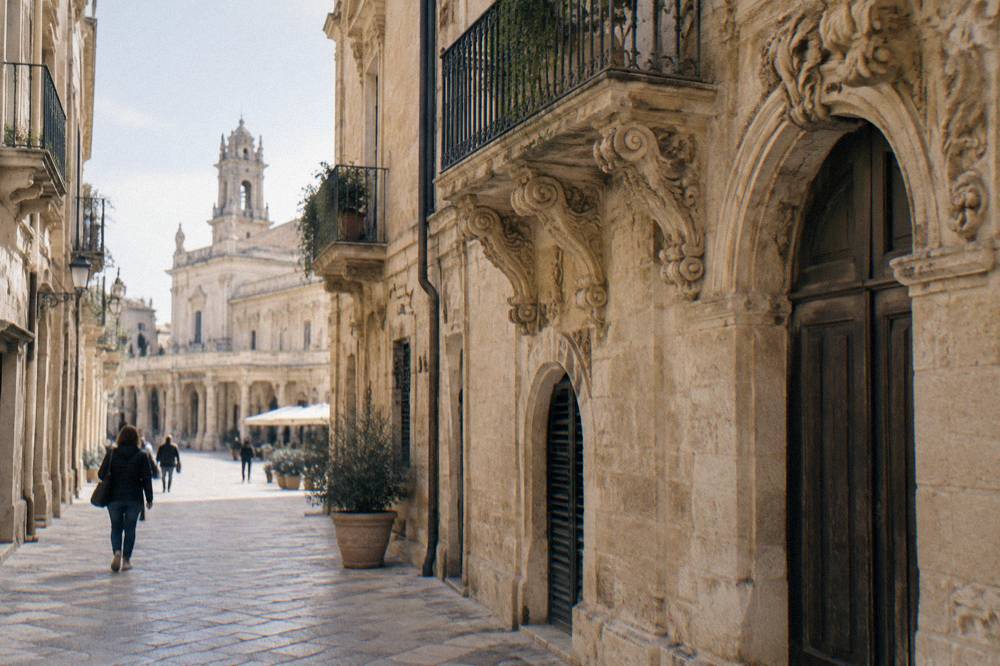
Lecce is the baroque capital of Salento, at the heel of Italy in Puglia, a honey-coloured old town built from pietra leccese limestone a few kilometres inland from the Adriatic. Reaching it from Rome means crossing most of the length of Italy, and there are three realistic ways to do it: a long direct train down the Adriatic coast, a flight into Brindisi followed by a short bus ride, or the road, driven in stages through Naples and Bari province. This guide compares all of them with the reported times and fares, then covers what happens once the train pulls in, because Lecce rewards arriving with a plan.
How Do You Get From Rome To Lecce?
There are three working routes from Rome to Lecce: the direct Trenitalia train, reported at about 5 hours 58 minutes to 6 hours 16 minutes with fares from about 32 euro; the flight to Brindisi followed by the Terravision bus at 6.50 euro one way, about 40 minutes; and the road, either driven in stages or ridden on a long-distance bus. Lecce itself has no commercial airport, so the plane always lands at Brindisi, 47.6 km and about 43 minutes by road from Piazza Sant'Oronzo.
The train is the option that needs the least explanation. Rome's Termini station and Lecce station sit on the same national network, and Trenitalia runs direct services between them, so there is no change to manage, no baggage belt to wait at and no airport transfer at either end. Rail booking services report the fastest direct journeys at just under six hours, with fares starting from about 32 euro and rising with the train class and how early the ticket is bought.
The flight is shorter in the air but longer in practice. Brindisi airport, coded BDS, is the gateway for the whole Salento peninsula, and the Terravision bus connects it to Lecce in about 40 minutes for 6.50 euro one way or 13 euro return, per the operator's own page. Add the transfer to Fiumicino or Ciampino, the security queue, the gate wait and the bus at the far end, and the door-to-door gap between flying and training narrows to something much smaller than the timetable suggests.
The road is the third option, and it is the one that turns the journey into part of the trip. Rome to Lecce by car means the A1 and A14 motorways, a long run south via Naples and then down the Adriatic coast through Bari province, passing Orvieto, the Gargano approaches and Puglia's olive country along the way. For a fuller picture of the arrival logistics, see Lecce Travel Guide's dedicated page on how to reach Lecce, which covers every direction of approach.
| Option | Reported journey time | Reported cost | Notes |
|---|---|---|---|
| Direct train, Rome Termini to Lecce | about 5 h 58 to 6 h 16 | from about 32 euro | GROK-sourced, Trainline and Trip.com; no changes |
| Flight to Brindisi plus Terravision bus | flight plus about 40 min bus | bus 6.50 euro one way, 13 return | bus fare VERIFIED on terravision.eu; flight fare not sourced here |
| Long-distance bus, Rome to Lecce | not sourced for this pair | not sourced | confirm with the operator |
| Car, Rome to Lecce | long motorway run, A1 then A14; no sourced time | fuel and tolls, not sourced | via Naples and Bari province |
What Is The Rome To Lecce Train Like?
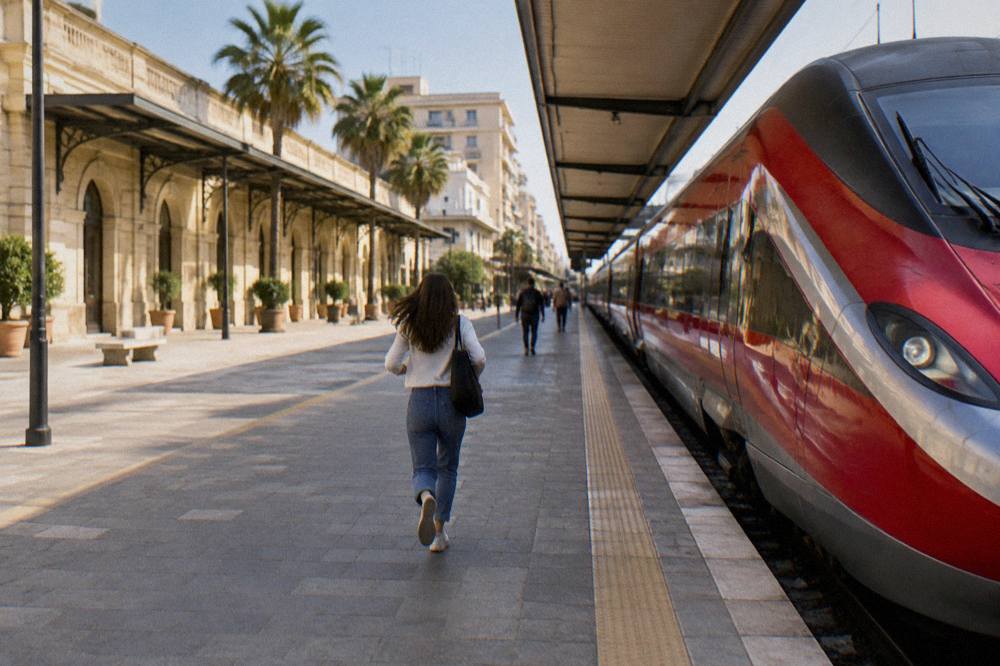
The direct train is a single-seat ride of just under six hours, reported by rail booking services at 5 hours 58 minutes to 6 hours 16 minutes, departing Rome Termini and running down the Adriatic coast through Foggia and Bari before ending at Lecce station. Fares are reported from about 32 euro. The train is the only option that puts a traveller inside Lecce's historic centre on foot within minutes of arrival, with no transfer to arrange.
Six hours sounds long, and it is longer than Rome to Florence or Naples, but the route is straightforward and the trains are the same Frecciarossa and Intercity stock used across the country. Booking services report several direct departures across the day, with the fastest runs just under the six-hour mark and slower services taking somewhat longer. The fare spread matters too: the from-about-32-euro figure is the floor, and flexible or last-minute tickets on the fast trains cost more, so the price a reader actually pays depends on when they book and how rigid their plans are.
The practical advice is to book early, pick a direct departure, and treat the journey as a coast-hugging preview of Puglia. The train passes through Foggia and Bari province, and the last stretch from Bari into Lecce runs through olive country and small Salento towns. Reserve a seat, because these are long-distance services that fill up in summer, and bring something to read: the last hour is pretty, but the first three are motorway-adjacent.
One thing the train does not do is require any thinking at the far end. Lecce station sits at the edge of the historic centre, and the walk from the platform to Piazza Sant'Oronzo takes minutes, not hours. The station itself has its own guide at Lecce train station explained, covering facilities, luggage storage and the walk into the old town.
How Much Does The Rome To Lecce Train Cost, And When Should You Book?
Reported fares for the direct Rome to Lecce train start from about 32 euro, per rail booking services including Trainline and Trip.com, with the price rising for flexible tickets and for the fastest trains booked close to departure. There is no single fixed fare: the figure is a floor, not a quote, and the same journey can cost several times that on a same-day booking. Booking weeks ahead and accepting a fixed train is what keeps the price near the floor.
The fare structure follows the national pattern. Fast long-distance trains in Italy use dynamic pricing, so the from-price belongs to early, non-flexible bookings on less popular departures. Regional connections cost flat, low fares instead, which matters for anyone building a route with changes. For this specific pair, though, the direct train is the normal choice, and the reported range of about 32 euro upward is the honest way to describe it.
A few booking habits keep the cost down. Book as soon as the dates are fixed, because Italian long-distance fares climb as the train fills. Avoid the Friday and Sunday peak around Italian holidays if the dates are flexible. And check whether the slower direct departures are meaningfully cheaper than the fastest ones, because an extra twenty minutes on a six-hour ride is a small price for a lower fare.
| Booking approach | Reported effect on the Rome to Lecce fare | Source note |
|---|---|---|
| Weeks ahead, fixed train | near the from-about-32-euro floor | GROK, Trainline and Trip.com |
| Flexible ticket, fast train | higher, not sourced as a figure | same services, dynamic pricing |
| Same-day purchase | higher still, not sourced as a figure | same |
| Slower direct departure | sometimes cheaper than the fastest run | same |
The train also avoids the hidden costs the other modes carry. No airport transfer at either end, no baggage fee, no bus ticket from Brindisi. When the comparison is honest about the hours spent getting to and from airports, the train is often the cheaper as well as the simpler choice, especially for anyone starting from central Rome rather than from a connecting flight.
Is Flying To Brindisi Faster Than Taking The Train?
Flying to Brindisi is faster in the air but not dramatically faster door to door. The flight lands at BDS, which sits 39 km in a straight line from Lecce, and the Terravision airport bus covers the road in about 40 minutes for 6.50 euro one way or 13 euro return, per the operator's verified page. Add the transfer to a Rome airport, security and boarding, and the total travel time lands close to the train's, with more failure points along the way.
The arithmetic is the thing to see clearly. The train is about six hours from station to station, and both stations are where a traveller actually wants to be. The flight is about an hour in the air, but the full chain is: getting to Fiumicino or Ciampino, arriving two hours before departure, the flight itself, baggage, then the bus into Lecce. Each link adds time and each can go wrong, where the train is one continuous link.
Where flying genuinely wins is on cost, sometimes, and on schedule for anyone who hates long rail journeys. Rome to Brindisi is a short domestic hop served by the national carrier and its low-cost competitors, and promotional fares can undercut the train. The catch is that the low fares come with baggage restrictions, and the bus from Brindisi airport is a separate ticket on top. Taxi and private-transfer fares from the airport were not verified for this site, so readers should confirm any door-to-door price directly at booking.
The airport bus deserves its own word. Terravision's page, which this site verified, lists the Lecce service at 6.50 euro one way and 13 euro return, with a journey of about 40 minutes, and the operator advises checking the day's schedule before travelling. The full arrival walkthrough, including what to do at the airport and how the bus connects with the city, lives at Brindisi airport to Lecce.
Can You Take A Long-Distance Bus From Rome To Lecce?
Long-distance buses do run the length of Italy, and operators such as Itabus, FlixBus and Miccolis serve routes into Puglia, with a reported Lecce to Matera bus journey of about 3 h 30 to 4 h 10 costing about 11 to 37 euro. No Rome to Lecce bus time or fare was sourced for this page, so readers should confirm the specific pair with the operator. The bus is the budget option in principle, but on a route this long it trades hours for euros.
What the sources do support is the shape of the network. The same operators that run Salento routes also run national long-distance services, and the reported Matera figures show what these journeys look like: three and a half to four hours for a neighbouring destination, at fares from about 11 euro. Rome to Lecce is a much longer run than Lecce to Matera, so a bus journey would be a long sit, likely with stops, and likely overnight or early morning on both ends.
The honest framing is that the bus is for travellers whose priority is the fare rather than the day. A six-hour train with a seat is one thing; a bus ride considerably longer than that, on a route where no timetable was sourced here, is a different proposition entirely. Anyone considering it should check the operator's own site for the current Rome to Lecce schedule, the departure points in Rome and the arrival point in Lecce.
For travellers already in Puglia rather than coming from Rome, the regional picture is well covered elsewhere on this site, including the Salento in Bus summer network and getting around Lecce without a car.
Should You Drive From Rome To Lecce?
Driving from Rome to Lecce means the A1 and A14 motorways, a long run south past Naples and down the Adriatic coast through Bari province. No door-to-door drive time for the full Rome to Lecce route was sourced for this page, so readers should plan with a routing service. The case for driving is the itinerary, not the speed: the road passes Orvieto, Matera and dozens of Puglian towns worth stopping in.
The trade-off is simple. A car turns the transfer into a road trip, with Matera reachable by bus from Lecce in about 3 h 30 to 4 h 10 for about 11 to 37 euro, per Itabus and the other operators, if the driver would rather not take the wheel for that leg. Matera is in Basilicata, a different region from Puglia, and the two cities pair naturally on one itinerary. Ostuni, Alberobello and Polignano a Mare all sit on or near the coastal route north of Bari, and the train also serves them: Ostuni is about 39 to 51 minutes from Lecce, direct, from about 7 euro, and Polignano a Mare about 1 h 09 to 1 h 21, per rail booking services.
The case against driving is the arrival. Lecce's historic centre is covered by a camera-policed ZTL, a limited traffic zone, active on weekdays and around the clock on Sundays and holidays, with fines reported from 83 to 332 euro. Visitors staying inside the zone need their accommodation to register the plate, and everyone else needs to park outside and walk in. The full rules, the reported camera hours and the parking options are covered at car rental and driving in Lecce.
| Leg of the drive | Reported figure | Source note |
|---|---|---|
| Rome to Lecce, full route | long motorway run, A1 then A14 | route description; no sourced time |
| Lecce to Matera by bus | about 3 h 30 to 4 h 10, about 11 to 37 euro | GROK, Itabus and FlixBus |
| Lecce to Ostuni by train | about 39 to 51 min, from about 7 euro | GROK, Trainline |
| Lecce to Polignano a Mare by train | about 1 h 09 to 1 h 21 | GROK, Trainline |
| Lecce ZTL fine, if entered without permit | 83 to 332 euro reported | GROK, comune ordinances |
Where Does The Train Arrive, And What Is Lecce Station Like?
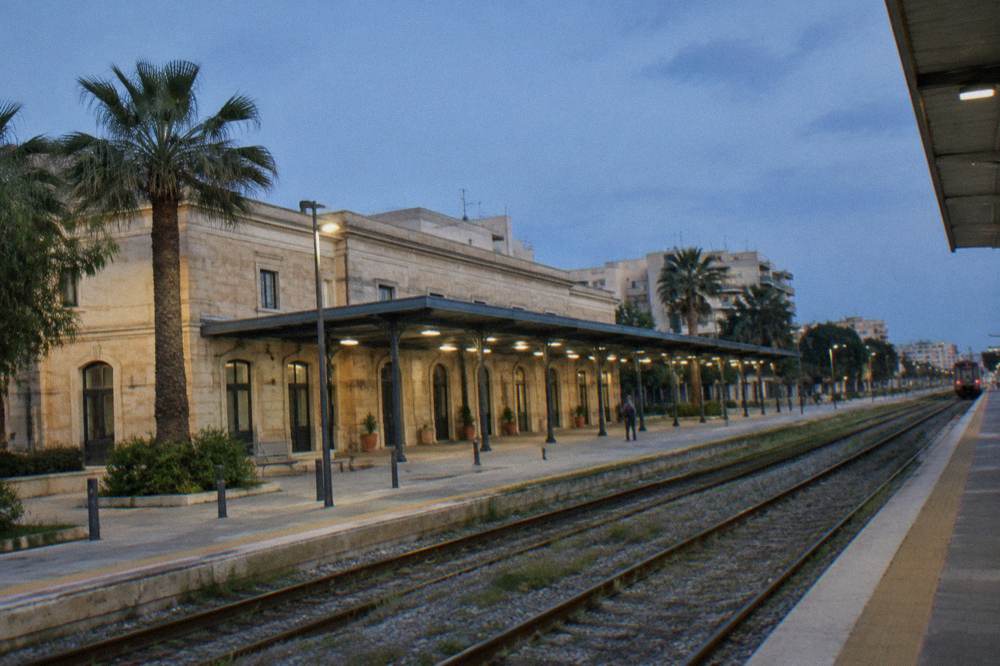
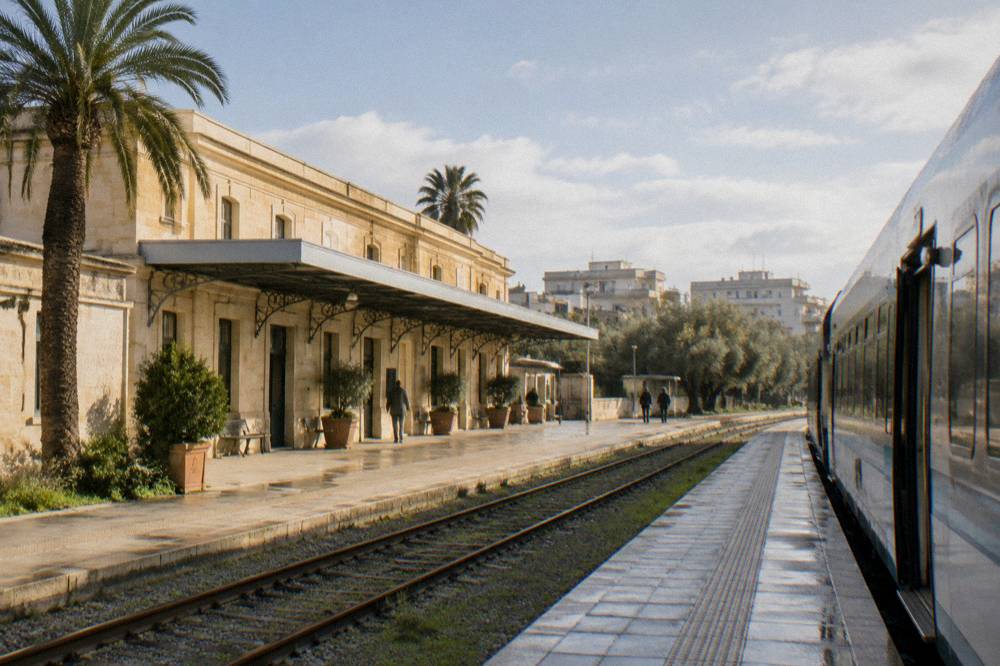
The train arrives at Lecce station, on the Trenitalia network and also the base of the Ferrovie del Sud Est (FSE) local lines, at the edge of the historic centre. It is a terminus for the long-distance services from Rome and the north, and the departure point for the FSE trains to Gallipoli, Galatina and, with a change at Maglie, Otranto. Piazza Sant'Oronzo, the heart of the old town, is a short walk from the platforms.
The station's position is its best feature. The old town begins a short walk from the platforms, and Piazza Sant'Oronzo, the living room of the city, is reachable on foot without crossing anything worse than a normal Italian street. That walkability is one of Lecce's genuine strengths as a destination, and it is why arriving by train beats arriving by plane for anyone without a tight schedule: there is no last mile to solve.
The station also handles the regional network. FSE, Ferrovie del Sud Est, runs the Salento lines out of Lecce, with reported journeys of about 1 h 18 to 1 h 43 to Gallipoli from about 5 euro, about 38 to 55 minutes to Galatina from about 3 euro, and about 1 h 33 to 2 h or more to Otranto with the change at Maglie. FSE fares in 2026 run from 1.30 euro for a 1 to 10 km journey up to 5.40 euro for 51 to 60 km, per the operator's tariff. These are the trains that make Lecce work as a base: a traveller can stay in the city and reach Gallipoli's island old town or Galatina's basilica for a few euro each way, without a car and without a tour bus.
Luggage is solvable too. App-based storage networks operate near the station at roughly 2.50 to 3.50 euro per day, per the operators' listings, which matters on departure day when the train back to Rome leaves in the evening and the checkout was in the morning. The station's facilities, the walk into the centre and the onward connections are all covered in the site's Lecce train station guide.
What About Coming From Naples Or Bari Instead?
Travellers starting in Naples rather than Rome face a different problem: no direct Naples to Lecce journey time was sourced for this page, so the honest answer is that it means changing trains and checking a national planner for the connection. From Bari the picture is firmer: Lecce to Bari Centrale runs about 1 h 19 to 1 h 24 on the fastest trains, with regional fares about 9 to 13 euro and fast trains about 18 to 24 euro, per rail booking services.
The Naples route matters because many Italy itineraries run Rome, Naples, then south, and Lecce sits at the end of that line. What the sources support is only the shape: Naples is north-west of Bari, the rail route to Lecce runs through Bari province, and a change is involved. Anyone building that leg should treat the connection time as a planning question for Trenitalia's own planner rather than a figure to be quoted here, because none was sourced.
Bari is the better-documented hub. The city is about 1 h 20 from Lecce on the fast trains, and Bari airport, a separate option from Brindisi, connects to Lecce by a short airport train into Bari Centrale followed by the mainline south. For anyone weighing the two airports, Brindisi is the closer gateway to Lecce by a wide margin, and the comparison of both arrival routes, with the reported figures, is laid out at Bari to Lecce.
| Route | Reported journey | Reported fare | Source note |
|---|---|---|---|
| Lecce to Brindisi by train | about 18 to 24 min | from about 3.40 euro | GROK, Rome2Rio |
| Lecce to Bari Centrale | about 1 h 19 to 1 h 24 fastest | regional 9 to 13, fast 18 to 24 euro | GROK, Trainline and Trip.com |
| Lecce to Ostuni | about 39 to 51 min, direct | from about 7 euro | GROK, Trainline |
| Lecce to Polignano a Mare | about 1 h 09 to 1 h 21, direct | not sourced | GROK, Trainline |
| Lecce to Alberobello | about 2 h 30 to 3 h or more, with a change onto FSE | not sourced | GROK, Omio |
| Naples to Lecce | no sourced time | no sourced fare | confirm with a national planner |
Do You Need A Car Once You Are In Lecce?
A car is not needed for Lecce itself, because the historic centre is compact and walkable, the station sits at its edge, and the FSE rail lines plus the summer Salento in Bus network reach the main coastal towns. FSE trains run direct to Gallipoli in about 1 h 18 to 1 h 43 from about 5 euro, and summer buses connect Lecce to Otranto, Porto Cesareo, Gallipoli and Leuca. A car earns its keep only for the scattered inland villages and flexible beach days.
The walkability claim deserves its evidence. The old town is a tight grid of baroque squares and lanes, entirely navigable on foot, with the Duomo, Santa Croce, the Roman amphitheatre and the Castello all within minutes of each other. The ZTL cameras make driving inside the centre actively unpleasant anyway, and the city's SGM buses, with a 60-minute ticket at about 1.20 euro and a day ticket at about 3 euro per the operator's tariffs, cover the rest.
The coast is where the question gets real. San Cataldo, the nearest beach, is about 13 km away, reachable on SGM line 32 from the City Terminal in about 20 minutes. Beyond that, the Salento in Bus summer network ran 13 June to 13 September 2026, with the peak from 1 July to 31 August, on lines including 101 (Lecce, Torre dell'Orso, Otranto), 104 (Lecce, Porto Cesareo, Gallipoli) and 107 and 108 (Leuca), at fares from 1.10 to 5 euro plus a 1 euro surcharge bought on board, children under 10 free, per Cotrap's own service pages. The 2027 dates had not been published, so summer travellers should check Cotrap each spring.
Off season, the calculus changes. Salento in Bus is a summer service, and the FSE trains, which run year-round, become the main car-free option for Gallipoli, Galatina and Otranto. For the full picture, including the beaches themselves, see the beaches near Lecce and the wider Salento beaches guide.
| Salento in Bus line 2026 | Route | Fare basis |
|---|---|---|
| 101 | Lecce, Torre dell'Orso, Otranto | 1.10 to 5 euro by distance, +1 euro on board |
| 104 | Lecce, Porto Cesareo, Gallipoli | same |
| 107 | Lecce towards Santa Maria di Leuca | same |
| 108 | Lecce towards Leuca | same |
| Season | 13 June to 13 September 2026, peak 1 July to 31 August | children under 10 free |
When Is The Best Time Of Year To Make This Journey?
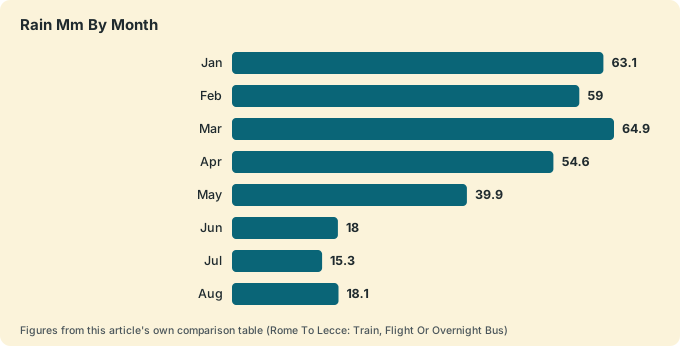
The journey itself is easiest in spring and autumn, when the ERA5 reanalysis, 1991-2020, shows mean highs of 18.6 C in April and 21.8 C in October, but the destination is at its liveliest in summer, with mean highs of 31.3 C in August and the lowest monthly rainfall, 15.3 mm, in July. November carries the highest monthly rain total, 93.7 mm. The right month depends on whether the trip is for the coast or for the city.
The climate numbers come from the ERA5 reanalysis for a modelled grid cell near Lecce at about 48 m elevation, covering 1991 to 2020, and they describe a Mediterranean pattern: hot, dry summers and mild, damp winters. Summer is the season the region is famous for, with the sea reported at about 22.5 C in June and 25 to 27 C at the August peak, and the beaches and the festival calendar at full volume. The Notte della Taranta Concertone in Melpignano ran on 22 August 2026 in its 29th edition, and Lecce's own Festa dei Santi Patroni ran 23 to 26 August 2026, both annual fixtures of the Salento summer.
| Month | Mean high C | Mean low C | Rain mm |
|---|---|---|---|
| Jan | 12.4 | 6.7 | 63.1 |
| Feb | 13.0 | 6.8 | 59.0 |
| Mar | 15.4 | 8.3 | 64.9 |
| Apr | 18.6 | 10.7 | 54.6 |
| May | 23.4 | 14.7 | 39.9 |
| Jun | 28.2 | 19.1 | 18.0 |
| Jul | 31.0 | 21.7 | 15.3 |
| Aug | 31.3 | 22.2 | 18.1 |
| Sep | 26.4 | 19.0 | 58.9 |
| Oct | 21.8 | 15.4 | 91.3 |
| Nov | 17.3 | 11.7 | 93.7 |
| Dec | 13.5 | 8.2 | 75.5 |
For the train journey specifically, summer brings two complications worth planning around. The first is crowding: August is the month Italians migrate south, and the direct trains fill. The second is heat, because a mean high of 31.3 C in August is manageable on an air-conditioned Frecciarossa but less so on a delayed regional connection. October and April trade the beach weather for empty seats, cool platforms and a city that is entirely itself, with mean highs around 20 C and the winter church hours, 9:00 to 18:00 per the LeccEcclesiae ticket, in force.
The seasonal detail, month by month, is its own subject, and it is covered at the best time to visit Lecce and the Lecce weather guide.
What Should You Actually Do Once The Train Pulls In?
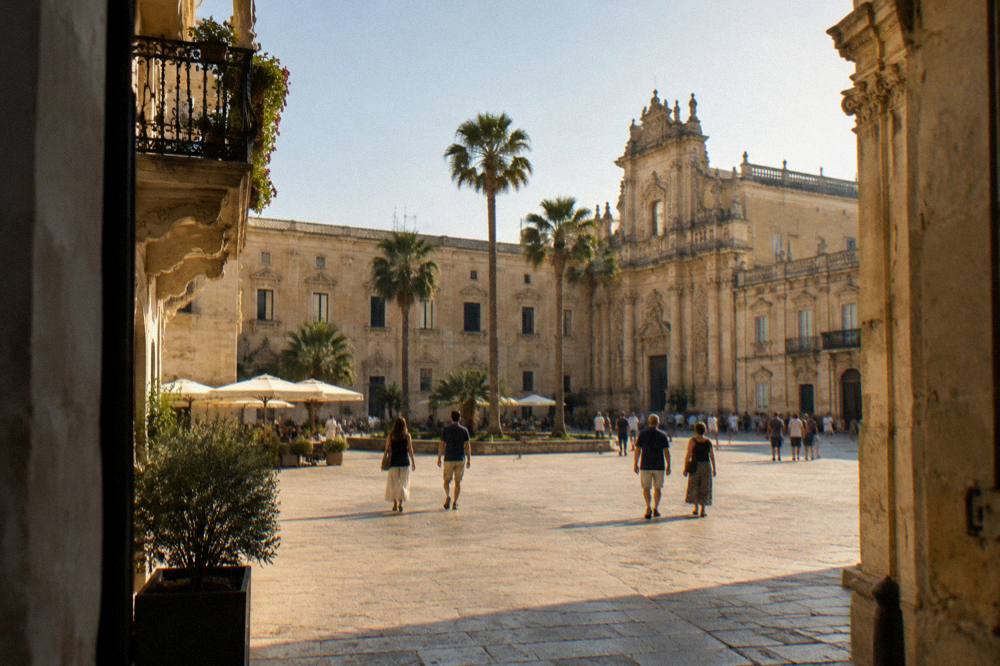
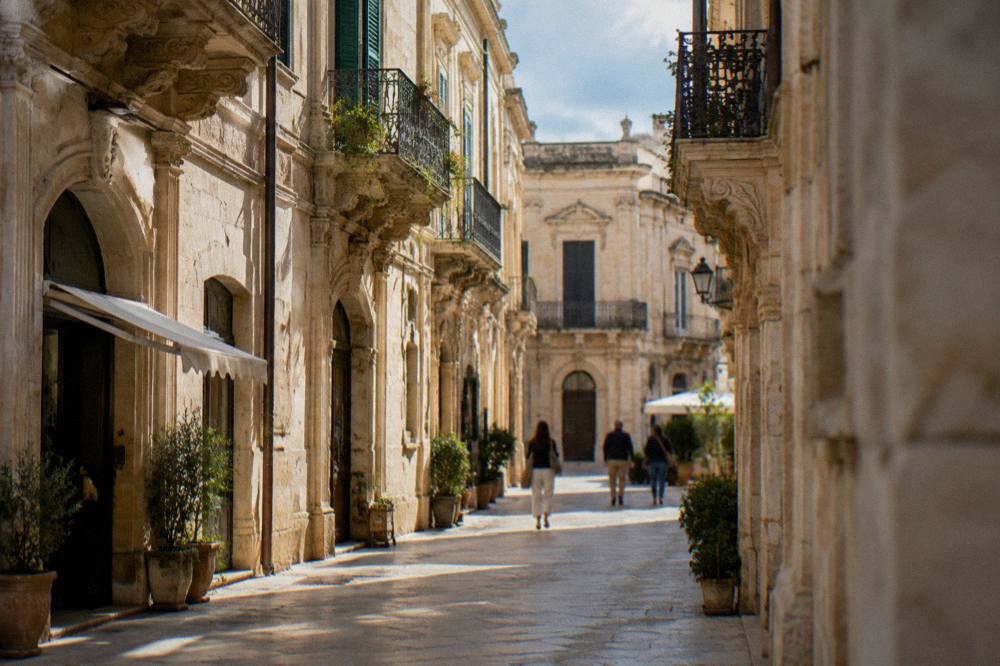
The first afternoon belongs to the old town on foot: Piazza Sant'Oronzo, where the Roman amphitheatre is visible from street level, the Duomo and its enclosed piazza, and the Basilica di Santa Croce facade, all within a compact walk of the station. The LeccEcclesiae combined ticket, 11 euro standard or 21 euro with the bell tower, valid 15 days, covers the Duomo and crypt, Santa Croce, San Matteo, Santa Chiara and the Antico Seminario with MuDAS, per the official chieselecce.it pages, and children under 12 enter free.
The combined ticket is the single most useful purchase a first-time visitor can make, because it bundles the churches that define Lecce Baroque into one pass with a 15-day validity, long enough to cover a week's stay with room to revisit a favourite. The winter hours, daily 9:00 to 18:00 from October, with last entry 15 minutes before close, apply across all the sites, and visits pause during services, so a Sunday arrival means checking the calendar rather than assuming access.
The secular sights round out the first day. The Castello Carlo V interior is by guided tour only, 10 euro full and 6 euro reduced, with the courtyard free, per the castle's own page. Museo Faggiano, the layered underground house museum, is 5 euro, open daily 9:30 to 20:00. The Roman amphitheatre in Piazza Sant'Oronzo is visible free from the square and visitable in its own right in the reopened section, at 5 euro full and 2 reduced, per the regional museums' pages, after a restoration project budgeted at 1,500,000 euro.
A guided walk is the efficient way to absorb all of this on day one, and the small-group history and local stories tour, Check availability, is the site's featured pick for exactly that job. The fuller menu of the city, sight by sight, is at things to do in Lecce, and the food side of the arrival, pasticciotto first and the iced coffee with almond milk second, starts at what to eat in Lecce.
Where Should You Stay On Arrival Night?
Stay inside or immediately beside the historic centre, because the station sits at its edge and every arrival day is better without a commute. Lecce's tourist tax is collected by the accommodation, per person per night, with the top reported rate at 5 euro for a 5-star property in high season and lower rates by category, per the comune's tariff page, so confirm the exact amount at booking. No nightly hotel rate was sourced for this page, so none is quoted.
The tax detail is the one worth knowing before check-in. The comune's schedule, updated from 1 April 2026, sets the rate by accommodation category and season, topping out at 5 euro per person per night in the highest category in high season, with short-let properties at 2.50 euro high season and 1.50 low. It is collected by the property, added to the bill, and it varies, so the number to ask about at booking is the specific rate for that property on those nights.
Location is the other decision. The centre inside the ZTL means the accommodation registers the car plate if a car is involved, and everything is walkable. Outside the centre, between the station and the old town, means cheaper rooms and a slightly longer walk, on flat streets with the station close for day trips. The neighbourhoods, the trade-offs and the practicalities are all laid out at where to stay in Lecce.
Common Questions About Traveling From Rome To Lecce
How long is the Rome to Lecce train?
The direct train is reported at about 5 hours 58 minutes to 6 hours 16 minutes, per rail booking services including Trainline and Trip.com, with fares from about 32 euro. Slower direct departures also run, so the exact time depends on the service chosen.
Is it better to fly or take the train from Rome to Lecce?
Lecce has no commercial airport, so flying means landing at Brindisi and taking the Terravision bus, 6.50 euro one way and about 40 minutes, per the operator's verified page. Door to door the two options are closer than the raw times suggest, and the train avoids transfers at both ends.
Where does the train from Rome arrive in Lecce?
At Lecce station, on the Trenitalia network, at the edge of the historic centre. The old town and Piazza Sant'Oronzo are a short walk from the platforms, and the station is also the base of the FSE local lines to Gallipoli, Galatina and, with a change at Maglie, Otranto.
Can you get from Lecce to the coast without a car?
Yes. FSE trains run direct to Gallipoli in about 1 h 18 to 1 h 43 from about 5 euro, and the summer Salento in Bus network ran 13 June to 13 September 2026 on lines 101, 104, 107 and 108 to Otranto, Porto Cesareo, Gallipoli and Leuca, at fares from 1.10 to 5 euro. Off season, check the FSE timetable and confirm locally.
What is the best month to travel from Rome to Lecce?
For the city alone, spring and autumn, with ERA5 reanalysis 1991-2020 mean highs of 18.6 C in April and 21.8 C in October and far fewer crowds. For the beach calendar, July and August, with a mean high of 31.3 C in August and the lowest monthly rainfall, 15.3 mm, in July, though the August trains fill.
Do you need to book the Rome to Lecce train in advance?
Booking early is what keeps the fare near the reported floor of about 32 euro, because Italian long-distance pricing rises as trains fill. A fixed, non-flexible ticket on a chosen departure is the cheapest way to make the journey.
The journey from Rome to Lecce is a real one, six hours by rail or a flight plus a bus, but it ends in one of the most rewarding small cities in southern Italy, and every option on this page delivers a traveller to the same place: the edge of a baroque old town that takes care of itself from the first step outside the station.