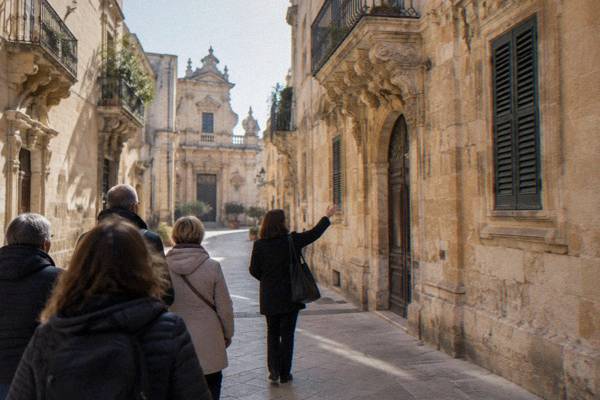
Lecce Weather By Month: Temperatures, Rain And Sea
Lecce sits a few kilometres inland on the Salento peninsula in Puglia, and its weather follows a classic Mediterranean pattern: hot, dry summers, mild and damp winters, and rain that concentrates hard into late autumn. Here is what the climate data actually says, month by month.
Short answer
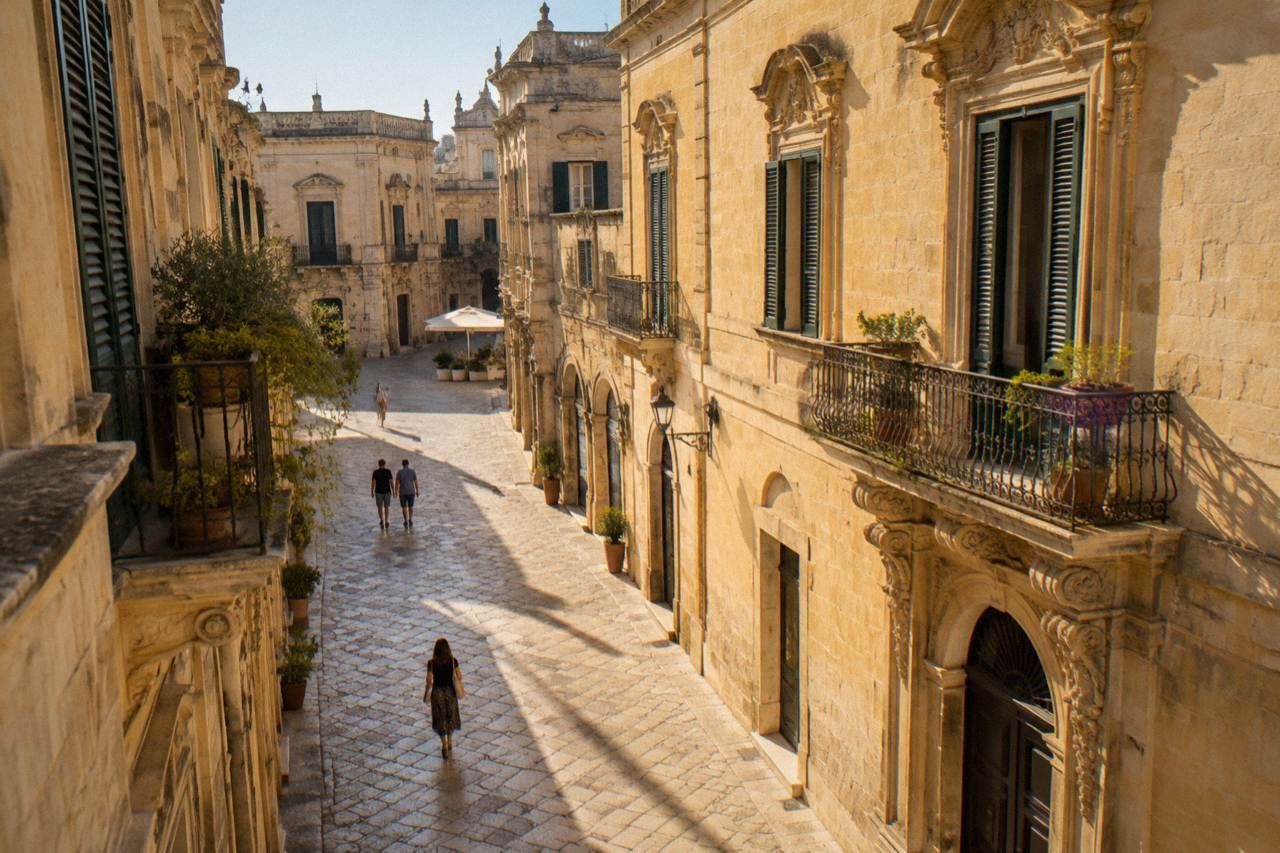
The ERA5 reanalysis for Lecce, 1991-2020, puts mean daily highs between 12.4 C in January and 31.3 C in August, with about 652 mm of rain across the year. November is the wettest month at 93.7 mm and July the driest at 15.3 mm. The sea reaches 25 to 27 C at the August peak.
Lecce, the baroque capital of Salento in Puglia, southern Italy, sits a few kilometres inland from its nearest beach at San Cataldo, about 13 km east, with the Adriatic on one side of the peninsula and the Ionian on the other. That geography shapes everything about its weather: the sea moderates the winters, the flat peninsula heats up fast in summer, and the rain that the summer withholds arrives in a rush from October onwards. The figures below come from the ERA5 reanalysis for Lecce, 1991-2020, a modelled grid cell near the city at about 48 m elevation, not a weather-station record, and they are the cleanest monthly picture available for planning a trip. For how the climate should shape the timing of the visit itself, the companion page on the best time to visit Lecce goes deeper than weather alone.
What Is The Weather Like In Lecce Month By Month?
Lecce has a Mediterranean climate with mean daily highs rising from 12.4 C in January to 31.3 C in August and mean lows from 6.7 C in January to 22.2 C in August, per the ERA5 reanalysis for 1991-2020. The year totals about 652 mm of rain, with November the wettest month at 93.7 mm and July the driest at 15.3 mm. Summer is hot and effectively rainless; winter is mild and damp.
The full monthly table below is the one to bookmark. Read the rainfall column as carefully as the temperature columns, because rain, not heat, is what rearranges plans in Salento: a July or August day without rain is the norm, while an October or November week can deliver more rain than the whole summer combined. Mean lows matter too, since evenings in the old town feel cooler than the daytime numbers suggest, especially on limestone that releases its heat slowly after sunset.
| Month | Mean High C | Mean Low C | Rain mm |
|---|---|---|---|
| Jan | 12.4 | 6.7 | 63.1 |
| Feb | 13.0 | 6.8 | 59.0 |
| Mar | 15.4 | 8.3 | 64.9 |
| Apr | 18.6 | 10.7 | 54.6 |
| May | 23.4 | 14.7 | 39.9 |
| Jun | 28.2 | 19.1 | 18.0 |
| Jul | 31.0 | 21.7 | 15.3 |
| Aug | 31.3 | 22.2 | 18.1 |
| Sep | 26.4 | 19.0 | 58.9 |
| Oct | 21.8 | 15.4 | 91.3 |
| Nov | 17.3 | 11.7 | 93.7 |
| Dec | 13.5 | 8.2 | 75.5 |
Two things jump out of that table. First, the summer plateau: July and August are nearly identical, around 31 C by day and 22 C by night, which is why the practical difference between them is crowd levels and sea temperature rather than air temperature. Second, the shoulder-season trade: May and September come with modest rainfall, 39.9 mm and 58.9 mm respectively, a balance of warmth and dry days. October is warmer than it is dry, 21.8 C on average but 91.3 mm of rain, the second-wettest month of the year.
A seasonal summary makes the shape of the year easier to hold in mind:
| Season | Typical Mean High | Rain Pattern | What It Feels Like |
|---|---|---|---|
| Winter (Dec-Feb) | 12.4 to 13.5 C | 59 to 75 mm per month | Mild by day, cool evenings, damp air |
| Spring (Mar-May) | 15.4 to 23.4 C | Falling from 64.9 to 39.9 mm | Warming fast, increasingly settled |
| Summer (Jun-Aug) | 28.2 to 31.3 C | 15.3 to 18.1 mm per month | Hot, dry, warm nights |
| Autumn (Sep-Nov) | 26.4 down to 17.3 C | Rising from 58.9 to 93.7 mm | Warm sea, increasing rain |
How Hot Are Lecce Summers, Really?
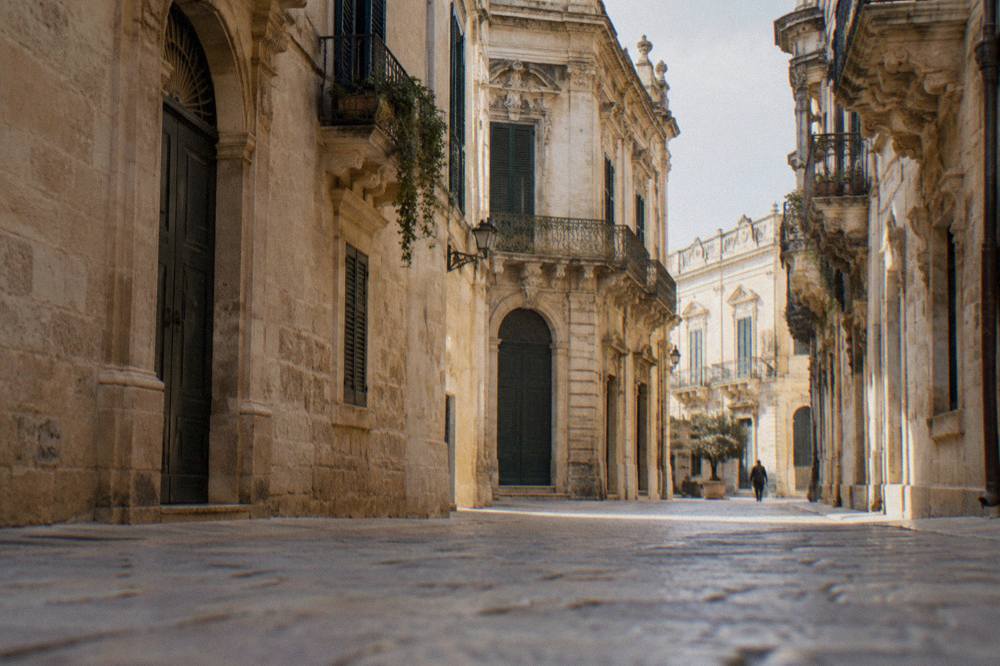
Summer in Lecce runs hot and dry: mean daily highs reach 31.0 C in July and 31.3 C in August, with mean lows of 21.7 C and 22.2 C, and monthly rainfall of just 15.3 mm and 18.1 mm, according to the ERA5 reanalysis, 1991-2020. June averages 28.2 C by day with only 18.0 mm of rain. The heat is dry rather than humid, and nights stay warm.
Those are means, not extremes, and means of 31 C describe a season in which many individual days climb higher. The saving grace of Salento heat is the architecture of the day: the streets of the centro storico are narrow, the pietra leccese stays pale and reflective, and the practical rhythm shifts early mornings and late evenings outdoors, with the middle of the day under a vault or behind a shutter. Shops and some churches observe a midday pause roughly from 13:00 to 16:00 or 17:00 in the warmer months, which suits the climate as much as any tradition.
The sea is part of summer heat management. San Cataldo, the nearest beach to Lecce, is about 13 km east and reachable on SGM bus line 32 from the City Terminal in about 20 minutes, per the comune of Lecce. In July and August the summer Salento in Bus network also ran extra lines to the coast, 13 June to 13 September in 2026, though the 2027 dates had not been announced and should be confirmed closer to the season. For the full coastal picture, including the cliffy Adriatic and sandy Ionian shores, see beaches near Lecce and the wider Salento beaches guide.
Lido prices track the heat. Reported 2026 figures for an umbrella and two sunbeds per day, from a Corriere Salentino survey citing Udicon, put San Cataldo at 15 to 25 euro in June and 33 to 35 euro in August, and Torre dell'Orso and San Foca at 25 to 35 euro in June and 50 to 60 euro in August, with Otranto ranging 20 to 50 euro and Ionian lidos higher. Prices change by year, so treat these as planning ranges and check at the lido.
| Lido Area | June (Umbrella + 2 Beds) | August (Umbrella + 2 Beds) |
|---|---|---|
| San Cataldo | 15-25 euro | 33-35 euro |
| Torre dell'Orso / San Foca | 25-35 euro | 50-60 euro |
| Otranto | 20-30 euro | 30-50 euro |
When the afternoon heat peaks, the indoor options are genuinely good rather than a consolation prize. The churches of the LeccEcclesiae circuit run on a combined ticket and stay cool inside, and the details on that are in the Lecce churches ticket guide. A guided tasting is the other classic heat escape, and one that fits the season particularly well is the tasting of four Negroamaro wines, Check availability.
What Are Winters Like In Lecce?
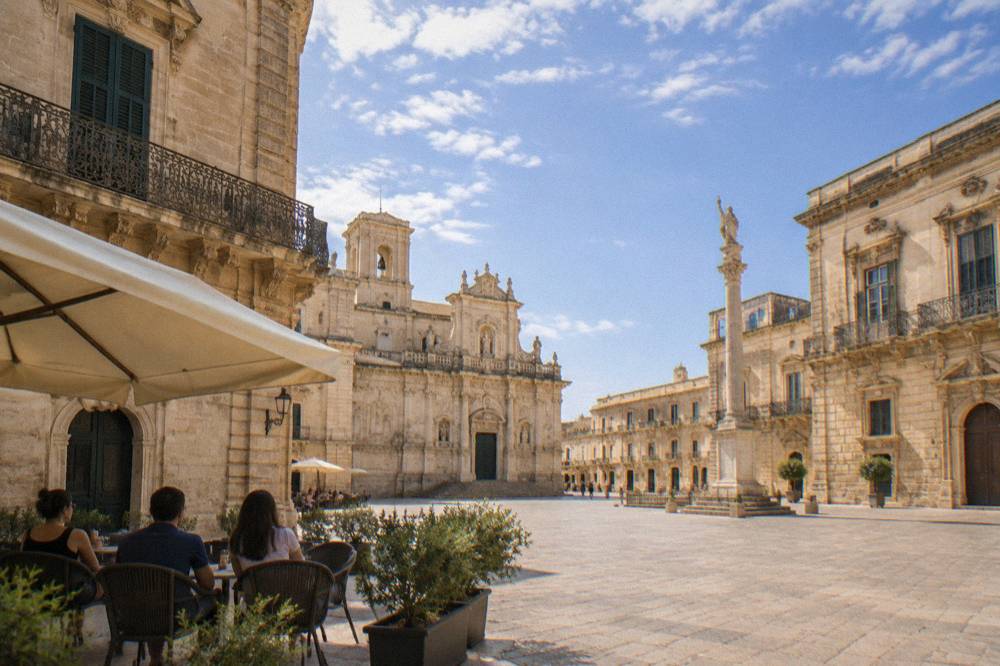
Winter in Lecce is mild and damp rather than cold: mean highs hold between 12.4 C and 13.5 C from December through February, mean lows sit at 6.7 to 8.2 C, and monthly rainfall runs 59.0 to 75.5 mm, per the ERA5 reanalysis, 1991-2020. Frost is not a feature of the averages, but the damp air makes the cool days feel sharper than the numbers alone suggest.
This is the season the "warm winter escape" headlines oversell. Lecce winters are mild by northern European standards, yes, but they are wet, and November carries the highest monthly rainfall of the entire year at 93.7 mm. Expect some bright, still days in the low teens, some grey ones, and rain arriving in sustained episodes rather than short showers. The compensation is a city that keeps its full rhythm: the museums run winter hours, the cafes pour hot caffe, and the baroque facades of pietra leccese take on a softer colour in low winter light.
Packing for a Lecce winter means layers and something waterproof, not skiwear. A warm jacket for the evening, when lows dip toward 7 C, a mid-layer for the afternoons, and real rain protection for October through December in particular. The seasonal sites also shift: October to March is the winter schedule for several monuments, the Roman Amphitheatre among them, open Tuesday to Sunday 10:00 to 17:00 in winter, per the regional museums directorate. Indoors, the papier-mache tradition is a natural wet-day subject and the craft has its own Lecce papier mache guide.
The cool months are also when the city's indoor culture earns its keep. Details on the main covered sights are in things to do in Lecce, from the Museo Faggiano to the Castello Carlo V, whose interior is visited by guided tour only, 10 euro full, per the castle's own ticket page.
How Much Rain Does Lecce Get, And When?
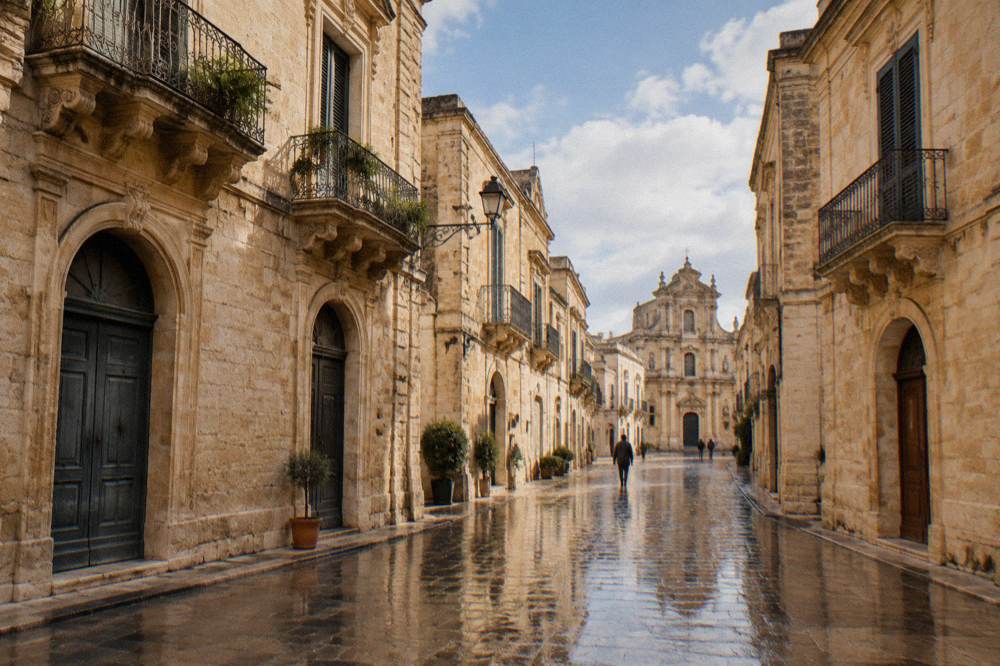
Lecce totals about 652 mm of rain across the year, per the ERA5 reanalysis, 1991-2020, and the distribution is sharply seasonal: November is the wettest month at 93.7 mm, October second at 91.3 mm, and December third at 75.5 mm, while July at 15.3 mm and June at 18.0 mm are the driest months. The three months from October to December carry far more rain than the entire summer half of the year.
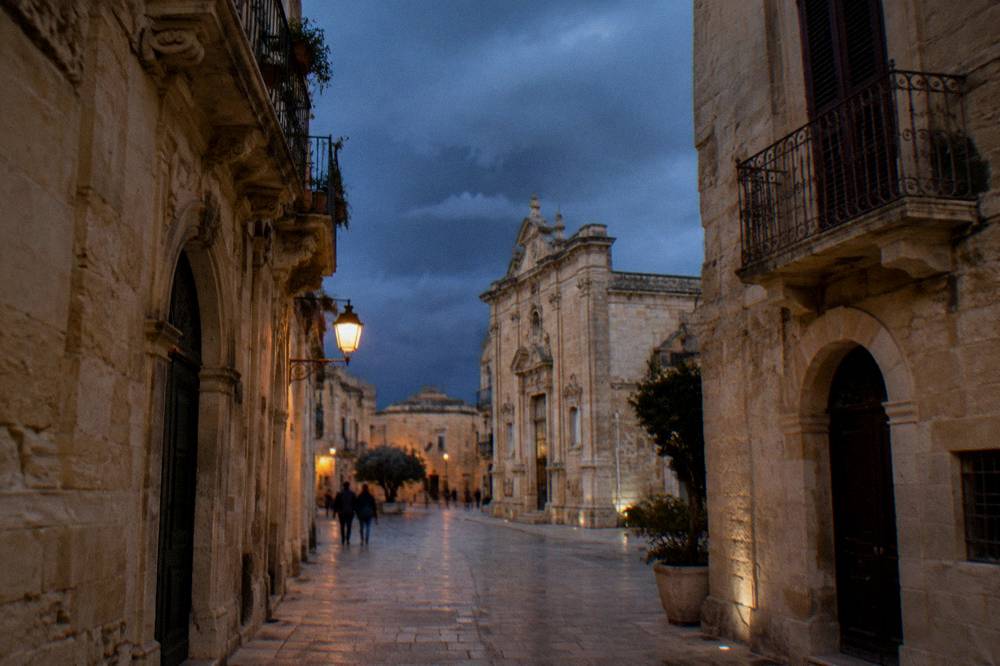
That autumn concentration is the single most useful weather fact for planning. A late-October or November visit trades thinner crowds and warm-afternoon temperatures of 17 to 22 C for a real chance of sustained rain. Any one of October, November or December delivers more rain on its own than the six months from May through October's summer neighbours combined, and the monthly table above shows the shape clearly: the totals climb from 58.9 mm in September to 91.3, 93.7 and 75.5 mm across the following three months, then ease through spring, with March at 64.9 mm falling to 39.9 mm by May as temperatures climb. More of these guides are collected on Lecce Travel Guide.
| Rank | Month | Rain mm | Notes |
|---|---|---|---|
| 1 | Nov | 93.7 | Wettest month of the year |
| 2 | Oct | 91.3 | Still warm, mean high 21.8 C |
| 3 | Dec | 75.5 | Short, damp days |
| 4 | Mar | 64.9 | Wettest spring month |
| 5 | Jan | 63.1 | Mild, showery |
| Driest | Jul | 15.3 | Effectively rainless |
Rain in Salento tends to arrive as episodes, Mediterranean systems that park over the peninsula for a day or two and then clear. The practical response is a flexible day structure: keep one or two indoor anchors in reserve, a museum, a long lunch, a tasting, and let the bright spells carry the walking. On that note, the question of which month suits Puglia best overall is answered in more depth on its own page, and the winter season specifically has a dedicated Lecce in winter treatment.
How Warm Is The Sea Around Lecce?
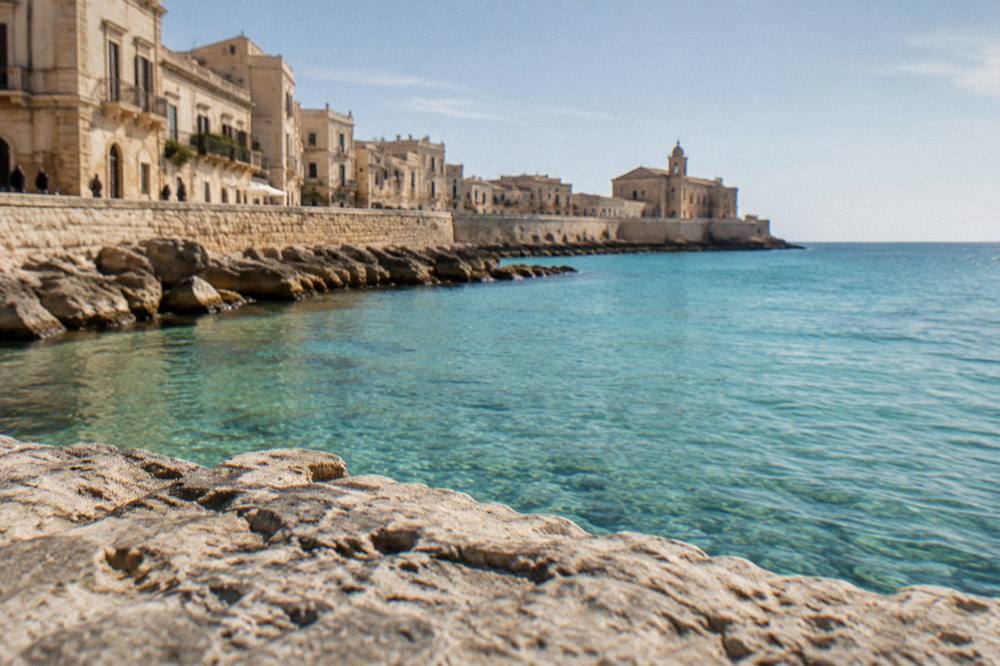
Reported sea temperatures around Salento run at about 22.5 C in June, 25 to 27 C at the August peak, 20 to 22 C in October and about 14 C in February, per seatemperature.org figures for the region. That gives Lecce a genuine bathing season from roughly June into early October, with the sea staying warmer than the air well into autumn.
Because Lecce itself is inland, the sea question is really a coast question, and the two coasts behave differently. The Adriatic side, San Cataldo, Torre dell'Orso, Otranto, is the cliffy, rockier shore with deeper water; the Ionian side, Porto Cesareo, Gallipoli, Pescoluse, is sandier and shallower, which warms it up and makes it calmer for children. Pescoluse on the Ionian, sometimes called the "Maldives of Salento" in area listings, held a Blue Flag in 2026 per puglia.info. No coast here is ranked above another; they are simply different shapes of the same sea.
| Month | Reported Sea Temperature | Bathing? |
|---|---|---|
| Feb | About 14 C | No, cold |
| May | Roughly mid-to-high teens rising | Brisk |
| Jun | About 22.5 C | Yes, comfortable |
| Jul | Rising toward the peak | Yes |
| Aug | 25-27 C | Yes, peak |
| Oct | 20-22 C | Yes, early October best |
Two access notes worth carrying. Baia dei Turchi near Otranto is a protected pinewood where cars park along the SP366 at roughly 4 to 8 euro a day in high season, followed by a 10 to 15 minute walk through the pines, per idealista.it. And Grotta della Poesia at Roca Vecchia changed its rules in 2026: bathing and diving are banned, and non-residents of Melendugno paid a 5 euro ticket in the 2026 season, with viewing from the paths only. The details are in the Grotta della Poesia guide, and the rules for 2027 should be confirmed locally before counting on a swim.
A coastal day pairs naturally with a boat trip, and the sea-cave tours out of Santa Maria di Leuca are the classic warm-season version. One long-standing option is the Leuca boat ride with aperitif and swimming stops, Check availability.
When Is The Best Weather For Visiting Lecce?
For the balance of warmth, low rain and manageable crowds, May and September are the strongest weather months in Lecce: May averages a 23.4 C mean high with 39.9 mm of rain, and September averages 26.4 C with 58.9 mm, per the ERA5 reanalysis, 1991-2020, while the sea is warm enough for swimming in both. June and September into early October give the longest swimming windows.
May wins on dryness and light: the rainfall has fallen to its spring minimum, the mean low of 14.7 C makes evenings pleasant rather than sticky, and the lido season is only beginning, with June umbrella-and-beds rates still at their low end. September wins on the sea, which holds its summer warmth after the air has cooled, and on the light itself, which photographs the baroque stone well. Either month delivers the weather that the July and August averages also promise, without the peak-season peak in everything else, from lido prices to accommodation demand.
The counter-argument for full summer is certainty. July and August carry 15.3 and 18.1 mm of rain respectively, meaning rain is close to a non-factor, and the sea is at its peak. If heat around 31 C is acceptable, and the plan includes a heavy dose of coast, deep summer works. If the trip is mostly a city trip, churches, museums, food, the Lecce Baroque circuit on foot, the shoulder months are kinder to that programme.
Winter, for its part, is not to be dismissed, just understood. A December mean high of 13.5 C is warmer than most of northern Europe, the Christmas period brings the Fiera dei Pupi papier-mache fair, and the Lecce at Christmas season has its own character. The trade is the damp: 75.5 mm in December, 93.7 mm in November. Bring the rain layer, keep the itinerary loose, and the city repays the patience.
What Should You Pack For Lecce Weather?
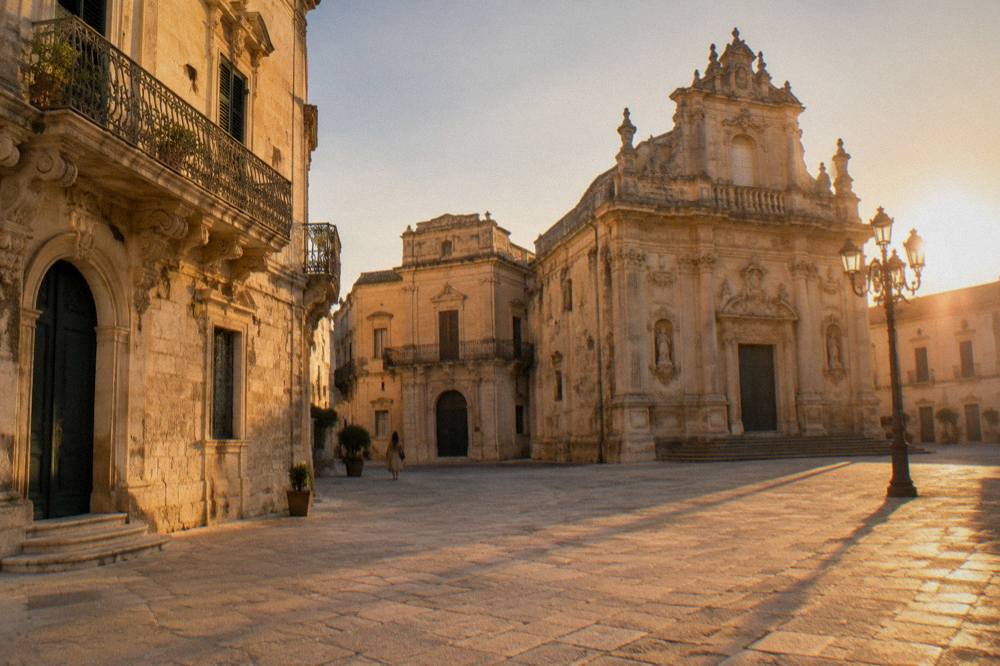
Pack for heat and dry air from June to August, when mean highs run 28.2 to 31.3 C and nights stay above 19 C, and pack layers plus real rain protection for October through March, when monthly rainfall runs 58.9 to 93.7 mm and mean lows fall to 6.7 C, per the ERA5 reanalysis, 1991-2020. Shoulder seasons need both wardrobes in moderation.
| Period | Day Wear | Evening | Rain Gear | Extras |
|---|---|---|---|---|
| Jun-Aug | Light, breathable, sun hat | Light layer | Rarely needed | Water bottle, swimwear |
| May, Sep | Light with sleeves | Light jacket | Packable jacket | Swimwear still useful |
| Mar-Apr | Layers, light jacket | Warm layer | Waterproof | Comfortable walking shoes |
| Oct-Nov | Layers, jacket | Warm jacket | Waterproof essential | Umbrella |
| Dec-Feb | Warm day layers | Coat, scarf | Waterproof | Warm shoes for damp stone |
Two local specifics refine the list. First, church dress codes are enforced in Lecce, shoulders and knees covered, per the Diocese's visitor information, so summer packing needs at least one solution that satisfies both 31 C heat and covered shoulders, a light scarf or overshirt does it. Second, footwear matters more than the forecast suggests: the old town is stone and stone-polished by centuries, and rain makes it slick, so the winter shoes should have actual grip. Those planning to drive should also read the driving and car rental guide, since weather and the camera-policed ZTL interact on parking decisions.
Beyond clothes, the weather-aware packing list is short. Sunscreen from May onwards, given the latitude and the reflective pale stone; a refillable bottle for summer, since the middle of the day is for shade and hydration; and in autumn, nothing more exotic than a good umbrella and patience with the occasional grey morning. Arrivals logistics, including the transfer from Brindisi airport, are covered in how to get to Lecce and the Brindisi airport to Lecce guide.
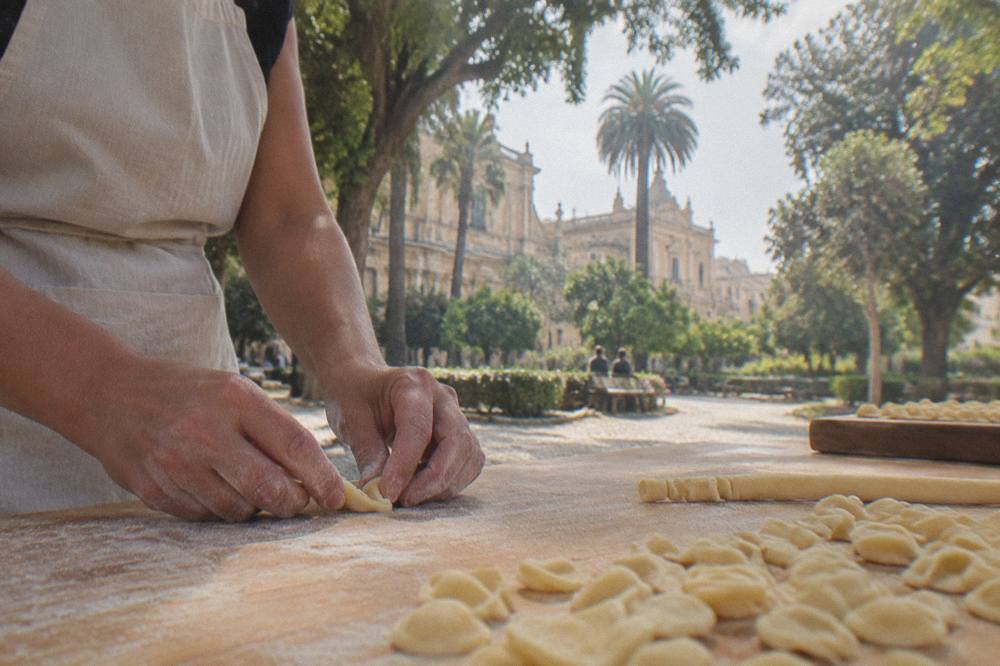
Should the forecast deliver a wet day, the indoor Lecce is strong: the museums, the cafe culture, and the food traditions from pasticciotto to the full what to eat in Lecce catalogue. A rainy afternoon spent learning to shape orecchiette is a genuinely Salento use of the weather, and classes run year-round.
Common Questions About Lecce Weather
Is Lecce hot in summer?
Yes. The ERA5 reanalysis, 1991-2020, puts mean daily highs at 31.0 C in July and 31.3 C in August, with mean lows above 21 C, and monthly rainfall under 20 mm. The heat is dry rather than humid, and the sea is at its warmest, 25 to 27 C at the August peak per seatemperature.org figures for the region.
Does it rain a lot in Lecce?
The year totals about 652 mm, per the ERA5 reanalysis, 1991-2020, which is modest by northern European standards, but it is concentrated: November is the wettest month at 93.7 mm, October second at 91.3 mm, and July the driest at 15.3 mm. Autumn episodes can deliver sustained rain, so pack waterproofs from October onwards.
Is Lecce warm in winter?
Mild, not warm. Mean highs run 12.4 to 13.5 C from December through February, with mean lows of 6.7 to 8.2 C and damp air, per the ERA5 reanalysis, 1991-2020. It is a coat-and-scarf winter with bright intervals, not a beach winter; the sea sits at about 14 C in February.
When can you swim near Lecce?
Roughly June into early October. Reported sea temperatures are about 22.5 C in June, 25 to 27 C at the August peak and 20 to 22 C in October, per seatemperature.org. The nearest beach to the city, San Cataldo, is about 13 km east and reachable by SGM bus line 32 in about 20 minutes.
What is the rainiest month in Lecce?
November, at 93.7 mm, per the ERA5 reanalysis, 1991-2020, narrowly ahead of October at 91.3 mm. Both months remain warm by northern standards, with mean highs of 17.3 C and 21.8 C respectively, so the rain is the trade-off, not the cold.
Is Lecce humid?
Summer heat in Salento is generally dry rather than humid, which is why mean highs around 31 C feel more manageable than the same figures in a humid climate. Night-time lows above 21 C in July and August still make air conditioning worth confirming at booking. The damp season is late autumn and winter, when humidity accompanies the rain rather than the heat.
The short version: Lecce rewards a calendar matched to its rain curve, summer for certainty and the sea, May and September for the balance, and the cool months for a quieter city taken at indoor pace. Pair this page with the best time to visit Lecce for the full timing decision, and let the forecast, not the folklore, set the itinerary.