Best Time To Visit Lecce: Heat, Crowds And Sea
Lecce sits a few kilometres inland in Salento, so the decision on when to go comes down to heat, festival crowds and how far you are willing to travel for warm sea.
Short answer
Late April to June and September to mid-October give Lecce warm, walkable days without the July and August mean highs of about 31 C; August is the peak festival and beach month, and November is the wettest.
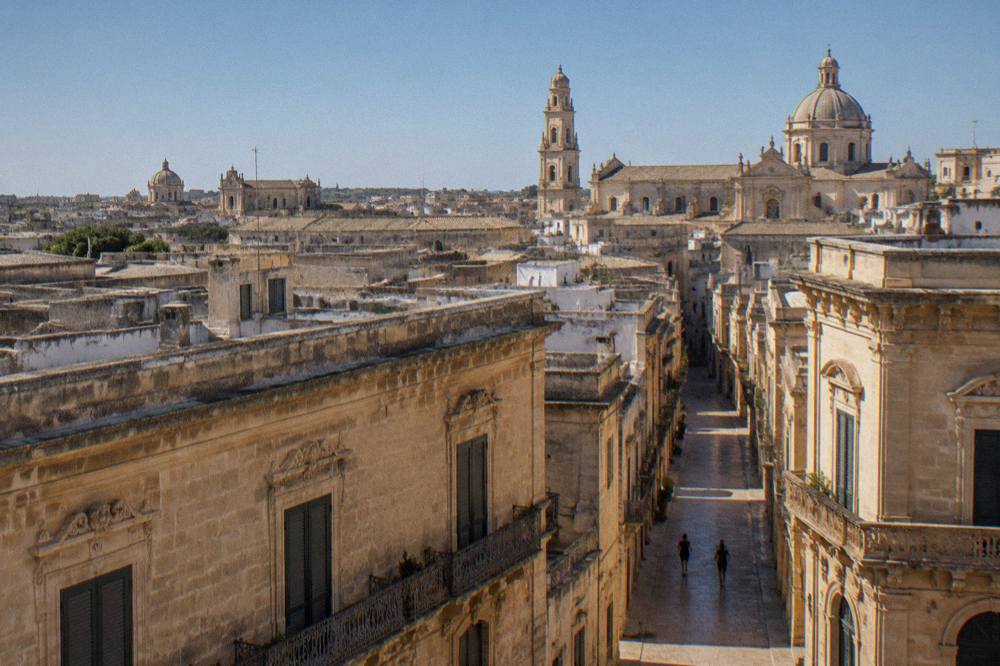
Lecce, the baroque capital of Salento in Puglia, southern Italy, is a honey-coloured inland city built from pietra leccese limestone, about 13 km from the nearest beach at San Cataldo. That geography shapes the whole timing question. The old town is seen on foot, the sea is a short bus or drive away, and the two never peak at the same moment: the church ticket LeccEcclesiae runs winter hours from October to March precisely because the city's rhythm slows when the beach season ends. This guide reports what the climate data, the operators and the local surveys actually say, month by month, so the choice can be made on figures rather than on slogans.
What Is The Best Time To Visit Lecce?
The best time to visit Lecce is late April to June, or September to mid-October, when the ERA5 reanalysis, 1991-2020 puts mean highs between 18.6 C and 26.4 C and rainfall stays modest. July and August bring mean highs of about 31 C, August stacks the Santi Patroni feast and the Notte della Taranta into one peak month, and November is the wettest month at 93.7 mm.
The reasoning behind that answer is simple: Lecce rewards walking. The centro storico, the Duomo square and the amphitheatre are all within a compact area, and the churches ticket is valid for 15 days, so a leisurely pace is built into the product itself. Heat and rain are the two variables that change that experience, and both have documented numbers behind them.
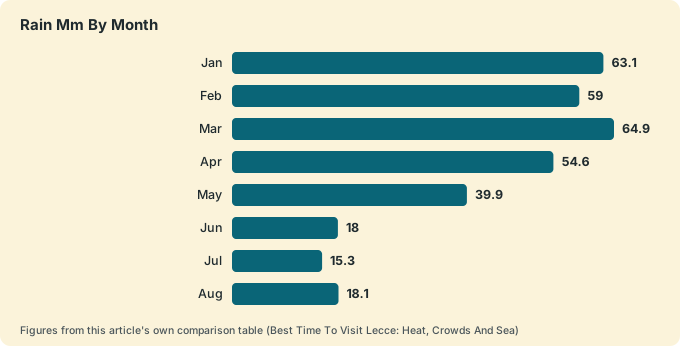
May and June combine a mean high of 23.4 C and then 28.2 C with monthly rainfall of 39.9 mm and 18.0 mm respectively, per the ERA5 reanalysis, 1991-2020 for the grid cell near Lecce. September cools to a mean high of 26.4 C but carries 58.9 mm of rain, and October drops to 21.8 C with 91.3 mm. None of that is severe by northern European standards, but it is the difference between a dry, warm stroll and a damp one.
Spring has a second practical advantage: prices and availability at the coast. The Salento in Bus summer shuttle network only ran from 13 June to 13 September in 2026, per the operator, so late June onwards is when the beaches become reachable without a car. Before that window, a coastal day means the ordinary FSE trains to Gallipoli or Otranto, or a drive. The trade-offs are laid out across this page, season by season.
For readers who want the fuller picture of the city's climate across the whole year, the companion Lecce weather guide works through the same dataset in detail.
How Hot Does Lecce Actually Get In Summer?
Lecce's summer heat peaks in August with a mean daily high of 31.3 C and a mean nightly low of 22.2 C, per the ERA5 reanalysis, 1991-2020; July is close behind at 31.0 C and 21.7 C. June sits at 28.2 C, and by September the mean high falls back to 26.4 C. Rainfall in July and August is minimal, 15.3 mm and 18.1 mm respectively.
Those are means, not extremes, and they are modelled reanalysis values for a grid cell near Lecce at about 48 m elevation rather than a weather-station record. Individual days run hotter than the mean. The practical consequence is scheduling: the LeccEcclesiae church circuit keeps daily hours of 9:00 to 21:00 in the April to September summer window, so early morning and evening visits are available, and churches are cooler inside than the limestone streets outside anyway.
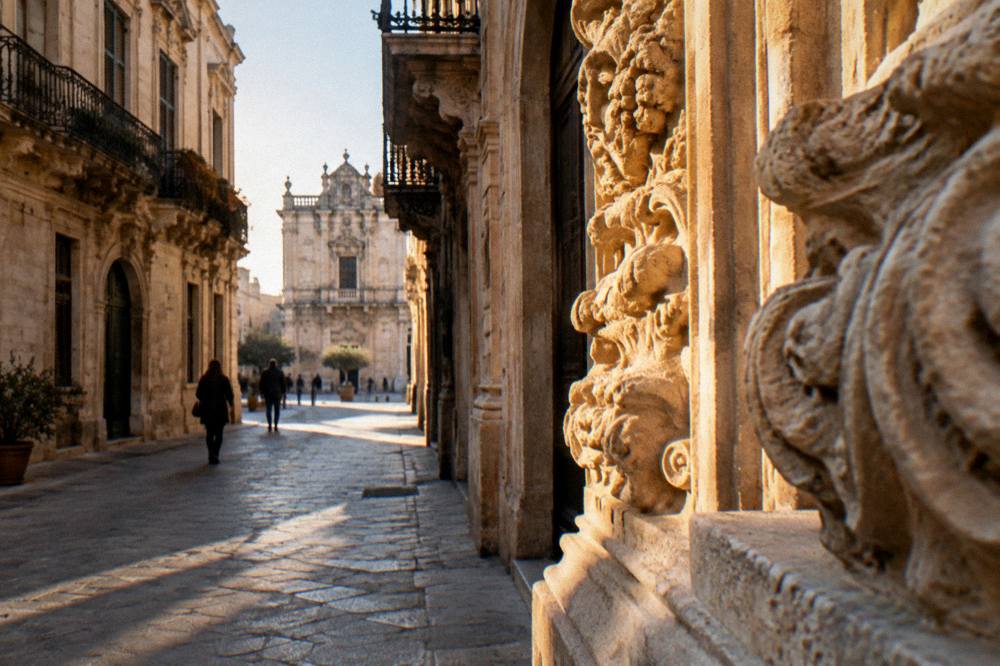
Winters are mild and damp rather than warm. January's mean low is 6.7 C and its mean high is 12.4 C, with 63.1 mm of rain. February is similar at 13.0 C and 6.8 C. The cold months are comfortable for walking, and the baroque facades photograph well in low winter light, but nobody should book January expecting beach weather: the reported sea temperature that month is about 14 C, per seatemperature.org data.
The month-by-month figures, all from the ERA5 reanalysis, 1991-2020:
| Month | Mean high C | Mean low C | Rain mm |
|---|---|---|---|
| Jan | 12.4 | 6.7 | 63.1 |
| Feb | 13.0 | 6.8 | 59.0 |
| Mar | 15.4 | 8.3 | 64.9 |
| Apr | 18.6 | 10.7 | 54.6 |
| May | 23.4 | 14.7 | 39.9 |
| Jun | 28.2 | 19.1 | 18.0 |
| Jul | 31.0 | 21.7 | 15.3 |
| Aug | 31.3 | 22.2 | 18.1 |
| Sep | 26.4 | 19.0 | 58.9 |
| Oct | 21.8 | 15.4 | 91.3 |
| Nov | 17.3 | 11.7 | 93.7 |
| Dec | 13.5 | 8.2 | 75.5 |
Two readings matter more than the rest. November carries the year's highest monthly rainfall at 93.7 mm, and July the lowest at 15.3 mm. The year as a whole totals about 652 mm of rain, which is modest for the Mediterranean, and it falls mostly between September and January.
When Is The Sea Warm Enough To Swim Near Lecce?
The reported sea temperature around Salento reaches about 22.5 C in June, peaks at 25 to 27 C in August, holds at 20 to 22 C in October and falls to about 14 C in February, per seatemperature.org data. That makes June through early October the realistic swimming window, with July and August the warmest water.
Lecce itself is inland, so the sea is always a trip: San Cataldo, the nearest beach, is about 13 km away on the Adriatic, reachable on SGM line 32 in about 20 minutes, per the comune's own description of its five marine quarters. The two coasts behave differently. The Adriatic side, towards Otranto and Castro, is the cliffy, rockier shore with coves and grottoes; the Ionian side, towards Porto Cesareo, Gallipoli and Pescoluse, is the sandy, shallower one. That is general geography, not a ranking.
For cave swimming without open-sea conditions, the boat trips from Santa Maria di Leuca run through the summer, and Grotta Zinzulusa at Castro offers guided visits year-round at 7 euro full and 4 euro reduced, per its own site. One caution from the 2026 season: at Grotta della Poesia near Roca Vecchia, bathing and diving are now banned and non-residents of Melendugno paid a 5 euro ticket, so that famous sinkhole is a viewpoint, not a swim. The 2027 rules are not published; confirm locally.
If the beach is the point of the trip, the timing question becomes a lido pricing question as much as a water temperature one. Reported 2026 prices for an umbrella plus two sunbeds per day:
| Area | June | August |
|---|---|---|
| San Cataldo | 15 to 25 euro | 33 to 35 euro |
| Torre dell'Orso and San Foca | 25 to 35 euro | 50 to 60 euro |
| Otranto | from about 20 euro | up to about 50 euro |
| Ionian coast (Porto Cesareo, Gallipoli) | higher than the Adriatic, per the survey | higher than the Adriatic, per the survey |
Those figures come from the Udicon and Adoc consumer surveys reported by Corriere Salentino, they are rounded, and lido prices change every year, so treat them as planning ranges and check the lido itself. Baia dei Turchi near Otranto is a protected pinewood beach where car access is limited: parking on the SP366 was reported at 4 to 8 euro a day in high season, followed by a walk through the pines.
A short note on how the coast ties into the calendar: the Salento in Bus network that connects Lecce to Torre dell'Orso, Otranto, Porto Cesareo, Gallipoli and Leuca ran only from 13 June to 13 September in 2026, with peak frequency from 1 July to 31 August. Fares were 1.10 to 5 euro by distance, per the operator Cotrap. The 2027 dates were not published, so anyone planning a car-free beach base around those shuttles should check before booking. More detail sits in the Salento in Bus guide and the round-up of beaches near Lecce.
When Is Lecce Quietest?
Winter, from November to February, is the quiet period in Lecce, with the caveat that no visitor or arrivals data was verified for this site and no "busiest month" ranking can be honestly printed. August is the general peak, because the beach season and the city's patronal feast coincide, and late August adds the Notte della Taranta concert across the region.
What can be said with sources is structural. The LeccEcclesiae churches switch to winter hours, 9:00 to 18:00, from October to March, against 9:00 to 21:00 in the April to September summer window, per the ticket's own information page. Castello Carlo V runs its winter tour timetable from October to May. Museums including the MUST and the amphitheatre close on Mondays in winter. These schedules are the infrastructure's own confession that the flow of visitors thins after the summer.
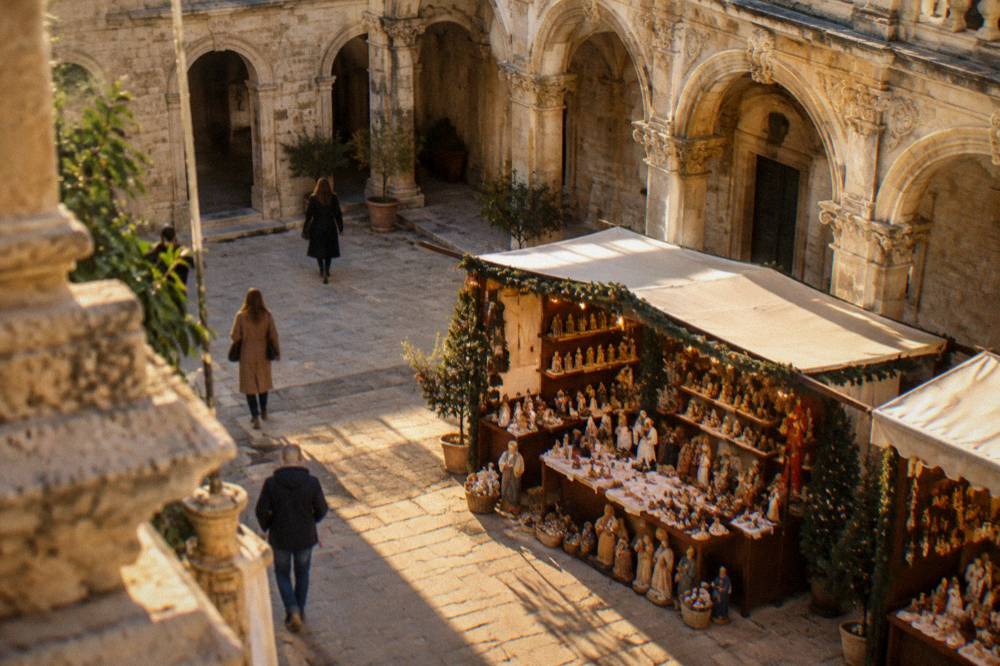
Quiet does not mean shut. The Duomo, Santa Croce, the amphitheatre viewpoint on Piazza Sant'Oronzo and Museo Faggiano, open every day 9:30 to 20:00 at 5 euro, all run through the winter, and the Fiera dei Pupi, the papier-mâché Christmas fair, traditionally fills the ex-Convento dei Teatini from early to late December. The 2026 dates were not yet published, per the comune's documentation of the 2025 pattern.
The trade-off in the quiet months is rain: October through December carries 91.3, 93.7 and 75.5 mm respectively in the ERA5 table, against July's 15.3 mm. February is the sweet spot for a dry, cool, empty city if swimming is irrelevant: 59.0 mm of rain, a 13.0 C mean high, and reported sea water nobody wants to enter at about 14 C.
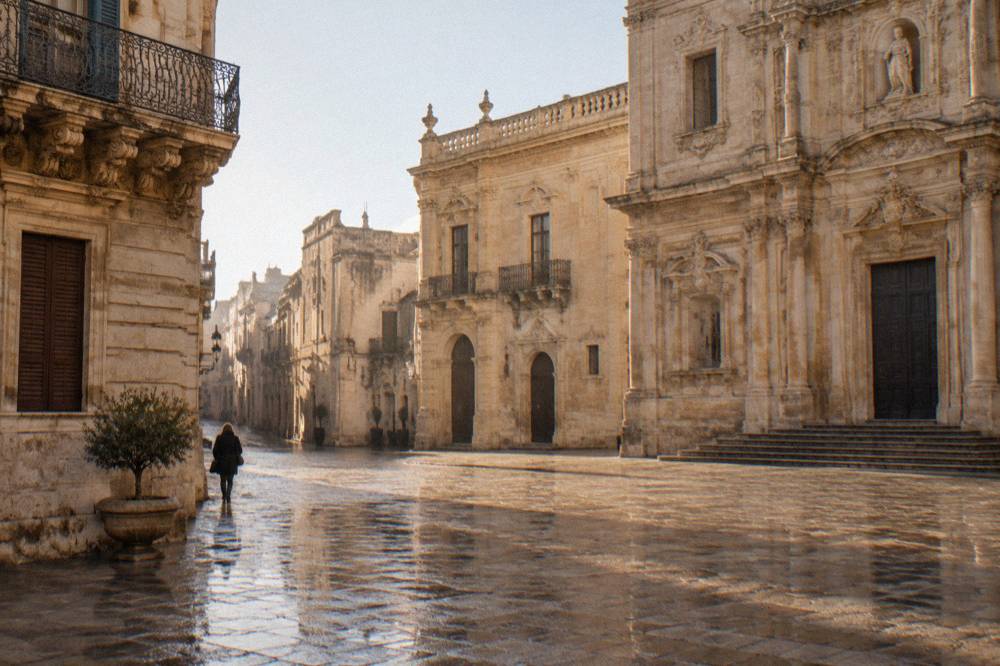
Is Spring A Good Time To Visit Lecce?
Spring, from March to May, is a strong season for Lecce: mean highs climb from 15.4 C in March to 18.6 C in April and 23.4 C in May, rainfall falls from 64.9 mm to 39.9 mm across the same stretch, and the churches are already on summer hours, 9:00 to 21:00, from April, per the LeccEcclesiae ticket page.
March is the weakest of the three months: 64.9 mm of rain and a 15.4 C mean high mean jackets and umbrellas. By April the balance tips, and May is close to ideal for a walking city, warm enough for an evening aperitivo in a piazza without the 31 C afternoons of July. The Easter calendar adds Holy Week processions, including the traditional Good Friday rites in Lecce, though their dates follow Easter and the 2027 dates were not published.
The main spring compromise is the sea. Reported water temperature is 15 to 16 C in April and about 18 C in May, per seatemperature.org data, which most swimmers will find bracing rather than pleasant. The beaches are there for walking, not swimming, and the Salento in Bus shuttles had not started in spring in 2026. A spring trip that wants a coastal day should plan on the FSE train to Gallipoli, about 1h18 to 1h43 from Lecce, or to Otranto with a change at Maglie.
Spring is also when the food calendar wakes up. The caffe in ghiaccio con latte di mandorla, espresso over ice with almond milk, is a warm-weather drink by definition, credited to Antonio Quarta of Quarta Caffe in the 1940s or 1950s, per Corriere Salentino's reporting on the city's gastronomic history. It tastes better in May than in January, and the what to eat in Lecce guide covers the rest of the table.
Is Autumn A Good Time To Visit Lecce?
Autumn, September to November, starts as one of the best windows and ends as the wettest: September holds a 26.4 C mean high with 58.9 mm of rain and reported sea temperatures of 24 C or more, while November's mean high falls to 17.3 C and its 93.7 mm of rain is the year's highest monthly total.
September is arguably the single best-compromise month in Salento. The sea is still near its summer warmth, the lido prices step down from their August peaks, the Salento in Bus shuttles ran through 13 September in 2026, and the city is back from its own August holiday rhythm. Early October keeps a 21.8 C mean high and sea reported at 20 to 22 C. The LeccEcclesiae hours drop to the winter 9:00 to 18:00 pattern from October, and the amphitheatre moves to its winter timetable, 10:00 to 17:00, closed Mondays, from 1 October.
The second half of October and November are the gamble. The rain totals climb steeply, 91.3 mm then 93.7 mm, and while that still means plenty of dry days on average, a wet week is a real possibility. Indoor options carry the season: Museo Faggiano, the Castello Carlo V guided tours with the papier-mâché museum inside, the MUST at 5.50 euro, the free Museo Castromediano, and the atmospheric churches, which are dry, cool and open regardless of the weather outside.
One autumn fixture worth building a trip around is the Notte della Taranta, the pizzica festival that runs across Salento towns in late July and August and culminates in the Concertone at Melpignano, held on 22 August 2026 for its 29th edition. That is technically a summer event, but the autumn visitor misses nothing structural: the city's own Lecce events guide tracks the calendar as dates are announced.
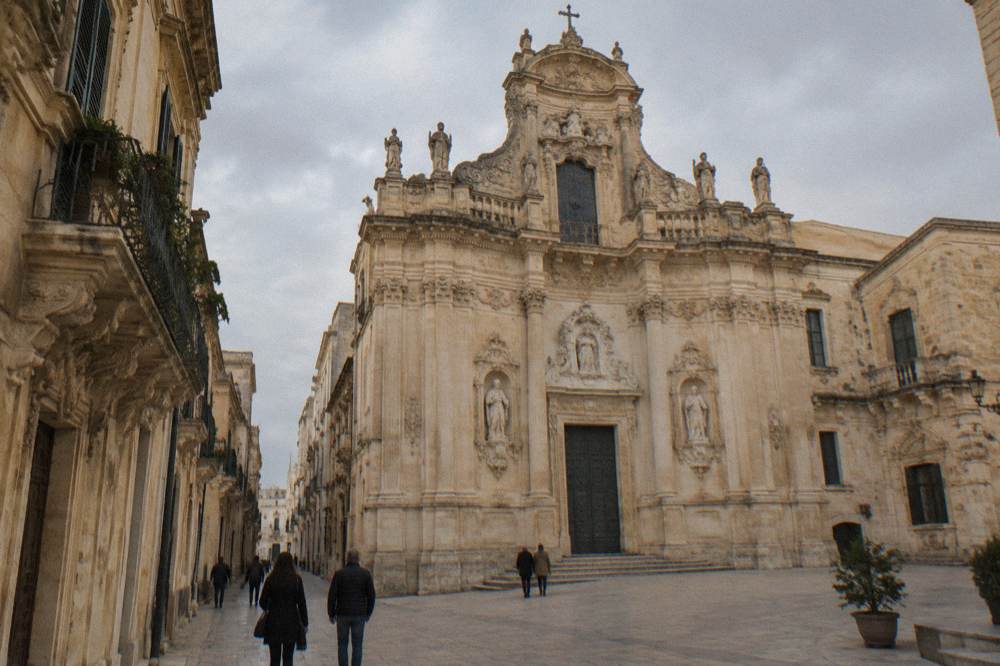
Should You Visit Lecce In August?
August is Lecce's peak month and it is a legitimate choice if festivals and warm sea are the goal: the Santi Patroni feast ran 23 to 26 August 2026 with processions and illuminations, the Notte della Taranta Concertone followed on the 22nd at Melpignano, and the reported sea temperature peaks at 25 to 27 C. The costs are mean highs of 31.3 C, peak lido prices and a region on holiday.
The feast of Sant'Oronzo, Giusto and Fortunato is the city's own festival, confirmed by the comune's 2026 programme of processions, luminarie, concerts and a fair. The Notte della Taranta draws the whole region's music audience to Melpignano, a short drive from Lecce, and smaller feste patronali and the San Rocco feast at Torrepaduli, 14 to 17 August 2026, keep the calendar dense all month.
Practically, August in Lecce means adapting the day around the heat rather than fighting it. Mornings for the Duomo and Santa Croce, a long lunch, the sea in the afternoon, and the piazza again after 20:00 when LeccEcclesiae's summer hours still admit visitors until 21:00. The Lecce in summer guide works through that rhythm in detail.
Two August cautions come straight from the sources. First, the sea is at its warmest but the lidos are at their dearest, 33 to 35 euro at San Cataldo and 50 to 60 euro at Torre dell'Orso for an umbrella and two beds, per the 2026 consumer surveys, and prices change by year. Second, no arrivals or crowd data was verified for this site, so this page will not claim August is "the busiest" with a number attached; it is enough to say the festivals and the beach season coincide.
For anyone in Lecce in the cooler half of the year who still wants the coast, the cave coast at Castro is reachable as a day trip, and Grotta Zinzulusa runs its guided visits year-round; the Castro day trip guide covers the logistics.
What About Lecce In Winter And At Christmas?
Winter in Lecce is mild and damp, with January mean lows of 6.7 C and mean highs of 12.4 C and no realistic swimming, but the city stays fully open: museums run winter timetables, church hours shorten to 9:00 to 18:00, and the Fiera dei Pupi, the traditional papier-mâché fair, runs in December.
The Christmas period is the one winter stretch with a crowd pull of its own. The Fiera dei Pupi traditionally occupies the ex-Convento dei Teatini from early December to the 24th, per the comune's participation documentation for the fair, with artisan stalls and the city's famous cartapesta nativity figures. Luminarie, the architectural light strings, dress the main streets. The 2026 dates were not published, so confirm locally.
The rest of winter is Lecce at its most local. The university, with about 20,774 enrolled students per Università del Salento's own figures, keeps bars and cafes busy through term. A caffe in ghiaccio is off the menu in the cold, but pasticciotto season never ends, and Pasticceria Natale, family-run since 1978, is among the named institutions. The 1745 invention date of the pasticciotto belongs to Pasticceria Ascalone's own claim, and that shop is in Galatina, not Lecce; historians dispute the date, so it is reported here as a claim only.
What can be said is that the tourist tax exists, collected by accommodation, with a top reported rate of 5 euro per person per night at the highest category in high season; rates changed from 1 April 2026 and should be confirmed at booking.
How Does The Festival Calendar Affect Timing?
The Salento festival calendar concentrates in late July and August: the Notte della Taranta Concertone was held 22 August 2026 at Melpignano, Lecce's Santi Patroni feast ran 23 to 26 August 2026, and San Rocco at Torrepaduli fell 14 to 17 August 2026, so anyone wanting pizzica and processions should target that window, while the Fiera dei Pupi sits in December.
No 2027 dates for these events had been announced, per the organisers' own sites, so the 2026 editions are the latest confirmed pattern. The dates below are the verified or reported 2026 calendar:
| Event | 2026 dates | Source status |
|---|---|---|
| Notte della Taranta Concertone, Melpignano | 22 August (29th edition) | verified on the festival's own site |
| Santi Patroni (Oronzo, Giusto, Fortunato), Lecce | 23 to 26 August | comune programme |
| Festa di San Rocco, Torrepaduli | 14 to 17 August | reported, Corriere Salentino |
| Fiera dei Pupi, Lecce | early to 24 December (2025 pattern) | comune documentation, 2026 not yet published |
| Holy Week processions, Lecce | follows the Easter calendar | traditional, dates not published |
The timing logic works both ways. A visitor who wants the region's folk-music climax books late August and accepts heat, traffic and peak lido prices. A visitor who wants empty churches books February and accepts that nothing is scheduled and the sea is 14 C. Between the two, the shoulder months buy most of the second benefit with little of the first cost.
One more calendar note that affects planning: several sights run Monday closures outside summer, including the Castello Carlo V tour schedule, the amphitheatre in winter, and the MUST. A long weekend booked Monday to Wednesday in the off-season will find doors shut that a Thursday arrival would not. Check each site's current hours before locking an itinerary.
What Should You Pack For Lecce By Season?
For summer, pack for mean highs of about 31 C plus church dress codes; for spring and autumn, layers for ranges of roughly 15 to 26 C and a rain layer from October on; for winter, warm clothing for mean lows of 6.7 to 8.2 C and an umbrella, since October to December carries 91.3, 93.7 and 75.5 mm of rain in the ERA5 reanalysis, 1991-2020 table.
The one non-negotiable across all seasons is covered shoulders and knees for the churches, a rule the LeccEcclesiae circuit enforces, with tourist visits paused during services. A light scarf or overshirt solves it in summer and is already part of the wardrobe in winter. Comfortable shoes matter more here than in many cities, because the centro storico rewards walking and the stone holds heat in August.
A seasonal summary drawn from the available data:
| Season | Mean high range | Rain pattern | Practical extras |
|---|---|---|---|
| Spring (Mar to May) | 15.4 to 23.4 C | 39.9 to 64.9 mm a month | layers, umbrella in March |
| Summer (Jun to Aug) | 28.2 to 31.3 C | 15.3 to 18.1 mm a month | sun protection, covered shoulders for churches |
| Autumn (Sep to Nov) | 17.3 to 26.4 C | 58.9 to 93.7 mm a month | rain layer from October, sea warm through September |
| Winter (Dec to Feb) | 12.4 to 13.5 C | 59.0 to 75.5 mm a month | warm layers, umbrella, short daylight |
For the full sightseeing menu once the dates are chosen, the root things to do in Lecce page lists the verified attractions, and the free things to do in Lecce guide covers the squares, gates and viewpoints that cost nothing in any season.
Which Month Should You Actually Book?
For a first visit that balances everything, book May, June or September: mean highs of 23.4 to 28.2 C, the year's lowest rainfall outside midsummer, church hours until 21:00, and, in June and September, sea temperatures of about 22.5 C and 24 C or more. Book August only for the festivals and the warmest water, and book November to February for a quiet, cheap-feeling city with rain gear.
That is the honest arithmetic of the sources on this page rather than a taste claim. May and September give the walkable city at its most comfortable. June adds the start of the Salento in Bus season and swimmable water. September keeps the water warm while the lido prices ease and the festival crowds disperse. Each of those three months costs the visitor something: spring sea is cool, September carries 58.9 mm of rain against July's 15.3 mm, and none of them has the Concertone.
For visitors with special interests the answer shifts. The baroque architecture itself is season-proof, and the Lecce Baroque guide explains why the city's soft pietra leccese made this style possible. Food travellers can eat well in any month, though the iced-coffee-and-almond-milk ritual belongs to warmth. Families may prefer June, before the heat peaks; anyone travelling car-free should align with either the train network, which runs year-round, or the summer shuttle window.
Whatever the month, arrival runs through Brindisi airport, since Lecce has no commercial airport of its own, with the Terravision bus covering the about 40 minute transfer for 6.50 euro one way, per the operator. The Brindisi airport to Lecce guide has the details.
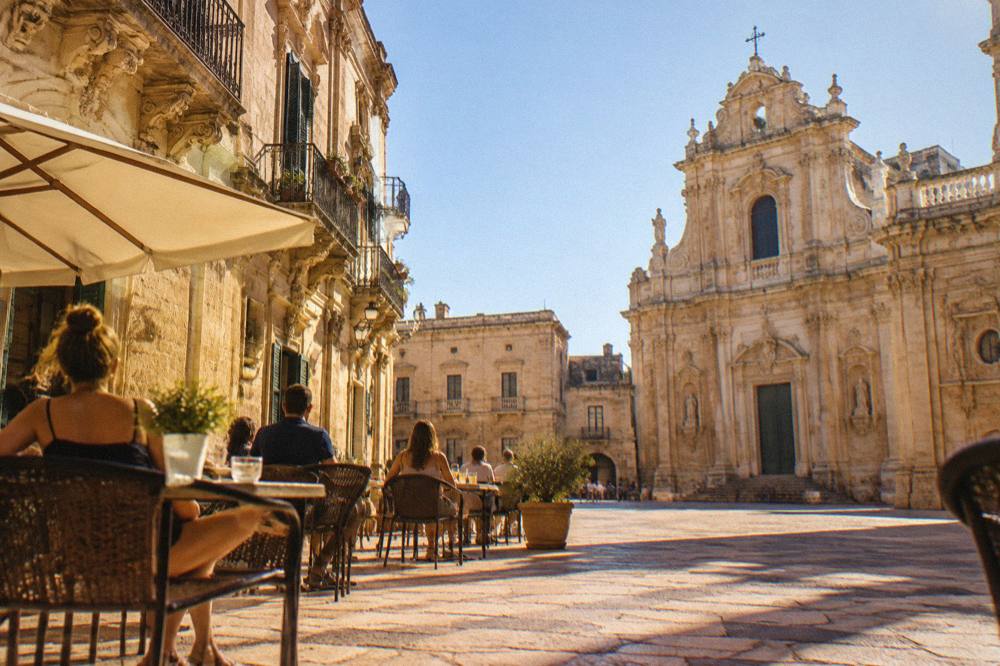
The food angle deserves its own paragraph in any timing decision, because Salento's table follows the seasons more than a casual visitor expects. Spring brings vegetables and the first outdoor tables; summer is iced coffee, sea urchins and late dinners; autumn is wine country at work, with the Negroamaro-based Salice Salentino DOC, established 1976 across the provinces of Lecce and Brindisi, pouring the new vintages; winter is rustic dishes and pastry counters. The Salento wine guide and the pasticciotto history cover the details.
Common Questions About The Best Time To Visit Lecce
What is the best time to visit Lecce?
Late April to June and September to mid-October, per the ERA5 reanalysis, 1991-2020: mean highs of 18.6 to 28.2 C, low rainfall, and summer church hours until 21:00. August suits festival and beach priorities specifically, and November is the wettest month.
What is the warmest month in Lecce?
August, with a mean daily high of 31.3 C and a mean low of 22.2 C, just ahead of July at 31.0 C. These are modelled reanalysis means, not station records, and individual days can run hotter.
What is the rainiest month in Lecce?
November, at 93.7 mm in the ERA5 reanalysis, 1991-2020 table, followed by October at 91.3 mm. July is the driest month at 15.3 mm, and the year totals about 652 mm.
When can you swim near Lecce?
Reported sea temperature reaches about 22.5 C in June, 25 to 27 C at the August peak, 20 to 22 C in October and about 14 C in February, per seatemperature.org data. June through early October is the realistic window, and the summer shuttle buses to the coast ran 13 June to 13 September in 2026.
Is Lecce worth visiting in winter?
Yes, with the right expectations. Mean highs of 12.4 to 13.5 C and rain of 59 to 75 mm a month mean a quiet, walkable city with museums open, church hours until 18:00, and the Fiera dei Pupi Christmas fair in December. The sea is about 14 C and no swimming is realistic.
When is the Notte della Taranta held?
The Concertone at Melpignano was held on 22 August 2026 for the 29th edition, per the festival's own site. The 2027 dates had not been announced, so check the festival's channels before booking around it.
The month that fits is the one whose compromises you accept, and the figures on this page are the ones to check against. For everything that is not timing, the Lecce Travel Guide homepage and the where to stay in Lecce guide pick up from here.
For more seasonal reading, the guides to Lecce in summer, Lecce in winter and the Salento overview carry the detail this page could only summarise.