What To Eat In Lecce: Ten Dishes And Where To Find Them
Lecce, the baroque capital of Salento in Puglia, southern Italy, eats well and cheaply at street level: pasticciotto, rustico, puccia, frisa and caffe in ghiaccio con latte di mandorla, plus the Negroamaro wines of the Salento plain.
Short answer
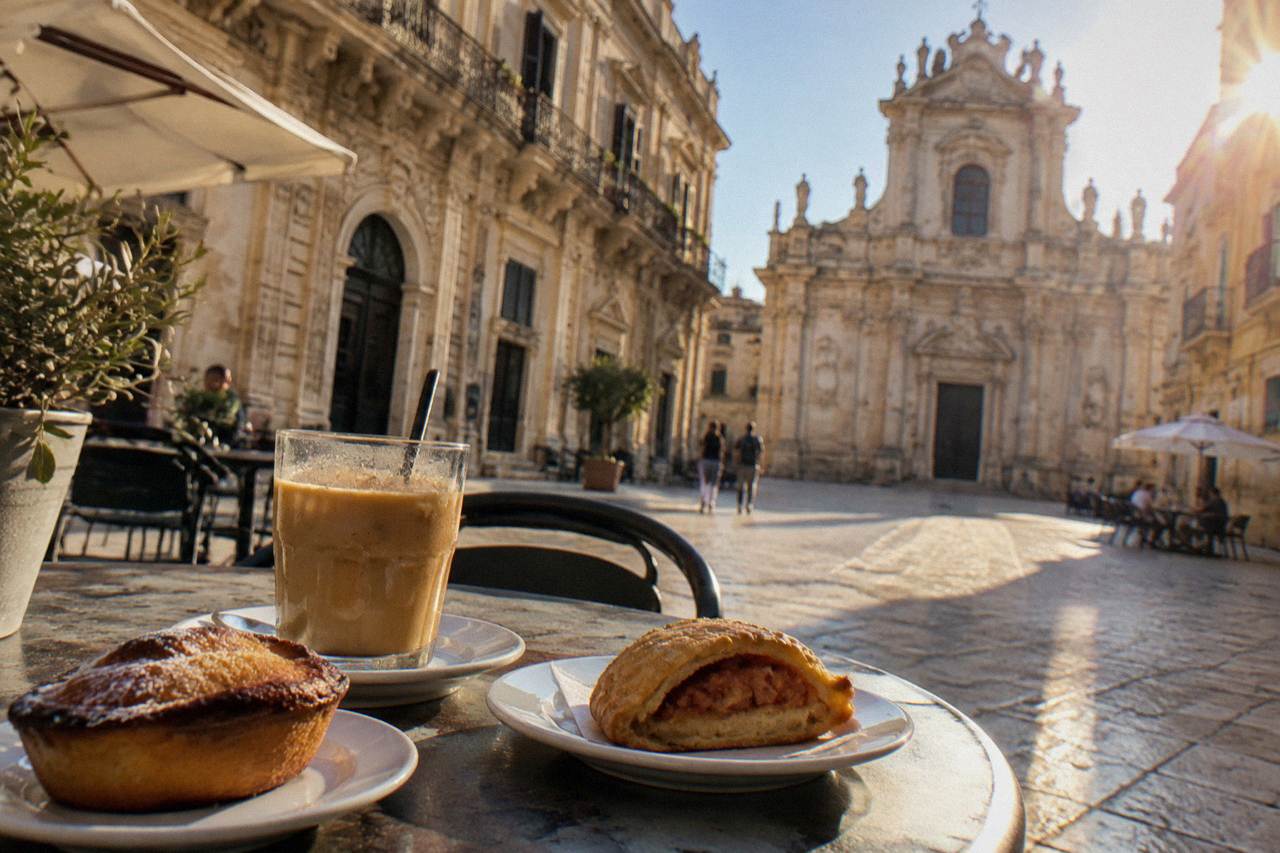
Eat pasticciotto and caffe in ghiaccio in Piazza Sant'Oronzo, a rustico mid-morning, puccia and frisa with tomato and oil at lunch, ciceri e tria as the traditional pasta, and drink Salice Salentino, the Negroamaro-based DOC established in 1976 covering Lecce and Brindisi provinces.
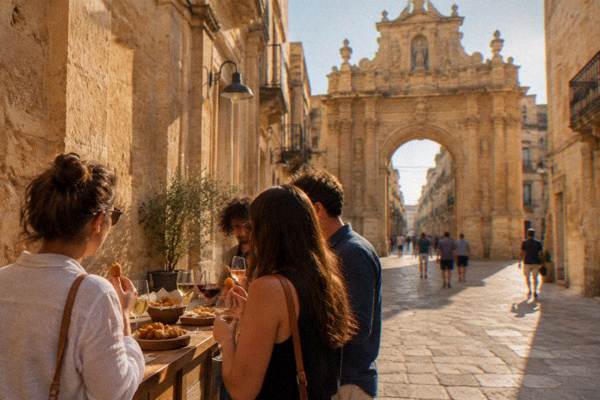
Lecce, the baroque capital of Salento at the heel of Puglia in southern Italy, is a city best understood at counter height. The honey-coloured pietra leccese facades of the centro storico are the backdrop to a food culture that runs on small, cheap, daily things: a custard pastry eaten standing up, a savoury puff-pastry snack at eleven in the morning, iced coffee with almond milk in the afternoon heat, hard bread softened with tomatoes and olive oil at lunch. This page sets out the ten dishes and drinks that define eating in Lecce, what each one actually is, and where the city's documented institutions serve them. Where a claim is a shop's own story rather than established fact, it says so, because in Salento the legends around food are half the flavour. The Lecce Travel Guide food coverage continues with a dedicated pasticciotto guide and a best restaurants in Lecce round-up for sit-down meals.
What Should You Eat In Lecce? Ten Dishes That Define The City
The ten foods and drinks that define Lecce are pasticciotto, rustico leccese, puccia, frisa, ciceri e tria, caffe in ghiaccio con latte di mandorla, almond milk itself, Negroamaro wine, Salice Salentino DOC, and the bombette-style Salento street snacks, and between them they cover breakfast, lunch, an afternoon drink and dessert. Pasticciotto is the custard-filled shortcrust pastry eaten at breakfast, rustico is the savoury mid-morning snack, puccia and frisa are the breads, ciceri e tria is the historic pasta and chickpea dish, and the rest is what fills the glass. None of it is ceremonial restaurant food. It is counter food, eaten in minutes, priced for locals, and it is the reason a food walk through the centro storico covers so much ground in so little time.
The list below is the short version. Each dish then gets its own section, because the details matter: which pastry claims to have invented what, what a rustico actually contains, and why the iced coffee has a story attached to a specific Lecce roaster.
| # | Dish or drink | What it is | When leccesi eat it |
|---|---|---|---|
| 1 | Pasticciotto | Shortcrust pastry filled with custard, served warm | Breakfast |
| 2 | Rustico leccese | Puff pastry disc filled with bechamel, mozzarella and tomato | Mid-morning snack |
| 3 | Puccia | Flat, soft Salento bread, often split and filled | Lunch |
| 4 | Frisa | Hard baked bread ring, soaked in water, dressed with oil and tomato | Summer lunch |
| 5 | Ciceri e tria | Fried and boiled fresh pasta with chickpeas | Traditional main meal |
| 6 | Caffe in ghiaccio con latte di mandorla | Espresso poured over ice with almond milk | Afternoon |
| 7 | Latte di mandorla | Almond milk syrup, the base of the coffee above | Summer drink |
| 8 | Negroamaro | The red grape of Salento, base of many local wines | With meals |
| 9 | Salice Salentino DOC | Negroamaro-based DOC established 1976, Lecce and Brindisi provinces | With meals |
| 10 | Salento street snacks | Sweets and small bites sold at sagre and pastry counters | Festivals, evenings |
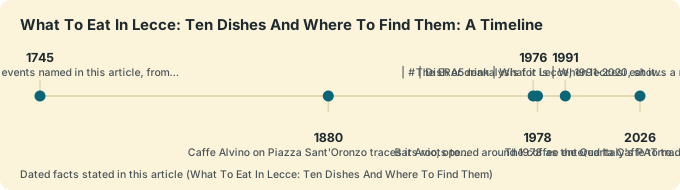
Two institutions anchor the pastry side of this list, and both are documented rather than invented. Caffe Alvino on Piazza Sant'Oronzo traces its roots to about 1880, and Pasticceria Natale has been family-run since 1978. Beyond those two names, this page does not recommend individual venues, because no ranking is offered here; the sit-down restaurant round-up is separate.
A guided walk is the most efficient way to sample several of these in one morning, and the site's featured food walk pairs the old town with its underground spaces and a tasting stop. The Two-Hour Underground Walk with food tasting is the related tour for this page, and its figures render in the blocks below.
Where Did The Pasticciotto Come From, And Where Do You Find It In Lecce?
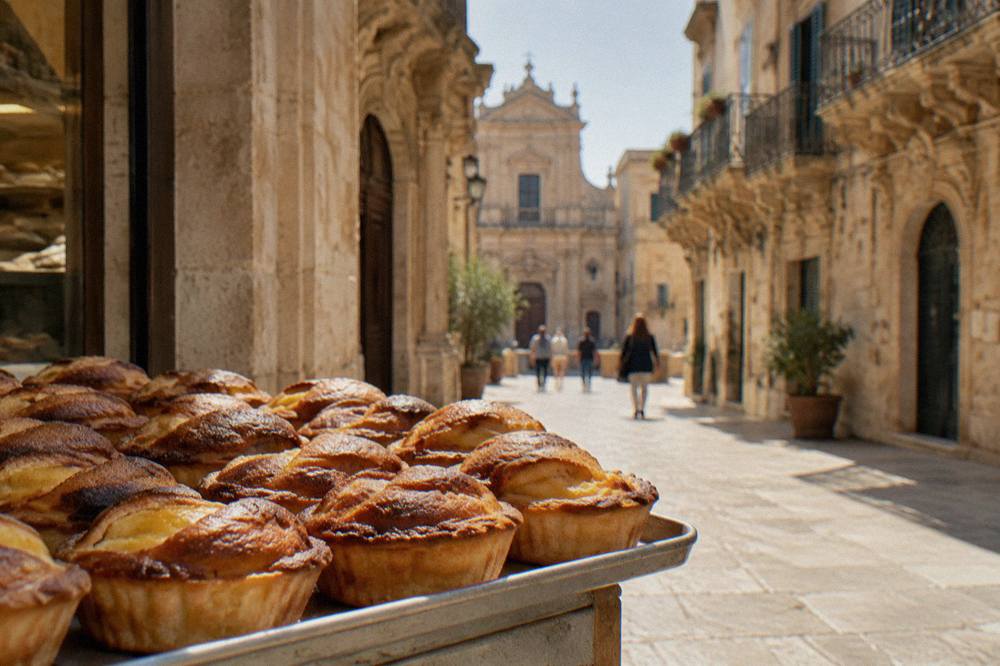
The pasticciotto is a small oval shortcrust pastry filled with egg custard and baked until the crust is golden, eaten warm at breakfast, and the famous 1745 invention date belongs to Pasticceria Ascalone in Galatina, a town about 26 km from Lecce, which claims the pastry itself, while historians dispute the date, so treat the story as the shop's own claim rather than fact. In Lecce the pastry is everywhere: pastry counters, bars, and the historic cafes around Piazza Sant'Oronzo all bake it through the day, because a pasticciotto served cold from a morning batch is considered past its best by early afternoon. The full story of the pastry, its variants and its disputed origin has its own page, the pasticciotto guide.
The origin story is worth telling carefully because it is repeated loosely all over Salento. As the telling goes, the Ascalone family, preparing sweets for a patron saint's feast in Galatina, had leftover shortcrust and custard, combined them in small copper moulds, and the accidental result was served to a local nobleman. The shop still stands by the story. What cannot be printed as fact is the 1745 date or even Galatina's absolute priority, because food historians have pointed to earlier references and thin documentation. None of that diminishes the pastry.
A "Santo Pasticciotto" at Pasticceria Natale was reported at 2.20 euro, which gives a realistic sense of what a single pastry costs at a Lecce counter, though prices vary and should be checked at the counter. Variants worth knowing are the pasticciotto with amarena (sour cherry), with cioccolato (a chocolate-custard filling), and the deep-fried version some bars offer in summer.
| Pasticciotto variant | Filling | Notes |
|---|---|---|
| Classico | Egg custard | The standard, served warm |
| Amarena | Custard with sour cherry | Common summer variant |
| Cioccolato | Chocolate custard | Regular at most counters |
| Fritto | Custard, deep-fried | Occasional summer special |
What Is A Rustico Leccese, And When Do Leccesi Eat It?
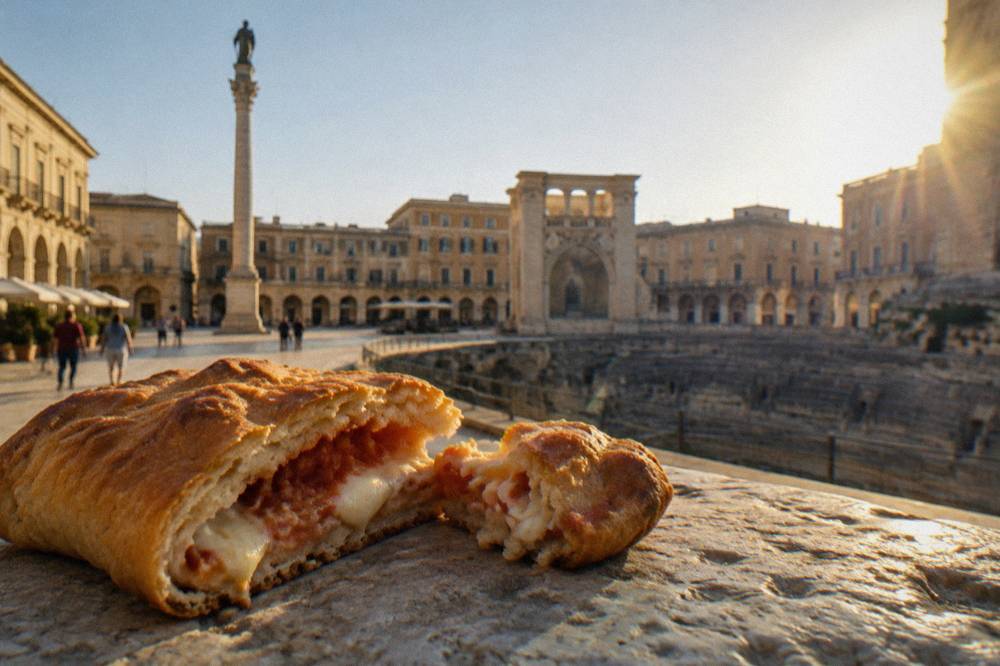
The rustico leccese is a round savoury snack made of two layers of puff pastry sealed around a filling of bechamel sauce, mozzarella or fior di latte, tomato pulp and pepper, baked until the pastry puffs and dries, and leccesi eat it mid-morning or late afternoon as a bar snack, warm rather than hot, often with a coffee or a beer. Its origins are uncertain: the plausible account places it in the late 18th or 19th century as an aristocratic or bar invention influenced by the French vol-au-vent, and it cannot be older than the era of widely available puff pastry. Like the pasticciotto it is counter food, bought one at a time and eaten within minutes of leaving the oven.
The filling balance is what separates a good rustico from a bad one. Too much bechamel and the pastry base goes sodden; too little tomato and the richness wins. The pepper note, sometimes with a hint of nutmeg in the bechamel, is what makes the snack taste specifically Salentine rather than generically Italian. It is filling in a way its modest size does not advertise: one rustico is a snack, two approach a lunch.
What Is Caffe In Ghiaccio Con Latte Di Mandorla?
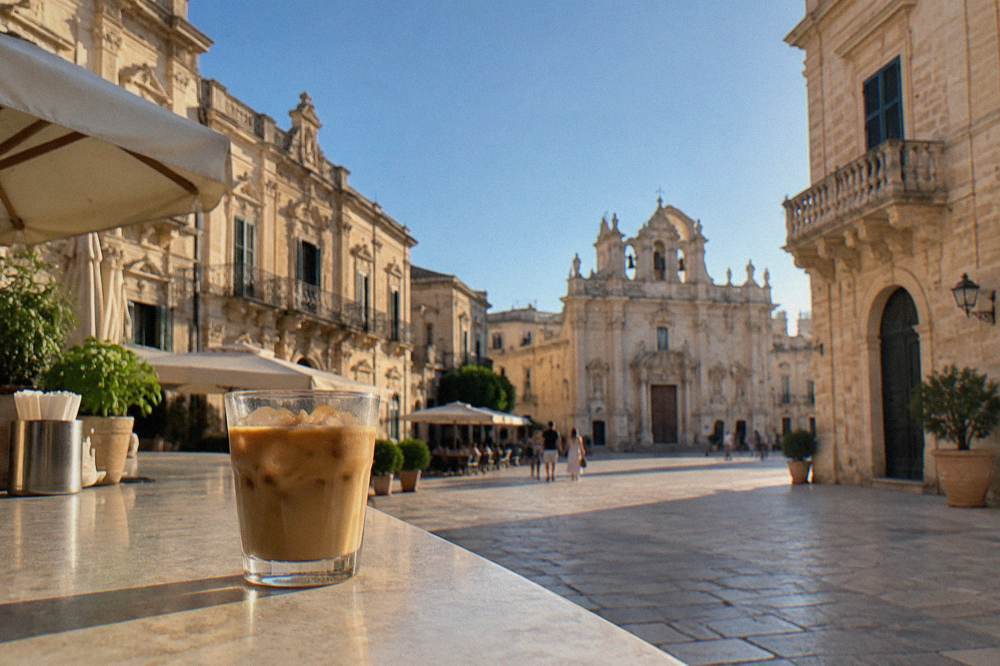
Caffe in ghiaccio con latte di mandorla, the drink often shortened to caffe leccese, is an espresso poured over ice cubes in a glass with almond milk syrup added, traditionally unsweetened because the almond syrup carries the sugar, and it is credited to Antonio Quarta of Quarta Caffe in Lecce in the 1940s or 1950s as an iced-coffee variant that then spread with almond milk across the Salento bars. The method matters more than the ingredients list: the espresso goes over the ice first, the almond milk goes in after, and the drink is left unstirred so the drinker controls the mixing. The coffee entered Italy's PAT traditional-food list around 2026, a recognition of how specifically local it remains.
Lecce's summer heat is the context. The ERA5 reanalysis for Lecce, 1991-2020, shows a mean daily high of about 31 C in July and August, and an iced, almond-sweetened espresso is the city's structural answer to an afternoon at that temperature. Bar Avio, opened around 1978 as the Quarta Caffe torrefazione bar, is the other documented institution in this story and a long-running one. The city's cafe culture and its climate are covered separately in the Lecce weather guide.
What Breads And Street Snacks Fill A Lecce Lunch?
The two breads that matter in Lecce are puccia, a soft flat Salento bread often split and filled like a sandwich, and frisa, a hard twice-baked bread ring that is soaked in water until it yields and then dressed with olive oil, tomato, oregano and sometimes capers, and together with ciceri e tria, the fried-and-boiled pasta with chickpeas that is the region's historic peasant dish, they carry the savoury side of Salento cooking at lunch. Puccia is the street version, sold from bakeries, and fountains of it appear at village feasts. Frisa is the summer version, assembled in minutes and needing no heat. Ciceri e tria is the Sunday version, older than both, in which part of the fresh pasta is fried crisp and the rest boiled with chickpeas.
The thread through all three is poverty cooking perfected. Salento was a poor agricultural region, and its defining dishes use inexpensive raw materials, dried or twice-baked for storage, combined with the region's one great product, olive oil. The result is food that survives on counters and in heat, which is exactly why it translates so well to a visitor's day of walking the centro storico between baroque facades.
| Bread or dish | Base | How it is served | Best time |
|---|---|---|---|
| Puccia | Soft flat bread | Split and filled, sandwich-style | Lunch |
| Frisa | Hard twice-baked ring | Soaked in water, dressed with oil and tomato | Summer lunch |
| Ciceri e tria | Fresh pasta and chickpeas | Part fried, part boiled, mixed | Traditional main meal |
| Tarallo Salento | Ring-shaped baked dough | Snacking | Any time |
What Should You Drink With A Lecce Meal?
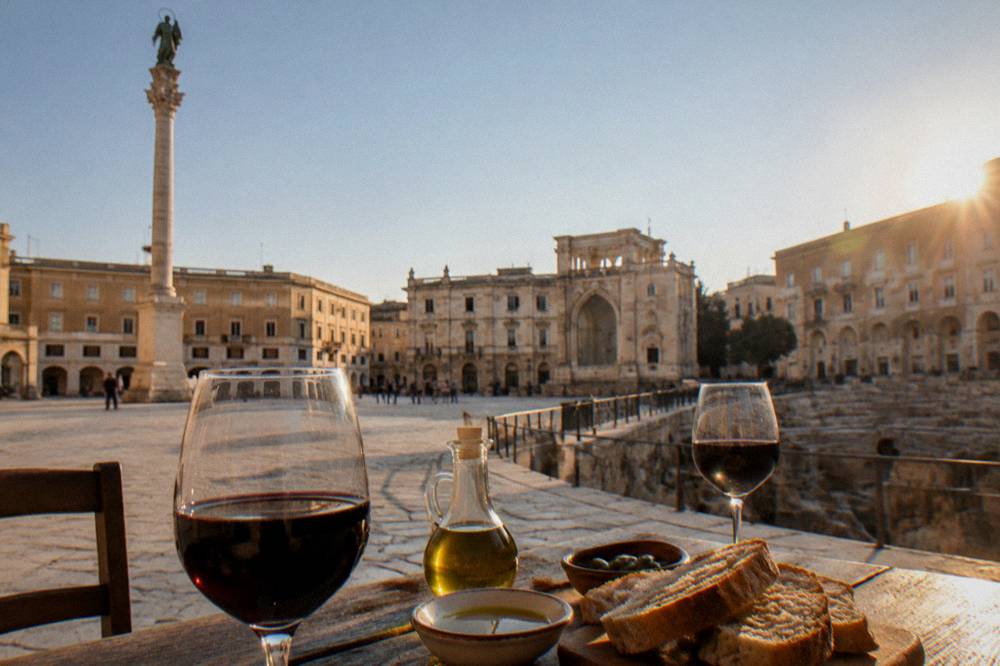
The two wines to know in Lecce are Negroamaro, the dark-skinned red grape that is the base of many Salento wines and gives them their name, meaning bitter-black in the local dialect, and Salice Salentino DOC, the appellation established in 1976 around Negroamaro that covers the provinces of Lecce and Brindisi, with Primitivo di Manduria, centred just over the provincial border around Manduria, as the neighbouring heavyweight. Salice Salentino exists in rosso, rosato and Negroamaro variants, and the rosato in particular is tuned to the region's summer drinking, pale, chilled and slightly bitter in the way the grape insists on being.
The wine culture here is bulk-heritage turned quality. For decades Salento grew grapes for strength and volume; the appellation framework, beginning with Salice Salentino's recognition in 1976, reframed the same grapes as bottles worth naming. A tasting in Lecce, or a winery stop on a day trip toward Manduria or Galatina, is the practical way into it, and the verified wine and food tasting experiences on the site cover both old-town and countryside settings.
| Wine | Grape | Notes |
|---|---|---|
| Salice Salentino DOC | Negroamaro-based | Established 1976, Lecce and Brindisi provinces |
| Primitivo di Manduria | Primitivo | DOC centred on Manduria, Taranto province |
| Negroamaro rosato | Negroamaro | The chilled summer pour of Salento |
How Do You Turn Eating In Lecce Into A Guided Experience?
The practical way to eat Lecce with a guide is a food-focused walking tour of the centro storico, which strings together pastry counters, bars and street snacks with the city's history and its underground spaces, and the site's featured tour of this kind is the walking tour of Lecce and its undergrounds with food tasting, which pairs the sights with tastings along the route. For visitors who want to cook rather than walk, pasta classes in Lecce cover orecchiette and the Salento repertoire, and some run in family homes or historic courtyards in and around the city. The advantage of the guided format is coverage: a morning walk passes several of the ten foods on this page in sequence, with the stories attached.
The choice between the formats is straightforward. A tasting walk suits a first visit and a short stay, because it doubles as an orientation to the old town. A cooking class suits a longer stay or a repeat visit, and it sends you home with a recipe rather than a receipt. A rickshaw or bike highlights tour, food aside, covers the same streets faster for travellers with limited mobility or time.
Readers planning the wider trip can combine the food stops with the sightseeing framework in the things to do in Lecce round-up, or with a regional route from the Puglia itinerary.
What Sweets And Snacks Fill The Festival Calendar Around Lecce?
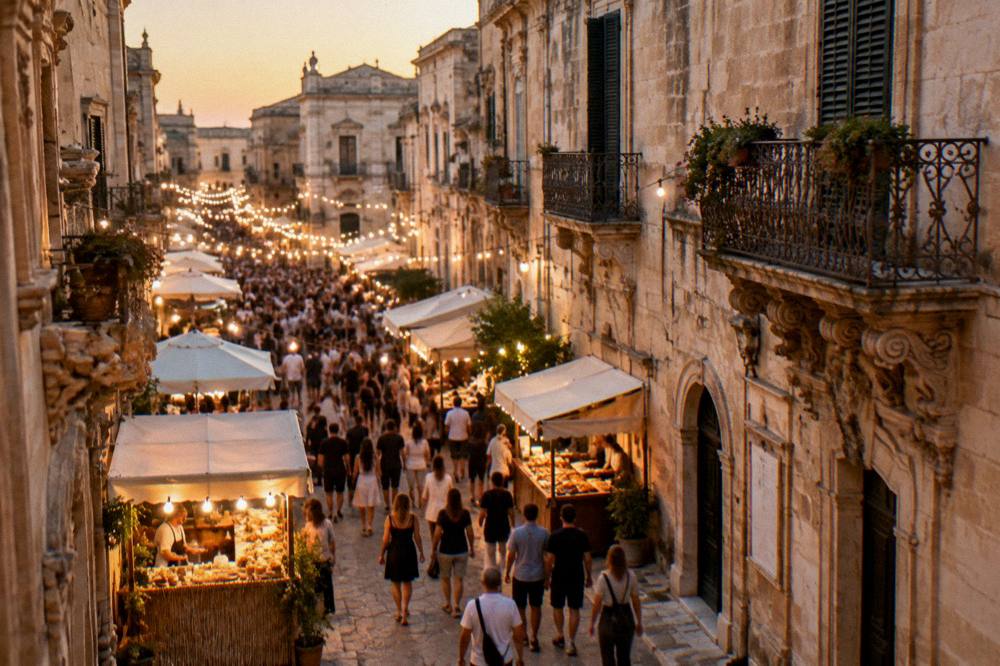
The Salento festival calendar supplies its own food, and the documented anchors are the Fiera dei Pupi, the papier-mache Christmas fair that traditionally runs in Lecce in December with accompanying artisan and food stalls, and the summer sagre, the village food festivals that serve single dishes such as puccia, frisa and ciceri e tria at long trestle tables, with the Festa di Sant'Oronzo, Lecce's patronal feast held 23 to 26 August in its 2026 edition, filling the city centre with fair food and luminarie. The pattern repeats across the peninsula: each town honours its saint with lights and a food focus, and the dishes are the same ones on this page, cooked in quantity outdoors.
December in Lecce has its own draw. The Fiera dei Pupi, at the ex-Convento dei Teatini in its recent editions, is where the city's papier-mache tradition, covered in the Lecce papier mache guide, meets its Christmas market culture, and the surrounding streets fill with sweets and roasted chestnuts. The Concertone of the Notte della Taranta at Melpignano in late August, 22 August 2026 in its 29th edition, is the region's biggest single draw and is covered in the Notte della Taranta guide, with street food at scale around the piazza.
What Should You Eat Beyond Lecce On A Food Day Trip?
The documented food day trips from Lecce run to Galatina, about 26 km away, home of the disputed pasticciotto origin and the free-entry Basilica di Santa Caterina d'Alessandria, to the wineries of the Salento plain inland toward the Salice Salentino zone, and to the coastal towns of Otranto and Gallipoli, where the same dishes meet the fish restaurants of the two coasts, with the Adriatic 27 minutes' drive to Torre dell'Orso and the Ionian about 34 minutes to Porto Cesareo. The countryside around the city is masseria country, fortified farm estates that historically produced the olive oil, wine and wheat behind every dish on this page; several now run visits and tastings.
The logic of the region's food becomes clearer with the map. Lecce sits inland at the centre of the peninsula, and everything it eats comes from a short radius in one direction or another: almonds and durum wheat from the plain, olives and Negroamaro from the red-soil vineyards, seafood from two seas on either side. A day trip that stitches together a winery, a masseria and a coastal lunch is effectively a tour of the supply chain.
| Food day trip from Lecce | Distance by road | Food focus |
|---|---|---|
| Galatina | about 26 km | Pasticciotto origin claim, basilica town |
| Otranto | about 47 km | Adriatic fish, historic centre |
| Gallipoli | about 41 km | Ionian seafood, old-town island |
| Porto Cesareo | about 28 km | Fish restaurants, flat sandy coast |
| Salento wineries inland | varies | Negroamaro, Salice Salentino DOC |
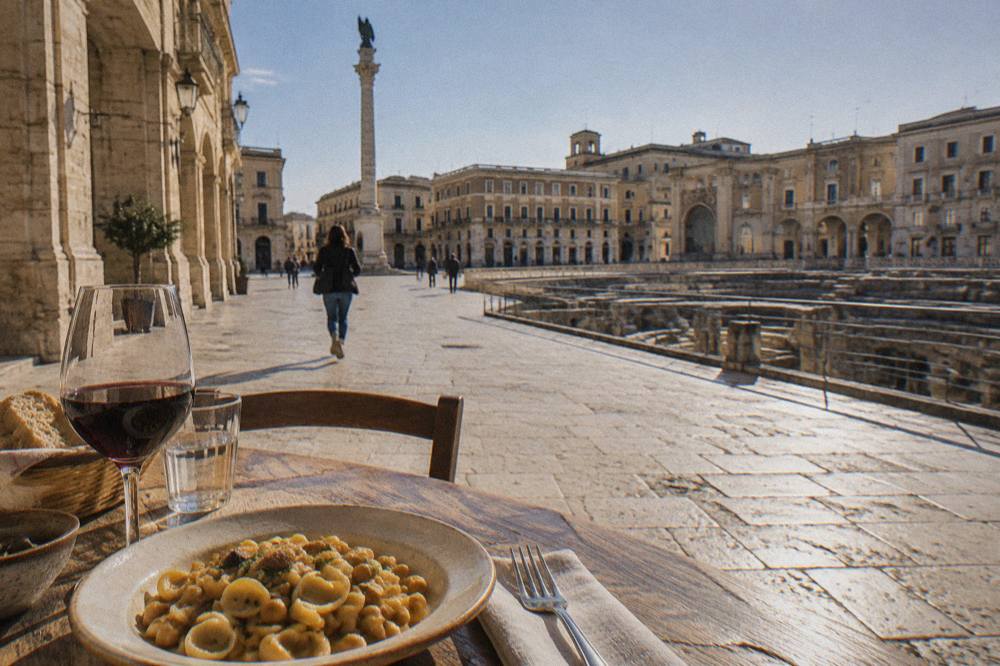
What Does A Day Of Eating In Lecce Actually Look Like?
A realistic food day in Lecce starts with a warm pasticciotto and a coffee at a bar around Piazza Sant'Oronzo in the morning, continues with a rustico as a mid-morning snack, moves to a puccia or a frisa with oil and tomato at lunch, pauses in the afternoon heat for a caffe in ghiaccio con latte di mandorla, and ends with an aperitivo or dinner paired with a Salice Salentino, and the whole day can be walked between the bars and counters of the centro storico without transport. The rhythm is the point: Salento eating is structured around small acts repeated through the day, not one big meal.
The timing follows the climate. In July and August, with mean highs around 31 C by the ERA5 reanalysis, 1991-2020, the serious eating happens at lunch and late dinner, and the afternoon belongs to the iced coffee. In the cooler months the pasticciotto counters keep going and the Christmas fair season adds its own layer. Visitors working out when to come can weigh the food calendar against the best time to visit Lecce guide.
For travellers who want the cooking rather than the eating, a pasta class in the city covers the orecchiette and the sauces that go with them, and the class below is the site's featured option for that.
Where Does Lecce Food Fit In The Wider Puglia Picture?
Lecce's food is the southern tip of a Puglian repertoire that runs through Bari's raw seafood and orecchiette, the bombette pork rolls of the Itria valley towns like Ostuni, Alberobello and Locorotondo, the burrata of the Murgia plateau around Andria, and the fish markets of Taranto and Gallipoli, but Lecce's specific contributions are the pasticciotto and the caffe in ghiaccio, both claimed here, and the Negroamaro-based wines that belong to the Salento plain. The breads, the durum-wheat pasta and the olive oil are shared across the region; the pastries and the iced coffee are the local signatures, and the wine changes character visibly as you move north from Primitivo country into Nero di Troia country.
A traveller eating their way down the region will notice the shift. Burrata gives way to the spicier, simpler cheeses of the deep south; the bread flattens into puccia; the wine darkens into Negroamaro. Lecce is where that transition completes, and it is a compact enough city, walkable end to end, that the whole of its food culture sits within a morning's radius of Piazza Sant'Oronzo. The regional frame is laid out in the Salento guide.
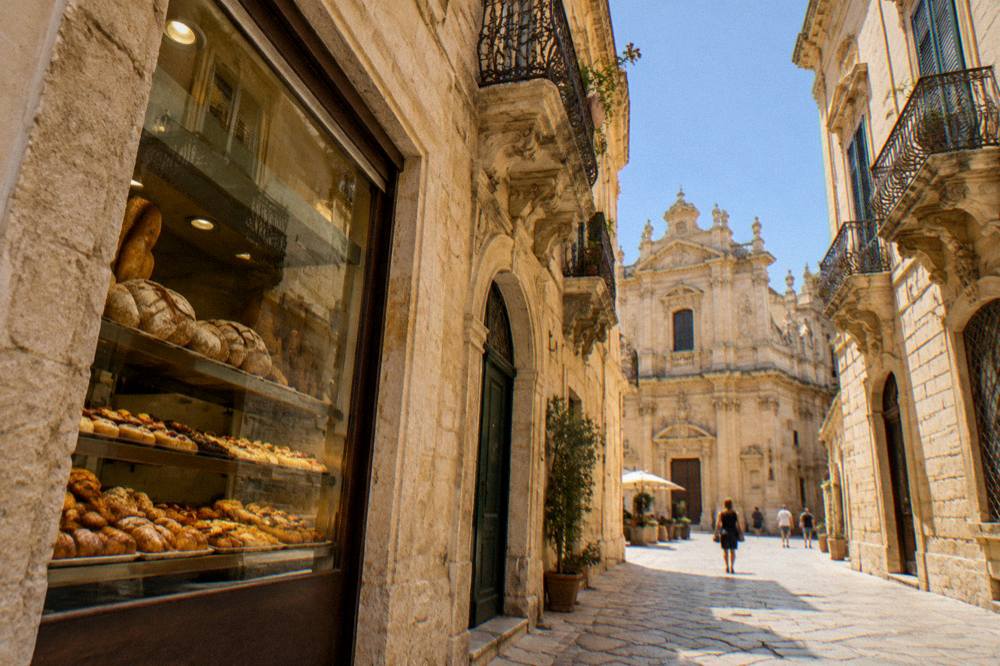
Common Questions About Eating In Lecce
What is the most famous food in Lecce?
The pasticciotto, the warm custard-filled shortcrust pastry, is the city's signature sweet, and caffe in ghiaccio con latte di mandorla is the signature drink. The savoury counterpart is the rustico leccese.
Was the pasticciotto invented in Lecce?
No. The 1745 invention claim belongs to Pasticceria Ascalone in Galatina, about 26 km from Lecce, and historians dispute the date. Lecce adopted the pastry thoroughly, but the origin story is the shop's own claim.
What is a rustico leccese made of?
Puff pastry around a filling of bechamel, mozzarella or fior di latte, tomato and pepper, baked until the pastry is dry and golden. It is eaten warm as a mid-morning or afternoon bar snack.
What is caffe in ghiaccio con latte di mandorla?
Espresso poured over ice cubes with almond milk syrup added, traditionally unsweetened. It is credited to Antonio Quarta of Quarta Caffe in Lecce in the 1940s or 1950s.
What wine should you drink in Lecce?
Negroamaro-based wines, above all Salice Salentino DOC, established in 1976 across the provinces of Lecce and Brindisi. Primitivo di Manduria is the neighbouring major appellation.
Is food in Lecce expensive?
Counter food like pasticciotto and rustico is cheap by design; a reported single-pastry price is 2.20 euro at one documented Lecce pastry shop. Sit-down restaurant pricing varies and should be checked directly.