Lecce Papier Mache: Workshops, Shops And The Museum
Cartapesta is the craft that gave Lecce its saints, its nativities and its Christmas fair. Here is what it is, where to see it, and how to try it yourself.
Short answer
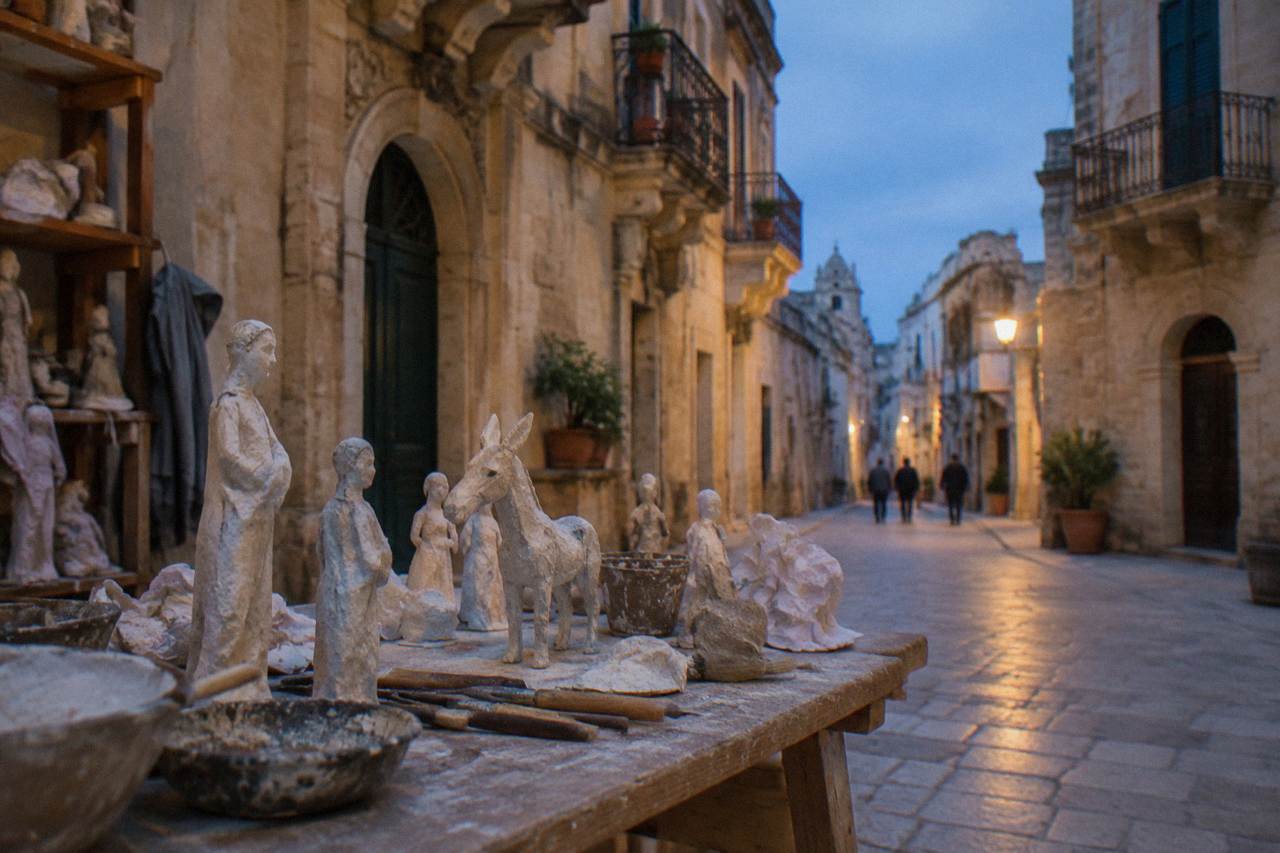
Papier mache, cartapesta in Italian, is Lecce's signature craft: religious figures and nativity scenes built from paper, glue and molds, developed because pietra leccese was cheap to carve for grand facades but wood was scarce in Salento. You can see it inside Castello Carlo V's Museo della Cartapesta (guided tour only), in churches across the old town, and make it yourself in bookable workshops.
Lecce, the baroque capital of Salento in Puglia, southern Italy, is famous for facades carved from honey-coloured pietra leccese, but its other great art is made from something far humbler: paper. Cartapesta, papier mache, is the craft behind the city's processional statues, its nativity figures and its Christmas fair, and it is one of the few Italian crafts a visitor can still learn in an afternoon. A few kilometres inland from the Adriatic, with the Ionian coast on the far side of the peninsula, Lecce built its churches from soft Miocene limestone and filled them with figures built from paper and glue. This guide from the Lecce Travel Guide editorial desk covers what the sources say about the tradition, where to see it, and how to book a workshop.
What Is Lecce Papier Mache, And Why Does The City Have It?
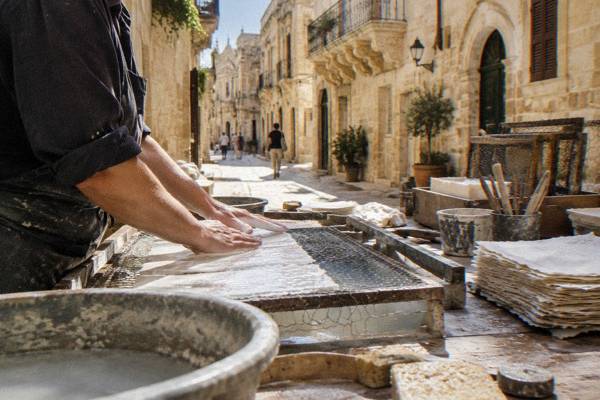
Lecce papier mache, cartapesta in Italian, is the local tradition of building statues, saints and nativity figures from layered paper and glue pressed into molds, then gilded and painted. It took hold in Salento because the region's trees were scarce and imported wood expensive, while paper, glue and plaster were cheap, so churches that could not afford carved wooden statuary could still fill their altars and processions with figure work that looked solid from the street.
The craft grew up alongside the baroque building boom that reshaped Lecce. The same soft local limestone that made ambitious facades affordable created a city of churches, and every one of those churches wanted statues. Cartapesta filled the gap between what a parish could pay a sculptor and what it actually needed on its altars and in its Good Friday processions.
InfoLecce, the local culture site, describes the technique in plain terms: paper, glue, molds, and the hands of a maestro cartapestaio. The finished object is hollow, light enough to be carried through streets on shoulders during feast days, and durable enough that figures from family botteghe are passed down. The tradition remains a living trade rather than a museum piece: artisan workshops still operate in and around the historic centre, and the city runs a dedicated Christmas fair for the craft, the Fiera dei Pupi.
What makes it distinct from school-room papier mache is the finishing. Figures are sanded, primed, painted in oils or tempera, and often dressed in real fabric stiffened with glue, so a finished saint reads as sculpture from a few paces away. The skill sits in the modeling and the painting, not the material. A cartapestaio starts from a plaster or clay mold built up over a wire and straw armature, laminates torn paper and paste layer by layer, and only reaches the decorative work once the shell has dried hard. The whole sequence is slow, repetitive and forgiving of mistakes, which is exactly why it suits a first-time workshop participant as well as a lifetime artisan.
The material economy of the craft also explains its spread beyond Lecce itself. Parishes across the Salento plain, from small inland towns to the fishing villages on both coasts, ordered from the Lecce botteghe, and the fair and the feast calendar kept demand alive across generations. Even today the craft is tied to the religious year: workshops ramp up toward Christmas for nativity work and toward summer for the processions of the patronal feasts.
Where Did Cartapesta In Lecce Come From?
Cartapesta in Lecce developed as a poor-materials answer to a rich-looking city: with little timber in Salento and pietra leccese reserved for architecture, artisans turned to paper, glue and plaster to produce religious figures cheaply, and the craft consolidated around the historic centre's botteghe, workshops that served churches across the province. The dates and founding names are not established in the sources, so this page does not print any.
The details of who first made what, and when, are contested in exactly the way craft histories usually are. What the sources do support is the economic logic. Southern Italy in the centuries of the baroque had no shortage of demand for devotional imagery and a real shortage of walnut and lime wood. Paper was available, and the technique of laminating it over a clay or plaster mold produced a hard shell once dried.
The connection to Lecce's baroque architecture is structural, not just atmospheric. The city's altars, niches and feast-day processions were the craft's client base. A statue that had to be carried through narrow streets by a dozen men needed to weigh far less than wood allowed, and cartapesta delivered that. The stone and the paper are two halves of one decorative programme: pietra leccese for the exteriors, because it carved like soap when freshly quarried and hardened on exposure, and cartapesta for the movable and replaceable figures inside.
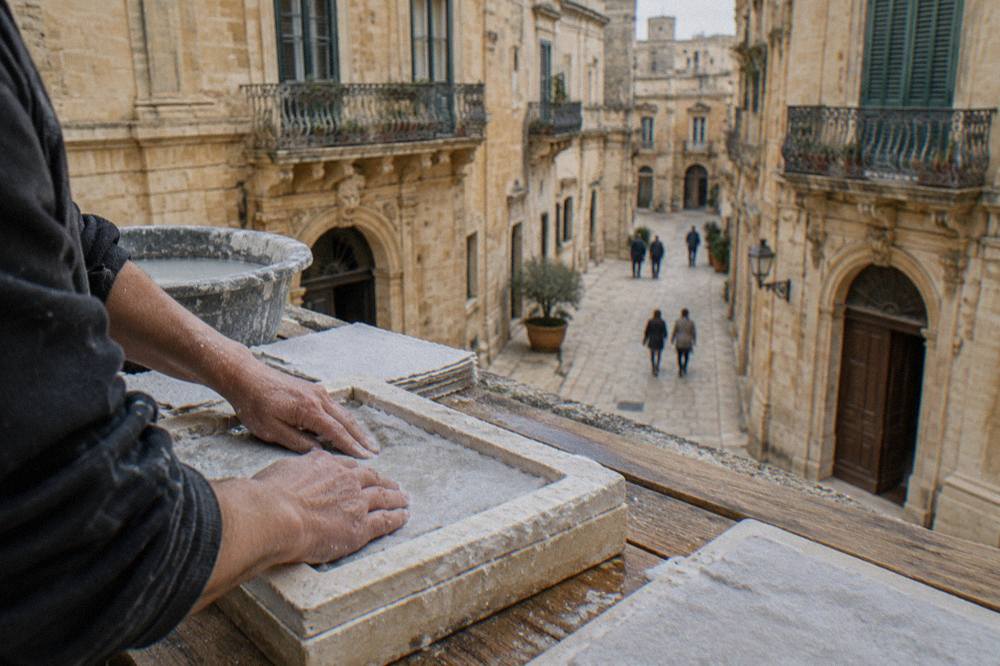
The trade also fed the nativity tradition, the presepe. Lecce families and churches built elaborate nativity scenes, and the figures came from the same workshops as the saints. That side of the craft survives most visibly in the December Fiera dei Pupi, where papier mache pupi, figures, are the centre of the fair.
If your trip is built around seeing the craft in place, these pages pair naturally with the workshops and museum visits below.
Where Can You See Papier Mache In Lecce?
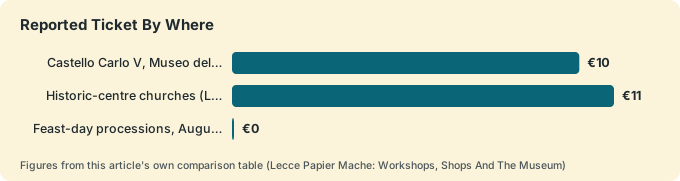
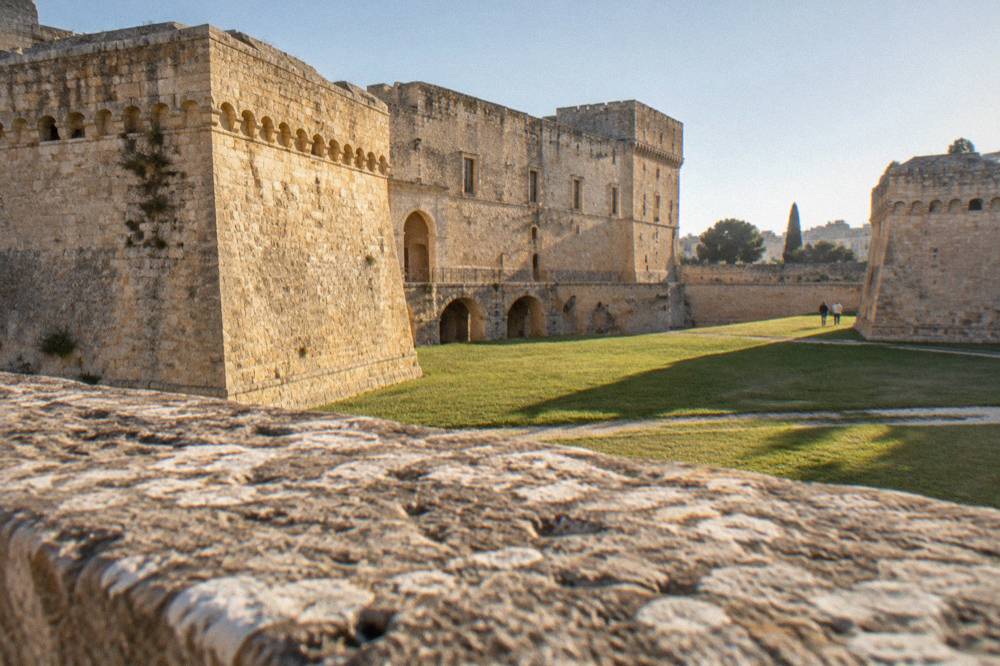
The Museo della Cartapesta sits inside Castello Carlo V, and it is included in the castle's guided tour: the interior is visitable only on a guided tour, Tuesday to Sunday, at 10 euro full, 6 euro reduced, free to age 11, with tours at 10:30, 11:30, 12:30, 16:00, 17:00, 18:00 and 19:00 from October to May. Beyond the castle, cartapesta figures are displayed in churches across the historic centre and carried in the city's processions.
The castle is the single best address for the craft, because its museum is dedicated to it. Il Castello di Lecce's own page confirms the tour-only access and the ticket prices above. The detail of what the papier mache displays contain was not established in the sources, so this page describes the craft rather than the specific exhibits; ask at the ticket point what is currently on show. The castle also hosts exhibitions on other themes: "La materia dei sogni" runs 17 July 2026 to 10 January 2027 at 8 euro, with a combined castle-plus-exhibitions ticket at 15 euro. Only the courtyard area is free.
Planning around the tour times matters more here than at a walk-in museum. With fixed departure slots through the day, arriving fifteen minutes before a listed time is the safe play, and the Monday closure is easy to forget when the rest of the old town runs seven days a week. The castle sits close to the centre, so it pairs naturally with a morning church circuit or an afternoon workshop.
The second way to see cartapesta is in situ, in the churches. Devotional figures in Lecce's churches include work in cartapesta alongside stone and wood, and the city's ticketed church circuit, covered in detail on things to do in Lecce, puts you in the rooms where the figures live. Santa Chiara, on the LeccEcclesiae circuit, is one such interior; its details are on the Santa Chiara page.
The third way is seasonal. At Christmas the craft takes over the ex-Convento dei Teatini for the Fiera dei Pupi, covered below, and in August the Festa dei Santi Patroni puts processional figures on the street. The 2026 patronal festivities ran 23 to 26 August, and the processions are the one moment when cartapesta stops being an exhibit and does the job it was built for: being carried.
| Where | What You See | Access | Reported Ticket |
|---|---|---|---|
| Castello Carlo V, Museo della Cartapesta | Dedicated papier mache museum displays | Guided tour only, Tue to Sun | 10 EUR full, 6 EUR reduced, free to age 11 |
| Historic-centre churches (LeccEcclesiae circuit) | Devotional figures in situ | Combined church ticket | 11 EUR standard, 15-day validity |
| Fiera dei Pupi, ex-Convento dei Teatini | Papier mache pupi and nativity work for sale | Fair entry, early to 24 December pattern | Fair entry terms set each year |
| Feast-day processions, August | Processional statues carried through streets | Public streets, free | Free |
For planning the church side of it, the ticket structure and validity are covered on how the Lecce churches ticket works, and the wider baroque context sits on the Lecce baroque page. The MUST museum and the Museo Castromediano round out the city's museum circuit if the castle visit leaves time.
Can You Take A Papier Mache Workshop In Lecce?
Yes, and a workshop is the most direct way into the craft: bookable sessions in Lecce cover the full sequence, pressing paper into molds, building up layers, and finishing a piece, with materials provided and an artisan walking the room. Prices, ratings and durations render in the product blocks below rather than in this text, because those figures live on the operators' live listings and change.
A workshop is not a demonstration. You work the material. InfoLecce's craft pages describe the practical sessions run with masters using paper, glue and molds, the same sequence the botteghe use. Sessions of this kind suit adults and patient children alike, and they end with a finished object to take home, which is more than most city visits give you.
The shorter and longer options below cover different depths: one is a compact class, the other a fuller workshop session. Both are operated experiences booked through their live listings.
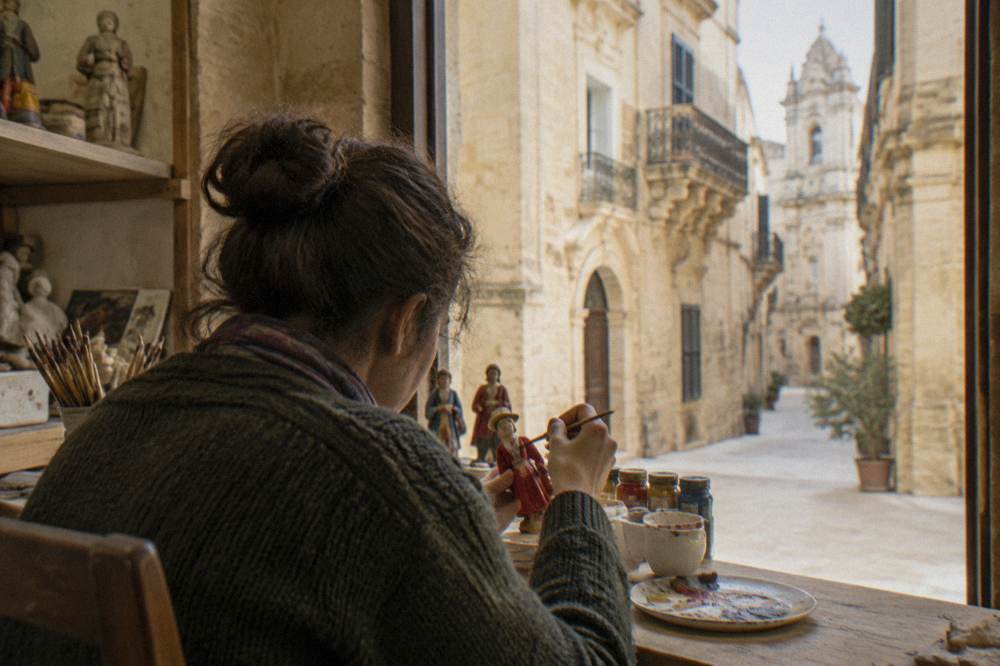
If you would rather watch the craft than practice it, ask at the castle ticket point what the museum currently displays, and time a December visit around the Fiera dei Pupi, when the workshops sell directly to the public.
Two practical notes for workshop day. Wear clothes that can take a smear of paste, since the glue is water-soluble but persistent, and check the listing for the meeting point before you set out, because sessions are sometimes held in a bottega off a courtyard rather than on a main street. Everything else, including materials and tools, is normally provided as part of the session.
What Is The Fiera Dei Pupi, Lecce's Papier Mache Christmas Fair?
The Fiera dei Pupi is Lecce's traditional papier mache fair, held in December at the ex-Convento dei Teatini, where cartapesta artisans sell pupi, figures and nativity work directly to the public. The 2025 edition ran from early December to 24 December, and the comune's norms document for the fair is the primary source; 2026 dates had not been published, so confirm on the comune's site before planning a visit.
The fair is the craft's shop window. It grew out of the nativity tradition, and it still centres on figures: shepherds, animals, holy-family scenes and the puppet-like pupi that give the fair its name. Artisan stallholding is regulated by the comune, which publishes participation norms each year, a sign that the exhibitor list is curated rather than open.
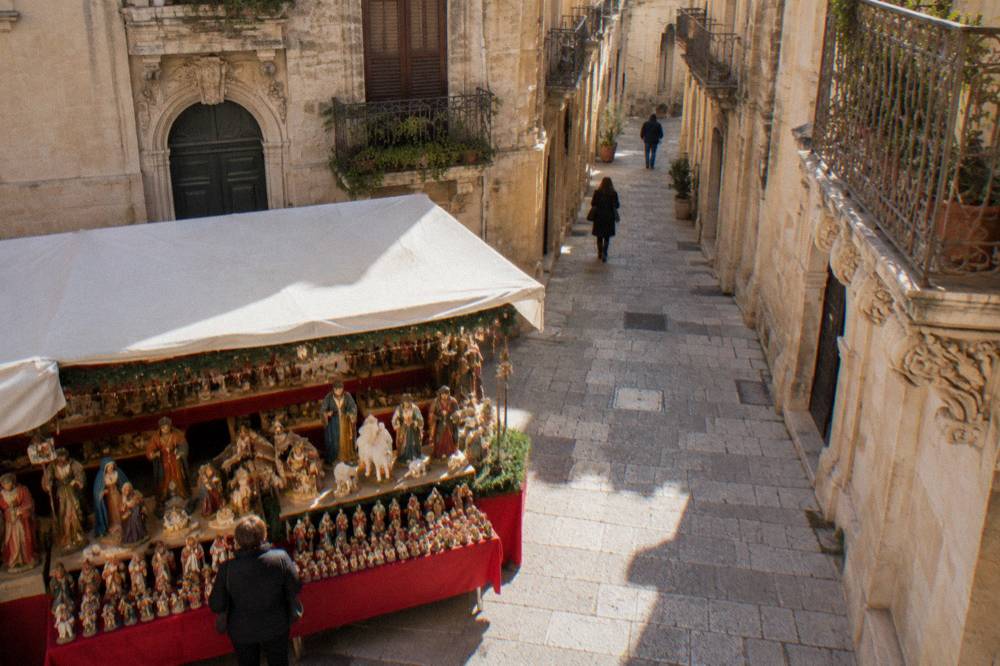
A December visit stacks well. The fair runs alongside broader Christmas lighting and artisan markets in the city, and the winter church hours, 9:00 to 18:00 on the LeccEcclesiae circuit, leave late afternoons free for the stalls. For the season overall, see the best time to visit Lecce and the Lecce weather page.
| Element Of The Fiera Dei Pupi | What The Sources Say |
|---|---|
| Venue | Ex-Convento dei Teatini, Lecce |
| Timing | Early December to 24 December, per the 2025 pattern |
| 2026 dates | Not published; confirm with the comune |
| Core goods | Papier mache pupi, nativity figures, artisan work |
| Regulation | Comune participation norms issued each year |
How Do You Tell Real Cartapesta From Souvenir-Grade Work?
Genuine cartapesta is hollow, light for its size, and shows lamination and hand-finishing: layered paper visible at edges or base, brushwork rather than spray-flat paint, and often real fabric stiffened into the drapery. Mass-produced resin or pressed-card figures are heavier, uniform and glossy, and the honest test is weight plus the base, where a handmade piece usually shows the raw paper layers.
No shop was individually checked for this page, so it names no addresses and prints no prices. What the sources support is the technique itself, and the technique is the authentication. A figure built over a mold is a shell; pick it up and the lightness tells you. Look at the underside.
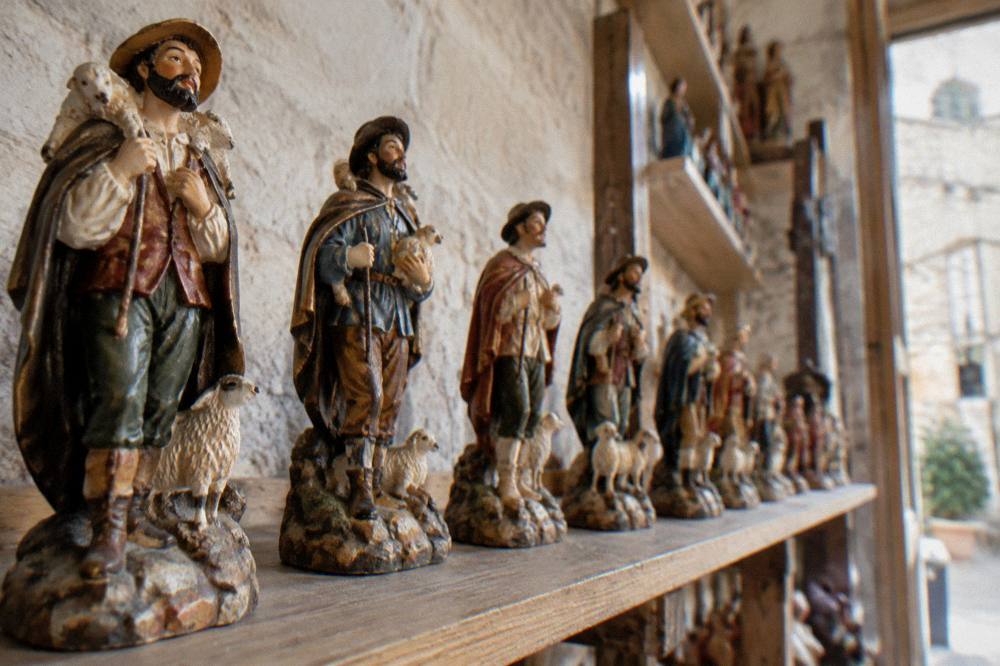
Hand-painting leaves evidence too. Cartapesta faces are built up in thin layers, so cheeks and eye sockets show subtle tonal shifts rather than a single flat flesh tone, and drapery folds are shaded individually. Price is a weak guide, because a small piece from a working bottega can cost less than a heavy resin import sold on a main shopping street; the material tells you more than the tag does.
The best buying windows are the ones where makers sell direct: the Fiera dei Pupi in December, and any workshop visit where pieces are sold from the bench. For the broader shopping picture, the comune's fair norms and InfoLecce's artisan listings are the reference points, and prices should always be asked at the stall.
When Should You Plan A Cartapesta Trip To Lecce?
December is the craft's month: the Fiera dei Pupi runs toward 24 December, church interiors are on winter hours, and the city's Christmas lighting is up. For workshops rather than fairs, any month works, since bookable sessions run year-round; the ERA5 reanalysis, 1991-2020, gives Lecce a December mean high of 13.5 C and October rainfall of 91.3 mm, with November the wettest month at 93.7 mm, so pack for cool, damp evenings either side of the fair.
The trade-off is straightforward. December delivers the fair but the shortest days and the dampest weather of the calendar. A spring or early-autumn trip gives pleasanter walking conditions for the church circuit and the castle tour, with the workshops unaffected by season. The full monthly picture is on the Lecce weather page.
| Period | ERA5 Reanalysis, 1991-2020 (Mean High / Rain) | Fit For A Cartapesta Trip |
|---|---|---|
| October | 21.8 C / 91.3 mm | Castle tour and workshops; fair not yet running |
| November | 17.3 C / 93.7 mm | Wettest month; indoor craft focus suits it |
| December | 13.5 C / 75.5 mm | Fiera dei Pupi season, Christmas lighting |
| March | 15.4 C / 64.9 mm | Workshops and churches in cooler, quieter streets |
| May | 23.4 C / 39.9 mm | Comfortable for combining craft with coast days |
How Does Papier Mache Fit Into A Longer Lecce Itinerary?
Cartapesta slots cleanly into a two-part Lecce plan: one or two city days covering the castle museum, the church circuit and a workshop, then Salento day trips to Otranto or Gallipoli by tour, train or car. The castle tour and a workshop can share a single day if tour times are checked first, and the Fiera dei Pupi in December replaces nothing, it simply adds itself to whatever else is running.
The craft itinerary is mostly an indoor itinerary, which makes it weather-proof and a good anchor for the November-to-March visits that beach-focused Salento plans struggle with. Pair it with what to eat in Lecce and the best restaurants in Lecce for the evenings, and read where to stay in Lecce for the neighbourhood picture.
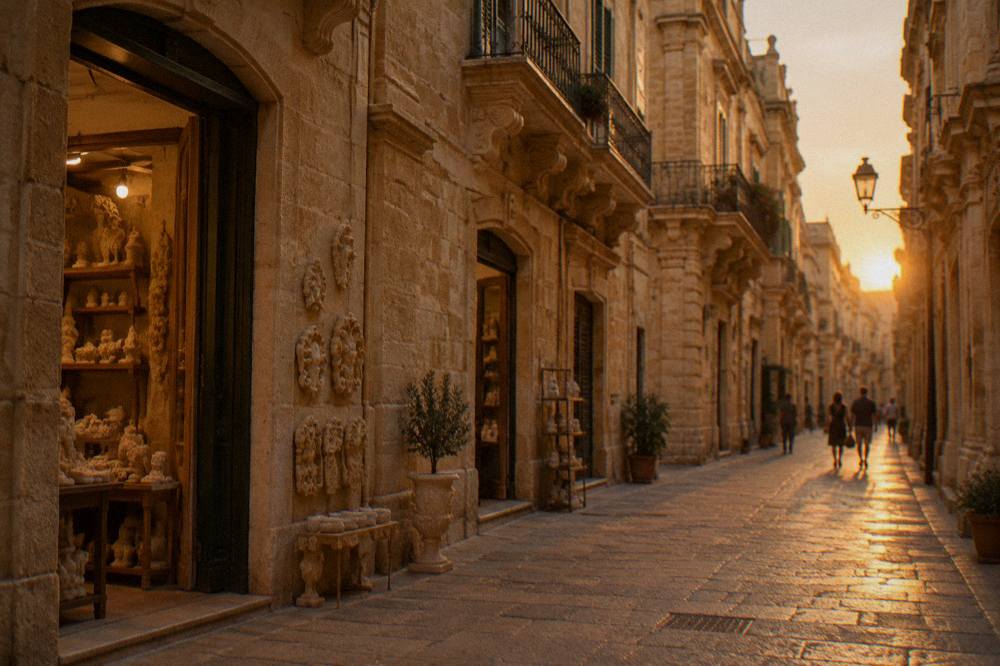
For the Salento leg, the two full-day options below cover the coast towns that pair naturally with a Lecce base. Both are operated day trips departing from the city.
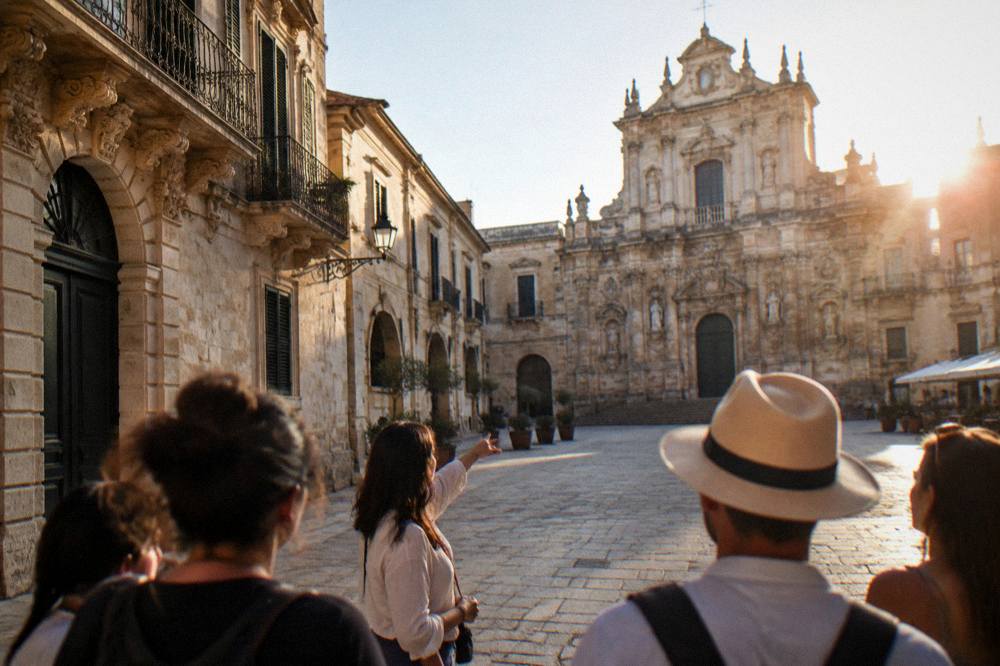
If you would rather move under your own steam, the getting around Lecce page covers the city buses, and the car rental and driving in Lecce page covers the ZTL rules that matter if you bring a car into the historic centre. A walking tour of the old town is a good orientation layer before any of it, and the option below is one such introduction.
Common Questions About Lecce Papier Mache
What is papier mache in Lecce called?
Cartapesta. The word covers both the material and the craft tradition, and a practitioner is a cartapestaio. The figures made for nativities and fairs are often called pupi.
Where is the papier mache museum in Lecce?
The Museo della Cartapesta is inside Castello Carlo V. It is included in the castle's guided tour, which is the only way to see the interior: Tuesday to Sunday, 10 euro full, 6 euro reduced, free to age 11, per the castle's own page. Only the courtyard is free.
Can you do a papier mache workshop in Lecce without speaking Italian?
Bookable workshops in the city are listed on operators' live listings, which state their language provision. Confirm the language in the tour details before booking rather than assuming.
When is the Fiera dei Pupi in Lecce?
The papier mache Christmas fair runs in December at the ex-Convento dei Teatini, on an early-to-24-December pattern in 2025. The 2026 dates had not been published; check the comune's site before travelling for it.
Is papier mache connected to Lecce Baroque?
Yes. The baroque churches built from pietra leccese created demand for devotional figures, and cartapesta met that demand cheaply in a region short of timber. The craft and the architecture grew together.
How much does a papier mache workshop in Lecce cost?
Prices are printed by the product blocks on this page from the operators' live listings, and they change, so check the listing for the current figure rather than relying on a printed number.
Cartapesta is the quiet half of Lecce's artistry, the half made from paper instead of stone, and it is the half you can take home in one hand. Check the castle tour times, pick a workshop, and if December is on the calendar, let the Fiera dei Pupi set the dates.