Where To Stay In Lecce: Inside Or Outside The Walls
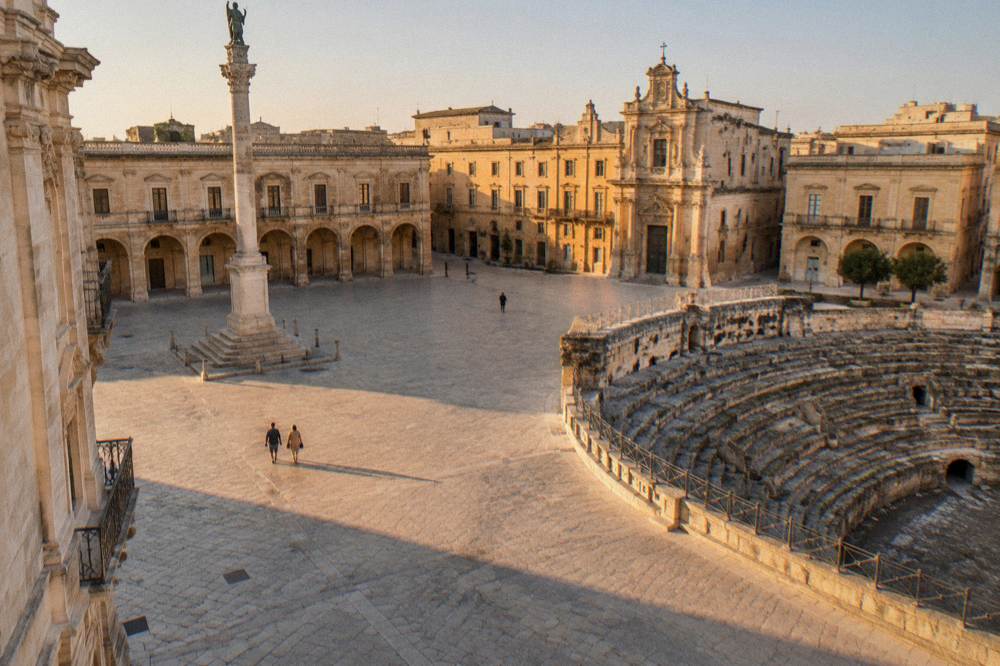
Lecce is a small, walkable baroque city in Puglia, a few kilometres inland from the Adriatic, and the honest answer to where to sleep is that the whole useful city fits within a twenty minute walk. This page compares the walled centre, the streets around the station, the modern quarter, and the coastal and Salento alternatives, using only verified fares, distances and drive times.
Short answer
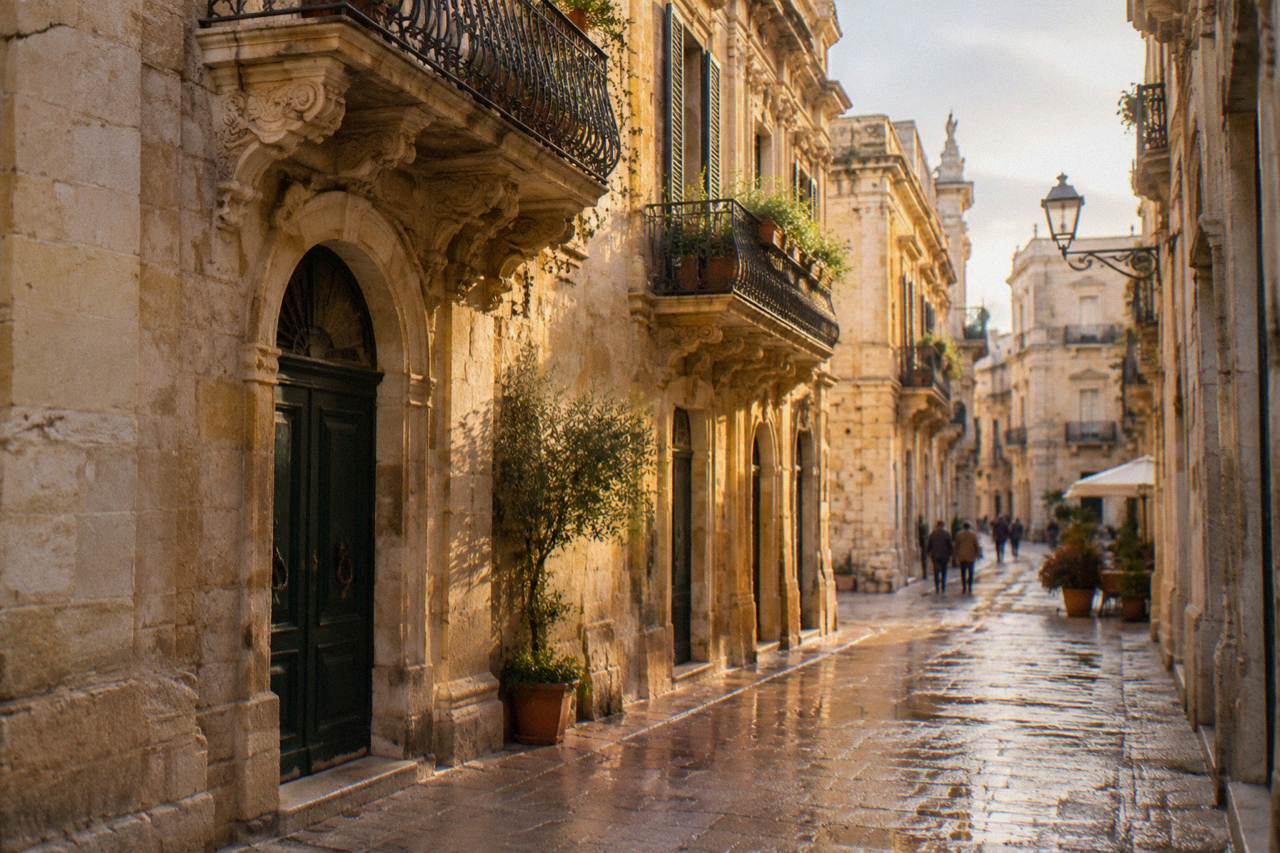
**Stay inside or immediately beside the old town walls if this is a first visit to Lecce: Piazza Sant'Oronzo, the Duomo and Santa Croce all sit within a ten to fifteen minute walk of each other, and the historic centre is compact, pedestrian-scaled and camera-policed by a ZTL. The streets around the station suit train arrivals and day-trippers, and a car base outside the walls suits a Salento road trip better than the centre does.**
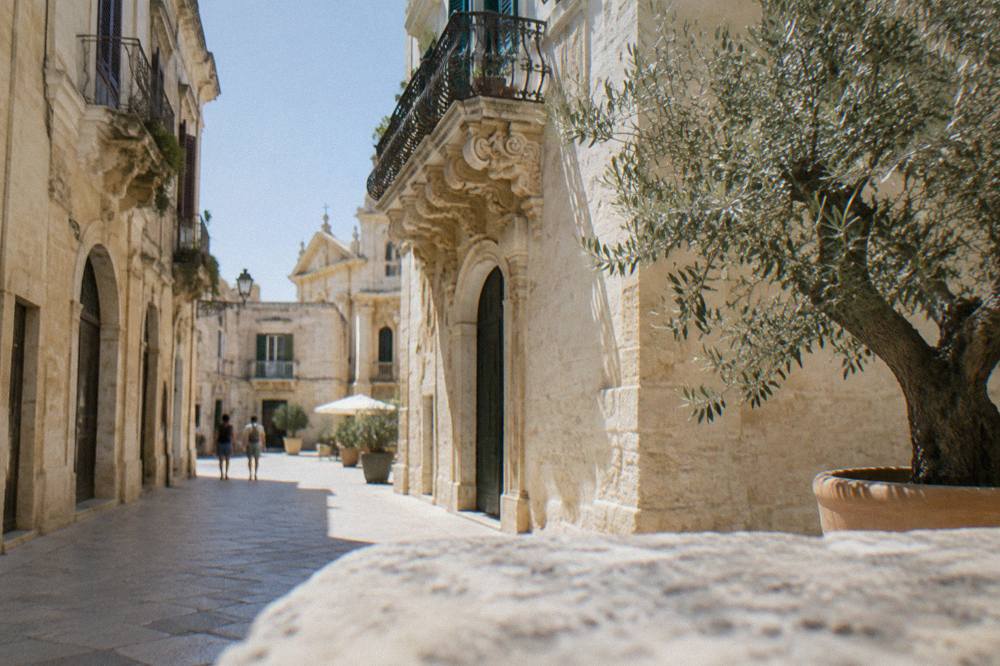
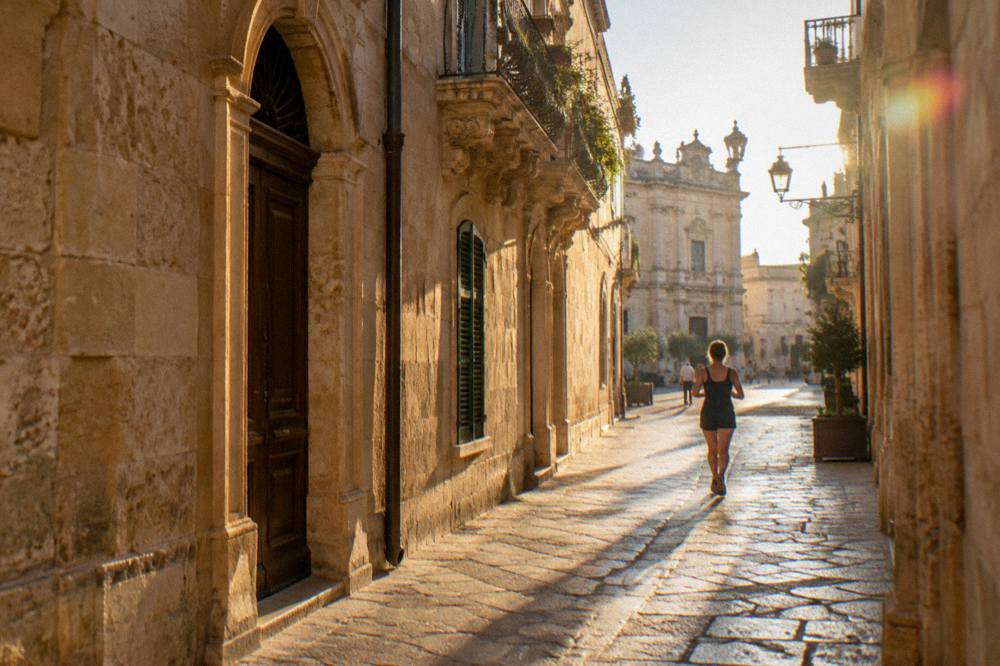
Lecce, the baroque capital of Salento in Puglia, southern Italy, is built from honey-coloured pietra leccese limestone and sits a few kilometres inland: San Cataldo, the nearest beach, is about 13 km away. That single fact shapes every lodging decision here. The city that visitors come for, the churches, the squares, the workshops of the cartapesta artisans, is concentrated inside a compact historic centre, so the question is not whether a hotel is "central" in any big-city sense but which side of the walls, and which gate, it sits behind.
This page from the Lecce Travel Guide editorial desk works through the decision in the order a planner actually faces it: inside or outside the walls, which quarter, with or without a car, near the sea or not, and what it costs once the tourist tax is added. Every fare, distance and drive time below comes from the site's verified facts file, and where a figure was never established, mainly nightly hotel rates, the page says so rather than guessing.
Inside Or Outside The Walls Of Lecce?
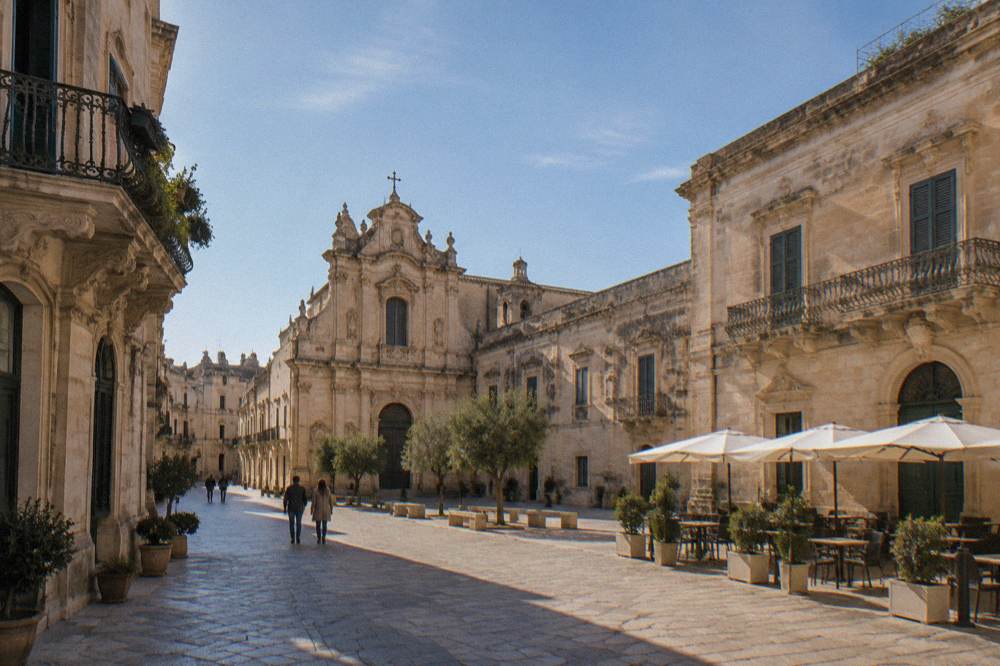
Sleep inside the walls for a first visit, and outside them if a car is part of the trip. The historic centre of Lecce is a ZTL, a camera-policed limited traffic zone, active on weekdays roughly between 20:00 and 10:00 and 13:00 to 16:30, and around the clock on Sundays and holidays, with Porta Napoli always closed, so a car and a centre hotel do not mix well. On foot, the Duomo, Piazza Sant'Oronzo and the Basilica di Santa Croce are minutes apart.
The walls question is really a car question. Fines for entering the ZTL without authorisation run from 83 to 332 euro, per the municipal ordinances, and the cameras do not distinguish a confused tourist from a local offender. Accommodation inside the zone can register a guest's plate, so the standard advice is to ask the property directly before driving in; that single question saves the single most common fine in the city.
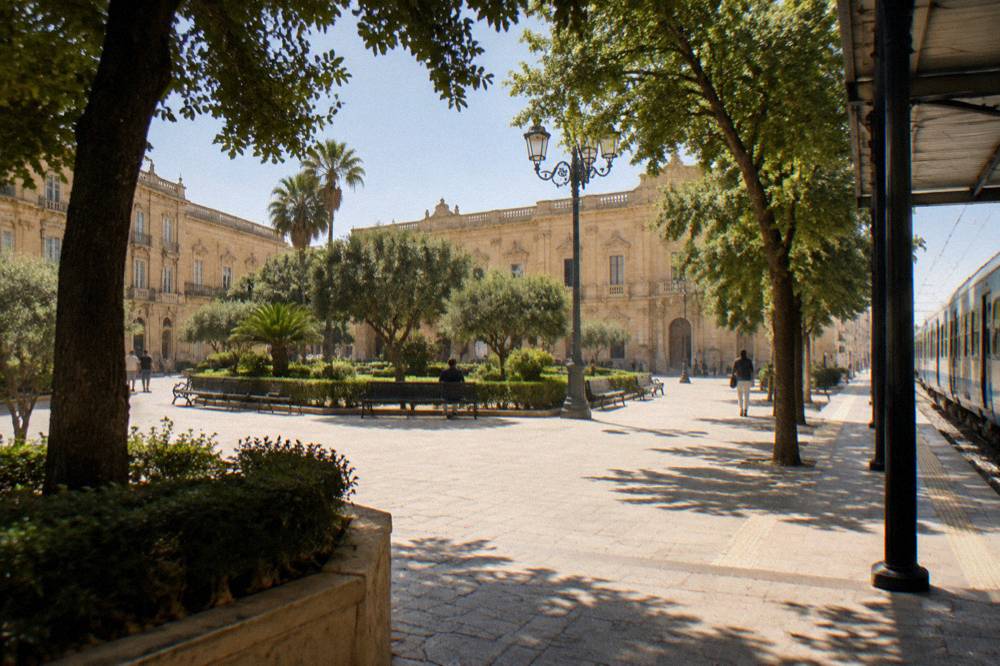
Outside the walls, the city remains walkable. The train station sits a short level walk from Porta Napoli and the western edge of the centre, and the ring of streets beyond the walls, around Piazza Mazzini and along Viale Gallipoli, carries the modern commercial city. Parking there is metered: SGM blue zones run about 1.10 euro per hour in the mid band, and the underground Park Liberty near the centre offers 466 spaces at about 1.50 euro per hour by day. The Lecce ZTL and parking guide on this site carries the detail.
| Decision | Inside The Walls | Outside The Walls |
|---|---|---|
| Car access | ZTL, plate registration needed, Porta Napoli always closed | Metered street parking, Park Liberty 466 spaces |
| Walking to Duomo | 5 to 10 minutes from most centre streets | 15 to 25 minutes depending on district |
| Atmosphere | Baroque streets, workshops, evening passeggiata | Wider streets, shops, ordinary city life |
| Suits | First visit, short stays, no car | Road trips, longer stays, train-first travel |
Neither choice is wrong. A two-night visitor who wants the evening light on pietra leccese will not regret the centre; a week-long Salento explorer with a hire car will find the outer ring calmer at midnight and cheaper to park in.
What Are The Best Areas To Stay In Lecce?
The four practical lodging areas of Lecce are the historic centre inside the walls, the station quarter to the west, the Mazzini and Viale Gallipoli belt of the modern city, and the outer residential districts such as the San Cataldo road corridor. The first three cover everything a visitor needs, and all of them touch the same SGM bus network, whose single 60-minute ticket costs about 1.20 euro bought in advance.
The historic centre divides loosely into the Duomo quarter around Piazza del Duomo, the Sant'Oronzo and Rudiae axis, and the quieter Giudecca streets in the south of the old town, once the Jewish quarter. All are within the same walls and the same ZTL, and all put the LeccEcclesiae circuit, the Duomo, Santa Croce, San Matteo, Santa Chiara and the Antico Seminario, within a short walk of the door. The combined church ticket costs 11 euro standard and stays valid 15 days, so a centre base means the ticket can be used across several mornings rather than one rushed day.
The station quarter is the pragmatic choice. Trenitalia and the FSE lines, which serve Gallipoli, Otranto with a change at Maglie, and Galatina, all arrive at the one station, and the airport bus from Brindisi, 6.50 euro one way on Terravision, about 40 minutes, stops within reach of it. The getting around Lecce guide maps the connections.
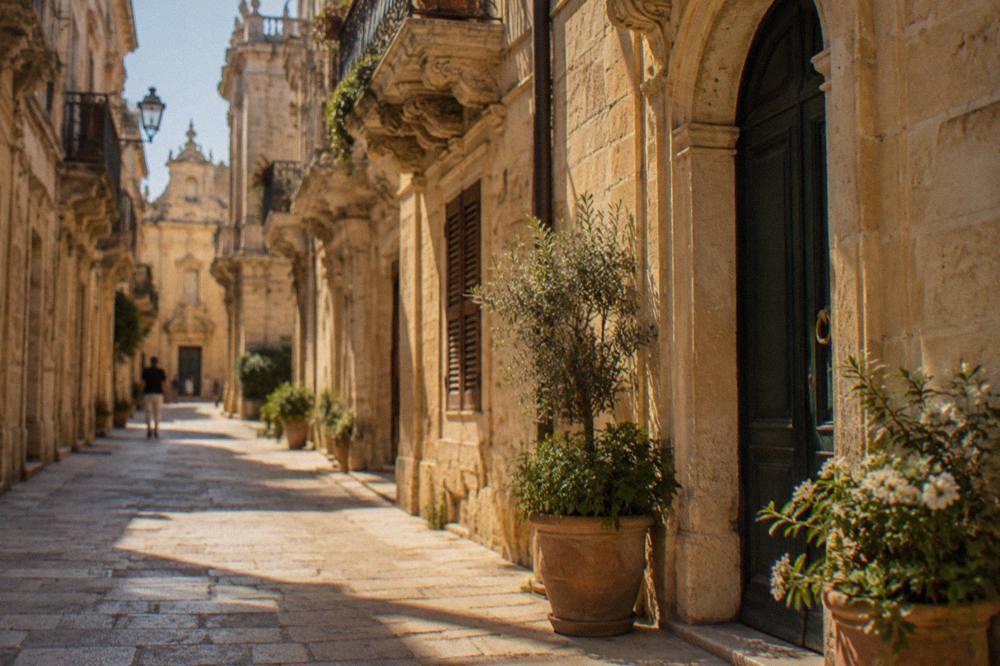
The Mazzini belt is Lecce's shopping and everyday quarter, stretching north and west of the walls. It trades baroque views for space, larger hotels and easier parking, and the Villa Comunale gardens sit on its edge. The outer districts matter mainly for one thing: the San Cataldo road, which is the direct line to the nearest coast.
A private walking tour is a genuinely useful scouting tool before committing to a quarter, because a guide's route through the centre traces the same streets a guest will walk each morning. The Private Baroque and Underground Tour covers the facades above ground and the rooms below them, and the one-day Lecce itinerary on this site shows how much of the centre a single well-placed base unlocks.
Where To Stay In Lecce Without A Car?
Stay inside the walls or beside the station, because Lecce without a car works better than almost anywhere else in Salento: the FSE railway links Lecce to Gallipoli in about 1h18 to 1h43, to Galatina in about 38 to 55 minutes, and to Otranto with a change at Maglie in about 1h33 to 2 hours, while Trenitalia runs to Brindisi in 18 to 24 minutes and to Bari from about 1h19 on the fastest trains.
The car-free case for Lecce is strong, and the station quarter is its natural home base. Every verified coastal and town connection in the facts file either starts at the station or at the adjacent City Terminal, where the SGM line 32 bus runs to San Cataldo beach in about 20 minutes. In summer, the Salento in Bus network, which ran 13 June to 13 September in 2026 and is a summer-only service, adds lines 101 to Torre dell'Orso and Otranto, 104 to Porto Cesareo and Gallipoli, and 107 and 108 toward Leuca, with fares from 1.10 to 5 euro bought through the operator's channels.
Off-season, the calculus changes. The summer shuttles stop in mid-September, and the FSE timetable thins outside the peak, so a car-free autumn or winter stay leans on the city itself, the museums and the churches, plus the year-round trains. The Salento in Bus guide and the day trips without a car answer cover the detail.
| Destination From Lecce | Mode | Typical Time | Fare From |
|---|---|---|---|
| Brindisi | Trenitalia | 18 to 24 min | about 3.40 euro |
| Bari Centrale | Trenitalia, fastest trains | 1h19 to 1h24 | about 9 euro regional |
| Ostuni | Trenitalia direct | 39 to 51 min | about 7 euro |
| Polignano a Mare | Trenitalia direct | 1h09 to 1h21 | See current price |
| Gallipoli | FSE direct | 1h18 to 1h43 | about 5 euro |
| Galatina | FSE direct | 38 to 55 min | about 3 euro |
| Otranto | FSE, change at Maglie | 1h33 to 2h+ | about 4 euro |
| Matera | Bus (Itabus, FlixBus, Miccolis) | 3h30 to 4h10 | 11 to 37 euro |
Note what the table cannot say: bus fares for some coastal routes and the exact 2027 summer shuttle dates were not published in the sources this site uses, so confirm those at booking rather than trusting a round number. The Lecce train station guide covers the terminal itself, including luggage storage near the station at about 2.50 to 3.50 euro per day through the app-based networks.
Where To Stay In Lecce To Be Near The Sea?
Lecce is not a beach town, and no hotel in it is on the sand: San Cataldo, the nearest beach, is about 13 km and a 14-minute drive away, reached car-free by SGM bus line 32 in about 20 minutes. To sleep beside the water, the verified options are the Adriatic-side bases at Torre dell'Orso, Otranto and San Foca, or the Ionian side at Gallipoli and Porto Cesareo.
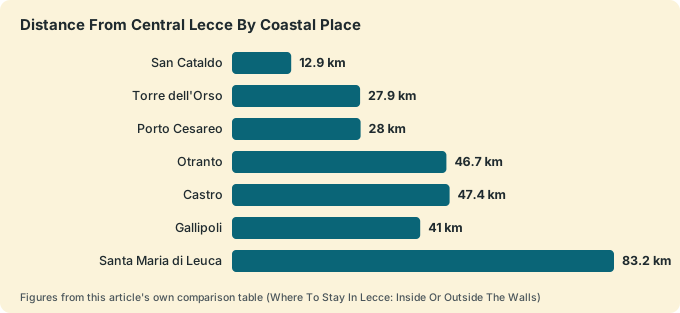
The honest framing matters. A Lecce base gives baroque evenings and a bus or drive to the sea; a coastal base gives the sea and a drive to the baroque. The drive times from Piazza Sant'Oronzo, computed on free-flow routing, quantify the trade:
| Coastal Place | Distance From Central Lecce | Drive Time |
|---|---|---|
| San Cataldo | 12.9 km | about 14 min |
| Torre dell'Orso | 27.9 km | about 32 min |
| Porto Cesareo | 28.0 km | about 34 min |
| Otranto | 46.7 km | about 44 min |
| Castro | 47.4 km | about 48 min |
| Gallipoli | 41.0 km | about 41 min |
| Santa Maria di Leuca | 83.2 km | about 78 min |
The sea itself is warm late: sea temperature runs about 22.5 C in June, 25 to 27 C at the August peak, and 20 to 22 C in October, per the seatemperature.org averages for Puglia, dropping to about 14 C in February. That October figure is why some travellers keep swimming well into autumn from an Adriatic base while the city crowd is in museums.
Lido costs vary sharply by month and coast, and the 2026 consumer surveys give real bands, reported by Udicon and Adoc: an umbrella plus two beds at San Cataldo ran 15 to 25 euro in June and 33 to 35 euro in August, while the Torre dell'Orso and San Foca area ran 25 to 35 euro in June rising to 50 to 60 euro in August, and Ionian stretches such as Porto Cesareo and Gallipoli priced higher at peak. The beaches near Lecce and Salento beaches guides carry the coast-by-coast detail.
What Does It Cost To Stay In Lecce?
The only lodging cost this site can state with attribution is the tourist tax, the imposta di soggiorno, collected by the accommodation per person per night by category and season, with rates updated from 1 April 2026 and a top reported rate of 5 euro for five-star high-season stays; short lets are reported at 2.50 or 1.50 euro. Nightly hotel and B&B rates by season were not established in verified sources, so no rate or range is quoted here: confirm prices at booking.
The tax is small but real, and it is the figure travellers most often miss when comparing listings. The comune's published schedule bands by star category and by high against low season; the mid categories sit between the top rate and the short-let floor. Confirm the exact per-night amount with the property when booking, since category and season decide it.
| Stay Type | Reported Tourist Tax, From 1 April 2026 |
|---|---|
| 5-star, high season | 5 euro per person per night |
| 5-star, low season | 4 euro per person per night |
| Short-term rental, high season | 2.50 euro per person per night |
| Short-term rental, low season | 1.50 euro per person per night |
For the price of the city itself, the LeccEcclesiae church ticket at 11 euro, the Castello Carlo V guided tour at 10 euro, and the Museo Faggiano at 5 euro set a floor for sightseeing that is modest by Italian standards, and the how expensive is Lecce guide assembles the full picture.
One timing note belongs here rather than anywhere else: October carries a mean 91.3 mm of rain in the ERA5 reanalysis, 1991-2020, and November the year's highest monthly total at 93.7 mm, while July and August stay under 20 mm. Shoulder-season rates, whatever they are, come with a real chance of rain; the best time to visit Lecce and Lecce weather guides give the month-by-month normals.
Where To Stay In Lecce For Food, Churches And Nightlife?
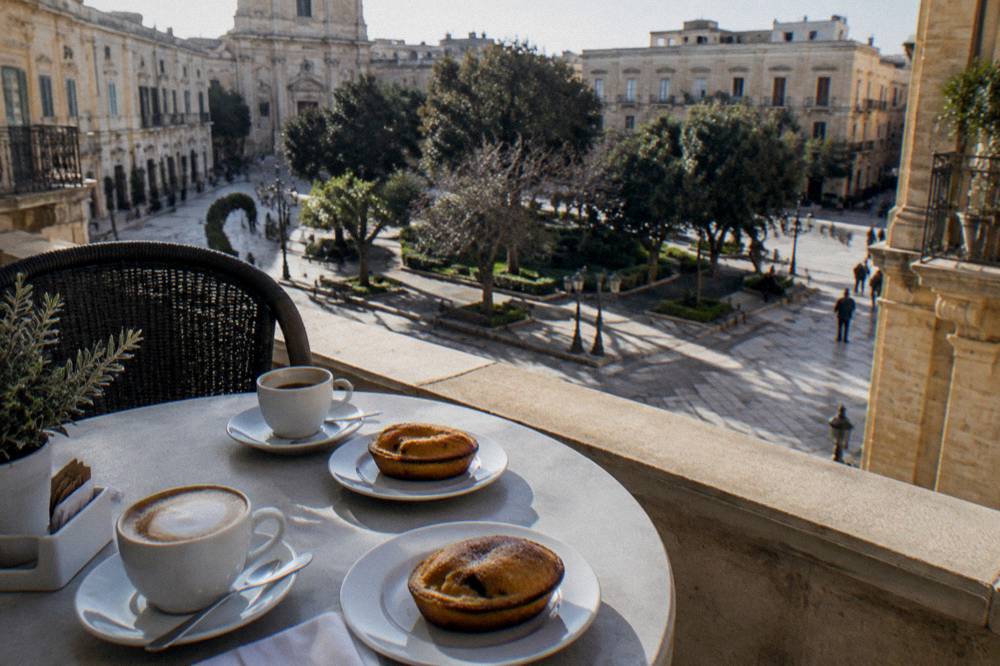
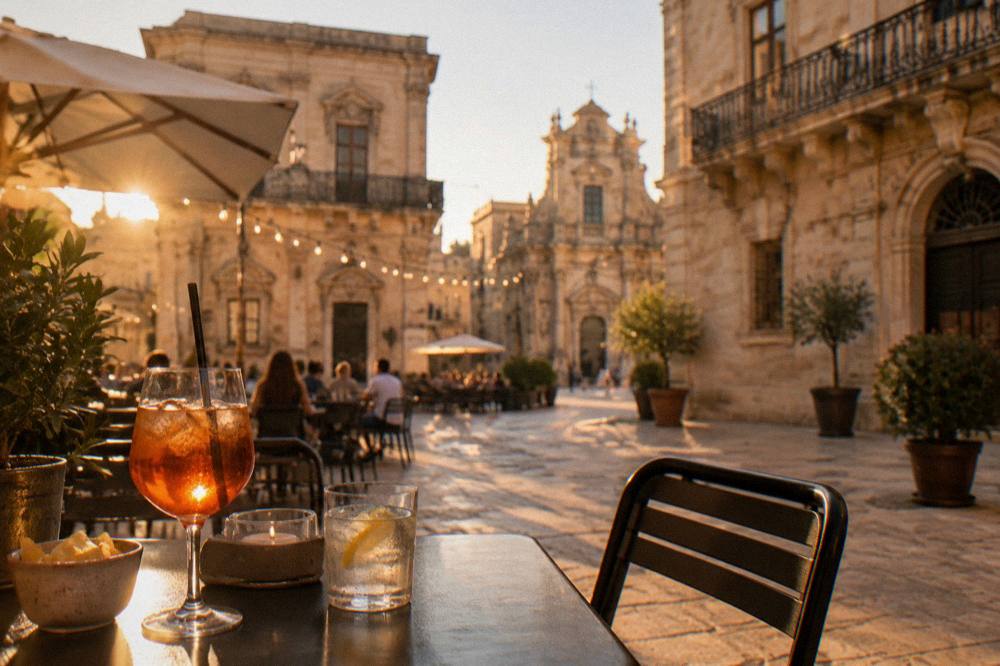
For eating and evening life, stay inside the walls near the Sant'Oronzo to Giudecca axis, where the historic cafes, Caffe Alvino on Piazza Sant'Oronzo with roots to about 1880 and Pasticceria Natale, family-run since 1978, sit inside a ten-minute walk of each other; for the churches, any centre street puts the LeccEcclesiae circuit within reach, and for late-night noise, the quieter quarters are the Duomo side and the southern Giudecca lanes.
The food logic of the centre is simple: the pasticciotto and the rustico are morning foods, the caffè in ghiaccio con latte di mandorla, iced espresso with almond milk, credited to Antonio Quarta's bar work in the 1940s and 1950s, is an afternoon one, and all three reward being five minutes from a bakery rather than twenty-five. The what to eat in Lecce and best restaurants in Lecce guides pick this up.
Noise runs the other way. The streets around the main squares carry the evening passeggiata and the bar trade later than the residential lanes, so light sleepers do better a few blocks off the axis. The Lecce at night guide maps the lively zone honestly.
For the church circuit, location barely matters inside the walls, but timing does: the LeccEcclesiae sites open daily, 9:00 to 21:00 in the April to September summer schedule and 9:00 to 18:00 in winter, with access limited during services and shoulders and knees covered. A centre base makes it easy to revisit, since the ticket stays valid 15 days. The Lecce churches ticket page explains the standard, bell-tower and family options.
Where To Stay Around Lecce For A Salento Trip?
For a wider Salento itinerary, sleep in Lecce itself or in one of the coastal hubs, Otranto, Gallipoli or the far south near Leuca, and drive: the verified free-flow times from central Lecce are about 44 minutes to Otranto, 41 to Gallipoli, 78 to Santa Maria di Leuca and 48 to Castro, while a two-base plan, Lecce plus one coastal town, keeps any single drive under an hour.
The single-base-in-Lecce plan works because the peninsula fans out from it. Otranto's cathedral, with its mosaic floor dated 1163 to 1165 by the priest Pantaleone, is under an hour away; Gallipoli's old town sits on a limestone island linked by a bridge; Galatina, home of the Basilica di Santa Caterina d'Alessandria with free entry, is 25.7 km and about 29 minutes out. The Salento itinerary and the Otranto, Gallipoli and Santa Maria di Leuca guides cover each hub.
The two-base plan suits longer stays. Three or four nights in Lecce for the baroque and the inland towns, then a shift to the coast for the beaches and the southern cape, halves the daily driving. The Puglia itinerary page frames the same choice at region scale, and which town in Puglia makes the best base answers the Lecce-against-Ostuni-against-Bari version of the question.
The far south rewards the committed. Leuca, where the basilica of Santa Maria de Finibus Terrae stands at the cape, is a 78-minute drive, and the boat trips along the coast caves from there, listed on this site's boat-tour pages, are the main draw. Grotta Zinzulusa at Castro, open for guided visits year-round at 7 euro full and 4 euro reduced, breaks the drive south.
A final word on arrival logistics, because they anchor the base choice: Lecce has no commercial airport. Brindisi, BDS, is the gateway, 47.6 km and about 43 minutes by road, with the airport bus at 6.50 euro one way and about 40 minutes. The Brindisi airport to Lecce and how to get to Lecce pages complete the arrival picture.
Common Questions About Where To Stay In Lecce
Is it better to stay inside or outside the walls in Lecce?
Inside the walls suits a first visit and any car-free stay, since the main sights sit minutes apart on foot. Outside suits drivers, because the centre is a camera-policed ZTL with Porta Napoli always closed, and outer parking is far easier.
Can I drive to my hotel in the centre of Lecce?
Only if the accommodation registers your plate with the ZTL system. Ask the property before arriving; fines run from 83 to 332 euro.
Where should I stay in Lecce without a car?
The station quarter or the historic centre. FSE trains reach Gallipoli, Galatina and Otranto, SGM bus line 32 reaches San Cataldo in about 20 minutes, and the summer Salento in Bus network adds coastal lines.
Is Lecce near the beach?
Lecce is a few kilometres inland. San Cataldo, the nearest beach, is about 13 km away, while the Adriatic hubs of Otranto and Torre dell'Orso and the Ionian towns of Gallipoli and Porto Cesareo are 28 to 47 km out.
What is the tourist tax in Lecce?
An imposta di soggiorno collected by the accommodation, per person per night, by category and season. From 1 April 2026 the top reported rate is 5 euro for five-star high-season stays, with short lets reported at 2.50 or 1.50 euro; confirm the exact amount at booking.
Should I stay in Lecce or on the coast?
Lecce for the baroque, the food and the train links; the coast for daily swimming. A two-base plan, a few nights in the city then a few on the sea, keeps every drive under about an hour.