Getting Around Lecce And Salento Without A Car
Lecce's old town is small enough to cross on foot, and the trains and summer buses of Salento reach the coast without a car. Here is what the operators themselves report about tickets, times and the ZTL.
Short answer
You can get around Lecce entirely without a car: the historic centre is walkable, SGM city buses cost about 1.20 euro for a 60-minute ticket, FSE and Trenitalia trains reach Gallipoli, Otranto (via Maglie), Galatina, Brindisi and Bari, and the summer-only Salento in Bus network ran 13 June to 13 September 2026 to the main beaches.
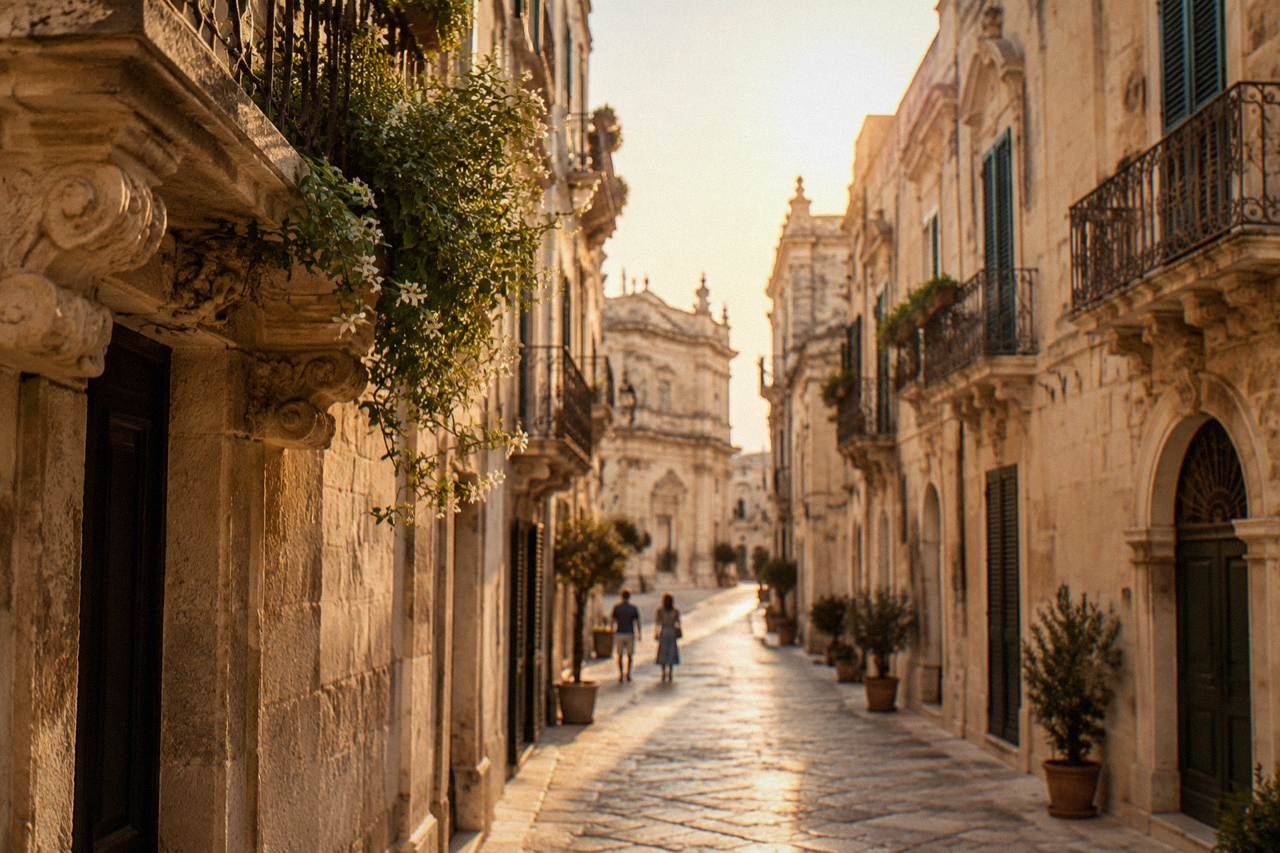
Lecce sits a few kilometres inland at the heart of the Salento peninsula, the heel of Italy, and it has no commercial airport of its own. That geography shapes everything about transport here: the city is a rail hub at the end of the Trenitalia line from Bari and Brindisi, the base of the Ferrovie del Sud Est (FSE) network that threads down the peninsula, and the departure point for a summer-only beach bus system. The baroque old town itself, built from honey-coloured pietra leccese limestone, is compact enough that the question of getting around it barely arises. The real question is how to reach the Adriatic and Ionian coasts without hiring a car, and this page sets out what the operators report.
How Do You Get Around Lecce Without A Car?
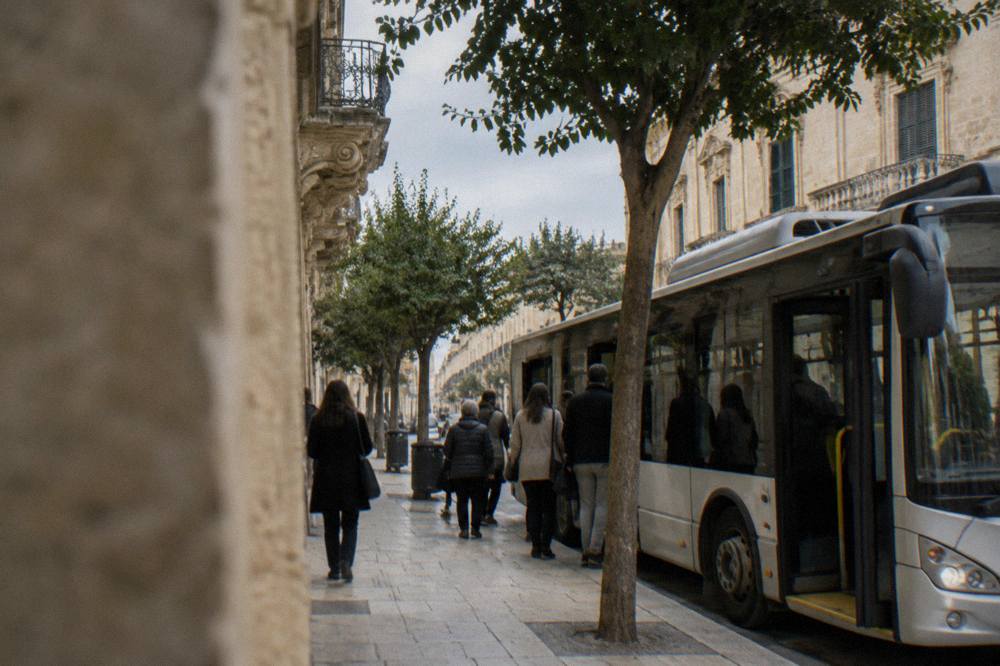
Lecce is best explored on foot, and the parts beyond walking range are covered by the SGM city bus network, which sells a 60-minute ticket for about 1.20 euro, 1.50 euro if bought on board, and a day ticket for about 3 euro. The historic centre is compact, flat and closed to most traffic, so buses matter mainly for the station, the outskirts and the nearest beach at San Cataldo.
The old town inside the ring of walls takes roughly twenty minutes to cross at a stroll, and every major sight, from Piazza Sant'Oronzo to the Duomo and the Basilica di Santa Croce, sits within it. SGM, the municipal operator, runs the city routes and publishes its tariffs and network maps on its own site. A weekly ticket at about 12 euro exists for longer stays, and the same operator runs the parking zones, so a bus ticket and a parking payment sometimes come from the same app.
The one city bus ride worth knowing by number is line 32, which runs from the City Terminal to San Cataldo, the nearest of the marine districts, in about 20 minutes according to the comune's own page on the five marine of Lecce. In summer the frequency rises to about every half hour. For everything else inside the walls, walking wins, and the practical limits are heat and opening hours rather than distance: the best time to visit Lecce matters more than any timetable.
| SGM ticket | Reported price | Notes |
|---|---|---|
| Single, 60 minutes | about 1.20 euro | 1.50 euro if bought on board |
| Day ticket | about 3 euro | Valid on the city network |
| Weekly ticket | about 12 euro | Suited to longer stays |
| Line 32 to San Cataldo | about 20 minutes | From the City Terminal |
Where Do The Trains From Lecce Station Go?
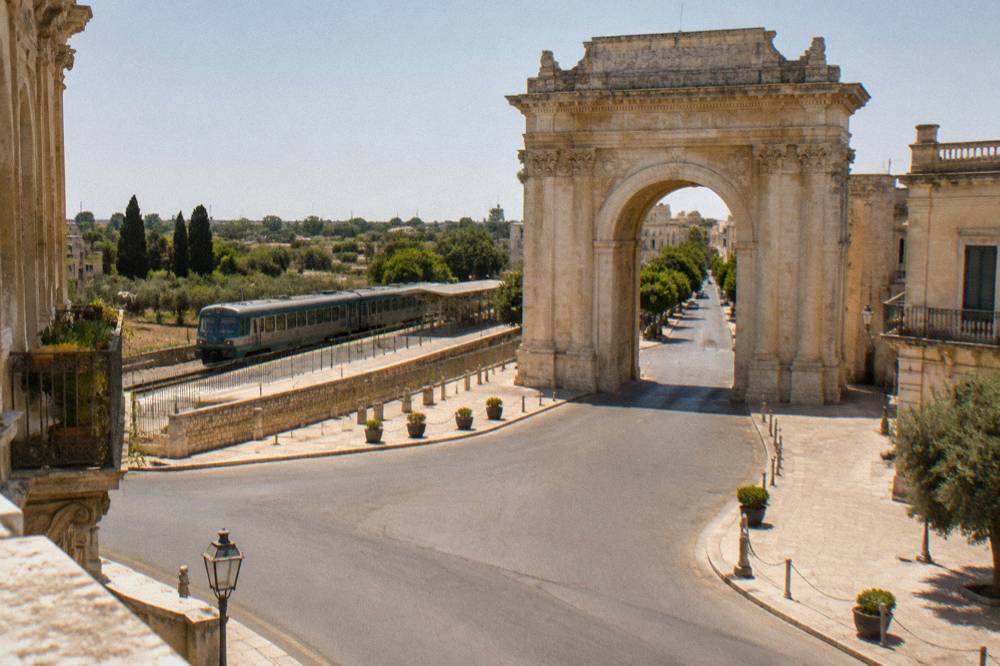
Lecce station is a joint Trenitalia and FSE hub: Trenitalia runs north to Brindisi in about 18 to 24 minutes and to Bari Centrale in about 1 h 19 to 1 h 24 at fastest, while FSE runs down the peninsula, direct to Gallipoli in about 1 h 18 to 1 h 43 and to Otranto with a change at Maglie in about 1 h 33 to 2 h or more. All times are reported, not a timetable.
The distinction between the two operators matters when planning. Trenitalia handles the long spine up the Adriatic coast: Brindisi, Ostuni (direct, about 39 to 51 minutes, from about 7 euro), Polignano a Mare (direct, about 1 h 09 to 1 h 21), Bari and, on direct trains, Rome in about 5 h 58 to 6 h 16 from about 32 euro. FSE, the regional railway, is the one that unlocks Salento itself. Its trains reach Galatina direct in about 38 to 55 minutes from about 3 euro, Gallipoli direct, and Otranto via a change at Maglie, where the connecting branch takes about half an hour.
FSE fares in 2026 are distance-based, running from 1.30 euro for a 1 to 10 km hop to 5.40 euro for 51 to 60 km, per the operator's own tariff pages. Alberobello is the awkward one: it needs a Trenitalia leg plus a change onto FSE, with total journeys reported at about 2 h 30 to 3 h or more. Naples has no sourced journey time from Lecce in the material this site works from; it means changing trains, and an official planner is the place to check it. For arrival logistics from the airport, the Brindisi airport to Lecce guide covers the bus and train options in detail.
| Route | Operator | Reported journey | Fare from |
|---|---|---|---|
| Lecce to Brindisi | Trenitalia | about 18 to 24 min | about 3.40 euro |
| Lecce to Ostuni | Trenitalia, direct | about 39 to 51 min | about 7 euro |
| Lecce to Polignano a Mare | Trenitalia, direct | about 1 h 09 to 1 h 21 | not stated here |
| Lecce to Bari Centrale | Trenitalia | about 1 h 19 to 1 h 24 fastest | about 9 to 24 euro |
| Lecce to Rome | Trenitalia, direct | about 5 h 58 to 6 h 16 | about 32 euro |
| Lecce to Galatina | FSE, direct | about 38 to 55 min | about 3 euro |
| Lecce to Gallipoli | FSE, direct | about 1 h 18 to 1 h 43 | about 5 euro |
| Lecce to Otranto | FSE, change at Maglie | about 1 h 33 to 2 h or more | not stated here |
Trains down the peninsula are not frequent, and the last services of the day can leave earlier than a visitor expects, so the rule is simple: check the FSE or Trenitalia planner for the specific date rather than trusting a pattern. Some segments run as rail replacement buses at times, which the operators announce themselves. A useful companion piece is the site's overview of Salento as a region, which puts these lines on the map.
For travellers who would rather not assemble a peninsula itinerary from three timetables, a organised day tour is the alternative the listings cover: the operator's page for the Salento full-day tour of Gallipoli, Galatina and Otranto describes one loop that stitches the FSE peninsula together by road, Check availability if that shape of day suits.
What Is Salento In Bus And When Does It Run?
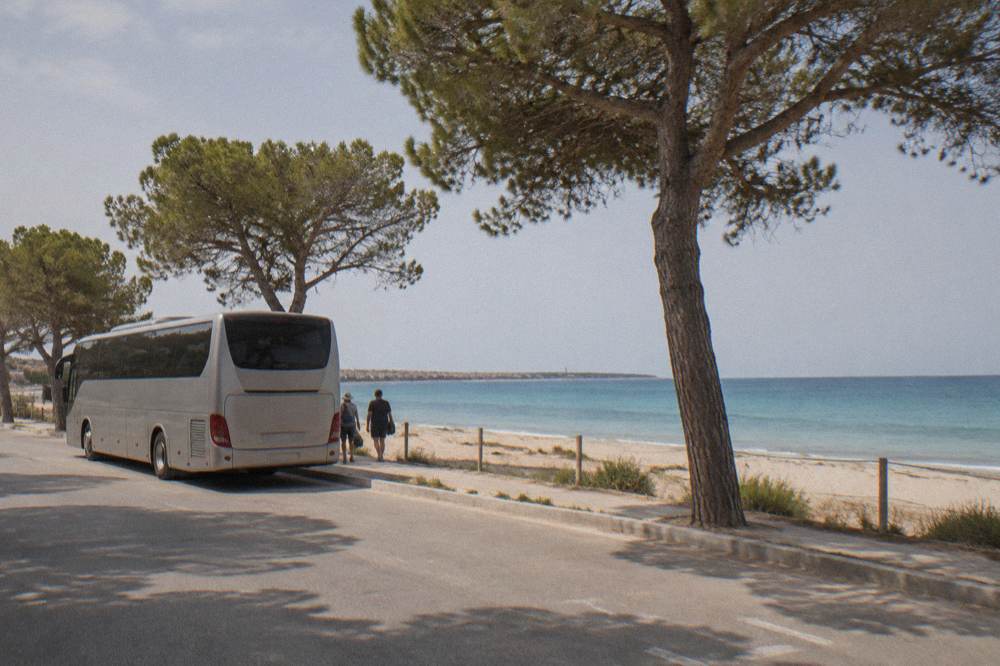
Salento in Bus is a summer-only coach network run by Cotrap with regional partners, and in 2026 it ran 13 June to 13 September, with reduced service at the edges and the full schedule from 1 July to 31 August. Its lines fan out from Lecce to the coast, fares are distance-based from 1.10 to 5 euro, under-10s ride free, and buying on board costs 1 euro extra.
The network exists for exactly the problem this page is about: reaching beaches that have no rail line. Line 101 runs Lecce, Torre dell'Orso and Otranto; line 104 runs Lecce, Porto Cesareo and Gallipoli; lines 107 and 108 reach Santa Maria di Leuca and Gallipoli territory at the southern tip. The operator sells tickets through its own site and app, and the 2026 season also included evening services on some lines, per the provincial announcements. The full line-by-line detail sits in the site's Salento in Bus guide.
Two cautions come straight from the season structure. First, the service is genuinely seasonal: outside roughly mid-June to mid-September it does not exist, and the 2027 dates had not been announced, so anyone planning a May or October trip needs the trains and the ordinary FSE and STP buses instead. Second, the summer peak means the beaches these lines serve are at their busiest precisely when the buses run most often, which is a trade rather than a flaw. The Lecce weather page explains when the sea is warm enough to make the trip worthwhile.
| Line | Reported route | Season note |
|---|---|---|
| 101 | Lecce, Torre dell'Orso, Otranto | Summer 2026 network |
| 104 | Lecce, Porto Cesareo, Gallipoli | Summer 2026 network |
| 107 / 108 | Lecce towards Santa Maria di Leuca and Gallipoli | Southern Salento |
| Fares | 1.10 to 5 euro, km-based | +1 euro bought on board |
| Children | under 10 free | Per the operator |
Is Walking And Cycling The Best Way To See The Lecce Old Town?
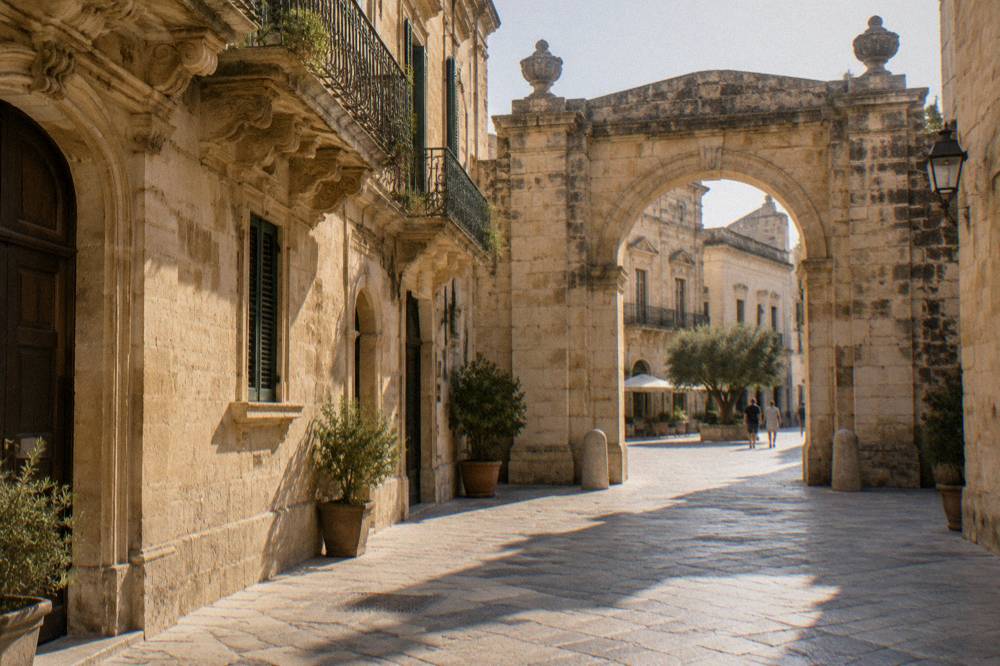
Yes: the Lecce old town is a walking district, roughly twenty minutes across, closed to through traffic by the ZTL, and flat enough that cycling adds little inside the walls. Bicycles earn their keep beyond the centre, on the lanes out to the marine and the surrounding countryside, where guided bike tours of the city highlights run as an alternative to bus routes.
Inside the walls the case for feet is overwhelming. The streets are narrow, the sights cluster around three or four squares, and the ZTL keeps general traffic out for much of the day, which makes the air and the noise tolerable in a way few southern Italian centres manage. A walking route through the baroque core is mapped in the site's Lecce walking tour itinerary, and the question of how long to allow is answered in how many days do you need in Lecce.
Cycling comes into its own at the edges. The operator listing for the city highlights tour by bike covers the centre and the outward lanes in one guided loop, and the listing describes the route and what is included; Check availability to see current dates. Independent riders should know that Salento is famously flat, which the region's cyclists repeat often, but no verified rental price list exists in this site's sources, so confirm rates with the shop directly.
Night walking deserves a mention because it is when the limestone glows. The old town is reported as safe to walk at night in the sources this site draws on, a question covered directly in is it safe to walk around Salento at night. Ordinary city caution about pickpockets applies, as it does anywhere in Italy.
How Does The ZTL Affect Driving And Parking In Lecce?
Lecce's historic centre is a camera-policed ZTL, reported as active on weekdays from about 13:00 to 16:30 and from 20:00 to 10:00, and all day on Sundays and holidays, with fines of 83 to 332 euro. The hours are reported from municipal ordinances, not guaranteed, so drivers should check the current rules and ask their accommodation whether it can register their plate.
The ZTL, zona a traffico limitato, is the single biggest trap for drivers in Lecce. Cameras record plates at the gates, and a rental car that strays inside during active hours produces a fine that arrives weeks later through the hire company. The reported pattern leaves windows when traffic is admitted on weekdays, roughly 10:00 to 13:00 and 16:30 to 20:00, but the site's advice is not to plan around the windows: park outside and walk. The dedicated ZTL and parking page carries the detail.
Park Liberty, an underground car park near the centre, is reported to hold 466 spaces. Beyond that, SGM operates the paid blue and central zones on the street, with tariffs set by zone and season, and the operator's own tariff maps are the source to check before assuming a price. No other car park name or tariff could be confirmed, so none is printed here.
| ZTL item | Reported detail |
|---|---|
| Active hours, weekdays | about 13:00 to 16:30 and 20:00 to 10:00 |
| Sundays and holidays | active 24 hours |
| Enforcement | cameras at the gates |
| Fines | 83 to 332 euro, 30 percent discount if paid in 5 days |
| Loading windows | weekdays about 05:30 to 09:30 and 15:00 to 16:00 |
| Advice | ask the accommodation about plate registration |
The wider question of whether to drive at all in the region is treated in car rental and driving in Lecce, which weighs the ZTL against the freedom of the inland roads. The short version: a car is a liability inside Lecce and an asset outside it.
Can You Reach The Salento Beaches Without A Car?
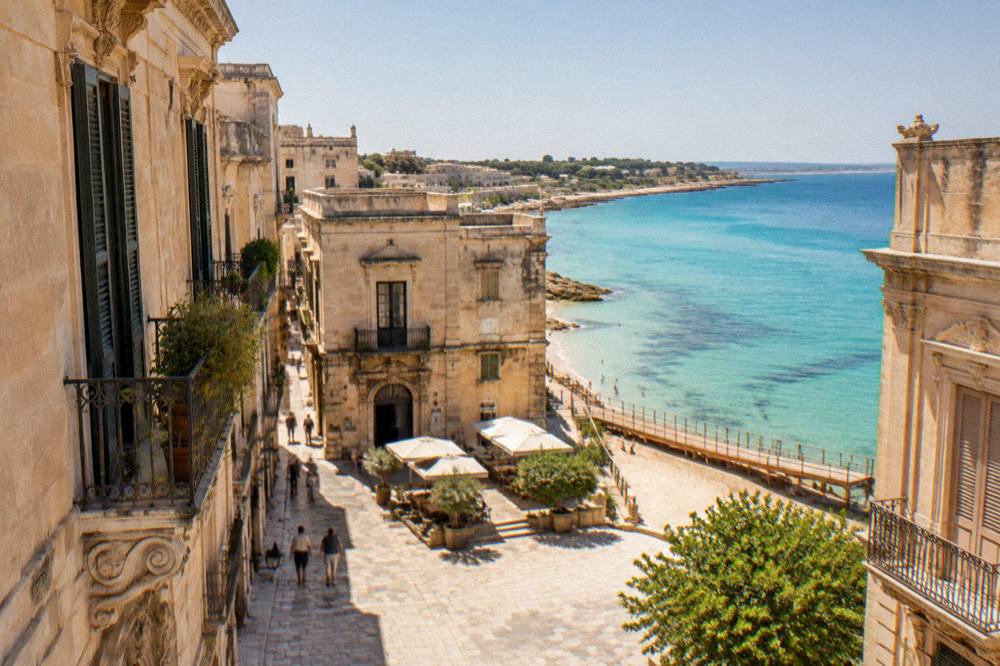
Yes, in summer easily and out of season with more planning: San Cataldo is 20 minutes from Lecce on SGM line 32, Salento in Bus lines 101 and 104 reach Torre dell'Orso, Otranto, Porto Cesareo and Gallipoli in season, and FSE trains serve Gallipoli year-round. The nearest sand, San Cataldo, is about 13 km from the centre, with the Adriatic on one side of the peninsula and the Ionian on the other.
The two coasts behave differently without a car. The Adriatic side, San Cataldo, Torre Chianca, Torre dell'Orso and Otranto, leans on line 32 and Salento in Bus line 101. The Ionian side, Porto Cesareo, Gallipoli and Pescoluse, leans on line 104 and the FSE train to Gallipoli. The site's beaches near Lecce and Salento beaches pages sort the strands themselves, and how many days are needed in Salento helps with pacing.
Two practical notes carry real weight. First, lido prices: the 2026 consumer surveys report an umbrella plus two sunbeds at San Cataldo at 15 to 25 euro in June rising to 33 to 35 euro in August, with Torre dell'Orso and San Foca at 25 to 35 euro in June and 50 to 60 euro in August, and the Ionian lidos generally higher. Second, the rules at Grotta della Poesia changed in 2026: bathing and diving are banned, and non-residents of Melendugno paid a 5 euro ticket in the 2026 season, with the 2027 rules not yet published, so confirm before going.
| Beach | Car-free route | Reported time |
|---|---|---|
| San Cataldo | SGM line 32 from City Terminal | about 20 minutes |
| Torre dell'Orso | Salento in Bus line 101 | summer only |
| Otranto | line 101, or FSE train via Maglie | about 1 h 33 to 2 h by train |
| Porto Cesareo | Salento in Bus line 104 | summer only |
| Gallipoli | FSE train, direct | about 1 h 18 to 1 h 43 |
| Pescoluse | connections towards the Ionian coast | check planners |
For the water itself, boat and snorkel tours run from the coastal towns, and one listing from San Foca covers a snorkel cruise towards Torre Sant'Andrea with gear and an aperitif; the listing describes the route, and Check availability for dates. Getting to San Foca itself is a Salento in Bus connection in season.
What Are The Best Car-Free Day Trips From Lecce?
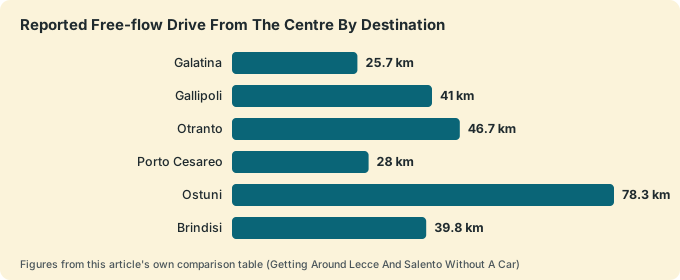
The best car-free day trips from Lecce are the FSE and Trenitalia rail destinations: Galatina in about 38 to 55 minutes, Gallipoli in about 1 h 18 to 1 h 43, Otranto with a change at Maglie in about 1 h 33 to 2 h, and Ostuni direct in about 39 to 51 minutes, with Alberobello reachable in about 2 h 30 to 3 h or more with a change. For towns off the rail lines, an organised day tour replaces the timetable.
Galatina is the easiest and the most rewarding short hop: a direct FSE train, a free-entry basilica in Santa Caterina d'Alessandria with split morning and afternoon hours, and the town that claims the pasticciotto, a claim the shop itself makes. Gallipoli follows, its old town standing on a limestone island joined to the mainland by a bridge, reached by direct train. Otranto needs the change at Maglie but delivers the cathedral floor mosaic dated 1163 to 1165 by the priest Pantaleone, free for independent visitors, with groups and guided visitors paying 2 euro since 1 March 2026 per the Diocese of Otranto's notice.
The full peninsula set, and the trade-offs between train, bus and tour, are laid out in good day trips from Lecce without a car, and a multi-day shape for the region sits in the Salento itinerary. For the towns the trains miss, the listings cover a full-day tour of Gallipoli, Galatina and Otranto as a single guided loop, which is the related tour for this page; Check availability if the rail change at Maglie does not appeal.
| Destination | Reported free-flow drive from the centre | Car-free alternative |
|---|---|---|
| Galatina | 25.7 km, about 29 minutes | FSE train, direct |
| Gallipoli | 41.0 km, about 41 minutes | FSE train, direct |
| Otranto | 46.7 km, about 44 minutes | FSE train via Maglie |
| Porto Cesareo | 28.0 km, about 34 minutes | Salento in Bus 104, summer |
| Ostuni | 78.3 km, about 66 minutes | Trenitalia, direct |
| Brindisi | 39.8 km, about 35 minutes | Trenitalia, about 18 to 24 minutes |
Should You Rent A Car In Lecce At All?
Renting a car in Lecce makes sense only for the inland and off-season parts of Salento: inside the city the ZTL, the paid parking and the walkable centre make a car a burden, and in summer the trains and Salento in Bus cover the main coasts. A car earns its keep for towns off the rail lines, for spring and autumn trips when the summer buses do not run, and for a loop of the whole region.
The honest split is seasonal. From mid-June to mid-September a visitor staying in Lecce can do the city, both coasts and the big three rail towns without a car, using the day ticket, the FSE trains and the Salento in Bus network. Outside that window the coach network disappears, the FSE branches thin out, and places like Specchia, Santa Cesarea Terme and the inland Salento towns become genuinely hard to reach on public transport, which is where the Puglia road trip shape takes over.
Costs tilt the same way. The tourist tax, collected by accommodation at rates that reach 5 euro per night at the top reported category in high season, is unaffected by transport choice, but parking in the centre is metered and the ZTL fines run to 332 euro at the reported ceiling. Anyone arriving at Brindisi airport can reach Lecce by bus for 6.50 euro one way in about 40 minutes, per the operator, and decide about a car in the city afterwards. Luggage storage near the station runs at about 2.50 to 3.50 euro per day through the app networks, which makes a car-free arrival day painless.
The editorial position of this Lecce Travel Guide is that the car-free Lecce trip is not a compromise version of the real one. The trains are slow but real, the summer buses go where the trains do not, and the old town rewards the traveller who never once looks for a parking space. Plan around the season, check the operators' own planners for the travel date, and the peninsula opens up on its own terms.
Common Questions About Getting Around Lecce
Is Lecce walkable without a car?
Yes. The historic centre takes about twenty minutes to cross on foot, it is flat, and the ZTL keeps general traffic out for much of the day. Buses are only needed for the station, the outskirts and San Cataldo, the nearest beach district.
How do I get from Lecce to the beach without a car?
SGM line 32 runs from the City Terminal to San Cataldo in about 20 minutes. In summer, Salento in Bus lines 101 and 104 reach Torre dell'Orso, Otranto, Porto Cesareo and Gallipoli, and the FSE train serves Gallipoli year-round.
Can you get from Lecce to Otranto by train?
Yes, with a change. FSE trains run Lecce to Maglie, with a connecting branch to Otranto, for reported total journeys of about 1 h 33 to 2 h or more. The Salento in Bus line 101 is the summer alternative.
Do I need a car in Lecce for day trips?
Not for the rail towns. Galatina, Gallipoli, Otranto, Ostuni and Bari are all reachable by train, with reported times on this page. A car helps for inland towns off the rail lines and for travel outside the summer bus season.
What is the ZTL in Lecce?
A camera-policed limited traffic zone covering the historic centre, reported as active on weekdays from about 13:00 to 16:30 and 20:00 to 10:00, and all day on Sundays and holidays. Fines are reported at 83 to 332 euro. Ask your accommodation about plate registration before driving in.
How do I get from Brindisi airport to Lecce without a car?
By airport bus, which the operator prices at 6.50 euro one way for a journey of about 40 minutes, or by train from Brindisi station, about 18 to 24 minutes from Lecce on reported Trenitalia timings.