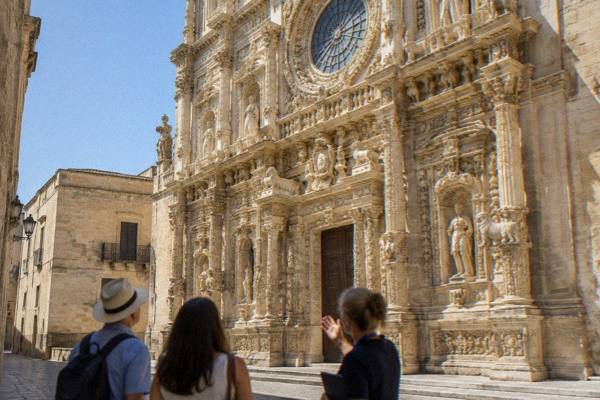
Basilica Di Santa Croce: Reading The Facade
The Basilica di Santa Croce is the single most photographed baroque facade in Lecce, and this page explains how to see it: what the LeccEcclesiae ticket costs, when the church opens, and what the carvings actually show.
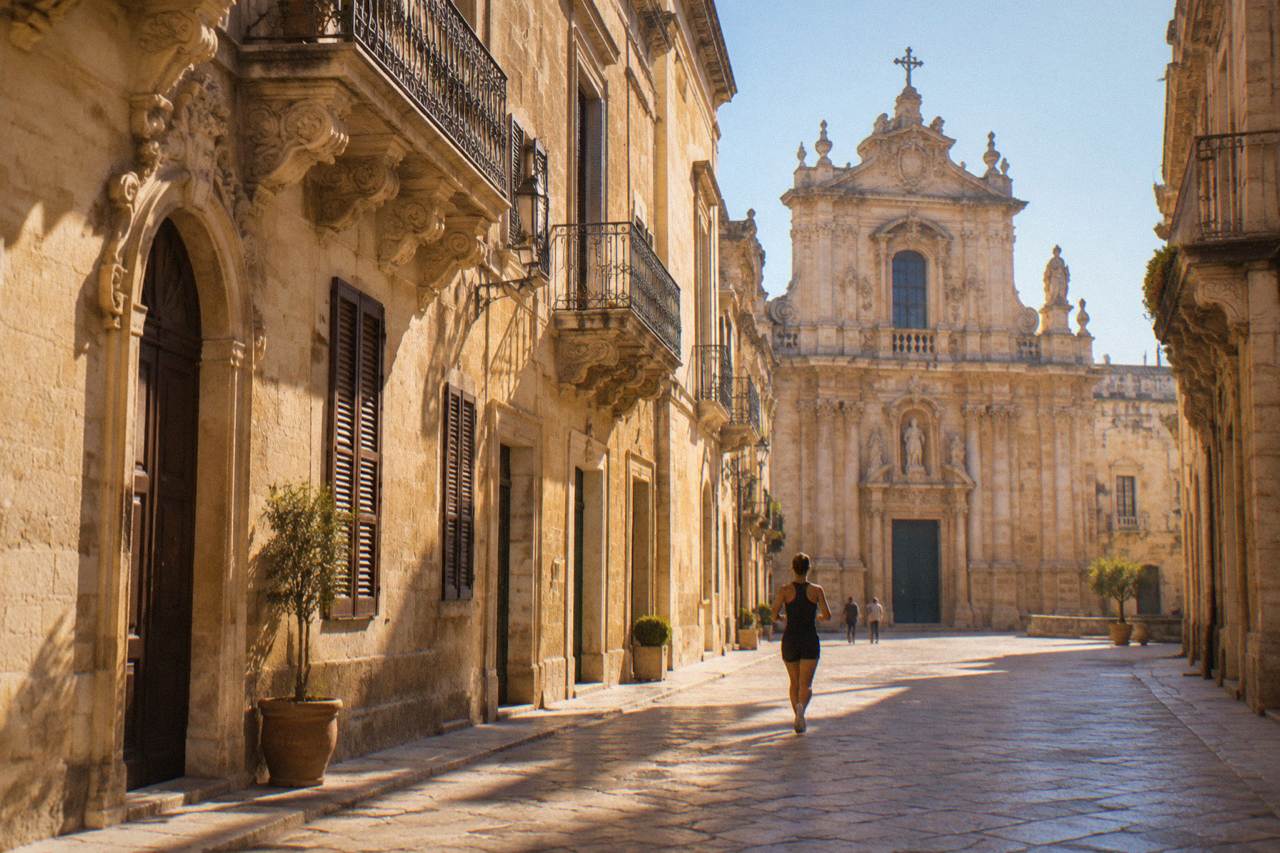
Short answer
The Basilica di Santa Croce in Lecce is visited on the LeccEcclesiae combined ticket: 11 euro standard, 21 euro with the Duomo bell tower, valid 15 days. The church is open daily, 9:00 to 21:00 in summer and 9:00 to 18:00 in winter, and tourist access pauses during services.
Lecce, in Puglia at the heel of southern Italy, keeps its showpiece on one corner of the old centre: the Basilica di Santa Croce, a church whose golden pietra leccese facade is the image the city is known by. The stone itself explains the architecture. Pietra leccese is a Miocene limestone, soft and workable when first quarried, then hardening with exposure, which is why the carvers of the Lecce Baroque could crowd a facade with figures, wreaths and animals to a degree that harder stone would not allow. The basilica is visited today on the LeccEcclesiae combined ticket together with the Duomo, San Matteo, Santa Chiara and the Antico Seminario, and this page sets out what that costs, when to come, and what to look at once you are standing in front of it. For the wider picture of the style, see the Lecce Baroque style guide; for the city at a glance, start with Lecce Travel Guide and the things to do in Lecce overview.
What Is The Basilica Di Santa Croce In Lecce?
The Basilica di Santa Croce is the most decorated church facade in Lecce, built in pietra leccese in the city's baroque style, and it faces the Palazzo dei Celestini at the edge of the old centre, a short walk from Piazza Sant'Oronzo. It is not an isolated monument: it belongs to the group of five church sites covered by the LeccEcclesiae combined ticket, alongside the Duomo with its crypt, San Matteo, Santa Chiara and the Antico Seminario with its museum of sacred art.
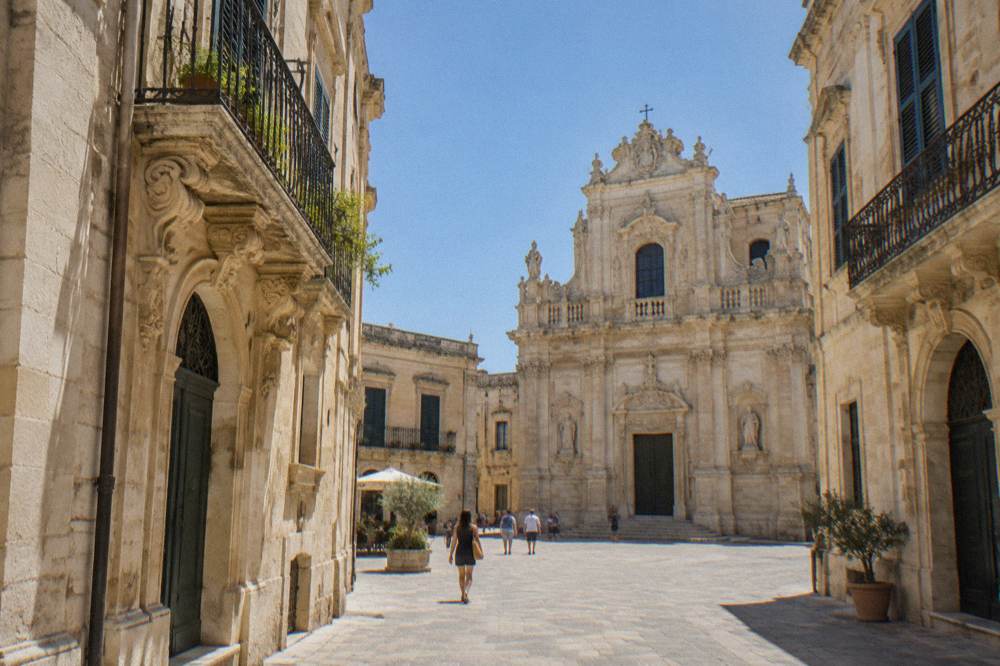
The church is the standard-bearer of what guidebooks call the Lecce Baroque, the style that gave the city its nickname, often rendered as the Florence of the South. The attribution of that nickname is contested and this page does not settle it. What is not contested is the material. Pietra leccese, a honey-coloured Miocene limestone, is soft when cut and hardens in the air, so masons could carve florid detail into it as if it were wood. Standing in front of Santa Croce you see the result: columns stacked on columns, animals, garlands, putti and heraldry crowding every register of the facade.
Describing the facade by what a visitor actually sees is the honest way to do it, because the construction history is not settled in the sources this site uses. No architect's name and no construction date appear on this page, for that reason. What you can verify on the spot is the effect: a dense vertical composition in pale gold stone, best viewed in the afternoon when the sun hits it flat, and best understood with a little preparation, which is what the rest of this page is for.
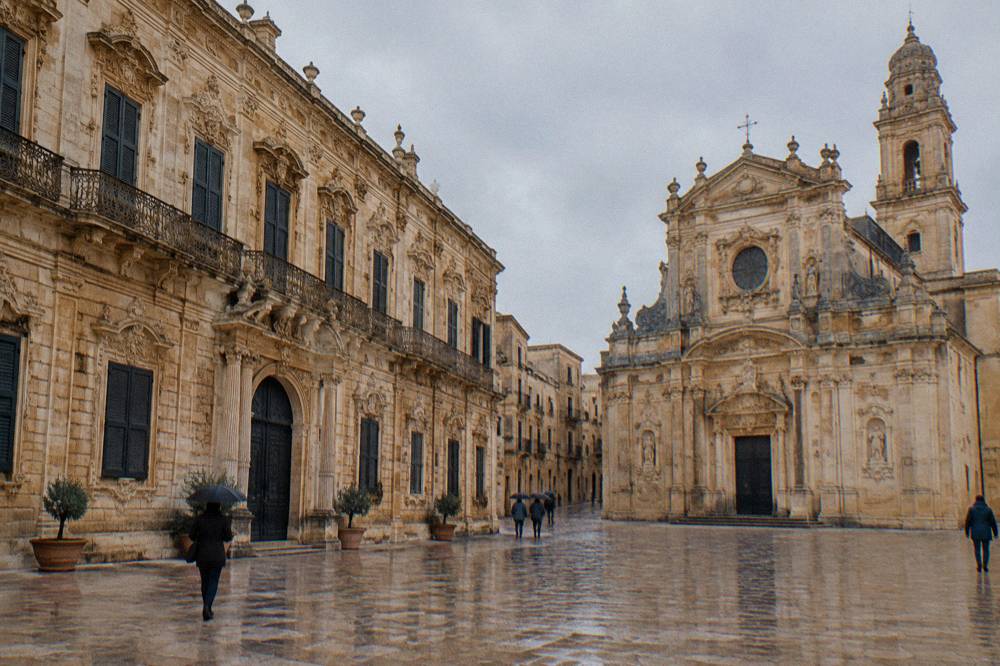
The setting matters as much as the building. The basilica closes one side of the square that also holds the Palazzo dei Celestini, whose courtyard is the seat of the provincial government, and from the corner of the square the old town runs downhill toward Piazza Sant'Oronzo and the Roman Amphitheatre. A visit to Santa Croce therefore sits naturally inside a morning or afternoon walking loop, not a dedicated expedition.
How Much Does It Cost To Visit The Basilica Di Santa Croce In Lecce?
The Basilica di Santa Croce is visited on the LeccEcclesiae combined ticket, which chieselecce.it lists at 11 euro full price, 5 euro reduced for ages 12 to 17 and 24 euro for a family of two adults plus minors aged 12 to 17, with children under 12 free. The ticket is valid 15 days and also covers the Duomo and crypt, San Matteo, Santa Chiara and the Antico Seminario with the MuDAS museum.
That is the standard ticket. There is also a full ticket that adds the Duomo bell tower, branded "Up!", at 21 euro full, 13 euro reduced and 48 euro for the family option. The choice between the two is straightforward: if you plan to climb the bell tower for the view over the old town's rooftops, the full ticket is the one; if churches alone are the goal, the standard ticket covers all five sites. Tickets are sold at Piazza Duomo 5 and at the Basilica di Santa Croce itself.
| Ticket | Full | Reduced (12-17) | Family (2 adults + minors 12-17) |
|---|---|---|---|
| LeccEcclesiae standard | 11 euro | 5 euro | 24 euro |
| LeccEcclesiae with bell tower "Up!" | 21 euro | 13 euro | 48 euro |
| Children under 12 | free | free | free |
Beyond the family and age reductions, free entry applies to residents of the Diocese with ID and to those coming to pray during services, when ticketed tourist access is limited. Visitors with a Diocese residence document should bring it. The 15-day validity is generous and rewards a slow pace: you can see the Duomo on one day and come back to Santa Croce later in the week rather than racing all five sites in one morning.
A wider pass also exists. The Lecce Artwork City Pass, listed at 29 euro for 7 days, bundles the LeccEcclesiae sites including the bell tower with additional entries such as the Palazzo Vernazza phygital experience. For a stay of four or more days with several church and museum visits planned, the arithmetic can work in its favour; for a single day focused on the basilica, the 11 euro ticket is the simpler purchase.
Guided walks that include church entry are another route in. One local option pairs a historic-centre walk with entry to the Duomo and the Basilica di Santa Croce, which suits visitors who want the carvings explained rather than just admitted.
The tours above are the three this site features for readers planning around Lecce: the guided walk that includes the Duomo and Santa Croce, a boat trip to the sea caves at Santa Maria di Leuca for the coastal half of the region, and a masseria visit with a burrata tasting for the inland, agricultural half. More solo picks appear further down this page.
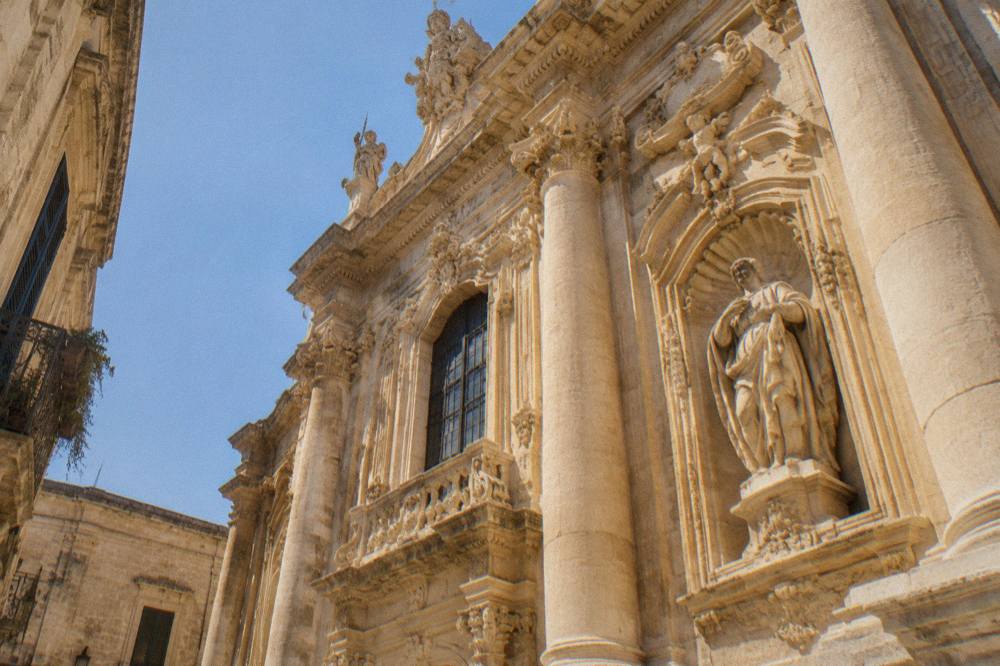
What Do You See On The Facade Of The Basilica Di Santa Croce?
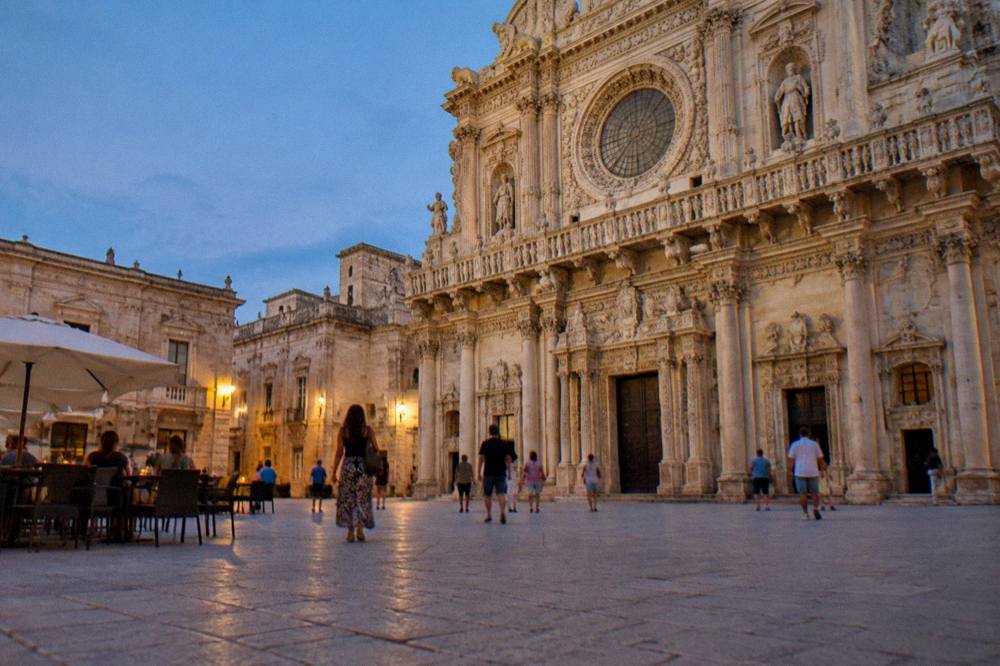
The facade of the Basilica di Santa Croce is a single composition in carved pietra leccese that reads from the bottom up: a lower order with flanking columns and a central portal, an upper order crowned by a large rose window surrounded by figures, and, at the top, a balustrade lined with statues and animals. Every element is ornamental limestone, soft-carved then hardened by exposure, which is why the detail survives so crisply.
Reading it in that order helps, because the facade rewards slow looking rather than one glance and a photograph. The lower storey carries the entrance, framed by columns and carving that draw the eye to the door. Above it, the second storey centres on the rose window, a circular window set in a wheel of sculpted ornament, with figures placed around it. The top of the facade finishes in a balustrade where statues stand between decorative supports, and where the famous animals of the facade appear, including a heraldic eagle and other creatures carved as if guarding the roofline.
The central theme of much of the imagery is triumph and devotion, expressed in the baroque language of garlands, cherubs and heraldic symbols rather than in narrative scenes. You do not need to decode every figure to enjoy it. Standing in the small square, it is worth working upward storey by storey and then stepping back toward the centre of the square to take in the whole vertical rush of stone.
Two practical notes improve the visit. First, the facade faces a square shared with the Palazzo dei Celestini, so the classic photograph includes the palace wing on one side; late afternoon light gives the limestone its deepest gold. Second, the square is small and the viewing distance is limited, so a pair of binoculars or a camera zoom genuinely helps with the roofline animals.
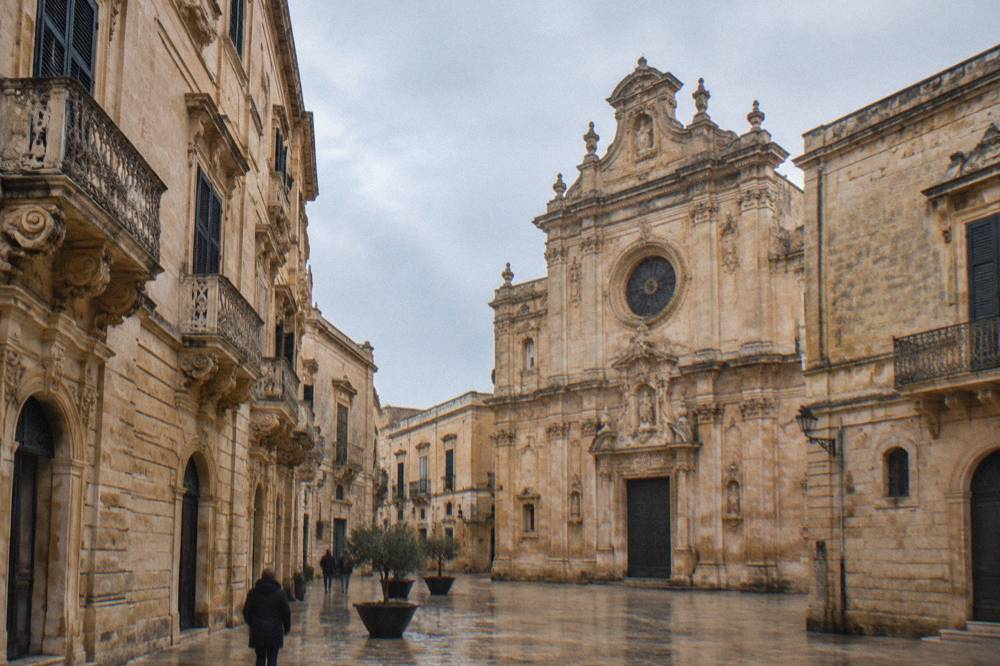
If the facade is what brings you, a guided walk that includes the basilica's interior adds the layer most self-guided visitors miss, and the listing can be checked for current availability.
What Is Inside The Basilica Di Santa Croce In Lecce?
Inside, the Basilica di Santa Croce is a baroque hall of side altars in pale pietra leccese, lighter and quieter than the facade promises, with a central nave leading to the high altar. The interior works as a counterpoint: the outside is theatrical and crowded, the inside is ordered and luminous, and both are carved from the same honey-coloured limestone that gives Lecce its colour.
The side altars are the interior's main furniture. Each is a small composition of columns, pediments and statuary in the same local stone, and walking the nave slowly, altar by altar, is the natural way to see the space. The proportions are the point: Lecce's baroque churches are rarely vast, and Santa Croce's interior is best understood as an intimate room richly trimmed, not a cathedral-scale void like the Duomo across town at Piazza del Duomo.
Visitors with the LeccEcclesiae ticket usually pair Santa Croce with the Duomo complex, and the contrast is instructive. The Duomo, its crypt and the Antico Seminario with the MuDAS museum of sacred art form the civic-religious heart of the city, while Santa Croce is the style's shop window. Both are on one ticket with 15 days of validity, so there is no need to do them back to back.
Dress and services apply as they do across the LeccEcclesiae churches: shoulders and knees covered, and tourist visits pause during religious services. The diocese publishes service times, and access is limited while they run, so a morning visit outside Mass hours is the safe planning assumption.
| LeccEcclesiae site | What it is | Included in ticket |
|---|---|---|
| Basilica di Santa Croce | Baroque basilica, this page's subject | Yes, standard and full |
| Duomo di Lecce and crypt | Cathedral and underground crypt at Piazza del Duomo | Yes, standard and full |
| Chiesa di San Matteo | Baroque church with a convex facade | Yes, standard and full |
| Chiesa di Santa Chiara | Church with a decorated interior | Yes, standard and full |
| Antico Seminario + MuDAS | Former seminary with the diocesan museum of sacred art | Yes, standard and full |
| Duomo bell tower "Up!" | Tower ascent with views, about every 20 minutes | Full ticket only |
When Is The Basilica Di Santa Croce Open, And When Should You Go?
The LeccEcclesiae sites, including the Basilica di Santa Croce, are open daily from 9:00 to 21:00 in the summer season, April to September, and from 9:00 to 18:00 in the winter season, October to March, with last entry 15 minutes before closing, according to chieselecce.it's information page. The ticket stays valid for 15 days, so a missed slot is not a lost visit.
The seasonal split matters for planning. A summer visit can be scheduled for the evening, when the long opening to 21:00 means the facade is seen in golden late light and the interior is cool after a hot day; the ERA5 reanalysis, 1991-2020, puts Lecce's mean daily high at about 31 C in both July and August, so midday churchgoing doubles as heat avoidance. A winter visit runs against the 18:00 close, which in practice means an afternoon slot before the light goes.
| Period | Hours (all LeccEcclesiae sites) | Note |
|---|---|---|
| April to September | Daily 9:00 to 21:00 | Last entry 20:45 |
| October to March | Daily 9:00 to 18:00 | Last entry 17:45 |
| During services | Tourist access limited | Check the diocese calendar |
| Ticket validity | 15 days from first use | Standard and full tickets |
Rain barely changes the calculus. The same ERA5 reanalysis, 1991-2020, shows November as the month with the highest rainfall total, 93.7 mm, and July the lowest at 15.3 mm, but the basilica is an indoor-and-facade visit that works in any weather. What weather does change is the photograph: the limestone reads deepest gold in low, angled light, which favours late afternoon over noon.
What Sits Around The Basilica Di Santa Croce In Lecce?
The basilica shares its square with the Palazzo dei Celestini, whose courtyard is freely viewable, and from that square the old town slopes toward Piazza Sant'Oronzo, the Roman Amphitheatre and, in the other direction, the Villa Comunale gardens. Everything on that list is within a short walk, and several of the sights are free public space, which makes the basilica the natural anchor of a walking loop rather than a detour.
The Palazzo dei Celestini stands directly beside the church. It serves as the seat of the provincial prefecture, and access is limited to the courtyard, which costs nothing. Its long facade in the same limestone is part of the reason the square photographs so well: palace and basilica read as one continuous piece of urban scenography.
From the square, the walk toward Piazza Sant'Oronzo passes through the commercial heart of the old centre, and the piazza itself holds the sunken arcades of the Roman Amphitheatre, visible free from above and visitable on a 5 euro ticket in its reopened, accessible form after its 1,500,000 euro PNRR restoration. The amphitheatre's neighbour, Piazza Sant'Oronzo's column and cafe terraces, is the place for the city's signature iced coffee with almond milk, described in the caffe in ghiaccio guide.
| Nearby sight | Relation to the basilica | Entry |
|---|---|---|
| Palazzo dei Celestini | Same square, courtyard only | Free courtyard |
| Piazza Sant'Oronzo and amphitheatre | Short walk downhill | Free from above; 5 euro to enter |
| Museo Faggiano | Archaeological house museum in the old centre | 5 euro |
| Castello Carlo V | South-west edge of the centre | Guided tour 10 euro, courtyard free |
| Villa Comunale | Public gardens a short walk west | Free |
| Piazza del Duomo | The Duomo end of the LeccEcclesiae circuit | On the same 11 euro ticket |
Two more churches sit in the wider circuit without LeccEcclesiae coverage: the Chiesa di Sant'Irene and the Basilica del Rosario, both described on their own pages, with no verified hours or prices to print here, so confirm locally before planning them into a tight schedule. The Chiesa di San Matteo and the Chiesa di Santa Chiara, by contrast, are on the ticket and lie within the same walking radius.
For visitors stringing the city together over more than a day, the Lecce in two days itinerary places the basilica on the first morning and the museums on the second, and the centro storico guide covers the streets between the landmarks in detail. Day trips out of the city, from Otranto to the Santa Maria di Leuca coast, work best once the old town's core has been walked.
Can You See The Basilica Di Santa Croce On A Guided Tour Of Lecce?
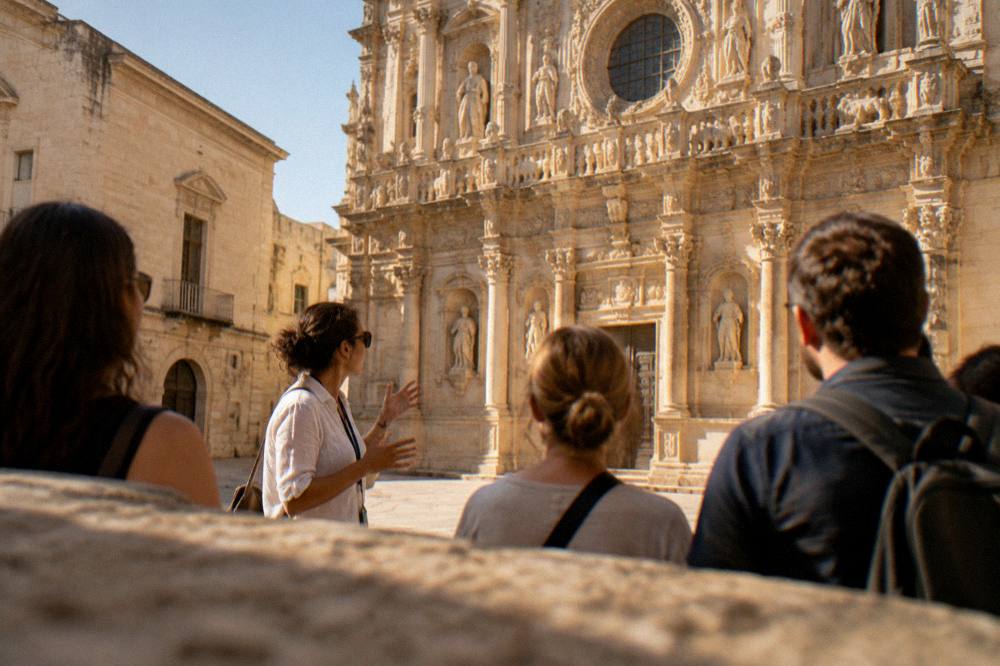
Yes: guided walking tours of Lecce's historic centre run daily and several include the Basilica di Santa Croce or the Duomo in their route, with one local option pairing the walk with free entry to the Duomo and the basilica itself. A guide adds the layer the ticket does not: the carving programmes, the style's logic and the city's layout, explained on site rather than read beforehand.
The featured option on this site is the guided tour with free entry to the Duomo and the Basilica di Santa Croce, a short historic-centre walk suited to a first day in the city. Its price, rating and duration render on the tour's own page rather than being typed here, and availability can be checked directly.
For travellers who prefer to build the day around the sea or the countryside instead, the two tours below are the site's other featured picks from Lecce.
Self-guided visitors lose nothing essential, to be clear. The LeccEcclesiae ticket, a good map and an unhurried afternoon cover the basilica well, and the Lecce walking tour guide lays out a route that connects it with the Duomo, the amphitheatre and the smaller churches.
How Does The Basilica Fit Into A Salento Trip?
The Basilica di Santa Croce is a half-day sight at most, and it anchors the Lecce portion of any Salento trip: one or two days in the city for the churches, the amphitheatre and the food, then day trips east to Otranto, south to Leuca and west to Gallipoli and the Ionian beaches. Lecce sits a few kilometres inland, with San Cataldo, the nearest beach, about 13 km away, so the city and the coast combine easily by car or summer bus.
In high summer the Salento in Bus network links Lecce to the coastal towns, running 13 June to 13 September in 2026 on lines such as 101 to Torre dell'Orso and Otranto and 104 to Porto Cesareo and Gallipoli. The service is summer-only and its later dates were not announced for 2027 at the time of the sources this page uses, so check the operator before planning a coastal loop around it. Outside those months the region is essentially a car or train proposition: FSE trains run from Lecce to Gallipoli, Galatina and, with a change at Maglie, Otranto.
The August calendar is the other timing consideration. The Festa dei Santi Patroni fills Lecce from 23 to 26 August with processions and illuminations, and the Notte della Taranta concert in Melpignano closes the summer on 22 August in its 2026 edition. Both pull visitors into the region, and both make a basilica visit feel like a quiet interlude in a loud week; the Festa di Sant'Oronzo guide covers the Lecce side.
| Trip stage | Where | What the sources support |
|---|---|---|
| Day 1 | Lecce old town | Basilica, Duomo, amphitheatre, on foot |
| Day 2 | Lecce museums | Castello Carlo V tour 10 euro, Faggiano 5 euro, MUST 5.50 euro |
| Day 3 | Adriatic side | Otranto by car about 44 min, or FSE train via Maglie |
| Day 4 | Ionian side | Gallipoli by car about 41 min, or direct FSE train |
| Day 5 | Deep south | Leuca by car about 78 min from the centre |
The featured tours below are the same trio this site recommends for visitors basing themselves in Lecce, repeated here for readers planning at the trip level: the church-and-Duomo walk, the Leuca caves boat trip and the masseria cheese tasting.
One more reassurance on planning: the LeccEcclesiae ticket's 15-day validity means a weather change or a festival crowd cannot ruin the church portion of the trip. Buy on arrival, see the Duomo end first, and keep Santa Croce for the afternoon light.
Common Questions About The Basilica Di Santa Croce In Lecce
How much is the Basilica di Santa Croce in Lecce?
The basilica is visited on the LeccEcclesiae combined ticket at 11 euro full price, 5 euro for ages 12 to 17 and 24 euro for a family of two adults with minors aged 12 to 17; children under 12 enter free. A 21 euro full ticket adds the Duomo bell tower.
What does the LeccEcclesiae ticket include?
It covers the Basilica di Santa Croce, the Duomo with its crypt, the Chiesa di San Matteo, the Chiesa di Santa Chiara and the Antico Seminario with the MuDAS museum of sacred art, and it stays valid for 15 days from first use.
What are the opening hours of the Basilica di Santa Croce?
All LeccEcclesiae sites open daily, 9:00 to 21:00 from April to September and 9:00 to 18:00 from October to March, with last entry 15 minutes before closing. Tourist access pauses during religious services.
Is there a dress code for the Basilica di Santa Croce?
Yes, as across the LeccEcclesiae churches: shoulders and knees must be covered, and visits are limited during services.
Can you photograph the facade of the Basilica di Santa Croce?
The square in front of the basilica is public space and the facade is photographed freely from it; interior photography rules are set by the diocese, so check signage or staff on arrival.
Do you need a guided tour of the Basilica di Santa Croce?
No, the ticket alone admits you, but a guided walk that includes the basilica and the Duomo adds historical and architectural context, and one such tour is featured on this site with availability shown on its listing.