Chiesa Di Santa Chiara: The Papier Mache Ceiling
The Chiesa di Santa Chiara in Lecce holds one of the strangest ceilings in Puglia: a riot of gilded cherubs and scrolls made not of stone or wood but of papier mache, inside a church covered by the LeccEcclesiae combined ticket.
Short answer
**The Chiesa di Santa Chiara in Lecce is a Lecce Baroque church known for its gilded papier mache ceiling, and it is included in the LeccEcclesiae combined church ticket (11 euro standard, valid 15 days, under 12 free). The church is open daily, 9:00 to 21:00 in summer and 9:00 to 18:00 in winter, and visits pause during services.**
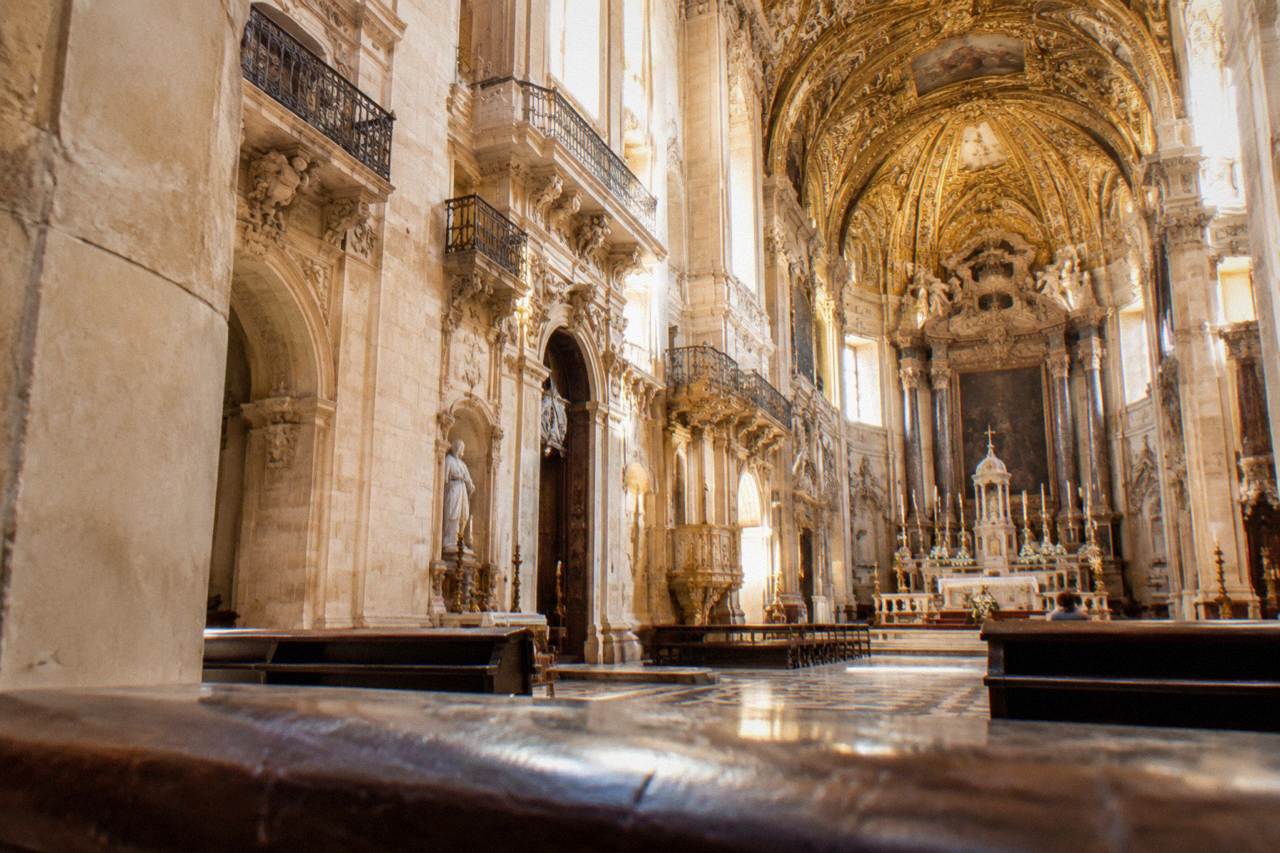
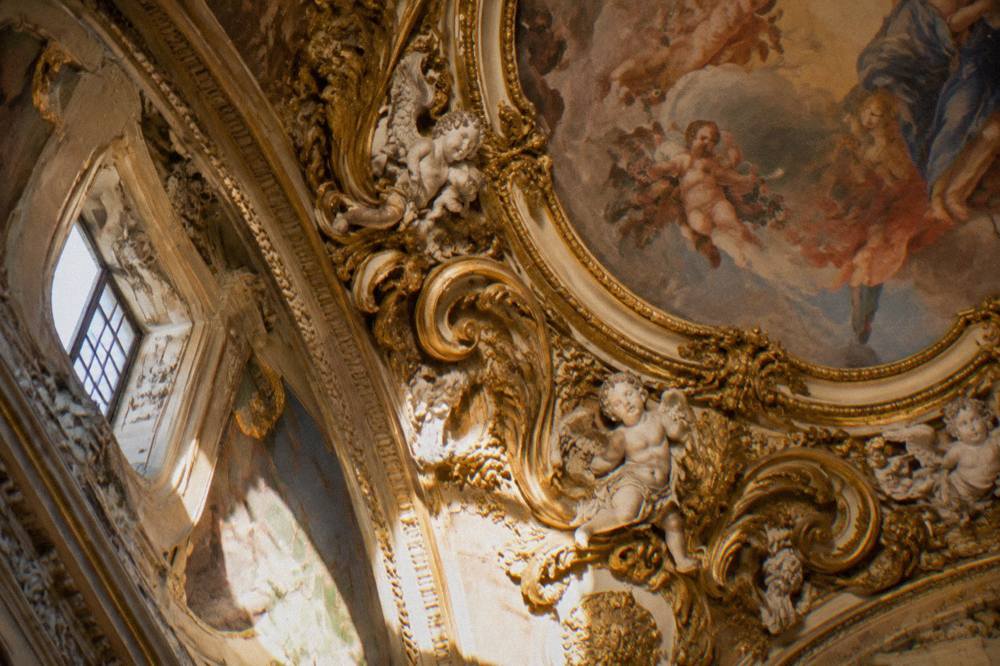
The Chiesa di Santa Chiara in Lecce, the baroque capital of Salento in Puglia, is the church where the city's strangest craft is on show above your head. While its facade and altars carry the honey-coloured pietra leccese limestone that gives Lecce its glow, the ceiling is something else entirely: gilded cherubs, scrolls, frames and floral sprays, modelled in papier mache and painted to pass for carved and gilded wood or stone. Lecce's cartapesta tradition, the same craft that fills the city's workshops and its Castello museum, was never a folk curiosity only. It was a working technique that finished churches, and Santa Chiara is one of the places where that is easiest to see. This guide covers what the church is, how its ceiling fits the craft, what the LeccEcclesiae ticket covers, when to go, and how to pair the visit with everything else in the old town.
What Is The Chiesa Di Santa Chiara In Lecce?
The Chiesa di Santa Chiara is a baroque church in the centre of Lecce, attached to the former convent of the Clarissan order, and its interior combines pietra leccese stonework with a celebrated gilded papier mache ceiling. It is one of the five church sites covered by the official LeccEcclesiae combined ticket, alongside the Duomo, Santa Croce, San Matteo and the Antico Seminario with MuDAS.
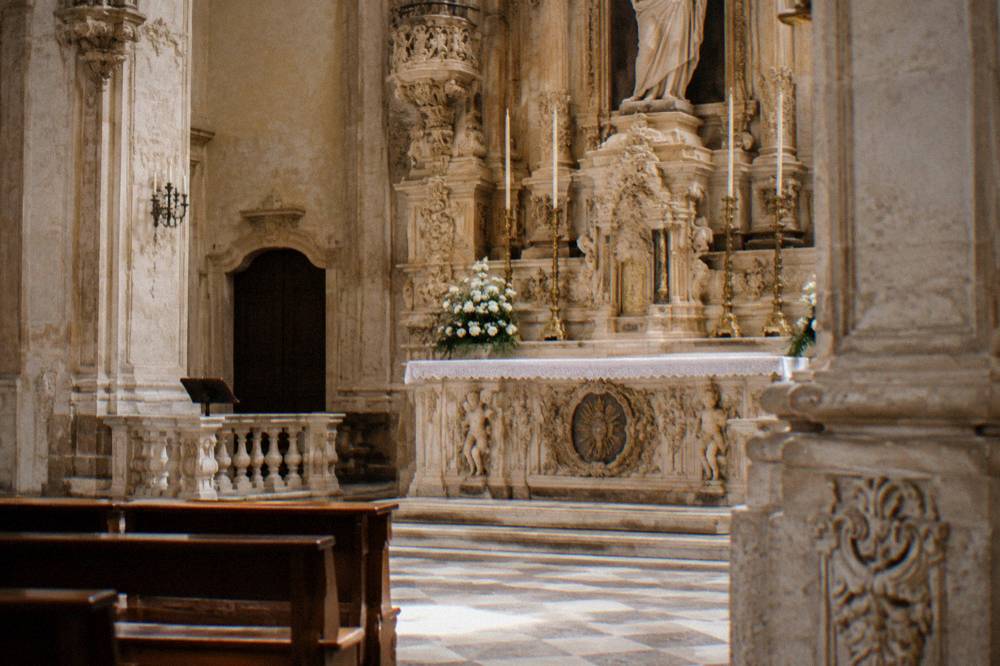
The church belongs to the group of baroque buildings that define Lecce's historic centre, the style locals call barocco leccese. The soft Miocene limestone of the region, pietra leccese, could be carved easily when freshly quarried and hardened on exposure, and the city's builders and sculptors exploited that softness to produce the dense decoration the style is known for: twisted columns, lush foliage, putti and scrollwork. The Lecce Baroque walk through the old town keeps passing buildings of the same stone, and Santa Chiara's altars sit comfortably in that lineage.
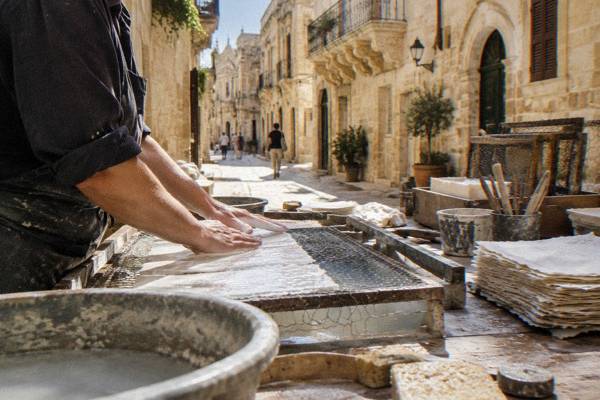
What sets the church apart is the ceiling. Cartapesta, the papier mache craft of Lecce, developed as a way of producing sculptural decoration at lower cost and weight than stone or carved wood, and its makers, the cartapestai, supplied figures, nativity scenes and architectural ornament to churches across the region. The ceiling of Santa Chiara is gilded and painted to read as if it were an expensive carved and gilded ensemble, and it is regularly cited as a leading example of the craft inside a working church. The tradition around it is living: the city still runs working botteghe in the historic centre, and the craft is the subject of the guide to Lecce papier mache.
The church sits within easy walking distance of the other LeccEcclesiae sites and of Piazza Sant'Oronzo, which makes it a natural stop rather than a destination in itself. Most routes through the centre pass it between the Duomo quarter and the shopping streets. For planning the wider old town, the centro storico pages on this site lay out the geography.
How Much Does The Chiesa Di Santa Chiara Lecce Cost To Visit?
The Chiesa di Santa Chiara is included in the LeccEcclesiae combined ticket, which the official chieselecce.it ticket page lists at 11 euro standard, 5 euro reduced for ages 12 to 17, and 24 euro for a family of two adults plus minors aged 12 to 17, valid for 15 days. Children under 12 enter free. The full version with the Duomo bell tower costs 21 euro, 13 euro reduced, 48 euro family.
There is no separate single-church ticket published for Santa Chiara: access comes with the combined ticket that also covers the Duomo and its crypt, the Basilica di Santa Croce, the Chiesa di San Matteo and the Antico Seminario with the Museo d'Arte Sacra (MuDAS). Tickets are sold at Piazza Duomo 5 and at the Basilica di Santa Croce, per the official information page.
| Ticket | Full | Reduced (12 to 17) | Family (2 adults + 12 to 17 minors) |
|---|---|---|---|
| LeccEcclesiae standard | 11 EUR | 5 EUR | 24 EUR |
| LeccEcclesiae with bell tower "Up!" | 21 EUR | 13 EUR | 48 EUR |
| Children under 12 | Free | Free | Free |
The 15-day validity is the detail worth planning around. A visitor who buys the standard ticket on arrival can spread the five sites across a stay rather than racing them in one day, which suits the pace of the city. For anyone staying longer or intending to add further sights, a city pass also exists: the Lecce Artwork pass is listed at 29 euro for 7 days and bundles the LeccEcclesiae sites including the bell tower with additional extras. Confirm inclusions at purchase, since pass contents are set by the operator.
A guided walk can put the ticketed churches in context, including an option with entry to the Duomo and the Basilica di Santa Croce:
| LeccEcclesiae Site | What You See |
|---|---|
| Duomo (Cattedrale) and crypt | Cathedral interior and crypt |
| Basilica di Santa Croce | Facade and interior of the baroque basilica |
| Chiesa di San Matteo | Church with a convex baroque facade |
| Chiesa di Santa Chiara | Church with the gilded papier mache ceiling |
| Antico Seminario + MuDAS | Former seminary and the Museo d'Arte Sacra |
Why Is The Papier Mache Ceiling Of Santa Chiara Famous?
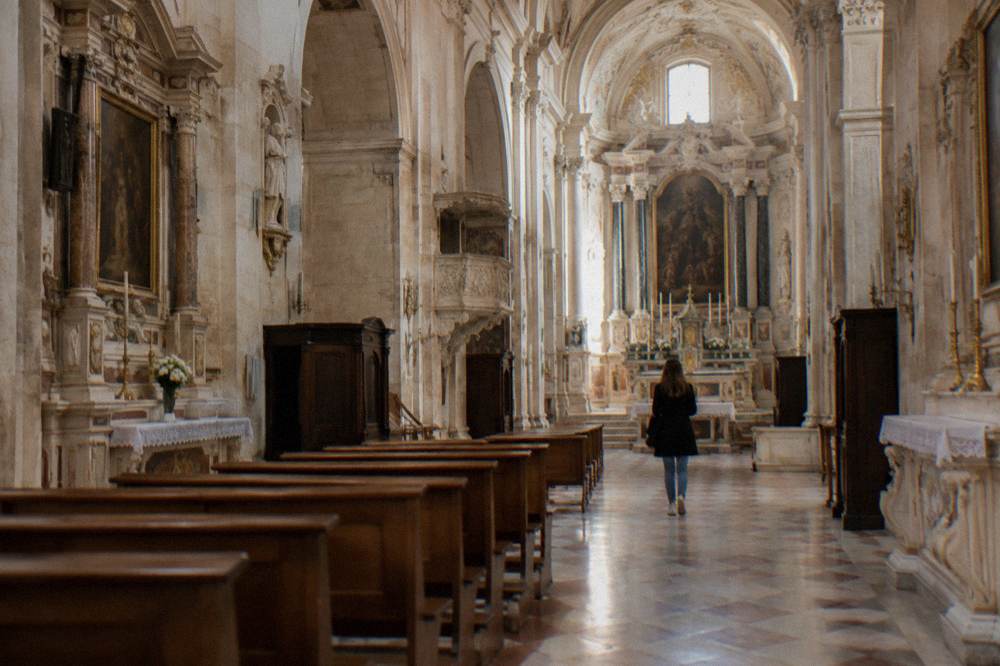
The ceiling of the Chiesa di Santa Chiara is famous because it is a large-scale gilded ensemble made in papier mache rather than carved wood or stone, showing Lecce's cartapesta craft at architectural scale inside a church. The decoration reads as gilded carving from the floor, and its material only becomes clear on close inspection, which is why the church is a standard reference point for the craft.
Cartapesta was a practical answer to a practical problem. Sculptural ornament in stone and carved wood was expensive, and the technique of layering paper, glue and cloth over moulds and armatures produced light, durable, paintable forms at lower cost. Lecce's makers used it for statues of saints, nativity figures and, at the top end, whole ceilings and altarpiece frames. The craft's materials were humble, the results were not, and gilding closed the gap between paper and gold.
The church therefore works as a viewing exercise. Stand at the entrance and the ceiling reads as an expensive carved and gilded program, frames and figures and scrolling ornament. Look longer, from directly beneath, and the modelling softness of the paper shows itself: edges round rather than chip, surfaces carry a faint give that stone never has. That double reading is the point of the building for a visitor, and it explains why the church is paired in guidebooks with the papier mache collections elsewhere in the city rather than only with the other baroque churches.
| Material | Role In The Church | Where To See It |
|---|---|---|
| Pietra leccese | Facade, altars, architectural carving | Throughout the interior |
| Papier mache (cartapesta) | Gilded ceiling decoration | Ceiling above the nave |
| Gilding and paint | Unifies paper and stone surfaces | Ceiling and altar frames |
The craft is still taught. For visitors who want to handle it rather than look up at it, workshops run in the city:
The Castello Carlo V also holds the Museo della Cartapesta, and access comes with the castle's guided tour: the castle's own page states the interior is visitable by guided tour only, at 10 euro full and 6 euro reduced, free to age 11, with the courtyard area free. The Castello Carlo V page on this site covers the detail.
When Is The Chiesa Di Santa Chiara Open In Lecce?
The Chiesa di Santa Chiara keeps the shared LeccEcclesiae hours: daily from 9:00 to 21:00 in the summer period of April to September, and daily from 9:00 to 18:00 in the winter period of October to March, with last entry 15 minutes before closing, according to the official chieselecce.it information page. Tourist access is limited during religious services, when visits pause.
Those hours apply across all the LeccEcclesiae sites, which simplifies planning: the Duomo, Santa Croce, San Matteo, Santa Chiara and the Antico Seminario open and close together. In practice the practical variables are the midday pause for services and the season's closing time. The city's climate shapes the rhythm too: the ERA5 reanalysis, 1991-2020, puts the mean daily high at about 31 C in July and August, and long summer evening opening hours to 21:00 exist partly because of that.
| Period | Hours | Last Entry |
|---|---|---|
| April to September | Daily 9:00 to 21:00 | 20:45 |
| October to March | Daily 9:00 to 18:00 | 17:45 |
Dress matters, as it does across the ticketed churches: shoulders and knees should be covered, per the guidance on the official church pages. The rule is applied at church entrances across Italy and Lecce is no exception. Visitors during a service are welcome to attend but not to sightsee, and the calendar of services is published by the diocese.
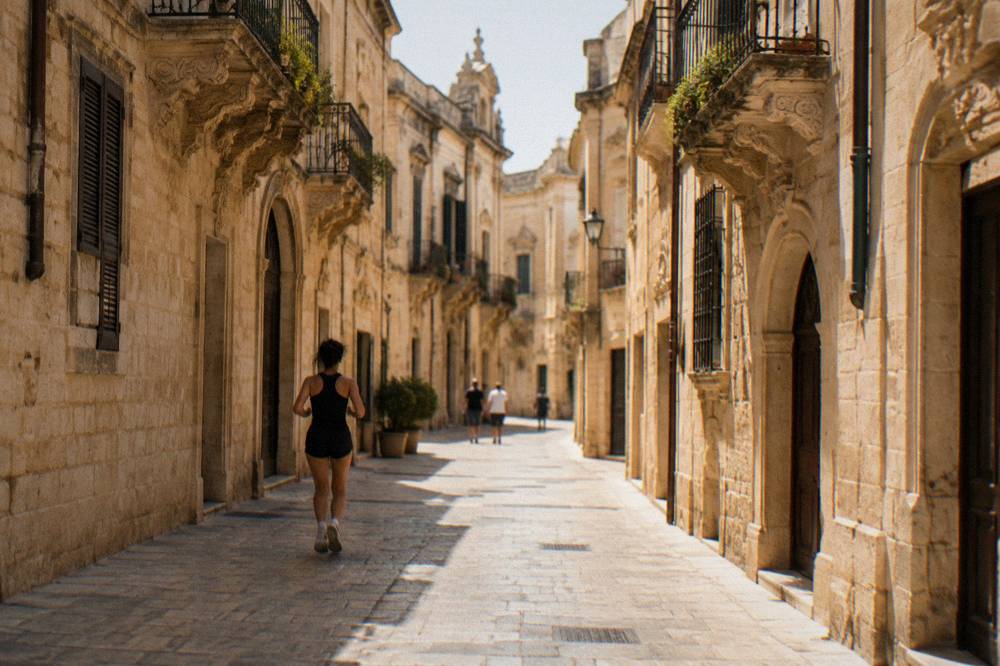
The church's central position means it slots into almost any old town route. The immediate neighbourhood also holds the Piazza Sant'Oronzo and the Roman Amphitheatre, both a short walk away, and the Porta Napoli gate stands to the west of the quarter. A viewer can cover the amphitheatre's bowl from the piazza free of charge, with paid entry details on its own page.
How Long Should You Spend At The Chiesa Di Santa Chiara?
The Chiesa di Santa Chiara is a single-naved church that rewards about 20 to 30 minutes, with time to stand at different points beneath the papier mache ceiling and to read the side altars, and longer if a guide or audio commentary is supplied with your ticket. It pairs well with the other four LeccEcclesiae sites in a half day, spread across the 15-day ticket validity.
The ceiling is the reason to slow down. A quick pass through reads as one gilded blur; standing beneath successive bays shows how the ornament is built up in layers, and how the paper forms were designed to be seen from a distance of ten metres or more. The stone altars repay a second look too, since the contrast between carved limestone and modelled paper is the whole story of the interior. The full index of guides sits on Lecce Travel Guide.
For a half-day circuit, the natural order runs from the Piazza del Duomo cluster, where tickets are sold at number 5, through the Duomo and its crypt, then Santa Chiara, then San Matteo, ending at the Basilica di Santa Croce near the heart of the shopping streets. The Basilica di Santa Croce is the largest of the set and the best saved for last in daylight. MuDAS, in the Antico Seminario on the same piazza as the Duomo, adds the diocesan art collection for those with stamina.
Visitors who prefer a guide to solo reading have several options, from short introductions to deeper small-group walks:
What Else Is Near The Chiesa Di Santa Chiara In Lecce?
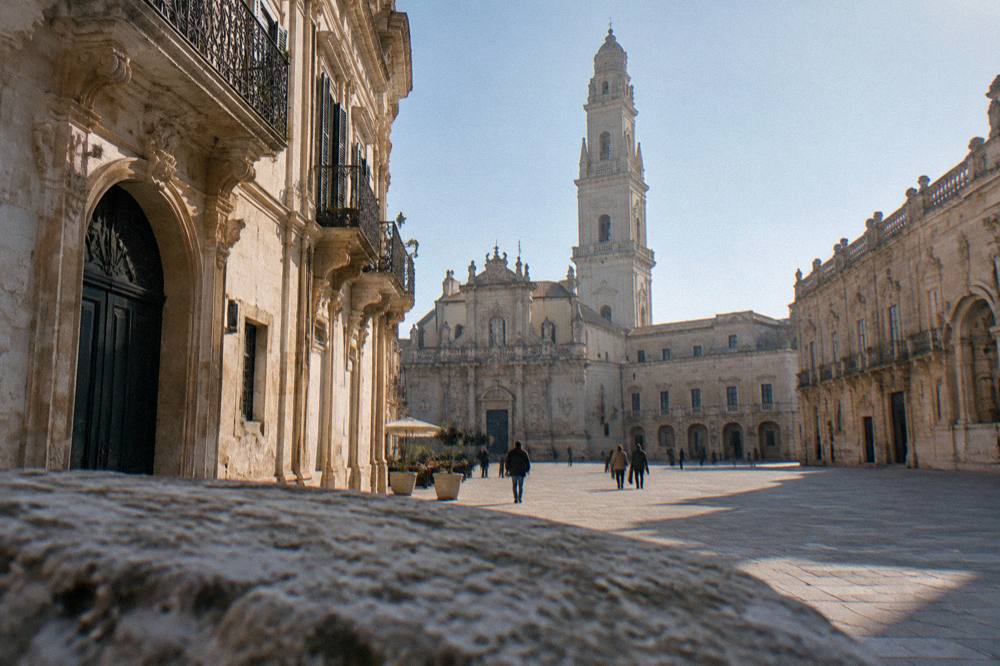
The streets around the Chiesa di Santa Chiara hold the densest cluster of Lecce Baroque sights in the city: the Piazza del Duomo with the cathedral, crypt and bell tower, the Basilica di Santa Croce, the Chiesa di San Matteo, the Roman Amphitheatre in Piazza Sant'Oronzo, and the Museo Faggiano's layered underground archaeology, all within a short walk of one another.
This compactness is Lecce's main practical advantage. The historic centre is small enough that the baroque circuit needs no transport at all, and the sights not in the LeccEcclesiae set have their own, separate tickets. The Museo Faggiano charges 5 euro for a descent through centuries of layered use beneath a townhouse, and the Teatro Romano hides a Roman theatre in the street grid, with its small museum running mornings from Monday to Saturday and afternoons by reservation. The MUST museum covers the city's history and the Museo Castromediano holds the provincial archaeology.
| Nearby Site | Ticket Basis | Walking Relation To Santa Chiara |
|---|---|---|
| Duomo and crypt | LeccEcclesiae | Same cluster, Piazza del Duomo |
| Basilica di Santa Croce | LeccEcclesiae | Short walk east |
| Chiesa di San Matteo | LeccEcclesiae | Short walk |
| Antico Seminario + MuDAS | LeccEcclesiae | On Piazza del Duomo |
| Roman Amphitheatre | Own ticket (5 EUR full, 2 EUR reduced) | Short walk, Piazza Sant'Oronzo |
| Museo Faggiano | Own ticket (5 EUR) | Central, short walk |
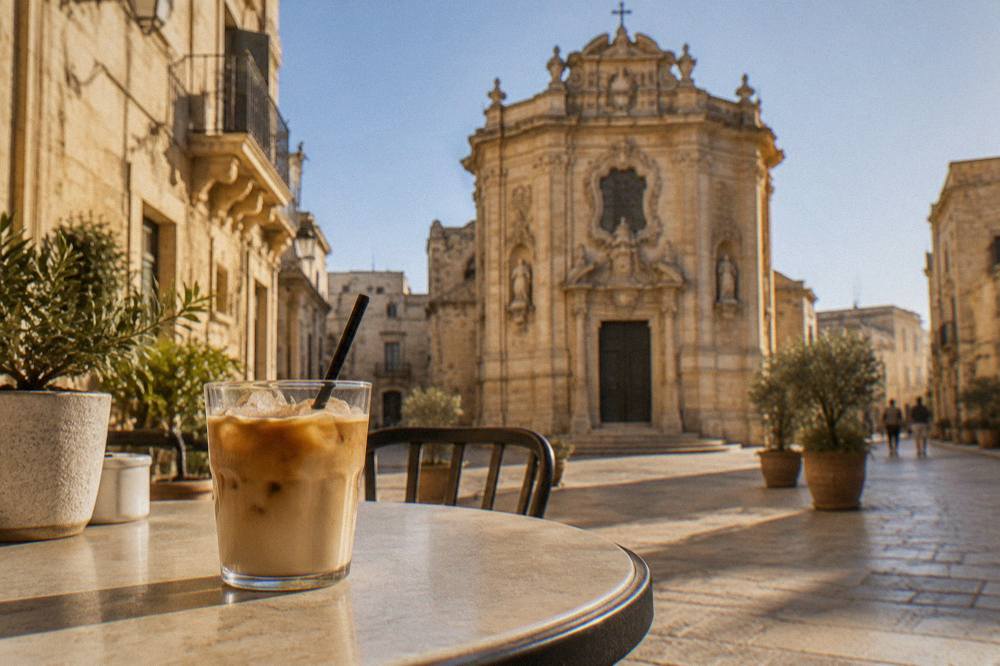
For a break between churches, the city's cafe culture is itself an attraction. The iced espresso with almond milk, the caffè in ghiaccio con latte di mandorla, is the local signature drink, credited to Antonio Quarta of Quarta Caffè in the 1940s to 1950s, and it is covered in the guide to caffe in ghiaccio. Caffè Alvino on Piazza Sant'Oronzo has roots to about 1880, and Pasticceria Natale has been family-run since 1978; both are long-standing names in the city's pastry scene.
Can You Visit Santa Chiara With A Guided Tour Of Lecce?
Yes, the Chiesa di Santa Chiara appears on guided walking itineraries of Lecce's baroque centre, and the LeccEcclesiae ticket that admits you to it can be bought separately at Piazza Duomo 5 or Santa Croce; several local tours include entry to the ticketed churches, and free or tip-based walks also run locally, in which case you confirm arrangements with the guide. Ticketed churches pause tourist visits during services.
Guided options range from short one-hour introductions that include the Duomo and Santa Croce to small-group walks built around history and local stories, and private tours that add the underground rooms beneath the centre. The advantage of a guide in Santa Chiara specifically is the ceiling: the craft story, the materials and the way the gilded paper was made to imitate carving are exactly the kind of context a guide supplies and a laminated card does not.
The pairing the desk would flag for a longer stay is churches in the morning, coast in the afternoon. Lecce sits a few kilometres inland, and the sea is part of the same region's pull. A group boat tour to the caves of Santa Maria di Leuca is the site's featured related tour, running from the southern tip of the peninsula, and live availability is on the operator's listing: Check availability. The caves along that stretch of coast are the maritime counterpart to Lecce's interiors, and the Santa Maria di Leuca page covers the town.
What Should You Know Before Visiting Churches In Lecce?
Before visiting the Chiesa di Santa Chiara and the other LeccEcclesiae churches, know four things: shoulders and knees must be covered, tourist visits pause during services, the combined ticket lasts 15 days so there is no need to rush, and Lecce's historic centre is a camera-policed ZTL, so anyone driving should park outside the restricted zone and ask their accommodation about plate registration.
The ZTL point matters more than first-time visitors expect. The restricted zone covers the historic core, cameras enforce it, and fines reported in the local ordinances run from 83 to 332 euro. The practical fix is simple: arrive by train or park in a peripheral structure and walk. The city is flat and compact, and the baroque circuit between the Duomo, Santa Chiara, Santa Croce and Piazza Sant'Oronzo is entirely on foot.
Clothing is the other recurring issue. Summer heat, with a mean daily high around 31 C in July and August per the ERA5 reanalysis, 1991-2020, pushes visitors toward shorts and vests, and churches still expect covered shoulders and knees. A light scarf or a longer layer in a day bag solves it without planning.
Finally, build the papier mache thread through the whole visit rather than treating the ceiling as an isolated curiosity. The ceiling of Santa Chiara, the Museo della Cartapesta inside the Castello Carlo V, the working botteghe of the historic centre and the hands-on workshops are one continuous story of a craft that finished Lecce's churches in paper and gold. Seen that way, the church becomes the anchor of a theme, not a single stop.
For the longer Salento picture, the coast towns are close: Otranto and its mosaic floor, Galatina with the frescoed Basilica of Santa Caterina d'Alessandria, and the Adriatic beaches of the marine di Lecce are all short hops. Finish the day with the festivity calendar in mind too: the Festa di Sant'Oronzo fills the city each August with processions and lights, and the Palazzo dei Celestini on the same axis as Santa Croce is one of the civic buildings that complete the baroque ensemble.
Common Questions About The Chiesa Di Santa Chiara Lecce
Is the Chiesa di Santa Chiara in Lecce included in the LeccEcclesiae ticket?
Yes. The combined LeccEcclesiae ticket covers the Duomo with its crypt, the Basilica di Santa Croce, the Chiesa di San Matteo, the Chiesa di Santa Chiara and the Antico Seminario with MuDAS. The standard ticket is listed at 11 euro, valid 15 days.
What is the papier mache ceiling of Santa Chiara?
The ceiling of the Chiesa di Santa Chiara is a gilded decorative ensemble made in cartapesta, Lecce's papier mache craft, rather than carved wood or stone. Painted and gilded to imitate carved decoration, it is a standard example of the craft at architectural scale inside a church.
How long does a visit to the Chiesa di Santa Chiara take?
About 20 to 30 minutes for the church itself, longer with a guide. The church is small, but the ceiling rewards standing beneath successive bays, and it is normally paired with the other four LeccEcclesiae sites in a half day spread across the ticket's 15-day validity.
What are the opening hours of the Chiesa di Santa Chiara in Lecce?
The church follows the shared LeccEcclesiae hours: daily 9:00 to 21:00 from April to September and 9:00 to 18:00 from October to March, with last entry 15 minutes before closing. Tourist visits pause during religious services.
Is there a dress code for the Chiesa di Santa Chiara?
Yes. As across the LeccEcclesiae churches, shoulders and knees should be covered. A light scarf or longer layer carried in a day bag is the usual solution in summer.
Where do you buy tickets for the Chiesa di Santa Chiara?
LeccEcclesiae tickets are sold at Piazza Duomo 5 and at the Basilica di Santa Croce, per the official chieselecce.it information page. The same ticket admits you to all five church sites, with children under 12 free.