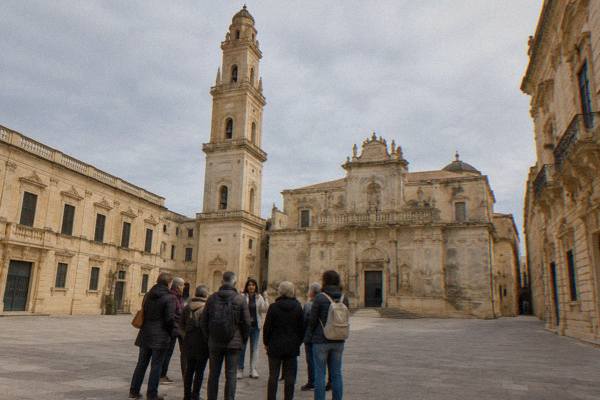
MUST: The City History Museum Of Lecce
MUST is Lecce's museum of the city's own story, from Messapian roots to the baroque boom, a short walk from Piazza Sant'Oronzo.
Short answer
MUST, the Museo Storico Città di Lecce, is open Tuesday to Sunday with a full ticket of 5.50 euro and a reduced rate of 3.50 euro; it closes on Mondays and children under 10 enter free.
Lecce, the baroque capital of Salento in Puglia, southern Italy, keeps its own biography in one building: MUST, the Museo Storico Città di Lecce. While the churches and palaces of the old town show what the city became, MUST lays out how it got there, from Messapian and Roman fragments found in local soil, through the medieval and Renaissance town, to the baroque expansion that filled the centre with pietra leccese facades. The museum's own pages report winter hours of Tuesday to Thursday 9:00 to 19:00 and Friday to Sunday 9:00 to 20:00, closed Monday, with a full ticket at 5.50 euro, a reduced rate of 3.50 euro for students, over 65s and similar categories, and free entry for children under 10. This page lays out what the museum holds, what it costs, how it compares with Lecce's other museums, and how to slot it into a day in the city. For the wider picture, start with the site's things to do in Lecce overview.
What Is MUST In Lecce?
MUST stands for Museo Storico Città di Lecce, the historical museum of the city of Lecce, and it tells the story of the town and its territory through archaeology, maps, paintings and multimedia displays rather than through a single art collection. Its reported winter hours are Tuesday to Thursday 9:00 to 19:00 and Friday to Sunday 9:00 to 20:00, closed on Mondays, with a full ticket at 5.50 euro, 3.50 euro reduced, and free entry for children under 10.
The museum is a civic institution, run by the comune, and its reported opening pattern follows the format given above for the winter season, with longer hours in summer. The comune's museum listing and the museum's own site both carry the current exhibition calendar, and the temporary show spaces are a real part of the offer: the museum rotates contemporary and historical exhibitions alongside its permanent city-story galleries. Because hours and programmes shift with the seasons, the practical advice is to check the museum's own site for the day you plan to visit.
The distinction between a civic history museum and an art museum is worth spelling out, because it shapes expectations. An art gallery asks you to look; a city history museum asks you to connect. At MUST the object on display is rarely the point on its own: a shard, a map or a painting functions as evidence in an argument about how Lecce grew, contracted, rebuilt itself and reinvented itself as a baroque showcase. Visitors who arrive expecting the Uffizi will be disappointed; visitors who arrive curious about why an inland agricultural town at the heel of Italy carries some of the most extravagantly carved facades in the country will get their answer in sequence, room by room.
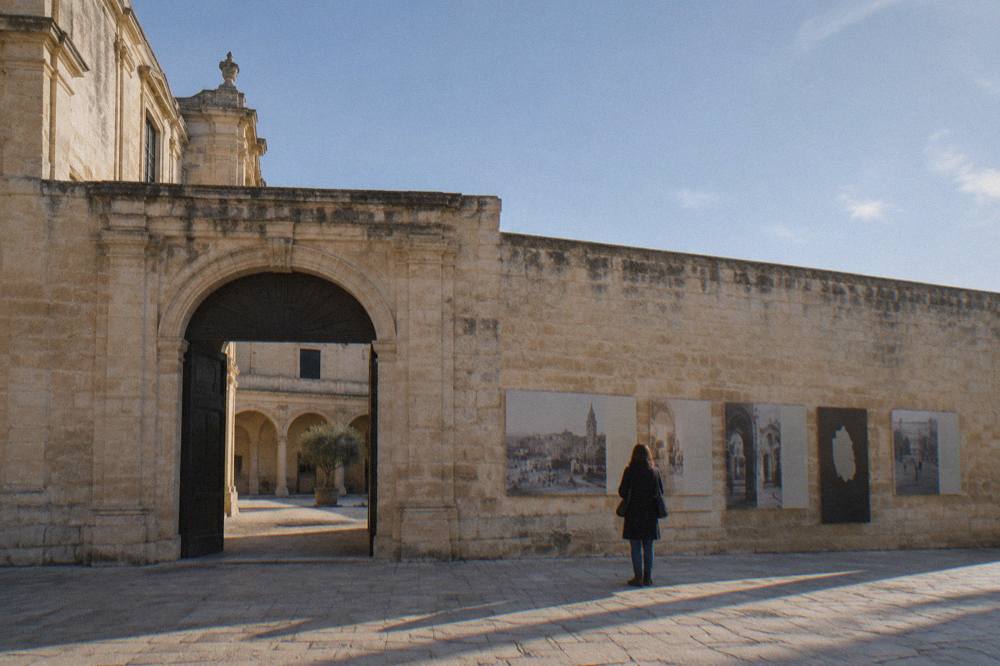
Context helps here. MUST sits in a city whose visible identity is the Lecce Baroque style, carved from the local pietra leccese limestone, but whose history runs much deeper: Roman remains surface in Piazza Sant'Oronzo, Messapian and Roman Rudiae lies at the edge of town, and the museum exists to connect those layers. Read alongside the history of Lecce, the collection works as the narrative spine of the whole city.
The city's scale makes that spine easy to follow once you leave the museum. Lecce counted 94,387 residents on 1 January 2026, with about 20,774 university students at the Università del Salento, which gives it the feel of a medium-sized provincial capital with a student population rather than a tourist factory. The old town inside the walls is compact enough that every era the museum describes has a physical remnant within a fifteen-minute walk of the exit.
How Much Does MUST Lecce Cost, And When Is It Open?
The reported full ticket for MUST is 5.50 euro, with a reduced rate of 3.50 euro for students, visitors over 65 and similar categories, and free entry for children under 10. The museum is reported closed every Monday, open Tuesday to Thursday 9:00 to 19:00 and Friday to Sunday 9:00 to 20:00 in winter, with extended hours in the summer months. Confirm the day's hours and any exhibition surcharge on the museum's own site before you go.
Those prices are reported, not guaranteed: museum tariffs in Italy adjust occasionally, and temporary exhibitions sometimes carry separate pricing. The table below sets out the reported figures against Lecce's other museums so the value comparison is easy to make.
| Museum | Reported hours (winter) | Reported full ticket | Notes |
|---|---|---|---|
| MUST | Tue to Thu 9:00 to 19:00, Fri to Sun 9:00 to 20:00, closed Mon | 5.50 euro, 3.50 reduced | Free under 10; rotating exhibitions |
| Museo Faggiano | Every day 9:30 to 20:00 | 5 euro | Ages 0 to 8 free, 8 to 16 pay 3 euro |
| Roman Amphitheatre | Tue to Sun 10:00 to 17:00 (1 Oct to 31 Mar) | 5 euro, 2 reduced | Closed Monday; visible free from the piazza |
| Museo Castromediano | Tue to Sun 9:00 to 19:00 | Reported free (secondary source) | Archaeology and art province-wide |
| Castello Carlo V | Guided tours Tue to Sun | 10 euro tour | Courtyard free; Museo della Cartapesta included |
A pattern jumps out of that table: Monday is the day Lecce's museums shut, more or less in unison. MUST, the amphitheatre and the Castromediano all close, and the Castello Carlo V runs its guided tours Tuesday to Sunday. A Monday in Lecce is therefore best spent on the open-air layer of the city, the piazzas, the gates, the Villa Comunale and the walk from Porta Napoli to Piazza Sant'Oronzo, with the churches of the LeccEcclesiae circuit carrying the indoor programme instead.
One more figure belongs in any Lecce museum budget: the Lecce Artwork City Pass, reported at 29 euro for 7 days, bundles the LeccEcclesiae church circuit with the bell tower and extras. If your plan leans toward churches rather than museums, the pass may make sense; if MUST and Faggiano are your main indoor stops, single tickets keep it simple.
Where Is MUST, And How Do You Get There?
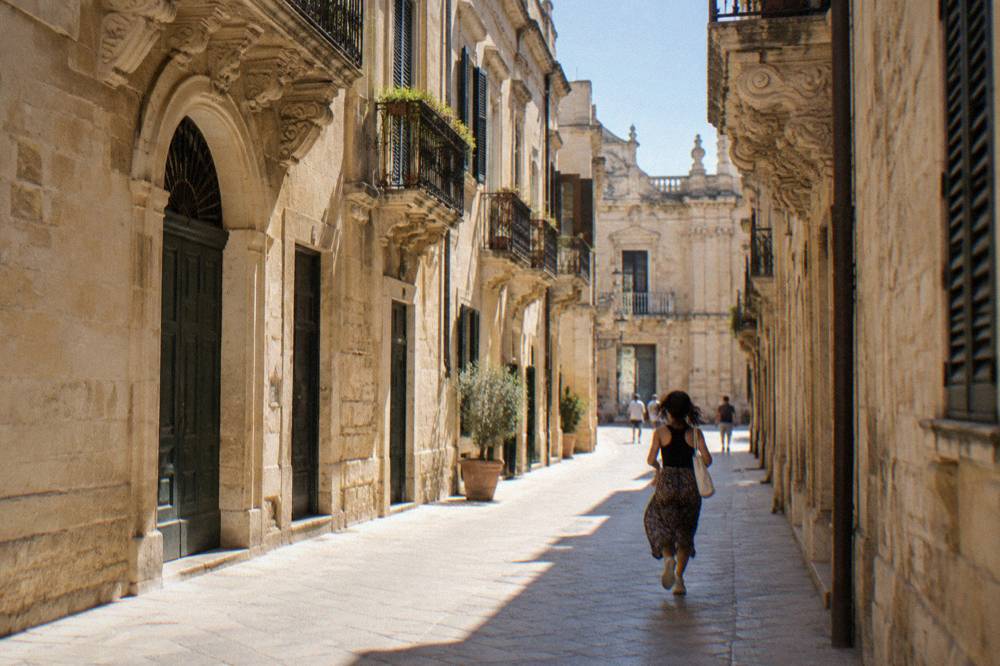
MUST is in the centre of Lecce, within the old town's walking radius, and Lecce itself is a compact, walkable city where the historic core between Piazza Sant'Oronzo and Piazza del Duomo is covered on foot in minutes rather than hours. The city has no commercial airport; the gateway is Brindisi, about 40 minutes away by airport bus at 6.50 euro one way, and the train station sits a short walk or one city bus ride from the centre.
The practical detail that matters is the ZTL, the camera-policed limited traffic zone over the historic centre. Reported hours run weekdays roughly 13:00 to 16:30 and overnight from 20:00, with 24-hour enforcement on Sundays and holidays, and fines from 83 to 332 euro. Anyone driving in should ask their accommodation to register the plate; anyone arriving by train simply walks or takes an SGM city bus, with a 60-minute ticket at about 1.20 euro bought in advance.
Parking, for those who do drive, is easier at the edge of the centre than inside it. SGM blue-zone street parking is reported at roughly 1.10 euro per hour in the blue areas with higher progressive rates in the central red and orange zones, and the underground Park Liberty near the centre offers about 466 spaces at a reported 1.50 euro per hour by day and 0.80 euro at night. Leave the car there, walk in, and the ZTL stops being a worry entirely.
From the museum, the rest of the centre strings together naturally. Piazza Sant'Oronzo with the Roman Amphitheatre, the Duomo complex, Basilica di Santa Croce and Palazzo dei Celestini all sit within the same short radius, which is why the city works so well as a walking destination. A guided option is the site's featured Lecce walking tour, and the small-group history walk below covers the same ground with the city's stories attached.
What Does The MUST Collection Actually Cover?
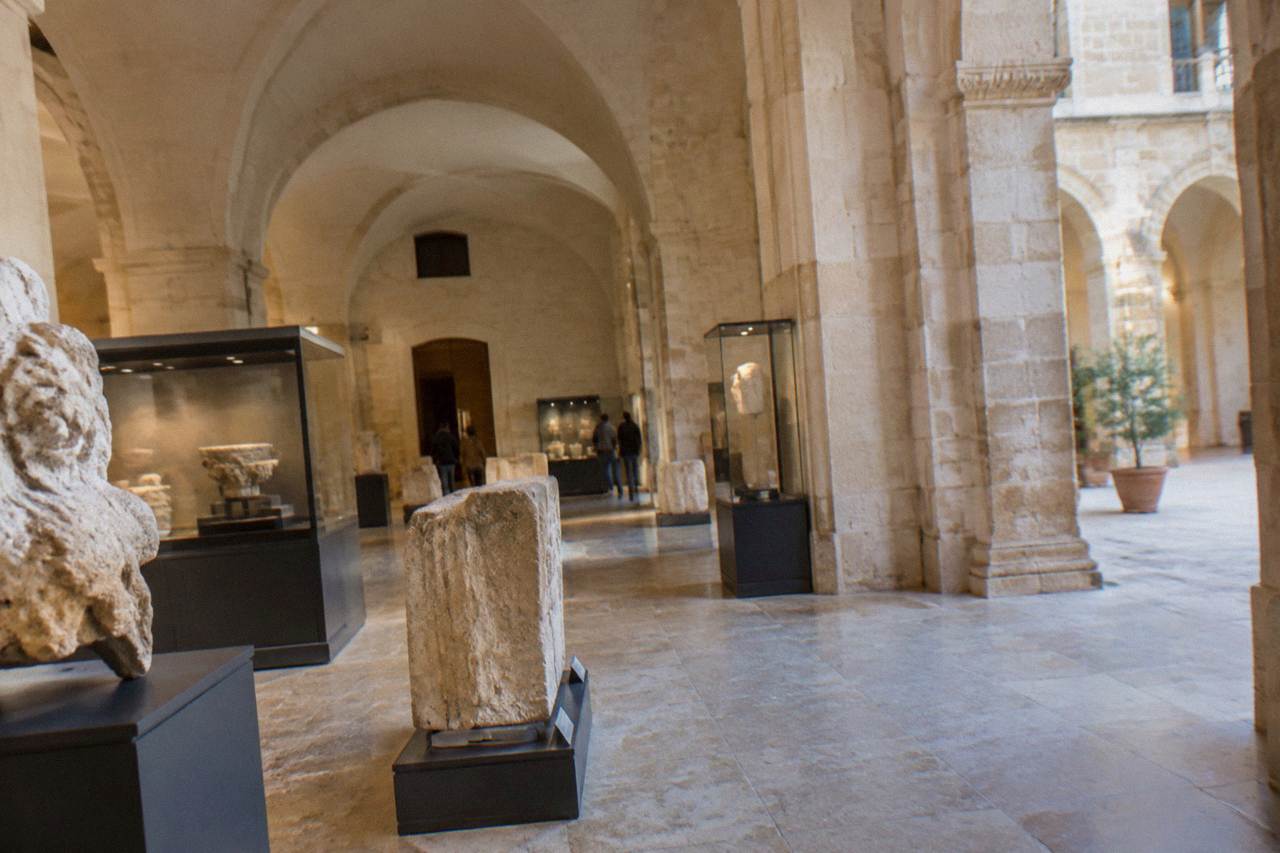
The permanent collection of MUST walks through the city's own past: Messapian and Roman material from the Lecce area, medieval and Renaissance town history, the baroque transformation of the centre, and modern Lecce, presented with maps, models, paintings and multimedia rather than as a warehouse of artefacts. Temporary exhibition spaces carry rotating shows, so part of any visit depends on what is currently programmed; the museum's own site lists current exhibitions.
The museum's framing matters for what you take from it. The Roman layer of the city is visible in the streets already, the amphitheatre in Piazza Sant'Oronzo and the Roman Theatre with its small museum, so MUST supplies the connective narrative between those fragments. The baroque layer, the one the city is famous for, is explained indoors while you live inside its outdoor version. Read the room on Lecce stone and the carving trades before or after, and the galleries about the city's craft economy, cartapesta above all, click into place.
The Messapian thread deserves a moment of attention, because it is the part of Lecce's past that the street-level visitor never meets. Before Rome, this was Messapian territory, and the archaeological park at Rudiae, traditionally linked to the poet Ennius in the classical sources, preserves remains from that era alongside Roman structures. Reported access to Rudiae is by weekend guided visits or weekday booking, at 5 euro full and 4 reduced, so MUST often ends up being where visitors first encounter the pre-Roman story at all, in display cases rather than in the ground.
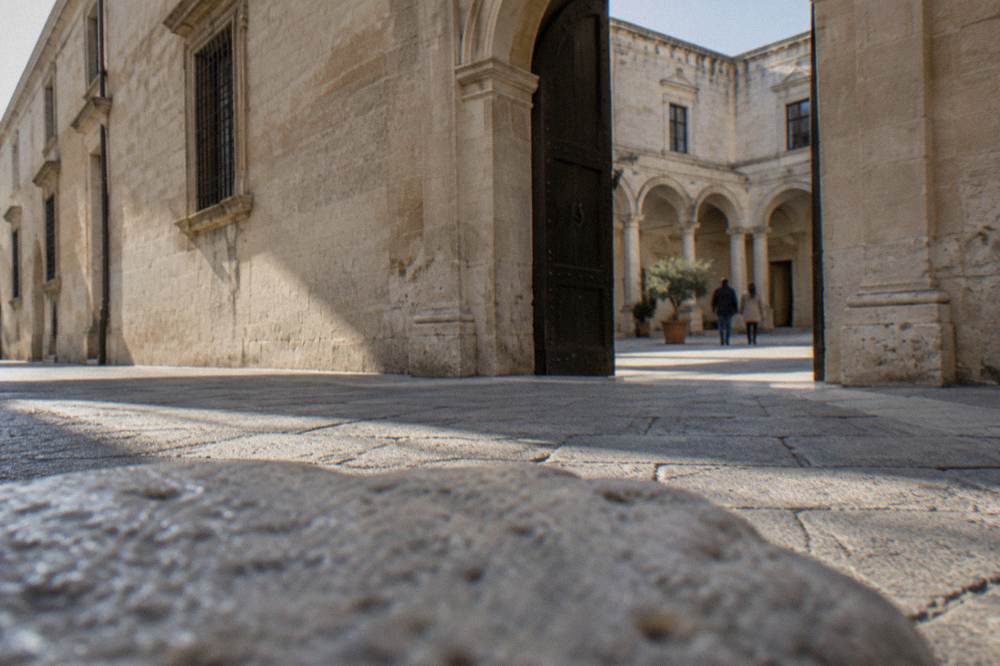
For depth on specific themes, the sibling guides carry the detail: cartapesta workshops for the papier-mache tradition, and the Jewish museum for the city's Jewish quarter story, which MUST touches on in its account of the old Giudecca. The Museo Ebraico runs guided visits only, reported at 5 euro full and 4 reduced, so it needs to be planned rather than stumbled into.
How Does MUST Compare With Lecce's Other Museums?
MUST is the city-history choice among Lecce's museums: it is broader in narrative than Museo Faggiano, which is an archaeological site under one palazzo, more civic in focus than Museo Castromediano, which covers provincial archaeology and art, and more indoors than the Roman Amphitheatre, which is a monument you walk through. The reported ticket prices are close together, from free at Castromediano to 5.50 euro at MUST, so the choice is about subject rather than cost.
Each museum answers a different question, and the fastest way to choose is to match the question to the venue.
| If your question is | Go to | Why |
|---|---|---|
| How did this city develop over time? | MUST | The whole city narrative, era by era |
| What lies under Lecce's palazzi? | Museo Faggiano | Layers of occupation inside one building |
| What did Rome leave here? | Roman Amphitheatre | The monument itself, newly accessible |
| What has the wider province dug up? | Museo Castromediano | Provincial archaeology and painting |
| How is cartapesta made? | Castello Carlo V | Museo della Cartapesta inside the castle tour |
| What was the Jewish quarter? | Museo Ebraico | Guided visits of the Giudecca story |
A realistic museum morning pairs MUST with one neighbour, not all five. Faggiano is the most common pairing: the two sit close together in the centre, both tickets are low single-figure euro amounts, and one gives the overview while the other gives the stratigraphy. Faggiano's own story is famously accidental: the building's owner cut into the floor for a moisture problem and uncovered layers of occupation beneath, which is why that museum is experienced as a descent through time rather than as galleries.
The Castromediano rounds out the set for anyone with a free afternoon. Its reported hours mirror MUST's Tuesday-to-Sunday, closed-Monday pattern, and its entry is reported as free on the strength of secondary sources, so it costs nothing but time to add. Its remit is provincial rather than municipal: material from across the province of Lecce rather than the story of the city alone, which makes it the natural second stop after MUST rather than before it.
Can You Visit MUST With Kids?
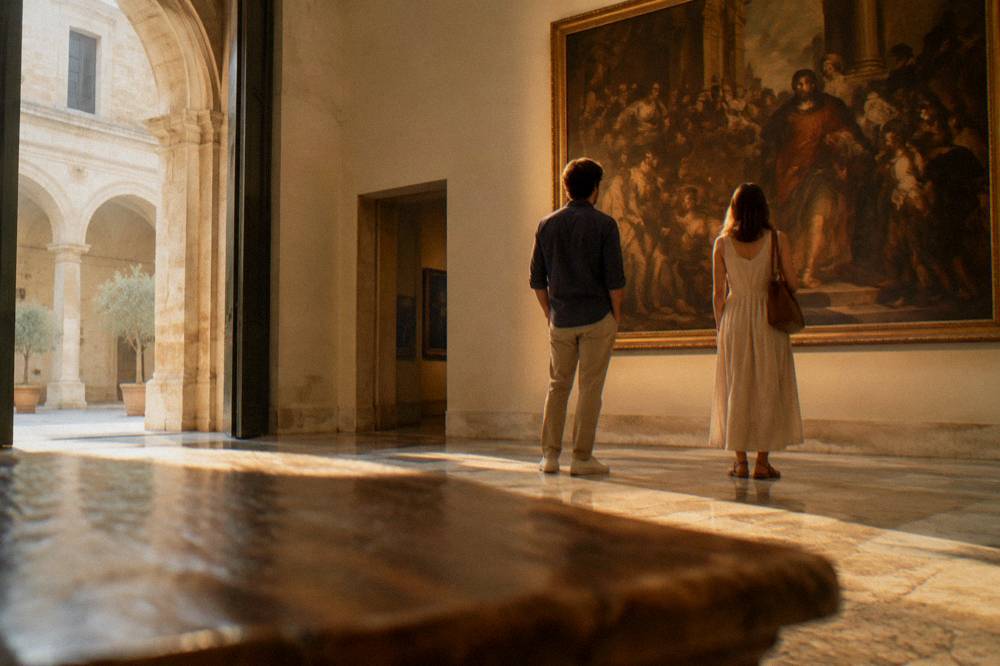
Yes: MUST admits children under 10 free, according to the reported tariff, and the museum's mix of maps, models and multimedia is built to explain a city rather than to display fragile objects behind glass at a distance. The reduced rate of 3.50 euro applies to older students. Two caveats from the general Lecce rules: churches in the city enforce a shoulders-and-knees dress code, and museum visits pause during services at religious sites, so plan indoor time around them.
For a family day, the pattern that works is indoor museum time in the morning, when energy is highest, then the free open-air layer of the city in the afternoon: Piazza Sant'Oronzo, the amphitheatre seen from above, Porta Napoli and the Villa Comunale gardens, all public space with no ticket at all. The site's free-things guide covers more of that layer.
A practical note on timing with children: the amphitheatre's winter hours end at 17:00 and its summer schedule splits the day into a morning and an evening window, so it does not fill a mid-afternoon slot in July the way MUST does. The city's museums, which keep straight-through evening hours, are the reliable answer to the hot middle of a Salento summer day, when the ERA5 reanalysis, 1991-2020, puts the mean daily high at about 31 C in July and August.
How Much Time Should You Allow For MUST?
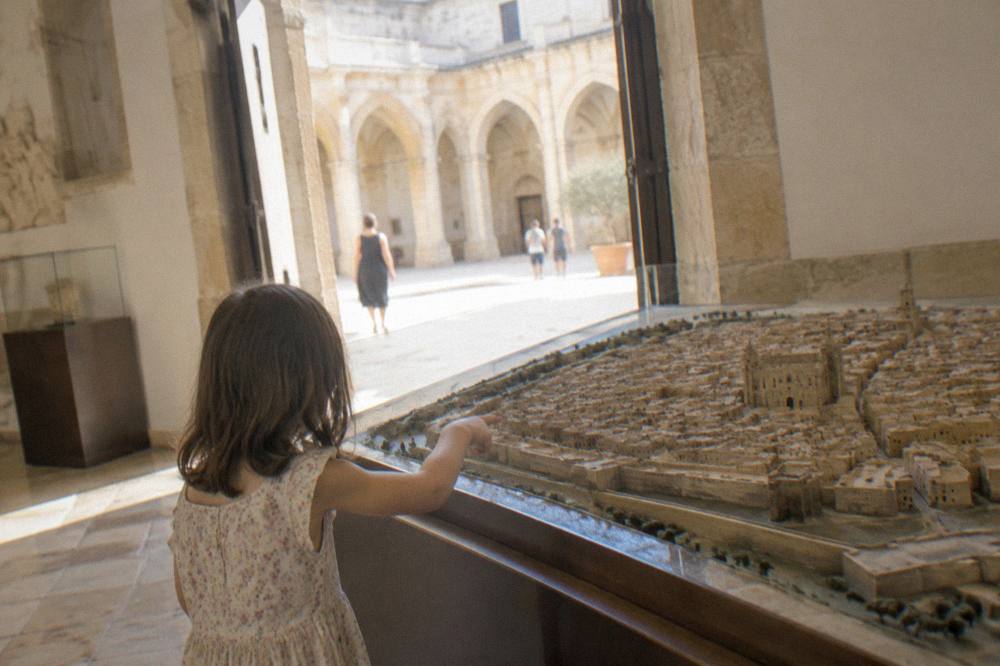
A visit to MUST is a half-morning or half-afternoon stop rather than a full day: the reported hours, Tuesday to Thursday until 19:00 and Friday to Sunday until 20:00 in winter, make it easy to attach to either side of a walking day, and the museum's compact scale means the permanent galleries plus one temporary show fit comfortably into a relaxed hour or two. Pair it with Museo Faggiano and lunch and you have a full museum day in Lecce without rushing.
The rhythm of a day in Lecce rewards this spacing. Mornings belong to the big baroque set pieces, Santa Croce and the Duomo, which open at 9:00 on the LeccEcclesiae circuit; the middle of the day is when shops close for riposo, roughly 13:00 to 16:00, which makes an indoor museum the natural filler; the evening is the passeggiata, when the stone glows and the cafes in Piazza Sant'Oronzo fill. Note that churches pause tourist visits during services, so a museum slot doubles as insurance against a closed basilica.
| Time of day | What works in Lecce | Why |
|---|---|---|
| Morning | Churches on the LeccEcclesiae circuit, MUST | Full hours, services less likely mid-morning |
| Early afternoon | MUST, Museo Faggiano, lunch | Shops close for riposo; indoor stops fill the gap |
| Late afternoon | Streets, Porta Napoli, Villa Comunale | Light on the pietra leccese facades |
| Evening | Passeggiata, cafes, night tours | City cools; guided night walks run locally |
Rainy-day planning follows the same logic, and Lecce does have a damp season even if summer is dry. The ERA5 reanalysis, 1991-2020, gives November as the month with the highest rainfall total, 93.7 mm, and October the next highest at 91.3 mm, while July sits at just 15.3 mm. An autumn or winter city break, which is exactly when the shorter daylight makes museum hours precious, is therefore also the season likeliest to send you indoors, and a two-museum indoor reserve, MUST plus Faggiano for a combined reported 10.50 euro, covers a wet afternoon cheaply.
Is MUST Included In Any City Pass?
The reported Lecce pass is the Artwork City Pass at 29 euro for 7 days, covering the LeccEcclesiae church circuit, the bell tower and extras such as Palazzo Vernazza; the pass listings do not present MUST as a core inclusion, so treat the museum as a separate 5.50 euro ticket. If your itinerary is church-heavy, the pass earns its price; if it is museum-heavy, single tickets at MUST, Faggiano and the amphitheatre together cost less than the pass.
The arithmetic is straightforward. The LeccEcclesiae standard ticket alone is 11 euro, reported by the diocese's own ticket pages, and the full version with the bell tower is 21 euro. Against that, 29 euro for a week of churches plus extras is defensible for a long stay. A museum-first visitor pays 5.50 at MUST, 5 at Faggiano, 5 at the amphitheatre and, if interested, 10 for the Castello Carlo V guided tour, and never needs a pass at all.
One wrinkle worth knowing: the LeccEcclesiae ticket is valid for 15 days and admits children under 12 free, with a family option at 24 euro for two adults plus 12-to-17-year-olds, so a family doing the churches heavily may find the church circuit cheaper than expected while the museum stops stay per-person. Every figure above is reported pricing; confirm at the ticket desk or on the operator's live listing before budgeting hard.
What Is Near MUST For The Rest Of The Day?
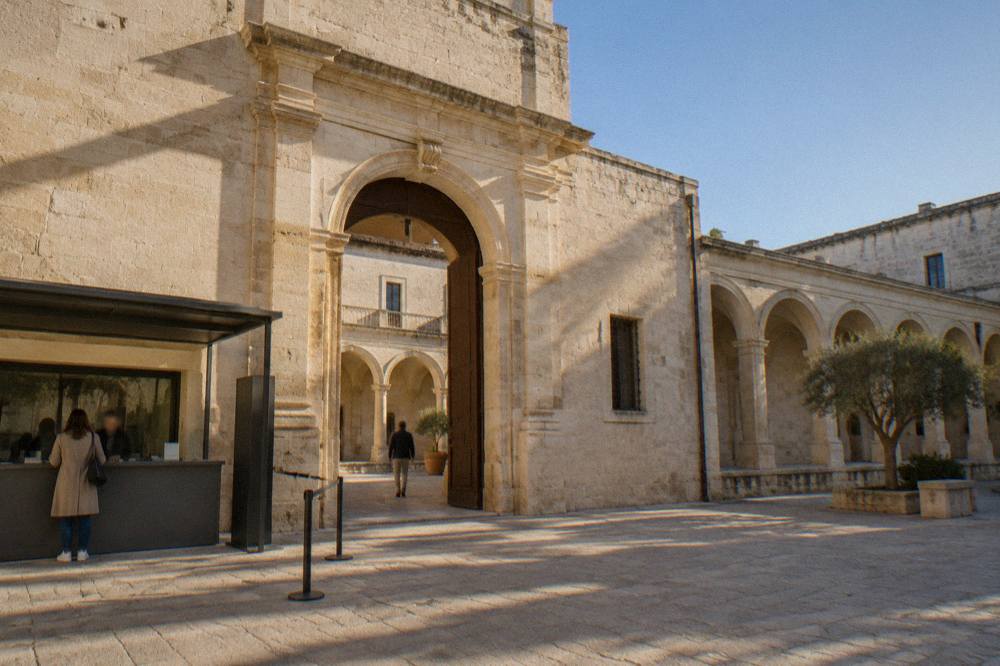
Everything in Lecce's compact centre is near MUST: Piazza Sant'Oronzo and the Roman Amphitheatre, the Duomo and its piazza, Basilica di Santa Croce, Palazzo dei Celestini, Porta Napoli and the Villa Comunale all sit within the same short walking radius, and the reported drive time even to the nearest beach at San Cataldo is only about 14 minutes, or a 20-minute city bus ride on SGM line 32. The city rewards staying on foot and saving transport for the coast.
A closing loop that works: MUST in the morning, then Piazza Sant'Oronzo for the amphitheatre, up through the centro storico lanes to Santa Croce and the Celestini courtyard, across to the Duomo piazza, and back down past Chiesa di San Matteo and Santa Chiara, both on the LeccEcclesiae ticket. That single walk is the museum's narrative made three-dimensional.
If the coast calls instead, the same SGM line 32 bus that serves San Cataldo runs from the City Terminal in about 20 minutes, and the summer Salento in Bus network, which ran 13 June to 13 September in 2026, pushed further out to Torre dell'Orso, Otranto, Porto Cesareo, Gallipoli and Leuca for fares between 1.10 and 5 euro. The 2027 dates had not been announced; outside that window the FSE trains and the ordinary buses carry the coastal traffic. A museum morning plus a beach afternoon is a genuinely normal Lecce summer day.
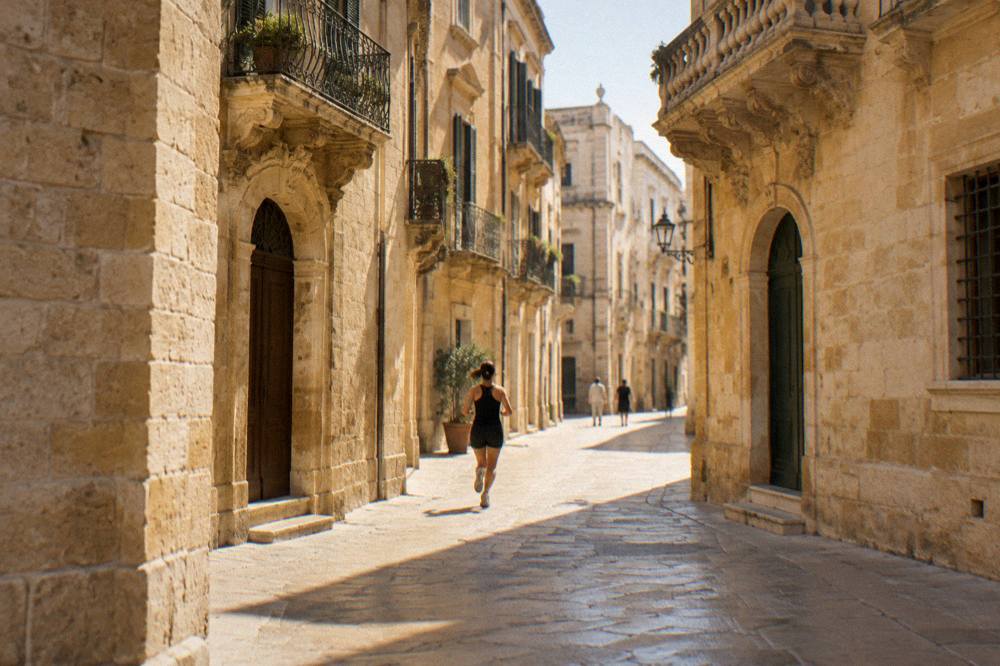
For the evening, guided options extend the same ground after dark: an ancient-city night walk runs locally, and a history-and-food version pairs the stories with street food. The trio below covers all three angles of seeing the city with a guide rather than alone.
Common Questions About MUST Lecce
Is MUST Lecce open on Mondays?
No. The reported schedule closes the museum every Monday, with Tuesday to Thursday 9:00 to 19:00 and Friday to Sunday 9:00 to 20:00 in winter. Check the museum's own site for summer hours and holiday variations.
How much is a ticket to MUST Lecce?
The reported full ticket is 5.50 euro, with 3.50 euro reduced for students, over 65s and similar categories, and free entry for children under 10. Temporary exhibitions can carry their own pricing; the museum's site lists current shows.
How long does a visit to MUST take?
The permanent galleries plus a temporary show fit comfortably into an unhurried hour or two. It works as a half-morning or half-afternoon stop, commonly paired with Museo Faggiano a few streets away.
Is MUST included in the Lecce city pass?
The reported Artwork City Pass at 29 euro for 7 days centres on the LeccEcclesiae churches, the bell tower and extras; MUST is treated as a separate ticket. Church-heavy itineraries suit the pass, museum-heavy ones do not.
Is MUST good for children?
Reported entry is free under 10, and the museum's maps, models and multimedia are built to explain a city rather than to keep visitors at a distance from objects. Pair it with the free open-air layer of the centre in the afternoon.
MUST is the one Lecce museum that answers the question every baroque facade raises: how did this city come to look like this. Buy the cheap ticket, give it a relaxed morning, and the whole centre reads differently afterwards. For more of the city's story in one place, the Lecce Travel Guide covers the churches, the museums and the coast around it.