Lecce History: Messapians, Romans And The Baroque Rebuild
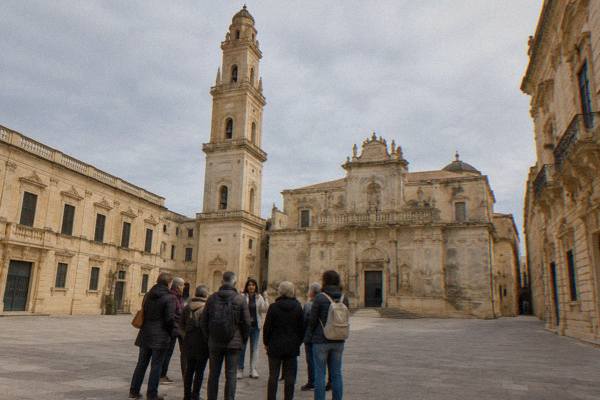
Lecce, the baroque capital of Salento in Puglia, southern Italy, is a city whose visible history is mostly a rebuild: a Messapian and Roman settlement underneath, and a honey-coloured Baroque city on top, carved from soft local limestone. This guide reports what the sources support, layer by layer.
Short answer
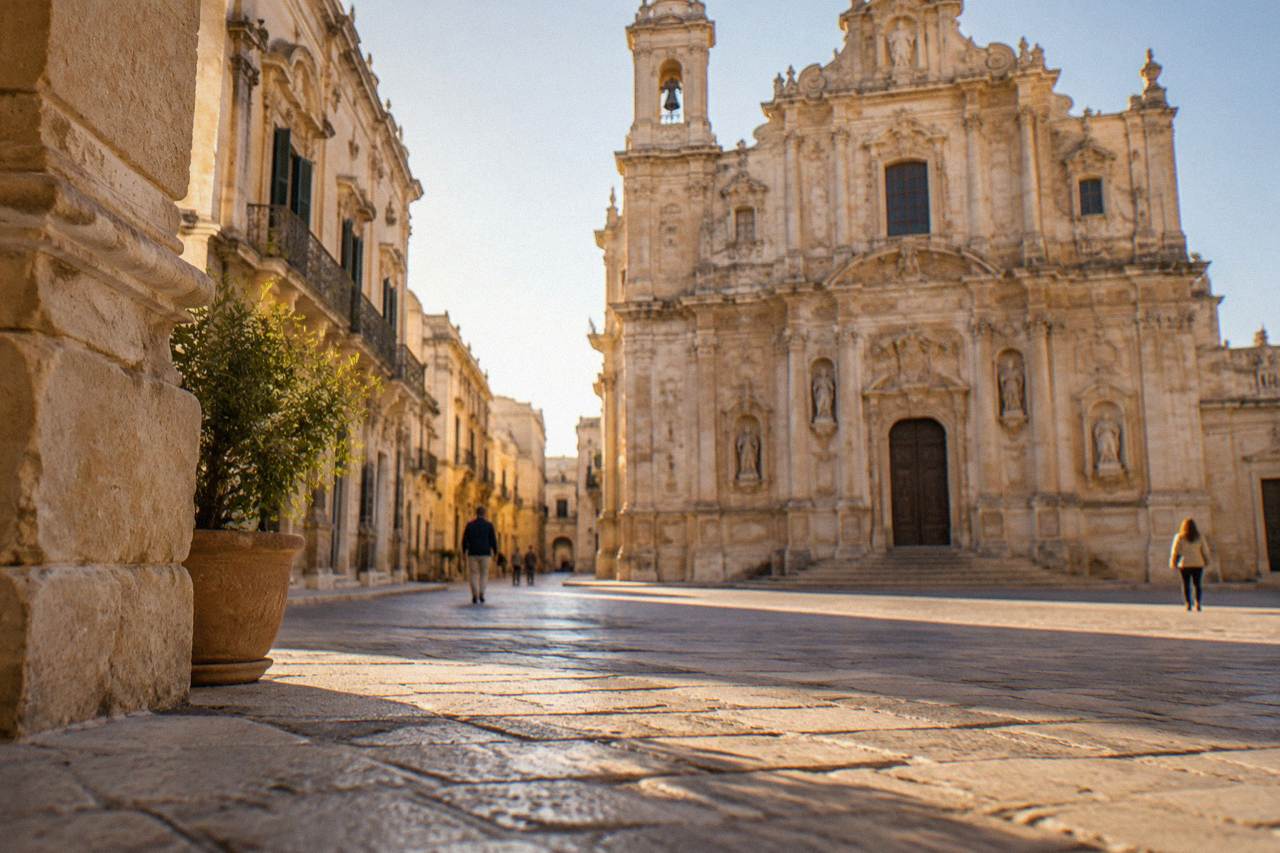
Lecce history runs in three layers: a Messapian settlement at nearby Rudiae and in the old city, a Roman city whose amphitheatre and theatre still stand in the centre, and the Baroque rebuild in pietra leccese that gives Lecce its signature look today. The Roman Amphitheatre reopened after a 1,500,000 euro restoration, and the Baroque churches are covered by the LeccEcclesiae combined ticket.
Lecce, in Puglia, southern Italy, is the baroque capital of Salento: an inland city of honey-coloured limestone at the heel of the Italian peninsula, about 13 km from the nearest beach at San Cataldo, with the Adriatic to the east and the Ionian to the west. Often called the "Florence of the South", it owes that reputation to a single building material and a single style. Pietra leccese, a soft Miocene limestone that hardens on exposure, allowed carvers to work friezes, capitals and florid facades that would be impractical almost anywhere else, and the result is the Lecce Baroque that fills the old centre today. Underneath that baroque city sits a Roman one, and under and around both lies the older Messapian world of the Salento peninsula. This page follows those layers in order, using only what the sources support, and pairs each era with the sites a visitor can actually stand in.
The city's population is 94,387 (citypopulation.de, 1 January 2026 estimate), with a university, the Università del Salento, enrolling about 20,774 students, and together they keep the old centre lived-in rather than museum-like. Lecce is not a UNESCO World Heritage Site: "Salento and the Barocco Leccese" sits on Italy's Tentative List, submitted in 2006, and nothing more. For planning around the history itself, the things to do in Lecce overview and the centro storico area guide cover the practical side, and this site's Lecce Travel Guide home page collects every article in one place.
Where Does Lecce History Begin?
Lecce history begins with the Messapians, the ancient people of the Salento peninsula, whose settlement at Rudiae near the modern city is now an archaeological park with Messapian and Roman remains, according to the Comune di Lecce's own park page. The Roman city later grew over the same ground, and the amphitheatre and theatre still stand inside the old city today. No founding date is reliably documented, so the story starts with what the ground shows.
The Comune di Lecce lists the parco archeologico di Rudiae as a Messapian-and-Roman site reached by guided visits at weekends and by booking on weekdays, with tickets at 5 euro full and 4 euro reduced, free under 7. That is the closest standing link to the pre-Roman world: Rudiae lies just outside the modern city, and its stratigraphy is the physical record of the Messapian culture that occupied Salento before Roman expansion. Inside Lecce itself the deeper layers are mostly underground, which is why so many "underground Lecce" visits exist in the old centre; the Museo Faggiano guide covers the best-known example, a house excavation that opened a window onto centuries of layered occupation.
A useful corrective for expectations: the popular idea of a precise founding year for Lecce, or of a documented continuity from one settlement to the next, is not supported by the sources this site uses. What the sources do support is the sequence: Messapian Salento, Roman occupation with substantial public works, centuries of change, and then the Baroque rebuild that defines the city visitors see.
| Era | What stands in or near Lecce | Where to see it |
|---|---|---|
| Messapian | Rudiae archaeological park, Messapian and Roman remains | Parco di Rudiae, weekend guided visits, weekdays by booking |
| Roman | Amphitheatre in Piazza Sant'Oronzo, Roman Theatre in the old streets | Anfiteatro Romano (ticketed), Museo del Teatro Romano |
| Medieval and later | Overbuilt layers beneath palazzi and churches | Museo Faggiano, underground visits on walking tours |
| Baroque | The rebuilt churches and facades in pietra leccese | LeccEcclesiae circuit, Santa Croce, Duomo |
What Did The Romans Leave In Lecce?
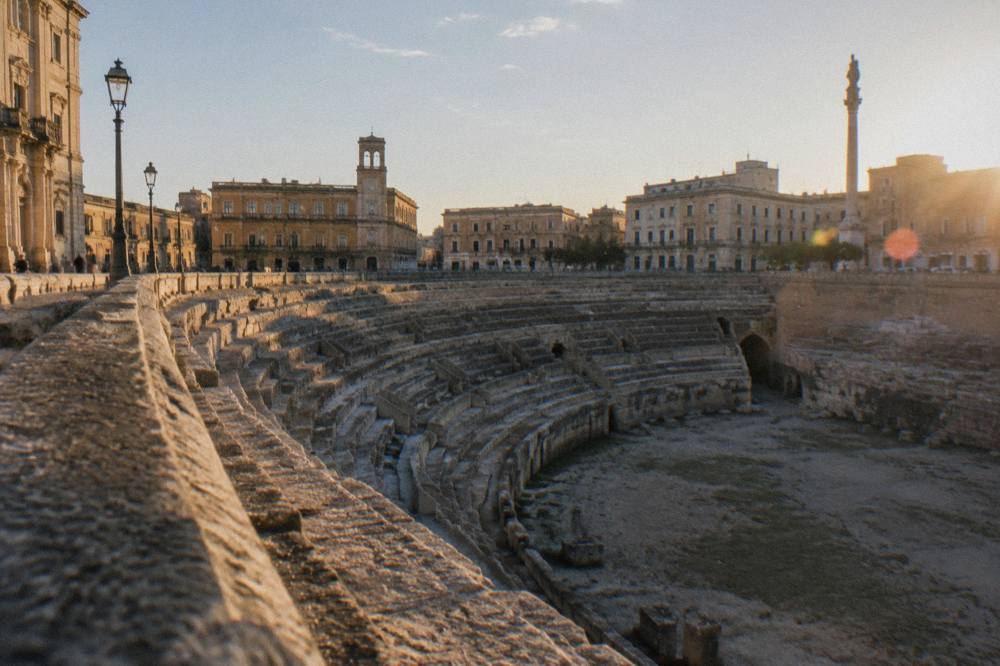
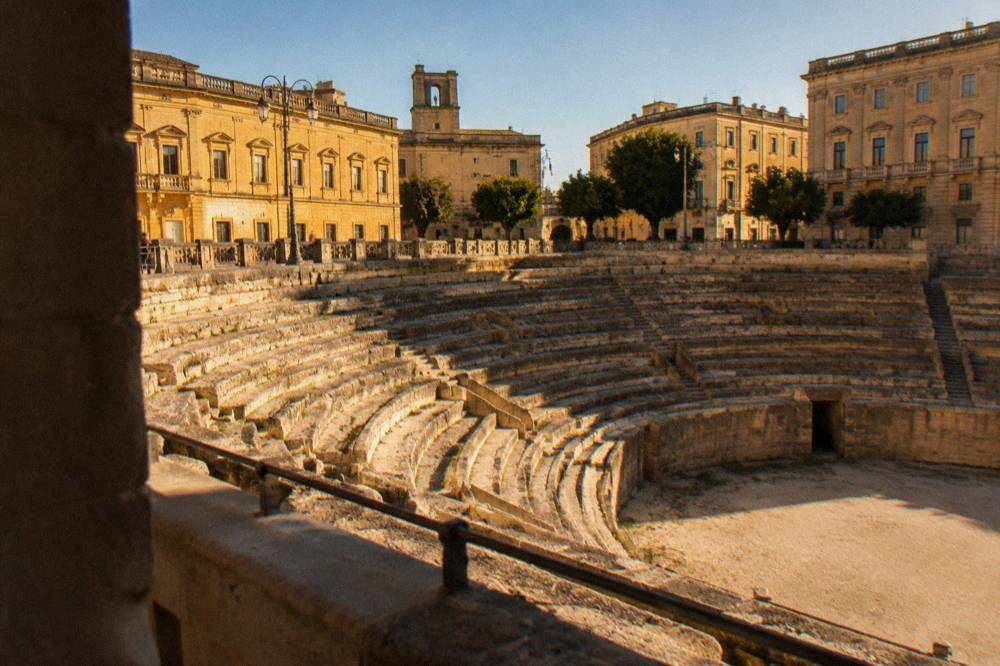
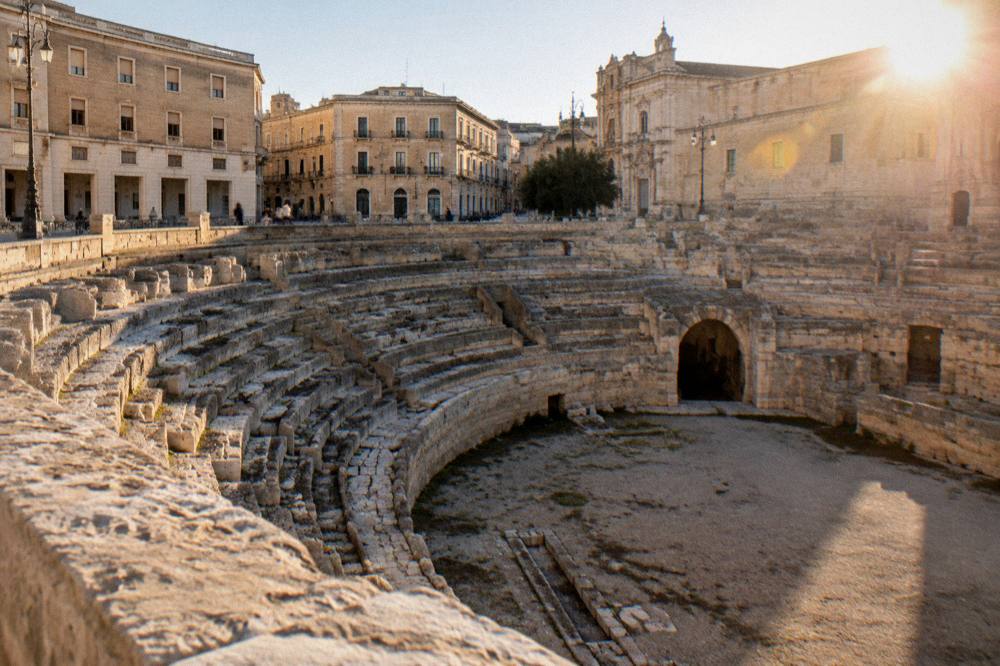
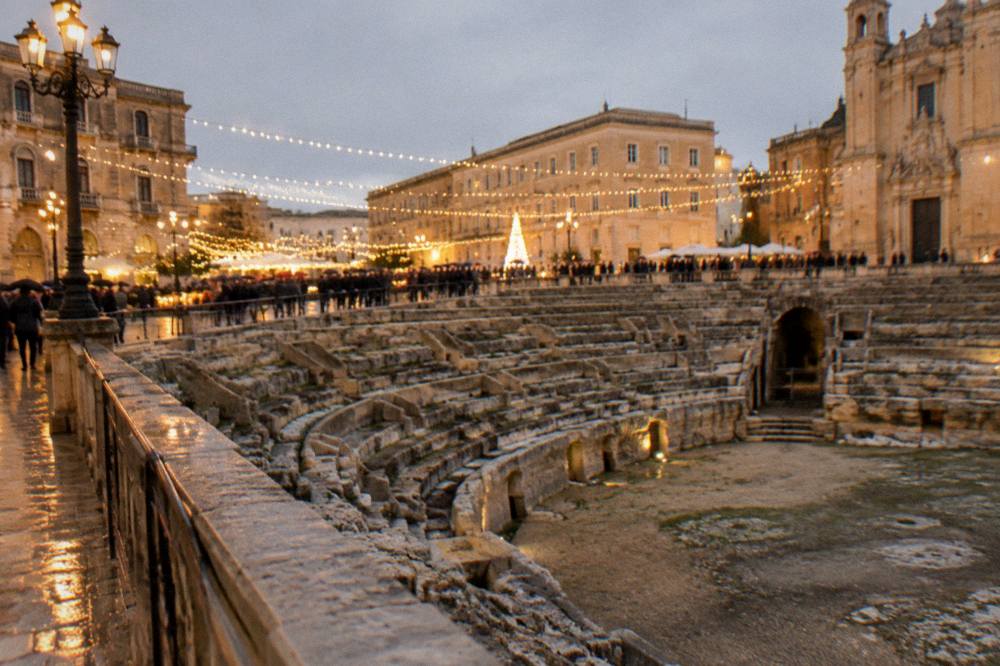
The Romans left Lecce two public monuments that still stand in the middle of the modern city: a Roman Amphitheatre in Piazza Sant'Oronzo, open Tuesday to Sunday from 10:00 to 17:00 in winter with tickets at 5 euro full and 2 euro reduced, and a Roman Theatre a few streets away, with its own small museum. The amphitheatre also reopened after a 1,500,000 euro restoration funded under the PNRR, with a new accessible entrance.
The amphitheatre is the headline Roman survivor. According to the Direzione regionale Musei Puglia, it now runs a winter season from 1 October to 31 March, Tuesday to Sunday 10:00 to 17:00 with last entry at 16:30, and a split summer schedule from 1 April to 30 September, 10:00 to 13:00 and 17:00 to 21:00. It is closed on Mondays. The restoration, a PNRR Measure 1.2 project of 1,500,000 euros, added an accessible entrance and ramp, and the surrounding piazza works have been completed. You can also see the amphitheatre free from above, since part of it sits exposed in Piazza Sant'Oronzo itself, which the Piazza Sant'Oronzo guide covers in detail.
The Roman Theatre is the quieter sibling, reached through the old streets rather than a grand square. Its museum, run by the Fondazione Memmo, keeps morning hours Monday to Saturday, 9:30 to 13:00, with afternoons by reservation and Sundays closed; listings put the ticket at about 3 euro, and a cumulative ticket with the amphitheatre appears in some listings, so confirm the current arrangement on arrival. The Teatro Romano page on this site collects the practical detail.
| Roman site | Hours | Ticket | Status |
|---|---|---|---|
| Anfiteatro Romano (winter, 1 Oct to 31 Mar) | Tue to Sun 10:00 to 17:00, last entry 16:30 | 5 euro full, 2 euro reduced | GROK, museipuglia.cultura.gov.it |
| Anfiteatro Romano (summer, 1 Apr to 30 Sep) | Tue to Sun 10:00 to 13:00 and 17:00 to 21:00 | 5 euro full, 2 euro reduced | GROK, museipuglia.cultura.gov.it |
| Museo del Teatro Romano | Mon to Sat 9:30 to 13:00, afternoons by reservation | about 3 euro | GROK, comune.lecce.it |
| Parco archeologico di Rudiae | Weekend guided visits, weekdays by booking | 5 euro full, 4 euro reduced, under 7 free | GROK, comune.lecce.it |
Rudiae belongs in the Roman column too, not only the Messapian one: the park's remains span both cultures, and the Comune di Lecce presents it exactly that way. For anyone assembling a history route, the pairing works well, since Rudiae is a short hop from the centre while both Roman monuments sit inside the walkable old city.
A guided walk is the efficient way to connect these layers, because the Roman fragments are scattered rather than concentrated: the amphitheatre occupies one edge of the main square, the theatre hides in a dense street block, and the underground remains sit beneath private buildings. The Understand Lecce small-group tour, this site's featured history walk, ties the above-ground Baroque city to the local stories behind it; the listing carries current prices and dates. You can also Check availability directly, and the Lecce walking tour guide compares the options in more depth.
What Is Pietra Leccese And Why Did It Shape Lecce History?
Pietra leccese is a Miocene limestone, soft and workable when first quarried and hardening with exposure, and its properties are the practical reason the Baroque rebuild of Lecce looks the way it does: carvers could cut friezes, capitals, garlands and figures in fine detail, in a honey colour that defines the whole old city. The comune's geological and planning documents record the stone's composition and its traditional local use.
Without a stone this cooperative, the exuberance of Lecce Baroque would have been prohibitively expensive to cut. The geological report prepared for the comune's San Cataldo seafront project identifies pietra leccese as a calcarenite of Miocene age, quarried locally, and the city's planning norms list its traditional uses including chianche slabs and carved detailing on historic buildings. The old quarries around the city, some later repurposed as public green space, are part of the same story. The Lecce stone guide unpacks the geology for readers who want it.
The stone also explains the city's chromatic unity. Because nearly everything in the centre was built and carved from the same material, Lecce reads as one continuous surface, warm at sunset, pale at noon, and that is the quality visitors remember. It is worth being precise about the style term as well: "Lecce Baroque" or "barocco leccese" names the local variant of the broader Baroque style, and the Lecce Baroque guide on this site covers its features and where to read them, facade by facade.
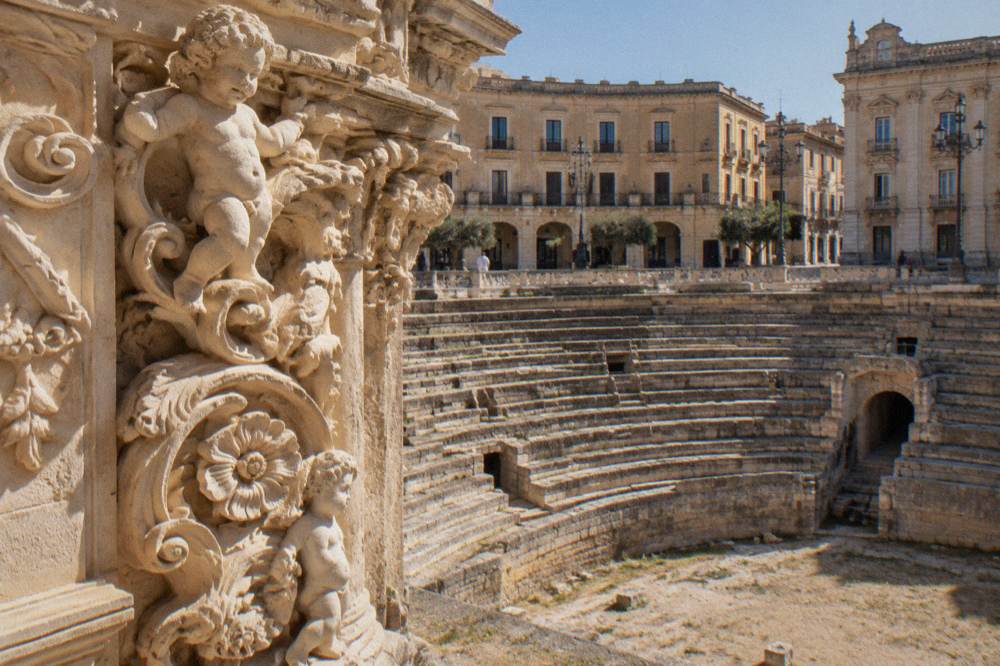
One caution that matters for honesty: attributions of specific facades to specific architects, and precise construction dates for the great churches, circulate widely but were not verified in the sources behind this page. Describe what the eye sees, the carving, the crowded ornament, the rose window, the columns stacked on columns, and leave the names out unless an official page supplies them. The buildings do not need invented dates to impress.
| Aspect of pietra leccese | What the sources say |
|---|---|
| Geological age | Miocene calcarenite, per the comune's geological report |
| Workability | Soft when quarried, easy to carve, hardens on exposure |
| Colour | Honey to pale gold, giving the old city its unified tone |
| Traditional uses | Facades, friezes, capitals, chianche slabs, channels |
| Where quarried | Locally around Lecce; former quarries survive as parkland |
What Was The Baroque Rebuild Of Lecce?
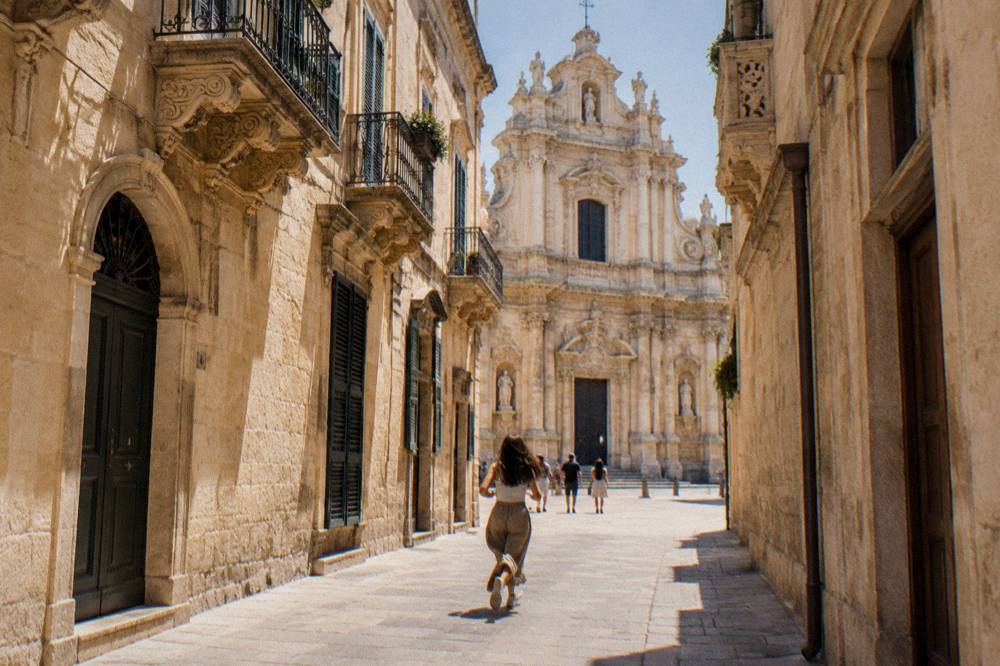
The Baroque rebuild of Lecce was the reconstruction and decoration of the city's churches and palazzi in pietra leccese, producing the facades that now define the centro storico, and it is the layer almost every visitor comes for. Its core circuit is covered today by the LeccEcclesiae combined ticket, 11 euro standard for five church sites including the Duomo and Basilica di Santa Croce, valid 15 days, according to chieselecce.it.
The rebuild is why Lecce reads differently from other southern Italian cities of similar size. Rather than a museum quarter, the Baroque city is a working fabric: the Duomo closes one side of a quiet piazza, Santa Croce fronts the main street, and the civil architecture of palazzi and the Prefecture's Palazzo dei Celestini sits in the same stone and the same register. The Piazza del Duomo guide and the Basilica di Santa Croce guide walk through the two anchors of the circuit, and the Lecce Baroque walk itinerary strings them into a route.
Practically, the LeccEcclesiae ticket is the history visitor's key purchase. Chieselecce.it lists the standard ticket at 11 euro full, 5 euro reduced for ages 12 to 17, and 24 euro for a family of two adults plus 12-to-17-year-olds, valid 15 days and covering the Duomo with its crypt, Santa Croce, San Matteo, Santa Chiara and the Antico Seminario with the MuDAS art museum. The full ticket adding the bell tower costs 21 euro. Children under 12 enter free. Hours run 9:00 to 21:00 in the April-to-September season and 9:00 to 18:00 from October to March, with last entry 15 minutes before closing and access limited during services. The Lecce churches ticket guide compares this against the other passes.
A question heading fits here: is a guided history walk worth adding to the church circuit? The reassurance is straightforward, since the featured small-group walk can be cancelled if plans change and payment options are shown at booking. The circuit explains itself in stone, but the stories attached to families, workshops and quarters are the part a local guide carries.
| LeccEcclesiae ticket | Full | Reduced (12 to 17) | Family | Validity |
|---|---|---|---|---|
| Standard (five sites, no bell tower) | 11 euro | 5 euro | 24 euro | 15 days |
| Full (adds bell tower "Up!") | 21 euro | 13 euro | 48 euro | 15 days |
| Children under 12 | free | free | free | with ticket |
The city's churches also carry the later history of Lecce's most famous craft. Cartapesta, the papier-mache tradition, grew up around the demand for religious figures and nativity scenes, its workshops clustered near Santa Croce, and the Museo della Cartapesta inside Castello Carlo V is included in the castle's guided tour. The Lecce papier-mache guide covers the tradition, and taking a class in it is one of the more direct ways to touch the city's making history.
What Survives From Lecce History Underground?
A large part of Lecce history survives literally underfoot, in cellars, cisterns and overlaid structures beneath the Baroque city, and the two accessible windows are Museo Faggiano, a house excavation open every day 9:30 to 20:00 for 5 euro, and the underground rooms included in several guided walks of the centro storico. Castello Carlo V, visited by guided tour only at 10 euro full, adds the castle layer above ground.
Museo Faggiano is the strongest single example of the city's vertical history: a private house whose renovation turned into an excavation, exposing layer upon layer of occupation beneath one roof. Its own tariff page lists 5 euro full, 3 euro for ages 8 to 16, free to age 8, open daily 9:30 to 20:00. The Museo Faggiano article gives the full picture. For the castle, the Castello Carlo V guide explains the tour-only rule: ilcastellodilecce.it lists guided visits Tuesday to Sunday, 10 euro full and 6 euro reduced, free to age 11, with the courtyard area free and the Museo della Cartapesta included; from October to May the tour times are 10:30, 11:30, 12:30, 16:00, 17:00, 18:00 and 19:00.
The Jewish history of Lecce belongs in this underground layer too, since the Museo Ebraico on Via Umberto I is visited by guided tour only, about 5 euro full and 4 euro reduced, with weekday hours around 10:00 to 18:00 and Sunday mornings on a fixed rotation of guided entries. The Museo Ebraico guide and the Giudecca area guide cover the quarter whose synagogue history survives below later buildings.
| Underground or enclosed site | Access | Ticket | Source |
|---|---|---|---|
| Museo Faggiano | daily 9:30 to 20:00 | 5 euro, ages 8 to 16 pay 3 euro, under 8 free | VERIFIED, museofaggiano.it |
| Castello Carlo V (with Museo della Cartapesta) | guided tour only, Tue to Sun | 10 euro full, 6 euro reduced, free to 11 | VERIFIED, ilcastellodilecce.it |
| Museo Ebraico | guided visits only | 5 euro full, 4 euro reduced | GROK, museionline.info |
| Underground rooms on walks | via guided walking tours | See current price | tour listings |
Which Sites Tell Lecce History Best Today?
The five sites that tell Lecce history best in one visit are the Roman Amphitheatre for the Roman layer, Rudiae for the Messapian layer, the LeccEcclesiae church circuit for the Baroque rebuild, Museo Faggiano for the underground stratigraphy, and Castello Carlo V for the fortified and craft traditions, with combined admission at 5, 5, 11, 5 and 10 euro full respectively. MUST, the city history museum at 5.50 euro, adds the narrative thread that ties them together.
MUST, the Museo Storico della Città di Lecce, is the one institution explicitly dedicated to the city's story. It runs Tuesday to Thursday 9:00 to 19:00 and Friday to Sunday 9:00 to 20:00 in winter, closed Monday, with tickets at 5.50 euro full and 3.50 euro reduced, free under 10; the MUST Museum page has the detail and current exhibitions. For visitors short on time, the one day in Lecce itinerary sequences the essential stops, and the longer three days in Lecce plan makes room for Rudiae and the museums.
The table below puts the full history circuit side by side, using only figures the sources supply.
| Site | Layer of Lecce history | Full ticket | Hours in brief |
|---|---|---|---|
| Roman Amphitheatre | Roman | 5 euro | Tue to Sun, winter 10:00 to 17:00 |
| Parco di Rudiae | Messapian and Roman | 5 euro | weekend guided visits, weekdays by booking |
| LeccEcclesiae circuit | Baroque rebuild | 11 euro | daily, 9:00 to 18:00 winter |
| Museo Faggiano | underground stratigraphy | 5 euro | daily 9:30 to 20:00 |
| Castello Carlo V | fortification and cartapesta | 10 euro | guided tours Tue to Sun |
| MUST | city history overall | 5.50 euro | Tue to Sun, closed Mon |
For travellers extending the story beyond the city, the Salento itinerary reaches Otranto, whose cathedral mosaic is dated 1163 to 1165 and made by the priest Pantaleone, and whose Castello Aragonese charges about 6 euro in low season and 12 euro in high season per the comune of Otranto. Those dates and prices belong to Otranto's story, not Lecce's, but they bracket the era between the Roman layer and the Baroque rebuild.
How Do You Walk Through Lecce History In A Day?
A one-day history walk of Lecce works because the city is compact and the layers are stacked in one walkable area: start at the Roman Amphitheatre in Piazza Sant'Oronzo, move to Piazza del Duomo for the LeccEcclesiae churches, continue to Basilica di Santa Croce and the Palazzo dei Celestini, then finish at Museo Faggiano or Castello Carlo V, all within the centro storico except Rudiae, which needs a separate trip. The full sequence fits inside the old city's walking scale.
The practical spine is the Lecce Baroque walk itinerary, which this site built for exactly this purpose. Morning light on Piazza Sant'Oronzo catches the exposed amphitheatre seats; the Duomo piazza is at its quietest early; and the castle's last winter tour at 19:00 allows a late finish. Dress code matters for the churches: shoulders and knees covered, and visits pause during services, per chieselecce.it. The ZTL also shapes any driving plans: the historic centre is camera-policed, with Porta Napoli always closed and hours reported rather than guaranteed, so ask your accommodation about plate registration before bringing a car inside; the ZTL and parking guide explains the detail.
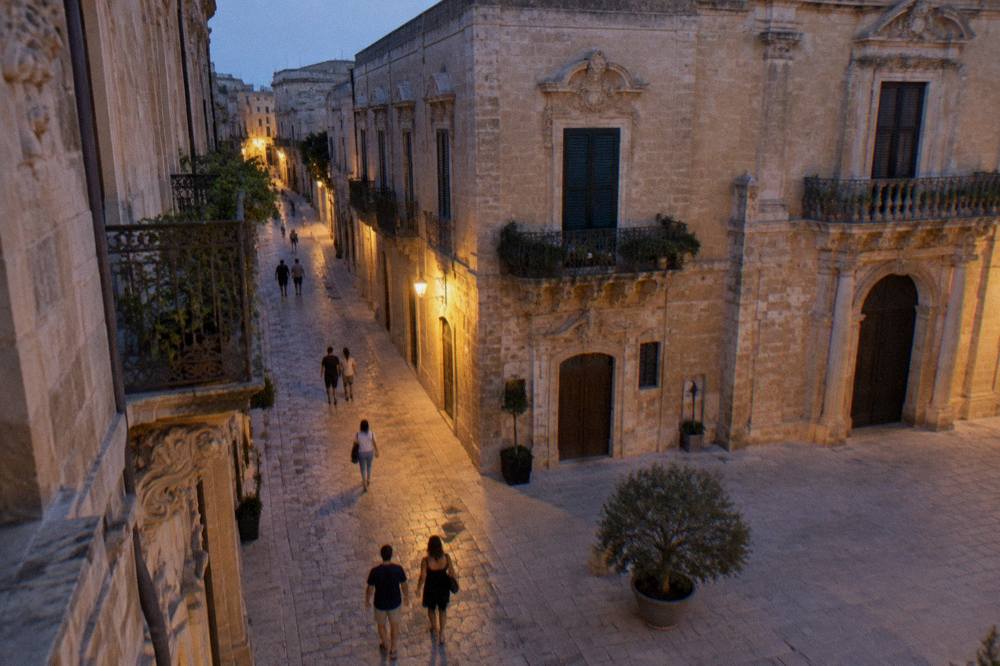
Guided options divide into the history walk, food-and-history combinations, and the craft workshops. The food and history small-group tour pairs the Baroque story with street-food stops, which suits travellers who want the narrative without a museum-heavy day, while the papier-mache workshop is the hands-on route into the city's making tradition. The listing for each carries the current price and availability.
Between those blocks, a note on pacing: the amphitheatre and Duomo piazza cost little time, the castle tour and Museo Faggiano each deserve an unhurried hour, and Rudiae is best treated as a half-day add-on using the comune's booking route. The getting around Lecce guide covers buses and walking distances, and the best time to visit Lecce guide helps with season choice, since the ERA5 reanalysis 1991-2020 normals put July and August mean highs at 31.0 and 31.3 C and November rainfall at 93.7 mm, the year's highest monthly total.
What Living Traditions Still Carry Lecce History?
Lecce history is still performed, not just displayed: the Festa dei Santi Patroni Oronzo, Giusto and Fortunato ran 23 to 26 August 2026 with processions and illuminations, the Fiera dei Pupi fills the ex-Convento dei Teatini with papier-mache stalls in December, and the cartapesta workshops near Santa Croce keep the Baroque-era craft in production. The Notte della Taranta at Melpignano on 22 August 2026 carried the region's musical tradition into its 29th edition.
These events are the living continuation of the same religious and craft cultures that built the Baroque city. The Comune di Lecce published the 2026 patronal programme with processions, luminarie, concerts and a funfair; the Festa di Sant'Oronzo guide explains what to expect. The Fiera dei Pupi follows the December pattern of roughly 6 to 24 December seen in the 2025 edition, with 2026 dates not yet published, so confirm before travelling; the Lecce at Christmas guide collects the season. The Notte della Taranta belongs to Melpignano rather than Lecce city, and its 2027 date had not been announced when this page was prepared; the Notte della Taranta article covers the festival and its pizzica roots.
| Tradition | 2026 edition | Status |
|---|---|---|
| Festa dei Santi Patroni, Lecce | 23 to 26 August | GROK, comune.lecce.it |
| Fiera dei Pupi, Lecce | December, 2026 dates not yet published | GROK, comune documents |
| Notte della Taranta Concertone, Melpignano | 22 August, 29th edition | VERIFIED, lanottedellataranta.it |
| Festa di San Rocco, Torrepaduli | 14 to 17 August | GROK, corrieresalentino.it |
Food carries history too, in its own register. The caffè in ghiaccio con latte di mandorla, iced espresso with almond milk, is credited to Antonio Quarta of Quarta Caffè in the 1940s to 1950s and entered Italy's PAT traditional-products list around 2026, while the pasticciotto's 1745 origin remains a Galatina shop's own claim, disputed by historians. The what to eat in Lecce guide and the pasticciotto history give the full story of both.
Common Questions About Lecce History
Is Lecce An Ancient Roman City?
Yes, in part. A Roman Amphitheatre stands in Piazza Sant'Oronzo and a Roman Theatre in the old streets, both open to visitors, and the parco archeologico di Rudiae nearby holds Messapian and Roman remains. The city visible today, though, is overwhelmingly the later Baroque rebuild in pietra leccese.
Why Is Lecce Called The Florence Of The South?
The nickname refers to the density and quality of its Baroque architecture, comparable in character to Florence's Renaissance richness. The attribution of the phrase is contested between two historical figures, so this site says only "often called" and names neither.
Is Lecce A UNESCO World Heritage Site?
No. "Salento and the Barocco Leccese" has been on Italy's UNESCO Tentative List since 2006, but the city is not inscribed on the World Heritage List. Any claim that it is a UNESCO site is incorrect.
Who Built The Baroque Churches Of Lecce?
The churches were built and carved in pietra leccese by local workshops over the Baroque period, but specific architect attributions and construction dates were not verified in the sources this site uses, so none are printed. Describe the facades by what you can see; the LeccEcclesiae ticket covers the five principal sites.
What Is The Oldest Thing You Can See In Lecce?
The Roman Amphitheatre and the Roman Theatre are the oldest visible monuments in the city centre, and Rudiae holds older Messapian remains just outside. This site avoids age superlatives beyond that, since no verified ranking of the city's oldest structures exists.
Can You Visit The Underground History Of Lecce?
Yes. Museo Faggiano is a house excavation open daily, several guided walking tours include underground rooms, and the Castello Carlo V tour covers the castle interior and its cartapesta museum. Each is ticketed separately, and the castle is by guided tour only.
The layers of Lecce history are unusually legible for a southern Italian city: a Messapian and Roman ground, a Baroque superstructure in a stone built for carving, and living traditions that still fill the squares each August and December. Read them in that order and the city explains itself.