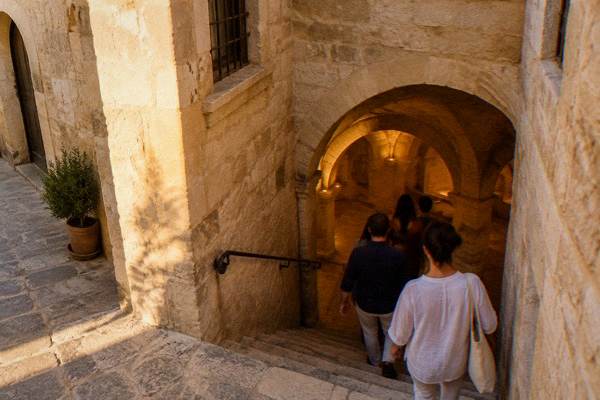
Museo Ebraico: The Medieval Jewish Quarter Of Lecce
The Museo Ebraico in Lecce covers the city's medieval Jewish quarter through guided visits only. Here is what the museum includes, what it costs, and how it fits with the ancient synagogue basement walk.
Short answer
The Museo Ebraico in Lecce is a small museum covering the medieval Jewish quarter, visited by guided tour only, with tickets reported at 5 euro full and 4 euro reduced. It pairs naturally with a guided walk of the Jewish quarter and the basement of the ancient synagogue.
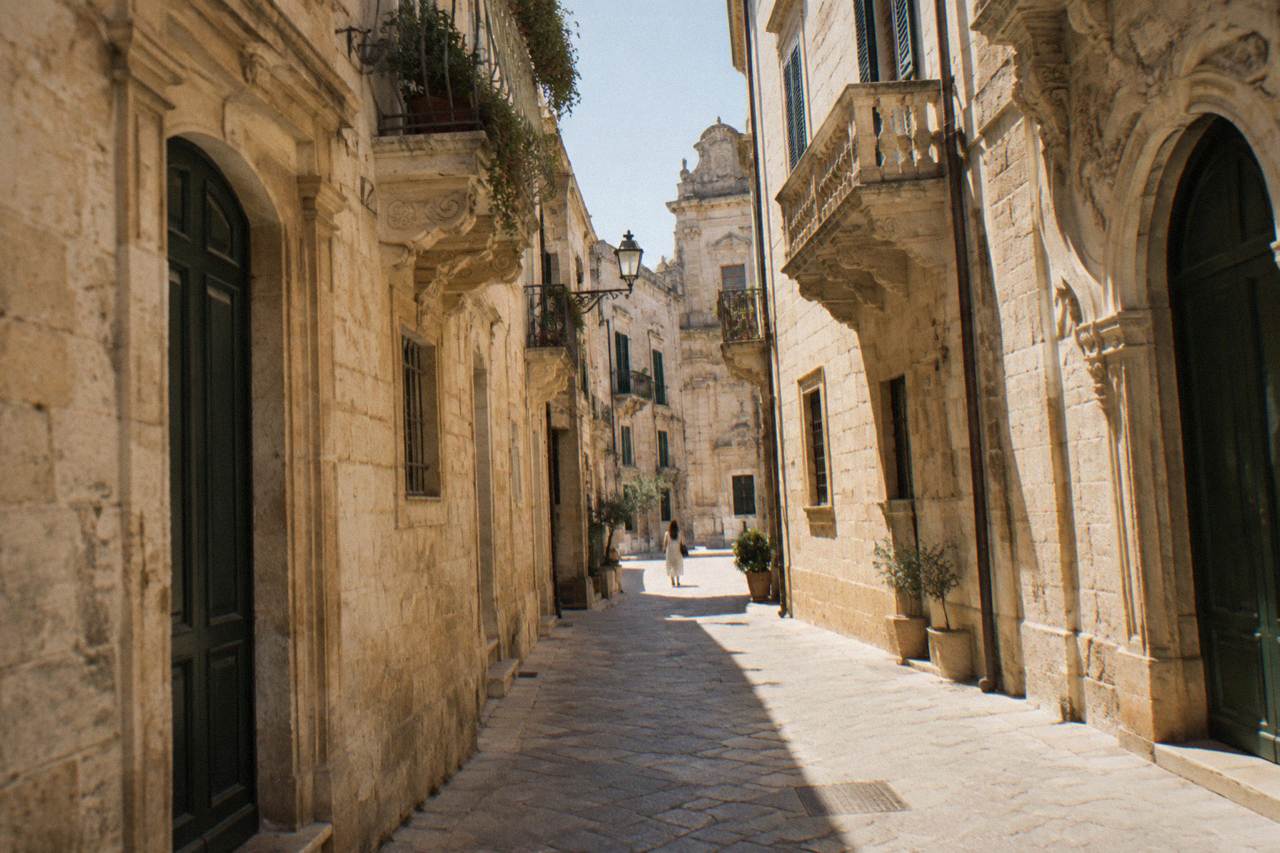
Lecce, the baroque capital of Salento in Puglia, southern Italy, is famous for churches and honey-coloured palaces, but one of its quieter stories sits a few streets off the main squares: the Museo Ebraico, the museum of the city's medieval Jewish quarter. The museum is visited by guided tour only, a detail that shapes every practical decision around a visit, and it sits in the part of the old town where the Jewish community lived before its expulsion from the city. This page from the Lecce Travel Guide sets out what the museum covers, what a visit costs and involves, and how to combine it with the neighbouring sites that tell the same story.
What Is The Museo Ebraico In Lecce?
The Museo Ebraico is a small museum in Lecce's historic centre dedicated to the city's medieval Jewish community and the quarter where it lived, and it can only be visited on a guided tour, with tickets reported at 5 euro full price and 4 euro reduced. The visit covers the museum's displays and the story of the quarter, led by a guide rather than self-guided.
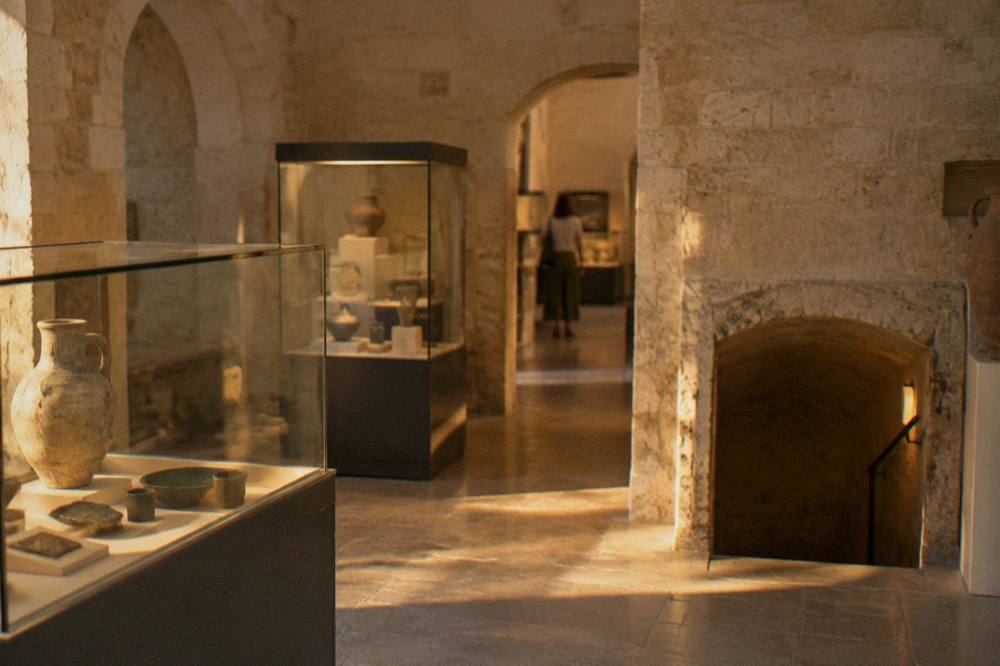
The museum's whole reason for existing is context. Lecce's baroque face, the facades of Santa Croce and the Duomo, belongs to the centuries after the Jewish community was expelled from the city, and the museum exists to record what was there before and alongside that transformation. The displays cover the daily life, faith and eventual expulsion of the Jews of Lecce, a community that lived inside the walls of the old city until the edit of expulsion issued in the Kingdom of Naples forced its departure.
What makes the museum unusual among Lecce's attractions is the format. Where the Museo Faggiano can be wandered freely and the churches of the LeccEcclesiae circuit are ticketed but self-directed, the Museo Ebraico is reported as guided-visit only. Listings indicate weekday openings of roughly 10:00 to 18:00, with Sunday visits run as guided tours at intervals of about 45 minutes from 10:30 to 13:30. These hours are reported rather than guaranteed, so confirm before planning a day around them.
The guided format is not a bureaucratic quirk; it is the point. The story of the Jewish quarter is told through layers, a mikveh, ritual traces, buildings converted to new uses, and a guide is what turns those layers from old walls into a narrative.
Where Is The Museo Ebraico And How Do You Get There?
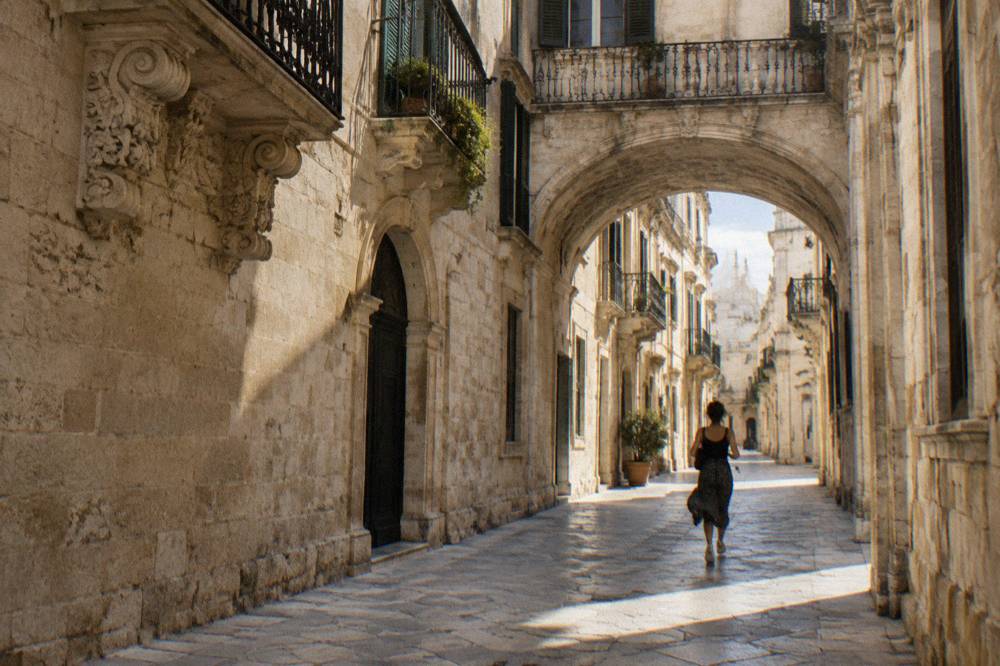
The Museo Ebraico stands on Via Umberto I in Lecce's historic centre, inside the area of the old Jewish quarter, a short walk from Piazza Sant'Oronzo and the Roman Amphitheatre. No transport is needed: the old town of Lecce is compact and flat, and the museum sits within a five to ten minute walk of the main squares.
The location is the historic one. The Jewish quarter of Lecce occupied the low-lying part of the old city around what is now the Giudecca area, and the museum stands inside that footprint rather than in a purpose-built venue on the edge of town. That matters for planning, because everything else in the centre, the amphitheatre, the Duomo, the Teatro Romano, is within an easy stroll of the museum door.
Arriving from outside the centre, the practical notes are the usual Lecce ones. The ZTL, the camera-policed limited traffic zone, covers the historic centre, with reported restrictions on weekdays through the middle of the day and overnight, and all day on Sundays and holidays. Anyone driving should park outside the zone and walk in, and should ask their accommodation about plate registration if they have been granted access. The main rail and bus stations are a flat walk of roughly fifteen to twenty minutes from the old town.
For orientation, the sites that cluster closest to the museum are the easiest pairing in the city.
| Site | Relation to the Museo Ebraico | Direction from the museum |
|---|---|---|
| Piazza Sant'Oronzo | Main square of Lecce, with the Roman Amphitheatre visible from above | Short walk north |
| Roman Amphitheatre | Roman-era arena sunk into the square, ticketed interior | Short walk north |
| Museo Faggiano | Archaeological house-museum with layered underground finds | Short walk west |
| Teatro Romano | Smaller Roman theatre embedded in the street grid | Short walk north-east |
| Basilica di Santa Croce | The landmark church of Lecce Baroque | Longer walk north-east |
Because the museum is guided-only, several readers prefer to see the quarter with a guide from the start rather than visiting independently and booking a tour separately.
What Does A Visit To The Museo Ebraico Include?
A visit to the Museo Ebraico is a guided tour of the museum's displays on the medieval Jewish community of Lecce, run as a led visit rather than a self-guided wander, with tours reported at intervals of about 45 minutes on Sundays and continuous guided access on weekdays. The ticket is reported at 5 euro full and 4 euro reduced, and there is no independent entry option.
The substance of the visit is the story of the quarter. The displays follow the Jewish community of Lecce through its medieval life inside the city walls: the trades its members worked, the religious practices the community maintained, and the physical traces that survived in the buildings after the community itself was gone. The expulsion of the Jews from the Kingdom of Naples emptied the quarter, and much of what the museum explains is how a neighbourhood can be emptied and yet remain legible in its stones.
The guide-led format also handles the parts of the story that a display case cannot. The museum sits inside the footprint of the quarter, so the visit typically frames the surrounding streets, the converted buildings and the traces of ritual spaces, as part of the exhibit. Visitors who want the fullest version of this usually combine the museum with a walking tour of the quarter and the basement of the ancient synagogue, which is a separate bookable experience.
The same street grid holds two other layered sites that reward a guide's explanation, and both sit minutes from the museum door.
A reasonable half-day built around the museum looks like this.
| Stop | What it adds to the Jewish quarter story | Reported access |
|---|---|---|
| Museo Ebraico | The museum displays and the narrative of the community | Guided visit only, 5 / 4 euro reported |
| Giudecca streets | The footprint of the quarter itself, in limestone lanes | Open public streets |
| Ancient synagogue basement | The surviving lower level of the converted synagogue building | Bookable guided tour, see current price |
| Museo Faggiano | A different layered underground, Roman to modern, under one house | Every day 9:30 to 20:00, 5 euro |
How Much Does The Museo Ebraico Cost?
Tickets for the Museo Ebraico in Lecce are reported at 5 euro for a full-price entry and 4 euro reduced, sold for the guided visit rather than for general admission, because the museum has no self-guided option. The prices are reported figures from museum listings, not from an official tariff page, so treat them as a planning base and confirm the current rate when booking.
Two practical points follow from that. First, the price buys the guide, not just the door: the visit is a tour, so timing follows the tour schedule rather than a free-flow entry window. Second, the museum is not part of the LeccEcclesiae combined church ticket, which covers the Duomo, Santa Croce, San Matteo, Santa Chiara and the Antico Seminario, nor of the Lecce Artwork City Pass as far as reported listings indicate. Anyone building a sightseeing budget around the city's ticket schemes should count the Museo Ebraico separately.
Set against Lecce's other small museums, the reported prices sit in familiar territory.
| Museum in Lecce | Reported ticket | Format |
|---|---|---|
| Museo Ebraico | 5 euro / 4 euro reduced | Guided visit only |
| Museo Faggiano | 5 euro, children 8 to 16 pay 3 euro | Self-guided, every day 9:30 to 20:00 |
| MUST | 5.50 euro / 3.50 euro, free under 10 | Self-guided, closed Monday |
| MuDAS (Diocesan museum) | 1 euro cloister, 4 euro museum | Seasonal hours |
| Parco archeologico di Rudiae | 5 euro / 4 euro, under 7 free | Weekend guided visits, weekdays by booking |
The pattern is consistent: Lecce's smaller museums cluster around the 4 to 6 euro mark, and the guided ones, the Museo Ebraico and Rudiae, are also the two whose schedules depend on tour times rather than open doors.
What Was The Jewish Quarter Of Lecce?
The Jewish quarter of Lecce was the neighbourhood inside the old city where the medieval Jewish community lived and worked, an area now covered by the streets around the museum in the historic centre, and it came to an end with the expulsion of the Jews from the Kingdom of Naples, after which its buildings passed to new uses.
The quarter's geography is still readable on the ground. It occupied the lower part of the old town, and its lanes survive in pietra leccese like everything else in the centre; what changed was the population and the purpose of the buildings. The synagogue, the community's central building, was converted after the expulsion, and its lower level survives in the structure that stands there today. The basement of that building is now shown on guided tours, which is the closest a visitor can come to standing inside the community's principal space.
The broader context is the one the museum exists to explain. Medieval Lecce was a city of mixed communities under successive rulers, and the Jewish community filled roles in trade, medicine and lending that the medieval economy assigned to it, as happened across southern Italy. The expulsion order issued in the Kingdom of Naples ended that presence in Lecce as elsewhere. What remains physically is fragmentary: the quarter's footprint, converted buildings, and the underground spaces that later construction sealed and preserved.
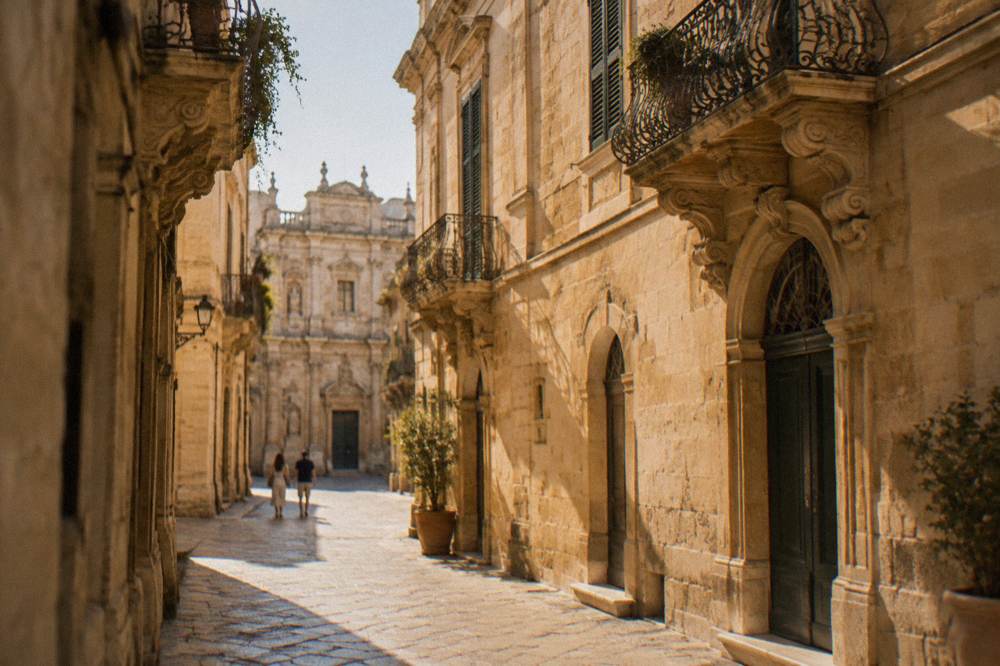
Visitors who want the geography explained street by street usually take a guided walk of the Giudecca area, which covers the quarter's lanes and the surviving traces with an explanation of what each building was.
Can You See The Ancient Synagogue In Lecce?
The ancient synagogue of Lecce survives only in part, chiefly as the basement of the later building that occupies its site in the old Jewish quarter, and it is shown on guided tours that include the underground space rather than as an open monument. There is no free-standing synagogue to visit: the experience is the basement level, reached with a guide.
That basement is the single most tangible survival of the medieval community, and it is the reason the synagogue tour and the museum are usually booked together or in sequence. The walk covers the quarter's streets and then descends into the surviving lower rooms, where the guide points out the features that identify the space and the modifications made after the building changed hands. What a visitor sees is stone, vaults and adjusted openings, the archaeology of a conversion rather than a preserved place of worship, and the guide's explanation is what makes it legible.
The same logic applies to the streets above. The quarter's lanes look, at a glance, like any attractive stretch of the centro storico, because the same pietra leccese built everything. The difference is in the record, and that is what the guided formats carry.
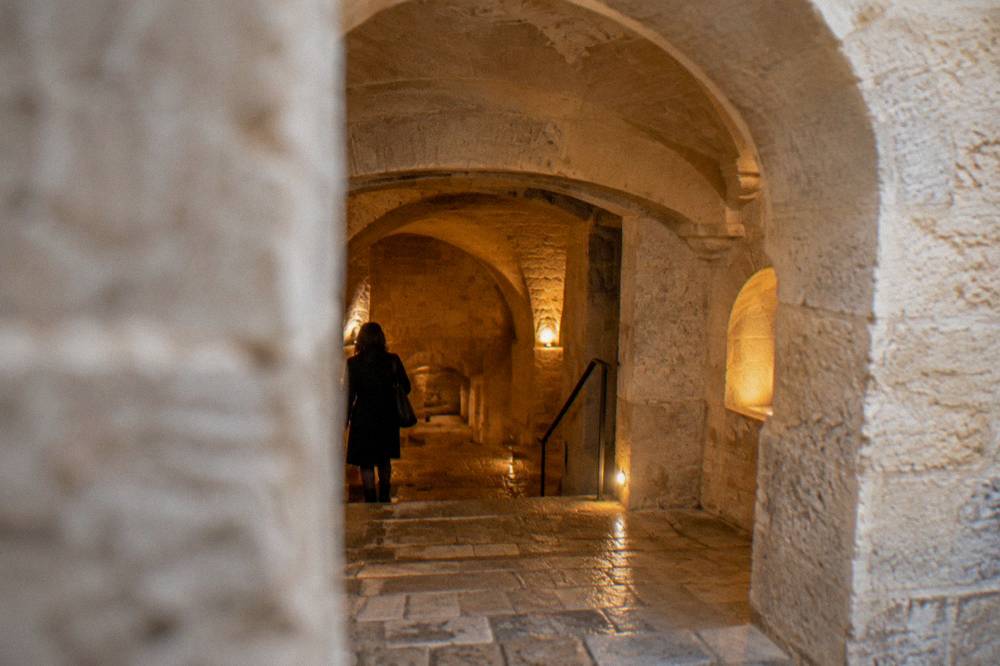
For visitors weighing the options, the choice is really between depth and breadth.
How Does The Museo Ebraico Compare With Lecce's Other Underground Sights?
The Museo Ebraico is the historical and cultural entry point to Lecce's Jewish quarter, while the city's other underground sights, the Museo Faggiano and the basement visits on baroque-and-underground tours, show different layers: Faggiano is a Roman-to-modern stratigraphy under one house, and the synagogue basement is the Jewish quarter's principal survival. They overlap in method, guided descents into old spaces, but not in subject.
The comparison matters because Lecce markets itself on its underground. The city sits on centuries of layered construction, in pietra leccese and before it, and several sites have opened that underground to visitors. The Museo Faggiano is the best known: a single family house whose renovation exposed layers running from Roman remains through medieval and later uses, visited daily on a self-guided ticket. The synagogue basement is narrower and deeper in a single story, and it needs a guide by design. The amphitheatre and the Teatro Romano add the monumental Roman layer above ground level.
| Underground or layered sight in Lecce | Layer it shows | Reported access |
|---|---|---|
| Museo Ebraico | The medieval Jewish quarter and its community | Guided visit, 5 / 4 euro |
| Ancient synagogue basement | The synagogue's surviving lower level | Bookable guided tour, see current price |
| Museo Faggiano | Roman to modern strata under one house | Self-guided, 5 euro, daily 9:30 to 20:00 |
| Roman Amphitheatre | The Roman arena, partly excavated | Tue to Sun, winter 10:00 to 17:00, 5 euro |
| Parco archeologico di Rudiae | Messapian and Roman remains at the city edge | Weekend guided visits, 5 / 4 euro |
A visitor with one afternoon should pick by curiosity rather than by ranking. The Jewish quarter story is the one that connects the streets above to the spaces below; Faggiano is the one that shows how deep the layers go under an ordinary house.
What Else Is Near The Museo Ebraico?
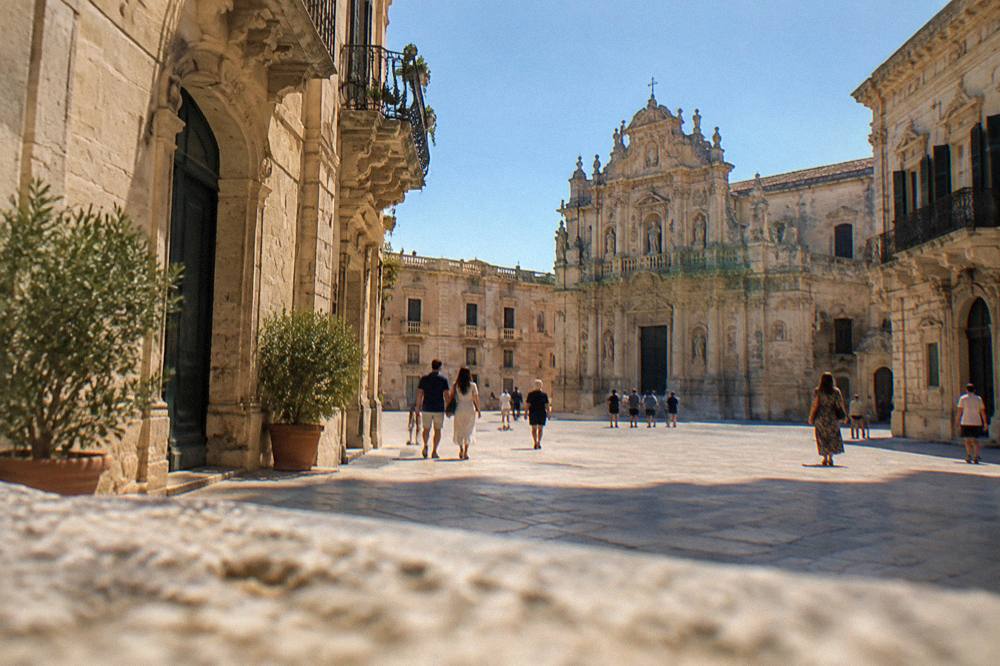
Everything in Lecce's historic centre is near the Museo Ebraico: the museum stands in the old Jewish quarter, a short walk from Piazza Sant'Oronzo, the Roman Amphitheatre, the Duomo and Piazza del Duomo, the Basilica di Santa Croce and the Museo Faggiano, and the whole set can be covered on foot in a single day without transport.
The closest pairing, geographically and thematically, is the walk between the quarter and the two great squares. Piazza Sant'Oronzo holds the exposed section of the Roman Amphitheatre, and Piazza del Duomo holds the cathedral, its bell tower and the seminary, all covered by the LeccEcclesiae combined ticket. The contrast between the quarter's quiet lanes and the theatrical baroque of the Duomo is the story of the city in two acts, and the walk between them takes minutes.
For visitors building a fuller day, the standard sequence runs the museum and quarter first, then the squares, then the church circuit. Anyone planning a longer stay can assemble the same material over two or three days at a slower pace, and the site's overview of things to do in Lecce covers the full set of options.
| Nearby sight | Reported ticket | Reported hours |
|---|---|---|
| LeccEcclesiae churches (Duomo, Santa Croce, San Matteo, Santa Chiara, seminary) | 11 euro standard, 5 euro reduced 12 to 17 | Daily 9:00 to 18:00 winter, 9:00 to 21:00 summer |
| Museo Faggiano | 5 euro, ages 8 to 16 pay 3 euro | Daily 9:30 to 20:00 |
| Roman Amphitheatre | 5 euro / 2 euro reduced | Winter Tue to Sun 10:00 to 17:00, closed Mon |
| Castello Carlo V | Guided tour 10 euro / 6 euro | Tue to Sun, guided tour times |
| MUST | 5.50 euro / 3.50 euro | Winter Tue to Thu to 19:00, Fri to Sun to 20:00, closed Mon |
Hours and prices here are reported figures from the operators' own pages and listings; they change by season, and the church circuit switches between winter and summer schedules, so confirm the current times for your dates.
Is The Museo Ebraico Worth Visiting?
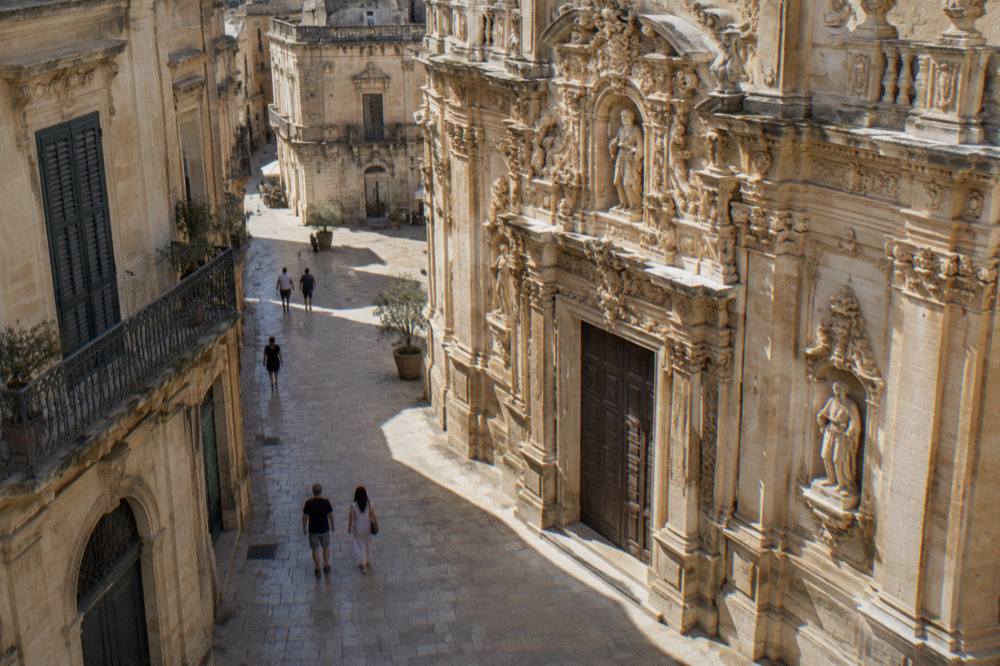
The Museo Ebraico is worth visiting for anyone with an interest in the history beneath Lecce's baroque surface, because it is the only site in the city dedicated to the medieval Jewish community and the quarter it lived in, and its guided format delivers context that the self-guided sights do not. For visitors whose interest stops at architecture and food, it is a smaller commitment, at a reported 5 euro, that can be slotted into any centre day.
The honest framing is about what kind of traveller the museum suits. Lecce rewards three appetites: facades, food and layers. The facades are free, the food is on every corner, and the layers are the part that needs a guide. The Museo Ebraico, the synagogue basement and the Jewish quarter walk are the layers at their most focused, and together they take a couple of hours and change how the rest of the old town reads afterwards.
Practically, the plan is simple. Book the guided visit or a quarter tour ahead, because the guided-only format means no walk-up fallback on busy days. Confirm the current hours and price when booking, since the reported figures come from listings rather than a fixed official tariff. Then pair the visit with the Duomo circuit or Museo Faggiano in the same afternoon, because nothing involved is more than a few minutes' walk away.
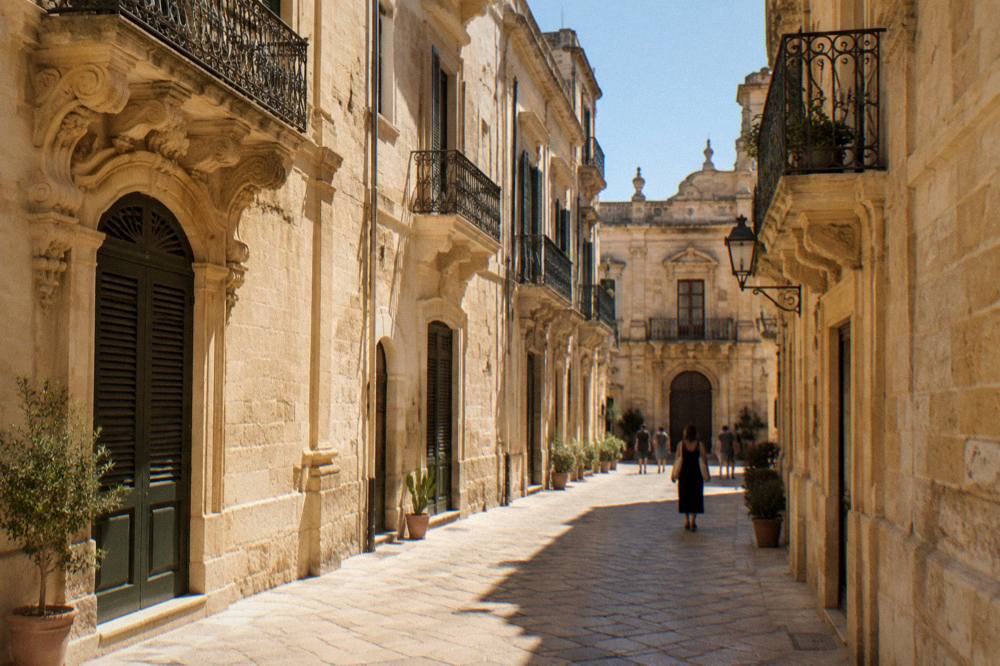
For travellers who prefer a structured introduction to the city's whole story before specialising, several guided formats cover the quarter alongside the baroque highlights and the underground spaces.
Common Questions About The Museo Ebraico In Lecce
Do you need a guided tour for the Museo Ebraico in Lecce?
Yes. The museum is reported as guided-visit only, with no self-guided entry, and Sunday visits run as tours at roughly 45-minute intervals. Booking ahead is the practical approach.
How much does the Museo Ebraico in Lecce cost?
Tickets are reported at 5 euro full price and 4 euro reduced. These are reported listing figures rather than a published official tariff, so confirm the current rate when booking.
Where is the Jewish quarter in Lecce?
The medieval Jewish quarter occupied the lower part of Lecce's historic centre, in the area around the present Giudecca streets, where the Museo Ebraico stands on Via Umberto I. The lanes survive and are walked on guided tours.
Can you visit the ancient synagogue in Lecce?
Only its surviving basement, on a guided tour. The building was converted after the expulsion of the Jews from the Kingdom of Naples, and the lower level is shown on bookable walks of the quarter.
Is the Museo Ebraico included in the LeccEcclesiae ticket?
No. The LeccEcclesiae combined ticket covers the Duomo, Santa Croce, San Matteo, Santa Chiara and the Antico Seminario. The Museo Ebraico is a separate, guided-only visit.
How long does a visit to the Museo Ebraico take?
The visit length follows the guided tour format rather than a fixed ticket window; plan a shorter stop than for the large self-guided sights, and check the tour duration when booking.