The Giudecca: Lecce Old Jewish Quarter
The Giudecca is the old Jewish quarter of Lecce, a compact web of lanes west of the historic centre, best known today for the Museo Ebraico and the basement of the ancient synagogue.
Short answer
The Giudecca is Lecce's historic Jewish quarter, a few lanes around Via Umberto I west of the centre. Visit the Museo Ebraico (guided visits only, 5 euro full) and the basement of the ancient synagogue on a guided tour.
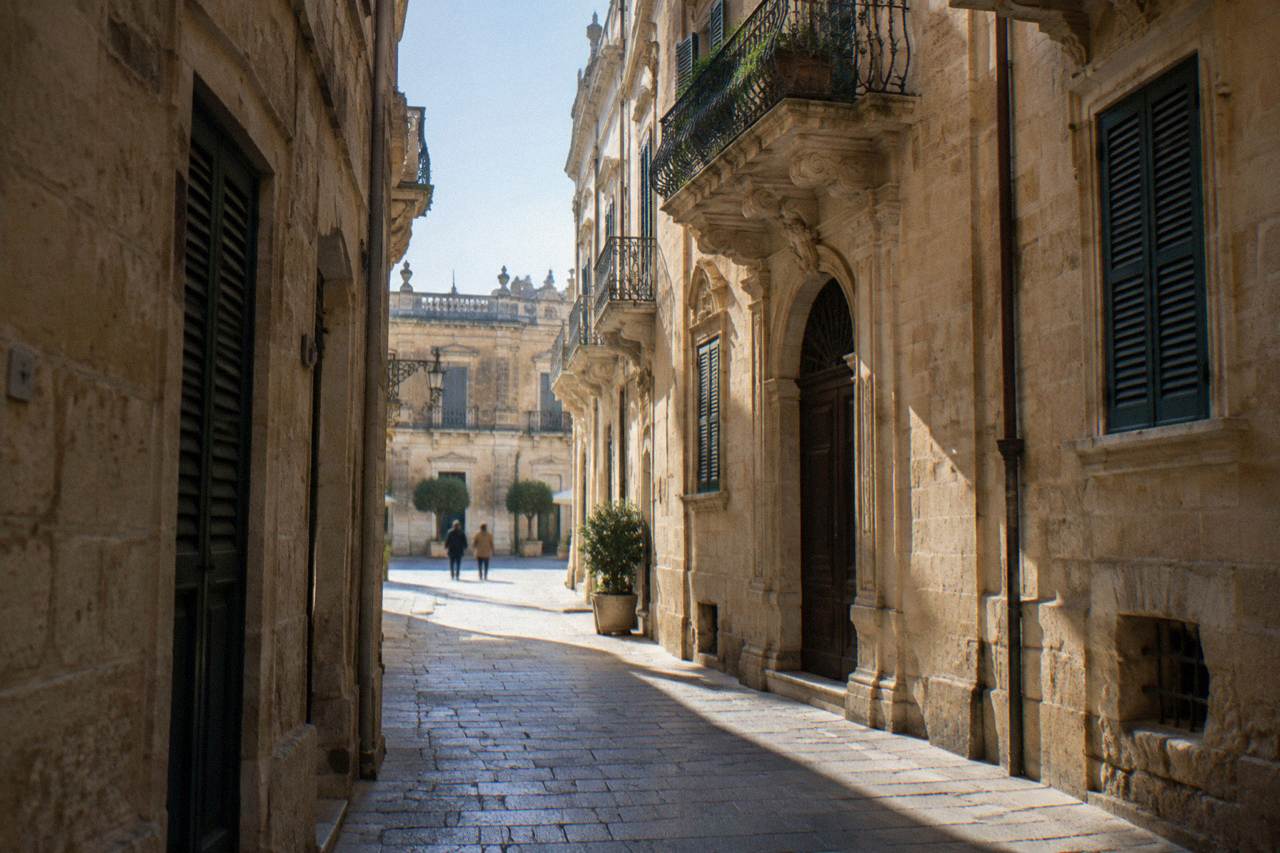
The Giudecca is the old Jewish quarter of Lecce, the baroque capital of Salento in Puglia, southern Italy, and it sits just west of the city's famous limestone centre. The name itself is the Italian term for a Jewish quarter, giudecca, and Lecce's version is a compact grid of quiet lanes centred roughly on Via Umberto I, a short walk from Piazza Sant'Oronzo. What makes it unusual among European Jewish quarters is how much survives underground: the basement of the ancient synagogue, discovered beneath a later building, and the mikveh and other remains now shown on guided visits. The quarter's surface, by contrast, is all honey-coloured pietra leccese, the soft Miocene limestone that gives the whole city its warm colour, carved into the same Lecce Baroque manner visitors come to see in the churches. This guide from the Lecce Travel Guide editorial desk covers what the quarter is, what survives, how to visit, and how it fits into a stay in the city.
What Is The Giudecca In Lecce?
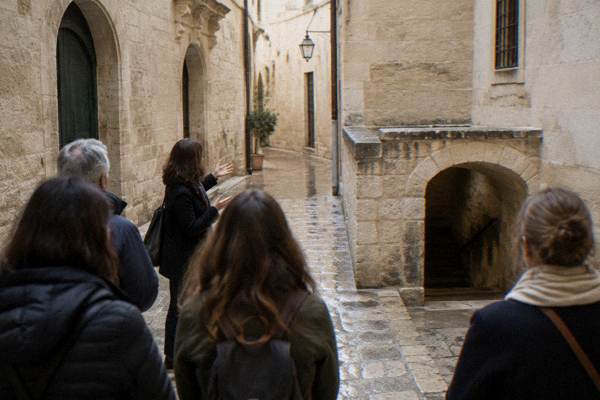
The Giudecca is the historic Jewish quarter of Lecce, a small area of lanes around Via Umberto I immediately west of the city centre, where a Jewish community lived until it was expelled from the Kingdom of Naples, leaving behind a synagogue building, a ritual bath and other traces now shown on guided visits. The quarter is not a museum district with ticket gates; it is a lived-in piece of the city that you walk through, and its interest lies in reading the layers. Above ground there are ordinary Leccese houses, workshops and small squares built of pietra leccese. Below ground there are the remains that tell the older story, and these are what the visits concentrate on.
The name needs a little unpacking. Giudecca, with the stress on the second syllable, is the historical Italian word for a Jewish quarter, and it appears in several Italian cities. In Lecce it refers to a specific set of streets: the quarter sat outside but adjacent to the walled centre, close to what is now Via Umberto I. The community's story ended with the general expulsion of Jews from the Kingdom of Naples, and after that the buildings were absorbed into the fabric of the growing baroque city. That is why nothing announces itself today: no separate gate, no plaque trail, just lanes that reward a guide's commentary.
What survives is genuinely distinctive. The building identified as the ancient synagogue was reused over the centuries, and its basement levels preserve structures that were only brought back to public attention relatively recently. Guided visits, including one that pairs the lanes with the synagogue basement, now cover this material, and the Museo Ebraico on Via Umberto I collects and explains the quarter's story. The surrounding district, part of the wider historic centre of Lecce, is also where several of the city's craft and food traditions sit within easy reach.
Where Is The Giudecca In Lecce And How Do You Reach It?
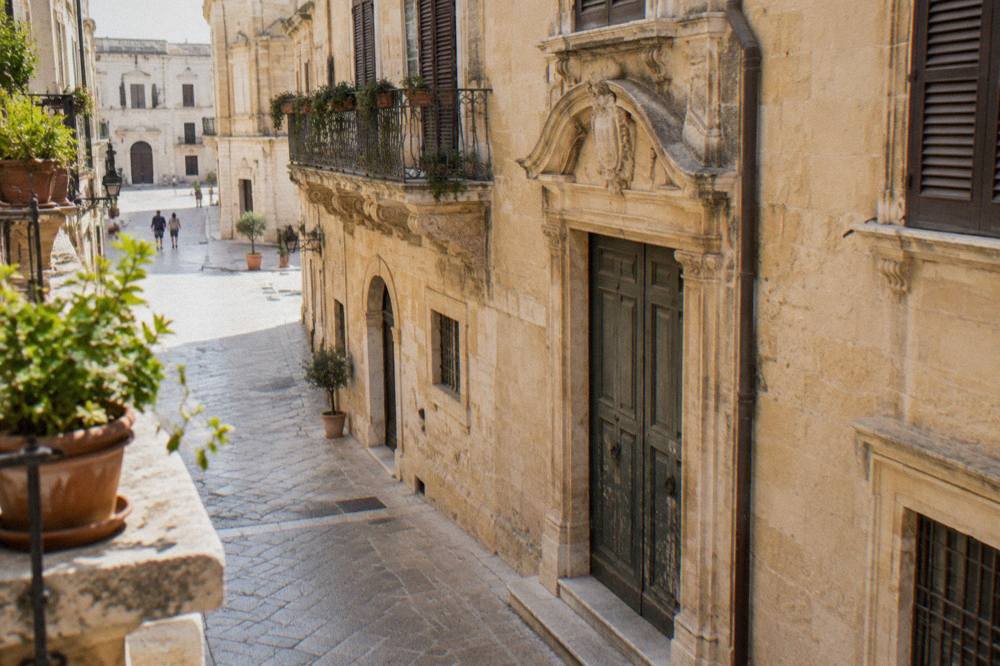
The Giudecca lies immediately west of Lecce's historic centre, centred on Via Umberto I, roughly a five to ten minute walk from Piazza Sant'Oronzo and inside the city's camera-controlled ZTL zone, so it is reached on foot from the centre or by local SGM bus if arriving from further out, with luggage storage available near the station for about 2.50 to 3.50 euro a day. Visitors staying anywhere in the centre will simply walk there; the quarter is closer to the main squares than it feels on a map, and the walk passes through some of the best of the city's limestone scenery.
For anyone driving, the ZTL matters. The historic centre's limited traffic zone is camera-policed, with reported restrictions on weekdays through the middle of the day and overnight, and around the clock on Sundays and holidays; reported fines run from 83 to 332 euro. Ask your accommodation to register your plate if they offer it, and otherwise park outside the zone, for example at the Park Liberty underground car park with 466 spaces near the centre, and walk in. The practicalities are covered in more detail on the site's pages on getting around Lecce.
From the station, an SGM city bus is the local option, with a 60-minute ticket reported at about 1.20 euro, or about 1.50 euro bought on board, and a day ticket at about 3 euro; confirm current fares on the operator's app before relying on them. The same buses connect the centre to the outlying districts and towards the coast road for San Cataldo and the marine districts.
A guided walk is the way to first see the quarter, because the stories attached to the lanes are the reason to come. The related tour on this page, the Jewish quarter guided walk, pairs the streets with the synagogue basement, and there is also a dedicated ancient synagogue tour listed below.
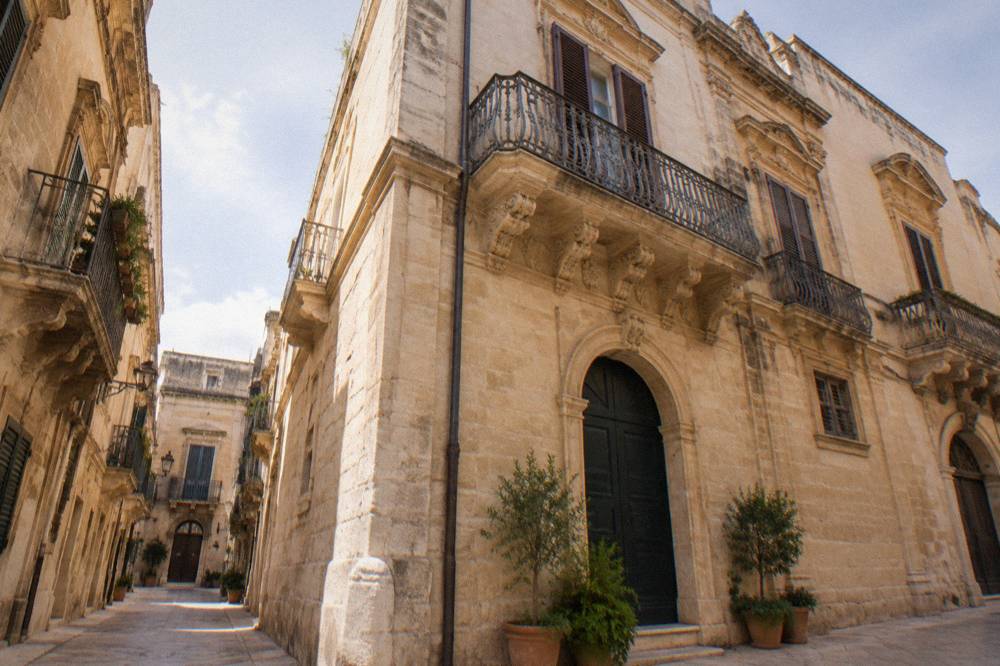
What Can You See In The Giudecca Quarter Of Lecce Today?
The quarter's sights are the lanes themselves, the basement of the ancient synagogue visited with a guide, the Museo Ebraico on Via Umberto I with guided visits only at 5 euro full and 4 euro reduced, and, within a short walk, the whole baroque core of Lecce from the Duomo to the Basilica di Santa Croce, all reachable in a single morning's walking. Nothing in the quarter needs a full day on its own, which is exactly why it pairs so well with the rest of the centre.
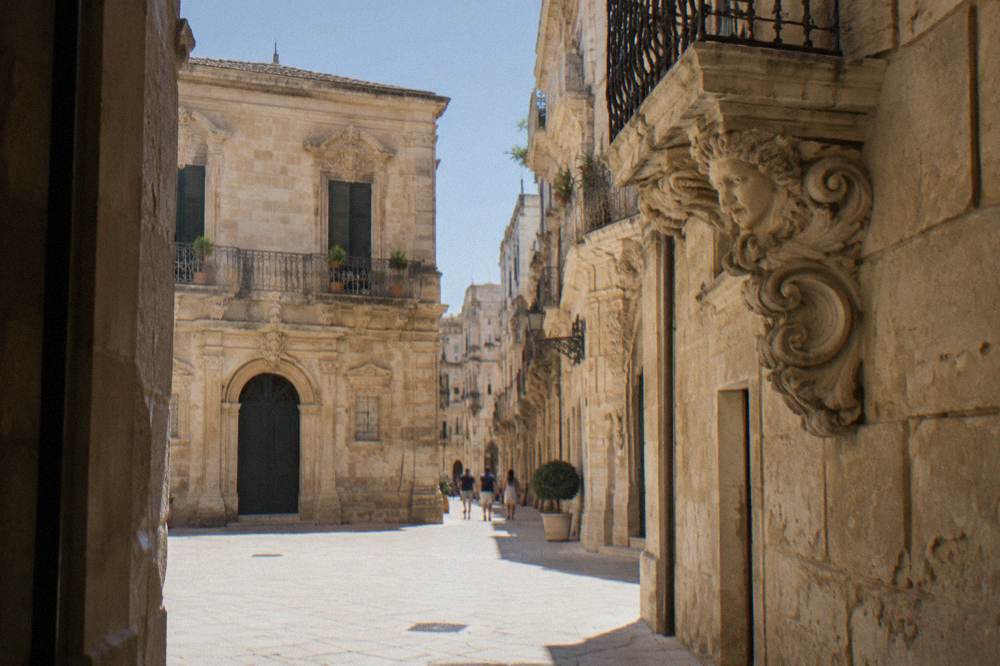
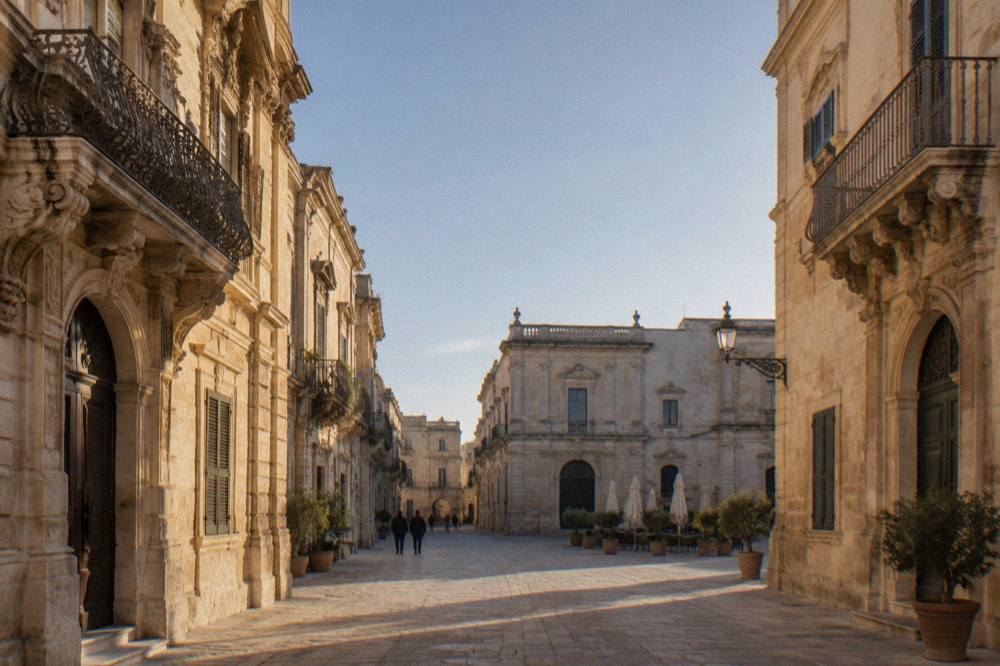
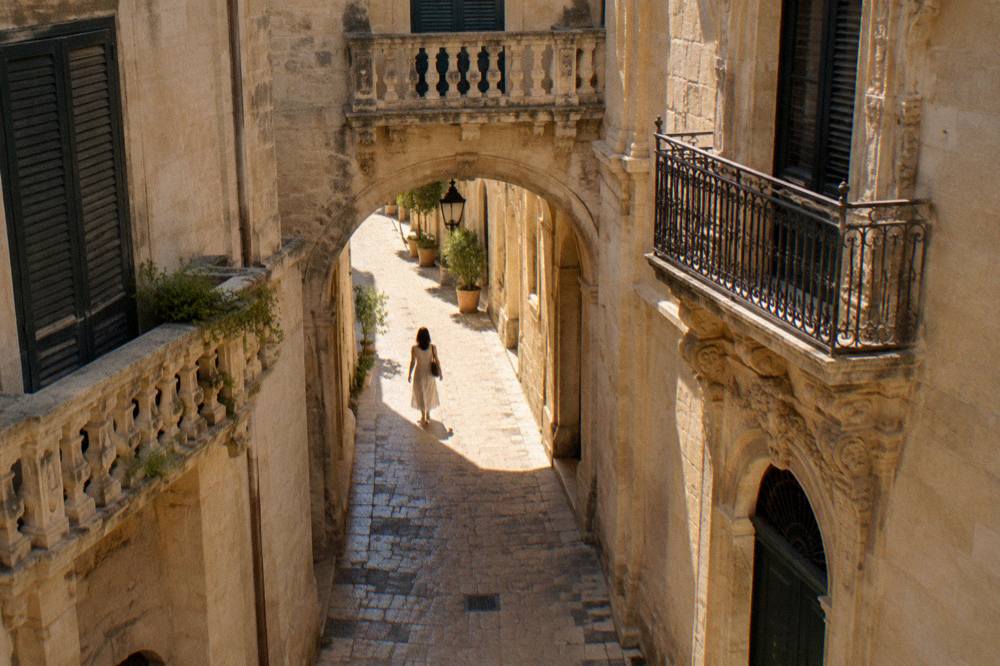
Start with the streets. Via Umberto I and the lanes running off it are the heart of the old quarter, and their character is quieter than the tourist axis around Santa Croce: smaller facades, workshop fronts, a handful of corner bars. Look at the stonework as you go. Pietra leccese is soft when quarried and hardens on exposure, which is why the city's carvers could cut such deep ornament into it, and even humble doorframes here show the same material. The craft tradition it fed, cartapesta, the papier mache craft of Lecce, is introduced on the site's page about Lecce papier mache.
The synagogue basement is the headline. The tour of Lecce with a visit to the basement of the ancient synagogue takes you below street level into the structures identified with the quarter's religious life, and it is the single most direct contact with the medieval community. The building above was repurposed long ago, so the basement is where the evidence lives. Details of what the visit includes are on the operator's live listing.
The Museo Ebraico rounds it out. According to listings it is open on weekdays roughly 10:00 to 18:00 with guided visits required, at 5 euro full and 4 euro reduced, and the site's full page on the Museo Ebraico covers it in depth. Confirm times before setting out, as a small museum on guided access only can fill up.
How The Giudecca Fits Into A Lecce Itinerary
The quarter sits naturally at the start or end of a centre walk. A sensible loop runs from Piazza Sant'Oronzo, past the Roman Amphitheatre, into the Giudecca lanes, then back east to Piazza del Duomo and the Basilica di Santa Croce. Anyone planning two days in the city can slot the quarter into either one; see Lecce in two days for a worked plan.
How Much Does The Giudecca In Lecce Cost To Visit?
Walking the Giudecca's lanes costs nothing, the Museo Ebraico charges 5 euro full and 4 euro reduced with guided visits required, and the synagogue basement is visited on paid guided walks whose prices are shown on the live listings, while the city's main church circuit, the LeccEcclesiae combined ticket, costs 11 euro standard or 21 euro with the bell tower and stays valid for 15 days. The quarter is therefore one of the cheaper half-days in a Salento trip, and the biggest cost is the guide.
The comparison below places the quarter's paid items against the city's main sites, using figures as reported on official or operator pages. Hours and prices can change seasonally; re-check before visiting.
| Site | Reported hours | Reported price |
|---|---|---|
| Giudecca lanes | Public streets, always open | Free |
| Museo Ebraico | Weekdays, about 10:00 to 18:00, guided visits only | 5 euro full, 4 euro reduced |
| Synagogue basement | Via guided tours, see listing | On the operator's live listing |
| LeccEcclesiae churches (Duomo, crypt, Santa Croce, San Matteo, Santa Chiara, Antico Seminario and MuDAS) | Daily 9:00 to 21:00 summer, 9:00 to 18:00 winter | 11 euro standard, 21 euro with bell tower, under 12 free |
| Museo Faggiano | Every day 9:30 to 20:00 | 5 euro, ages 8 to 16 pay 3 euro, under 8 free |
| Roman Amphitheatre | Winter Tuesday to Sunday 10:00 to 17:00, closed Monday | 5 euro full, 2 euro reduced |
| Castello Carlo V | Tuesday to Sunday, guided tours only | 10 euro full, 6 euro reduced |
A few planning notes on the ticket economics. The LeccEcclesiae ticket's 15-day validity means it does not need to be used in one rush; a visitor can see the Duomo one day and Santa Chiara later in the week. The Artwork City Pass, reported at 29 euro for 7 days, bundles the church circuit with extras such as the Palazzo Vernazza experience, and may suit anyone staying longer. The Giudecca items, the museum and the guided walks, are separate from all of these.
Is The Giudecca Worth Visiting Compared With Lecce's Baroque Sights?
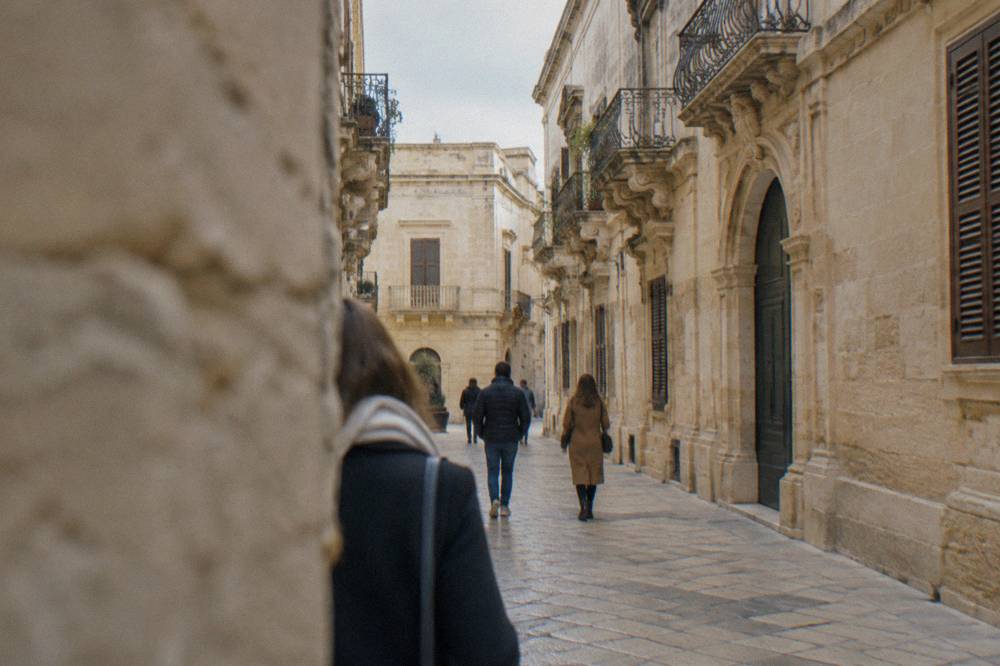
The Giudecca rewards visitors who want Lecce's history before the baroque era as well as after it, because the synagogue basement and the museum show a chapter the churches cannot, while visitors chasing facade after facade of Lecce Baroque will get more from Piazza del Duomo, Santa Croce and the Basilica's rose window than from these quieter lanes, so the honest answer is that the two work best together. A morning of baroque followed by an hour in the quarter is a fuller picture of the city than either alone.
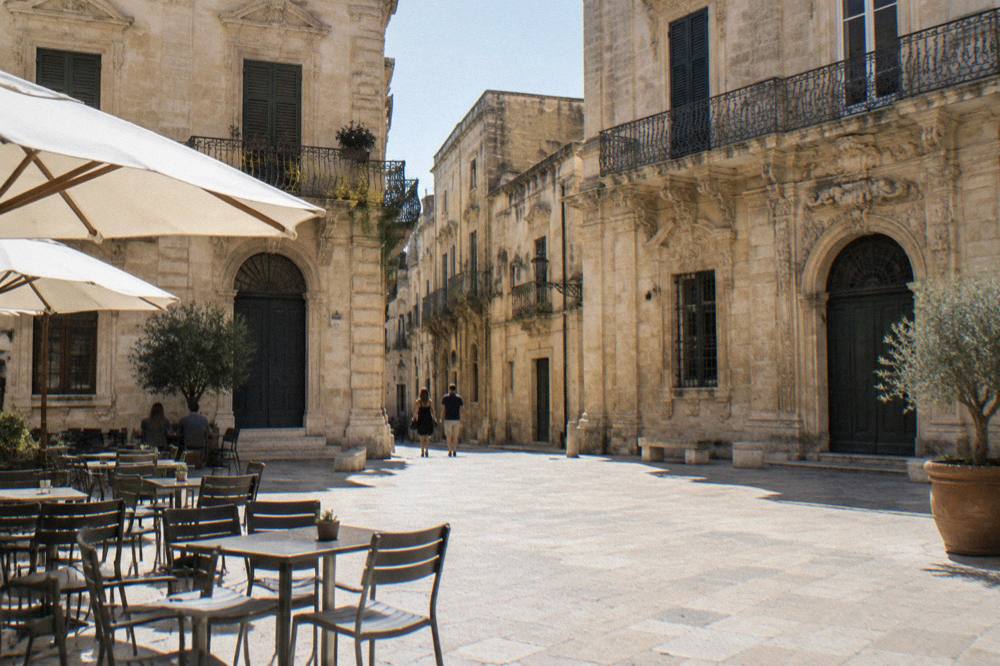
There is also a pacing argument. The baroque core concentrates visitors around a handful of facades, and by early afternoon the streets around Santa Croce thin out as tours move on. The Giudecca's lanes never had that traffic, so they work well as a late-afternoon walk, especially with a coffee stop. The city's cafe culture, including the caffè in ghiaccio con latte di mandorla, the iced espresso with almond milk credited to Lecce's Quarta Caffè in the 1940s and 1950s, is one of the small pleasures of walking this part of town; the site's cafes of Lecce page lists the historic names.
For families, the quarter is flat, compact and traffic-light, which makes it an easy add-on to the site's Lecce with kids plans. The synagogue basement involves stairs and low ceilings, so it suits children old enough for a guided visit rather than toddlers.
What Is There To Eat Near The Giudecca In Lecce?
The streets around the Giudecca sit inside Lecce's eating heart, with the city's street food classics, the rustico leccese, the savoury pastry filled with bechamel, mozzarella and tomato, pasticciotto, and the iced coffee with almond milk, all available in bars and bakeries within a short walk, though the site prints no meal prices or venue details beyond the historic cafes named in its sources. The practical move is to treat the quarter as one stop on a food walk rather than a dining destination in itself.
The classics are worth knowing before you order. Pasticciotto is a custard tart whose invention is claimed by Pasticceria Ascalone in Galatina, with 1745 the shop's own claimed date and historians disputing it, so treat the story as a legend attached to a neighbouring town rather than a Lecce fact. The rustico is a savoury disc of puff pastry, likely a late eighteenth or nineteenth century creation, sold warm in bars through the morning. Frisa and puccia, the hard bread rusks and the flat loaf, are the everyday Salento carbohydrates. The site's what to eat in Lecce page covers all of them in detail.
Guided food walks thread these tastes together with the city's sights, and two of the options in the picks band below are a good match for this quarter: a small group history and street food walk, and a cooking class where orecchiette, the ear-shaped pasta of Puglia, is made by hand. Wine in this region means Negroamaro first, the workhorse red grape of Salento, and the Salice Salentino DOC, established in 1976 across the Lecce and Brindisi provinces, is its most familiar label. Deeper day trips into Salento's wine and food country are covered on the Salento itinerary page.
When Is The Best Time To Visit The Giudecca In Lecce?
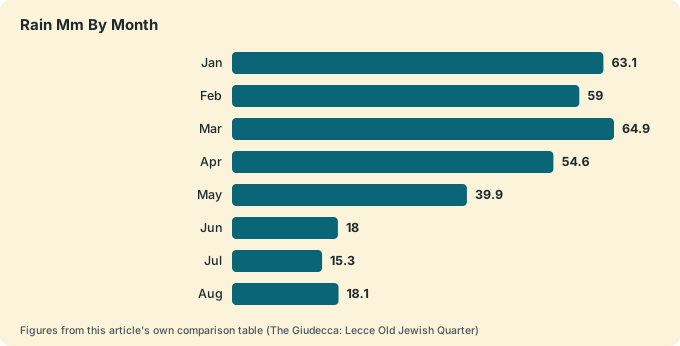
The most comfortable months to walk the Giudecca and the rest of Lecce are late April, May, June, late September and October, when the ERA5 reanalysis 1991-2020 climate normals show mean daily highs of about 18.6 C in April rising to 28.2 C in June and falling back to 21.8 C in October, with July and August averaging 31.0 and 31.3 C at peak and November carrying the highest monthly rainfall at 93.7 mm. The quarter is walked outdoors, so the weather table below is the planning tool.
The climate figures deserve their label: they are ERA5 reanalysis values for the 1991-2020 period, a modelled grid cell near Lecce, not a weather-station record. They describe the pattern, not a forecast. Rainfall is strongly seasonal, with the wettest stretch from October through December and the driest weeks in July.
| Month | Mean high C | Mean low C | Rain mm |
|---|---|---|---|
| Jan | 12.4 | 6.7 | 63.1 |
| Feb | 13.0 | 6.8 | 59.0 |
| Mar | 15.4 | 8.3 | 64.9 |
| Apr | 18.6 | 10.7 | 54.6 |
| May | 23.4 | 14.7 | 39.9 |
| Jun | 28.2 | 19.1 | 18.0 |
| Jul | 31.0 | 21.7 | 15.3 |
| Aug | 31.3 | 22.2 | 18.1 |
| Sep | 26.4 | 19.0 | 58.9 |
| Oct | 21.8 | 15.4 | 91.3 |
| Nov | 17.3 | 11.7 | 93.7 |
| Dec | 13.5 | 8.2 | 75.5 |
Two seasonal notes from the events calendar. August brings the Festa dei Santi Patroni to Lecce, held 23 to 26 August in 2026, with processions and illuminations in the centre, which means crowds and life in the surrounding streets, the Giudecca included. December brings the Fiera dei Pupi, the papier mache Christmas fair that ran to 24 December on its recent pattern, and the Notte della Taranta concert in nearby Melpignano closed its 2026 edition on 22 August. Event dates for future years are published by the comune closer to the time, so check before planning around them.
Can You Visit The Giudecca On A Day Trip, Or Combine It With Salento?
The Giudecca is inside Lecce, so it needs no day trip of its own, but it works as the morning anchor of a Lecce day followed by an afternoon or a later full day in Otranto, Gallipoli or Galatina, with Otranto about 44 minutes by car or reached by train with a change at Maglie, and Gallipoli about 41 minutes by car or on a direct FSE train of about 1h18 to 1h43, so a car-free Salento plan is realistic in summer thanks to the Salento in Bus network. That network ran 13 June to 13 September in 2026 with lines to Torre dell'Orso, Otranto, Porto Cesareo, Gallipoli and Leuca, and is a summer-only service, so confirm whether it is running for your dates.
The rail and road options from the city are summarised below, using the reported figures for each exact journey. Times vary by departure and season; check live schedules on the operators' sites.
| Journey | Reported method and time | Reported fare |
|---|---|---|
| Lecce to Otranto | Car about 44 min, or FSE train changing at Maglie, about 1h33 to 2h | From about 4 to 5 euro by train |
| Lecce to Gallipoli | Car about 41 min, or direct FSE train about 1h18 to 1h43 | From about 5 euro by train |
| Lecce to Galatina | Car about 29 min, or direct FSE train about 38 to 55 min | From about 3 euro |
| Lecce to Brindisi | Direct train about 18 to 24 min | From about 3.40 euro |
| Lecce to Bari Centrale | Direct train, fastest about 1h19 to 1h24 | Regional from about 9 euro, fast trains 18 to 24 euro |
| Lecce to Ostuni | Direct train about 39 to 51 min | From about 7 euro |
For a single packed day, a private tour that strings together several towns removes the transfer puzzle. The Ostuni, Alberobello and Polignano a Mare day trip from Lecce covers three of Puglia's headline towns north of the city, while tours heading south string Otranto, Leuca, Gallipoli and Galatina. Pages on Otranto and Gallipoli cover those towns in depth, and a longer plan is on the Puglia itinerary page.
What Should You Know Before Walking The Giudecca In Lecce?
Before visiting, know that the quarter is quiet and residential rather than a museum district, that its two paid experiences, the Museo Ebraico and the synagogue basement tour, both run on guided access, that dress rules and service suspensions apply if you continue into the city's churches, and that the ZTL rules the roads, so comfortable shoes, a booked visit and a plan to walk everywhere are the three things that matter. A little preparation converts a pleasant stroll into the historical experience the quarter deserves.
Book the guided items ahead. The museum's guided visits fill on busy days, and the synagogue basement is only entered with a guide. Both can be arranged for the same morning, with the lanes walked between them. If a free or tip-based walk comes up in your research, note only that such walks do run locally and that terms should be confirmed with the guide directly.
Dress and timing for the churches. The LeccEcclesiae circuit requires shoulders and knees covered, and tourist visits are paused during services, with the diocese's calendar the place to check timings. The ticket is bought at Piazza Duomo 5 or at the Basilica di Santa Croce.
Practical extras. Italy's single emergency number is 112. The tourist tax exists and is collected by your accommodation, with the top reported rate at 5 euro per person per night for five-star high-season stays from 1 April 2026; confirm the amount for your property at booking. Luggage storage near the station runs at about 2.50 to 3.50 euro a day through app-based networks. Lecce is generally reported as a safe city, with petty theft the main concern, as in any Italian tourist centre.
| Practical item | Detail as reported |
|---|---|
| ZTL | Camera-controlled centre; reported fines 83 to 332 euro; ask your accommodation about plate registration |
| SGM city bus | 60-minute ticket about 1.20 euro, day ticket about 3 euro; confirm on the operator's app |
| Tourist tax | Collected by accommodation; top reported rate 5 euro per night, 5-star high season; confirm at booking |
| Emergency number | 112 |
| Luggage storage | Near the station, about 2.50 to 3.50 euro per day via app networks |
| Church dress code | Shoulders and knees covered; visits pause during services |
Common Questions About The Giudecca In Lecce
What is the Giudecca in Lecce?
The Giudecca is Lecce's old Jewish quarter, a compact area of lanes around Via Umberto I just west of the historic centre. A Jewish community lived there until the expulsion from the Kingdom of Naples, and its traces, including the basement of the ancient synagogue, are now shown on guided visits.
How much does the Museo Ebraico in Lecce cost?
The Museo Ebraico di Lecce is reported at 5 euro full and 4 euro reduced, with visits by guided tour only, on weekdays from about 10:00 to 18:00. Confirm times before visiting, as a small guided-access museum can fill up.
Can you visit the ancient synagogue in Lecce?
The building identified as the ancient synagogue was reused over the centuries, and its basement is visited on guided tours, including a dedicated synagogue and Jewish quarter walk. The basement is where the surviving structures are; details of what the visit includes are on the operator's live listing.
Where is the Giudecca relative to Lecce's main sights?
It sits immediately west of the centre, roughly a five to ten minute walk from Piazza Sant'Oronzo and the Roman Amphitheatre, with Piazza del Duomo and the Basilica di Santa Croce a short walk beyond, so it slots easily into a half-day circuit of the centre.
Is the Giudecca in Lecce free to walk around?
Yes, the lanes are public streets and free to walk at any time. The paid items are the Museo Ebraico and the guided tours that include the synagogue basement; prices for tours render on their live listings.
When is the best time of day to visit the Giudecca in Lecce?
Morning suits the guided visits, since the museum runs on weekdays and tours run through the day, while late afternoon suits a quieter walk of the lanes themselves, with a coffee stop, once the midday heat and the peak crowds around Santa Croce have eased.
The Giudecca will never compete with Lecce's facades for spectacle, and that is its point: a quarter that shows the city's deeper layers, one guided basement and one quiet lane at a time, ten minutes from the baroque everyone photographs.