Historic Cafes In Lecce: Where To Order Like A Local
Lecce, the baroque capital of Salento in Puglia, runs on iced coffee with almond milk, custard pastries and marble-topped bars that have served the same squares for generations. This guide sets out what the sources actually say about the city's historic cafes, what to order, and how to order it.
Short answer
Lecce's cafe culture centres on three sourced institutions: Caffe Alvino on Piazza Sant'Oronzo (roots to about 1880), Pasticceria Natale (family-run since 1978) and the Quarta Caffe tradition behind caffe in ghiaccio con latte di mandorla. Order standing at the bar, pay first where asked, and drink the iced almond coffee in the afternoon heat.
Lecce, in Puglia, southern Italy, is a baroque city of honey-coloured pietra leccese limestone, and its cafe culture is one of the practical pleasures of a visit: an iced espresso with almond milk taken standing at a marble bar, a warm pasticciotto bought from a pasticceria a few streets from the Duomo, a table on Piazza Sant'Oronzo under the Roman Amphitheatre. This page reports what the sources say about the city's historic cafes, the sweets that belong to Salento, and the small ordering habits that mark you as someone who knows how the counter works. For the wider food picture, start with what to eat in Lecce and the guide to the pasticciotto.
What Makes Lecce's Cafe Culture Different From Other Italian Cities?
Lecce's cafes are defined by one drink and one pastry that you will not find made the same way anywhere else in Italy: caffe in ghiaccio con latte di mandorla, an iced espresso with almond milk credited to Antonio Quarta of Quarta Caffe in the 1940s or 1950s, and the pasticciotto, a shortcrust custard tart whose invention story belongs to Galatina, not Lecce. Around them sits a conventional southern Italian bar culture: standing espresso, marble counters, and pasticcerie rather than anglophone coffee shops.
The distinction matters because the city is small and walkable. The historic institutions sit on or near Piazza Sant'Oronzo, in the centro storico, so a cafe crawl fits comfortably inside a morning of sightseeing around the Lecce Baroque churches. You are never more than a few minutes from a counter.
The other difference is rhythm. Like everywhere in southern Italy, bars fill at mid-morning and again in the early evening; many shops in the centre observe a pausa in the early afternoon, and cafe hours vary by business, though tourist-facing bars in the centre keep longer days. Confirm times locally rather than assuming a schedule.
What Should You Order In A Lecce Cafe?
Order caffe in ghiaccio con latte di mandorla for the signature Lecce drink: espresso poured over ice cubes with almond milk syrup, traditionally unsweetened, stirred only when you choose to mix the layers. For food, order a pasticciotto (shortcrust pastry with custard, sometimes with a sour cherry), or a rustico leccese, a savoury puff-pastry disc filled with bechamel, mozzarella and tomato. Both drinks and sweets are Salento traditions, and the bars that sell them are everywhere in the old town.
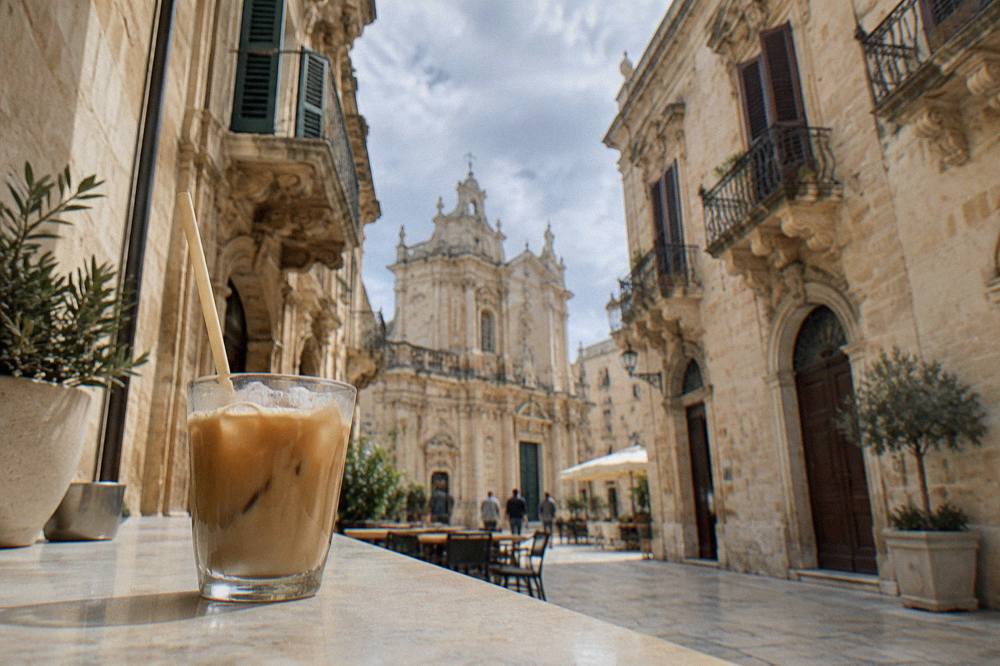
The almond coffee deserves its own explanation. The drink is espresso served over ice with latte di mandorla, almond milk syrup, poured in so the layers sit separately until you stir them. It was devised as an iced coffee variant by Antonio Quarta of Quarta Caffe in Lecce, in the 1940s or 1950s per Corriere Salentino's account, and it entered Italy's PAT traditional-foods list around 2026. It is an afternoon drink: locals take it in the heat of the day, not at breakfast.
The pasticciotto is the other essential. It is a small oval of shortcrust pastry filled with custard cream, sometimes topped with amarena, a sour cherry. Pasticceria Ascalone in Galatina, a town about 26 km from Lecce served by direct FSE trains, claims its family invented it in 1745 from leftover dough during a patron-saint feast; historians dispute the date and the claim, so treat 1745 as the shop's story rather than established fact. Lecce's own pasticcerie sell pasticciotti fresh daily, and a warm one beats a cold one.
For a savoury stop, the rustico leccese is a round of puff pastry filled with bechamel, mozzarella or fior di latte, tomato and pepper, served warm. Its origins are uncertain; accounts point to a late aristocratic or bar invention influenced by French vol-au-vent pastry, so no café in Lecce can credibly claim to have invented it. Bread-based salento items like frisa (a hard rusks soaked in water and dressed with oil and tomato) and puccia (a flat, pizza-like bread) round out the counter food.
If you want to go deeper than eating, the practical option is a hands-on class. The pasta and tiramisu class with wine covers Italian dessert technique in a Lecce kitchen, and you can Check availability at the operator's live listing. A food-focused walk is the other natural pairing; the history and street food tasting tour strings the old town's counters together.
The table below is the short version of what to ask for and when.
| Order | What it is | When leccesi take it |
|---|---|---|
| Caffe in ghiaccio con latte di mandorla | Espresso over ice with almond milk syrup | Afternoon heat, mid-morning in summer |
| Caffe in ghiaccio | Espresso over ice, no almond milk | Afternoon |
| Espresso / caffe | Single shot, taken standing at the bar | Any time, most often after a meal |
| Cappuccino | Espresso with steamed milk | Morning only, rarely after lunch |
| Pasticciotto | Shortcrust custard tart, sometimes with sour cherry | Breakfast, mid-morning |
| Rustico leccese | Warm savoury puff pastry with bechamel, mozzarella, tomato | Mid-morning, aperitivo hour |
| Frisa with pomodoro | Soaked wheat or barley rusks with tomato and oil | Lunch, summer |
Where Are Lecce's Historic Cafes And What Do The Sources Say About Them?
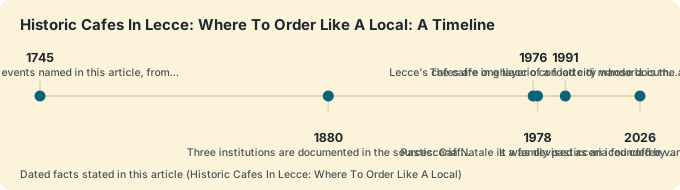
Three institutions are documented in the sources: Caffe Alvino on Piazza Sant'Oronzo, whose roots trace to about 1880 and which some accounts call the first bar in Lecce, now run by the Catamo family since 2007; Pasticceria Natale, family-run since 1978 under the Natale family; and the Quarta Caffe tradition, whose founder Antonio Quarta is credited with the iced almond coffee, with Bar Avio opening around 1978 as the family's torrefazione bar.
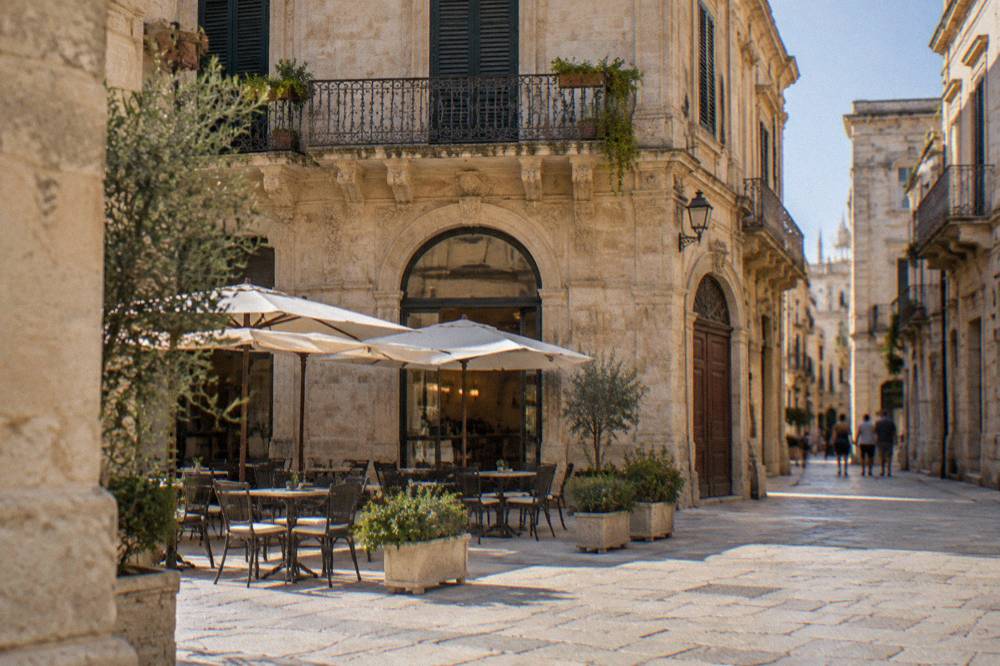
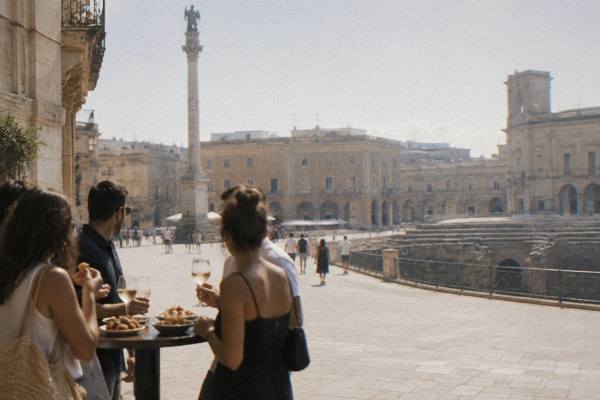
Caffe Alvino sits on Piazza Sant'Oronzo, the square where the Roman Amphitheatre is visible from above, in the heart of the old city. Corriere Salentino's history of the bar traces its roots to about 1880, notes the claim that it was the first bar in Lecce, and records that the Catamo family has run it since 2007. Its terrace looks onto one of the busiest tourist spaces in Salento, which makes it the easiest landmark cafe to fold into a walking day.
Pasticceria Natale is a family pasticceria founded by Fernando Natale and run by the family since 1978, known for traditional Salento pastry work including pasticciotto. A "Santo Pasticciotto" was reported on Natale's own menu at 2.20 euro, one of the few printed prices in the sources; pastry prices elsewhere vary, so check the counter. The Quarta Caffe story belongs to the same lineage: Antonio Quarta is credited with creating the iced almond coffee in the 1940s or 1950s, and the family's Bar Avio opened around 1978, serving figures including the politician Sandro Pertini, per Quotidiano di Puglia's reporting.
Beyond those three, the sources are deliberately silent. No verified ranking of Lecce's bars exists, no meal prices, addresses, hours or phone numbers for other venues, and this site prints none. The practical method is to walk the old town: pastry shops cluster around the Duomo and Santa Croce and along the streets between Piazza Sant'Oronzo and Piazza Mazzini, and any counter with a pasticciotto in the case and a coffee machine behind it will do the job.
| Institution | What the sources say | Status |
|---|---|---|
| Caffe Alvino, Piazza Sant'Oronzo | Roots to about 1880; called the first bar in Lecce by some accounts; Catamo family since 2007 | Reported (Corriere Salentino) |
| Pasticceria Natale | Family-run since 1978, founded by Fernando Natale; Santo Pasticciotto reported at 2.20 euro | Reported (GROK, shop menu) |
| Quarta Caffe / Bar Avio | Antonio Quarta credited with caffe in ghiaccio con latte di mandorla, 1940s to 1950s; Bar Avio opened around 1978 | Reported (Corriere Salentino, Quotidiano di Puglia) |
| Pasticceria Ascalone, Galatina | Claims to have invented the pasticciotto in 1745; historians dispute the claim, and the shop is in Galatina, not Lecce | Contested claim |
How Do You Order Coffee Like A Local In Lecce?
Order at the counter, drink it there, and pay when and where the bar indicates: in Lecce, as across Italy, many bars have you pay first at the till (cassa) and hand the receipt to the barista, though others settle at the counter. Espresso is a caffe or un caffe, a cappuccino is a morning drink, and the iced almond coffee goes by its full name, caffe in ghiaccio con latte di mandorla, or locally a caffe leccese. Sitting at a table costs more than standing.
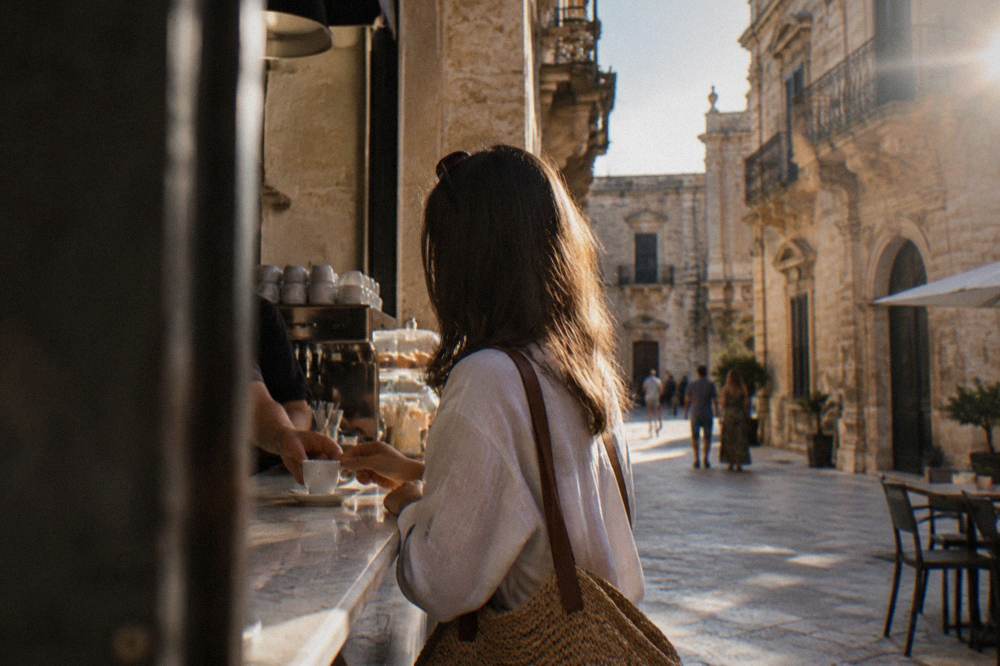
The mechanics are simple but unspoken. If there is a till, pay there first and take the scontrino to the bar; if not, order and pay the barista. Take your espresso standing, at the counter, in two or three sips. Say "un caffe" for an espresso; "un caffe macchiato" if you want a spot of milk; "un caffe lungo" for a longer pull. Asking for a "latte" on its own gets you a glass of milk, because that is what the word means.
The clock matters more than the vocabulary. Cappuccino and caffellatte are breakfast drinks; ordering one after a full lunch marks you as a visitor, though nobody will refuse you. The caffe in ghiaccio con latte di mandorla is the afternoon exception, the drink the city is genuinely known for, and in July and August, when the ERA5 reanalysis, 1991-2020, puts the mean daily high at about 31 C, it is the sensible order.
Two more habits close the gap. First, the pausa: many central shops close or slow in the early afternoon, and cafe hours vary by business, so a mid-afternoon pastry hunt is better planned around the busier bars near the main squares. Second, tipping is not expected at the counter; rounding up a coin is normal, and nothing more is required.
| Situation | What locals do | What to say |
|---|---|---|
| Quick morning espresso | Stand at the bar, drink in two sips | "Un caffe, per favore" |
| Breakfast with milk | Cappuccino plus a cornetto or pasticciotto, before about 11:00 | "Un cappuccio e un pasticciotto" |
| Hot afternoon | Iced coffee with almond milk | "Un caffe in ghiaccio con latte di mandorla" |
| After lunch | Espresso only, no milk drinks | "Un caffe" |
| Paying | Pay at the till first where there is one, then order | Show the scontrino at the counter |
| Something savoury | Warm rustico, mid-morning or aperitivo | "Un rustico, caldo per favore" |
What Sweets And Pastries Belong To Lecce's Counters?
The pasticciotto is the headline sweet: a shortcrust custard tart, sometimes with amarena cherry, claimed by a Galatina shop since 1745 on its own account. Around it sit Salento's other traditional items described in general terms by the sources: frisa and puccia breads, and the caffe in ghiaccio family of drinks. No verified "best pastry shop" list exists for Lecce, and this page does not print one; the three documented institutions above are what the record supports.
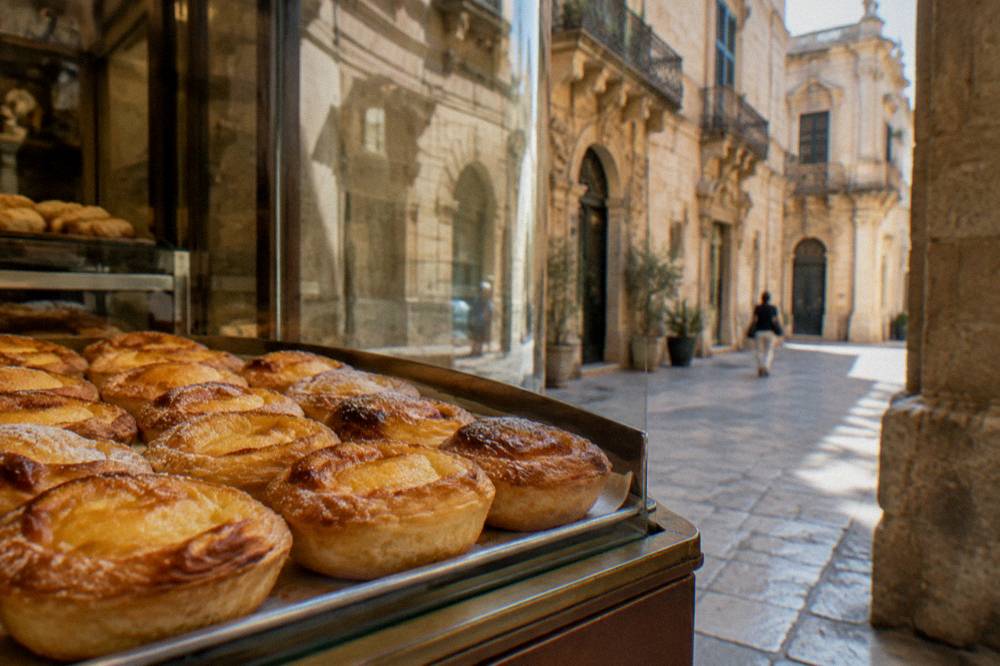
The pasticciotto story is worth getting right because guides routinely get it wrong. The 1745 date belongs to Pasticceria Ascalone in Galatina, which says the tart was created from leftover shortcrust and custard in small copper moulds during the town's patron-saint feast. Historians dispute the account, citing earlier references and thin documentation, and the shop is in any case 26 km from Lecce, a direct FSE train ride of about 38 to 55 minutes if you want to judge the original yourself. In Lecce, every pasticceria makes its own version and the fresh, still-warm ones are the point. Other pages covering the same trip are gathered on Lecce Travel Guide.
The savoury counter is the rustico's territory. Puff pastry, bechamel, mozzarella or fior di latte, tomato and pepper, sometimes nutmeg: a warm round that functions as mid-morning fuel or aperitivo food. Its history is genuinely murky, likely late in origin and influenced by French pastry, so treat any bar's founding legend with a smile. Frisa and puccia are the bread-based traditions, covered in more detail in what to eat in Lecce.
For visitors who want to understand Salento sweets by making them, a class works better than another café. The pasta and tiramisu class is the featured option on this page, and the 15th-century courtyard wine tasting pairs the region's Negroamaro-based wines with the same old-town setting; Check availability for the courtyard session at the live listing.
When Is The Best Time Of Day, And Year, For Cafe Life In Lecce?
For time of day, mid-morning and the late-afternoon aperitivo window are when the counters are liveliest; for time of year, the caffe in ghiaccio season runs with the heat, from late spring through September, when sea temperature off Puglia runs about 22.5 C in June and 25 to 27 C at the August peak. In the mild shoulder months the espresso-and-pasticciotto routine continues unchanged, and even in winter the mean daily high stays around 12 to 13 C per the ERA5 reanalysis, 1991-2020.
The seasonal logic is thermal. The ERA5 reanalysis, 1991-2020, gives Lecce mean daily highs of about 28 C in June, 31 C in July and 31 C in August, with rainfall at its lowest in July; that is iced-coffee weather, and it is exactly when the caffe in ghiaccio con latte di mandorla earns its place in the PAT list. October still reaches a mean high of about 22 C, warm enough for iced coffee through autumn. November is the wettest month in the same dataset, at about 93.7 mm, which pushes cafe life indoors without closing it.
If you are timing a whole trip around café squares and terraces rather than beaches, the shoulder seasons trade heat for calm. The best time to visit Lecce and Lecce weather guides carry the month-by-month detail, and the city's December calendar includes the Fiera dei Pupi, the papier-mache Christmas fair traditionally held in early to late December at the ex-Convento dei Teatini, which pairs naturally with pastry stops.
| Season | Mean high (ERA5 1991-2020) | Cafe pattern |
|---|---|---|
| Spring (Mar to May) | 15 to 23 C | Terrace season begins; warm pasticciotto at breakfast |
| June | 28 C | Iced almond coffee season opens; rainfall about 18 mm |
| July and August | 31 C | Peak iced-coffee and aperitivo hours; warmest sea, 25 to 27 C |
| September | 26 C | Long warm evenings; sea still about 24 to 25 C |
| October to November | 22 C falling to 17 C | Indoor counters; November rain about 93.7 mm, the wettest month |
| December to February | 12 to 14 C | Espresso and sweets indoors; Fiera dei Pupi fair in December |
Can You Build A Day Around Lecce's Cafes And Squares?
Yes, and the city's size makes it easy: the documented cafe institutions all sit in or near the centro storico, within a short walk of Piazza Sant'Oronzo, the Duomo and Santa Croce, so a cafe-first day is just a walking day with scheduled stops. Pair a mid-morning pasticciotto with the baroque churches on the LeccEcclesiae circuit, take the iced almond coffee in the early afternoon heat, and finish with a rustico and a glass of Negroamaro-based Salice Salentino at aperitivo hour.
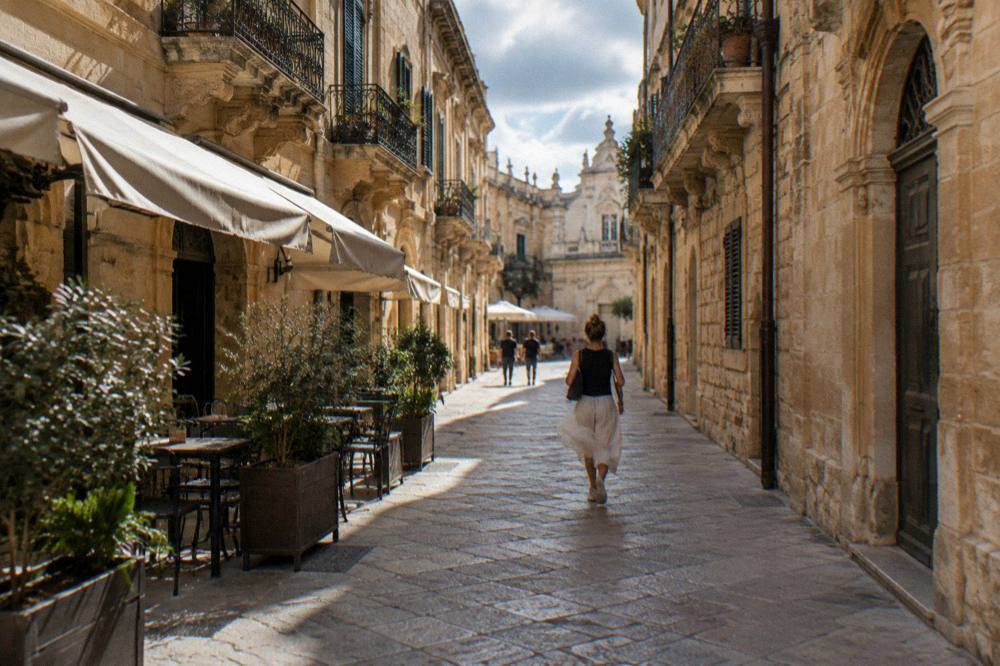
A sample shape: start on Piazza Sant'Oronzo, where the amphitheatre is visible free from the square and Caffe Alvino's terrace sits under it. Walk to Piazza del Duomo for the church circuit; the combined church ticket details are in the guide to Lecce's churches ticket. Loop back through the old streets, stopping at any pasticceria for the mid-morning pasticciotto. After sightseeing, take the iced coffee, then give the late afternoon to the quieter corners around Santa Croce, where papier-mache workshops sit among the bars, a craft covered in the guide to Lecce papier mache.
The same logic scales up. A day built around food and counters is exactly what the guided walks in the cards below deliver, and the full old-town picture, including the free sights, is in things to do in Lecce and free things to do in Lecce. For an overview of the peninsula beyond the city, see the Salento guide.
What Does A Cafe Stop Cost In Lecce?
Only one printed cafe price exists in the sources: the Santo Pasticciotto at Pasticceria Natale, reported at 2.20 euro on the shop's own menu. No verified price list exists for espresso, cappuccino or the iced almond coffee in Lecce, and no hotel or restaurant price ranges were sourced either, so this page prints none. Standing at the bar is the cheaper way to consume anything, and terrace tables on the main squares carry a service premium, as they do across Italy.
The honest answer about money is that the record is thin, and inventing a band would be worse than silence. What can be said: the single documented pastry price sits just above two euro; the tourist tax, a separate accommodation cost collected by your lodging, runs at a top reported rate of 5 euro per person per night for five-star high-season stays from 1 April 2026, with lower categories lower, confirm at booking. Wider trip-budget context, including transport figures such as the 6.50 euro Brindisi airport bus, is covered in how to get to Lecce and the Brindisi airport to Lecce guide.
Practical spending behaviour is the same as anywhere in Italy. Pay at the till where there is one. Ask the price of the iced coffee before ordering if the menu is not displayed; almond milk is an added ingredient and is priced accordingly. And treat the terrace on Piazza Sant'Oronzo as you would any prime square in Europe: you are paying partly for the view of the amphitheatre and the baroque facades.
| Item | Sourced figure | Note |
|---|---|---|
| Santo Pasticciotto, Pasticceria Natale | 2.20 euro | Reported on the shop menu; the only printed cafe price in the sources |
| Espresso, cappuccino, caffe in ghiaccio | No sourced figure | Ask at the counter; standing costs less than a table |
| Tourist tax (accommodation, not cafe) | Top rate 5 euro per night, 5-star high season, from 1 April 2026 | Collected by the accommodation; confirm at booking |
| Brindisi airport bus to Lecce (context) | 6.50 euro one way, about 40 min | Terravision figure, for arrival planning |
Where Do Lecce's Cafes Sit In The Wider Food Scene?
Lecce's cafes are one layer of a food city whose documented features include the Salice Salentino DOC wine zone, established in 1976 and Negroamaro-based across the provinces of Lecce and Brindisi, plus the restaurant scene covered separately on this site. The bars supply the morning and afternoon; trattorie carry lunch and dinner; and wine-focused experiences bridge the two, from courtyard tastings in the old town to winery stops on day trips toward Gallipoli and Galatina.
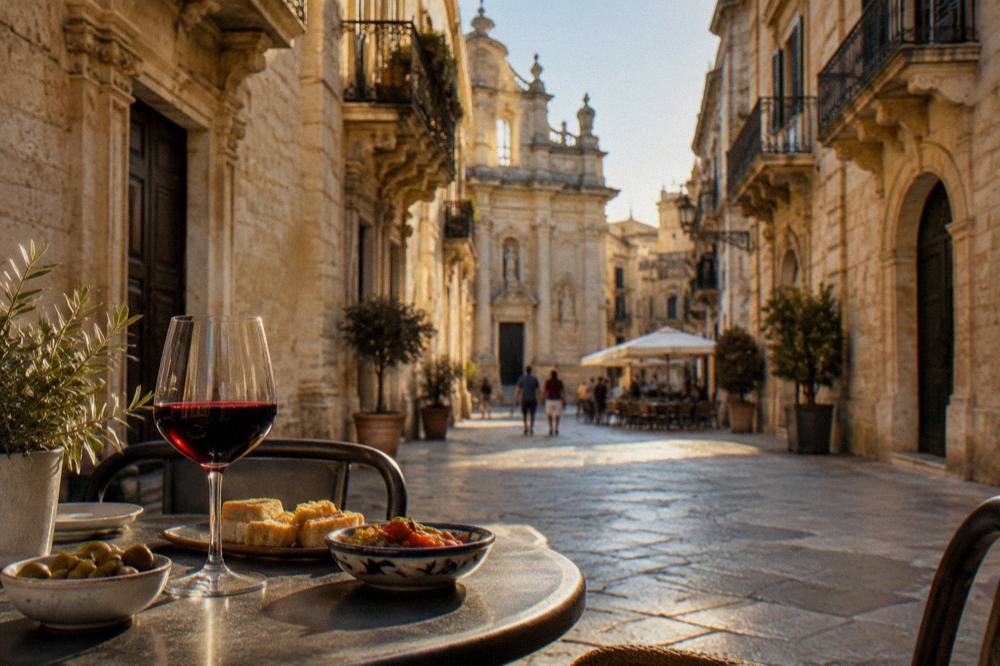
The wine connection is real and local. Salice Salentino, the DOC established in 1976, is built on the Negroamaro grape and covers vineyard land in both Lecce and Brindisi provinces, which makes a glass of it the standard aperitivo pour in the city's bars. The Primitivo di Manduria DOC, centred in Taranto province, is the other Salento name on wine lists. The full picture is in the guide to Salento wine, and restaurant recommendations, within the limits of what this site has sourced, sit on the best restaurants in Lecce page.
Guided experiences cover the same ground with the driving removed. The trio below is the selection this site features for exactly this kind of day: a cooking class for the hands-on angle, a full-day Gallipoli and Galatina trip that ends at a winery, and a Duomo-focused guided walk for the baroque between meals.
If your trip extends past the city, the pattern repeats along both coasts: Porto Cesareo and the Ionian side one way, Otranto and the Adriatic the other, each with its own pastry counters and sea-view bars. The day-trip logistics, drive times and seasonal buses included, are laid out in the guide to beaches near Lecce and the Salento beaches overview.
Common Questions About Lecce Cafes
What is the famous coffee drink in Lecce?
Caffe in ghiaccio con latte di mandorla, espresso poured over ice with almond milk syrup, is the drink the city is known for. It is credited to Antonio Quarta of Quarta Caffe in the 1940s or 1950s, and it entered Italy's PAT traditional-products list around 2026. Ask for it by name, or as a caffe leccese.
Where was the pasticciotto invented?
Pasticceria Ascalone in Galatina, not Lecce, claims to have invented the pasticciotto in 1745, and the shop says it was made from leftover shortcrust and custard during a patron-saint feast. Historians dispute the claim, so treat the date as the shop's story. Galatina is a direct FSE train ride of about 38 to 55 minutes from Lecce.
Can I order a cappuccino after lunch in Lecce?
You can, and nobody will stop you, but cappuccino and caffellatte are breakfast drinks in southern Italy. After a meal the standard order is a plain espresso, un caffe, taken standing at the bar. The iced almond coffee is the accepted afternoon exception.
Is it cheaper to stand at the bar or sit at a table?
Standing at the bar is cheaper, as it is across Italy; terrace tables on the main squares such as Piazza Sant'Oronzo carry a service premium. Pay at the till first where the bar has one, then hand the receipt to the barista.
How much does a coffee or pastry cost in Lecce?
Only one cafe price is documented in this site's sources: a Santo Pasticciotto at Pasticceria Natale reported at 2.20 euro. No verified price list exists for espresso, cappuccino or the iced almond coffee, so check the menu or ask at the counter before ordering.
Which historic cafes in Lecce are documented?
Three institutions: Caffe Alvino on Piazza Sant'Oronzo, with roots to about 1880 and run by the Catamo family since 2007; Pasticceria Natale, family-run since 1978; and the Quarta Caffe tradition, including Bar Avio from around 1978, behind the iced almond coffee. This site prints no rankings and no other venues, because the record does not support them.
The café routine in Lecce is small, cheap by big-city standards once you stand at the bar, and entirely walkable: a pasticciotto in the morning, the iced almond coffee in the afternoon heat, and a terrace on Piazza Sant'Oronzo whenever the squares win the argument. Order like the leccesi do, and the rest of the baroque city fills in around the counters.