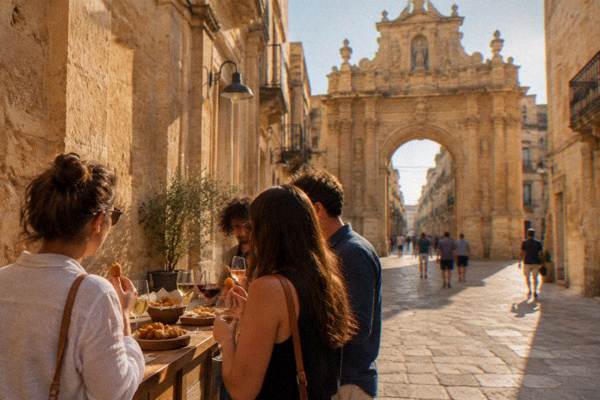
Pasticciotto: The Custard Pastry Of Lecce
Pasticciotto is the shortcrust custard tart that defines breakfast in Lecce, the baroque capital of Salento. This guide covers the disputed invention story, the filling, the cafés, the price, and the classes.
Short answer
A pasticciotto is a small oval tart of shortcrust pastry filled with egg custard, served warm or cold across Lecce and the Salento peninsula. Its 1745 invention date is claimed by a bakery in Galatina, not Lecce, and historians dispute it. A reported price at Pasticceria Natale in Lecce was 2.20 euro for one.
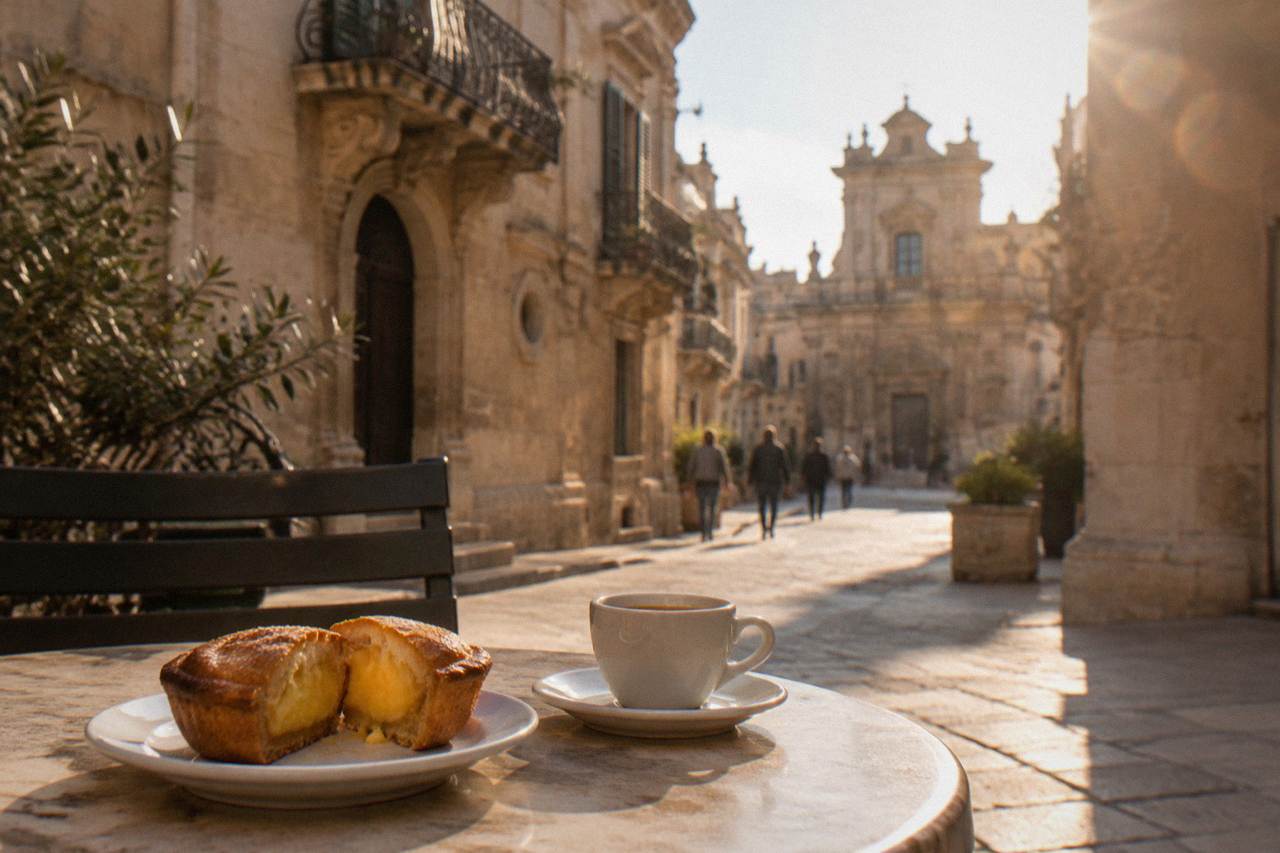
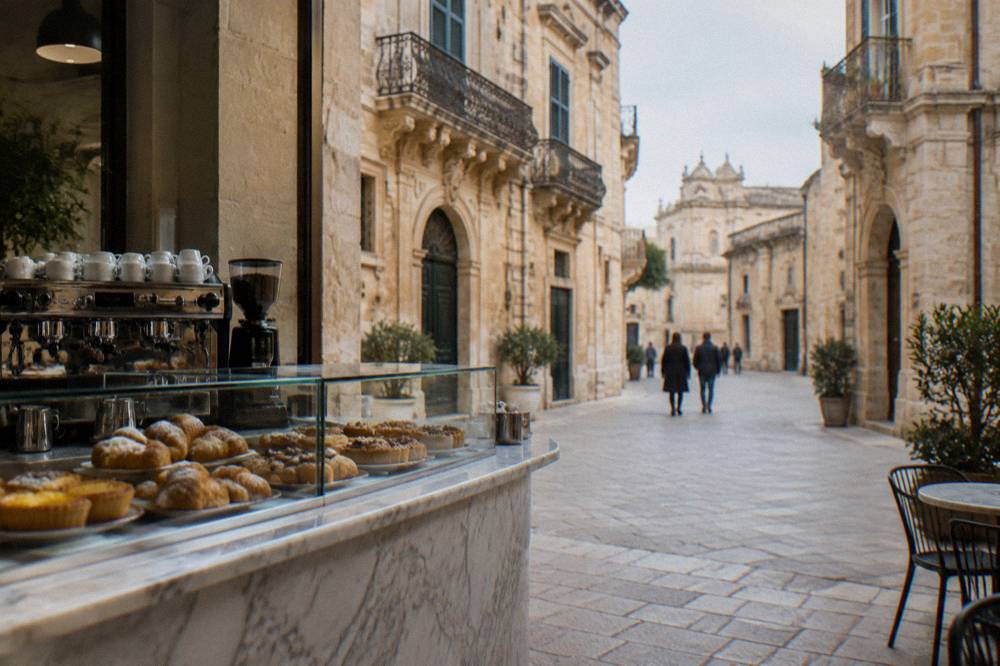
Pasticciotto is the custard pastry that anchors breakfast in Lecce, the baroque capital of Salento in Puglia, southern Italy: a small oval of shortcrust pastry, baked until golden, filled with a set egg custard that trembles when the pastry is cut. Walk into a bar in the old town in the morning and the pasticciotti sit in trays behind the counter beside the espresso machine, ordered by pointing, paid at the till, eaten standing or at a marble table. This guide covers what the pastry is, where it comes from, what belongs inside it, where to eat it in Lecce, what it costs, and how to learn to make one in a class.
What Is A Pasticciotto, The Signature Pastry Of Lecce?
A pasticciotto is a small oval tart made of shortcrust pastry, pasta frolla, filled with baked egg custard and eaten warm or at room temperature, and it is the standard morning pastry of Lecce and the whole Salento peninsula. The name is a diminutive of pasticcio, meaning a mess or a concoction, and the plural is pasticciotti. Every bar and pasticceria in the city keeps them, and ordering one with a caffe in ghiaccio, the iced coffee with almond milk credited to Antonio Quarta of Quarta Caffè in Lecce in the 1940s or 1950s, is the local combination.
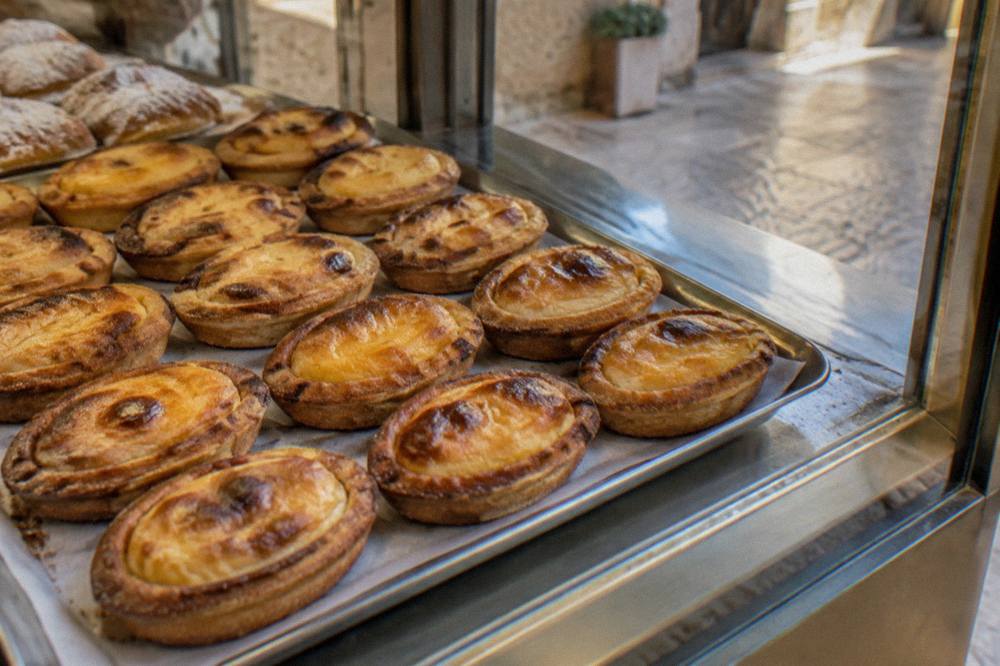
The pastry is small, roughly the size of a palm, and oval rather than round. The lid and base come from the same dough, pressed into shallow tins, sealed at the edge, brushed and baked until the top takes on colour. The custard, crema pasticcera in Italian, is poured in raw and sets as the tart bakes, which is why a freshly baked one arrives with a filling hot enough to scald. Old bakery lore in the region holds that the mark of a good pasticciotto is a slightly collapsed blister on the lid where steam escaped, and the pastry in Lecce is often served still warm from a morning batch.
There are variations across Salento. A larger family-size version, the pasticciotto grande, is cut in slices at the table. A chocolate version swaps part of the custard for cocoa. In the summer a fruit-topped version appears in display cases. The core form, though, is unchanged: shortcrust, custard, heat. It belongs to the same family of Puglian baking covered in the wider guide to what to eat in Lecce, where it sits beside the savoury rustico and the soaked frisa, and it is the one item from that list that visitors most often come back for a second time.
Was The Pasticciotto Invented In Lecce Or In Galatina?
The invention belongs, by the claim, to Galatina, a small town about 26 km from Lecce, not to Lecce itself: Pasticceria Ascalone in Galatina says the pasticciotto was created there in 1745 from leftover shortcrust and custard, though historians dispute the date, so the origin should be treated as a shop's claim rather than settled fact. Lecce adopted the pastry so thoroughly that it is now inseparable from the city's name, but the invention story points to the smaller town.
The story, as the shop tells it, is that a baker preparing sweets for the patron saint's feast in Galatina had shortcrust and custard left over, combined them in small copper moulds, and served the result to a local nobleman. The date of 1745 comes from the same shop tradition. Historians have questioned it, citing earlier references and missing documents, which is why this page reports it as a claim. Galatina is an easy day trip from Lecce, reachable by direct regional train, and the town's Basilica of Santa Caterina d'Alessandria is free to enter; the pairing of basilica and pastry makes a half day of it, as described in the Galatina guide.
The dispute matters less than the geography. The pasticciotto is Salentino, not strictly leccese, and every town in the peninsula bakes its own. What Lecce contributed was scale: a historic centre of bars and pasticcerie that turned a Galatina improvisation into the defining breakfast of the regional capital.
What Goes Into A Real Pasticciotto Leccese?
A traditional pasticciotto has two components: a shortcrust pastry of flour, sugar, butter or lard, and egg, and a filling of egg custard made with milk, egg yolks, sugar and flour or cornstarch, with lemon zest the usual aromatic; some bakers add a spoon of sour cherries or a chocolate disc under the custard, and lard rather than butter is the older choice for the dough. The ingredient list is short, which is why the execution shows.
The custard is the test. It must be thick enough to slice but loose enough to read as cream rather than rubber, and it must be poured into the raw shell, because a pre-cooked filling separates from the pastry as it bakes. The pastry should be short and faintly sandy, sturdy enough to lift by hand and tender enough to break under a fork. Lecce bakers are divided on the fat: lard gives the traditional crumb and keeps better in a hot climate, butter gives a rounder flavour and is now common in artisan shops.
Three local habits govern how it is served. First, warmth: a pasticciotto straight from a morning batch is the point of the exercise, and bars that bake on site sell out by late morning. Second, the pairing: espresso, or the iced almond-milk coffee, never cappuccino after midday by local convention. Third, quantity: pasticciotti are counted in ones and twos, and buying a box of six to carry home is a standard gesture at the airport-bound end of a trip.
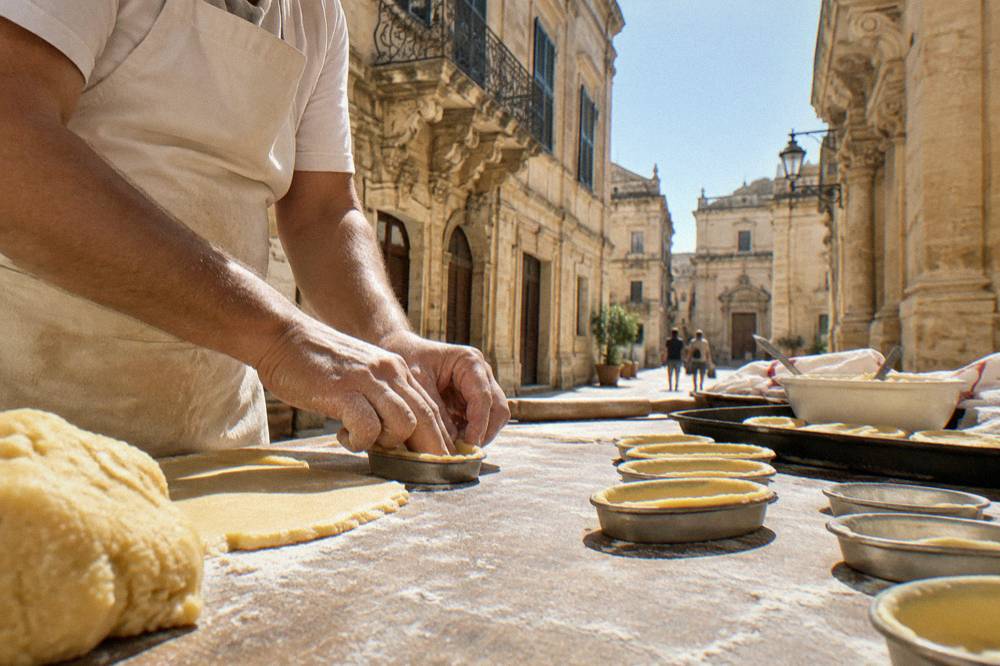
The table below sets out the components as the tradition defines them.
| Component | Traditional ingredients | Notes |
|---|---|---|
| Pastry (pasta frolla) | Flour, sugar, egg, butter or lard | Lard is the older Salento choice; butter is now common |
| Custard (crema pasticcera) | Milk, egg yolks, sugar, flour or cornstarch, lemon zest | Poured raw, sets during baking |
| Classic addition | Amarena sour cherry or chocolate disc | Placed at the base before the custard |
| Finish | Egg wash or a dusting of sugar | Gives the golden blistered lid |
Tasting the pastry in context, with someone who can name each bar and each variation, is the easiest way in. The history and street food tasting tour walks the old town through both, and the same decision point is covered by the picks below.
For a guided comparison of the pastry against the rest of the counter, a small-group food walk is the format that fits; the street-food tour above includes tastings with the history. To go deeper on the cooking itself, Check availability for the pasta and tiramisu class, which runs in the same family-kitchen tradition of Salento home cooking.
How Does Pasticciotto Compare With The Rustico Leccese?
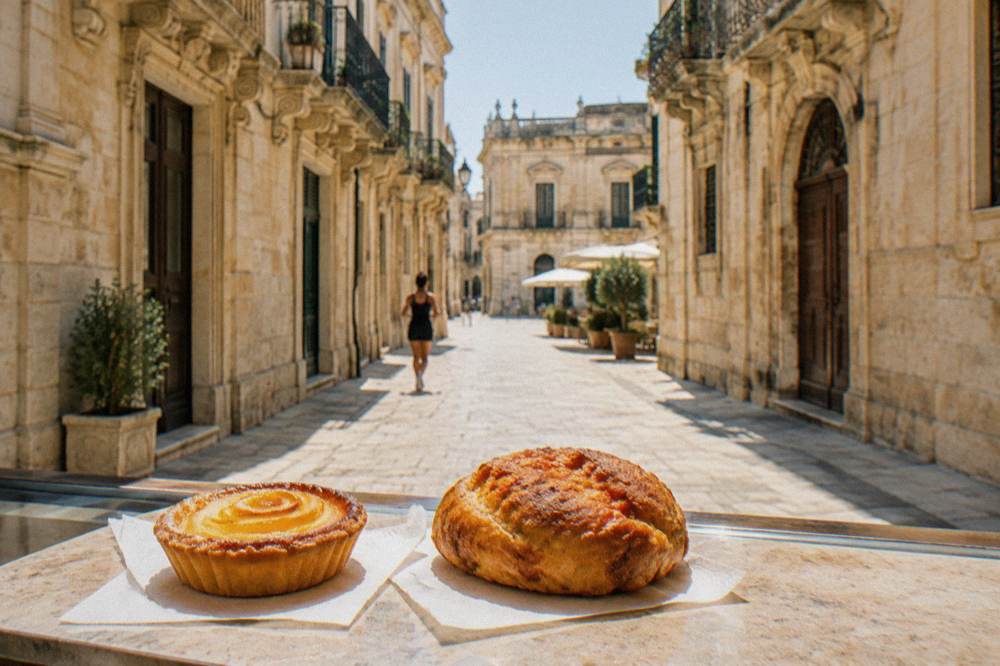
Pasticciotto and rustico leccese are the two counter classics of Lecce and they are opposites: the pasticciotto is a sweet shortcrust tart filled with egg custard, while the rustico is a savoury disc of puff pastry filled with bechamel, mozzarella or fior di latte, tomato and pepper, eaten warm as a snack rather than at breakfast. Ordering one of each is a legitimate way to learn the difference in a single sitting.
The doughs differ completely. Shortcrust for the sweet, puff pastry for the savoury, which is also why their origins differ: the rustico is a much later creation, likely from the late 18th or 19th century and influenced by French pastry, while the pasticciotto's custard-in-pastry idea is older. The fillings could not be further apart. One is dessert at eight in the morning, the other is a salty late-afternoon stop. The full story of the savoury side, including the disputed origin, is in the rustico leccese guide.
| Pasticciotto | Rustico leccese | |
|---|---|---|
| Course | Breakfast or dessert | Savoury snack |
| Pastry | Shortcrust (pasta frolla) | Puff pastry (sfoglia) |
| Filling | Egg custard, sometimes amarena or chocolate | Bechamel, mozzarella or fior di latte, tomato, pepper |
| Served | Warm or room temperature | Warm, always |
| Usual drink | Espresso or caffe in ghiaccio | Beer or a soft drink |
A morning that starts with a pasticciotto and ends with a rustico is, in miniature, the eating rhythm of the city. Neither is a full meal on its own, both cost a couple of euro at most counters, and both are sold by weight or by the piece in the same pasticcerie.
Where Do You Eat Pasticciotto In Lecce?
The named, long-running places in the sources are Caffe Alvino on Piazza Sant'Oronzo, which traces its roots to about 1880, and Pasticceria Natale, family-run since 1978; beyond these, every bar and pasticceria in the historic centre bakes pasticciotti, and the practical rule is to look for a shop that bakes on site and sells out by late morning. No venue beyond those two is verified, so no ranking is offered here.
Caffe Alvino sits on the main square of the old town, facing the Roman amphitheatre, and its claimed lineage makes it the historic reference point for a pastry-and-coffee stop at the centre of Lecce. Pasticceria Natale is the other documented name, a family pasticceria running since 1978 and known for traditional Salento baking, including its reported "Santo Pasticciotto" at 2.20 euro. Both are covered in general terms only: no addresses, hours or phone numbers are listed here, and the reader should confirm locally, as the practical facts pages for where to stay in Lecce and the restaurant guide advise for everything in the city.
The practical advice is simpler than any list. Choose a bar with its own oven, visible trays, and a morning queue of locals, because a pasticciotto loses its reason within hours of baking. Ask whether the batch is warm. If the answer is yes, take two. Repeat the exercise in a different bar the next day, because the variations between bakers, the fat in the dough, the sweetness of the custard, the presence or absence of a cherry, are the actual pleasure of the subject. The wider set of guides lives on Lecce Travel Guide.
How Much Does A Pasticciotto Cost In Lecce?
The one reported price in the sources is 2.20 euro for a "Santo Pasticciotto" at Pasticceria Natale in Lecce, and that single figure is the honest anchor: individual pastry prices in the city are set by each bar, vary with size and filling, and should be checked at the counter, so treat 2.20 euro as an example rather than a going rate. No verified range across the city exists, and none is invented here.
What can be laid out in a table is the cost structure of a pastry-focused morning in Lecce, using only the figures the sources support. The caffe in ghiaccio pairing, the taxi-free walkability of the old town and the 2.20 euro example are all covered here; everything else is a check-at-the-counter item.
| Item | Reported figure | Status |
|---|---|---|
| Santo Pasticciotto, Pasticceria Natale | 2.20 euro | Reported price |
| Other pasticciotti in Lecce | Not published | Check at the counter |
| Caffe in ghiaccio con latte di mandorla | Not published per cup | Check at the counter |
| Box of pasticciotti to take home | Not published | Ask at the till |
The general cost picture for the city, including the tourist tax collected by accommodation at a top reported rate of 5 euro per night, is covered in the wider planning pages; the pastry itself is among the cheapest things in Lecce, which is part of its standing. A morning of one pastry and one iced coffee costs less than a museum ticket almost anywhere, and the free things to do in Lecce page covers the squares and churches that fill the rest of such a day at no cost.
Can You Learn To Make Pasticciotto In Lecce?
Yes: the practical route for visitors is a cooking class in or near Lecce, and the site's roster includes family-home cooking classes and pasta workshops where Salento baking and pastry traditions are taught alongside the savoury repertoire, so a visitor can spend a morning learning doughs and fillings and eat the results; no dedicated pasticciotto-only class is verified in the roster. What is verified are classes in the region's home-cooking tradition.
The format that fits is the family-home class: a small group, a domestic kitchen, a cook who makes the dough by hand and explains the custard by doing rather than by recipe. The classes on this site's roster are described in their listings, with prices and ratings rendering from the product blocks rather than from this page. The private baroque and underground tour makes a good companion booking for a different kind of day, pairing the kitchens of the present with the underground storerooms of the past.
For home cooks, the recipe itself is short. Make a shortcrust with flour, sugar, egg and cold butter or lard; rest it; line small oval tins; fill with a raw egg custard thickened with yolks and cornstarch and scented with lemon; seal, brush and bake until the lids blister. The failures are instructive: a filling that leaks means the seal was weak, a tough pastry means the dough was worked warm. The learning curve is measured in batches, and Lecce bakers have had generations of them.
Beyond the classes, the craft context of the city is worth an afternoon. Lecce's papier-mache workshops, the botteghe that once supplied the churches, are covered in the papier-mache guide, and the whole food culture of the peninsula, from frisa to Negroamaro, is mapped in the Salento overview. A day that pairs a morning class with an afternoon of baroque and botteghe is the shape of a full Lecce day.
What Wine Or Coffee Do You Pair With Pasticciotto In Lecce?
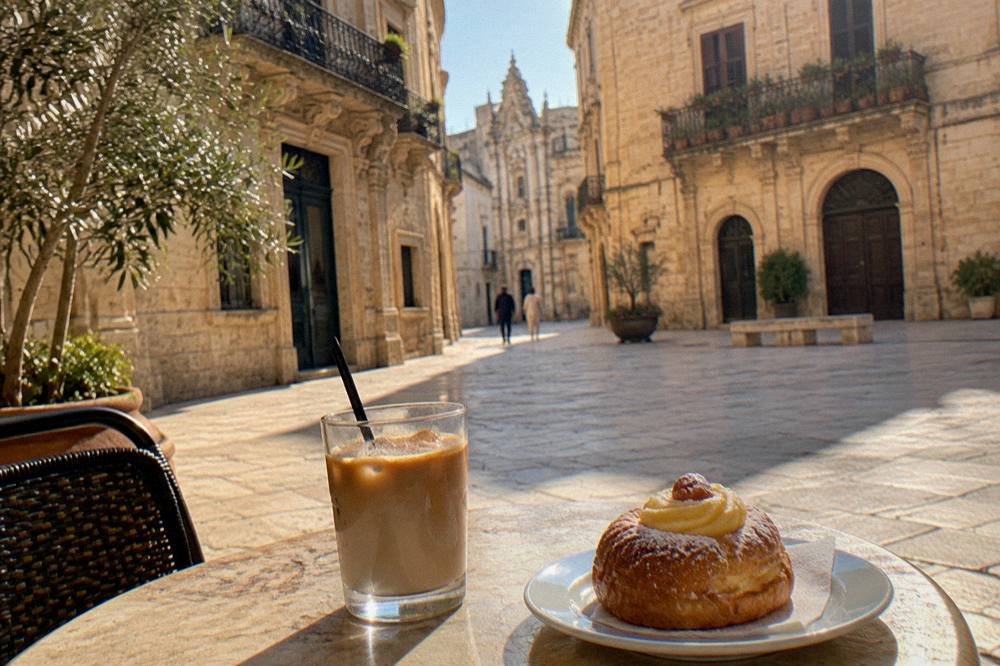
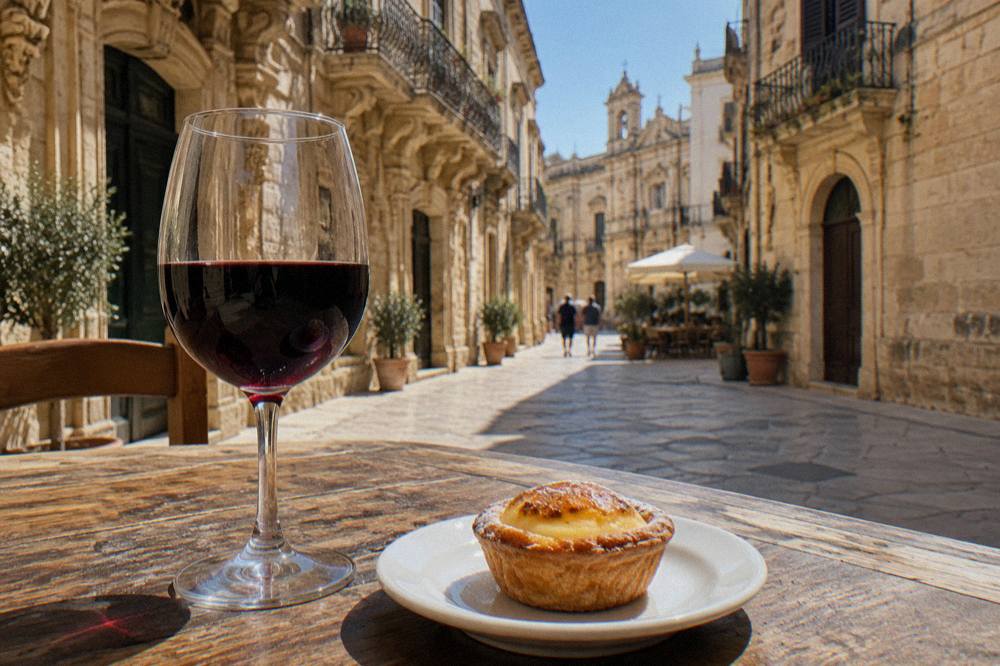
The standing local pairing is coffee, not wine: espresso or the caffe in ghiaccio con latte di mandorla, iced espresso over ice cubes with almond-milk syrup, a drink credited to Antonio Quarta of Quarta Caffè in Lecce in the 1940s or 1950s and now on Italy's PAT list of traditional foods, is the classic companion; for an afternoon dessert pairing, the region's Negroamaro-based sweet and dry wines are the local answer.
The almond-milk iced coffee deserves its own sentence of mechanics, because the order matters. The espresso goes over ice first, the almond-milk syrup follows, and the drink is traditionally left unstirred, the layers mixing only as you drink. It was built for Salento summers, when the mean daily high reaches about 31 C in July and August per the ERA5 reanalysis, 1991-2020, and it turns a warm pasticciotto into a complete hot-weather breakfast. The pairing is documented in the city's cafe culture, traced through Quarta Caffè and the bars that adopted the format.
For wine, the region's reference points are Negroamaro, the workhorse red grape of Salento, and Salice Salentino DOC, established in 1976 across the provinces of Lecce and Brindisi. A sweet Negroamaro or a Primitivo di Manduria pairs with the custard's richness; the dry rosati of the same denominations suit a table where pasticciotto follows a savoury lunch. The Salento wine guide is not on this page's link list, so the practical pointer is the tasting experiences in the product blocks above, which pour the same denominations.
| Pairing | What it is | When it fits |
|---|---|---|
| Espresso | Short black coffee | The default morning order |
| Caffe in ghiaccio con latte di mandorla | Iced espresso, ice, almond-milk syrup, unstirred | Warm months; credited to Quarta Caffè, 1940s-1950s |
| Sweet Negroamaro | Sweet red from the local grape | Afternoon dessert |
| Salice Salentino DOC | Negroamaro-based DOC since 1976 | Table settings, savoury-to-sweet meals |
When Is The Best Time Of Year To Eat Pasticciotto In Lecce?
Any month works, because pasticciotto is baked year-round in Lecce, but the experience differs: the pastry peaks in summer alongside the iced-coffee season and the region's festival calendar, while winter brings the Fiera dei Pupi, the papier-mache Christmas fair traditionally running in Lecce from early December to the 24th, when pasticcerie fill with seasonal baking. The climate decides the coffee more than the pastry.
The ERA5 reanalysis, 1991-2020 puts the mean daily high at about 31.3 C in August against about 12.4 C in January, with November the rainiest month at 93.7 mm. A warm pastry is pleasant in both, but the iced almond coffee belongs to the hot half of the year, and the best time to visit Lecce and Lecce weather pages cover the trade-offs in full. August adds the Festa dei Santi Patroni, held 23 to 26 August in 2026, when the city fills for processions and luminarie, and the Notte della Taranta concert in Melpignano, held 22 August 2026.
December has its own claim. The Fiera dei Pupi, the Christmas fair of papier-mache craft at the ex-Convento dei Teatini, follows a pattern of roughly the 6th to the 24th of December, with 2026 dates not yet published, and a cold-month visit pairs the fair with warm pasticciotti and the year's pasticciotto-shaped gift boxes. There is no wrong month, only a different drink beside the plate.
Common Questions About Pasticciotto In Lecce
What is a pasticciotto?
A small oval tart of shortcrust pastry filled with baked egg custard, eaten warm or at room temperature as the standard breakfast pastry of Lecce and Salento. The plural is pasticciotti, from pasticcio, a mess or concoction.
Was the pasticciotto invented in Lecce?
No. The invention is claimed by Pasticceria Ascalone in Galatina, about 26 km from Lecce, which dates it to 1745; historians dispute the date, so treat it as a claim. Lecce adopted the pastry as its own breakfast standard.
What is inside a pasticciotto leccese?
Egg custard made with milk, egg yolks, sugar, flour or cornstarch and lemon zest, poured raw into the shell and set during baking. Some versions add an amarena cherry or a chocolate disc at the base.
How much does a pasticciotto cost in Lecce?
The one reported figure is 2.20 euro for a Santo Pasticciotto at Pasticceria Natale. Prices elsewhere are set by each bar and are not published in the sources, so check at the counter.
What is the difference between pasticciotto and rustico?
The pasticciotto is sweet, a shortcrust tart with custard; the rustico leccese is savoury, a puff-pastry disc with bechamel, mozzarella, tomato and pepper, served warm as a snack.
Where can I try pasticciotto with a guide in Lecce?
Food-focused walking tours of the old town include pastry tastings alongside other Salento specialities; the tour blocks on this page show current prices and ratings from the operators' live listings.
The pasticciotto is the smallest reason to come to Lecce and, on many trips, the one that is remembered most precisely: a warm oval of shortcrust, a spoonful of set custard, a coffee beside it, and a baroque square outside the door. Eat it warm, eat it twice, and check the counter price before you order the second one.