Salento Wine: Negroamaro, Primitivo And Where To Taste
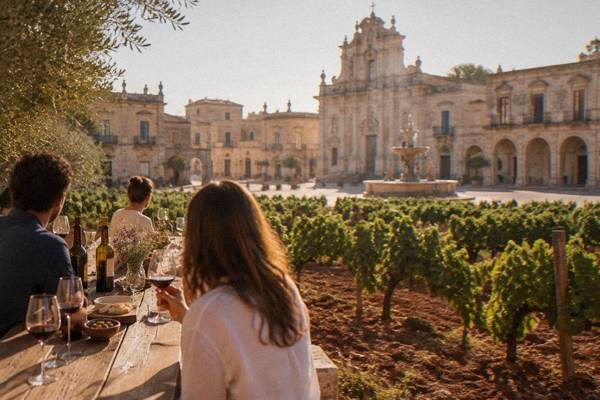
Salento wine runs on two grapes, negroamaro and Primitivo, and Lecce is the natural base for tasting both. Here is what the denominations actually say, and where the glasses are poured.
Short answer
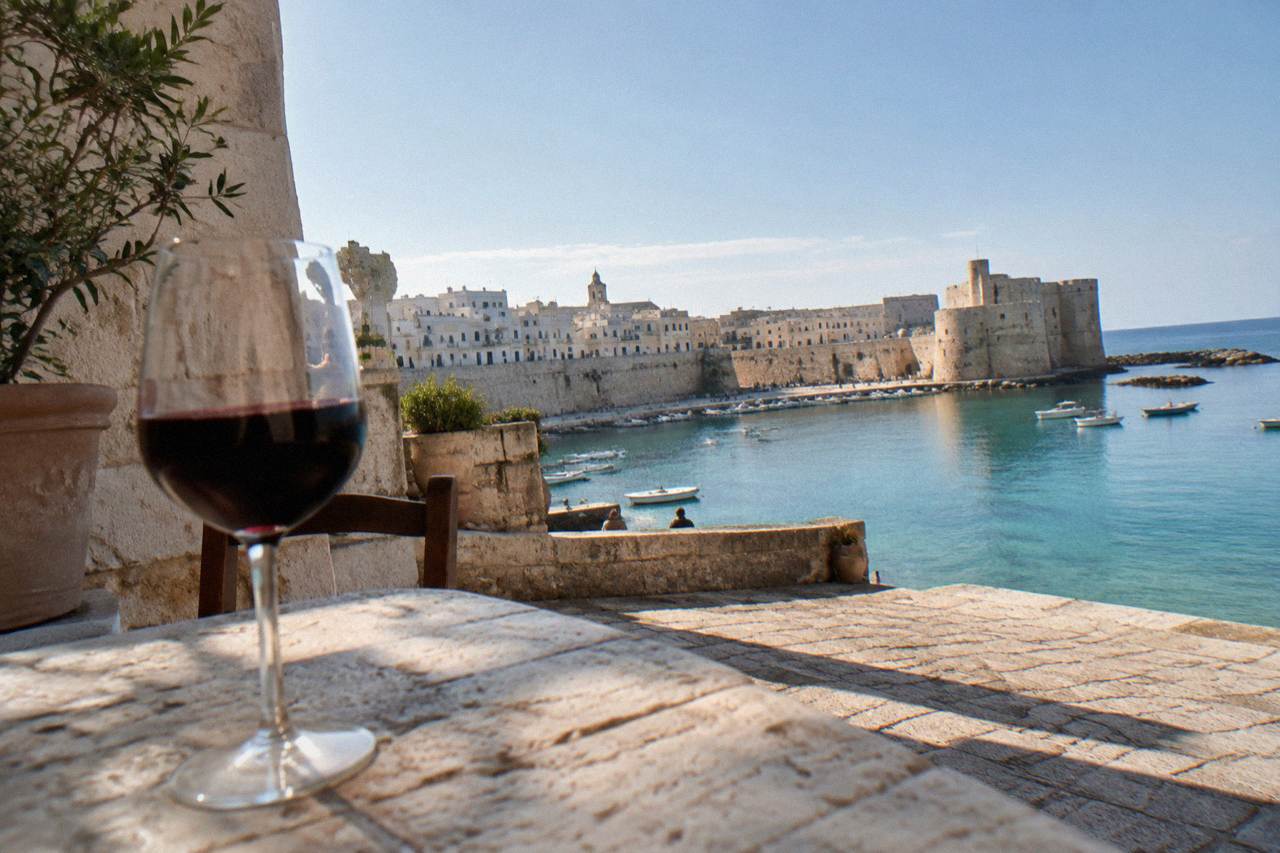
Negroamaro is the signature red grape of Salento, the peninsula around Lecce in Puglia, and the base of Salice Salentino DOC; Primitivo di Manduria is the other headline wine. Tastings cluster in Lecce's old town, in family homes and courtyards, and at masserie across the province.
Salento wine begins with a grape called negroamaro, and Lecce, the baroque capital of Puglia in southern Italy, is the most practical place in the peninsula to drink it. The city sits a few kilometres inland from the Adriatic, with the Ionian coast across the peninsula to the west, and its old town of honey-coloured pietra leccese limestone holds wine bars, courtyards and tasting rooms within a short walk of one another. The Lecce Travel Guide desk has assembled what the denominations and local sources say about the region's two headline grapes, negroamaro and Primitivo, and where the tasting happens.
What Is Negroamaro, The Signature Grape Of Salento Wine Near Lecce?
Negroamaro is the key red grape of the Salento peninsula around Lecce, a dark-skinned variety whose name is usually read as a fusion of negro, dark, and amaro, bitter, a reference to its marked bitterness on the palate. It is the base grape for many denominations of the region, above all Salice Salentino DOC, which was established in 1976 and covers vineyard land in the provinces of Lecce and Brindisi.
That establishment date matters because Salento's modern wine identity is younger than its winemaking tradition. The region, the heel of Italy, has grown vines for centuries on flat, sun-baked land between two seas, but the denominations that organise it today took their current shape in living memory. Salice Salentino DOC was set up in 1976 as a Negroamaro-based appellation spanning both Lecce and Brindisi provinces, and it remains the reference point for what a bottle from this peninsula should taste like: a deep red, sometimes a rosato, built on negroamaro with other local varieties in support. The regional production register describes the rosso as Negroamaro-dominant, with the permitted share of the principal grape having shifted upward in recent rule changes.
The name itself is disputed. The common reading pairs the Italian word for dark with a word for bitter that traces to a Greek or dialect root, but the grape's age in the area is a matter of tradition rather than documentation. What the sources agree on is the flavour signature: dark fruit, an earthy, faintly bitter edge, and the warmth that comes from grapes ripened on flat coastal plain under a Mediterranean sun. For a visitor based in Lecce, negroamaro is the default red on local lists, and understanding it unlocks most of the cellar doors of the province.
How Do Negroamaro And Primitivo Differ In The Glass In Lecce?
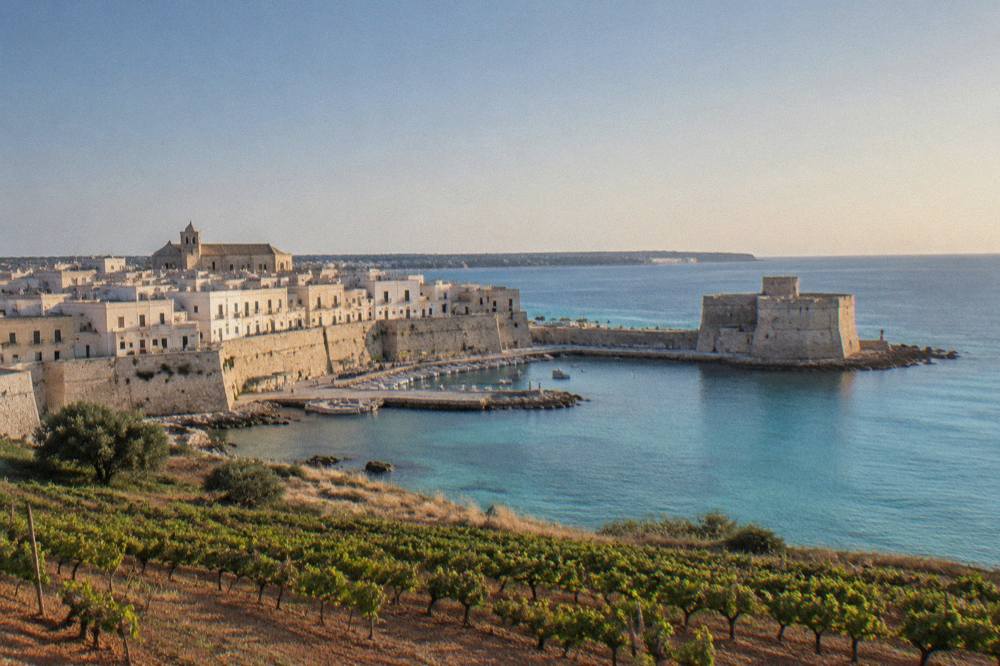
Negroamaro gives a deep, earthy red with a characteristic bitter edge and dark fruit, while Primitivo, the other headline grape of Salento, gives a bigger, jammier, higher-alcohol red centred on the Primitivo di Manduria denomination in the Taranto province portion of Salento. Negroamaro is the grape of Lecce's own province; Primitivo is the neighbour whose heartland lies a drive west of the city.
The practical distinction for a drinker in Lecce is texture and weight. Negroamaro tends toward structure and savoury depth, which is why it carries the Salice Salentino name and much of the everyday drinking of the peninsula. Primitivo, genetically the same variety as California's Zinfandel under an older Italian name, ripens early, accumulates sugar and turns out wines with more obvious sweetness of fruit and more alcohol. Primitivo di Manduria DOC is centred on Manduria, in the province of Taranto but inside the Salento cultural region, and old-vine expressions from that area are noted in the region's quality register as a distinctive category.
Neither grape is a monoculture of style. Both are made as rosato, the pale rosé that Salento drinks by the litre in summer, and both appear in blends. The honest way to learn the difference is side by side, which is exactly what the structured tastings around Lecce set out to do: four-wine flights built around negroamaro, or guided tastings in a 15th-century courtyard in the old town where local bottles are poured with an explanation of what each denomination permits.
| Grape | Style it drives | Home denominations | Character in the glass |
|---|---|---|---|
| Negroamaro | Rosso, rosato | Salice Salentino DOC (Lecce and Brindisi provinces) and other Salento DOCs | Dark fruit, earthy, marked bitter edge |
| Primitivo | Rosso, some sweet styles | Primitivo di Manduria DOC (Taranto province side of Salento) | Jammy fruit, high alcohol, broad body |
A tasting built on the two grapes side by side is the fastest education available in the city, and the roster of experiences based in Lecce includes flights of four local wines in the negroamaro heartland, poured with an explanation of the land. For travellers pairing wine with the sights rather than the cellar, a street food and sightseeing walk of Lecce folds local pours into a route through the old town.
The three experiences above cover the main ways visitors fold wine into a Lecce trip: a guided walk that pairs pours with street food, a day across the Salento towns where the grapes grow, and a craft workshop for the afternoon the cellar is closed. Each is described on the operator's live listing, where prices, ratings and current availability render from verified data.
What Is Salice Salentino DOC And Why Does It Matter Around Lecce?
Salice Salentino DOC is the reference denomination of the Salento peninsula, established in 1976, based on negroamaro, and covering vineyard areas in the provinces of Lecce and Brindisi. Its rosso is Negroamaro-dominant by rule, it also produces rosato and white styles, and it is the name a drinker in Lecce sees most often on a local wine list.
The regional production register describes the denomination as a DOP covering parts of both provinces, with the red built principally on negroamaro and the rulebook permitting a supporting share of other authorised varieties. Recent updates to the disciplinare have moved the minimum share of the principal grape upward in some versions, which is worth knowing only because it signals the direction of travel: the appellation is tightening around its signature grape rather than diluting it.
For a visitor, the denomination is a shorthand for reliability at modest cost. Salice Salentino is the workhorse red of trattorie across Lecce and the peninsula, and its riserva versions and varietal Negroamaro bottlings are the step up. The name itself comes from a small town in the Lecce province interior, Salice Salentino, which sits among the flat, red-soil vineyards that characterise the area between Lecce and Brindisi. That landscape, low training systems and pale soils, is what the region's promotional bodies put at the centre of the Salento story.
| Salice Salentino DOC fact | What the sources say |
|---|---|
| Established | 1976 |
| Principal grape | Negroamaro |
| Territory | Provinces of Lecce and Brindisi |
| Styles | Rosso, rosato, Negroamaro varietal versions, whites |
| Source | Regione Puglia production register |
Where Can You Taste Salento Wine In Lecce Itself?
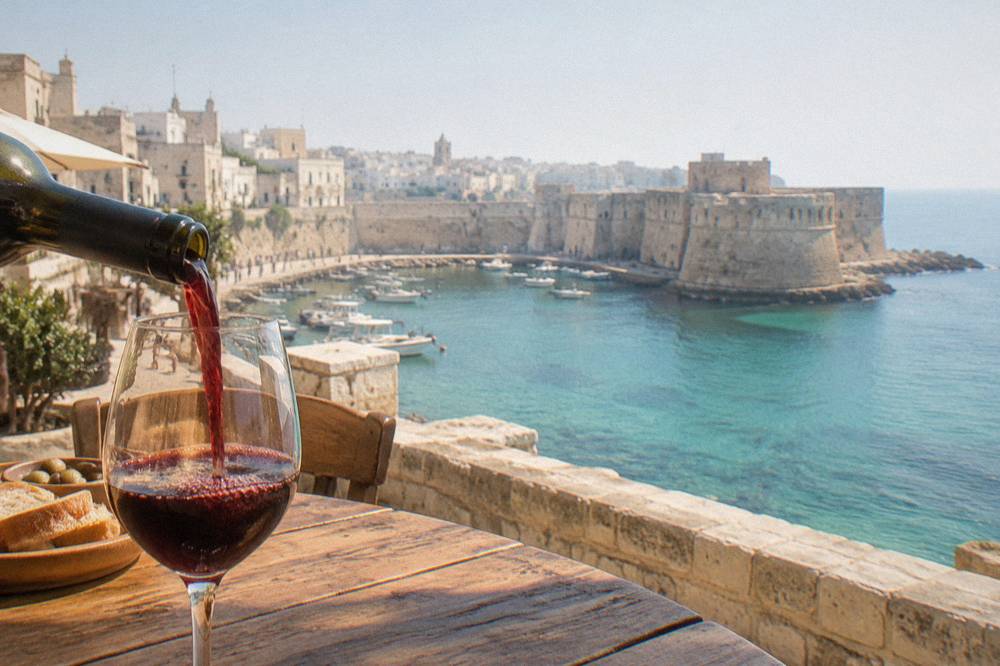
The main tasting options inside Lecce are guided tastings in old-town courtyards, including a 15th-century courtyard pouring traditional local wines, wine-and-food tastings in bars of the historic centre, and cooking classes that pair pasta-making with wine service; the city also has wine bars in the centro storico, though the site names no individual venue beyond the sourced cafés and pasticcerie.
The courtyard format is the distinctive one. Lecce's old town is built of pietra leccese, the soft Miocene limestone that hardens on exposure, and its palazzi hold cool internal courtyards that now host tastings of traditional wines. The operator's listing for the 15th-century courtyard tasting describes a seated flight of local bottles with explanation, and the roster also carries a wine-and-food tasting experience in the old town that combines pours with regional dishes. For visitors who want the wine to arrive with dinner rather than before it, a family-home lunch or dinner serving the typical products of Salento is on the same roster.
Cooking classes are the third route. Several pasta classes in the city serve wine as part of the session, so the pairing lesson comes free with the orecchiette. The street food walks pour local wine between stops, which makes them the most efficient option for a traveller with one evening in the city; the detailed coverage lives in the food tour guide, which sets out the dishes and the drinks of the region side by side.
| Tasting format in Lecce | What it involves | Where it happens |
|---|---|---|
| Courtyard guided tasting | Seated flight of traditional wines with explanation | 15th-century courtyard, old town |
| Wine and food tasting | Local wines poured with regional dishes | Historic centre |
| Street food walk with wine | Pours between food stops on a guided route | Old town streets |
| Cooking class with wine | Pasta-making session with wine service | Family homes and venues in and near the city |
The box above links to the operator's live listing for the street food and sightseeing tour, where the current price, rating and availability render from verified data, with free cancellation and pay-later options.
Which Towns Around Lecce Should A Wine-Focused Day Trip Include?
The towns that anchor a wine day trip from Lecce are Galatina, reached by direct FSE train in about 38 to 55 minutes from about 3 euro; Gallipoli on the Ionian, about 41 minutes by car or by direct FSE train in about 1h18 to 1h43 from about 5 euro; and Manduria, the Primitivo heartland, which lies beyond the verified transport figures in this pack, so visitors should confirm connections locally.
Galatina is the easiest rail outing: a direct FSE train runs from Lecce in under an hour, and the town holds the Basilica of Santa Caterina d'Alessandria, free to enter with split morning and afternoon hours, plus the pasticceria that claims the invention of the pasticciotto, a claim the shop itself makes and historians dispute. Gallipoli combines a fishing-vaulted old town on a limestone island joined to the mainland by a bridge with the Ionian beaches south of the centre, and the town sits inside Salento's wine country. Otranto, on the Adriatic side, is reached by FSE train with a change at Maglie in about 1h33 to 2 hours, and its cathedral floor mosaic of 1163 to 1165 by the priest Pantaleone is the peninsula's single most famous interior after its beaches.
A structured way to cover several of these without a car is the private four-town Salento tour on the roster, which takes in Otranto, Leuca, Gallipoli and Galatina in one loop from Lecce. Independent travellers should read the Salento itinerary guide and the getting around Lecce guide before committing to trains, since FSE timetables are thin on some branches and the summer Salento in Bus network, covered in its own Salento in Bus guide, ran only 13 June to 13 September in 2026.
| Destination | From Lecce by train | From Lecce by car | Wine relevance |
|---|---|---|---|
| Galatina | Direct FSE, about 38 to 55 min, from about 3 euro | About 29 min | Interior Salento, pasticciotto claim |
| Gallipoli | Direct FSE, about 1h18 to 1h43, from about 5 euro | About 41 min | Ionian coast, local lists |
| Otranto | FSE with change at Maglie, about 1h33 to 2h | About 44 min | Adriatic coast, day-trip base |
| Manduria | Confirm locally | Beyond verified figures | Primitivo di Manduria heartland |
What Food From Lecce Pairs With Negroamaro?
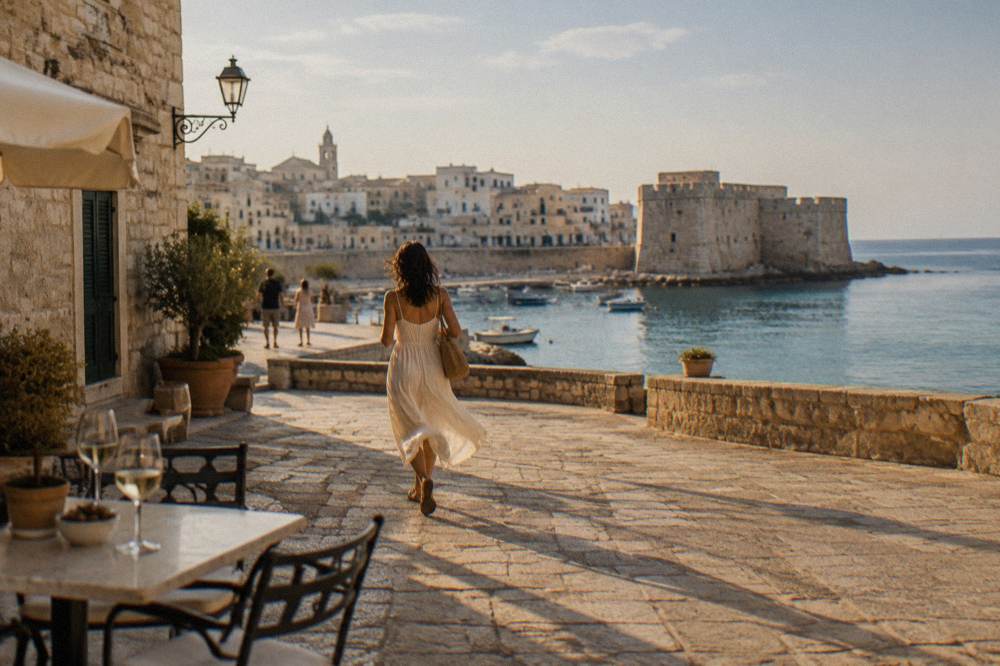
The classic Salento pairings for negroamaro are the region's own dishes: ciceri e tria, chickpeas with partly fried pasta; grilled and stewed meats; aged cheeses; and the tomato-heavy cooking of the peninsula, while Primitivo suits the richer meat dishes and pasticciotto stays with coffee, not wine, and a rustico or frisa with negroamaro is the everyday local combination.
The logic is straightforward. Negroamaro's bitter, earthy edge wants food with fat and salt. The frisa, the hard twice-baked ring soaked in water and dressed with tomato, olive oil and oregano, is the lunch that the region's rosato was invented for; the fuller coverage is in the frisa and puccia guide. Puccia, the pocket of bread filled with whatever the kitchen has, does the same job for a walk-and-eat afternoon. The rustico leccese, the warm disc of puff pastry filled with bechamel, tomato and mozzarella, is more a coffee-time snack than a wine pairing, but the city's bars serve both at once. The broader mapping of dishes to the region sits in the Puglia food guide.
For structure, the guided experiences do the pairing work for the visitor. The street food tours of the old town pour local wine between the savoury stops, and the wine-and-food tastings in the historic centre are built as a matched progression. The cooking classes finish with a shared meal where the wine arrives with the pasta the class has just made, which is as close as a short trip gets to how Salento households actually drink negroamaro.
| Salento dish | What it is | Natural pour |
|---|---|---|
| Ciceri e tria | Chickpeas with fresh pasta, part of it fried | Negroamaro rosso |
| Frisa | Twice-baked bread ring, soaked and dressed | Negroamaro rosato |
| Puccia | Bread pocket with savoury fillings | Rosato or light rosso |
| Grilled meat | Lamb and beef of the peninsula | Negroamaro or Primitivo |
| Pasticciotto | Custard tart in shortcrust | Coffee, not wine |
The four-wine tasting above is the roster's dedicated negroamaro flight: a guided tasting of four wines from the grape's home territory, with figures rendering from the listing.
When Is The Best Season For Wine Travel Around Lecce?
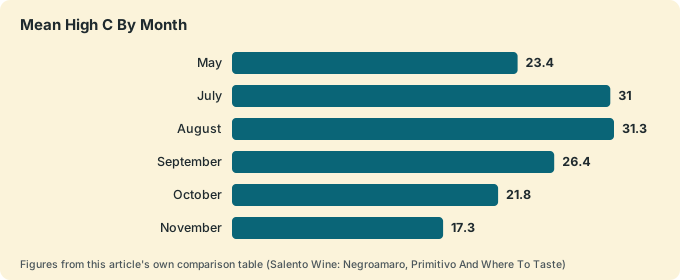
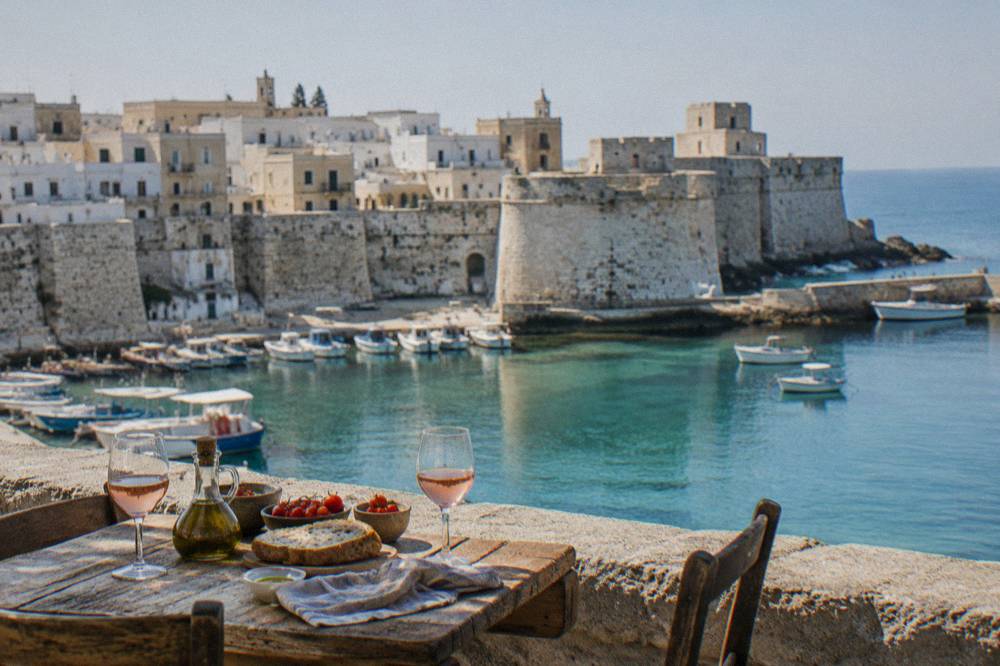
The most comfortable months for wine-focused travel around Lecce are May, September and October, when the ERA5 reanalysis for 1991 to 2020 shows mean daily highs of about 23 C in May, 26 C in September and 22 C in October, with September rainfall at about 59 mm against November's 93 mm, the highest monthly total of the year; July and August, with mean highs of about 31 C, are the season of rosato and beaches rather than cellar visiting.
The numbers come from the ERA5 reanalysis for the 1991 to 2020 period, a modelled grid cell near Lecce rather than a station record, and they describe a classic Mediterranean pattern: a dry trough from June through August, when rainfall drops to between 15 and 18 mm per month, and a wet autumn peak in November. Harvest in Salento therefore runs early, with negroamaro and Primitivo picked from late August into September, which makes September the month when the countryside is at its most worked-over and the weather still cooperates. October brings the new wine and cooler walks through the old town. The fuller month-by-month picture, including what the sea temperature does for a combined wine-and-beach trip, is in the Lecce weather guide and the best time to visit guide.
Summer travel has its own logic. The tasting rooms of the old town run through the season, the evening is the natural time for them, and the coast is close: San Cataldo, the nearest beach, is about 13 km from the city, reachable on SGM line 32. August layers the Festa dei Santi Patroni in Lecce, held 23 to 26 August in 2026, and the Notte della Taranta Concertone at Melpignano, held 22 August 2026 in its 29th edition, over the wine country, which is a different trip but a memorable one.
| Month | Mean high C | Rain mm | Wine travel read |
|---|---|---|---|
| May | 23.4 | 39.9 | Comfortable, green vineyards |
| July | 31.0 | 15.3 | Hot, rosato season, beach days |
| August | 31.3 | 18.1 | Harvest begins, festivals |
| September | 26.4 | 58.9 | Harvest, warm sea, best balance |
| October | 21.8 | 91.3 | New wine, cooler town walks |
| November | 17.3 | 93.7 | Highest rain of the year |
Can You Visit Masserie And Cellar Doors Near Lecce?
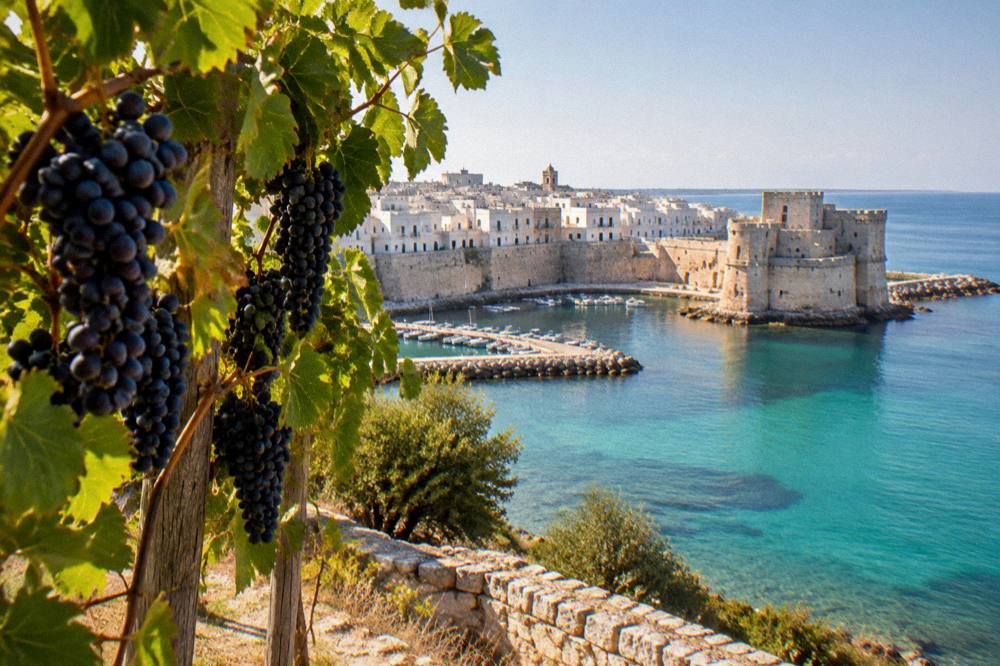
Yes, masseria visits and cellar-door tastings run in the countryside around Lecce, and the roster carries a masseria tour with cheese and burrata tasting reached from the city, but the site's sources do not verify individual masseria names, prices or amenities, so travellers should confirm the specific estate and what the visit includes at booking.
The masseria is the fortified farmhouse of the Salento plain, and the region's promotional bodies list many across the province working as wineries, olive estates and guesthouses. What the verified pack supports is the format rather than a named list: a tour of a working masseria with a tasting of its cheeses, including burrata, bookable from Lecce, and the network of country roads that makes the estates reachable by car from the city. The car rental and driving guide covers the practicalities, including the ZTL camera zone of the historic centre, and visitors staying in town without a car should read the where to stay in Lecce guide for locations that make a rural day trip easy.
The honest caution is that masserie vary enormously, from working dairies with a tasting room to full agriturismo hotels, and prices and opening arrangements are set estate by estate. The operator listings that render through this site's product blocks state exactly what each included visit covers, which is why the masseria tour above is the safest single booking for a traveller who wants the countryside without research burden. Independent visitors should contact estates directly.
How Do You Plan A Wine Trip To Lecce Without A Car?
A car-free wine trip to Lecce works because the tastings are inside the old town, the FSE railway reaches Galatina in under an hour and Gallipoli in about an hour and a half, and the summer Salento in Bus network, which ran 13 June to 13 September in 2026 with fares from 1.10 to 5 euro, links Lecce to the coastal towns, while the airport gateway is Brindisi, about 40 minutes away by bus for 6.50 euro one way.
The rail facts are the backbone. FSE, Ferrovie del Sud Est, runs the peninsula's local network from Lecce station: direct trains to Galatina from about 3 euro, direct trains to Gallipoli from about 5 euro, and a change at Maglie for Otranto. Trenitalia handles the long legs: Lecce to Brindisi in about 18 to 24 minutes from about 3.40 euro, and direct trains to Rome in about six hours. Brindisi airport, the nearest commercial airport since Lecce has none, connects to Lecce by airport bus in about 40 minutes for 6.50 euro one way, per the operator's own page, and the full arrival routes are laid out in the Brindisi airport to Lecce guide and the how to get to Lecce guide.
Inside the city, everything in this guide's tasting section is walkable. The centro storico is compact, the question of its walkability is covered in detail elsewhere on the site, and the station sits a short distance from the walls. One caution carried over from the transport facts: the ZTL cameras police the historic centre, with reported weekday restrictions around the early afternoon and overnight, and hours are reported rather than guaranteed, so anyone with a rental car should ask their accommodation about plate registration. The answers to common trip-planning questions, including how many days are needed in Salento, round out the planning.
The class above pairs the region's signature pasta with wine service, a format that works on a car-free itinerary because it runs in the city itself.
The street food and sightseeing tour above is the featured pick for this page: a guided walk through Lecce with local wine poured between the food stops, bookable on the operator's live listing with free cancellation and pay-later options.
Common Questions About Salento Wine And Lecce
What does negroamaro taste like?
Negroamaro gives dark fruit, an earthy character and a marked bitter edge, a reading built into the grape's name. In Salice Salentino DOC it is the principal grape of the rosso, and it also makes the pale rosato that Salento drinks through summer.
Is Primitivo the same grape as Zinfandel?
Primitivo and Zinfandel are the same variety under different names, and Primitivo's Italian heartland is Manduria in the Salento region, where Primitivo di Manduria DOC is centred. The grape ripens early and produces big, jammy, high-alcohol reds.
Can you taste wine in Lecce without a car?
Yes. Guided tastings run in the old town, including a 15th-century courtyard format and wine-and-food tastings in the historic centre, and the FSE railway reaches Galatina and Gallipoli for vineyard-country day trips. The masserie of the countryside are the one category that usually needs a car or a booked tour.
What is Salice Salentino DOC?
Salice Salentino DOC is the reference denomination of the peninsula, established in 1976, based on negroamaro and covering vineyard areas in the provinces of Lecce and Brindisi. It produces rosso, rosato and white styles, with the red built principally on negroamaro.
When is grape harvest in Salento?
Harvest in Salento runs from late August into September, which makes September the month when the vineyards are busiest and the weather is still warm, with a mean daily high of about 26 C in the ERA5 reanalysis for 1991 to 2020. October brings cooler walks and the first new wine.
Is Salento wine expensive?
Everyday Salice Salentino and negroamaro bottles are among the more affordable denominations in Italy, and the region's promotional bodies position it as value-led. Tastings and tours around Lecce render their prices from the operator listings on this site, and the individual masserie set their own cellar-door prices, which should be confirmed at booking.