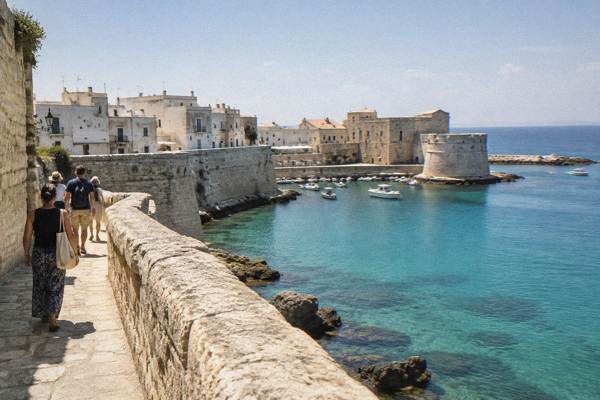
Otranto From Lecce: Mosaic, Castle And Baia Dei Turchi
Otranto is the Adriatic's answer to Lecce's baroque interior: a walled town on the easternmost point of Italy, about 45 minutes from Lecce by car, holding a floor mosaic laid between 1163 and 1165, an Aragonese castle and a pinewood beach. Here is how the day trip works, with the verified times, tickets and access rules.
Short answer
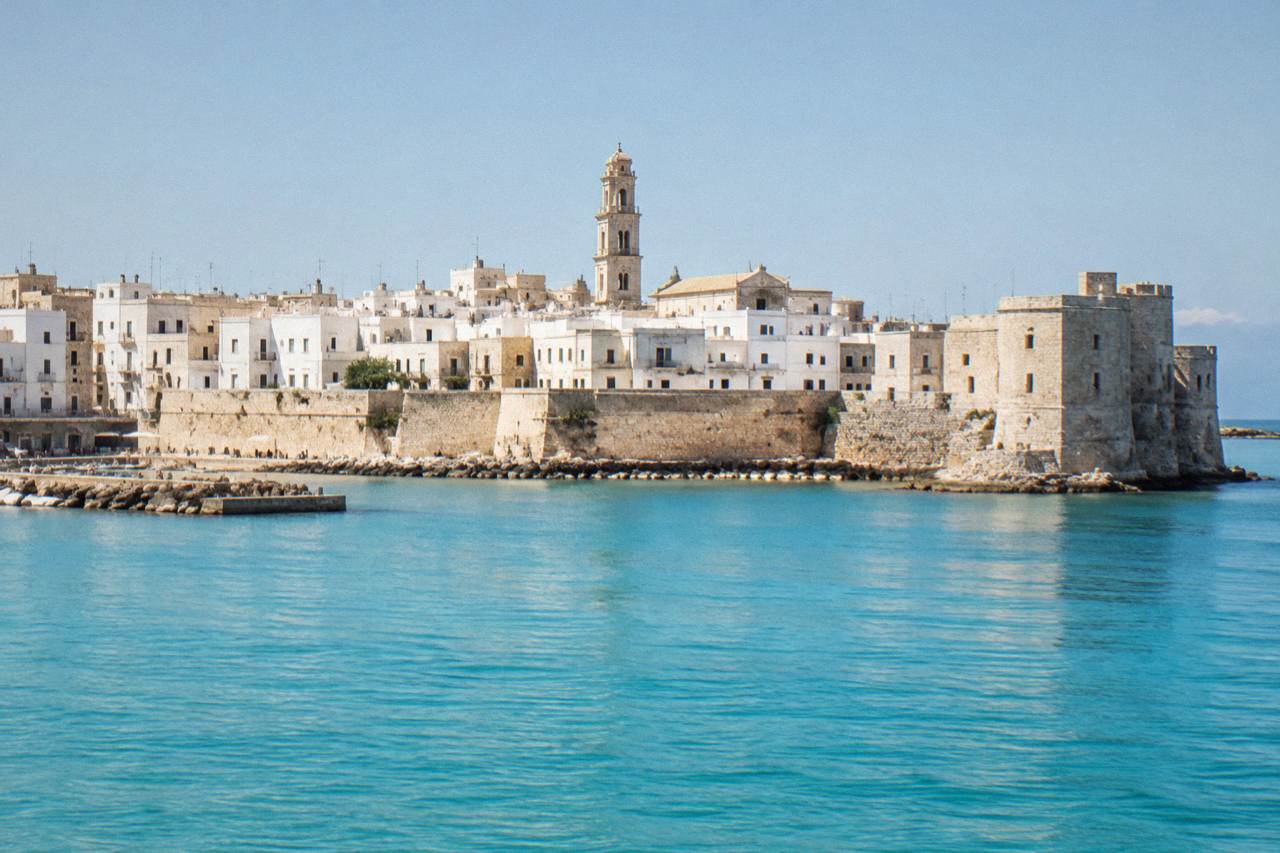
Otranto sits 46.7 km from Lecce, about 44 minutes by car, or roughly 1h33 to 2 hours by FSE train with a change at Maglie. The cathedral is free for independent visitors, the floor mosaic dates from 1163 to 1165, and Baia dei Turchi is reached on foot from SP366 parking through a protected pine forest.
Otranto is the easternmost town of any size in Italy, perched on the Adriatic at the mouth of the Salento peninsula, and it is the single most natural day trip out of Lecce: 46.7 km of road, about 44 minutes of free-flow driving, or a slow rattling FSE train ride that changes at Maglie. Lecce itself, let's be clear, is the baroque capital of Salento, a few kilometres inland, built in honey-coloured pietra leccese limestone, and it has no beach of its own. Otranto is where that inland world meets the cliffs. The Lecce Travel Guide desk lays out below every verified time, ticket and access rule for the trip, from the cathedral's 1163 mosaic floor to the parking rules at Baia dei Turchi, and the things no source has confirmed, so nothing here is guesswork.
How Do You Get From Lecce To Otranto?
Otranto is 46.7 km from Lecce by road, about a 44-minute drive in free-flow traffic from Piazza Sant'Oronzo, and there is no direct train: FSE services change at Maglie or Zollino, with a total journey of about 1h33 to over 2 hours from roughly 4 to 5 euro. Direct buses run the route in about 55 minutes to 1h32 for roughly 2 to 6 euro, and the summer-only Salento in Bus line 101 also links Lecce, Torre dell'Orso and Otranto.
The train is the cheap and scenic option, but it is not a fast one. The FSE network, Ferrovie del Sud Est, runs Lecce to Maglie, where a connecting branch line covers the final half hour into Otranto, and the whole thing costs from about 4 to 5 euro. Timetables are seasonal and some segments have run as rail replacement in the past, so the FSE site or the 800 07 90 90 0 number is the place to confirm the day's actual service. Buses, including Cotrap services on some schedules, are direct and can be quicker than the train. In summer 2026 the Salento in Bus network ran from 13 June to 13 September, with line 101 serving the Lecce to Otranto corridor, fares from 1.10 to 5 euro and a 1 euro surcharge if bought on board; the 2027 dates had not been announced.
| Option | Time | Cost | Notes |
|---|---|---|---|
| Car (free-flow) | about 44 min | fuel and parking | 46.7 km from Piazza Sant'Oronzo |
| FSE train | about 1h33 to 2h+ | from about 4-5 euro | change at Maglie or Zollino |
| Direct bus | about 55 min to 1h32 | about 2-6 euro | schedules vary by season |
| Salento in Bus line 101 | seasonal | 1.10-5 euro | ran 13 June to 13 Sept 2026 |
Driving gives the most flexibility for the coast stops, and the SS16 and provincial roads carry the route. Parking in Otranto itself fills quickly in July and August, and the lido and town lots charge separately; no verified price list for town parking exists, so confirm on arrival. If you are stringing several Salento towns together, compare the options in the fuller day trips from Lecce overview, which also covers the logistics of the two-coast loop.
Why Does Otranto Cathedral Draw People Across The Peninsula?
The cathedral's nave floor carries a mosaic signed and dated by the priest Pantaleone, laid between 1163 and 1165, a sprawling medieval image-world of Alexander the Great, the months, the zodiac and a tree of life growing from two elephants. Entry is free for independent visitors, though since 1 March 2026 groups and visitors with a licensed guide pay 2 euro per person, booked through the mosaic site.
The Diocese of Otranto's own notice sets the current access rules: free individual entry, the 2 euro guided-group charge, a Museo Diocesano at 3 euro, San Pietro at 3 euro, and a combined cathedral, museum and San Pietro ticket at 5 euro. The mosaic itself is the reason guidebooks put Otranto on the map. It reads like a medieval encyclopedia in stone tesserae, with figures from legend and scripture interwoven across the whole nave, and it survived the historic sack of the town, the darkest episode in Salento's remembered past, when the defenders were killed near where the chapel of the martyrs now stands inside the cathedral. The chapel holds the relics of those martyrs, and it is the second thing every visitor walks toward after the floor.
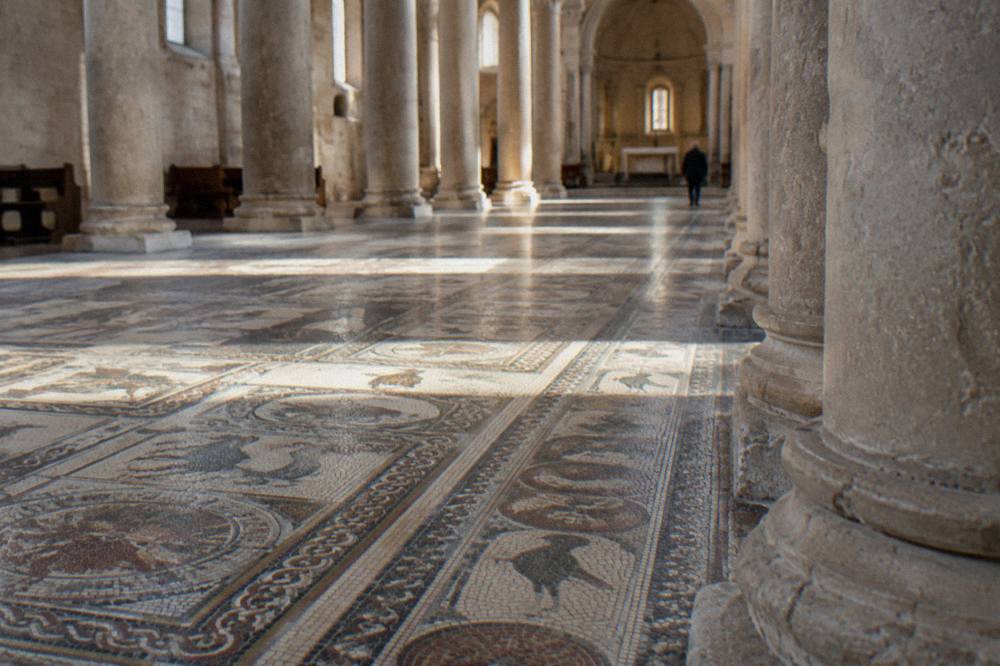
Practical points matter here. The cathedral is a working church: shoulders and knees covered, and tourist visits pause during services. Hours vary by season, with longer summer openings, and the diocesan site is the authority on the day's schedule. None of that dampens the effect. Lecce's own churches, covered on the Lecce churches ticket guide, are exercises in baroque exuberance; Otranto's floor is earlier and completely different in spirit, flat, strange and narrative.
The comparison is the real reason the pairing works. A morning under Lecce's Santa Croce facades and an afternoon over Pantaleone's mosaic gives you two poles of Salento art in one day. The desk-level verdict in Lecce or Otranto: which suits you goes deeper, but the short version is that Lecce is architecture you look up at and Otranto is art you stand on.
What Is There To See At The Castello Aragonese?
The Castello Aragonese sits at the edge of the old town, a fortified Aragonese and later Habsburg structure whose ticket runs seasonally from about 6 euro in low season to about 12 euro in high season, with reductions and an extra charge of about 3 to 4 euro for the underground route. Opening times stretch late into summer evenings when shows and events fill the courtyard.
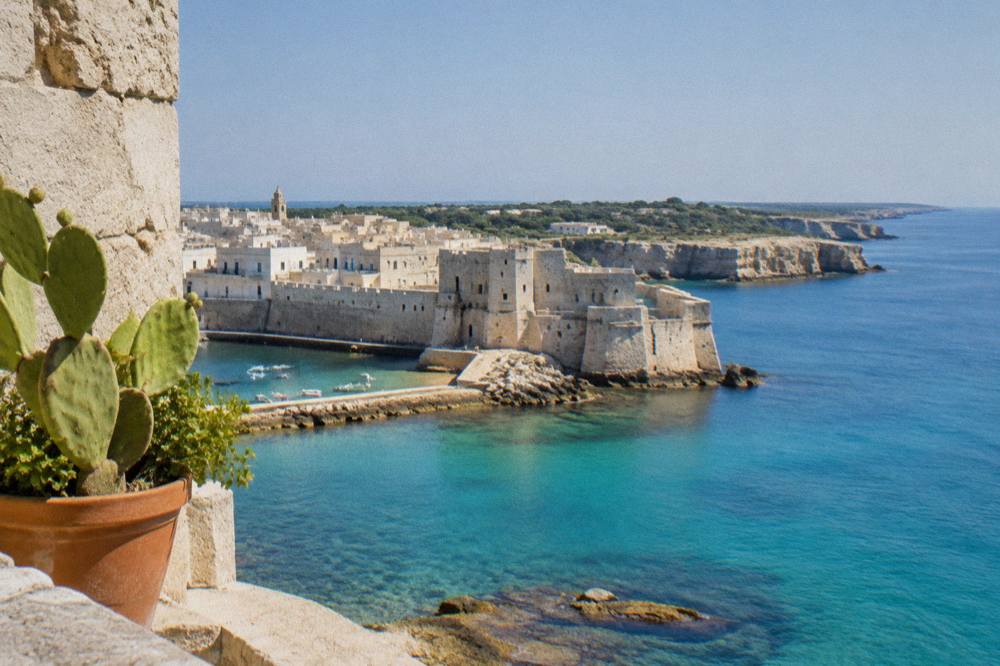
The comune di Otranto's own service page sets those seasonal tariffs, and they genuinely move: a winter visit and an August visit are different prices, because the castle doubles as an event venue in summer, sometimes staying open to midnight during shows. The walls and bastions give views over the strait of Otranto toward Albania, which on clear days is the closest you come to seeing another country from an Italian beach town. What the interior contains beyond the standard route varies with the exhibition calendar, and no verified current listing exists, so treat the castle as walls, views and rotating shows rather than a fixed collection.
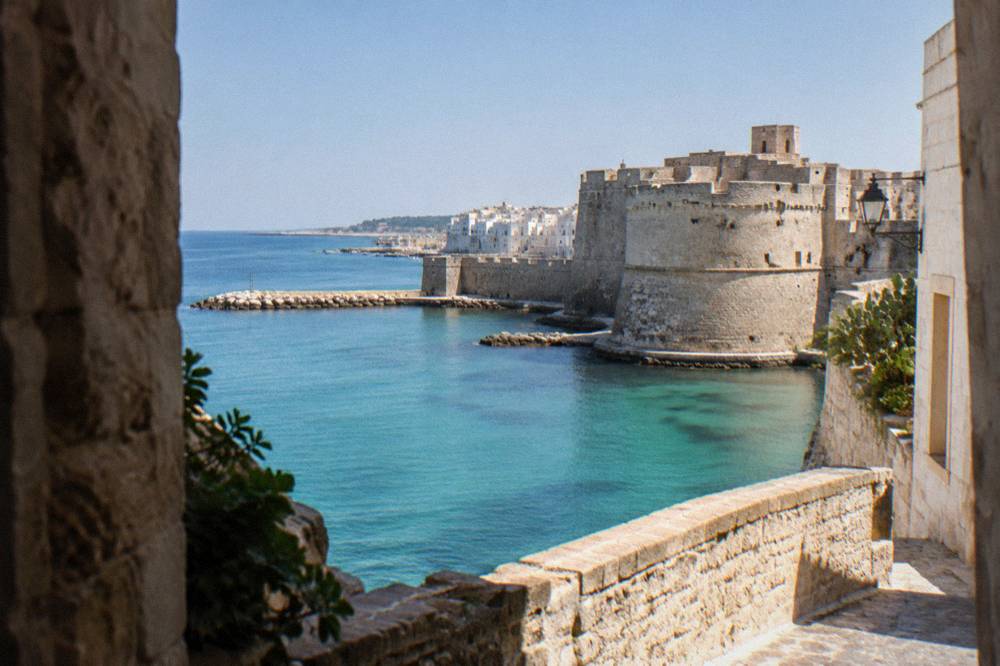
Between the castle and the cathedral, the old town itself is small and walkable in an hour: lanes of whitewashed houses, workshops, and the seafront ramparts facing the port. If you want the structure of a guided day rather than self-direction, there are organized options that bundle Otranto with the rest of the peninsula, and the van tour below runs a loop taking in Castro, Leuca and Gallipoli after an Otranto stop.
Where Is Baia Dei Turchi And How Do You Reach It?
Baia dei Turchi is a protected sandy cove in pine forest about 5 km north of Otranto: cars park along the SP366 provincial road, paying roughly 4 to 8 euro a day in high season, and visitors then walk on a path through the pinewood to the sand. Vehicle access to the beach itself is restricted, and in summer a shuttle runs from the parking areas.
The pine forest is the point. This is not a lido strip but a shielded stretch of coast where the trees come almost down to the dunes, and the access rules exist to keep it that way. The name, Bay of the Turks, recalls the Ottoman landing that led to the siege and sack of the town. Lido concessions operate in the peak season on parts of the Otranto coast at reported 2026 prices of roughly 20 to 50 euro for an umbrella and two sunbeds, per the Corriere Salentino and Udicon consumer surveys, while free stretches of sand remain available; prices shift year to year. The walk-in format means the beach suits you better with light bags and proper shoes rather than flip-flops.
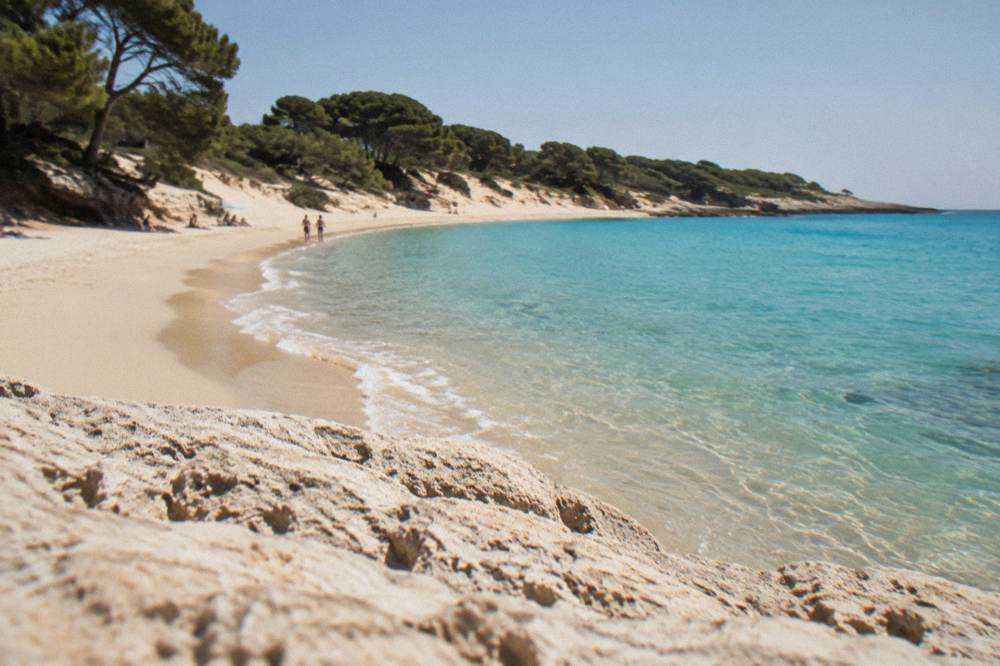
Getting there without a car is the weak link. Salento in Bus line 101 served the Otranto corridor in summer 2026 and stops in the area, but service frequency outside the 13 June to 13 September window drops away, and the 2027 schedule had not been announced. Off season, the realistic choices are a car, a bicycle with ambition, or a taxi booked locally, for which no verified fare exists.
What Are The Sea Caves Like South Of Otranto?
The coast south of Otranto is low limestone cliff threaded with sea caves, best known at Castro, where Grotta Zinzulusa runs guided visits year round at 7 euro full and 4 euro reduced; from Otranto itself, boat and canoe trips explore the caves and coves of the marine protected stretch, with swimming stops and, on some departures, a night-time slot.
Castro is 47.4 km and about 48 minutes from Lecce, which makes it a natural second stop if you have wheels, or the next stop on a loop tour. Grotta Zinzulusa's own site confirms the year-round guided visits and the 7 and 4 euro tickets; its hours shift through the seasons, shorter in winter, longer into the evening in July and August. The cave is a karst hall of stalactites and, in its inner pool, pale cave shrimp and other relict fauna, reached on a walkway above the water.
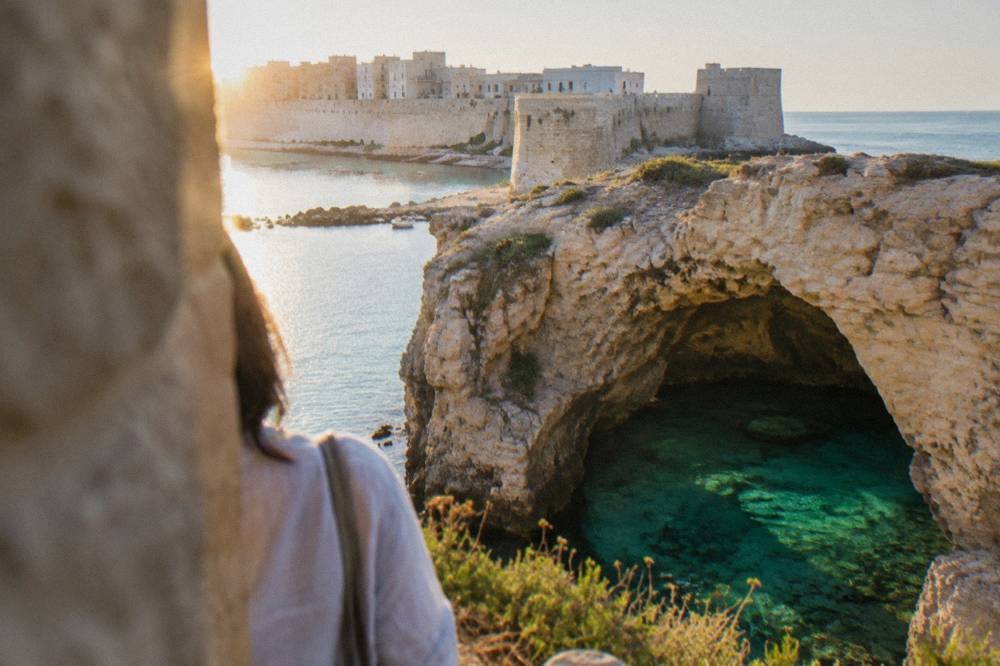
From the water side, the canoe trip below is the site's featured way into this coast: it paddles the cave mouths and coves with a guide, gear included, and has a night option. Sea temperature shapes the experience: per seatemperature.org data, the Adriatic here runs about 22.5 C in June, 25 to 27 C at the August peak, and 20 to 22 C in October, dropping to about 14 C by February. A May or October paddle is perfectly possible with a wetsuit mindset; a July one is bathtub water.
For the pull of the whole southern coast in one day, the Santa Maria di Leuca guide covers the tip of the peninsula, and the Castro guide goes deeper on Grotta Zinzulusa and the clifftop old town.
How Long Should An Otranto Day Trip From Lecce Take?
A single day is enough for Otranto town plus either Baia dei Turchi or one coastal stop, given the roughly 44-minute drive or the 1h33 to 2-hour train each way; two days are needed if you want the cathedral and castle at a slow pace plus the caves south of town and a swim, because the train change at Maglie eats the margin that a car preserves.
The arithmetic is honest about the mode. A driver leaving Lecce at 9:00 can be in Otranto's cathedral before 10:00, on the beach after lunch, and back for dinner, with detours. A train traveller does the same town-only day comfortably but should not stack Castro or Leuca onto it: the change at Maglie plus the connection times mean every extra stop costs disproportionate hours. The sweet spot for rail-based travellers is Otranto plus Baia dei Turchi on foot in high summer when the shuttle runs, or Otranto town alone off season with a long lunch.
| Trip shape | Feasible by car | Feasible by train or bus | What it covers |
|---|---|---|---|
| Otranto town only | half day | full day | Cathedral, castle, old town |
| Otranto plus Baia dei Turchi | full day | full day, summer | Above plus beach |
| Otranto plus Castro caves | full day | tight, not advised | Above plus Grotta Zinzulusa |
| Otranto, Castro, Leuca, Gallipoli loop | full day | no | The van tour circuit |
For a wider Salento plan built around realistic transport days, the Salento itinerary guide sequences the whole peninsula, and the Torre dell'Orso day trip guide covers the beach town that line 101 also serves between Lecce and Otranto.
What Food Should You Look For In Otranto?
Otranto's kitchen is Salento's with a fish emphasis: raw sea bass and octopus starters, orechiette and the chickpea-and-fried-pasta dish ciceri e tria on the pasta side, and the classic Salento sweets, pasticciotto and the iced espresso with almond milk that Lecce's Quarta Caffe is credited with inventing in the 1940s and 1950s. No verified restaurant list or price exists for Otranto: choose by the day's catch on display.
The honest position on restaurants is that no source in the verified pack ranks or prices venues in Otranto, so this desk prints none. What can be said is what the regional plate looks like. Salento cooking runs on legumes, greens, durum pasta and olive oil inland, and on Adriatic catch along this coast, so an Otranto lunch leans to grilled or raw fish, mussels and the local sea urchin when in season. The pasticciotto, custard and sour cherry in shortcrust, is claimed as a 1745 invention by Pasticceria Ascalone in Galatina, a claim historians dispute and which belongs to Galatina, not Lecce; the full story sits in the pasticciotto guide.
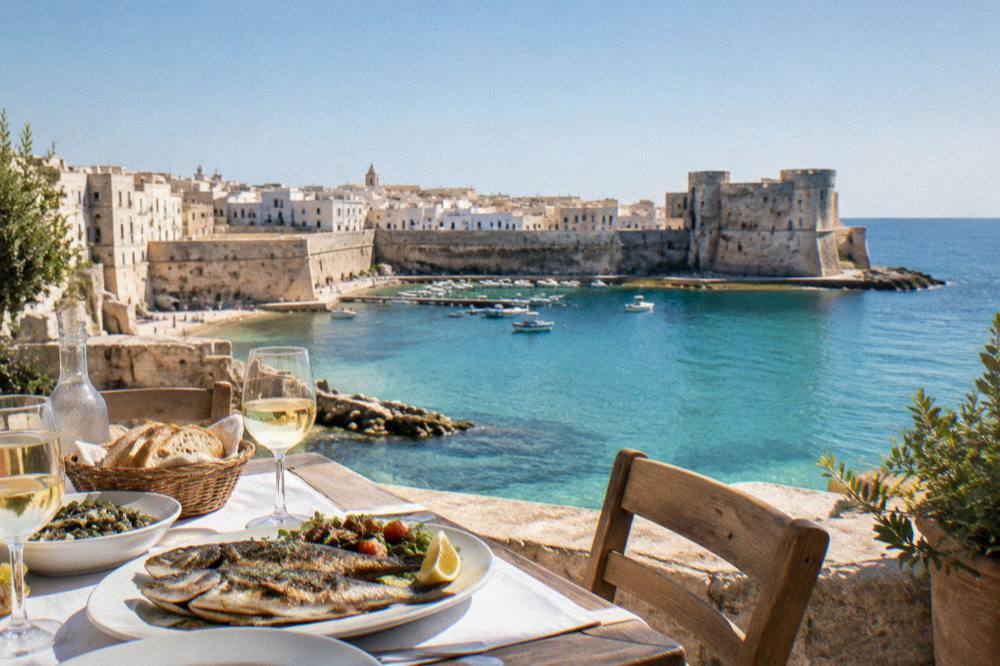
Wine follows the same regional logic. Negroamaro and Primitivo di Manduria are the anchors, and Salice Salentino, the Negroamaro-based DOC established in 1976 across the Lecce and Brindisi provinces, is the local red by the glass; the Salento wine guide maps it. A tasting-room stop in Galatina or a winery visit pairs naturally with the return leg, and the e-bike tour below builds exactly that kind of day out of Lecce toward Gallipoli.
What Else Combines Well With Otranto From Lecce?
Otranto pairs best with Castro for the caves, with Galatina for the free-entry Basilica of Santa Caterina d'Alessandria on the return inland leg, or with Torre dell'Orso and the Grotta della Poesia if you go north first: Galatina is 25.7 km and about 29 minutes from Lecce, Castro 47.4 km and about 48 minutes, and Torre dell'Orso 27.9 km and about 32 minutes, all by car in free-flow traffic.
Each pairing makes a different day. North first means the Adriatic beach belt: Torre dell'Orso's sandy bay, then the Grotta della Poesia at Roca Vecchia, where since summer 2026 bathing and diving are banned and non-residents of Melendugno paid a 5 euro ticket in the 2026 season, with viewings from paths only; the 2027 rules are not published. South first means cliffs: Castro's cave, then the sweep down toward Leuca. Inland on the way home means Galatina, whose basilica is free to enter with split morning and afternoon hours, a fresco cycle that rivals anything in the province, and the pastry shop claiming the pasticciotto.
| Stop | From Lecce | From Otranto logic | Known cost |
|---|---|---|---|
| Castro, Grotta Zinzulusa | 47.4 km, about 48 min | 20 min further south | 7 / 4 euro, guided |
| Galatina, Basilica | 25.7 km, about 29 min | inland return leg | free entry |
| Torre dell'Orso | 27.9 km, about 32 min | north-first route | lidos 25-60 euro 2026 |
| Grotta della Poesia | near Roca Vecchia | north-first route | 5 euro 2026, no swimming |
| Gallipoli | 41.0 km, about 41 min | western finish | castle price not published |
The deeper comparisons, if you are choosing bases rather than day trips, sit in the Gallipoli or Otranto comparison and the Gallipoli day trip guide. For a full second day on this coast, the Grotta della Poesia guide carries the current access rules in detail.
When Is The Best Time Of Year For The Otranto Day Trip?
Late May, June and September are the sweet spots: the ERA5 reanalysis 1991-2020 for the Lecce area shows mean highs of about 23 C in May, 28 C in June and 26 C in September against 31 C in July and August, and rainfall of 40 to 59 mm in those shoulder months versus the July low of 15.3 mm and the November peak of 93.7 mm, with sea temperatures of about 22 C in June and 20 to 22 C in October.
Those numbers describe the Lecce grid cell, and Otranto's coast runs a degree or so milder under sea breeze, but the shape holds. August is when Salento compresses its whole year of crowds into six weeks, when lido prices peak, when the Notte della Taranta Concertone at Melpignano, held on 22 August 2026 in its 29th edition, and the Lecce patronal feast of Santi Patroni, 23 to 26 August in 2026, fill the roads, and when parking at Baia dei Turchi becomes a competitive sport. October flips the region back to local pace: the sea is still swimmable at 20 to 22 C, the cathedral queue is gone, and the winter hours of the coastal sights begin.
Common Questions About Otranto From Lecce
How far is Otranto from Lecce?
Otranto is 46.7 km from Piazza Sant'Oronzo in Lecce by road, about 44 minutes of free-flow driving. By FSE train with a change at Maglie the journey runs about 1h33 to over 2 hours, and direct buses take about 55 minutes to 1h32.
Is Otranto Cathedral free to visit?
Entry is free for independent visitors. Since 1 March 2026, groups and visitors with a licensed guide pay 2 euro per person, with the Museo Diocesano at 3 euro, San Pietro at 3 euro and a combined ticket at 5 euro, per the Diocese of Otranto.
Can you get to Otranto from Lecce without a car?
Yes. FSE trains run with a change at Maglie or Zollino from about 4 to 5 euro, direct buses cover the route in about an hour, and the summer Salento in Bus line 101 served the corridor from 13 June to 13 September 2026. Off season, check the FSE and operator schedules before committing.
How do you get to Baia dei Turchi?
Park on the SP366 provincial road north of Otranto, roughly 4 to 8 euro a day in high season, then walk 10 to 15 minutes through the protected pine forest to the sand. Vehicle access to the beach itself is restricted and a shuttle runs from the lots in summer.
Is one day enough for Otranto?
One day covers the cathedral mosaic, the castle and the old town comfortably, plus either Baia dei Turchi or one coastal stop if you drive. Add a second day if you want the caves south of town or a slower pace arriving by train.
What is the best month to visit Otranto?
Late May, June and September balance warmth and space: mean highs of 23 to 28 C and moderate rainfall per the ERA5 reanalysis 1991-2020, with sea temperatures around 22 C in June and 20 to 22 C in October. August is the busiest and priciest month on the Salento coast.
Whichever way you build the day, the pairing is the point: Lecce's limestone theatrics in the morning, Pantaleone's mosaic underfoot in the afternoon, and the pine shade at Baia dei Turchi in between, all inside one honest day's radius of the baroque capital.