Gallipoli From Lecce: The Island Old Town
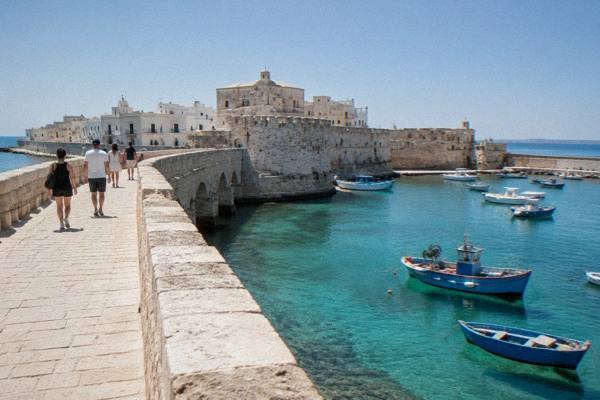
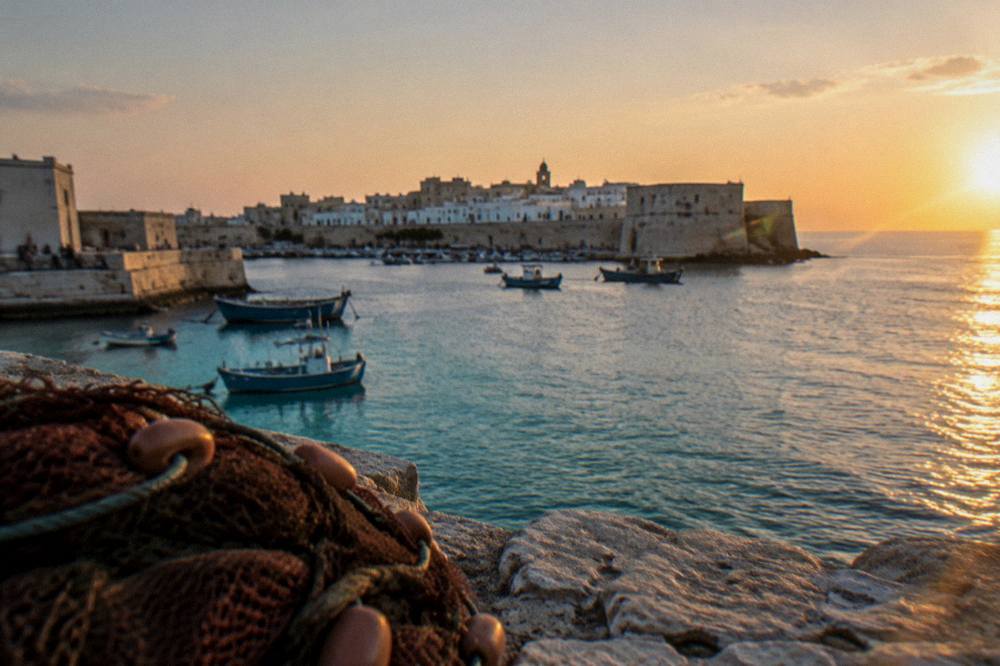
Gallipoli sits on its own small limestone island off the Ionian coast, about 41 km west of Lecce, joined to the modern town by a bridge. Here is how the day trip works: trains, buses, drive times, what the old town holds, and what the sources actually say about tickets and seasons.
Short answer
Gallipoli is about 41 km from Lecce: roughly 41 minutes by car, or a direct FSE train of about 1h18 to 1h43. The old town stands on a limestone island linked by a bridge. The Castello di Gallipoli ticket price was not published in the sources: confirm locally.
Gallipoli is the Ionian counterpart to Lecce's inland baroque: a fishing and olive-oil town on a small limestone island, joined to the mainland and the modern new town by a bridge, about 41 km west of Lecce in Puglia, southern Italy. Lecce itself is the baroque capital of Salento, a few kilometres inland from the Adriatic, so the trip to Gallipoli is also the quickest way to put the sea into a Lecce-based holiday. This guide lays out the verified transport options, the island's sights, the beaches just south of the centre, and the combinations that make sense if Salento is your base for longer than a weekend.
How Do You Get From Lecce To Gallipoli?
Gallipoli lies about 41 km west of Lecce, and the pack gives three ways to close the gap: driving takes about 41 minutes, the direct FSE regional train takes about 1h18 to 1h43 from about 5 euro, and direct buses take roughly 50 minutes to 1h05 from about 1 to 5 euro. The drive time is a free-flow figure computed from Piazza Sant'Oronzo, so add margin in July and August, when the coastal roads fill up from late morning.
The train is the option the sources support most cleanly. Ferrovie del Sud Est (FSE) runs direct regional trains from Lecce to Gallipoli, typically via Zollino, with journeys of about 1h18 at the fastest and about 1h43 on the more common pattern, fares from about 5 euro. FSE tariffs in 2026 scale by distance, from 1.30 euro for a 1 to 10 km hop up to 5.40 euro for 51 to 60 km. Timetables are seasonal and the live schedule lives on the operator's own site; check the day before you travel, because some segments run as rail replacement at times and the pack does not say which.
| Option from Lecce | Time | Fare | Notes |
|---|---|---|---|
| Car | about 41 min | not published | free-flow, 41.0 km from Piazza Sant'Oronzo |
| FSE train, direct | about 1h18 to 1h43 | from about 5 euro | via Zollino; seasonal timetable |
| Direct bus | about 50 min to 1h05 | about 1 to 5 euro | operators vary; frequency is seasonal |
| Salento in Bus line 104 | seasonal | 1.10 to 5 euro | summer only, 13 June to 13 Sept 2026 |
In summer there is a fourth option. Salento in Bus, the province's seasonal network, ran 13 June to 13 September 2026, with line 104 linking Lecce, Porto Cesareo and Gallipoli. Fares were 1.10 to 5 euro by distance, with a 1 euro surcharge bought on board and free travel for children under 10. The 2027 dates had not been announced; treat it as a summer-only service and confirm before relying on it.
What Is There To See In Gallipoli's Old Town?
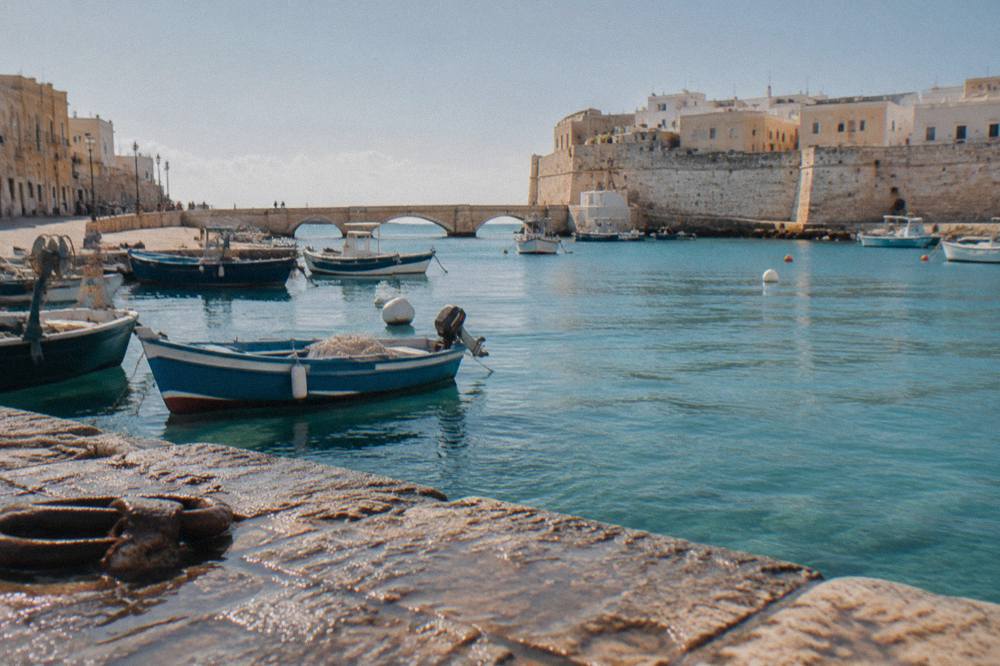
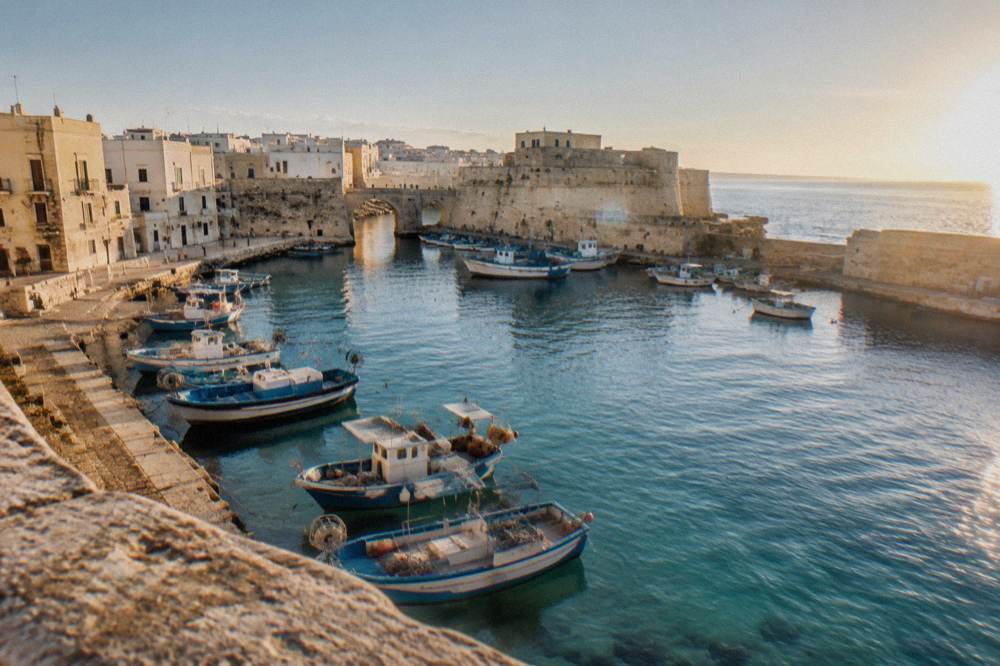
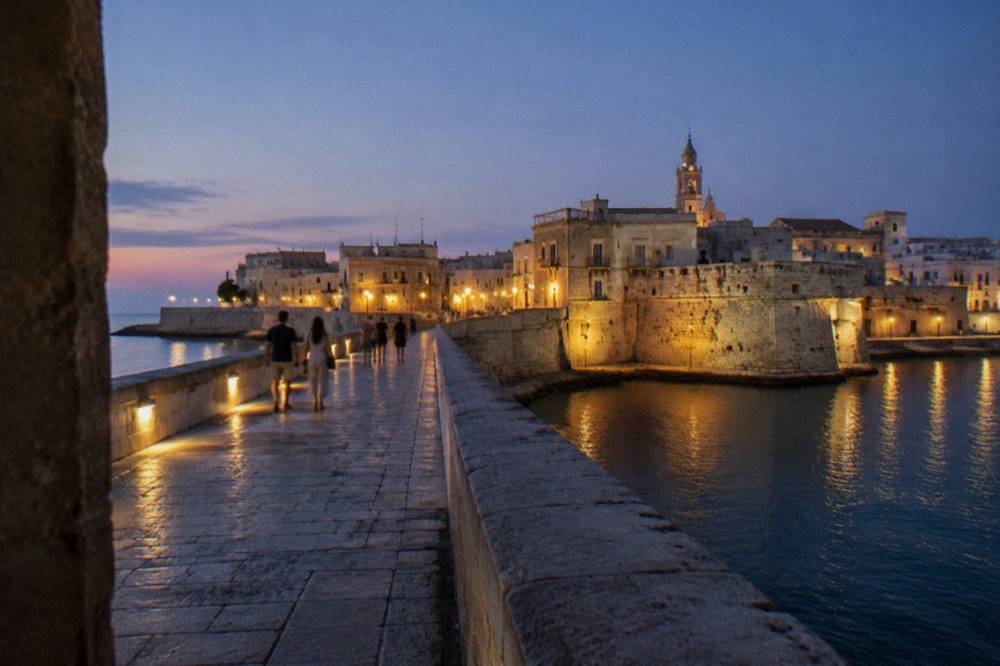
The historic centre of Gallipoli stands on a limestone island linked to the mainland by a bridge, and its landmarks are the Castello di Gallipoli at the island's edge, the cathedral and the old town's network of alleys around it; the castle's ticket price was not found in the sources, so confirm locally. The island setting is the point: the pack describes the centro storico as a limestone island town, with the newer town on the mainland side of the bridge. Everything worth seeing on the island is within a compact walk, which is why the town pairs so well with a morning in Lecce.
The Castello di Gallipoli anchors the island's seaward side. It is a real, working museum venue with seasonal hours, reported as summer openings running late, up to around midnight in high season, and shorter winter hours with Monday closures off-season. The standard ticket price was not fixed in any source the pack trusts: prices vary with the exhibitions inside, with reductions for groups, minors and residents. Say nothing firmer than that, and check the live listing or the town's channels before you go.
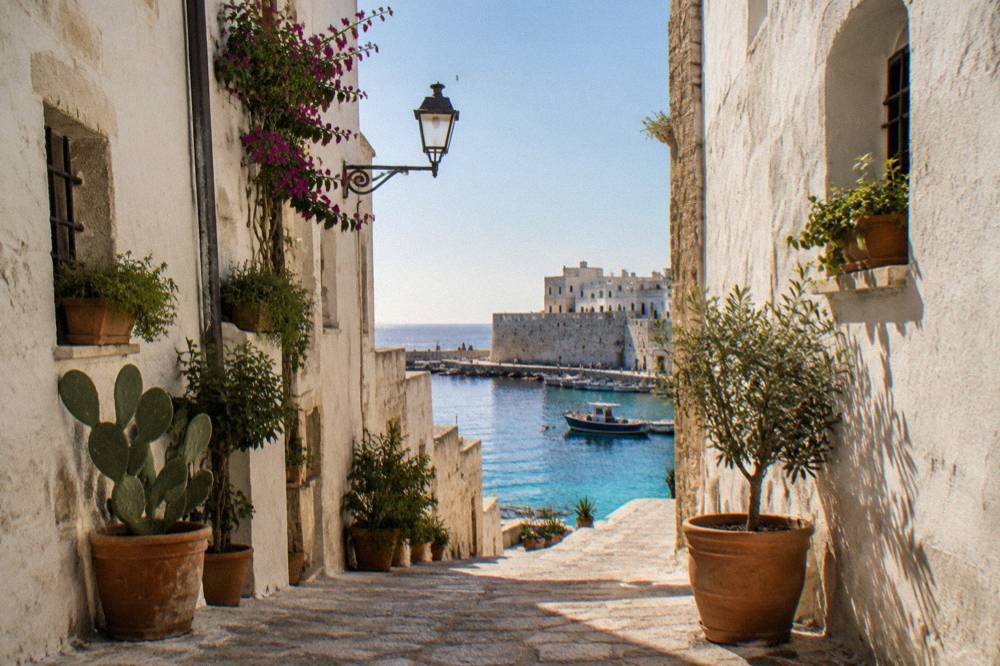
The cathedral, dedicated to Sant'Agata, sits at the heart of the island with a baroque facade carved in the local golden stone, and the surrounding lanes hold aristocratic palazzi and workshops tied to the town's fishing economy. The ramparts and the sea walls give the classic view back over the water toward the new town. None of these require a ticket: the island itself is open public space, and the paid interior is the castle.
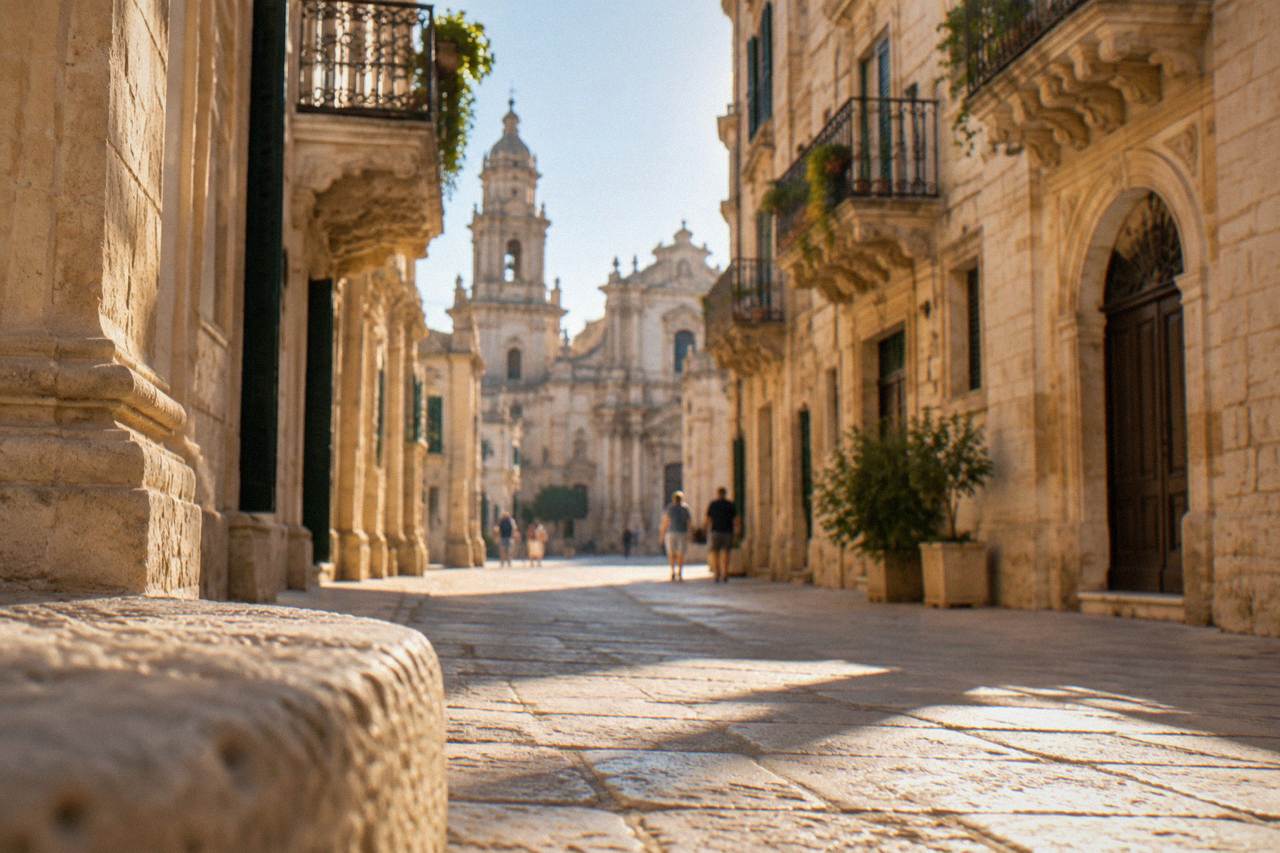
Lecce and Gallipoli make a natural pairing because the two towns show two faces of the same stone and the same era. If the baroque facades of Lecce catch your interest, the small-group history walk Understand Lecce: History And Local Stories is the local companion, and the related tour below covers the same ground with a guide who can set Gallipoli in its context. Before you book anything for the coast, it is worth fixing what your Lecce hours look like first.
A practical note on the day's shape: the pack gives no opening hours or sight lists for Gallipoli beyond the castle's seasonal pattern, so plan the island as a wandering destination rather than a checklist. Morning light on the east-facing walls, lunch on the island or the mainland front, and the afternoon on a beach south of the centre is the sequence the geography itself suggests.
Is Gallipoli Worth A Day Trip From Lecce?
Gallipoli is worth the trip from Lecce if what you want is sea, an island old town and a working fishing port, reached in under an hour by car or a direct train of about 1h18 to 1h43; it does not replace Lecce's churches and baroque interiors, it complements them. The two towns are close enough that the question is rarely either-or. The train makes a half-day feasible, and the drive makes an evening return easy after a late dinner on the front.
The honest comparison with the Adriatic alternatives runs through the pack's own figures. Otranto, the other headline day trip from Lecce, is about 47 km east, with its cathedral mosaic of 1163 to 1165 by the priest Pantaleone and its Aragonese castle. Gallipoli, west on the Ionian, is nearer at 41 km and about 41 minutes. The choice between them is a choice of coast, and the site's own comparison page Gallipoli Or Otranto works through it in detail.
| Salento day trip from Lecce | Distance | Drive time | Pack highlights |
|---|---|---|---|
| Gallipoli | 41.0 km | about 41 min | island old town, bridge, castle |
| Otranto | 46.7 km | about 44 min | cathedral mosaic 1163-1165, Castello Aragonese |
| Porto Cesareo | 28.0 km | about 34 min | Ionian beaches and marine park |
| Torre dell'Orso | 27.9 km | about 32 min | Adriatic sands near Grotta della Poesia |
| Santa Maria di Leuca | 83.2 km | about 78 min | peninsula tip, basilica |
| Galatina | 25.7 km | about 29 min | Basilica di Santa Caterina, free entry |
One thing Gallipoli is known for beyond its walls is its summer nightlife, and the site's answer page on whether Gallipoli is a party town covers that side of it directly. In the shoulder months the town reads very differently: quieter lanes, the fishing fleet still working, and the lidos either shuttered or half-empty. The pack gives no visitor numbers for any month, so plan on season logic rather than crowd statistics.
If your Lecce days are short and you would rather not spend one on timetables, guided day tours from Lecce exist that bundle the coast. The one below pairs Gallipoli with Galatina, the coast and a winery stop, with transport included.
When Is The Best Time Of Year To Visit Gallipoli From Lecce?
The pack's climate figures point to May, June and September as the balanced months for a Gallipoli day trip: the ERA5 reanalysis, 1991-2020, gives Lecce mean highs of about 23 C in May, 28 C in June and 26 C in September, with sea temperatures of about 22.5 C in June and 20 to 22 C in October. July and August bring mean highs of about 31 C and the peak sea temperatures of 25 to 27 C, but also the seasonal peak in lido prices and traffic on the coastal roads.
| Month | Mean high C (ERA5 1991-2020) | Rain mm | Sea temp C |
|---|---|---|---|
| May | 23.4 | 39.9 | about 18 |
| June | 28.2 | 18.0 | about 22.5 |
| July | 31.0 | 15.3 | 25 to 26 |
| August | 31.3 | 18.1 | 25 to 27 |
| September | 26.4 | 58.9 | about 24 to 25 |
| October | 21.8 | 91.3 | 20 to 22 |
The rainfall column matters more than it looks: November carries the highest monthly total at 93.7 mm and October follows at 91.3 mm, so an autumn beach plan should carry a town-shaped backup. Winter day trips are entirely workable for the old town itself, with January mean highs of about 12.4 C, though the castle's off-season hours shorten and the summer-only buses stop running after mid-September. More of these guides are collected on Lecce Travel Guide.
If summer is when you are coming, work the calendar. Salento in Bus ran only 13 June to 13 September in 2026, with the peak frequency from 1 July to 31 August. Beach clubs on the Ionian side quoted the pack's higher figures in August, and the town's summer evening openings, including the castle's late hours, are concentrated in exactly those weeks. Early June or the first half of September buys the sea without the full summer premium.
Where Are The Best Beaches Near Gallipoli?
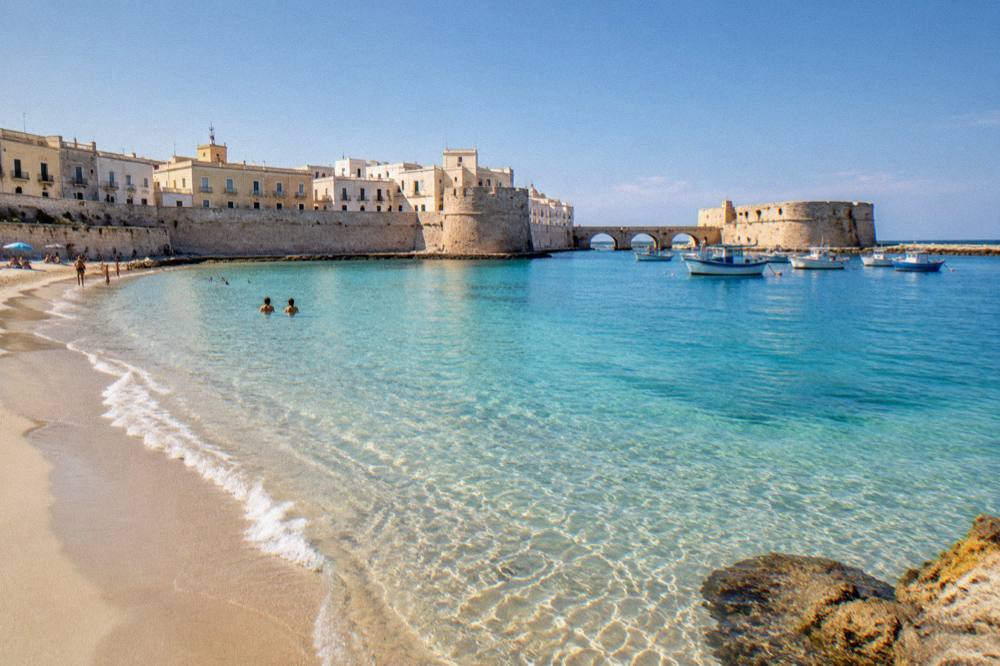
Baia Verde, immediately south of Gallipoli's centre, is the pack's named beach for this trip, reached by FSE train to Gallipoli plus a local bus or Salento in Bus connection, and the 2026 lido surveys put Ionian beach clubs at the top of the regional price range, around 40 to 70 euro for an umbrella and two beds at the peak. On the Adriatic side the same survey's equivalents run lower; the Ionian is quoted as the more expensive coast for lidos, an average of roughly 24 to 42 euro across the area depending on the zone and the month.
| Area | Umbrella + 2 beds, June | Umbrella + 2 beds, August |
|---|---|---|
| San Cataldo (Adriatic, near Lecce) | 15 to 25 euro | 33 to 35 euro |
| Torre dell'Orso / San Foca (Adriatic) | 25 to 35 euro | 50 to 60 euro |
| Otranto (Adriatic) | 20 to 30 euro | 30 to 50 euro |
| Porto Cesareo / Gallipoli (Ionian) | higher range | 40 to 70 euro and up at peaks |
Free beach access exists year-round where the shoreline is open, subject to local ordinances. If you are choosing between coasts for a beach day out of Lecce, the site's guides to beaches near Lecce and the Adriatic alternatives such as Torre dell'Orso set out both sides. For swimmers, the sea warms from about 22.5 C in June to the 25 to 27 C August peak and holds 20 to 22 C into October.
What Should You Eat In Gallipoli On A Day Trip From Lecce?
Gallipoli is a fishing port first, so the day's eating centres on the raw-bar and grilled fish tradition of the Ionian coast, while the Salento classics to compare against Lecce's are pasticciotto, the rustico leccese, the caffè in ghiaccio con latte di mandorla and the Negroamaro-based wines of the Salice Salentino DOC, established in 1976. The pack names no restaurants in Gallipoli and prints no meal prices for it, so treat the town's fish stalls and friggitorie as things to confirm on arrival rather than to plan by list.
The sweets and the coffee, though, travel with you from Lecce. Pasticciotto, the custard-and-shortcrust tart, is a Galatina claim rather than a Lecce one: the 1745 date belongs to Pasticceria Ascalone's own account, and historians dispute it. The caffè in ghiaccio con latte di mandorla, iced espresso with almond milk, is credited to Antonio Quarta of Quarta Caffè in Lecce in the 1940s to 1950s, and it is exactly the drink a hot afternoon on the Gallipoli front calls for. The site's page on what to eat in Lecce runs through all of it.
Wine is the third pillar. Salento's signature grape is Negroamaro, the base of the Salice Salentino DOC across the Lecce and Brindisi provinces, with Primitivo di Manduria the other regional heavyweight. A tasting in Lecce before or after the coast day is the efficient way to learn the labels, and the wine and food tasting below does it in the old town.
Can You Combine Gallipoli With Other Towns From Lecce?
Yes, and the pack's drive times make two pairings easy: Gallipoli with Galatina, 25.7 km and about 29 minutes from Lecce on the way, whose Basilica di Santa Caterina d'Alessandria is free to enter, and Gallipoli with Porto Cesareo, 28.0 km and about 34 minutes up the Ionian coast, both served by the same FSE rail corridor and the summer Salento in Bus line 104. By car, a loop through Galatina on the way to Gallipoli adds only a short detour to the drive and can absorb a beach stop in between.
| Combination | Legs from Lecce | Rail option | Pack notes |
|---|---|---|---|
| Galatina + Gallipoli | 25.7 km to Galatina, then onward | FSE to Galatina (38-55 min, from 3 euro), then onward | basilica free, split hours |
| Porto Cesareo + Gallipoli | 28.0 km to Porto Cesareo, then onward | line 104 bus in summer | Ionian beaches both stops |
| Gallipoli + Santa Maria di Leuca | 41.0 km to Gallipoli, then onward to Leuca (83.2 km from Lecce) | bus, about 2h to 2h15 to Leuca | a full coast day by car |
| Gallipoli as a stop on a full Salento circuit | varies | van day tours exist from Lecce | Otranto and Leuca included |
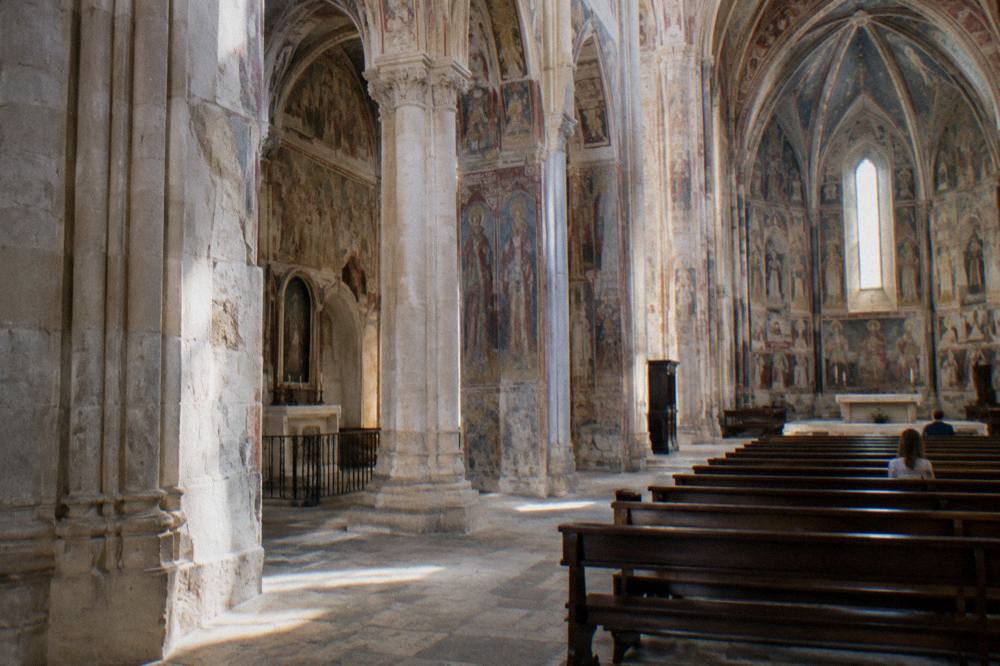
Galatina deserves the stop more than its size suggests: the Basilica di Santa Caterina d'Alessandria is free to enter, with split morning and afternoon hours, and it holds some of the finest frescoes in the south, painted in the same Gothic world that Otranto's 1163 to 1165 mosaic closed. Nardo, 28.6 km and about 29 minutes from Lecce, sits nearby; the pack found no verified train journey for Lecce to Nardo, so drive it or reach it on the Gallipoli rail line's corridor with a local connection checked on the day.
If you would rather leave the driving to someone else, the private four-town tour below strings Otranto, Leuca, Gallipoli and Galatina into one long Salento day from Lecce.
Back in Lecce, the evening belongs to the old town. Gallipoli's island rewards an unhurried afternoon, but Lecce's baroque is at its best after dark, when the facades of the Duomo and Santa Croce catch the floodlighting, and the site's Lecce at night guide picks up where the coast day ends. If three days is your total budget, the three-day Lecce itinerary slots a Gallipoli day in as the middle act.
What Should You Know Before Travelling From Lecce To Gallipoli?
Pack for the sun and plan around the seasons: summer means the Salento in Bus network only until mid-September, Ionian lido prices at their yearly peak, and hot mean highs of about 31 C, while winter means shorter castle hours, Monday closures off-season and mean highs of about 12 C, and the emergency number anywhere in Italy is 112. Lecce's own ZTL is camera-policed with reported hours rather than guaranteed ones, so if you drive back into the old town at night, ask your accommodation about registering your plate.
Money and paperwork are simple: Italy uses the euro and is a Schengen member, and the tourist tax in Lecce is collected by your accommodation, with a top reported rate of 5 euro per night for five-star high season from 1 April 2026; confirm the amount for your property at booking. The pack prints no hotel rates and no taxi fares, so budget those from the booking platforms directly.
For the return leg, the FSE evening timetable thins out; the pack gives no last-train time, so check the operator's live schedule the same day rather than assuming a service. Driving back is about 41 minutes in free flow, but August evenings on the coast road run slower.
Lecce without a car still reaches Gallipoli comfortably on the train, and the site's guide to day trips from Lecce without a car covers the wider set. Before you finalise anything, the desk's own comparison of the two headline Ionian and Adriatic options is on the Gallipoli or Otranto page. This page sits inside a fuller set of Salento trip plans at Lecce Travel Guide, and the related walks below are the other half of a Lecce stay.
Common Questions About Gallipoli From Lecce
How far is Gallipoli from Lecce?
About 41 km by road, roughly 41 minutes of driving in free-flow conditions from Piazza Sant'Oronzo, or a direct FSE train journey of about 1h18 to 1h43.
Is there a direct train from Lecce to Gallipoli?
Yes. FSE, Ferrovie del Sud Est, runs direct regional trains on the route, typically via Zollino, with the fastest journeys about 1h18 and fares from about 5 euro. Timetables are seasonal, so check the operator's live schedule.
How much does the Castello di Gallipoli cost?
The sources the site trusts did not publish a fixed standard ticket price; pricing varies with the exhibitions on show, with reductions for groups, minors and residents. Confirm locally or at the venue before your visit.
What is the best month to visit Gallipoli from Lecce?
May, June and September balance the pack's figures best: mean highs of about 23 to 28 C, sea temperatures of about 22.5 C in June, and lower lido prices than the August peak, when Ionian beach clubs run 40 to 70 euro and up for an umbrella and two beds.
Can you swim in Gallipoli?
Yes, at Baia Verde south of the centre and along the Ionian coast. Sea temperatures run about 22.5 C in June, 25 to 27 C at the August peak and 20 to 22 C in October, per the seatemperature data the site cites.
Is Gallipoli or Otranto better as a day trip from Lecce?
Otranto is slightly farther at 46.7 km and about 44 minutes, Gallipoli 41.0 km and about 41 minutes. Otranto brings the 1163 to 1165 cathedral mosaic and the Aragonese castle; Gallipoli the island old town and the Ionian beaches. The site's full comparison is on the Gallipoli or Otranto answer page.