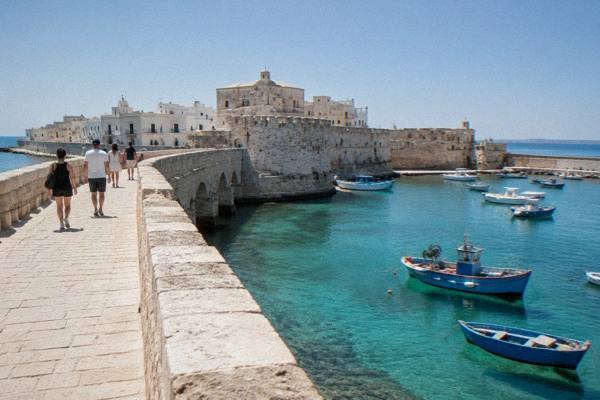
Porto Cesareo From Lecce: Shallow Water And Punta Prosciutto
Porto Cesareo is the Ionian beach day that balances Lecce's baroque: shallow turquoise water, sand rather than cliff, and a reachable drive or summer bus ride west across the peninsula.
Short answer
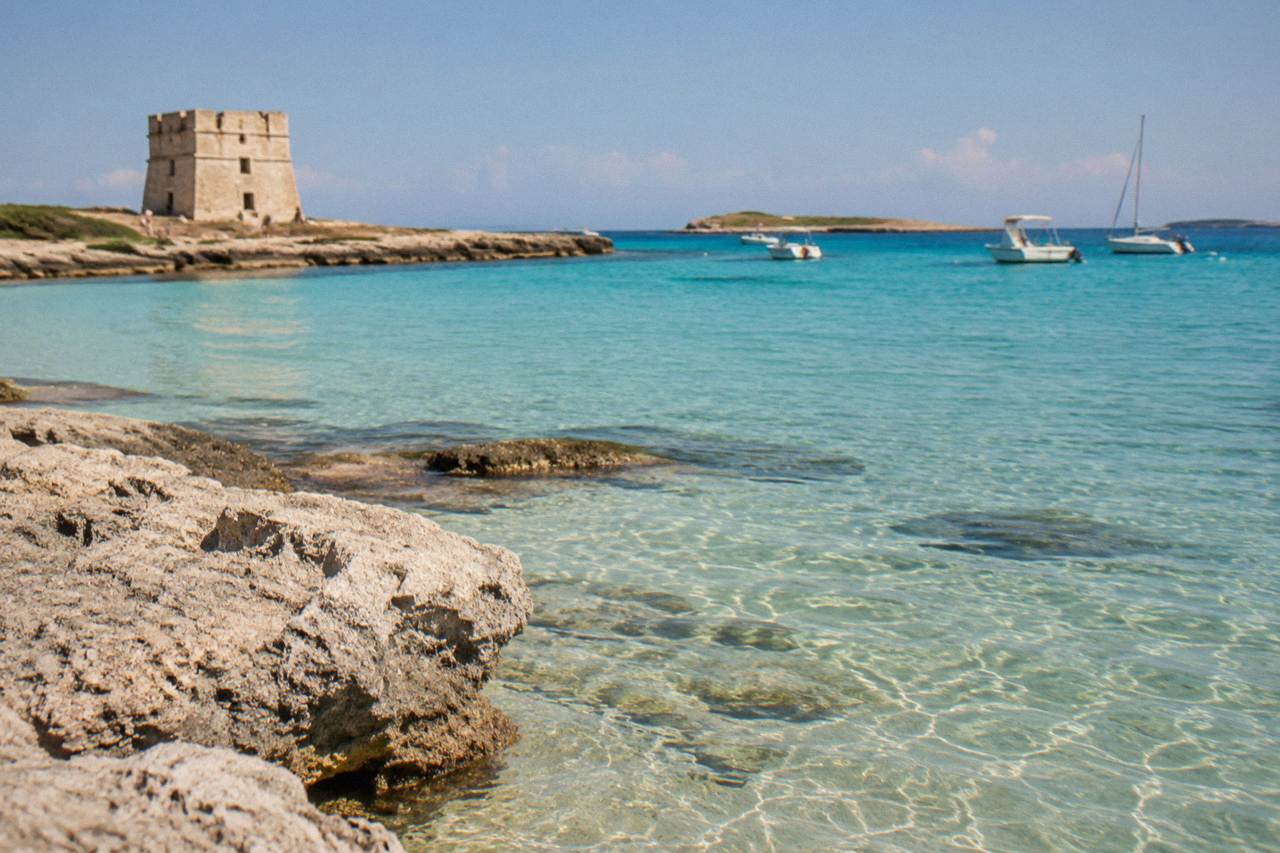
Porto Cesareo lies about 28 km west of Lecce on the Ionian coast, roughly a 34-minute drive or the summer Salento in Bus line 104. It is known for very shallow sandy water, the Torre Cesarea tower and the protected marine area, and Punta Prosciutto's pale sand a short hop north.
Porto Cesareo sits on the Ionian side of the Salento peninsula, about 28 km and a 34-minute drive west of Lecce, the baroque capital of Puglia that lies a few kilometres inland. Where the Adriatic coast east of Lecce runs to cliffs and rock, this stretch of coast is the opposite: pale sand shelving into water so shallow that you can walk out tens of metres and still stand waist-deep. The town wraps around a small harbour of fishing boats and there is a protected marine area offshore. This guide covers how to get there from Lecce, the beaches including Punta Prosciutto, what a day actually looks like, and the practical figures that matter.
Where Is Porto Cesareo And Why Does It Suit A Lecce Day Trip?
Porto Cesareo is a fishing harbour and beach town on the Ionian coast of Salento, about 28 km west of Lecce by road, a drive of roughly 34 minutes from Piazza Sant'Oronzo. It faces west, so the light goes golden in the evening over flat, shallow water rather than against cliffs. The contrast with Lecce itself, which is inland and built of honey-coloured pietra leccese limestone, is the whole point of the pairing.
Lecce is not a beach town. San Cataldo, the nearest stretch of coast to the city, is about 13 km east on the Adriatic, and the city's business is baroque architecture, churches and food rather than sand. Porto Cesareo completes it. You spend the morning among facades and pasticciotto, then drive half an hour west to water that stays shallow enough for children and hesitant swimmers far out from shore.
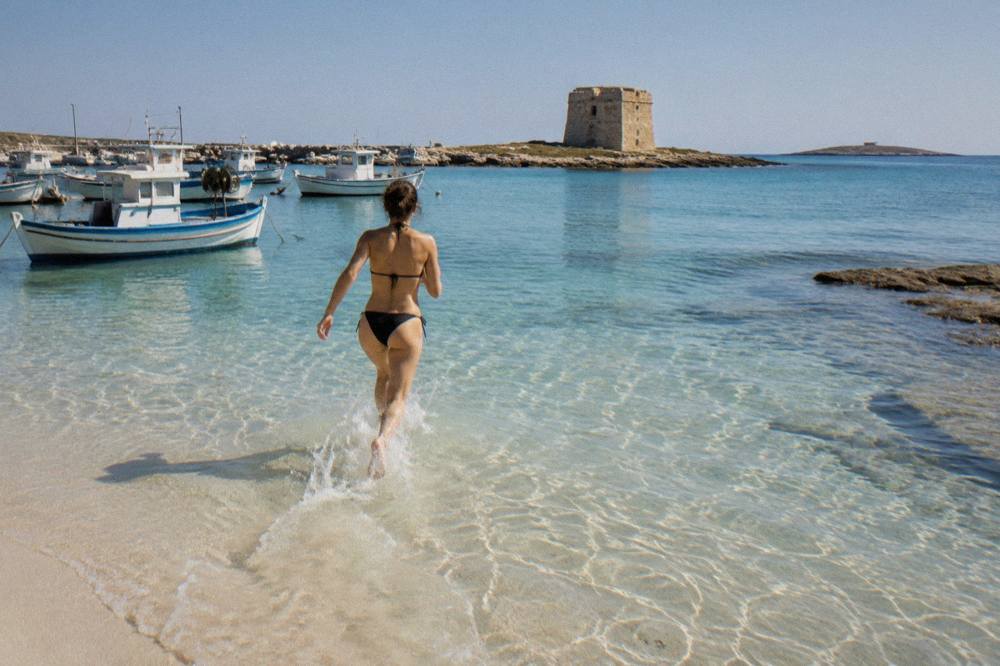
The town's identity is still partly working fishing port. Boats come and go from the harbour, and the seafront is a line of lidos, free beach sections and seafood restaurants rather than a resort strip. Offshore lies the Area Marina Protetta di Porto Cesareo, a marine protected area, which is one reason the water stays so clear. For more on the peninsula as a whole, the Salento overview on Lecce Travel Guide sets the geography out.
The other name in every conversation about this coast is Punta Prosciutto, the sandy point north of town, treated below in its own section. If your base is Lecce and you want one uncomplicated beach day with sand, shallows and an easy drive, this is the standard answer, alongside the Adriatic options covered in the beaches near Lecce guide.
How Do You Get From Lecce To Porto Cesareo Without A Car?
Driving is the year-round option, about 28 km and roughly 34 minutes from central Lecce, while the car-free option is the Salento in Bus line 104, which ran from Lecce through Porto Cesareo to Gallipoli from 13 June to 13 September 2026 with fares from about 1.10 to 5 euro. Outside that summer window there is no rail line to the town, and the FSE trains from Lecce run to Gallipoli and Galatina instead, so you are driving, cycling or on a tour.
The drive itself is simple: you cross the peninsula westward on flat main roads, and there is no Lecce ZTL complication for the outbound leg, since the restricted historic core is small and the western routes leave the city without entering it. Park around the town as you would at any Italian beach resort in summer, arriving earlier rather than later for spaces close to the sand. If you are renting, the car rental and driving in Lecce guide covers the basics.
For the bus, tickets in 2026 were sold through the Itineris platform rather than on paper at the stop, and the network is operated by Cotrap with provincial partners. The service exists precisely because this coast is hard to reach by train: the FSE regional network out of Lecce serves Gallipoli, Otranto via Maglie, and Galatina, and none of those lines touch Porto Cesareo. In the shoulder months of May, late September and October, a car or an organised day trip is realistically the only way.
The other car-free route is to let someone else drive and sail. Boat tours depart from Porto Cesareo itself, so a morning transfer plus a snorkel cruise covers both the journey and the water in one booking. The Check availability link shows the operator's live listing for the snorkelling cruise with aperitif that runs from the town.
Distance And Time From Lecce To The Ionian Coast
| Destination from Piazza Sant'Oronzo | Distance | Free-flow drive time | Coast |
|---|---|---|---|
| Porto Cesareo | 28.0 km | about 34 min | Ionian |
| Nardo | 28.6 km | about 29 min | Ionian (inland town) |
| Gallipoli | 41.0 km | about 41 min | Ionian |
| San Cataldo | 12.9 km | about 14 min | Adriatic |
| Torre dell'Orso | 27.9 km | about 32 min | Adriatic |
| Santa Maria di Leuca | 83.2 km | about 78 min | Southern tip |
The table makes the strategic point: Porto Cesareo is barely farther than the nearer Adriatic beaches yet on the completely opposite side of the peninsula. Nardo, at nearly the same distance, makes a natural inland pairing on the way, and its old centre is covered in the Nardo day trip guide.
What Are The Best Beaches At Porto Cesareo And Punta Prosciutto?
The town beaches closest to the harbour are sandy and shallow with lidos and free sections, while Punta Prosciutto, a short drive north along the coast road, is the pale-sand spit with dunes and the clearest, shallowest water in the area. Lido prices in 2026 for an umbrella and two sunbeds ran higher on the Ionian than the Adriatic, per the Udicon and Adoc consumer surveys, which also reported a 25 percent rise over five years.
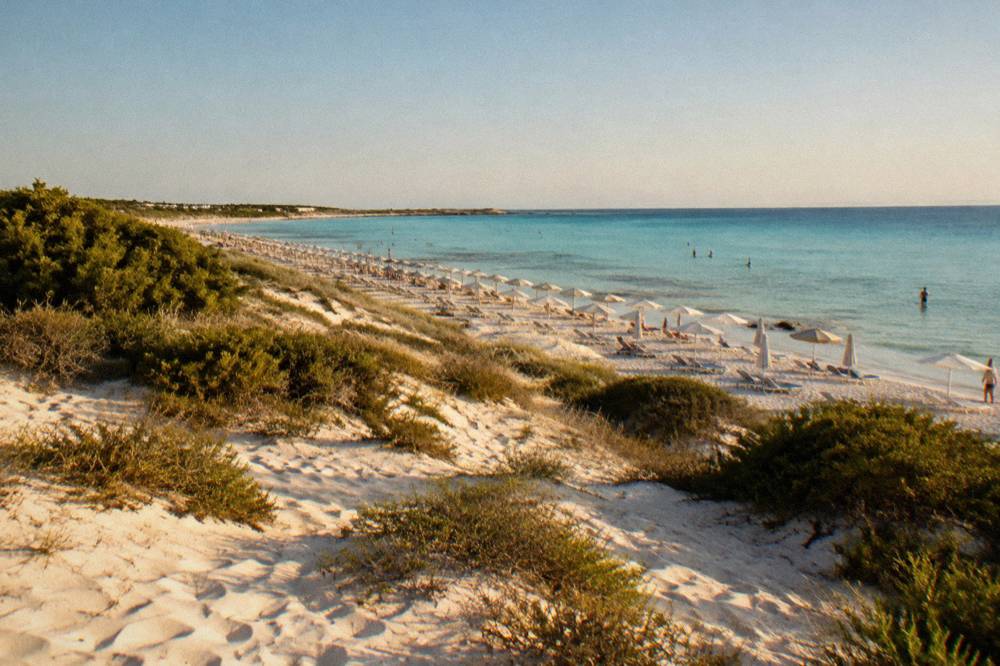
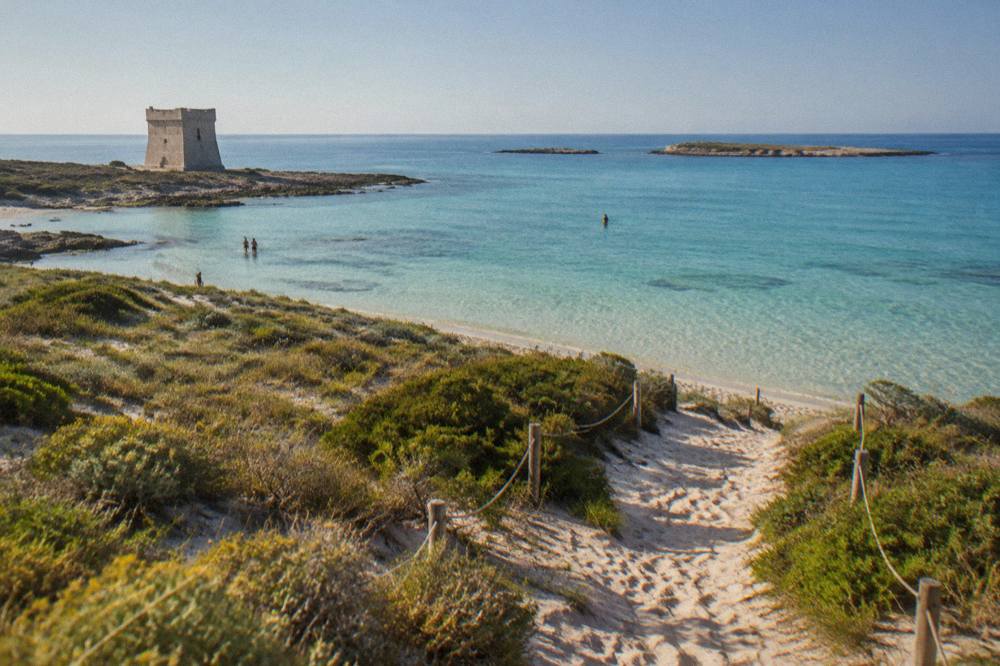
Start with the difference between the two. The Porto Cesareo waterfront is organized and easy: rows of stabilimenti, the paid lidos with umbrellas and beds, alternating with public sand, everything walking distance from the harbour and the restaurants. Punta Prosciutto, on the other hand, is the wilder end: sand dunes, pine behind, and water so shallow and so pale it is the photograph everyone associates with this coast. Between the two lie a string of coves and free beach stretches along the coast road north out of town.
For comparison, the 2026 surveys reported umbrella-plus-two-bed day rates of 15 to 25 euro in June and 33 to 35 euro in August at San Cataldo, 25 to 35 euro in June rising to 50 to 60 euro in August at Torre dell'Orso and San Foca, and 20 to 50 euro at Otranto, with the Ionian lidos including this coast generally priced above the Adriatic ones. Prices shift every season, so treat those as the latest reported picture and check at the lido.
| Beach area | Character | Water | Access notes |
|---|---|---|---|
| Porto Cesareo town beaches | Lidos plus free sections by the harbour | Sandy, very shallow | Walkable from the centre and parking |
| Punta Prosciutto | Dunes, pale sand, pine backdrop | Shallowest and clearest in the area | Short drive north; arrive early in August |
| Free coves along the coast road | Smaller sandy patches between lidos | Shallow, calm | Bring your own umbrella and water |
The protected marine area offshore keeps fishing and anchoring controlled, and that is part of why the water reads so clear on a calm day. Wind matters more here than on the Adriatic: the Ionian can flat-calm and mirror-like or chop up with an onshore breeze, and the shallow profile means the water warms early and cools late. Sea temperature around Puglia runs about 22.5 C in June, 25 to 27 C at the August peak, 20 to 22 C in October and about 14 C in February, per seatemperature.org data.
If your instinct after a week of architecture is simply "sand, shade, sea", this coast answers it, and the wider sandy-versus-cliff geography of both coasts is laid out in the Salento beaches guide.
What Can You Do At Porto Cesareo Besides Lying On The Sand?
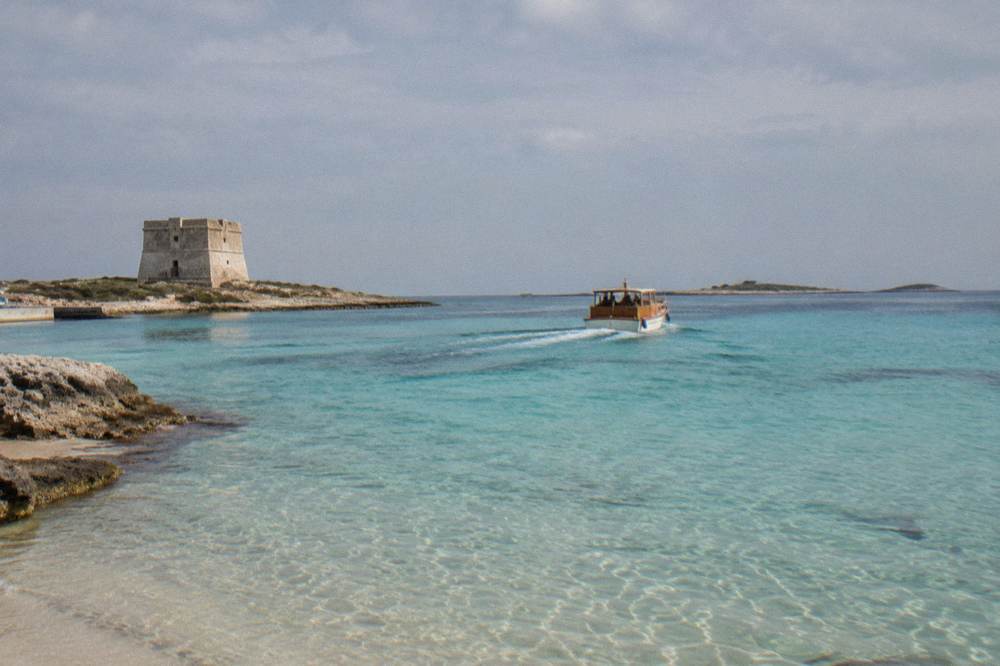
The harbour is the working alternative to the beach: fishing boats, a seafront of seafood restaurants, the coastal tower, and boat or snorkel trips out over the protected marine area. The standard half-day on the water is a guided cruise with swimming stops and an aperitif, and the listing for the aperitif snorkel tour from Porto Cesareo covers coves, gear and a drink in one price.
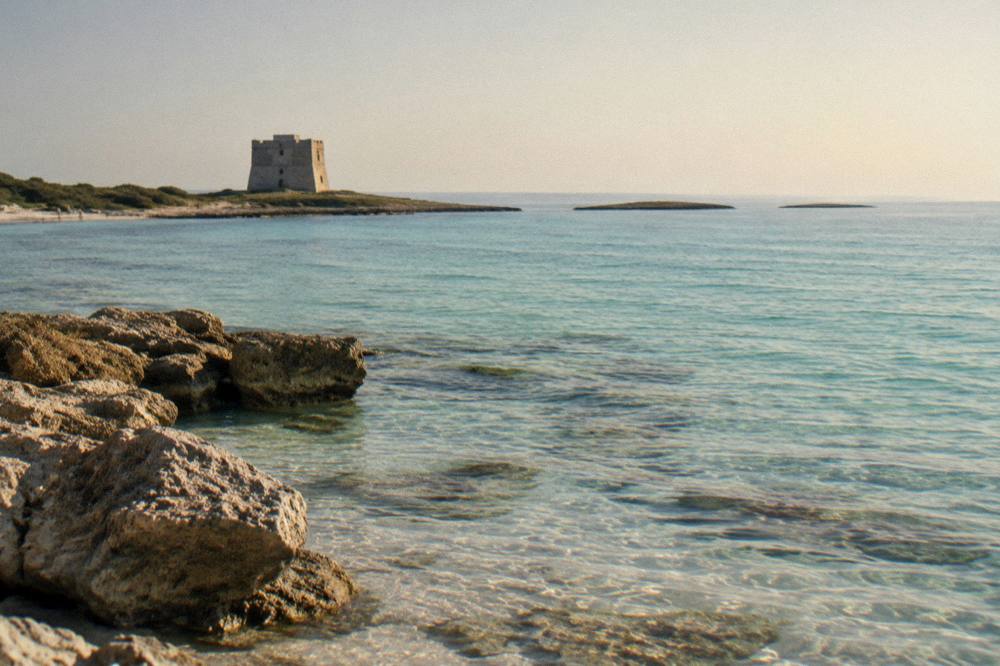
The Torre Cesarea, the Aragonese-era tower that gives the town half its name, anchors the seafront and is the town's landmark silhouette. Around the harbour, the economy is still visibly fish, and restaurants serve what the boats bring in, with the typical Salento plates: raw and cooked seafood, frisa with tomato, and the local wines, Negroamaro-based reds and rosatos from the Salice Salentino DOC zone established in 1976. The region's food more broadly is covered in what to eat in Lecce.
Out on the water, the marine protected area is the draw. Snorkelling here is easy-water snorkelling: shallow reefs and posidonia meadows rather than dramatic drop-offs, which suits families and first-timers. Several operators run from the harbour, and the tours below are the bookable options on this site.
The cruise above is the town's signature product: a small-boat trip with swimming stops and a typical aperitif on board. For a different angle on the same water, a canoe-based cave adventure runs from this coast too.
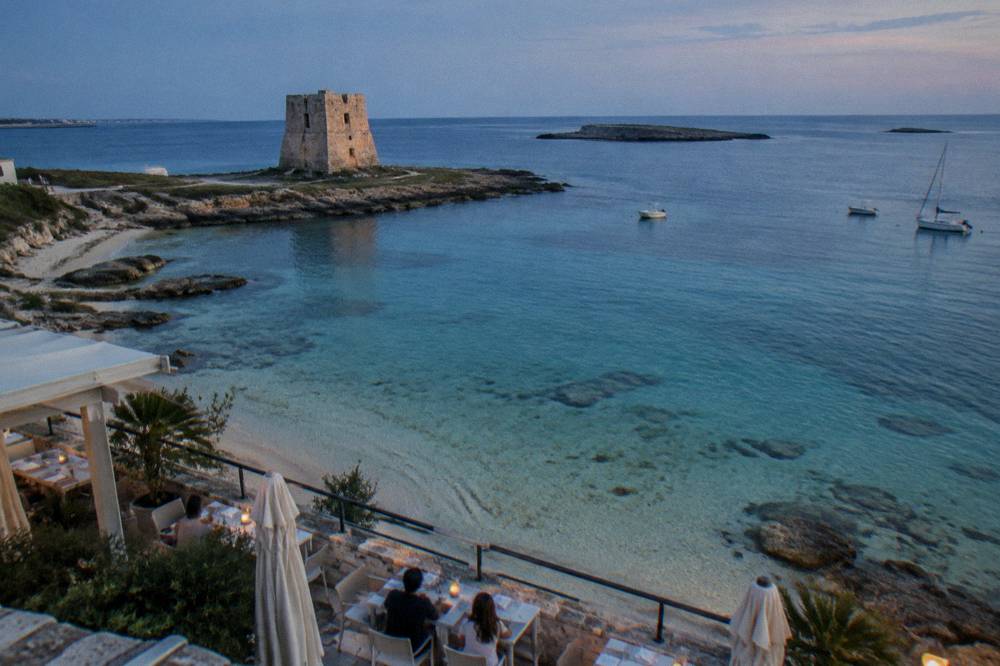
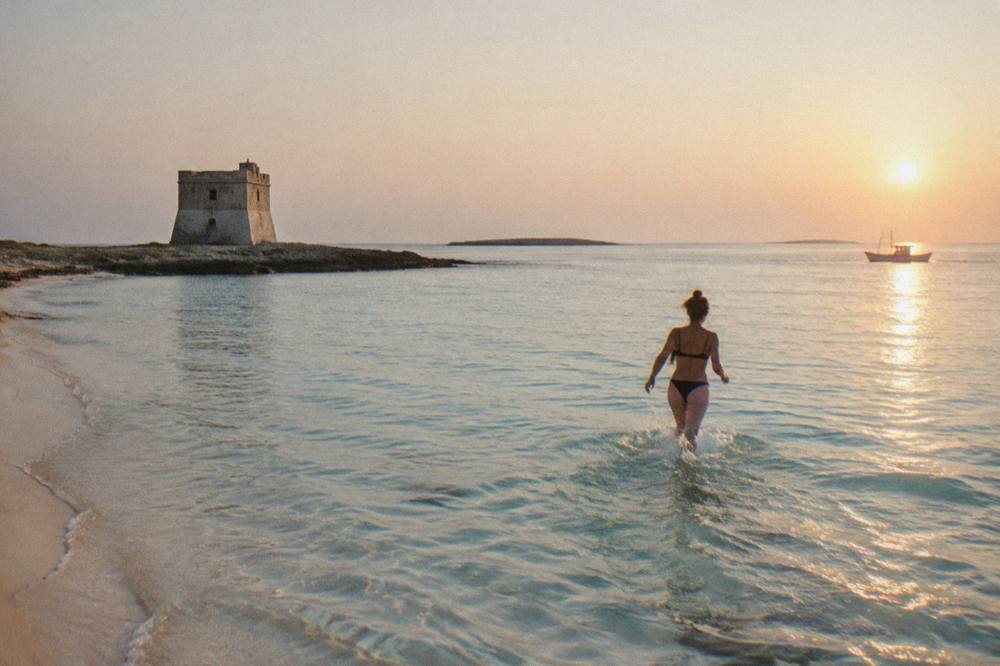
Back on land, the rhythm is slow. A morning on the sand, a long seafood lunch, an afternoon boat trip, an evening passeggiata along the harbour with the sun setting over the water behind the boats, which is the one thing an east-facing Adriatic beach day from Lecce cannot give you.
When Is The Best Time Of Year For A Porto Cesareo Day Trip?
July and August are the full season, with sea temperatures of 25 to 27 C and every lido and boat trip running, but they are also when the sand is most crowded and lido prices peak. June and September are the calmer shoulder, with sea around 22.5 C in June and still 20 to 22 C in October, while winter is a walk-and-lunch prospect only, with the ERA5 reanalysis, 1991-2020, showing a January mean high of about 12 C.
The climate numbers for Lecce, which sit a short drive inland and read the same for this coast, tell the story month by month. Summer is hot and essentially dry: mean highs of about 28 C in June, 31 C in July and 31 C in August, with monthly rainfall of 18, 15 and 18 mm respectively. Autumn cools and dampens fast, with September still warm at a mean high of about 26 C but 59 mm of rain, October 22 C and 91 mm, and November the wettest month at 93.7 mm. Other pages covering the same trip are gathered on Lecce Travel Guide.
| Month | Mean high C | Mean low C | Rain mm | Sea C |
|---|---|---|---|---|
| May | 23.4 | 14.7 | 39.9 | warming |
| June | 28.2 | 19.1 | 18.0 | about 22.5 |
| July | 31.0 | 21.7 | 15.3 | 25 to 26 |
| August | 31.3 | 22.2 | 18.1 | 25 to 27 |
| September | 26.4 | 19.0 | 58.9 | 24 to 25 |
| October | 21.8 | 15.4 | 91.3 | 20 to 22 |
Figures are ERA5 reanalysis, 1991-2020, for the Lecce grid cell, with sea temperatures from seatemperature.org for Puglia. Two timing notes follow directly from the transport facts. First, the Salento in Bus season ran 13 June to 13 September in 2026, so car-free visitors outside that window need a car or a tour. Second, the lido price surveys show the June-to-August step clearly, so a June visit buys the same water at a noticeably lower beach cost.
One honest note on the late-summer pattern: an occasional scorcher of a wind can churn the shallow Ionian for a day, and when it does the water goes from glass to chop. There is no forecast for that here; check the wind forecast the evening before and be ready to switch your day to the Adriatic side, Torre dell'Orso and the Grotta della Poesia coast, which face the other way.
Can You Combine Porto Cesareo With Other Places On The Same Day?
Yes, and the geography makes it easy: Nardo's old centre is about 29 minutes from Lecce on roughly the same westward route, Gallipoli is about 41 km and 41 minutes onward down the Ionian coast, and the sandy stretch at Punta Prosciutto is a short hop north of Porto Cesareo itself. A common shape is sand in the morning, a seafood lunch at the harbour, then Gallipoli's island old town in the late afternoon and evening.
Gallipoli rewards the evening slot specifically. Its historic centre sits on a limestone island linked to the mainland by a bridge, and it faces the same west light, so sunset there ends the day well. The full logistics, including the direct FSE train from Lecce of about 1h18 to 1h43 from about 5 euro if you would rather do Gallipoli separately by rail, are in the Gallipoli day trip guide.
Nardo, inland and almost equidistant with Porto Cesareo from Lecce, is the cultured alternative pairing: baroque piazzas and a quiet old core before the coast. Going the other direction down the peninsula, Santa Maria di Leuca is the far end at about 78 minutes of driving, and the cave coast at Castro, where the Grotta Zinzulusa runs guided visits year-round at 7 euro full and 4 euro reduced, sits between the two.
| Combination | Shape of the day | Best season |
|---|---|---|
| Porto Cesareo plus Nardo | Old centre morning, sand afternoon | May to September |
| Porto Cesareo plus Gallipoli | Sand morning, island old town at sunset | June to September |
| Punta Prosciutto plus Porto Cesareo | Dunes early, harbour lunch, boat trip after | June to August |
| Porto Cesareo plus Castro caves | Morning sand, afternoon Grotta Zinzulusa | April to October |
The one combination to be careful with is trying to stack this coast with the Adriatic in a single day. It is technically possible, the peninsula is narrow, but you will spend the middle of the day in the car and both coasts at their worst hours. Pick a side per day.
What Should You Know Before You Go: Practical Porto Cesareo Tips?
Bring water shoes rather than flip-flops, cash for lidos and beach kiosks, and a plan for parking that assumes August fills early; the beach day here is shallow and calm rather than dramatic, the town is compact and walkable once parked, and everything on this page's price side, from bus fares to lido rates, changes season by season, so confirm at the point of sale.
A few specifics make the day smoother. The shallow water means it warms pleasantly but also reflects sun off the sand, so sunscreen matters more than the air temperature suggests. The free sections between lidos fill first in peak weeks. If you are relying on the summer bus, buy tickets through the Itineris app in advance in 2026 pattern, since buying on board carried a 1 euro surcharge, and check the timetable for the last return rather than trusting it to run late.
If your day starts or ends in Lecce itself, remember the ZTL: the historic centre is camera-policed with hours that are reported rather than guaranteed, and the standard advice is to ask your accommodation to register your plate. That, plus parking and the western exit routes, is covered in full in the Lecce ZTL and parking guide.
For the water itself, the boat products handle the logistics. Beyond the Porto Cesareo cruise already mentioned, the Leuca end of the coast runs similar cruises with swimming breaks, and the San Foca snorkel cruise covers the Torre Sant'Andrea stacks on the Adriatic side.
Should You Choose Porto Cesareo Or An Adriatic Beach Day From Lecce?
Choose Porto Cesareo and the Ionian for sand, shallows, dunes and sunsets over open water, and choose the Adriatic coast, Torre dell'Orso, San Cataldo or the Grotta della Poesia stretch, for cliffs, deeper swimming water and rock formations; the drive times are nearly identical from Lecce, roughly 34 minutes west versus about 32 minutes east, so the decision is about water style, not distance.
That symmetry is the quiet advantage of basing in Lecce. You are not choosing a beach at booking time, you are choosing each morning. Families with small children and swimmers who like to stand rather than float lean Ionian, to Porto Cesareo and Punta Prosciutto. Snorkellers, cliff jumpers of the legal kind and anyone who wants the theatrical geology of stacks and caves lean Adriatic, with the caveat that bathing and diving at the Grotta della Poesia itself are banned since summer 2026 and non-residents of Melendugno paid a 5 euro ticket in the 2026 season.
There is also the sunset test, and it is not trivial. An Adriatic beach day ends with the sun going down behind you, inland. An Ionian day ends with the sun dropping into the sea in front of you, ideally from a harbour table in Porto Cesareo or the Gallipoli walls. If that is the image you came to Puglia for, this coast is the one.
Common Questions About Porto Cesareo
How far is Porto Cesareo from Lecce?
About 28 km by road, a free-flow drive of roughly 34 minutes from Piazza Sant'Oronzo, per routing data computed for this site.
Is there a train from Lecce to Porto Cesareo?
No. The FSE regional network from Lecce serves Gallipoli, Otranto via Maglie and Galatina, and none of its lines reach Porto Cesareo. The summer Salento in Bus line 104, which ran 13 June to 13 September 2026, is the public-transport link.
What is Punta Prosciutto?
A sandy point with dunes and very shallow, clear water just north of Porto Cesareo, on the Ionian coast of Salento. It is reached by a short drive up the coast road from the town.
Is Porto Cesareo good for children?
The water stays shallow far from shore and the beaches are sandy, which suits families; the profile is the opposite of the cliffier Adriatic side of the peninsula.
How much does a lido cost at Porto Cesareo?
Per the 2026 Udicon and Adoc consumer surveys, Ionian lidos generally priced above the Adriatic ones, with the same basket of an umbrella and two sunbeds reported at 15 to 25 euro in June and 33 to 35 euro in August at San Cataldo for comparison. Rates change each year, so check at the lido.
Can you visit Porto Cesareo without a car?
Yes in summer, on the Salento in Bus line 104 from Lecce, with 2026 fares from 1.10 to 5 euro; outside the summer season, a car or an organised tour with transfers is the practical option.