San Cataldo: The Nearest Beach To Lecce
San Cataldo is Lecce's own seaside fraction, a low sandy Adriatic shore with pine woodland behind it, about 13 km east of the city and reachable by city bus in roughly 20 minutes.
Short answer
San Cataldo is the nearest beach to Lecce, about 13 km east of the city on the Adriatic. SGM city bus line 32 runs there from the City Terminal in about 20 minutes, lidos charged 15 to 25 euro a day in June 2026 and 33 to 35 euro in August, and the shore is low and sandy with a pine forest reserve behind it.
Lecce is a baroque city built a few kilometres inland, in Puglia, southern Italy, and San Cataldo is the seaside fraction where the city meets the Adriatic. The comune of Lecce describes it as a low sandy coast with a pine forest and reserve behind it, and the drive from Piazza Sant'Oronzo covers 12.9 km in about 14 minutes in free-flowing traffic. That distance, short enough for a city bus to cover, is what sets San Cataldo apart from every other beach in the region: it is the one shore leccesi treat as their own, and the one a visitor can reach from a hotel in the old town without a car, a train or a long plan. This page lays out what the sources say about getting there, what the beach actually looks like, what the lidos charged in 2026, and how San Cataldo compares with the better-known marine further down the Salento coast, which are covered in the guide to Lecce's five marine on this site.
Where Is San Cataldo And How Far Is It From Lecce?
San Cataldo sits on the Adriatic coast about 13 km east of Lecce, 12.9 km by road from Piazza Sant'Oronzo with a free-flow drive time of about 14 minutes, making it the nearest beach to the city. It is not a separate town but a marine, a seaside fraction of the comune of Lecce itself, set where the low sandy shore meets a belt of pine woodland and protected reserve inland.
The comune of Lecce groups San Cataldo among its five marine, the coastal fractions that belong administratively to the city even though the historic centre lies inland. The geography matters for planning: Lecce is the baroque capital of Salento, built in honey-coloured pietra leccese limestone, and it sits a few kilometres from the sea rather than on it. San Cataldo is the closest point where that gap closes. East is the Adriatic; across the peninsula to the west, past Gallipoli, is the Ionian, and the two coasts could hardly feel more different: the Adriatic side here is lower and sandier than the cliffy stretches further north around Torre Sant'Andrea, while the Ionian side carries the long white sand and shallows of places like Pescoluse.
For a visitor staying in the centro storico, the practical effect is that a beach morning costs almost nothing in transit time. The old town's churches and squares, from Santa Croce to the Duomo, fill the early hours well, and the shore is close enough that a late-morning departure still leaves most of a beach day. Visitors planning a fuller split between city and coast will find framing in things to do in Lecce.
How Do You Get To San Cataldo From Lecce Without A Car?
SGM city bus line 32 runs from Lecce's City Terminal to San Cataldo, serving the lidi, the rotunda and the darsena, with a ride of about 20 minutes and a ticket at roughly 1.20 euro bought in advance or 1.50 euro on board, per the operator's published tariffs. In summer the comune has advertised frequencies of a bus every 30 minutes on the line, so no car is needed for a beach day.
Line 32 is an ordinary SGM urban service, not a seasonal tourist shuttle, which is its quiet advantage: it runs on the same tariff structure as every other city route. The SGM tariff page lists the 60-minute ordinary ticket at about 1.20 euro, rising to 1.50 euro if bought on board, with a day ticket at about 3 euro for anyone planning a return trip plus movement along the coast road. The comune's summer announcements have promised a bus every half hour to San Cataldo and neighbouring Torre Chianca in past seasons; frequencies outside the summer months thin out, and the operator's own app carries the live timetable.
Cyclists and e-bike riders have a second option that turns the journey itself into the outing. The flat road east from Lecce crosses olive country and rural masserie land before reaching the coast, which is exactly the terrain a guided e-bike route exploits, and riders who want the sea as the finale rather than the destination can also look at trips that pair the ride with a swim stop. Driving is straightforward too: the 12.9 km run takes about 14 minutes without traffic, and the ZTL rules that guard the historic centre, covered in the site's parking guide, do not apply out here. Summer visitors relying on the wider Salento bus network should check the Salento in Bus guide: that seasonal service spreads further along both coasts but ran only from 13 June to 13 September in 2026.
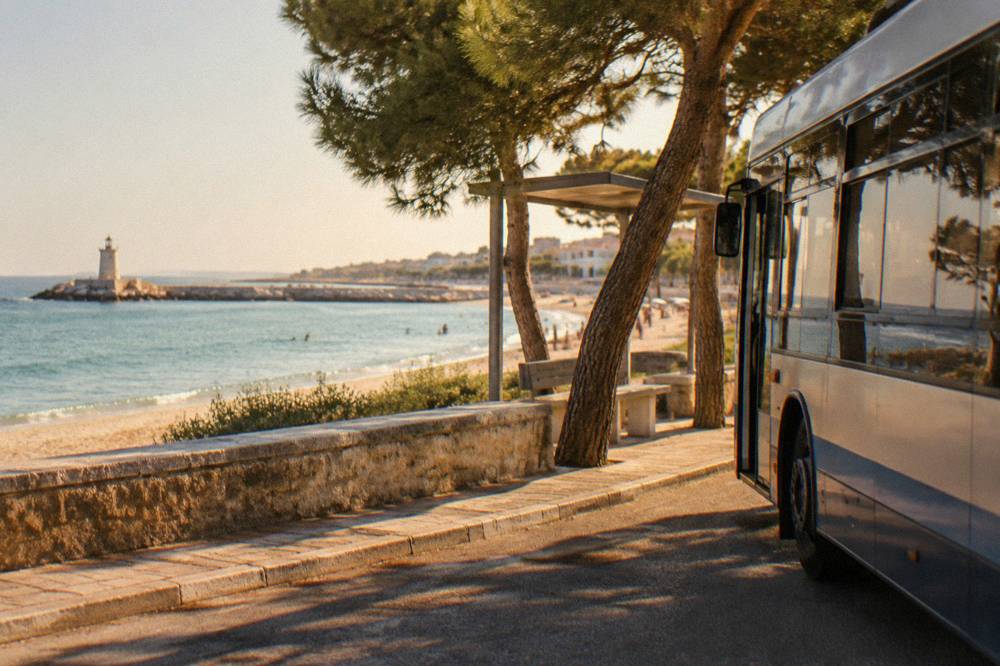
The road east also passes the Frigole and Torre Chianca marine on the way, so a wrong bus or an exploratory afternoon is rarely wasted. Anyone travelling with gear for a whole family should note that the buses are ordinary urban vehicles without luggage racks; the ride is short, but a beach cart and a crowded midday service can test patience.
What Does The Beach At San Cataldo Actually Look Like?
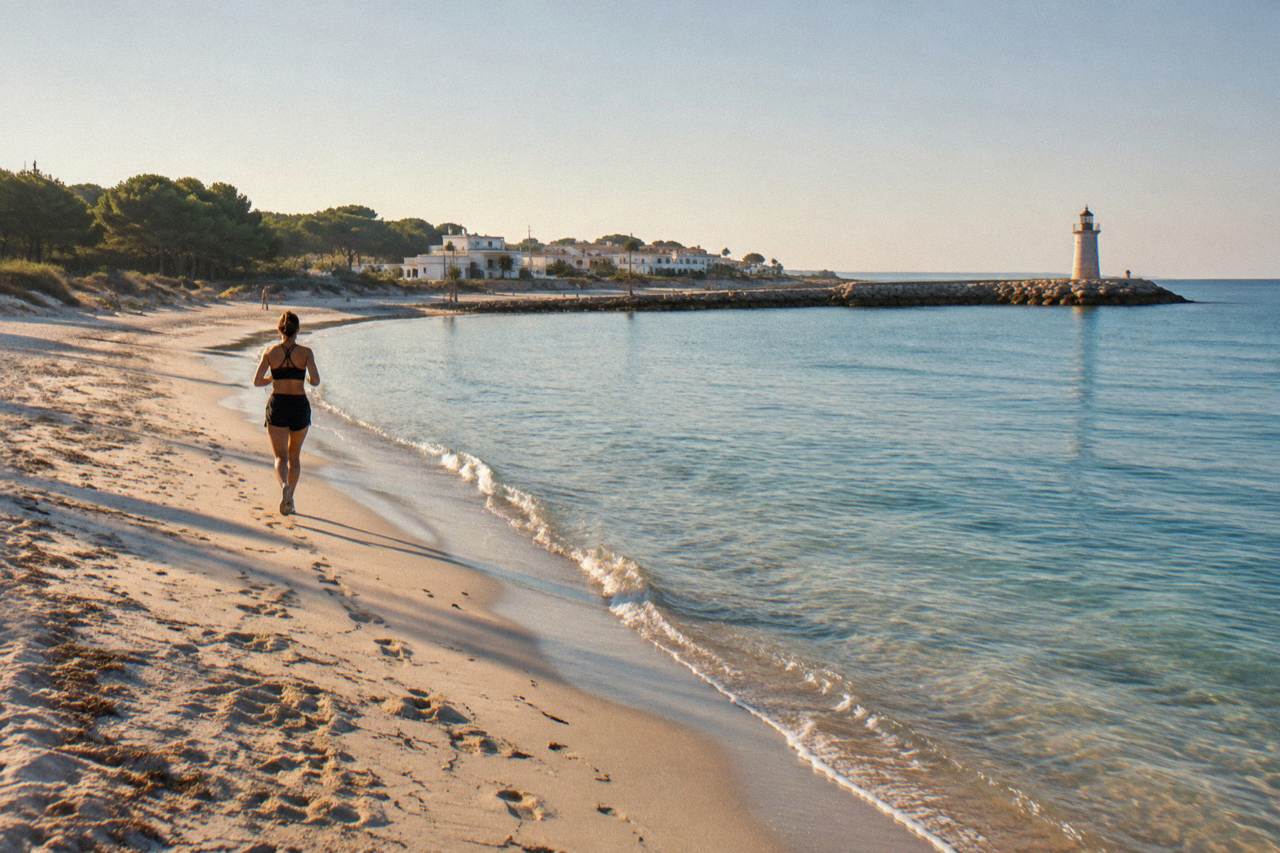
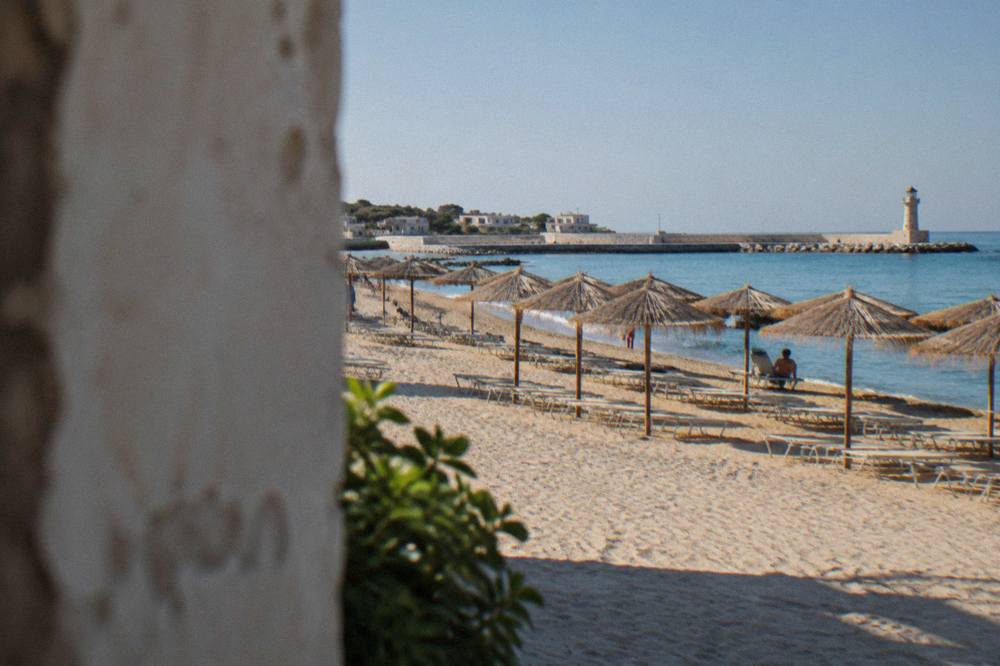
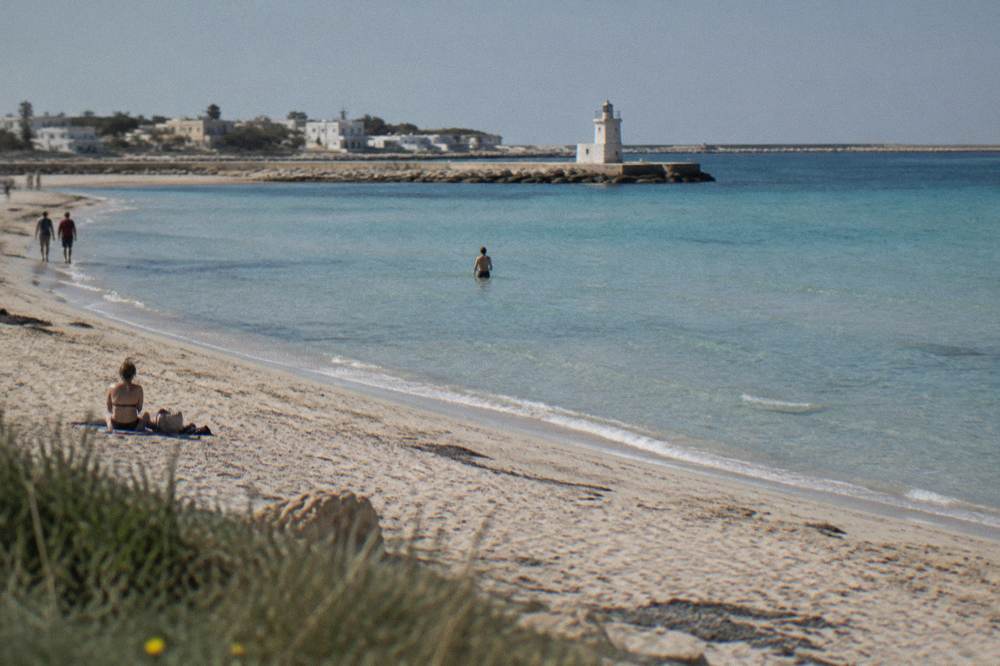
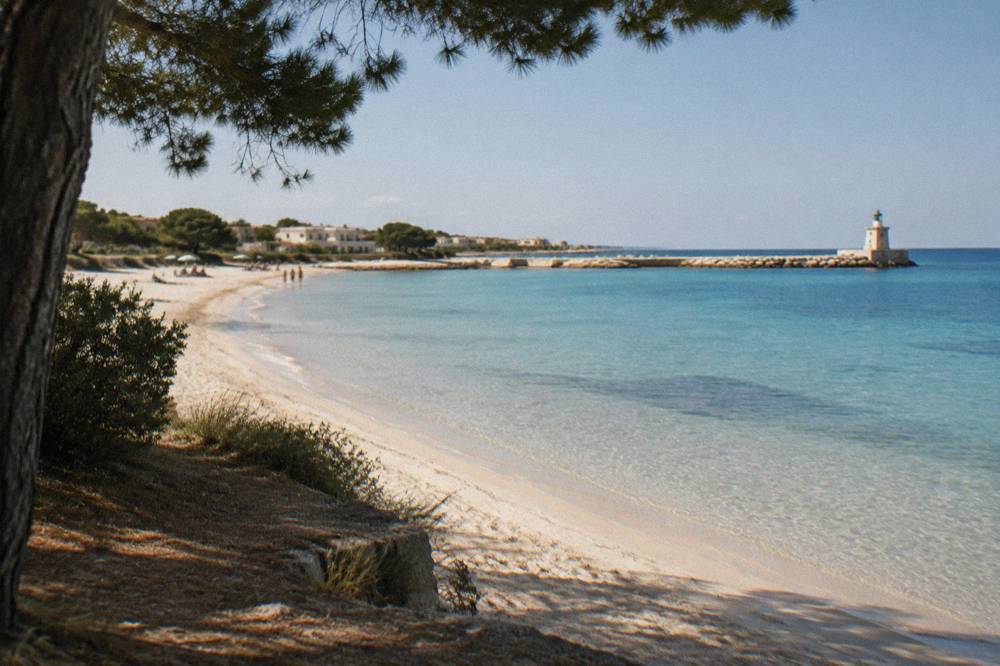
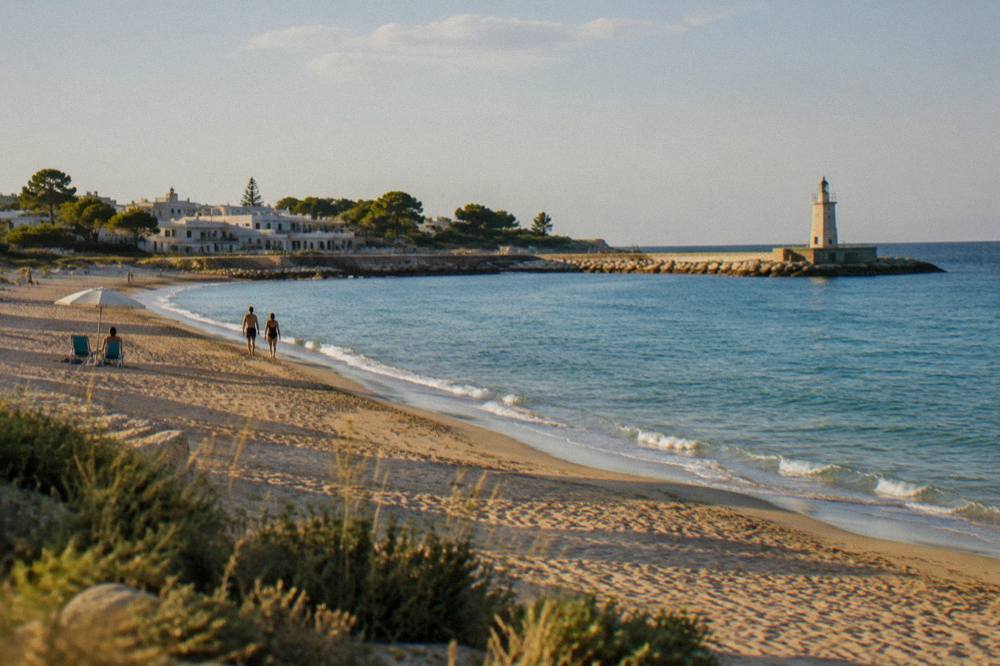
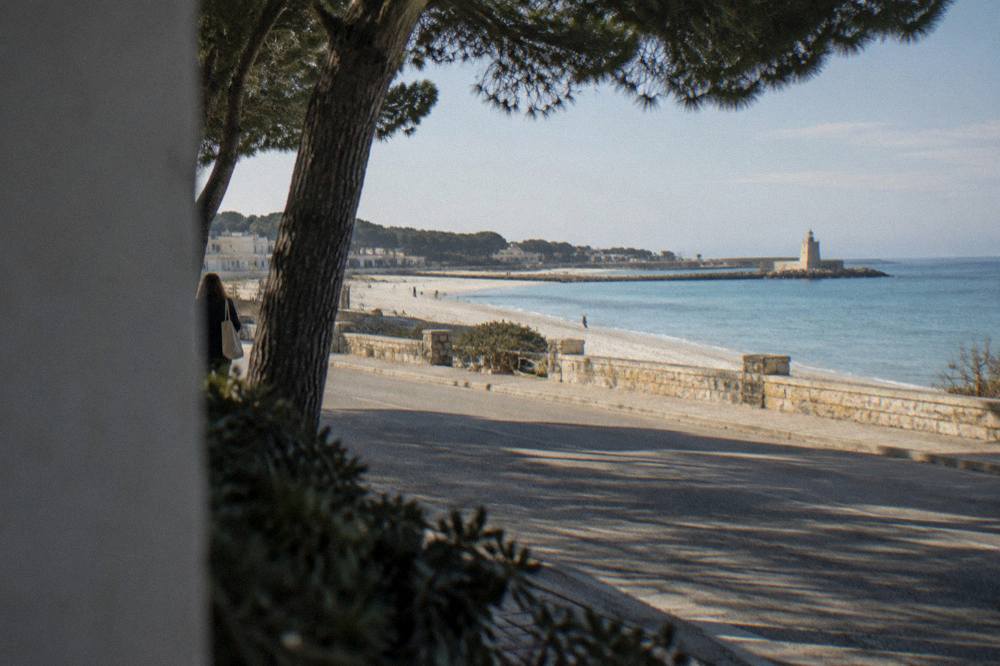
San Cataldo is a low, sandy, gently shelving Adriatic shore backed by a pine forest and a protected reserve, according to the comune of Lecce's own description of the fraction, not a cliff or rocky cove. The beach is divided between organised lidos with umbrellas and sunbeds and free stretches of public sand, and the water stays shallow for a long way out, which suits families with children and steady, easy swimming.
The comune's page on San Cataldo is unusually specific about the setting: a low sandy coast, pine forest, reserve. That reserve, part of the protected woodland belt behind the marine, is what gives the place its character on hot afternoons, when the pines give shade that the open beach cannot. The contrast with the Adriatic coast further south is worth knowing before choosing: around Torre dell'Orso and San Foca the shore mixes sand with rock and dramatic dune-backed stretches, while at Otranto the coast turns to cliffs and pine-framed baie such as Baia dei Turchi, a protected pinewood where visitors park on the SP366 for about 4 to 8 euro a day in high season and walk 10 to 15 minutes in.
The darsena, the small harbour at San Cataldo, marks one end of the beach and gives the fraction its working, faintly industrial edge: this is a genuine local marine, not a resort built for tourism alone. Along the seafront the lidos sit in rows, and behind them the coast road separates the sand from the pine belt and the few streets of houses. The Lecce in summer guide on this site covers how the whole coast behaves in July and August, when the city empties toward the shore on weekends.
How Much Do Lidos At San Cataldo Cost?
An umbrella with two sunbeds per day at San Cataldo ran 15 to 25 euro in June 2026 and 33 to 35 euro in August, per the Udicon survey reported by Corriere Salentino, with the free stretches of beach costing nothing. Those are reported 2026 survey figures for this specific marine, not operator promises, and lido prices change year to year, so confirm at the lido itself.
The Udicon and Adoc consumer surveys reported by Corriere Salentino are the only sourced price series for Salento lidos in 2026, and they place San Cataldo at the affordable end of the regional scale. The same survey found neighbouring Torre Chianca ranging from 15 to 35 euro in June and up to 52 euro in August, Torre dell'Orso and San Foca at 25 to 35 euro in June rising to 50 to 60 euro in August, Otranto between 20 and 50 euro, and the Ionian lidos around Porto Cesareo and Gallipoli higher still at peaks of 40 to 70 euro. Adoc, the second survey, put regional lido inflation at about 25 per cent over five years.
| Marine | June 2026 (umbrella + 2 beds) | August 2026 peak | Coast |
|---|---|---|---|
| San Cataldo | 15 to 25 euro | 33 to 35 euro | Adriatic |
| Torre Chianca | 15 to 35 euro | 25 to 52 euro | Adriatic |
| San Foca / Torre dell'Orso | 25 to 35 euro | 50 to 60 euro | Adriatic |
| Otranto | 20 to 30 euro | 30 to 50 euro | Adriatic |
| Porto Cesareo / Gallipoli | higher | 40 to 70 euro and up | Ionian |
Two practical notes go with the table. First, the figures describe a standard umbrella-and-two-beds setup at an organised lido; free beach access along the public stretches costs nothing, year-round, subject to local ordinances. Second, the cheapest days are the shoulder ones: the June price band reflects low-season lido openings, and the August band the peak weeks, so a September or early-June visit can sit well below both.
What Is The Sea Like At San Cataldo, And When Is It Warm Enough To Swim?
The sea at San Cataldo reaches about 22.5 C in June, 25 to 27 C at the August peak, 20 to 22 C in October and about 14 C in February, per seatemperature.org's Puglia averages. The water is shallow and sandy-bottomed for a long stretch, so it warms early in the season and stays swimmable late, and the bathing season broadly tracks the summer window when lido services run at full strength, mid-June to mid-September.
Those sea temperatures describe the Salento coast generally, and San Cataldo's shallow shelf means the water there behaves like the mild end of the range. For air temperature, the ERA5 reanalysis, 1991-2020, for the Lecce grid cell gives a mean daily high of 28.2 C in June, 31.0 C in July and 31.3 C in August, with rainfall at its monthly minimum in July at 15.3 mm. November is the wettest month at 93.7 mm and October second at 91.3 mm, which is why the beach season contracts so sharply once the lidos close. Everything else covered here is indexed on Lecce Travel Guide.
| Month | Mean high C (ERA5 1991-2020) | Rain mm | Sea C (seatemperature.org) |
|---|---|---|---|
| May | 23.4 | 39.9 | about 18 |
| June | 28.2 | 18.0 | about 22.5 |
| July | 31.0 | 15.3 | about 25 |
| August | 31.3 | 18.1 | 25 to 27 |
| September | 26.4 | 58.9 | about 24 to 25 |
| October | 21.8 | 91.3 | 20 to 22 |
The pattern to read from the table is that the sea stays warm long after the services thin out: an October swim at 20 to 22 C is realistic on a calm day even when the umbrellas are stacked. September, with a mean high of 26.4 C and the sea still near 25 C, is arguably the quiet month that suits this marine best, since the school holidays have ended and the weekend crowds from Lecce ease.
How Does San Cataldo Compare With Lecce's Other Marine?
San Cataldo is the nearest and most low-key of Lecce's five marine, reachable by ordinary city bus in about 20 minutes, while its siblings Frigole, Torre Chianca, Punta Pizzo toward the Ionian side and the others spread west and north with different mixes of sand, rock and services. San Cataldo's edge is proximity and pine shade; the others trade that for dunes, wider sand or emptier stretches, and none of them requires a car if the summer bus network is running.
The comune of Lecce formally lists five marine belonging to the city, a fact many guides skip because the city itself is inland. San Cataldo and Torre Chianca sit closest to the bus spine; Frigole lies just north with its own small harbour character. The comparison that actually matters is not within Lecce's marine at all but along the famous stretch south: Torre dell'Orso with its dune-backed beach, the twin torri and the short walk to Grotta della Poesia at Roca Vecchia, where swimming and diving have been banned since summer 2026 and non-residents of Melendugno paid a 5 euro ticket in the 2026 season, viewing being from the paths only.
| Beach | Distance from Lecce | Free-flow drive | Public transport | Shore type |
|---|---|---|---|---|
| San Cataldo | 12.9 km | about 14 min | SGM line 32, about 20 min | low sand, pine reserve |
| Torre Chianca | nearby, same bus line | short | SGM line 32 | sand |
| Torre dell'Orso | 27.9 km | about 32 min | Salento in Bus 101, 60 min | sand and dunes |
| Otranto | 46.7 km | about 44 min | FSE train via Maglie | cliffs and baie |
| Gallipoli | 41.0 km | about 41 min | FSE train direct | island old town, sand |
| Porto Cesareo | 28.0 km | about 34 min | Salento in Bus 104 | Ionian sand |
The drive times come from routing-engine calculations in free-flow conditions; summer traffic on the coast road, especially weekend evenings, can stretch them considerably. Readers weighing San Cataldo against a bigger day out can also compare the Ionian alternatives in which is the most beautiful beach town in Puglia.
What Else Can You Do Around San Cataldo Beyond The Sand?
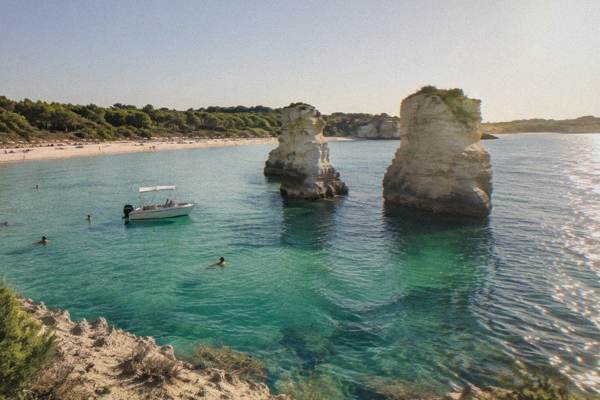
Beyond the beach itself, San Cataldo's surroundings offer the pine forest reserve walks, the small darsena harbour, the short hop to neighbouring Torre Chianca and Frigole, and the launch point for boat and snorkel trips along the Adriatic cliffs north toward San Foca and the sea stacks of Torre Sant'Andrea, reached by operators running from the nearby marine. Inland, the flat country between the coast and Lecce is olive-grove and masseria land, with farm visits and tastings a short drive from the shore.
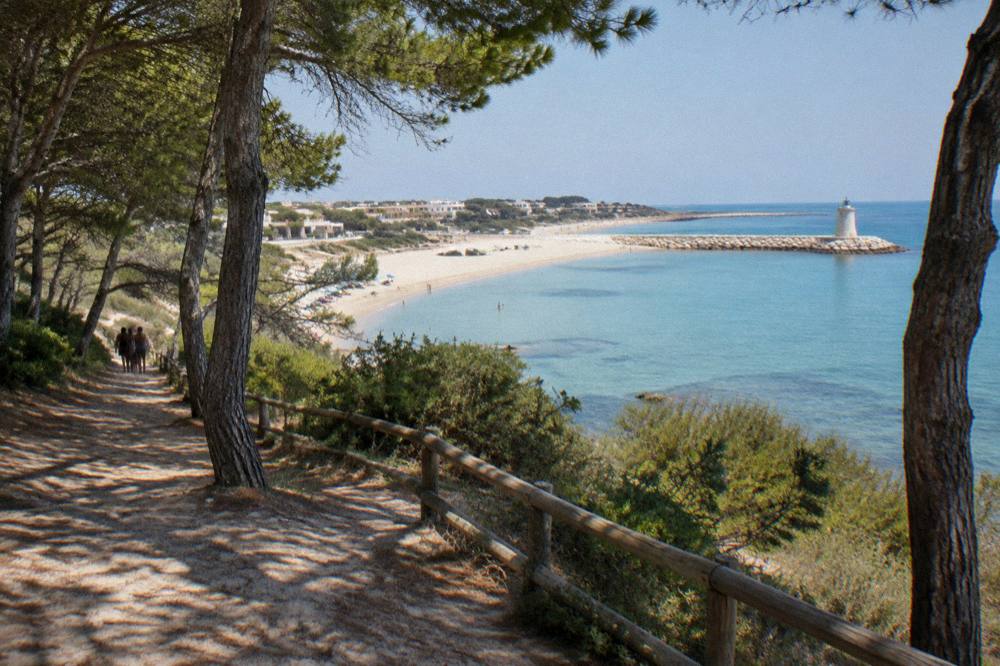
The reserve behind the beach is the underrated half of San Cataldo. The pine belt is protected land, and its shaded paths are what make the fraction bearable in the August heat that pushes the ERA5 mean high to 31.3 C. Early mornings belong to walkers and runners on the coast road and the tracks behind the darsena; by midday the same shade shelters families escaping the open sand.
For the water itself, the interesting geology sits north of San Cataldo rather than at it. The coast toward San Foca and Torre Sant'Andrea is where the Adriatic turns rocky and spectacular, and a snorkel cruise from San Foca to Torre Sant'Andrea covers exactly that stretch, with the site's featured option bookable via Check availability at the operator's live listing. San Foca is a short hop up the coast from San Cataldo, so a beach base here doubles as a base for the boat day. Further afield, the cave coast at Castro includes Grotta Zinzulusa, with year-round guided visits at 7 euro full and 4 reduced per the cave's own site.
Inland, the flat land between San Cataldo and Lecce is classic Salento olive country, and two kinds of half-day sit naturally alongside a beach morning. A masseria visit with cheese and burrata tasting introduces the farm economy that feeds the coast, while an e-bike loop from the city through olive groves and past ancient masserias to a seaside village turns the commute itself into the excursion. Both are covered by the options below.
Where Can You Eat Near San Cataldo?
San Cataldo's eating is beach-franchise practical: lido bars and small restaurants along the coast road serving the Salento standards, with no venue on this stretch carrying a verified review profile in the site's sources, so no meal prices, addresses or recommendations can responsibly be printed here. For the dishes themselves, the regional canon applies: pasticciotto, rustico leccese, frisa, puccia and iced coffee with almond milk, all covered in the site's food guides.
The honest position is that the verified food facts in this site's sources attach to Lecce city venues, not to San Cataldo's seafront. What can be said is regional: the caffè in ghiaccio con latte di mandorla, espresso over ice with almond milk syrup, is credited to Antonio Quarta of Quarta Caffè in Lecce in the 1940s to 1950s and entered Italy's PAT traditional-products list in 2026, and it is the canonical beach drink of the province. A pasticciotto from a Lecce pasticceria on the way out of the city, at a reported 2.20 euro for one named example, is the other ritual.
Visitors who want the farmhouse version of Salento cooking rather than the beach-bar version can pair the coast with an inland tasting stop, which is exactly the structure of the masseria visit below: cheese, burrata and the farm courtyard, with the shore 20 minutes away for the afternoon.
Is San Cataldo Worth The Trip From Lecce?
San Cataldo is worth the trip for what it uniquely is: the nearest beach to Lecce, about 13 km away, served by an ordinary city bus in about 20 minutes, with low sand, shallow water and pine shade, and lido prices at the affordable end of the 2026 regional survey at 15 to 25 euro in June. It is not worth the trip for dramatic coastline or famous water; that lies north toward Torre Sant'Andrea or across on the Ionian, and day-trippers seeking spectacle should route there instead.
The verdict, in other words, depends on the day you are planning. A city break in Lecce with one beach afternoon bolted on is San Cataldo's exact use case: bus out, umbrella or free sand, swim, iced coffee, bus back, evening in the old town. A holiday organised around the sea is better built on Torre dell'Orso, Otranto, Gallipoli or the Ionian marine, with San Cataldo as the fallback for late arrivals or lazy mornings. The two-marine structure of the comune, San Cataldo and Torre Chianca side by side on the same bus line, also means a first reconnaissance can cover both in one afternoon.
What Should You Know Before Visiting San Cataldo?
Before visiting San Cataldo, know the practical frame: it is a fraction of Lecce with no through airport anywhere near it, the nearest airport being Brindisi about 47.6 km and 43 minutes by road from the city; Italy uses the euro and is a Schengen member; the emergency number is 112; and Lecce's tourist tax, collected by accommodation from 1 April 2026 at rates up to 5 euro per night for five-star high season, is confirmed at booking rather than at the beach.
A few details specific to the coast complete the picture. Sun protection matters more than the latitude suggests: the ERA5 reanalysis, 1991-2020, puts the mean daily high at 31.3 C in August, and the pine shade that rescues the afternoon is behind the lidos, not on the open sand. Free beach access runs year-round where the shore is open, subject to weather and local ordinances, but lido services and full-frequency buses concentrate in the summer window. The summer-only Salento in Bus network, useful for reaching the marine further out, ran 13 June to 13 September in 2026 and had not announced 2027 dates. Shade, water and a hat solve the rest.
| Practical item | Detail | Source basis |
|---|---|---|
| Nearest airport | Brindisi (BDS), 47.6 km / about 43 min by road | routing computation |
| City bus to beach | SGM line 32, about 20 min, about 1.20 euro | operator tariffs |
| Lido day cost | 15 to 25 euro June, 33 to 35 euro Aug 2026 | Udicon survey via Corriere Salentino |
| Emergency number | 112 | national service |
| Currency | euro | country fact |
| Tourist tax | up to 5 euro per night, top rate, from 1 April 2026 | comune tariff page |
Common Questions About San Cataldo
How far is San Cataldo beach from Lecce?
San Cataldo is about 13 km east of Lecce, 12.9 km by road from Piazza Sant'Oronzo, with a free-flow drive of about 14 minutes. It is the nearest beach to the city and belongs administratively to the comune of Lecce as one of its five marine.
Is there a bus from Lecce to San Cataldo?
Yes. SGM city bus line 32 runs from Lecce's City Terminal to San Cataldo, serving the lidi, the rotunda and the darsena, in about 20 minutes. The ordinary 60-minute ticket costs about 1.20 euro bought in advance or 1.50 euro on board, per the operator's tariffs, and summer frequencies have been advertised at a bus every 30 minutes.
Is San Cataldo a sandy beach?
Yes. The comune of Lecce describes San Cataldo as a low sandy coast with a pine forest and reserve behind it. The water shelves gently over sand, which suits families and easy swimming; rockier, cliffier Adriatic scenery lies further north toward Torre Sant'Andrea.
How much does a sunbed and umbrella cost at San Cataldo?
Reported 2026 survey figures put an umbrella with two sunbeds at 15 to 25 euro per day in June and 33 to 35 euro in August at San Cataldo, per the Udicon survey reported by Corriere Salentino. Prices change by year and lido, so confirm at the lido; the free public stretches of sand cost nothing.
When can you swim at San Cataldo?
Sea temperatures per seatemperature.org reach about 22.5 C in June, 25 to 27 C at the August peak, 20 to 22 C in October and about 14 C in February. The full lido and bus season runs roughly mid-June to mid-September, but free beach access is year-round subject to local ordinances.
Is San Cataldo or Torre dell'Orso better?
San Cataldo wins on proximity: an ordinary city bus, about 20 minutes, low sand and pine shade, with the cheapest reported lido prices in the 2026 regional survey. Torre dell'Orso, about 32 minutes by car or an hour on the summer 101 bus, offers dune-backed sand and proximity to Grotta della Poesia, where bathing is banned and a 5 euro ticket applied for non-residents in 2026. Choose San Cataldo for convenience, Torre dell'Orso for a bigger beach day.