What Is The Most Beautiful Beach Town In Puglia?
There is no verified ranking of Puglia's beach towns. This guide covers Lecce, the baroque capital of Salento, and reports the sourced facts about the coastal towns around it.
Lecce, the baroque capital of Salento in Puglia, southern Italy, sits a few kilometres inland, so it cannot itself be the answer to this question: the nearest beach, San Cataldo, is 12.9 km away. The honest answer is that no official or verified ranking names the most beautiful beach town in Puglia, and this guide covers Lecce and the Salento coast around it rather than pretending otherwise. What the sources do give is concrete: drive and train times from Lecce, reported 2026 lido prices, sea temperatures, and a handful of named distinctions such as Pescoluse's 2026 Blue Flag. Beauty stays a matter of taste, but the logistics of reaching each candidate are not.
What Is The Most Beautiful Beach Town In Puglia?
There is no verified ranking, contest or official designation that names one beach town in Puglia as the most beautiful, and any page that crowns a single winner is offering an opinion. What can be reported is the sourced field of candidates within reach of Lecce: Otranto, Gallipoli, Castro, Santa Maria di Leuca, Porto Cesareo, Torre dell'Orso and Pescoluse each have documented coastline facts, access times and 2026 beach-club prices.
The towns that usually anchor the conversation are the ones with a verifiable claim to notice rather than a vague reputation. Pescoluse, a marina of Salve on the Ionian side, is called the "Maldives of Salento" in area listings and held a Blue Flag in 2026, per puglia.info. Castro's Grotta Zinzulusa, a sea cave on the Adriatic, runs guided visits year-round at 7 euro full and 4 euro reduced, per the cave's own ticket page. Otranto's cathedral mosaic, dated 1163 to 1165 by the priest Pantaleone, sits a short walk from that town's beaches.
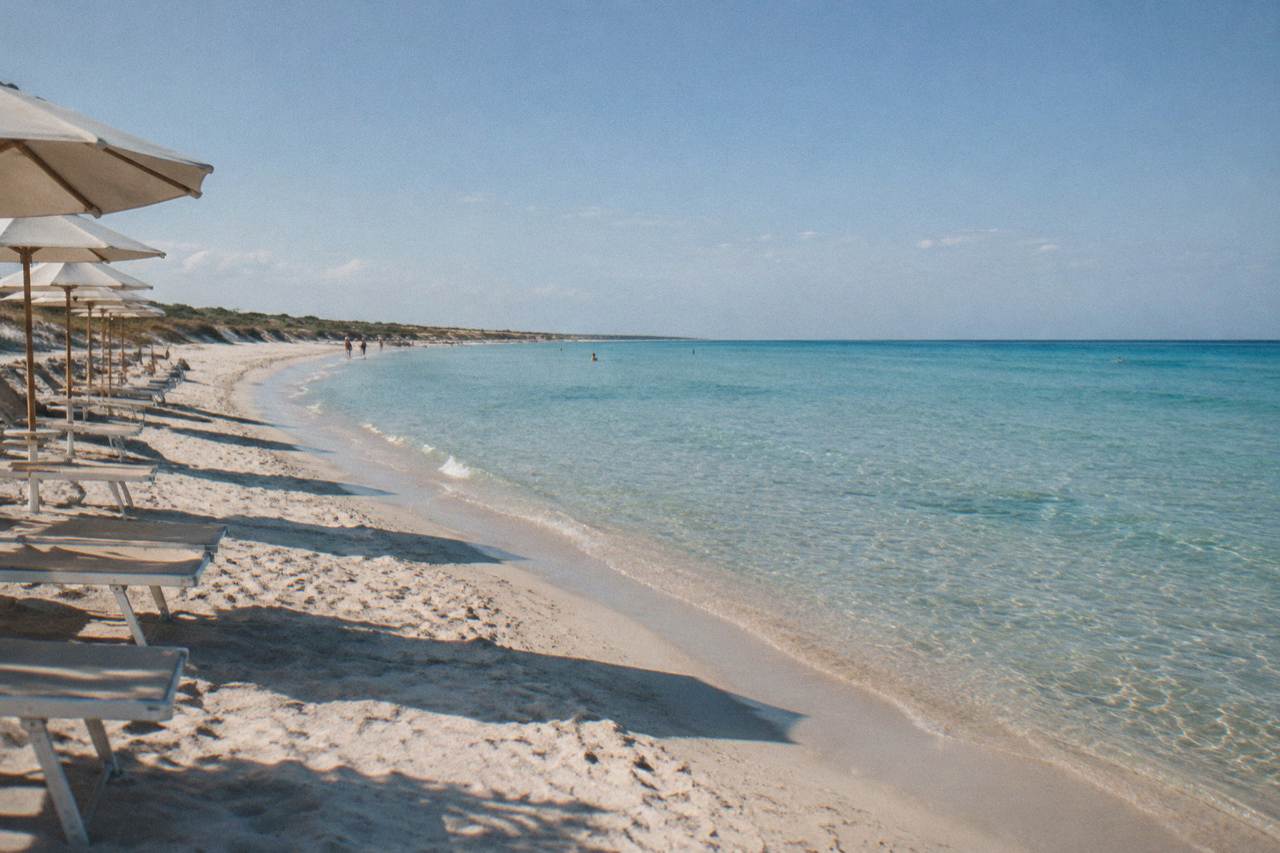
Geography does the first sorting. The Adriatic side of the peninsula, east and south of Lecce, is the cliffier, rockier coast: Otranto, Castro, Santa Maria di Leuca and the Torre dell'Orso area. The Ionian side to the west is the sandy, shallower one: Porto Cesareo, Gallipoli's Baia Verde and Pescoluse. Neither coast is ranked anywhere in the sources, and this site ranks nothing. Readers who want the full regional picture can start from the Salento peninsula overview and work outward.
Which Coastal Towns Near Lecce Lead The Argument?
The strongest documented candidates around Lecce are Otranto, about 46.7 km and 44 minutes by road from Piazza Sant'Oronzo; Gallipoli, 41.0 km and 41 minutes; Porto Cesareo, 28.0 km and 34 minutes; Torre dell'Orso, 27.9 km and 32 minutes; Castro, 47.4 km and 48 minutes; and Santa Maria di Leuca, 83.2 km and 78 minutes. These are free-flow drive times computed by routing engine, not opinions about scenery.
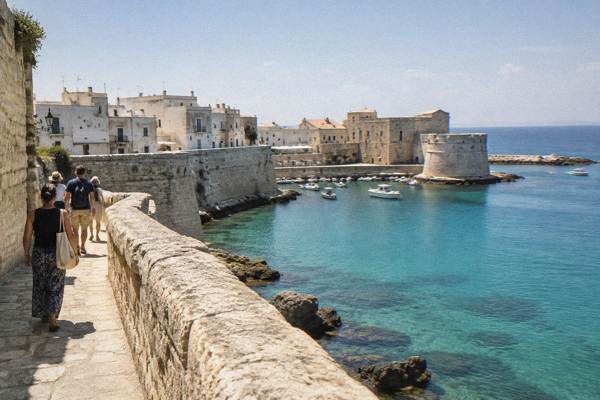
Each town brings something the sources actually record. Otranto pairs its beaches with the cathedral mosaic and an Aragonese castle whose tickets run from about 6 euro in low season to about 12 euro in high season, per the Comune di Otranto's own service page. Gallipoli's old town sits on a limestone island linked to the mainland by a bridge, per visit-gallipoli.com. Torre dell'Orso sits near the Grotta della Poesia at Roca Vecchia, where bathing and diving have been banned since summer 2026 and non-residents of Melendugno paid a 5 euro ticket in the 2026 season; the view from the paths is what remains, and 2027 rules had not been announced.
Baia dei Turchi, outside Otranto, is a protected pinewood beach where car access is limited: parking on the SP366 cost about 4 to 8 euro a day in the 2026 high season, followed by a 10 to 15 minute walk through the pines, per idealista.it. That kind of constraint shapes the experience of a "beautiful" beach as much as the water does, and it is the sort of fact worth having before choosing a town. For the town nearest Lecce itself, the San Cataldo day-trip guide covers the local marine.
Reported 2026 beach-club prices add a second axis of comparison. Per a Udicon survey reported by Corriere Salentino, an umbrella and two sunbeds per day cost 15 to 25 euro in June at San Cataldo, rising to 33 to 35 euro in August; at Torre dell'Orso and San Foca the range ran 25 to 35 euro in June and 50 to 60 euro in August; Otranto spanned 20 to 50 euro across the season, with Ionian lidos generally higher. Prices change by year, so treat these as reported planning ranges, not promises.
| Town | Drive from Lecce | Coast | Documented distinction (source) |
|---|---|---|---|
| Otranto | 46.7 km / about 44 min | Adriatic | Cathedral mosaic 1163 to 1165; castle tickets about 6 to 12 euro (Comune di Otranto) |
| Gallipoli | 41.0 km / about 41 min | Ionian | Old town on a limestone island linked by a bridge (visit-gallipoli.com) |
| Castro | 47.4 km / about 48 min | Adriatic | Grotta Zinzulusa guided visits year-round, 7 / 4 euro (cave's ticket page) |
| Porto Cesareo | 28.0 km / about 34 min | Ionian | Sandy shallows; snorkelling cruises depart locally |
| Torre dell'Orso | 27.9 km / about 32 min | Adriatic | Near Grotta della Poesia, bathing banned since summer 2026 |
| Pescoluse | Ionian, south-west | Ionian | "Maldives of Salento", Blue Flag 2026 (puglia.info) |
Getting out on the water is one way to judge the coastline for yourself, and boat and bike options from Lecce render their live prices and ratings through the picks below rather than through any figure typed here.
How Do You Reach The Salento Beach Towns From Lecce?
By train, FSE regional services run direct from Lecce to Gallipoli in about 1h18 to 1h43 and to Galatina in about 38 to 55 minutes, with Otranto reached by changing at Maglie in about 1h33 to 2 hours or more. In summer the Salento in Bus network ran 13 June to 13 September 2026 with lines to Torre dell'Orso, Otranto, Porto Cesareo, Gallipoli and Leuca, fares 1.10 to 5 euro.
Without a car, the season matters. Salento in Bus is a summer-only service: in 2026 it peaked between 1 July and 31 August on lines 101, 104 and 107/108, per the operator Cotrap, and its 2027 dates had not been announced. Off season, the train is the backbone: FSE fares in 2026 ran from 1.30 euro for 1 to 10 km up to 5.40 euro for 51 to 60 km, per the operator's tariff sheet. The Salento in Bus guide lays out the lines in detail, and the Torre dell'Orso day-trip page covers that stretch of coast specifically.
The boat angle deserves a note here, because half of Salento's coastal beauty is vertical: cliffs and caves that a beach towel never shows you. The caves of Santa Maria di Leuca, at the peninsula's southern tip, are the signature example, and a group boat trip there is this site's featured tour for the coast. The listing renders current pricing and ratings itself, so check it live rather than relying on any figure quoted second-hand. Other pages covering the same trip are gathered on Lecce Travel Guide.
Is Lecce Itself A Beach Town?
No. Lecce is an inland baroque city about 13 km from the sea at San Cataldo, and its documented identity is architectural: pietra leccese limestone, the Lecce Baroque style, a Duomo and a Basilica di Santa Croce covered by the LeccEcclesiae combined ticket at 11 euro standard. The city is a base for the coast, not a part of it.
That inland position is exactly why the "most beautiful beach town" question resolves differently here than in, say, a resort town. Lecce's own facts are about stone and churches: the LeccEcclesiae ticket covers five religious sites and stays valid 15 days, per chieselecce.it, and the Castello Carlo V interior is visitable by guided tour only, at 10 euro full. None of that is beach material, and the city makes no claim to be.
What Lecce offers instead is geometry. San Cataldo, the nearest beach, is 12.9 km away, about 14 minutes by road, and SGM city bus line 32 runs there from the City Terminal in about 20 minutes in the summer schedule. From there the whole Salento coast unfurls in both directions, Adriatic to the east and Ionian to the west, which is why the question of which town is most beautiful usually turns into a question of which coast, covered next.
| Coast | Character | Named towns from Lecce | Reported 2026 sea temperature (seatemperature.org) |
|---|---|---|---|
| Adriatic (east) | Cliffier, rockier, sea caves | Otranto, Castro, Torre dell'Orso, San Cataldo, Santa Maria di Leuca | About 22.5 C in June, 25 to 27 C at the August peak |
| Ionian (west) | Sandy, shallower | Porto Cesareo, Gallipoli, Pescoluse | Same regional averages, 20 to 22 C lingering into October |
Which Coast Suits You Better, Adriatic Or Ionian?
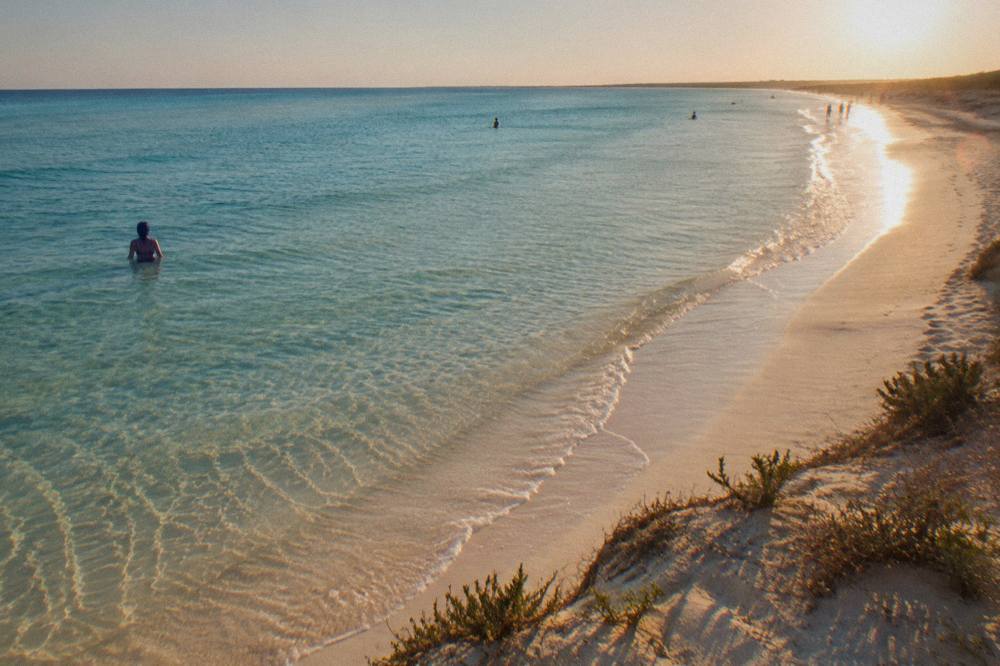
As general geography, the Adriatic side east of Lecce is the cliffy, rockier coast with sea caves at Castro and Leuca, while the Ionian side to the west is the sandy, shallower one with Pescoluse's dunes and Porto Cesareo's shallows. The sources rank neither coast above the other, and this site prints no "best beach" verdict; the choice is between rock and sand, caves and shallows.
The practical differences are documented. Sea temperature, per seatemperature.org regional averages, runs about 22.5 C in June, peaks at 25 to 27 C in August, holds 20 to 22 C in October and drops to about 14 C in February, so the swimming season is effectively June through September, which matches the 2026 Salento in Bus window almost exactly. Lido pricing tilts toward the Adriatic being cheaper: the Udicon survey reported Ionian lidos generally higher than the Adriatic ones, with Porto Cesareo and Gallipoli peaks noted above 40 to 70 euro for an umbrella and two beds.
For readers weighing a summer base, the sourced comparison is only about access and what each place offers; there is no verified "best base" ranking, and none is invented here. What is documented is that Lecce sits between the two coasts with roughly 30 to 80 minutes of road or rail to every major candidate, a point expanded in how many days you need in Lecce. Readers curious about the region as a whole can also see the most beautiful part of Puglia, which faces the same absence of any official ranking with the same honesty.
A snorkelling cruise from the Adriatic side rounds out the water-based options, again with price and rating rendered by the listing rather than typed here.
Common Questions About The Most Beautiful Beach Town In Puglia
What Is The Most Beautiful Beach Town In Puglia?
No verified ranking exists. The documented candidates around Lecce include Otranto, Gallipoli, Castro, Porto Cesareo, Torre dell'Orso and Pescoluse, each with sourced access times, 2026 lido prices or named distinctions such as Pescoluse's 2026 Blue Flag. Any single winner is an opinion.
Is Lecce a beach town?
No. Lecce is an inland baroque city; its nearest beach is San Cataldo, 12.9 km away, about 14 minutes by road or 20 minutes on the summer SGM bus line 32. The city is a base for both coasts of Salento.
Can you swim at Grotta della Poesia?
No. Bathing and diving have been banned since summer 2026, and non-residents of Melendugno paid a 5 euro ticket in the 2026 season. The pools are viewed from paths only; the 2027 rules had not been announced.
How much do beach clubs cost in Salento?
Per a Udicon survey reported by Corriere Salentino, an umbrella and two sunbeds per day ran 15 to 25 euro in June at San Cataldo, 33 to 35 euro there in August, and 25 to 35 euro rising to 50 to 60 euro at Torre dell'Orso and San Foca. Ionian lidos were generally higher. Prices change by year.
When can you reach the beach towns without a car?
Easiest in summer. The Salento in Bus network ran 13 June to 13 September 2026 on lines to Torre dell'Orso, Otranto, Porto Cesareo, Gallipoli and Leuca, with fares from 1.10 to 5 euro. Off season, FSE trains serve Gallipoli, Galatina and Otranto with a change at Maglie.
Which coast near Lecce is sandy?
The Ionian side to the west is the sandy, shallower coast, including Porto Cesareo, Gallipoli's Baia Verde and Pescoluse. The Adriatic side to the east is cliffier and rockier, with sea caves at Castro and Santa Maria di Leuca. The sources rank neither above the other.