Salento In Bus: The Summer Beach Buses From Lecce
Lecce sits inland, a few kilometres from the sea, and every summer a provincial bus network carries the city out to both coasts of the Salento peninsula. Here is what Salento in Bus covered in 2026, what it cost, and how to plan a beach day from the baroque old town without a car.
Short answer
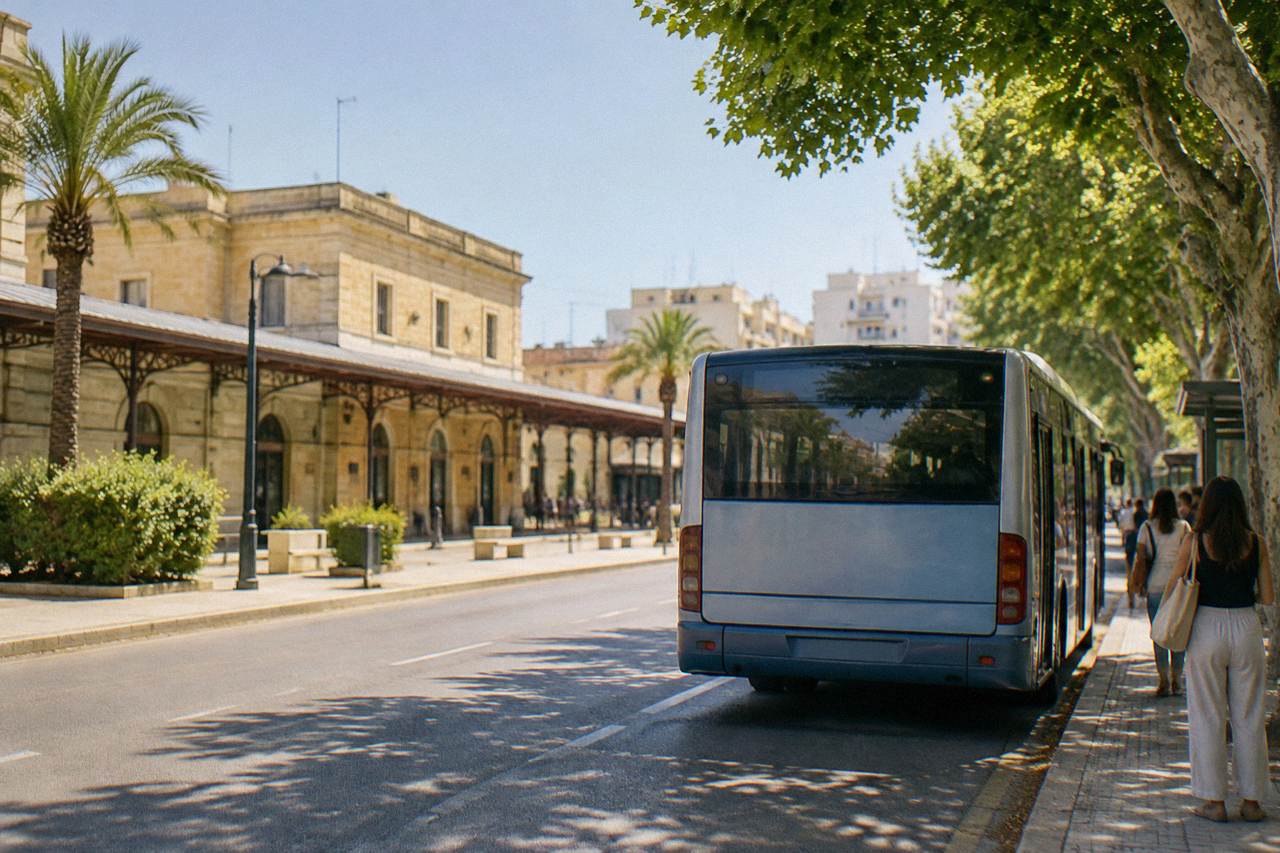
Salento in Bus is Cotrap's summer-only bus network from Lecce. The 2026 season ran 13 June to 13 September, with peak frequency 1 July to 31 August. Line 101 served Torre dell'Orso and Otranto, line 104 served Porto Cesareo and Gallipoli, and lines 107 and 108 ran towards Santa Maria di Leuca. Reported fares ran from 1.10 to 5 euro, plus 1 euro on board, with children under 10 free.
Salento in Bus is the summer bus network that carries Lecce, the baroque capital of Salento in Puglia, southern Italy, from its inland old town out to the beaches of the peninsula. Lecce sits a few kilometres from the sea: San Cataldo, the nearest stretch of sand, lies about 13 km east of Piazza Sant'Oronzo, and the two coasts fold around the heel of Italy, the rockier Adriatic to the east and the sandier Ionian to the west. The 2026 season ran from 13 June to 13 September, with the busiest timetables between 1 July and 31 August, and the operator Cotrap ran about ten main lines plus support services. This guide sets out what the network covers, what it costs, and how it fits into a Lecce summer.
What Is Salento In Bus, And Who Runs It?
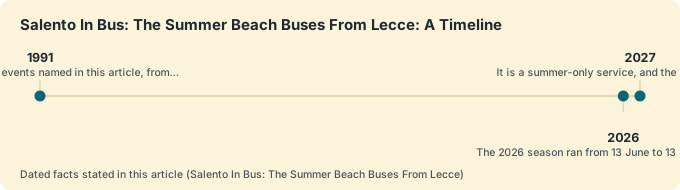
Salento in Bus is a seasonal summer bus network run by Cotrap with provincial partners, linking Lecce's city terminal to the beaches and coastal towns of the Salento peninsula in Puglia. The 2026 season ran from 13 June to 13 September, with peak frequency from 1 July to 31 August. It is a summer-only service, and the 2027 season dates had not been announced, so the place to check each spring is Cotrap's own site.
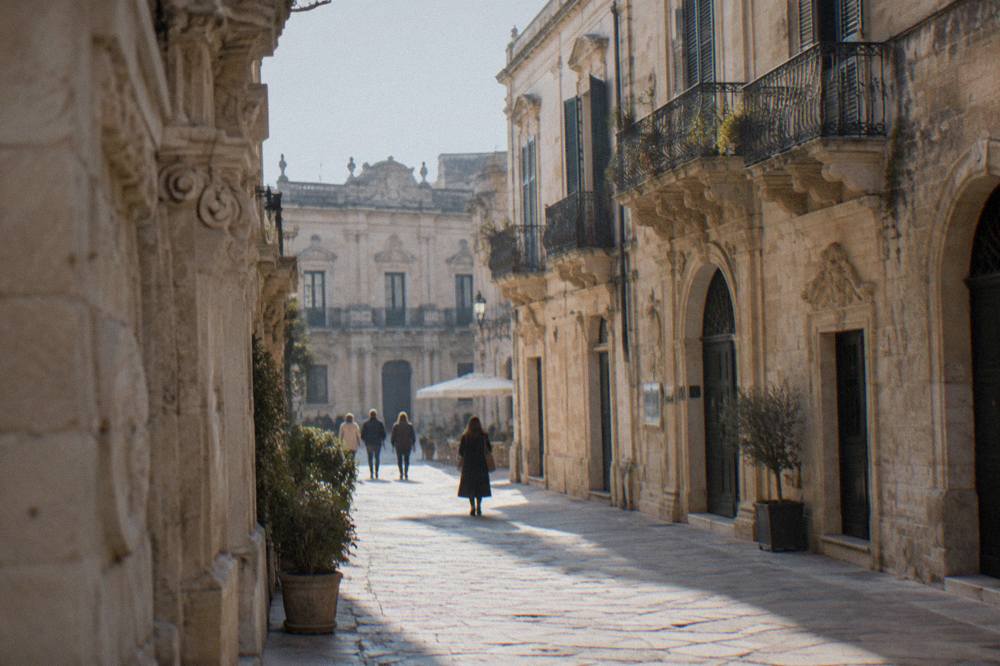
The reason the network exists is geography. Lecce is a city of honey-coloured pietra leccese limestone, a university town of about 94,387 residents with roughly 20,774 students enrolled at the Università del Salento, and none of it sits on the water. The beaches begin at San Cataldo on the Adriatic and spread down both sides of the peninsula. A summer visitor based in the old town who does not want to hire a car needs exactly what this network provides: a scheduled way out to the coast and back.
The branding matters more than the operator. "Salento in Bus" describes the provincial summer service, sold through Cotrap's channels, while SGM runs the ordinary city buses in Lecce itself. The two systems meet at the City Terminal, and a beach day from Lecce can involve both: an SGM bus to reach the terminal, then a Salento in Bus line out to the coast. The getting around Lecce guide covers the city side of that handoff in detail.
The 2026 network, as reported by Cotrap and by the provincial announcements, looked like this:
| Line | Route reported for 2026 | Service pattern in 2026 |
|---|---|---|
| 101 | Lecce, Torre dell'Orso, Otranto | Daily through the season, extra runs in the peak |
| 104 | Lecce, Porto Cesareo, Gallipoli | Daily through the season, extra runs in the peak |
| 107 / 108 | Lecce towards Gallipoli and Santa Maria di Leuca | Daily through the season, evening and express options reported |
About ten main lines plus support services ran in the peak, and the network also carried night services in the high weeks of July and August, per the provincial announcements for 2026. The season is short and the service is popular, which is why the rest of this guide keeps returning to the same two pieces of advice: buy the ticket before boarding, and read the year's own timetable before locking in a plan.
Which Beaches Do The Salento In Bus Lines Reach From Lecce?
Line 101 ran from Lecce to Torre dell'Orso and Otranto on the Adriatic, line 104 ran to Porto Cesareo and Gallipoli on the Ionian, and lines 107 and 108 ran south towards Santa Maria di Leuca, so the 2026 network covered both coasts of the peninsula. San Cataldo, the nearest beach to Lecce, sits outside the Salento in Bus network: SGM city bus line 32 reaches it from the City Terminal in about 20 minutes.
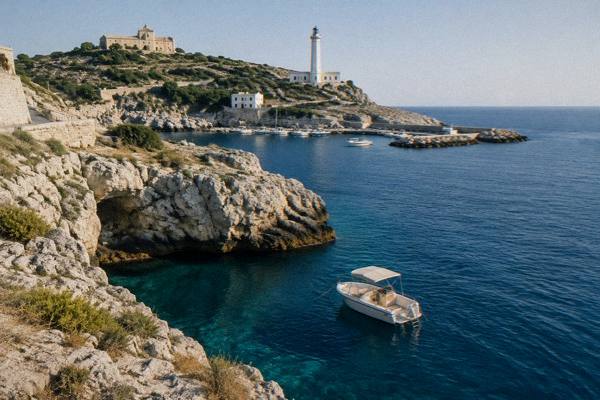
The two coasts are different, and the bus lines reflect that. The Adriatic side is the cliffier, rockier coast, with limestone shelves, small coves and pine woods behind the sand. The Ionian side is the sandier, shallower one, with long white beaches and turquoise water that earns comparisons with farther-flung seas. A visitor with a week in Lecce can honestly do both, because the lines run on the same summer schedule.
Here is how the main beach destinations lined up in 2026, with the reported road times from Piazza Sant'Oronzo for comparison:
| Destination | Coast | Bus link from Lecce | Reported drive time from Lecce |
|---|---|---|---|
| San Cataldo | Adriatic | SGM line 32, about 20 min | About 14 min, 12.9 km |
| Torre dell'Orso | Adriatic | Salento in Bus line 101, about 60 min reported | About 32 min, 27.9 km |
| Otranto | Adriatic | Salento in Bus line 101 | About 44 min, 46.7 km |
| Porto Cesareo | Ionian | Salento in Bus line 104 | About 34 min, 28.0 km |
| Gallipoli | Ionian | Salento in Bus line 104 | About 41 min, 41.0 km |
| Santa Maria di Leuca | Ionian tip | Salento in Bus lines 107 and 108 | About 78 min, 83.2 km |
Torre dell'Orso deserves a note of its own, because the line 101 stop opens onto one of the most photographed stretches of the Adriatic coast. The Torre dell'Orso day trip guide covers the beach and the nearby lakes. Just up the coast, San Foca and Torre Sant'Andrea sit among sea stacks and rocky inlets, and the water there is the clearest on this side of the peninsula. That stretch of coast is also the departure point for one of the boat trips this site features: the San Foca snorkel cruise to Torre Sant'Andrea, which runs along the cliffs and stops for swims. Check availability.
San Cataldo is the everyday beach, the one leccesi themselves use, and the San Cataldo guide explains the pine forest and the marina. It is also the cheapest and quickest of the lot, which matters on a hot afternoon when the idea of a second hour on a bus is unwelcome. For everything else along both shores, the beaches near Lecce guide and the wider Salento beaches guide map the coast stop by stop.
How Much Do Salento In Bus Tickets Cost, And Where Do You Buy Them?
Reported fares for the 2026 season ran from 1.10 to 5 euro depending on distance, with a 1 euro surcharge added for tickets bought on board, and children under 10 travelled free. Tickets were sold through Cotrap's own channels, online and in the app, before boarding. The 2027 fares had not been announced, so treat these figures as the latest reported season rather than a standing price list.
The distance-based structure means a short hop costs little and the long run down to Leuca costs the most. The surcharge for paying the driver is the detail that catches people out: a ticket bought at the terminal or in the app is simply cheaper than the same ticket bought stepping on. The full picture for 2026, including the city buses for comparison:
| Ticket | Reported 2026 price |
|---|---|
| Salento in Bus single, distance based | 1.10 to 5 euro |
| Salento in Bus single bought on board | Plus 1 euro |
| Child under 10 on Salento in Bus | Free |
| SGM city bus, 60 minutes | About 1.20 euro, 1.50 on board |
| SGM city bus day ticket | About 3 euro |
The SGM figures matter here because San Cataldo, the nearest beach, is reached on the city network rather than the summer one. A 60-minute ticket covers the ride out, and a day ticket covers a round trip with an afternoon on the sand. The two systems use different sales channels, so a visitor planning both in one week buys from SGM for the city and the near beach, and from Cotrap for the Salento lines.
One more cost belongs in any Lecce summer budget, though it has nothing to do with buses. The municipal tourist tax is collected by the accommodation, per person per night, with a top reported rate of 5 euro for the highest category in high season. Confirm the exact amount at booking, because rates changed on 1 April 2026 and vary by structure and season.
For the hours the buses do not cover, the sea keeps its own schedule, and the caves of Santa Maria di Leuca are reached by water rather than road. Check availability if a boat morning fits the plan better than a bus afternoon.
What Time Do The Buses Run Through The Summer?
In 2026 the season opened at reduced frequency on 13 June, ran at full frequency from 1 July to 31 August, and dropped back to reduced service for the first thirteen days of September before closing on 13 September. Evening and night runs were reported in the peak weeks. The timetable is built around beach days rather than late nights, so the year's schedule is worth reading before planning a sunset return.
The reduced shoulders matter more than they sound. A visitor arriving in late June finds a thinner service than the one running in July, and the same applies to the first days of September. The peak, 1 July to 31 August, is when the extra lines appear, when the frequency rises, and when the night runs carry beach crowds home after dark. The climate explains the shape of the season: the ERA5 reanalysis for 1991 to 2020 puts the mean daily high at 31.0 C in July and 31.3 C in August, with mean lows of 21.7 and 22.2 C, and almost no rain, 15.3 mm in July and 18.1 mm in August. That is beach weather for two solid months, and the bus network is built for it.
The sea follows the same curve. Reported temperatures for the Salento coast run at about 22.5 C in June, 25 to 27 C at the August peak, 20 to 22 C in October, and about 14 C in February. In other words, the water is warm exactly when the buses run at full frequency, and the service closes while swimming is still possible for the hardy.
| Month | Reported sea temperature off the Salento coast |
|---|---|
| February | About 14 C |
| June | About 22.5 C |
| July | About 25 C |
| August | 25 to 27 C |
| October | 20 to 22 C |
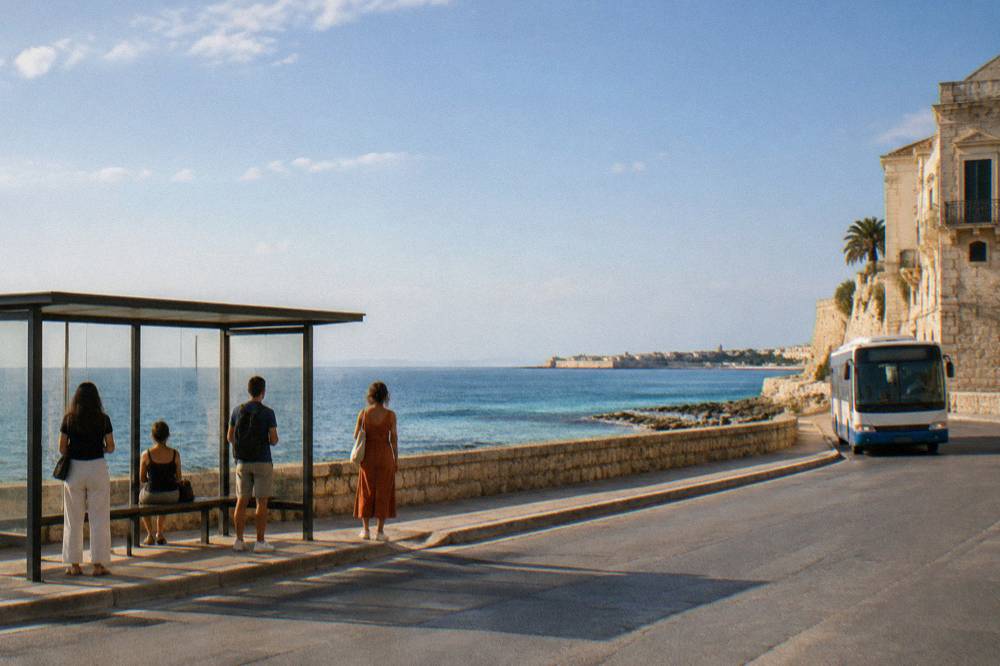
A practical note on how the peak feels: the buses are seasonal, popular and cheap, and the July and August runs fill up. The 2026 fares rewarded buying ahead with the on-board surcharge, and the same logic applies to seats on busy days. An early bus out and a late bus back is the pattern that leaves the middle of the day free, and the night runs in the peak weeks gave the sunset crowd a way home that the shoulder weeks did not have.
Can You Reach Otranto, Gallipoli And Leuca Without A Car?
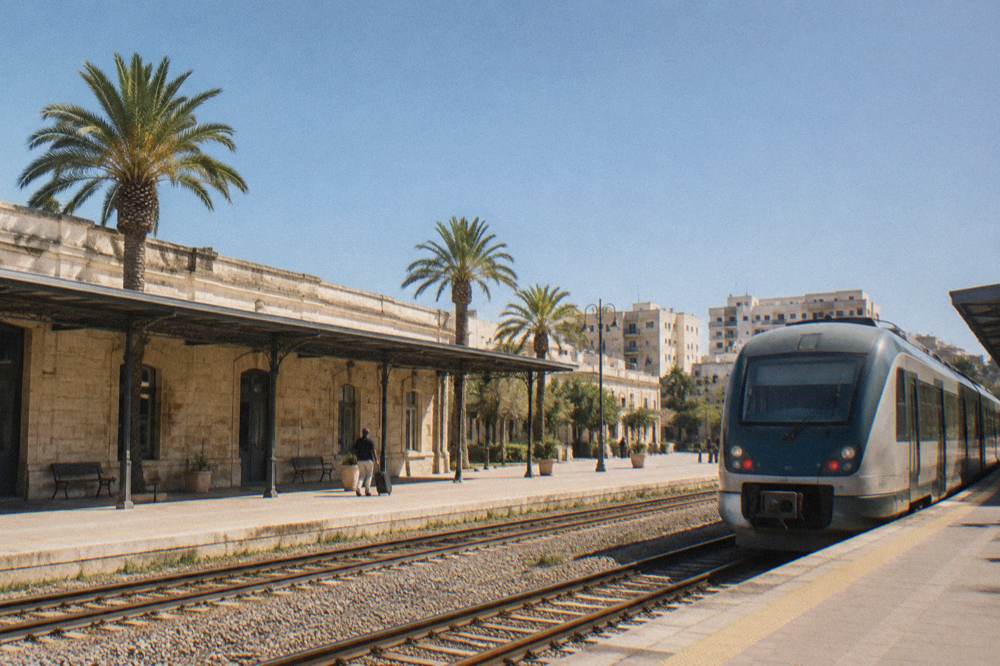
Yes, and not only by Salento in Bus. The FSE railway ran direct Lecce to Gallipoli trains in about 1 hour 18 to 1 hour 43, and Lecce to Otranto services with a change at Maglie in about 1 hour 33 to 2 hours or more. Galatina was about 38 to 55 minutes direct. Reported one-way fares on those lines started around 3 to 5 euro.
The FSE, Ferrovie del Sud Est, is the regional railway that threads the peninsula: its lines serve Gallipoli, and Otranto with a change at Maglie, and Galatina. For the towns on the rail routes the train is often the steadier choice, running through the shoulder seasons when the summer buses do not run at all. For the beaches themselves, the buses win, because the stations sit in the towns and the bus stops sit nearer the sand.
| Route from Lecce | Mode | Reported journey time | Reported fare from |
|---|---|---|---|
| Gallipoli | FSE train, direct | About 1 h 18 to 1 h 43 | About 5 euro |
| Otranto | FSE train, change at Maglie | About 1 h 33 to 2 h or more | About 4 to 5 euro |
| Galatina | FSE train, direct | About 38 to 55 min | About 3 euro |
| Brindisi | Trenitalia, direct | About 18 to 24 min | About 3.40 euro |
| Matera | Itabus, FlixBus or Miccolis bus | About 3 h 30 to 4 h 10 | About 11 to 37 euro |
Otranto is the east coast's headline town, and it earns its place on any Salento route. The Cathedral floor mosaic dates from 1163 to 1165 and is the work of the priest Pantaleone, and the cathedral itself is free for independent visitors, though since 1 March 2026 groups and visitors with a licensed guide pay 2 euro each, with the Museo Diocesano at 3 euro, San Pietro at 3 euro, and a combined ticket at 5 euro. The Castello Aragonese runs seasonal tickets reported at about 6 euro in low season up to about 12 euro in high season. The Salento peninsula overview places Otranto in its coastal context.
Gallipoli is the Ionian counterpart, an old town standing on a limestone island joined to the mainland by a bridge. The Castello di Gallipoli ticket price was not published in the sources for this page, so confirm locally. Galatina, on the FSE line about 38 to 55 minutes out, holds the Basilica of Santa Caterina d'Alessandria, free to enter, with split morning and afternoon hours.
Santa Maria di Leuca is the long one, at the tip of the heel: about 83 km and about 78 minutes by road from Lecce, and the 2026 bus lines 107 and 108 ran down towards it, with reported bus journeys of about 2 hours to 2 hours 15 and fares from about 4 to 10 euro. The Basilica at De Finibus Terrae is free to enter. Leuca is also where the cave-studded coast is best seen from the water, and the Leuca caves boat tour with swimming stops covers the grottoes with an aperitif on board. Check availability.
What Do The Salento Lidos Cost, And Which Beach Rules Changed In 2026?
Reported 2026 prices for an umbrella and two sunbeds per day ran from about 15 to 25 euro at San Cataldo in June up to about 50 to 60 euro at Torre dell'Orso and San Foca in August, per the Corriere Salentino and Udicon survey, with Ionian lidos generally dearer. Grotta della Poesia banned bathing and diving from summer 2026 and charged non-residents of Melendugno a 5 euro ticket. Prices change by year.
The lido survey is worth reading closely because it prices the same beach at two points in the season, and the spread is the story. A sunbed day that costs 20 euro in June can cost 50 or more in August, and the Ionian coast runs higher than the Adriatic at the peak. The bus fare is the same in both months, so the expensive part of an August beach day is never the ride out.
| Area | Reported June 2026, umbrella and two beds | Reported August 2026, umbrella and two beds |
|---|---|---|
| San Cataldo | 15 to 25 euro | 33 to 35 euro |
| Torre Chianca | 15 to 35 euro | 25 to 52 euro |
| Torre dell'Orso, San Foca, Melendugno | 25 to 35 euro | 50 to 60 euro |
| Otranto | 20 to 30 euro | 30 to 50 euro |
| Porto Cesareo and Gallipoli | Higher, reported 40 to 70 euro at peaks | Higher |
Free beach access exists year-round where the coast is open, so the lido prices are a choice rather than an obligation. What is not a choice is the new rule at Grotta della Poesia, the karst pool at Roca Vecchia near Torre dell'Orso: bathing and diving have been banned since summer 2026, and the site charged non-residents of Melendugno a 5 euro ticket for the 2026 season, with an Experience ticket at 10 euro including a guide. The 2027 rules had not been announced. The beaches near Lecce guide keeps the detail on which stretches stay free.
Two more 2026 notes belong here. Baia dei Turchi at Otranto is a protected pinewood: parking sits on the SP366 at about 4 to 8 euro a day in high season, followed by a walk of 10 to 15 minutes through the pines. Pescoluse, the Ionian stretch at Marina di Salve billed as the "Maldives of Salento", held a Blue Flag in 2026, and the Pescoluse guide covers its dunes and free sections. At Castro on the Adriatic, Grotta Zinzulusa runs guided visits year-round at 7 euro full and 4 euro reduced.
Porto Cesareo, out on line 104, is the Ionian's shallow-water favourite, and the town gives its name to one of the boat trips this site features: the Porto Cesareo snorkelling tour with aperitif, which swims over the posidonia meadows and ends with a drink on board. Check availability.
How To Plan A Car-Free Salento Summer From Lecce
A car-free Salento week from Lecce works when the base is the old town and the days alternate bus beaches with train towns: line 101 and the FSE change at Maglie cover Otranto, line 104 and the direct FSE train cover Gallipoli, and SGM line 32 covers San Cataldo. The historic centre is camera-policed, so ask the accommodation about registering a plate before driving anywhere near it.
The ZTL is the detail that decides whether a hire car helps or hurts. Lecce's limited traffic zone is enforced by cameras, with reported active windows on weekdays through the afternoon and overnight and around the clock on Sundays and holidays, and fines reported at 83 to 332 euro. A visitor staying inside the perimeter and relying on buses and trains never meets any of it. A visitor who drives in without registering a plate meets it by post.
The month shapes the plan as much as the route. July and August carry the full bus network, the warmest sea, and the peak lido prices. June and September carry thinner bus service, cheaper sunbeds, and a coast that is far from empty of summer. The Lecce in summer guide works through the trade month by month. For the calendar of festivals, the Notte della Taranta concert in Melpignano ran on 22 August 2026 in its 29th edition, with the 2027 date not announced, and the Notte della Taranta guide covers getting there without a car, which is the same problem this page solves for beaches.
| Month | Mean daily high, ERA5 1991 to 2020 | Mean daily low | Rainfall |
|---|---|---|---|
| Jan | 12.4 C | 6.7 C | 63.1 mm |
| Feb | 13.0 C | 6.8 C | 59.0 mm |
| Mar | 15.4 C | 8.3 C | 64.9 mm |
| Apr | 18.6 C | 10.7 C | 54.6 mm |
| May | 23.4 C | 14.7 C | 39.9 mm |
| Jun | 28.2 C | 19.1 C | 18.0 mm |
| Jul | 31.0 C | 21.7 C | 15.3 mm |
| Aug | 31.3 C | 22.2 C | 18.1 mm |
| Sep | 26.4 C | 19.0 C | 58.9 mm |
| Oct | 21.8 C | 15.4 C | 91.3 mm |
| Nov | 17.3 C | 11.7 C | 93.7 mm |
| Dec | 13.5 C | 8.2 C | 75.5 mm |
Those are climate normals from the ERA5 reanalysis for 1991 to 2020, a modelled grid cell near Lecce at about 48 m elevation, not a weather station record, and they are the reason the bus season is where it is: the year totals about 652 mm of rain, November carries the highest monthly total at 93.7 mm, and July the lowest at 15.3 mm. The two months the network runs at full frequency are the two driest and warmest on the sheet.
A workable shape for a first car-free week, built from the routes above: two or three beach days alternating the coasts, one on line 101 towards Torre dell'Orso and one on line 104 towards Porto Cesareo or Gallipoli; a train day to Otranto with the mosaic and the castle; a slow day at San Cataldo on the SGM line; and one long day south towards Leuca if the season allows. The Salento itinerary page sequences a full route, and how many days Salento needs answers the length question directly. Readers weighing Lecce against the coast can start from the most beautiful beach town in Puglia and work back inland.
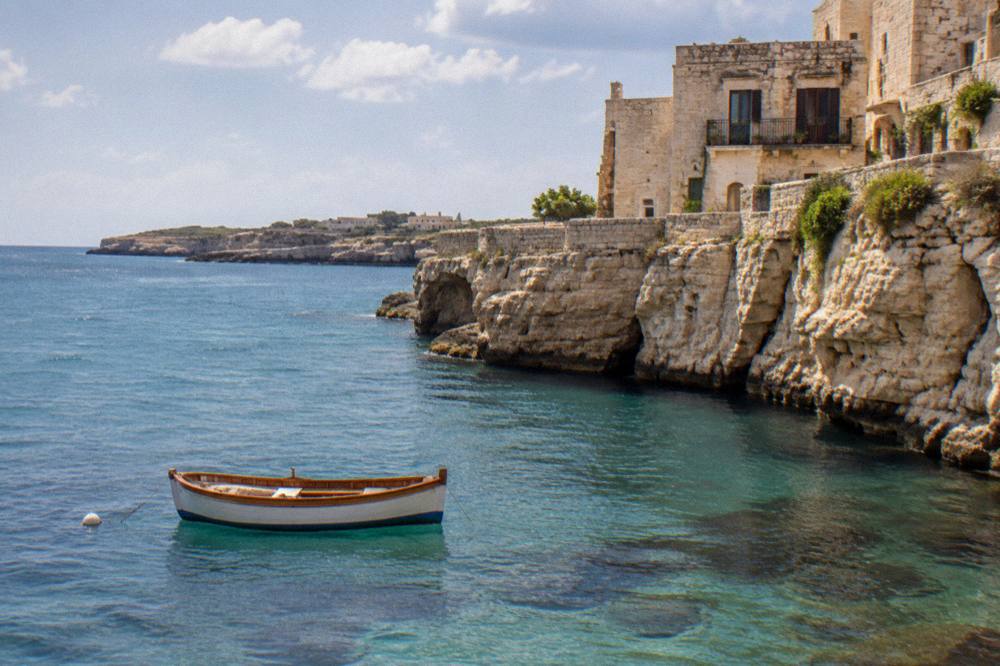
Arriving and departing are their own legs. Lecce has no commercial airport: Brindisi, BDS, is the gateway, about 47.6 km and about 43 minutes by road, and the Terravision airport bus runs the transfer for 6.50 euro one way, about 40 minutes, per the operator. The Brindisi airport to Lecce guide covers the landing, and onward rail runs to Brindisi in about 18 to 24 minutes and up the coast to Bari, with the Bari to Lecce and Rome connections laid out on their own pages. For a two-region detour, Matera by bus takes about 3 hours 30 to 4 hours 10 from Lecce, in Basilicata rather than Puglia.
For the days when the buses and the trains together still leave a gap, the coast itself is the venue, and this site's featured trips fill it from the water side. The Lecce Travel Guide keeps the full roster, and the three below are the ones that pair best with a bus-based week.
Common Questions About Salento In Bus From Lecce
These are the questions the Salento in Bus timetable raises for Lecce visitors: whether the service runs outside summer, what a ticket costs, which towns it reaches, and how it differs from the SGM city buses. The answers below hold to the reported 2026 season, with the 2027 details still to come from Cotrap.
Does Salento in Bus run all year?
No. It is a summer-only service. The 2026 season ran from 13 June to 13 September, with reduced frequency at either end and the peak from 1 July to 31 August. The 2027 dates had not been announced, so check Cotrap's own site each spring before planning a trip around the network.
How much does a Salento in Bus ticket cost?
Reported 2026 fares ran from 1.10 to 5 euro depending on distance, with a 1 euro surcharge for tickets bought on board, and children under 10 travelled free. Tickets were sold through Cotrap's own channels, online and in the app. Treat the figures as the latest reported season rather than a standing price list.
Can you get from Lecce to Otranto without a car?
Yes, two ways. Salento in Bus line 101 ran from Lecce through Torre dell'Orso to Otranto in 2026, reported at about 60 minutes to Torre dell'Orso. The FSE railway also runs Lecce to Otranto with a change at Maglie, in about 1 hour 33 to 2 hours or more, with reported fares from about 4 to 5 euro.
Is Salento in Bus the same as the Lecce city buses?
No. SGM runs the ordinary city network in Lecce, including line 32 from the City Terminal to San Cataldo in about 20 minutes, with a 60-minute ticket at about 1.20 euro and a day ticket at about 3 euro. Salento in Bus is the separate provincial summer service, sold through Cotrap's channels.
Do the buses reach Santa Maria di Leuca?
Lines 107 and 108 ran south towards Santa Maria di Leuca in the 2026 season, with reported bus journeys of about 2 hours to 2 hours 15 and fares from about 4 to 10 euro. By road it is about 83 km and about 78 minutes from Lecce. The basilica at De Finibus Terrae is free to enter.
What happens if a bus is full in August?
The peak weeks of 1 July to 31 August carried extra lines and night runs, but the service is seasonal, cheap and popular, so the busy runs fill. The practical pattern is an early bus out and a late one back, with the ticket bought before boarding to avoid the on-board surcharge. Confirm the year's own timetable with Cotrap before locking in a plan.
The short version: Salento in Bus is the piece of infrastructure that turns inland Lecce into a beach town for three months a year, and it does it for the price of a coffee on the sand. Buy ahead, read the year's timetable, and keep the train as the fallback for the towns, and the whole peninsula opens from a base in the baroque old town.