Salento Beaches: Adriatic Cliffs Or Ionian Sand
Lecce sits a few kilometres inland, and the Salento peninsula gives it two seas to choose from: the rocky Adriatic cliffs to the east and the shallow sandy Ionian shore to the west. This guide compares the two coasts and explains how to reach them.
Short answer
The Salento peninsula around Lecce offers two distinct coasts: the Adriatic side east of the city, with cliffs, coves and cave systems at towns like Castro and Santa Maria di Leuca, and the Ionian side to the west, with fine sand and shallow water at Porto Cesareo, Gallipoli and Pescoluse. San Cataldo, the nearest beach to Lecce, is about 13 km away and reachable by city bus in about 20 minutes. In summer the Salento in Bus network links Lecce directly to the main beach towns.
Lecce is the baroque capital of Salento, in Puglia at the heel of Italy, and it is not itself a beach town: San Cataldo, the nearest stretch of sand, lies about 13 km east of the city. What Lecce offers instead is position. The Salento peninsula narrows around it until the Adriatic and the Ionian seas are both within an hour, and the two coasts could hardly feel more different, with limestone cliffs and sea caves on one side and long shallow sand on the other. This guide sets out what the sources say about each coast, how to reach the water from Lecce without a car, and what the 2026 surveys reported lidos charging.
Adriatic Cliffs Or Ionian Sand: Which Salento Coast Suits You?
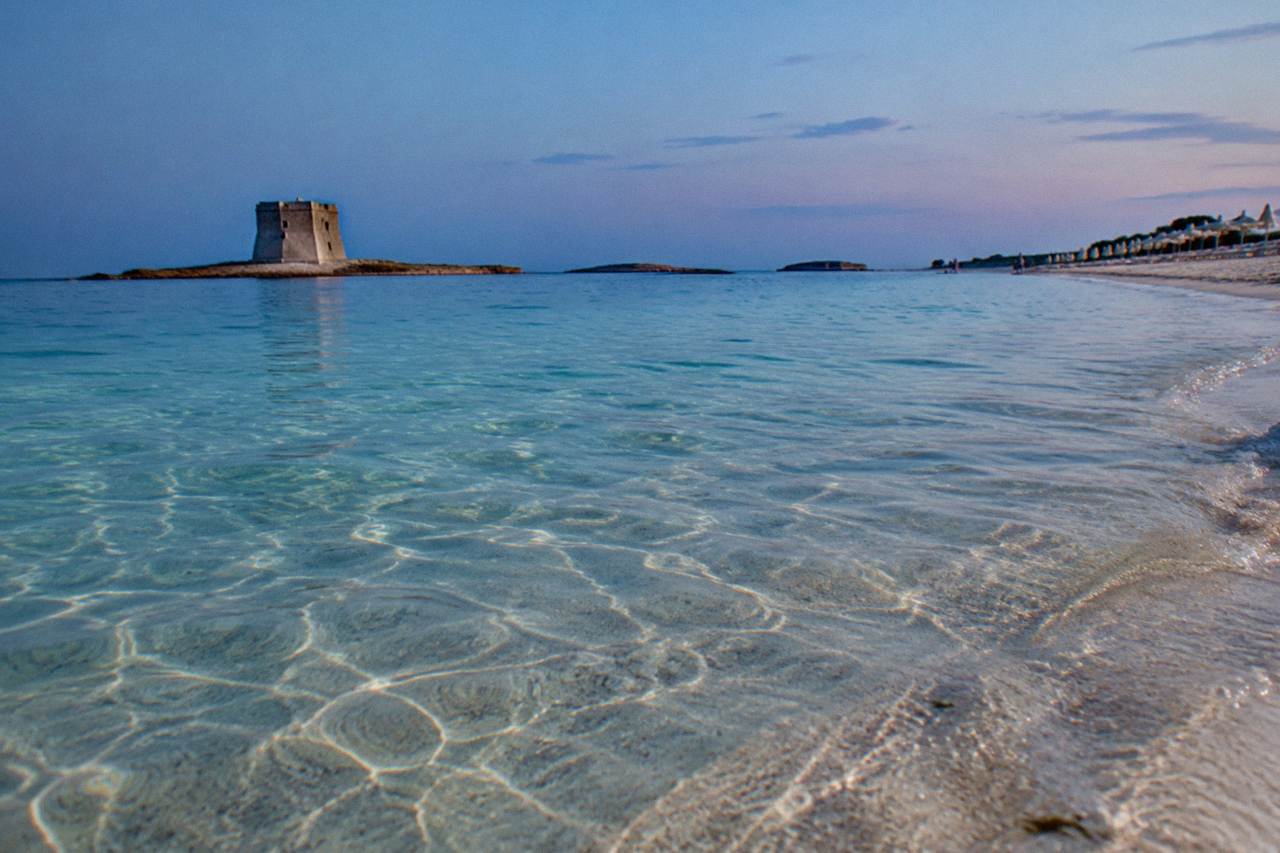
The Adriatic coast east and south of Lecce is the rockier, cliff-fringed side, with coves, sea stacks and cave systems at towns such as Castro, Santa Maria di Leuca and Torre Sant'Andrea, while the Ionian coast to the west is the sandy, shallower side, with fine sand and waist-deep water at Porto Cesareo, Punta Prosciutto, Baia Verde at Gallipoli and Pescoluse. Neither is ranked "best": the choice is between swimming off rocks over clear deep water and shelving sand that warms early and suits children.
That contrast is simple geography rather than a matter of taste. The Adriatic shore of Salento is cut into the limestone plateau that also gives Lecce its pietra leccese, and the sea reaches the cliffs directly, which is why the cave systems at Castro and around Leuca are all on this side. The Ionian shore faces an open shallow gulf, so the sand runs long and the seabed slopes gently. Families with small children and swimmers who like to stand in warm water tend to the Ionian; snorkellers and cliff jumpers, where local rules allow it, tend to the Adriatic.
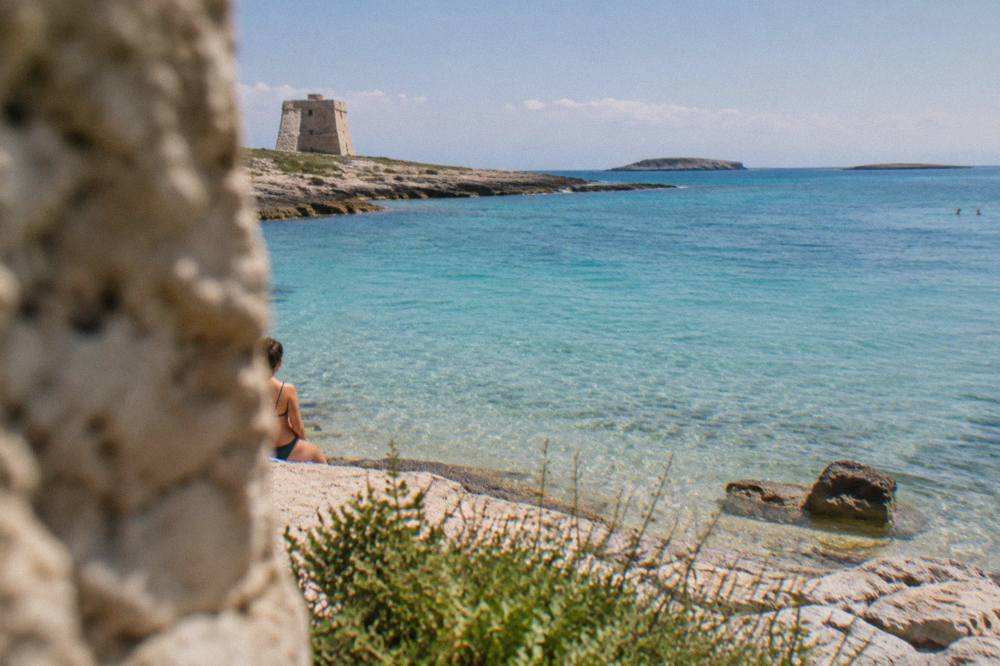
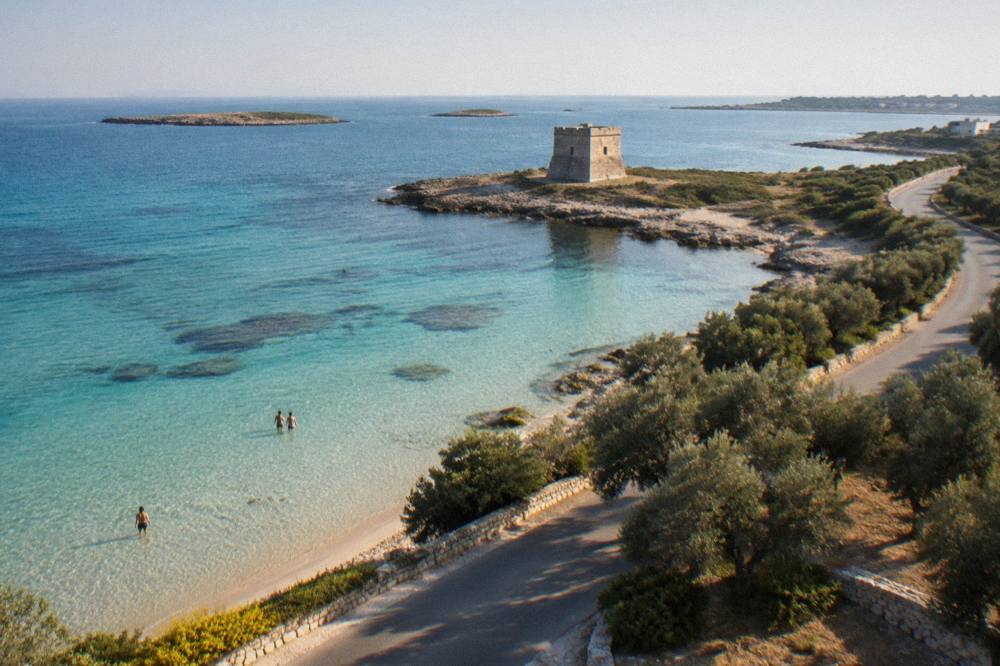
The cliffs also produce the photographs the region is known for: the two sea stacks at Torre Sant'Andrea, the cove at Grotta della Poesia near Roca Vecchia, and the cave mouth of Grotta Zinzulusa at Castro. The Ionian counterpoint is space, with free beach sections running alongside the lidos at Pescoluse and Punta Prosciutto. Our guide to the Salento peninsula covers the inland towns if you want to split days between coast and baroque.
| Coast | Direction from Lecce | Character | Representative Spots |
|---|---|---|---|
| Adriatic | East and south | Cliffs, rocks, coves, sea caves | San Cataldo, Torre dell'Orso, Otranto, Castro, Leuca |
| Ionian | West | Fine sand, shallow water, dunes | Porto Cesareo, Punta Prosciutto, Baia Verde, Pescoluse |
How Do You Reach Salento Beaches From Lecce Without A Car?
San Cataldo, the closest beach, is about 13 km from Lecce and reachable on SGM city bus line 32 from the City Terminal in about 20 minutes. Beyond it, the summer-only Salento in Bus network ran 13 June to 13 September 2026 and linked Lecce directly to the main beach towns: line 101 to Torre dell'Orso and Otranto, line 104 to Porto Cesareo and Gallipoli, and lines 107 and 108 towards Santa Maria di Leuca, with fares from 1.10 to 5 euro.
FSE trains also run year-round to Gallipoli, Otranto via Maglie and Galatina.
The distinction that matters is seasonal. The Salento in Bus shuttles exist only in summer, with the full timetable from 1 July to 31 August, and the 2027 dates had not been announced; outside that window the FSE railway is the dependable link, reaching Gallipoli in about 1h18 to 1h43 and Otranto, with a change at Maglie, in about 1h33 to 2h or more. Children under 10 travelled free on Salento in Bus, and buying on board carried a 1 euro surcharge.
For everything on timetables, tickets and the ZTL rules if you do drive, see our getting around Lecce guide and the dedicated Salento in Bus page. The beaches near Lecce guide covers the closest options in more detail.
| Route from Lecce | Mode | Journey Time | Notes |
|---|---|---|---|
| San Cataldo | SGM bus line 32 | About 20 min | City service from the City Terminal |
| Torre dell'Orso | Salento in Bus 101 | About 60 min | Summer season only |
| Otranto | FSE train via Maglie | About 1h33 to 2h+ | Year-round rail, change at Maglie |
| Gallipoli | FSE train direct | About 1h18 to 1h43 | Direct service, from about 5 euro |
| Porto Cesareo | Salento in Bus 104 | Seasonal service | Summer season only |
| Santa Maria di Leuca | Salento in Bus 107/108 | Seasonal service | Summer season only |
If you would rather have the coast arranged for you, guided day trips run from Lecce through the operator listings, and a boat-based day removes the parking question entirely.
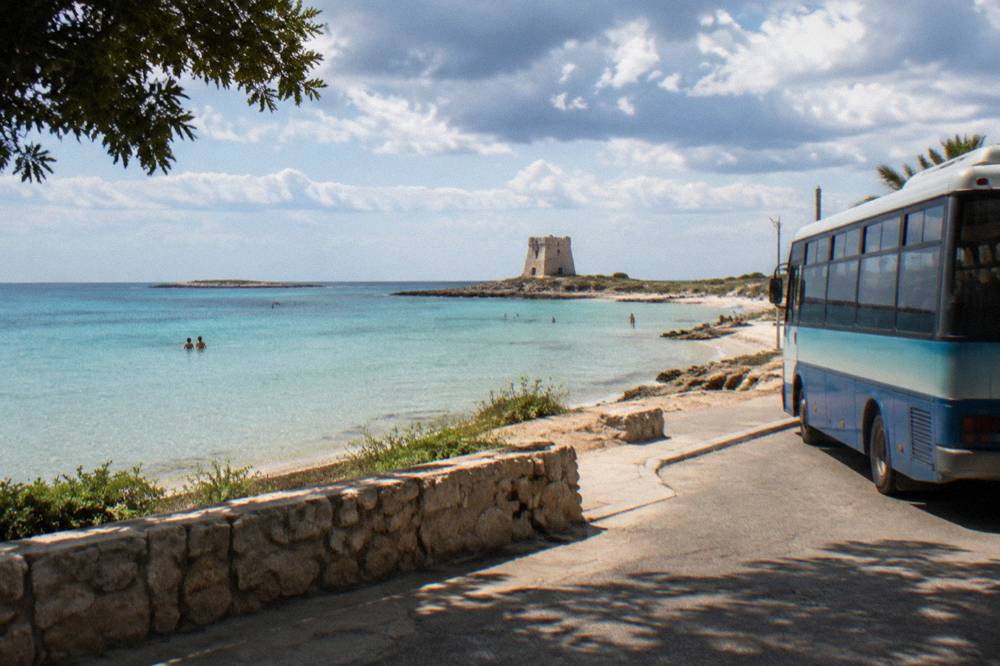
The trio above mixes the three ways to do the coast in a day: a snorkel cruise out of San Foca, a full-day loop of Gallipoli, Galatina and Otranto by road, and an e-bike ride to Gallipoli with a swim stop and a farm tasting on the way.
What Do Salento Lidos Charge For An Umbrella And Two Sunbeds?
Reported 2026 prices for an umbrella plus two sunbeds per day ran from 15 to 25 euro at San Cataldo in June, rising to 33 to 35 euro in August, and from 25 to 35 euro at Torre dell'Orso and San Foca in June, rising to 50 to 60 euro in August, per the Udicon and Adoc consumer surveys reported by Corriere Salentino. Otranto lidos ranged from about 20 to 50 euro across the season, and Ionian lidos generally charged more than the Adriatic ones.
Adoc reported a 25 per cent increase over five years.
These are survey figures, not operator promises, and they move every year, so treat them as planning ranges and confirm at the lido. Free beach sections exist along both coasts, and at Pescoluse the free stretches run alongside the lidos. The August peak is unambiguous in the data: the same umbrella and bed pair that costs 15 to 25 euro at San Cataldo in June roughly doubles by mid-August, and the same holds at Torre dell'Orso and San Foca. Parking is a separate line on the Adriatic: at Baia dei Turchi, visitors park along the SP366 for about 4 to 8 euro a day in high season and walk 10 to 15 minutes through the pinewood, per idealista.it, because vehicle access to the protected bay is limited.
| Area | June (Umbrella + 2 Beds) | August | Source Note |
|---|---|---|---|
| San Cataldo | 15 to 25 euro | 33 to 35 euro | Udicon survey, 2026 |
| Torre Chianca | 15 to 35 euro | 25 to 52 euro | Udicon survey, 2026 |
| Torre dell'Orso / San Foca | 25 to 35 euro | 50 to 60 euro | Udicon survey, 2026 |
| Otranto | 20 to 30 euro | 30 to 50 euro | Udicon survey, 2026 |
| Porto Cesareo / Gallipoli | Higher, reported peaks above 40 euro | 40 to 70 euro+ | Udicon survey, 2026 |
A day on the water sidesteps the lido bill altogether: the boat trips include swimming stops along the coast, and the operator's live listing carries the current price, rating and cancellation terms.
What Are The Adriatic Beach Towns Of Salento Like?
The Adriatic string runs San Cataldo, Torre Chianca, Frigole and the other marine di Lecce closest to the city, then Torre dell'Orso and San Foca with their sandy bays, then Otranto with its walled old town and the protected pinewood bay of Baia dei Turchi, then Castro with the Grotta Zinzulusa cave, and finally Santa Maria di Leuca where the two coasts meet at the tip of the peninsula.
Drive times from Piazza Sant'Oronzo run about 14 minutes to San Cataldo, 32 to Torre dell'Orso, 44 to Otranto, 48 to Castro and 78 to Leuca.
Each town answers a different question. San Cataldo is the low, sandy, pine-backed shore the comune itself describes as one of the marine di Lecce, and the SGM line 32 bus makes it the easiest half-day from the city. Torre dell'Orso sits between cliffs with a long sandy beach backed by pines; the Salento in Bus line 101 reached it in about 60 minutes in the 2026 season. San Foca, next along, is the harbour town the snorkel cruises leave from, tucked below the coast road.
Otranto is the town that justifies an overnight. Its old centre holds the cathedral with the floor mosaic dated 1163 to 1165 by the priest Pantaleone, free for independent visitors, though since 1 March 2026 groups and visitors with a licensed guide pay 2 euro per the Diocese of Otranto's notice. Baia dei Turchi, north of town, is the protected bay described above. Our Otranto guide covers the town in full.
South of Otranto the coast turns to cliff. Castro guards the Grotta Zinzulusa, open for guided visits year-round at 7 euro full and 4 euro reduced, the castle town's main draw, and beyond it the shore runs to Leuca, where the basilica of Santa Maria de Finibus Terrae looks over the meeting of the two seas. The Santa Maria di Leuca guide and the Castro guide continue the detail.
What Are The Ionian Beach Towns Of Salento Like?
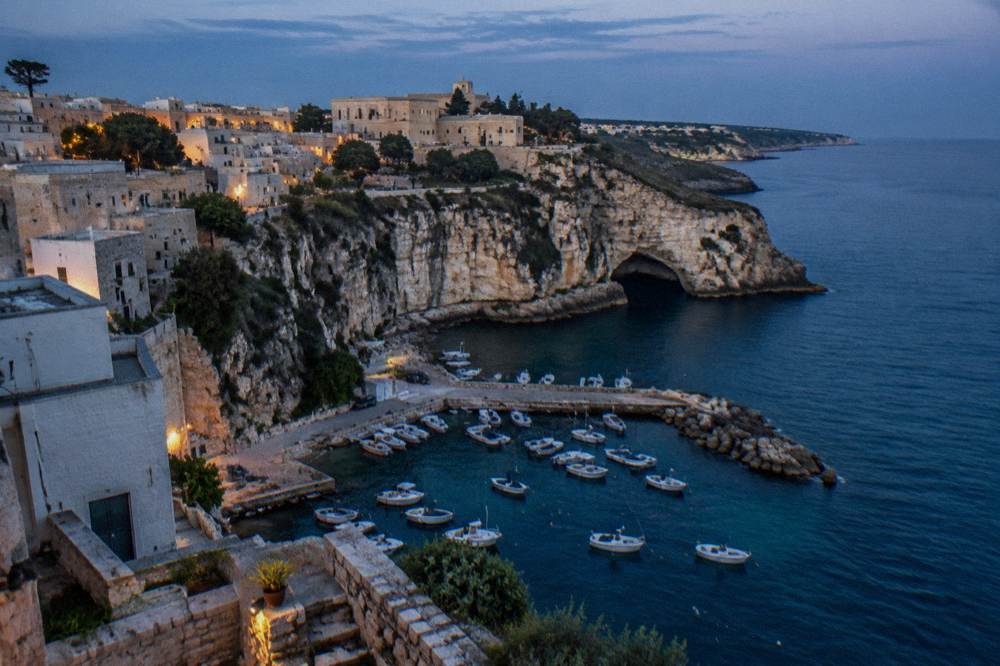
The Ionian side runs from north to south through Punta Prosciutto and Porto Cesareo with their fine sand and shallow water, past the walled island old town of Gallipoli and its southern Baia Verde beach strip, down to Pescoluse at Marina di Salve, called the "Maldives of Salento" and a Blue Flag beach in 2026 per puglia.info, and Ugento with its dune-backed sands. Drive times from Piazza Sant'Oronzo run about 34 minutes to Porto Cesareo, 41 to Gallipoli and longer to Pescoluse further down the coast.
Punta Prosciutto, in the Porto Cesareo area listings, is the shorthand for what the Ionian does well: fine pale sand, dunes and water that stays shallow a long way out. Porto Cesareo itself wraps around a small harbour and a protected marine area, and the 2026 Salento in Bus line 104 linked it to Lecce and onward to Gallipoli in summer. Snorkelling trips leave from here too, over the posidonia meadows. The rest of the planning pages sit on Lecce Travel Guide.
Gallipoli splits in two: the borgo antico standing on a limestone island joined to the mainland by a bridge, and the modern town with Baia Verde stretching south. The FSE train reaches Gallipoli direct from Lecce in about 1h18 to 1h43, which makes it the easiest sandy-beach day by rail. The Castello di Gallipoli stands at the edge of the old town; no standard ticket price was published in the sources, so confirm locally. Our Gallipoli guide has the full picture.
Pescoluse, on the Ugento coast, is the sand-and-turquoise end of the scale: long fine white sand, dunes, and shallow warm water, with free sections alongside the lidos and parking near Largo dei Gigli or along the litoranea. The Pescoluse day-trip page plans the visit, and the drive can be broken at inland Specchia, one of the region's small stone towns.
Where Can You Swim In Caves And Coves Around Salento?
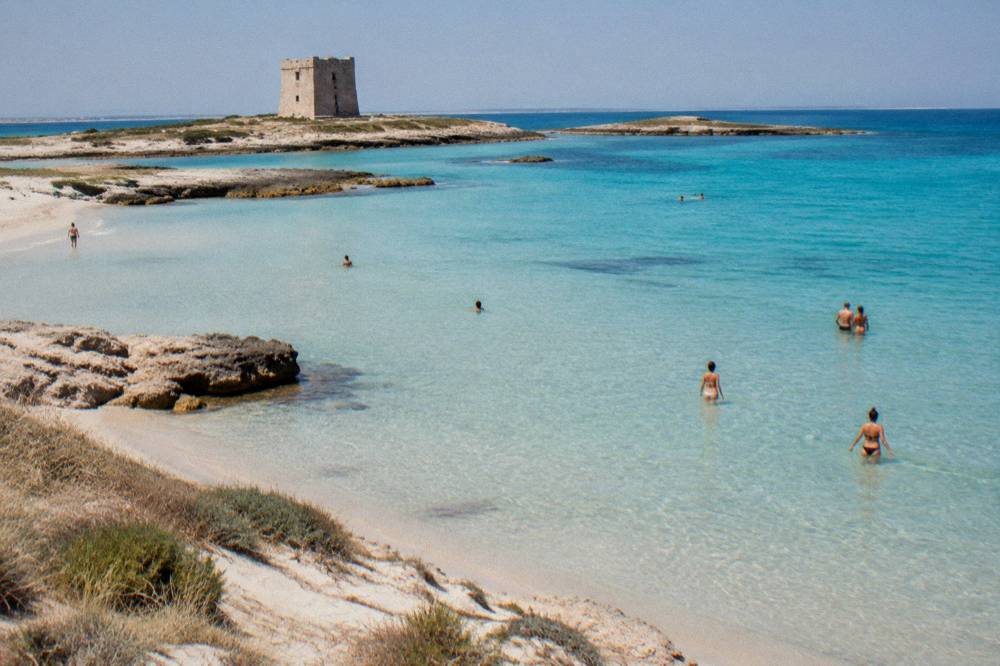
Grotta Zinzulusa at Castro offers guided visits year-round at 7 euro full and 4 euro reduced, and the boat trips out of San Foca, Santa Maria di Leuca and Porto Cesareo reach coves and sea stacks along both coasts. Grotta della Poesia near Roca Vecchia is the exception: since summer 2026 bathing and diving are banned, non-residents of Melendugno paid a 5 euro ticket in the 2026 season, and the 2027 rules had not been announced, so view it from the paths only.
The Poesia change matters because the cove spent years on every list of swimming holes. The ban is enforced, the idealista.it report states, and the ticketed access ran from about 18 July to the end of September 2026 under the ArcheoRoca project, with an "Experience" option including a guide and VR at 10 euro. Treat all of that as the 2026 edition: the daily visitor cap and next season's rules are not published, so confirm before travelling.
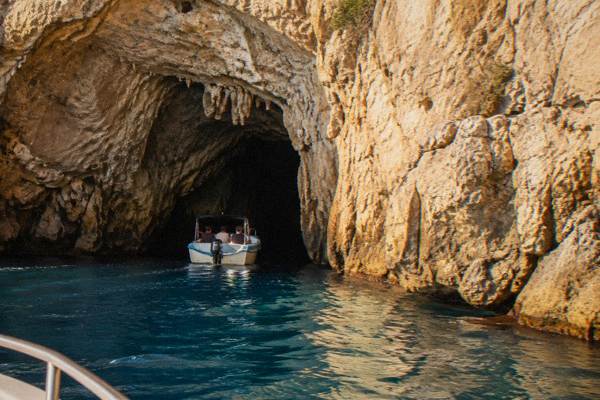
The cave coastline that remains fully visitable runs south of Otranto. Grotta Zinzulusa's own site gives winter hours of about 10:00 to 15:00 or 16:30 and summer openings up to about 19:00, always guided. Around Santa Maria di Leuca the cliffs are pierced with dozens of sea caves that local boats tour from the harbour; no specific operator list or prices were found in official sources, so book through a listing and read its terms. On the Adriatic north of Otranto, the stacks at Torre Sant'Andrea and the coves of the coast between San Foca and Torre dell'Orso are the snorkel-boat territory.
When Is The Sea Warm Enough To Swim Near Lecce?
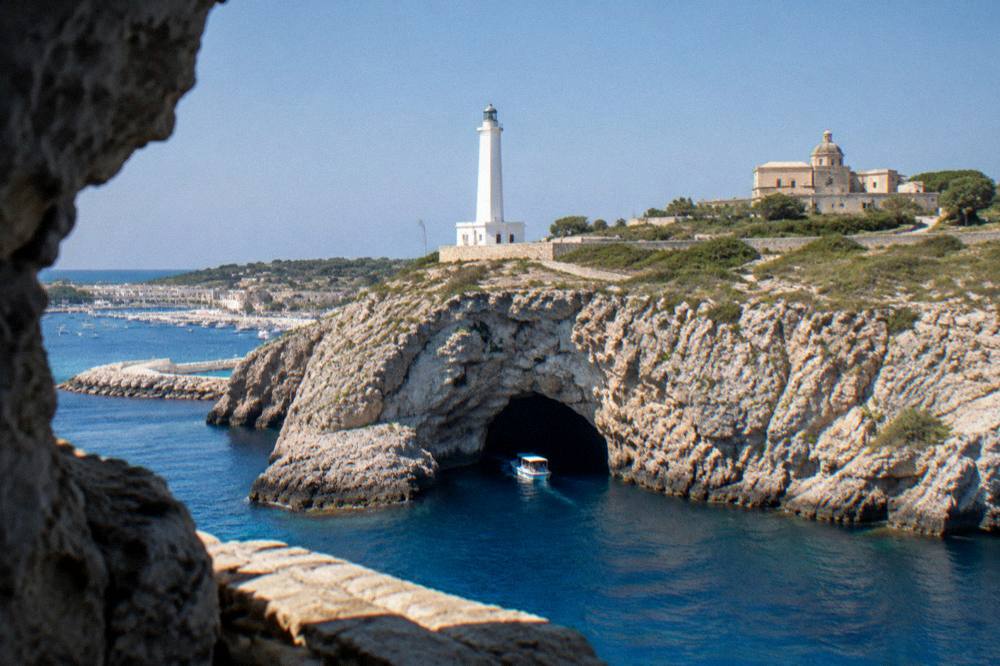
Sea temperatures around Salento average about 22.5 C in June, 25 to 27 C at the August peak, 20 to 22 C in October and about 14 C in February, per seatemperature.org data for Puglia. Air temperatures support a long season: the ERA5 reanalysis, 1991-2020, gives Lecce mean daily highs of 23.4 C in May, 28.2 C in June and 31.3 C in August, falling to 21.8 C in October.
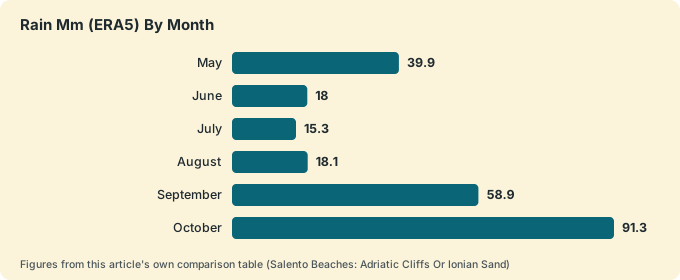
November carries the highest monthly rainfall at 93.7 mm, while July averages 15.3 mm.
Two readings sit behind the answer. The sea warms slowly, so June air can feel summer-hot while the water still carries spring's chill, especially on the Adriatic where deeper water sits against the cliffs. The Ionian shallows warm first, which is the quiet reason families gather at Pescoluse and Punta Prosciutto in early summer. By August both coasts have warmed.
Rain, not temperature, ends the season. The ERA5 reanalysis normals put October at 91.3 mm and November at 93.7 mm for Lecce, against 18 mm or less in June, July and August, and the lido season broadly tracks the Salento in Bus window of mid-June to mid-September. The best time to visit Lecce guide and the Lecce weather page carry the month-by-month detail.
| Month | Mean High (ERA5) | Rain mm (ERA5) | Sea Temp |
|---|---|---|---|
| May | 23.4 C | 39.9 | Warming |
| June | 28.2 C | 18.0 | About 22.5 C |
| July | 31.0 C | 15.3 | About 25 C |
| August | 31.3 C | 18.1 | 25 to 27 C |
| September | 26.4 C | 58.9 | About 24 to 25 C |
| October | 21.8 C | 91.3 | 20 to 22 C |
What Should You Bring For A Full Day On A Salento Beach?
The practical list is short: water shoes for the Adriatic rocks and sea urchins, reef-safe sun protection since the summer sky is reliably clear, cash for smaller lidos and beach bars, and something to eat if you are heading to a free stretch, since services thin out away from the lido rows. On the Ionian side bring shade, because the dune-backed sands offer little natural cover, and on either coast check the flag system before swimming off cliffs.
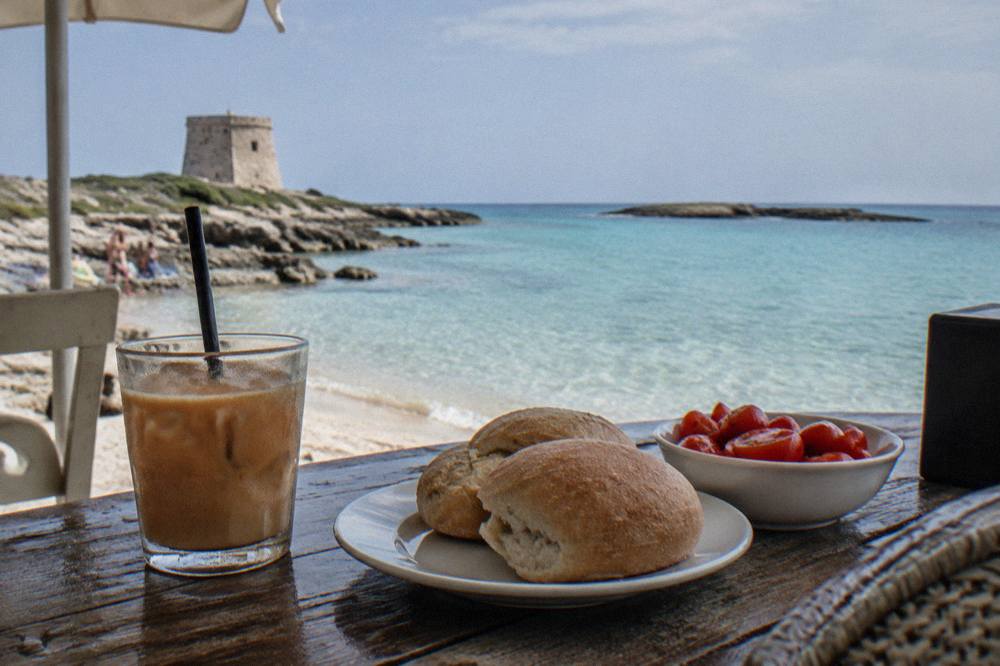
Food is where the coast meets the region's table. The Salento beach day has its own canon: frisa, the hard rusks soaked in water and dressed with tomato and oil, and puccia, the local flatbread that carries whatever the lido kitchen has that day. Our frisa and puccia guide explains both, and the wider Puglia food guide covers everything else worth carrying. For the evening, Negroamaro-based Salice Salentino, a DOC since 1976, is the region's standard pour, and the Salento wine guide maps it.
One caution belongs to every beach list: the afternoon riposo. Smaller shops and some lido services pause in the early afternoon, and church visiting hours pause midday too, which matters if you are pairing a beach morning with a town. Plan supplies before lunch. If the day runs long into an evening in the old towns, the safety picture is generally calm; our page on walking around Salento at night reports what the sources say.
Can You Combine Lecce Sightseeing With Beach Days On One Trip?
Yes, and the geography argues for it: Lecce lies about 13 km inland with the Adriatic beaches 15 to 45 minutes away by car or bus and the Ionian sands 35 to 60 minutes away, so a single base in Lecce can serve piazza mornings and beach afternoons without changing hotels. The LeccEcclesiae church ticket is valid 15 days, which suits a split week, and the FSE trains and summer Salento in Bus shuttles make at least three or four beach days workable without a car.
The pattern that fits best is one beach day to every day or two of town. A week could run: two days of Lecce Baroque and the walking tour highlights, an Adriatic day at Torre dell'Orso or a snorkel cruise from San Foca, an Ionian day by FSE train to Gallipoli, and a final day at Otranto pairing the mosaic with Baia dei Turchi. The Salento itinerary page sequences exactly this kind of split, and the question of how many days are needed in Salento is answered separately.
Where to sleep is the other half. Lecce has the restaurants, the baroque and the rail hub; the coast has the mornings. Our where to stay in Lecce guide and the restaurant guide cover the city end, and remember that the tourist tax, up to a reported 5 euro per person per night in the top category in high season, is collected by the accommodation, so confirm at booking.
The snorkel cruise above is the single trip that combines best with a city base: it leaves from San Foca, covers the Torre Sant'Andrea stacks and coves by boat, and returns you to Lecce with the evening free. The operator's live listing shows the current dates and terms.
Common Questions About Salento Beaches
Which coast is better in Salento, the Adriatic or the Ionian?
Neither is ranked best. The Adriatic side has cliffs, rocks, coves and the sea caves; the Ionian side has fine sand, dunes and shallow warm water. Snorkellers tend east, families with small children tend west.
How far is Lecce from the beach?
San Cataldo, the nearest beach, is about 13 km from Lecce, reachable by SGM bus line 32 from the City Terminal in about 20 minutes. The main Adriatic and Ionian beach towns sit between 30 and 80 minutes away by car.
Can you get to Salento beaches without a car?
Yes. SGM bus line 32 serves San Cataldo, FSE trains run year-round to Gallipoli, Otranto via Maglie and Galatina, and the summer-only Salento in Bus network ran 13 June to 13 September 2026 with lines from Lecce to Torre dell'Orso, Otranto, Porto Cesareo, Gallipoli and Leuca.
Can you swim at Grotta della Poesia?
No. Since summer 2026 bathing and diving at Grotta della Poesia near Roca Vecchia are banned, and non-residents of Melendugno paid a 5 euro ticket in the 2026 season to view it from the paths. The 2027 rules had not been announced.
What is the sea temperature in Salento?
Per seatemperature.org data for Puglia, the sea averages about 22.5 C in June, 25 to 27 C at the August peak, 20 to 22 C in October and about 14 C in February.
How much do beach clubs in Salento cost?
Reported 2026 survey figures for an umbrella plus two sunbeds per day ran from 15 to 25 euro at San Cataldo in June to 50 to 60 euro at Torre dell'Orso and San Foca in August, with Ionian lidos generally higher. Prices change by year, so confirm at the lido.