Beaches Near Lecce: The Closest Sand By Bus And Car
Lecce sits a few kilometres inland, so every beach day starts with a short hop east or west. Here is what the sources say about distances, buses, lido prices and the water itself.
Short answer
San Cataldo is the closest beach to Lecce at about 13 km, reached by SGM line 32 in about 20 minutes. Further afield, Salento in Bus summer lines link Lecce to Torre dell'Orso, Otranto, Porto Cesareo, Gallipoli and Leuca.
Lecce is a baroque city built a few kilometres inland, at the heart of the Salento peninsula in Puglia, southern Italy. That geography is the whole story of its beaches: the Adriatic lies to the east, the Ionian to the west, and both are close enough that a beach morning and a cathedral afternoon fit in the same day. San Cataldo, the nearest stretch of sand, is about 13 km from the city, per the comune of Lecce's own description of its five marine districts. This page lays out what the sources say about which beaches sit closest, how to reach them without a car, what a sun umbrella cost there in 2026, and how warm the sea is month by month. For the wider picture of the peninsula's coast, the companion page on Salento beaches covers the full sweep.
How Far Is Lecce From The Sea?
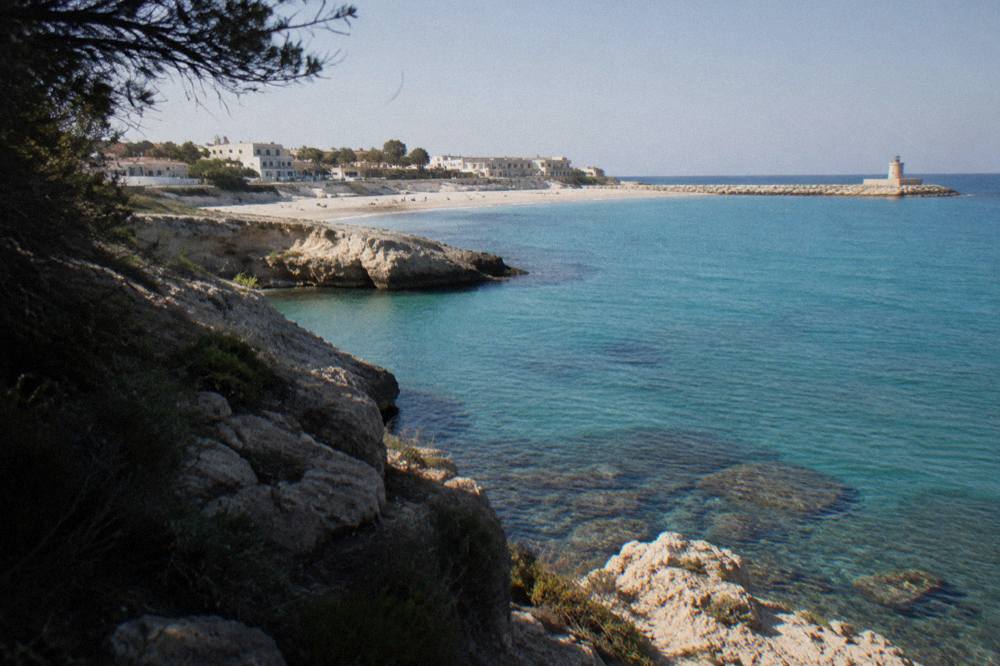
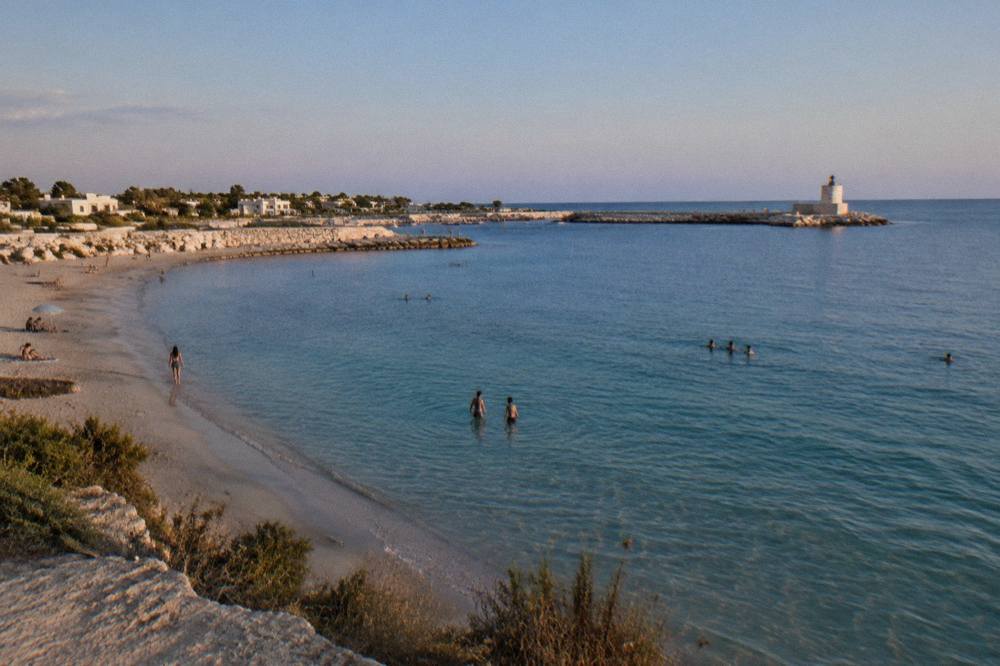
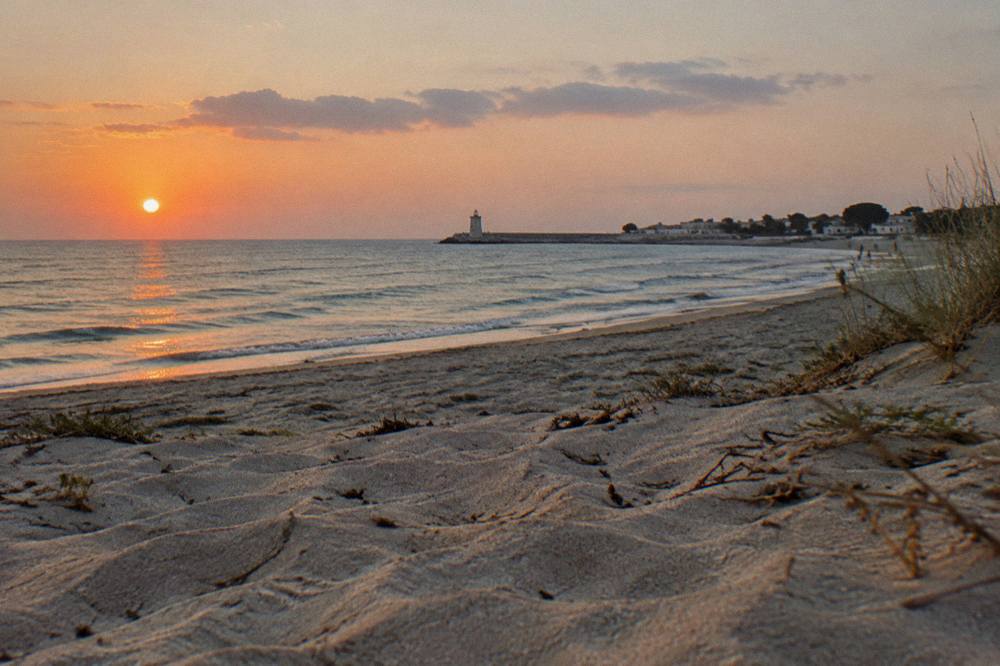
Lecce is an inland city, roughly 13 km from its nearest beach, San Cataldo, on the Adriatic. The comune of Lecce describes San Cataldo as a low sandy coast backed by pine forest and a reserve, about 10 km east of the centre. Beyond San Cataldo, the Salento peninsula spreads east and west, putting both the Adriatic and the Ionian within an hour's reach by car or seasonal bus.
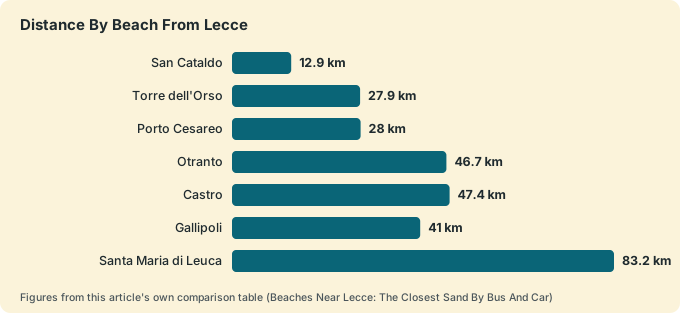
The drive-time table computed from free-flow routing, measured from Piazza Sant'Oronzo, gives a concrete sense of the peninsula's scale. Torre dell'Orso is about 32 minutes away, Otranto about 44, Porto Cesareo about 34 across on the Ionian side, Gallipoli about 41, and Santa Maria di Leuca, the very tip of the heel, about 78. None of these is a committed expedition; all of them are beach-day distances.
The two coasts feel different, and the sources support a plain geographic distinction rather than a ranking. The Adriatic side east of Lecce is the cliffier, rockier shore, with caves and rocky platforms around Castro and Santa Maria di Leuca. The Ionian side to the west is the sandy, shallower one, the coast of Punta Prosciutto and Pescoluse. Families after sand and knee-deep water tend to look west; swimmers after depth and rocks look east. Neither is "the best beach", and this page will not pretend otherwise.
Which Are The Closest Beaches To Lecce?
San Cataldo is the closest beach, about 13 km and about 14 minutes by car from the centre, reached by SGM line 32 in about 20 minutes from the City Terminal. The next ring out includes Torre Chianca and Frigole on the same Adriatic shore, then Torre dell'Orso at 27.9 km and about 32 minutes, and Porto Cesareo on the Ionian side at 28.0 km and about 34 minutes.
The comune of Lecce groups its coast into five marine districts, of which San Cataldo is the nearest, a low sandy shore with pine woodland. The OSRM routing table gives precise free-flow figures for the beaches further out, which are worth having in one place before planning:
| Beach from Lecce | Distance | Drive time | Coast |
|---|---|---|---|
| San Cataldo | 12.9 km | about 14 min | Adriatic |
| Torre dell'Orso | 27.9 km | about 32 min | Adriatic |
| Porto Cesareo | 28.0 km | about 34 min | Ionian |
| Otranto | 46.7 km | about 44 min | Adriatic |
| Castro | 47.4 km | about 48 min | Adriatic |
| Gallipoli | 41.0 km | about 41 min | Ionian |
| Santa Maria di Leuca | 83.2 km | about 78 min | Adriatic tip |
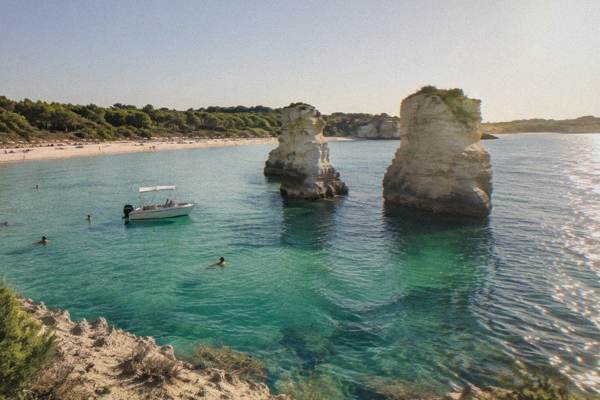
Torre dell'Orso deserves its own word. Its beach sits below sandy dunes, and the nearby Grotta della Poesia at Roca Vecchia has become one of Salento's famous natural pools. That fame changed the rules: since summer 2026, bathing and diving at the Grotta della Poesia are prohibited, and non-residents of Melendugno paid a 5 euro ticket in the 2026 season, per the reported notice. Visitors view the pool from paths. The 2027 rules had not been announced, so check before planning a swim there.
Otranto adds Baia dei Turchi to the mix, a protected pinewood beach where car access is limited: the reporting says visitors park along the SP366 (about 4 to 8 euro a day in high season) and walk through the pines to reach the sand. It is a short hop from Otranto town, which itself is a full day-trip destination, covered in its own guide.
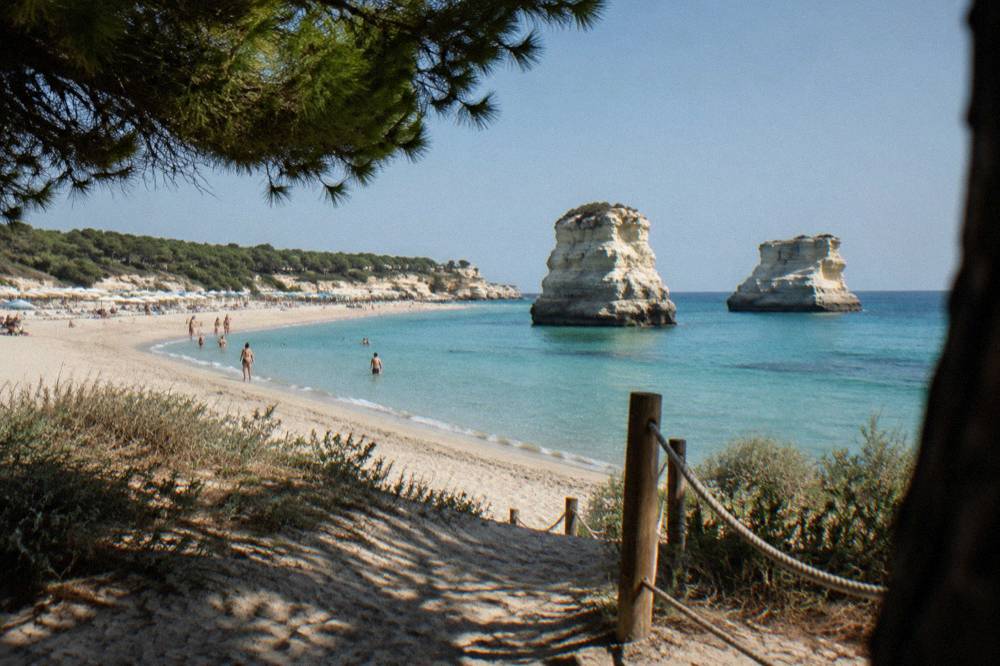
How Do You Get To The Beach From Lecce Without A Car?
SGM line 32 runs from Lecce's City Terminal to San Cataldo in about 20 minutes, making it the only year-round beach link. In summer, the Salento in Bus network took over the longer runs: it operated 13 June to 13 September 2026, with line 101 to Torre dell'Orso and Otranto, line 104 to Porto Cesareo and Gallipoli, and lines 107 and 108 towards Leuca, at fares of 1.10 to 5 euro.
The Salento in Bus service is seasonal, and the 2027 dates were not published at the time of this page. The pattern reported for 2026 was a reduced service at the shoulder of the season (13 to 30 June and 1 to 13 September) and a full timetable with more lines in July and August. Tickets could be bought through the Cotrap platform or app, with a 1 euro surcharge on board, and children under 10 travelled free. Anyone planning a car-free beach summer should check Cotrap's site each spring for the new dates.
| Salento in Bus line (2026 pattern) | Route from Lecce | Notes |
|---|---|---|
| 101 | Lecce, Torre dell'Orso, Otranto | about 60 min to Torre dell'Orso |
| 104 | Lecce, Porto Cesareo, Gallipoli | Ionian beaches |
| 107 / 108 | Lecce towards Santa Maria di Leuca / Gallipoli | southern tip of the peninsula |
Outside the summer window the picture narrows. The FSE railway still runs year-round to Gallipoli (about 1h18 to 1h43 from Lecce) and to Otranto with a change at Maglie (about 1h33 to 2h or more), which puts a beach town within train reach even in October, though the sea is another matter, see the water-temperature section below. Full logistics for the seasonal buses are in the Salento in Bus guide, and the broader car-free options are collected in the site's overview of getting around Lecce and its answer page on good day trips from Lecce without a car.
Driving is the flexible option, and the ZTL is the one trap. Lecce's historic centre is camera-policed, with reported restrictions on weekdays and around the clock on Sundays and holidays, and fines reported from 83 to 332 euro. Anyone renting a car should read the site's pages on car rental and driving in Lecce first, and ask their accommodation about registering a number plate. Park Liberty, an underground car park with 466 spaces near the centre, is one reported option for leaving the car outside the restricted zone.
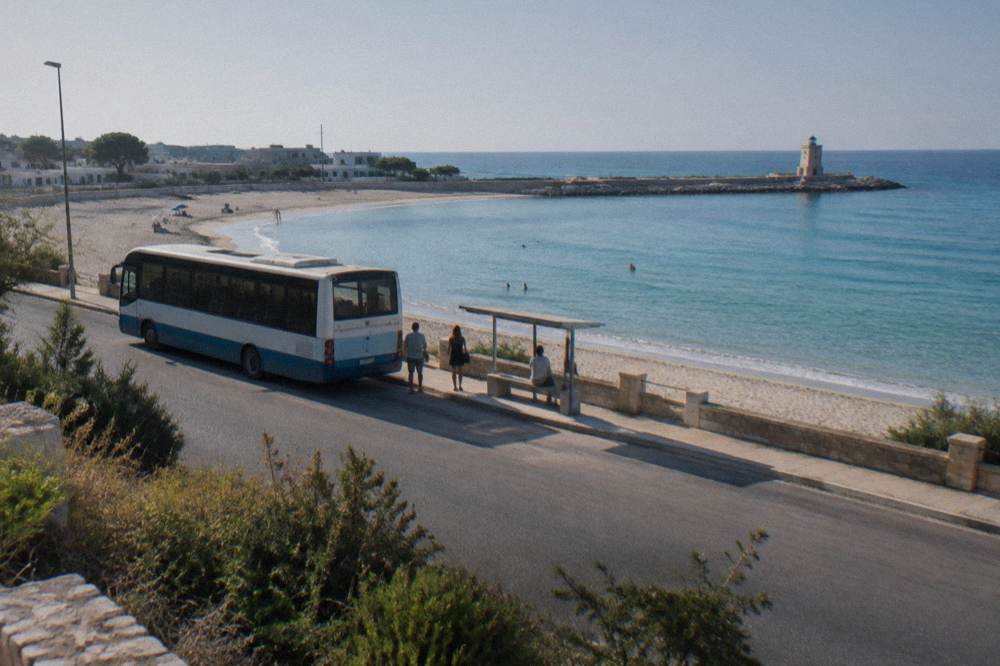
What Do Lidos Cost Near Lecce?
Reported 2026 prices for an umbrella and two sunbeds per day ran from 15 to 25 euro at San Cataldo in June, rising to 33 to 35 euro in August; at Torre dell'Orso and San Foca from 25 to 35 euro in June to 50 to 60 euro in August; and at Otranto from 20 to 50 euro depending on season. The Ionian lidos ran higher, per the same consumer survey, and prices change every year.
The figures come from the Udicon and Adoc consumer surveys reported by Corriere Salentino in 2026, which also noted an increase of about 25 per cent over the previous five years. Treat them as planning ranges and check the board at each lido. Free beach sections exist along both coasts where access is open, so a beach day does not require a rented umbrella.
| Area | Umbrella + 2 sunbeds/day, June 2026 | August 2026 | Source basis |
|---|---|---|---|
| San Cataldo | 15 to 25 euro | 33 to 35 euro | Udicon survey |
| Torre Chianca | 15 to 35 euro | up to 25 to 52 euro | Udicon survey |
| Torre dell'Orso / San Foca | 25 to 35 euro | 50 to 60 euro | Udicon survey |
| Otranto | 20 to 30 euro | 30 to 50 euro | Udicon survey |
| Porto Cesareo / Gallipoli (Ionian) | higher, reported peaks 40 to 70 euro | 40 to 70+ euro | Udicon survey |
The same arithmetic applies to Baia dei Turchi, where the parking on the SP366 costs about 4 to 8 euro a day in high season before any lido spend, and the walk through the pinewood takes a little while. Budget the whole outing, not just the umbrella.
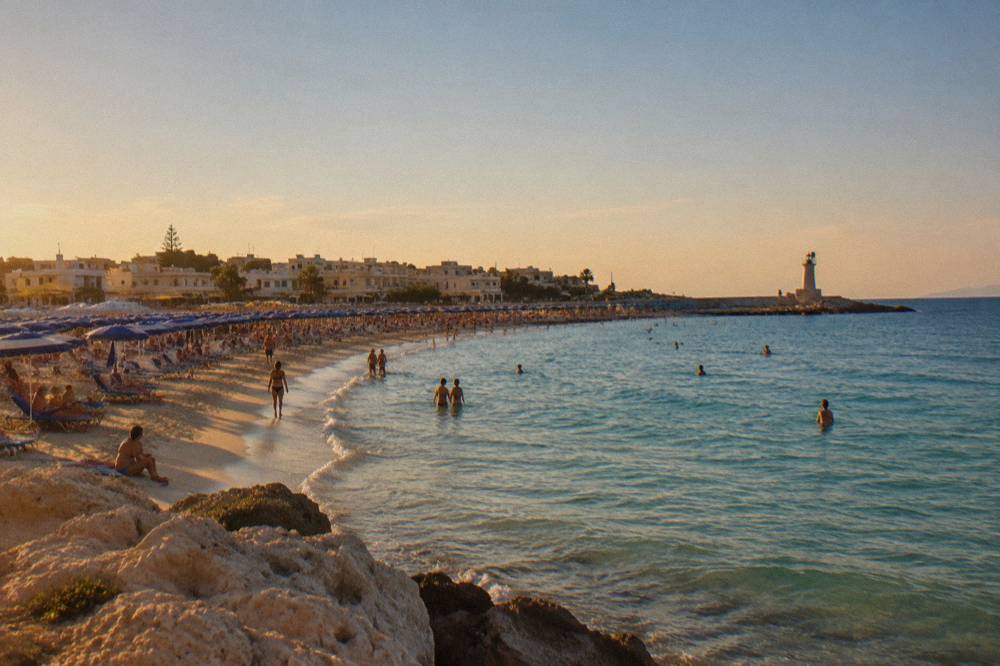
Which Side Of Salento Should You Choose, Adriatic Or Ionian?
The Adriatic coast east and south of Lecce is the cliffier, rockier shore, with sea caves around Castro and Leuca and deeper water close to the rocks; the Ionian coast to the west is the sandy, shallower one, the home of Punta Prosciutto and Pescoluse, with dunes and long shallows. The geography, not a ranking, is what the sources support, and both coasts sit within about an hour of Lecce by car.
On the Adriatic side, the stretch from Otranto down to Castro and Leuca is the cave coast. Grotta Zinzulusa at Castro runs guided visits year-round, at 7 euro full and 4 reduced, per the cave's own schedule page, with winter visits ending in mid-afternoon and summer ones running into the evening. It is one of the few coastal sights with confirmed year-round opening, which matters for anyone visiting outside the beach season.
On the Ionian side, Pescoluse, in the marina of Salve, is the stretch nicknamed the "Maldives of Salento": long fine white sand, dunes and shallow turquoise water, and it held a Blue Flag in 2026, per the regional tourism listing. It is the farthest of the famous beaches from Lecce, well beyond an hour by road, which makes it a full-day outing rather than a morning hop. Punta Prosciutto near Porto Cesareo offers similar sand and shallows closer to the city.
For a single map of how these coasts string together, the Salento beaches guide covers the full peninsula, and the Puglia road trip itinerary shows how beach stops combine with the inland towns. The short answer for a base is that Lecce works precisely because both coasts are in range, a point the site's where to stay in Lecce page develops.
What Can You Do On The Water From Lecce?
Boat trips run from the Adriatic ports to the sea caves, and snorkelling cruises run from Porto Cesareo and San Foca on the two coasts. The roster on this site includes a group boat tour to the caves of Santa Maria di Leuca, a snorkelling mini cruise from Porto Cesareo with an aperitif, a canoe cave adventure, and a snorkel cruise from San Foca towards Torre Sant'Andrea, alongside bike tours that reach the coast inland.
The caves around Leuca and Castro are the headline act, and the water is the only way in. For readers planning the sea day, the featured Group Boat to the Caves covers the Leuca cave coast, with swimming stops and an aperitif on some departures, Check availability for the live listing. On the Ionian side, a Snorkel Mini Cruise, Aperitif Included operates out of Porto Cesareo, whose protected shallow water suits first-time snorkellers.
Not every water day needs a boat. The cave coast can also be seen by canoe, on an Adventure to the caves by canoe, and the flat inland roads of Salento make the coast reachable by e-bike, a slower route that passes olive groves and masserias on the way. Swimming itself is banned at Grotta della Poesia since summer 2026, so the famous pool is a viewing stop now, not a bathing one.
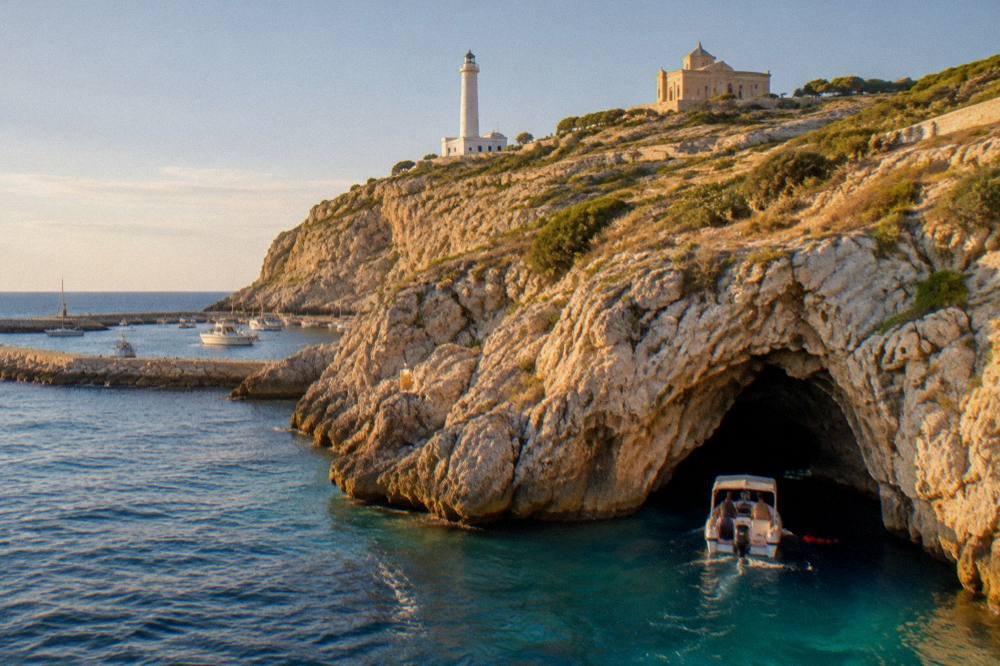
When Is The Sea Warm Enough To Swim Near Lecce?
Sea temperature around Salento averages about 22.5 C in June, peaks at 25 to 27 C in August, holds at 20 to 22 C in October, and falls to about 14 C in February, per seatemperature.org data for the region. That makes mid-June through early October the realistic swimming window, with the warmest water in August and the sea still swimmable for hardier bathers into autumn.
The air side of the equation comes from the ERA5 reanalysis, 1991-2020, for the grid cell near Lecce: mean daily highs of 28.2 C in June, 31.0 C in July and 31.3 C in August, easing to 21.8 C in October. Rain is the other factor: November carries the highest monthly total at 93.7 mm and July the lowest at 15.3 mm, which is why the beach season and the dry season line up almost exactly. The site's pages on Lecce weather and the best time to visit Lecce develop the timing question in full.
| Month | Mean high C (ERA5 1991-2020) | Rain mm | Sea temp C (regional average) |
|---|---|---|---|
| May | 23.4 | 39.9 | about 18 |
| June | 28.2 | 18.0 | about 22.5 |
| July | 31.0 | 15.3 | 25 to 26 |
| August | 31.3 | 18.1 | 25 to 27 |
| September | 26.4 | 58.9 | about 24 to 25 |
| October | 21.8 | 91.3 | 20 to 22 |
The bathing season, in practical terms, follows the services: lidos and beach facilities peak from July to August, and the Salento in Bus network that carried beachgoers without cars ran mid-June to mid-September in 2026. Free beach access is year-round where the shore is open, subject to local ordinances and weather. September is the quiet compromise, with the sea still at about 24 to 25 C and the August crowds gone, though the seasonal buses thin out after the first half of the month.
Can You Combine A Beach Day With Sightseeing In Lecce?
Yes, and the geography practically insists on it: San Cataldo is about 14 minutes by car or about 20 by bus from the centre, so a morning on the sand and an afternoon among the baroque churches of the old town fit one day without rushing. The LeccEcclesiae church ticket even stays valid 15 days, per the Diocese of Lecce's ticket page, so church visits can absorb the gaps between beach days.
A workable pattern reported by the schedules: the SGM line 32 bus to San Cataldo takes about 20 minutes, the beach sits by a pine reserve, and a return by mid-afternoon leaves the golden hours for Piazza Sant'Oronzo and the Roman Amphitheatre, visible free from the square. The full one-day plan is laid out in the site's guide to Lecce in one day, and longer stays in the Lecce in three days itinerary, which slots a coast day between city days.
The reverse also works: base yourself in Lecce, day-trip the coast, and keep the evenings for the city's food. The pages on what to eat in Lecce and the best restaurants in Lecce cover the apéro and dinner end of the day, including the iced coffee with almond milk that the city claims as its own.
What Should You Know Before You Go?
Three practical points: Lecce's tourist tax exists and is collected by accommodation, with a top reported rate of 5 euro per person per night in the high season from 1 April 2026, so confirm at booking; the historic centre's ZTL is camera-policed, so a hire car needs a plan for parking; and the emergency number in Italy is 112. Beyond those, the beaches themselves ask for little more than shoes for rocky Adriatic platforms and a booked lido in August.
For the wider planning stack, the site's coverage runs from arrival at Brindisi airport to Lecce through how to get to Lecce by train from Bari, Rome or Naples, and onward around the region. Luggage storage near the station runs about 2.50 to 3.50 euro a day through app-based networks, per the listing, useful on a beach-bound departure day. And for the whole scope of the city beyond the sand, the root page on things to do in Lecce is the site's starting point, alongside this Lecce Travel Guide page for the coast.
Common Questions About Beaches Near Lecce
What is the closest beach to Lecce?
San Cataldo, about 13 km east of the centre on the Adriatic, per the comune of Lecce. It is reached by SGM line 32 from the City Terminal in about 20 minutes, or by car in about 14 minutes from Piazza Sant'Oronzo.
Can you get from Lecce to the beach without a car?
Yes. SGM line 32 runs year-round to San Cataldo in about 20 minutes, and in summer the Salento in Bus network ran lines 101, 104, 107 and 108 from Lecce to Torre dell'Orso, Otranto, Porto Cesareo, Gallipoli and Leuca between 13 June and 13 September 2026. FSE trains also reach Gallipoli and Otranto year-round.
How much does a beach umbrella cost near Lecce?
Reported 2026 prices for an umbrella and two sunbeds per day ran from 15 to 25 euro at San Cataldo in June, 33 to 35 euro in August, and 50 to 60 euro in August at Torre dell'Orso and San Foca, per the Udicon consumer survey. Prices change by year; check the board at each lido.
Which is better, the Adriatic or the Ionian coast near Lecce?
The two coasts differ rather than rank: the Adriatic east of Lecce is cliffier and rockier with sea caves around Castro and Leuca, while the Ionian west is sandy and shallow, the coast of Punta Prosciutto and Pescoluse. Both are within about an hour of Lecce by car.
Can you swim at Grotta della Poesia?
No. Since summer 2026 bathing and diving are prohibited at the Grotta della Poesia at Roca Vecchia, and non-residents of Melendugno paid a 5 euro ticket in the 2026 season. The pool is viewed from paths. The 2027 rules had not been announced, so check locally.
When is the sea warm enough to swim near Lecce?
Roughly mid-June through early October. Sea temperature averages about 22.5 C in June, peaks at 25 to 27 C in August, and holds at 20 to 22 C in October, per seatemperature.org regional data, falling to about 14 C in February.