Le Marine Di Lecce: San Cataldo, Frigole And Torre Chianca
Lecce is a baroque city a few kilometres inland, but its own comune lists five marine, seaside districts on the Adriatic. San Cataldo, Frigole and Torre Chianca are the closest beaches to the old town, reachable by city bus in about twenty minutes.
Short answer
Le marine di Lecce are the city's seaside fractions on the Adriatic, about 13 km from the centre. SGM bus line 32 runs from the City Terminal to San Cataldo in about 20 minutes, and the summer Salento in Bus network connects the coast towns from mid-June to mid-September.
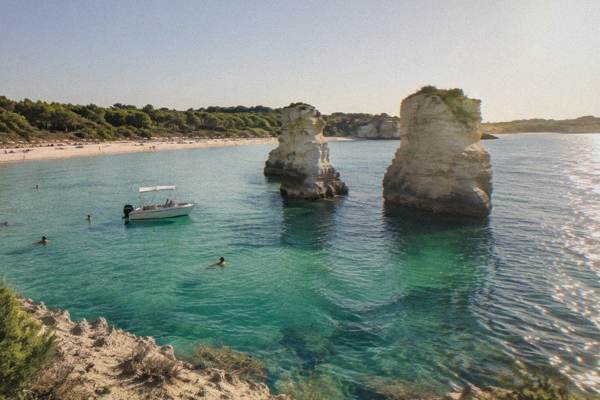
Lecce, in Puglia, southern Italy, is the baroque capital of Salento, and it sits a few kilometres inland: the nearest beach, San Cataldo, is about 13 km from the centre. What the comune's own pages call "le cinque marine di Lecce", the five seaside districts of the city, stretch along the low, sandy Adriatic shore east of town. San Cataldo, Frigole and Torre Chianca are the three visitors meet first, and each is a working summer frazione rather than a resort built for tourism. This page lays out what the sources say about getting there, what a beach day costs, and how these marine fit into a wider Salento coastal trip.
What Are Le Marine Di Lecce?
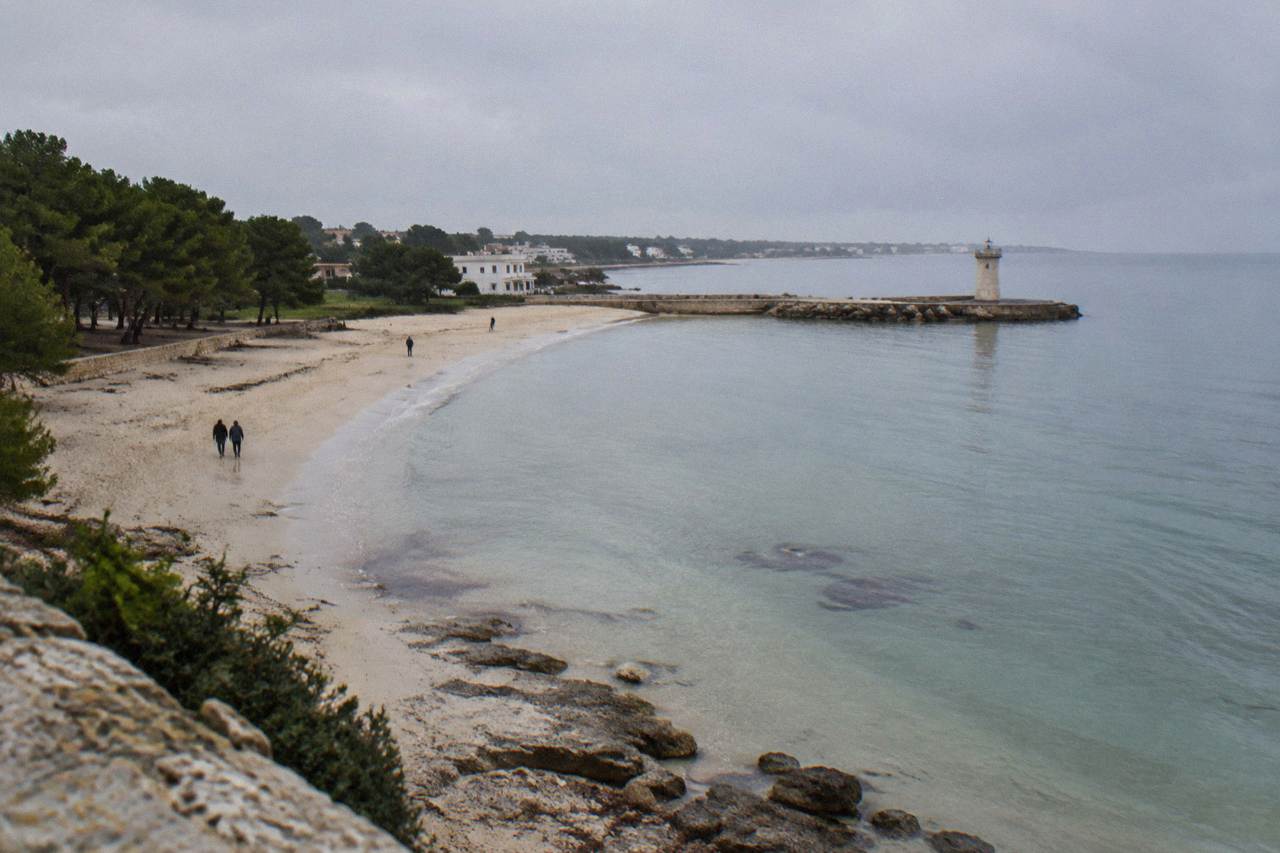
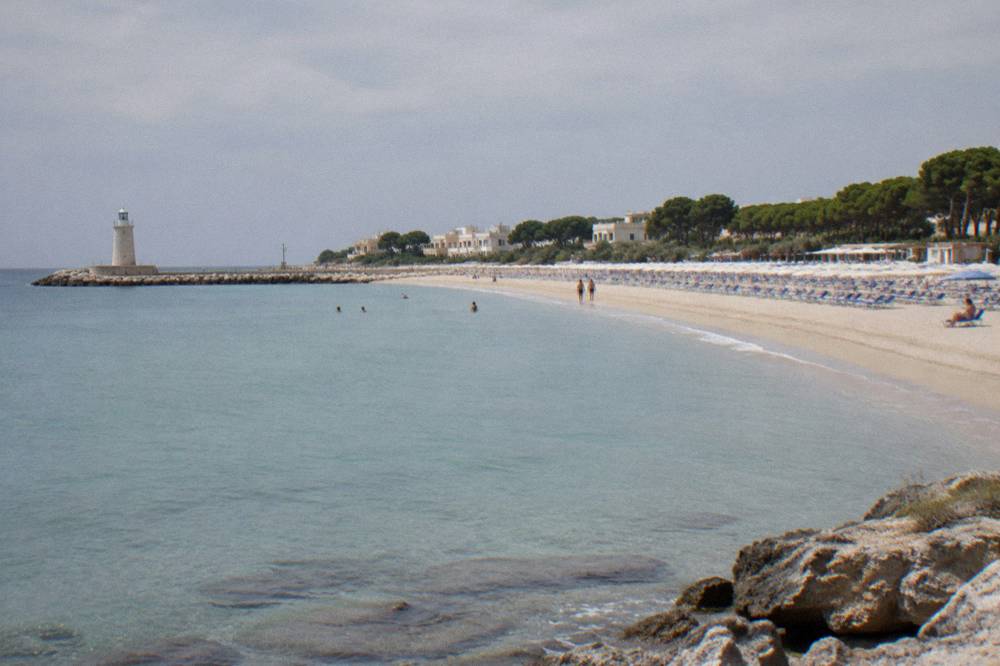
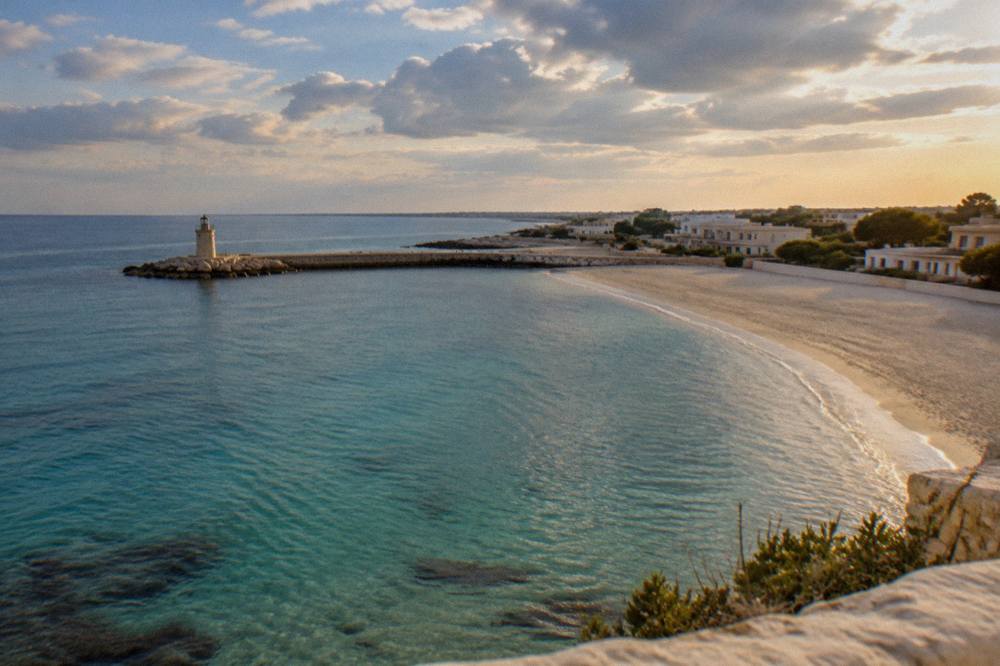
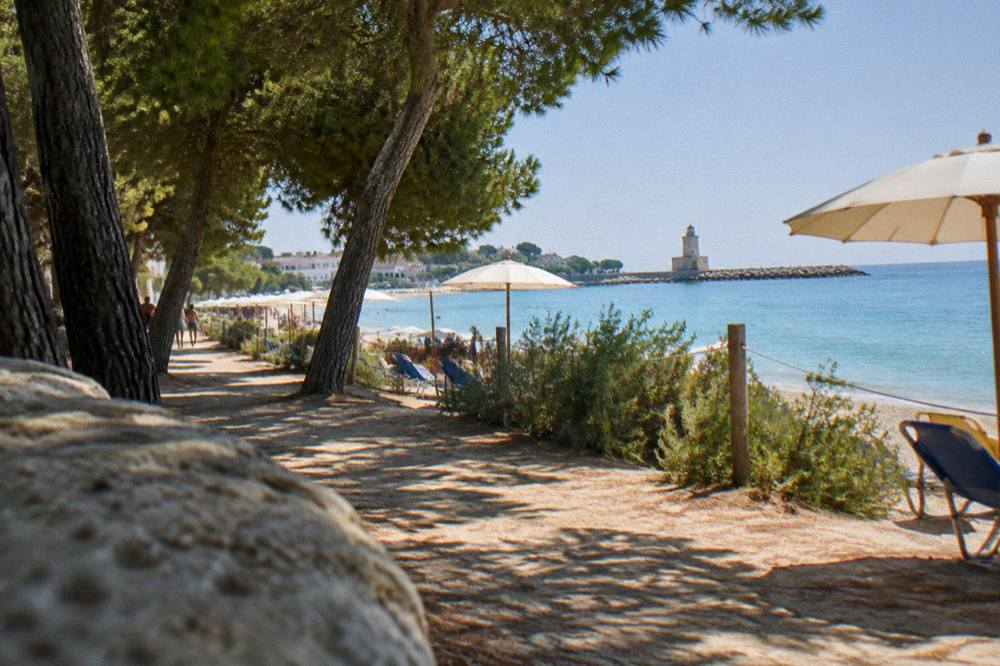
Le marine di Lecce are the five seaside districts the comune of Lecce lists on its own tourism pages, coastal fractions on the low sandy Adriatic shore east of the city, of which San Cataldo, Frigole and Torre Chianca are the ones closest to the historic centre. San Cataldo, the nearest, lies about 13 km from Piazza Sant'Oronzo. They are summer beach settlements backed by pine forest, not baroque towns: the architecture that makes Lecce famous stays inland, in the centro storico.
The centro storico holds the limestone facades and the churches; the marine hold sand and pines. The comune of Lecce publishes a dedicated section on its site called "le cinque marine di Lecce", describing each district's character. San Cataldo appears there as a low sandy coast with a pine forest and reserve behind it. The description matters because it sets expectations: this is a flat, shallow shoreline with pine cover, useful for families and for anyone who wants shade in the afternoon, and quite different from the cliff and rock formations further south towards Otranto and Castro.
Geographically the marine sit on the Adriatic side of the Salento peninsula. The Adriatic coast here is the lower, sandier shore compared with the rocky stretches south of Torre dell'Orso, while the Ionian side of the peninsula, Pescoluse and Gallipoli's Baia Verde, holds the long white sand and shallower turquoise water. No ranking follows from that: it is simply the geography the sources describe, and the marine are the convenient option because they belong to Lecce itself.
The word marina itself needs a note. In Salento usage a marina is the seaside fraction of an inland town, the "sea place" that belongs to a hill or plain town inland. Lecce's marine follow that pattern exactly: city inland, beach districts at the end of a short road and rail corridor east. The Frigole and Torre Chianca districts continue the same sandy shoreline north of San Cataldo's port area.
How Do You Get From Lecce To San Cataldo Without A Car?
SGM city bus line 32 runs from Lecce's City Terminal to San Cataldo in about 20 minutes, on a route that also serves Torre Chianca, and a single SGM ticket costs about 1.20 euro bought in advance. In summer the comune has advertised a bus every half hour to San Cataldo and Torre Chianca. By car, San Cataldo is 12.9 km and about 14 minutes from Piazza Sant'Oronzo.
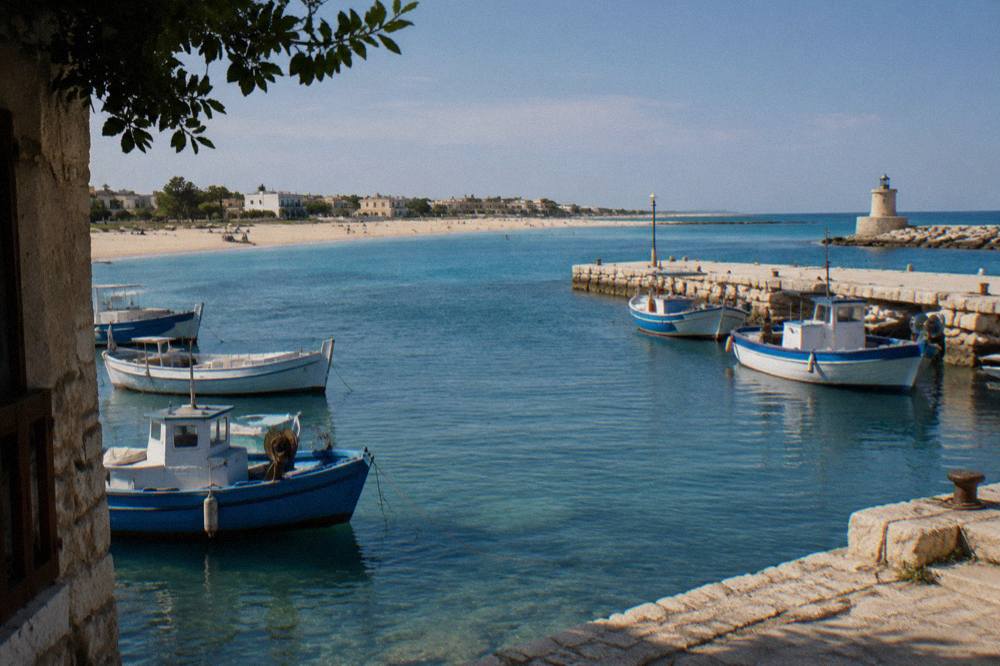
The bus is the practical answer for a beach day from the old town. Line 32's stops include the San Cataldo lido area, the rotunda and the darsena, the small harbour. The comune's summer announcements describe a half-hourly frequency in the bathing season, though schedules are seasonal and worth checking on the SGM site or app before travel. The standard SGM ordinary single, valid sixty minutes, is about 1.20 euro from a ticket source and about 1.50 euro bought on board, and a day ticket costs about 3 euro.
Driving is straightforward too. The OSRM routing table computed for this site puts San Cataldo at 12.9 km and roughly 14 minutes of free-flow driving from Piazza Sant'Oronzo, the shortest of all the seaside runs from Lecce. There is no ZTL concern at the beach end, only at the city end: Lecce's historic centre is camera-policed with restricted hours, so a car day usually means parking outside the centre, for example at the Park Liberty underground car park with 466 spaces, and walking in.
The wider summer network is the other piece. Salento in Bus, operated by Cotrap with provincial partners, ran from 13 June to 13 September in 2026, with peak service from 1 July to 31 August. Its lines from Lecce include line 101 towards Torre dell'Orso and Otranto, line 104 towards Porto Cesareo and Gallipoli, and lines 107 and 108 towards Santa Maria di Leuca. Fares ran from 1.10 to 5 euro depending on distance, with a 1 euro surcharge buying on board, and children under 10 travelled free. The 2027 dates had not been announced; the service is summer-only.
| Route | Operator | Typical time | Fare |
|---|---|---|---|
| Lecce City Terminal to San Cataldo (line 32) | SGM | about 20 min | about 1.20 euro |
| Lecce to San Cataldo by car | road | about 14 min | 12.9 km |
| Salento in Bus line 101 to Torre dell'Orso | Cotrap | about 60 min | 1.10 to 5 euro by distance |
| Salento in Bus line 104 to Porto Cesareo | Cotrap | summer schedule | 1.10 to 5 euro by distance |
| Salento in Bus lines 107/108 to Leuca | Cotrap | summer schedule | 1.10 to 5 euro by distance |
A pattern that works well, on the evidence of the timetables rather than on anyone's taste, is a morning walk in the city before the midday heat and an afternoon bus out to the shore. The one-day Lecce itinerary covers the inland half, and the marine close the day with a swim.
Which Of The Marine Di Lecce Suits A Beach Day?
San Cataldo is the closest and the one the comune describes in most detail, a low sandy coast with pine forest and a reserve behind it, served by both bus and a short drive; Frigole and Torre Chianca continue the same shoreline north, with Torre Chianca sharing the line 32 bus and its own lidos. The choice between them is practical, about transport and lido prices, not about dramatic scenery, which on this stretch is uniformly low and sandy.
San Cataldo has the harbour and the darsena, the pine backdrop, and the reserve the comune's page mentions. It is also the terminal point of the historic Lecce to San Cataldo tram corridor, now a road corridor, which is why it feels like the "official" beach of the city. The 2026 lido surveys place it at the budget end of the regional scale: an umbrella with two sunbeds ran 15 to 25 euro a day in June and 33 to 35 euro in August, per the Udicon survey reported by Corriere Salentino.
Torre Chianca sits north along the same coast. The same survey reported its lidos at 15 to 35 euro in June, rising to between 25 and 52 euro in August. The comune's summer bus notice pairs Torre Chianca with San Cataldo on the half-hourly service, which makes it a genuine alternative stop rather than a separate expedition. The free beach sections run along the whole shore where access is open, and beach access itself is free year-round where ordinances allow.
Frigole completes the near group. The pack carries no separate distances, lido prices or bus details for Frigole beyond its place among the comune's five marine, so the honest advice is to confirm locally: the shoreline is continuous, and access follows the same pattern of lidos interspersed with free beach. What the sources do support is that all three sit on the flat Adriatic shore, within a short drive of each other, so a wrong choice costs minutes rather than a morning.
What Do Lidos At Le Marine Di Lecce Cost In 2026?
Reported 2026 prices for an umbrella and two sunbeds per day ran at 15 to 25 euro in June and 33 to 35 euro in August at San Cataldo, and 15 to 35 euro in June rising to between 25 and 52 euro in August at Torre Chianca, per the Udicon and Adoc consumer surveys reported by Corriere Salentino. Free beach sections sit alongside the lidos, and prices change by year, so the figure to confirm is the day's, not the survey's.
The consumer-association surveys are the source here, and they carry two caveats worth repeating in plain terms. First, they are snapshots: Adoc certified a 25 percent increase over the previous five years in the regional lido market, which is the direction of travel. Second, they are area averages, and a single lido's row position, front line versus back, moves the price within the band.
| Area | Umbrella + 2 sunbeds, June | Umbrella + 2 sunbeds, August |
|---|---|---|
| San Cataldo | 15 to 25 euro | 33 to 35 euro |
| Torre Chianca | 15 to 35 euro | 25 to 52 euro |
| Torre dell'Orso / San Foca | 25 to 35 euro | 50 to 60 euro |
| Otranto | 20 to 30 euro | 30 to 50 euro |
The regional comparison in that table is the useful part for planning. The marine of Lecce sit at the cheaper end of the Adriatic survey, and the Ionian lidos reported higher still. A family comparing a San Cataldo day with a Torre dell'Orso day is comparing a band that tops out around 35 euro in August with one that reaches 60 euro, per the same survey.
What the surveys do not cover is equally worth knowing. No hotel rates, parking prices at the marine or restaurant prices were found in the sources for this page, so none are quoted here; the advice is to confirm with the lido or the accommodation directly. The beach itself, outside the equipped lido rows, remains free public shore.
When Is The Sea Warm Enough To Swim At Le Marine Di Lecce?
Sea temperature on the Puglia coast averages about 22.5 C in June, peaks at 25 to 27 C in August, holds 20 to 22 C in October and falls to about 14 C in February, per seatemperature.org data for the region, while the ERA5 reanalysis for Lecce, 1991 to 2020, puts the mean daily high at 28.2 C in June and 31.3 C in August with only 18 mm and 15.3 mm of rain in July respectively.
Those two datasets answer different questions and both belong on the page. The sea temperatures, reported by seatemperature.org, are regional averages for the Salento coastline the marine sit on, and they bracket the real swimming season: comfortable from June, at its warmest in August, still plausible in October, and genuinely cold by February. The air-side figures come from the ERA5 reanalysis for the Lecce grid cell, a modelled dataset covering 1991 to 2020, not a weather-station record.
| Month | Mean high C (ERA5 1991-2020) | Rain mm | Sea temperature |
|---|---|---|---|
| May | 23.4 | 39.9 | cool, warming |
| June | 28.2 | 18.0 | about 22.5 C |
| July | 31.0 | 15.3 | warm |
| August | 31.3 | 18.1 | 25 to 27 C |
| September | 26.4 | 58.9 | cooling |
| October | 21.8 | 91.3 | 20 to 22 C |
The rainfall column explains the region's rhythm as much as the temperature one. June through August is the dry quarter, with 18 mm or less per month, while October and November carry 91.3 mm and 93.7 mm respectively, November being the wettest month of the year in the reanalysis. A beach day at the marine in high summer is a low-risk plan on those numbers; an October swim is a milder-weather bet with a real chance of rain.
The bathing season aligns with the service calendar. Salento in Bus and the half-hourly SGM beach service both ran within the 13 June to 13 September window in 2026, and the lido surveys price the peak in July and August. Outside that window the free shore remains walkable year-round where ordinances allow, with services thinned out.
What Can You Do On The Water From Le Marine Di Lecce?
The marine themselves are swimming and lido territory on a low sandy shore, and the pack carries no boat operators based at San Cataldo, Frigole or Torre Chianca; the verified boat and snorkel departures on this coast run from San Foca, Torre Sant'Andrea and Santa Maria di Leuca, reached by summer shuttle or by tour transport from Lecce. A San Foca snorkel cruise to Torre Sant'Andrea is the closest verified water trip.
San Foca and Torre dell'Orso sit just up the coast from the marine, and Salento in Bus line 101 connects Lecce with Torre dell'Orso in about 60 minutes in the summer season. The San Foca snorkel cruise listed on this site covers that rock-and-cliff stretch, with the sea stacks of Torre Sant'Andrea as the landmark feature, and it pairs naturally with a beach day because it leaves from the shore rather than requiring a drive across the peninsula. Details, prices and availability render on the operator's live listing.
South along the same Adriatic coast, the sea caves begin in earnest. A group boat tour to the caves of Santa Maria di Leuca runs three hours along the southern tip of the peninsula, and canoe tours to the caves operate with a night option, both covered on this site. Leuca itself is a full coastal trip from Lecce, 83.2 km and about 78 minutes of free-flow driving per the routing table, or reachable on the summer 107/108 shuttle lines, and the Santa Maria di Leuca guide covers the town end.
For swimmers who want the famous pool rather than the open sea, Grotta della Poesia at Roca Vecchia near Torre dell'Orso changed in 2026: bathing and diving are banned since summer 2026, non-residents of Melendugno paid a 5 euro ticket in the 2026 season, and access is limited and contingent through the ArcheoRoca project, viewed from paths only. The 2027 rules are not published. That is a reason to treat the marine's ordinary swimming as the plan and the Grotta as a viewpoint.
Where Do Le Marine Fit In A Wider Salento Coast Trip?
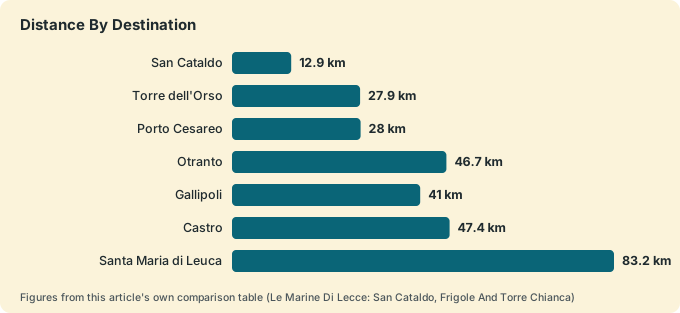
Le marine are the near beach option within Lecce's own boundaries, about 13 km from the centre, and they work best as the swim-and-return half-day of a city-based stay, while the named coastal destinations, Torre dell'Orso at 32 minutes, Otranto at 44 minutes, Porto Cesareo at 34 minutes and Gallipoli at 41 minutes by car, are separate day trips with their own characters and transport.
The routing table computed for this site gives the free-flow driving picture from Piazza Sant'Oronzo, and it shows how compact the Salento coast really is. Nothing on the list below is more than ninety minutes away, and the two seas are both in range: the Adriatic destinations east and south, the Ionian ones west.
| Destination | Distance | Drive time | Sea |
|---|---|---|---|
| San Cataldo | 12.9 km | about 14 min | Adriatic |
| Torre dell'Orso | 27.9 km | about 32 min | Adriatic |
| Porto Cesareo | 28.0 km | about 34 min | Ionian |
| Otranto | 46.7 km | about 44 min | Adriatic |
| Gallipoli | 41.0 km | about 41 min | Ionian |
| Castro | 47.4 km | about 48 min | Adriatic |
| Santa Maria di Leuca | 83.2 km | about 78 min | Adriatic tip |
By train and bus the picture changes shape. Otranto is an FSE ride with a change at Maglie, about 1h33 to over 2 hours; Gallipoli is a direct FSE train of about 1h18 to 1h43 from about 5 euro. The marine remain the only coastal option on a plain city bus ticket, which is exactly their role in a trip plan. For the fuller picture, the things to do in Lecce page collects the inland half of the region's offer, from the Duomo to the Museo Faggiano.
A reasonable week, on the transport evidence alone, alternates: two or three city days walking the baroque quarter, one or two marine afternoons on the line 32 bus, and two or three shuttle or train days to the named coastal towns. The summer-only services, Salento in Bus above all, set the window in which the last group works without a car.
What Should You Know Before A Beach Day At Le Marine Di Lecce?
Bring cash expectations in line with the survey bands, plan the bus before midday because the half-hourly frequency is a summer service, use sun protection because the ERA5 reanalysis puts the July and August mean highs at 31.0 and 31.3 C, and keep the city itinerary for the evening when the stone cools.
The tourist tax exists in Lecce and is collected by the accommodation, with a top reported rate of 5 euro per night at five-star high season properties from 1 April 2026; confirm at booking.
The practicalities come from the transport and survey data rather than from any single beach report. The SGM ticket bought on board costs more than one bought in advance, about 1.50 euro against 1.20, and the day ticket at about 3 euro covers a return with margin. The lido bands are survey averages for an umbrella and two sunbeds, so a front-row position in August at Torre Chianca can exceed the top of the band and a June weekday at San Cataldo can undercut the bottom.
Sun and heat need respect. The reanalysis shows a two-month stretch with mean daily highs above 31 C and almost no rainfall, and the pine cover at San Cataldo that the comune's page describes is part of the district's value, not decoration. The sea breeze moderates the shore relative to the inland city, but the swimming hours are the middle of the day everywhere on this coast.
For the city half of the day, the standard advice from the church authorities applies inland: shoulders and knees covered for church visits, and tourist visits paused during services. The caffe in ghiaccio culture, espresso over ice with almond milk, is the local answer to beach-adjacent afternoons, credited to Antonio Quarta's Lecce roastery in the 1940s and 1950s.
Common Questions About Le Marine Di Lecce
Does Lecce Have Its Own Beach?
**Yes, in the administrative sense the comune's own pages describe: the five marine di Lecce are seaside fractions of the city, and San Cataldo, the nearest, lies about 13 km from the centre on a low sandy Adriatic shore backed by pine forest.** It is a bus or short-drive beach rather than a walk-out-the-door one, because the historic city sits inland. The line 32 bus covers the run in about 20 minutes, so a beach morning costs very little planning.
How Far Is San Cataldo From Lecce?
**San Cataldo is 12.9 km from Piazza Sant'Oronzo by road, about 14 minutes of free-flow driving per the routing data, or about 20 minutes on SGM bus line 32 from the City Terminal.** In summer the comune has advertised a half-hourly frequency on the beach route. A single ticket is about 1.20 euro bought in advance, and the day ticket at about 3 euro covers a return with margin.
Are The Marine Di Lecce Sandy Or Rocky?
**Sandy and low, per the comune's description of San Cataldo as a low sandy coast with pine forest; the rocky, cliff-bound Adriatic shore begins further south, around Torre Sant'Andrea, Castro and the Leuca cave stretches.** The Ionian side of the peninsula carries the long fine white sand, at places like Pescoluse. The marine sit firmly in the first category, which is why they suit families and shallow-water swimming.
Can You Swim At Grotta della Poesia Near The Marine?
**No: since summer 2026 bathing and diving at Grotta della Poesia are banned, non-residents of Melendugno paid a 5 euro ticket in the 2026 season, and access is limited and contingent, viewed from paths only through the ArcheoRoca project.** The 2027 rules are not published, so confirm locally before planning a visit. That makes the marine's ordinary swimming, and the open-sea lidos, the reliable plan for a beach day.
Do The Beach Buses Run All Year?
**No: the half-hourly summer frequency on the San Cataldo and Torre Chianca route is a seasonal service, and the Salento in Bus network ran only from 13 June to 13 September in 2026, with the 2027 dates unannounced.** SGM line 32 itself is the year-round city route to check for off-season timetables. Outside the bathing season, expect thinned frequencies and confirm times on the operator's channels before travelling.
The marine di Lecce are, in the end, the city's practical seaside: close, sandy, cheap by the regional survey's standards, and connected by a plain city bus for a euro or two. The dramatic Salento coast, the caves, the stacks and the turquoise Ionian sand, starts where the marine end, and the summer shuttles and the FSE trains stitch the two together for anyone based in the baroque old town of Lecce, as the Lecce Travel Guide lays out across its coast and city pages.