Which Is Better, Gallipoli Or Otranto?
Gallipoli and Otranto compared for a Lecce-based trip: drive and train times, cathedral and castle tickets, beaches and what each Salento town does best.
Gallipoli and Otranto are the two headline day trips from Lecce, the baroque capital of Salento in Puglia, southern Italy, and travellers based in the city ask the same question every summer: which one deserves the day? Both sit on the coast, within about an hour's drive of the city, but they face opposite seas. Otranto looks east across the Adriatic, Gallipoli looks west across the Ionian, and the choice usually comes down to what a day away from Lecce's limestone lanes should actually contain.
Which Is Better, Gallipoli Or Otranto?
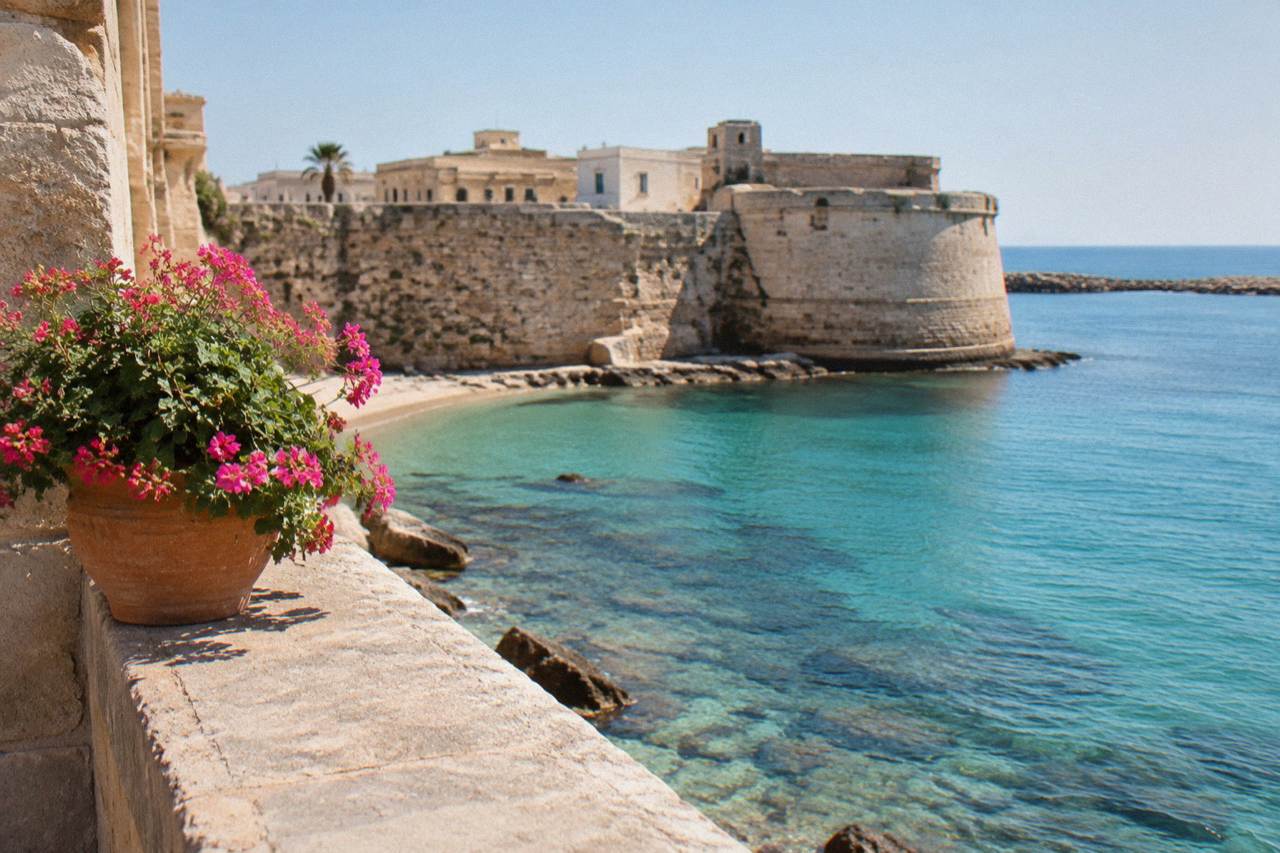
Neither town wins outright, because they answer different briefs. Otranto, on the Adriatic side of Salento about 46 km and 44 minutes by road from Lecce, leads on history and coastal drama: a cathedral floor mosaic dated 1163 to 1165, a seafront castle and pine-framed coves. Gallipoli, about 41 km and 41 minutes from Lecce on the Ionian side, leads on the old-town setting, a limestone island joined by a bridge, on beaches and on nightlife.
The two towns are not substitutes for each other, and that is the useful starting point. Otranto is the history day. Gallipoli is the water day. Travellers who want a day dense with sights lean one way, and travellers who want to swim, eat and wander lean the other.
Lecce itself is the base in almost every version of this question. The city sits a few kilometres inland, about 13 km from its nearest beach at San Cataldo, so the coast is the point of every day trip out. Both towns sit inside comfortable range, and the Lecce Travel Guide keeps a full day-trip page for each: the Otranto day trip guide and the Gallipoli day trip guide.
How Do You Get To Gallipoli And Otranto From Lecce?
Both are easy day trips from Lecce, and the drive is close to a tie. Otranto sits about 46.7 km east of Lecce, about 44 minutes by road, while Gallipoli is about 41 km west, about 41 minutes. By train, Gallipoli has a direct FSE service of roughly 1h18 to 1h43, while Otranto needs a change at Maglie, roughly 1h33 to over two hours in total.
The road times are free-flow figures from Lecce's Piazza Sant'Oronzo, and summer traffic on both coasts stretches them. The rail picture is the real difference: Gallipoli is a single direct FSE ride from Lecce station, while Otranto is a two-leg journey with the change at Maglie. Fares on the Gallipoli line start around 5 euro, and on the Otranto routing around 4 to 5 euro.
| Journey from Lecce | Distance | Drive time | Rail option | Summer bus |
|---|---|---|---|---|
| Lecce to Otranto | 46.7 km | about 44 min | FSE, change at Maglie, about 1h33 to 2h+ | Salento in Bus line 101 |
| Lecce to Gallipoli | 41.0 km | about 41 min | Direct FSE, about 1h18 to 1h43 | Salento in Bus line 104 |
The summer-only Salento in Bus network, run by Cotrap, covered both towns in 2026: it operated from 13 June to 13 September 2026, with line 101 running Lecce, Torre dell'Orso, Otranto and line 104 running Lecce, Porto Cesareo, Gallipoli. Fares ran from 1.10 to 5 euro by distance, with a 1 euro surcharge bought on board and children under 10 free. The 2027 season had not been announced, so anyone travelling outside the summer window should plan on train, bus or car.
Three bookable ways to see the Salento coast from a Lecce base:
What Does Otranto Do Best?
Otranto's case rests on layered history beside clear water. The cathedral floor mosaic, dated 1163 to 1165 and made by the priest Pantaleone, is the town's centrepiece, and independent visitors still enter free, though since 1 March 2026 groups and visitors with a licensed guide pay 2 euro. The Castello Aragonese charges seasonal tickets of about 6 euro in low season to about 12 euro in high, and the pine-framed Baia dei Turchi sits a short walk from parking on the SP366.
The mosaic is the single strongest sight on either coast. It covers the cathedral nave floor and reads as a sprawling medieval world map, a tree of life and a bestiary in one pavement. The Diocese of Otranto's notice sets the current access rules: independent visitors pay nothing, groups and guided visitors pay 2 euro each from 1 March 2026, the Museo Diocesano costs 3 euro, San Pietro costs 3 euro, and a combined cathedral, museum and San Pietro ticket costs 5 euro.
South of the town the coast turns limestone and green again. The Castello Aragonese sits inside the walled old town, its ticket swinging between about 6 and about 12 euro with the season and the exhibition calendar. The Grotta Zinzulusa at Castro, about 48 minutes' drive from Lecce and a short run south of Otranto, runs guided visits year-round at 7 euro full and 4 euro reduced.
The Otranto day trip guide carries the full sight list, and travellers weighing the city itself against the coast can read whether Lecce or Otranto is the better base.
A driver-led day removes the Maglie change and the coastal parking question at a stroke, which is why the private four-town tour is the site's featured route for this comparison.
What Does Gallipoli Do Best?
Gallipoli's case is the setting and the sand. The old town stands on a limestone island joined to the mainland by a bridge, so the historic core is ringed by water on every side, and the town sits on the Ionian coast, where long sandy stretches run south from the centre. The Castello di Gallipoli anchors the old town, though its ticket price varies with exhibitions and should be confirmed on site.
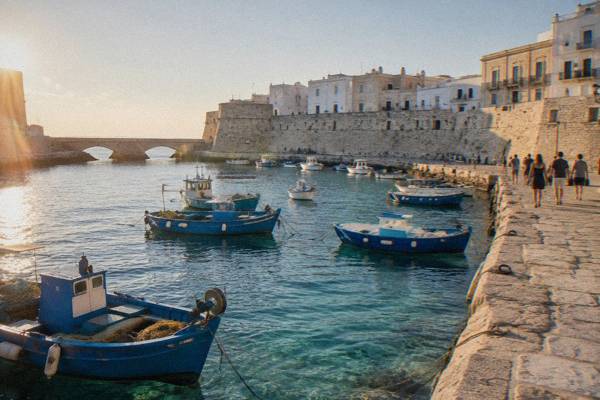
The island setting is what photographs never quite settle. The old town is a compact grid of lanes and baroque fronts with the sea on all four sides, reached across the bridge from the mainland new town, and the harbour walls put fishing boats and the evening passeggiata in the same frame.
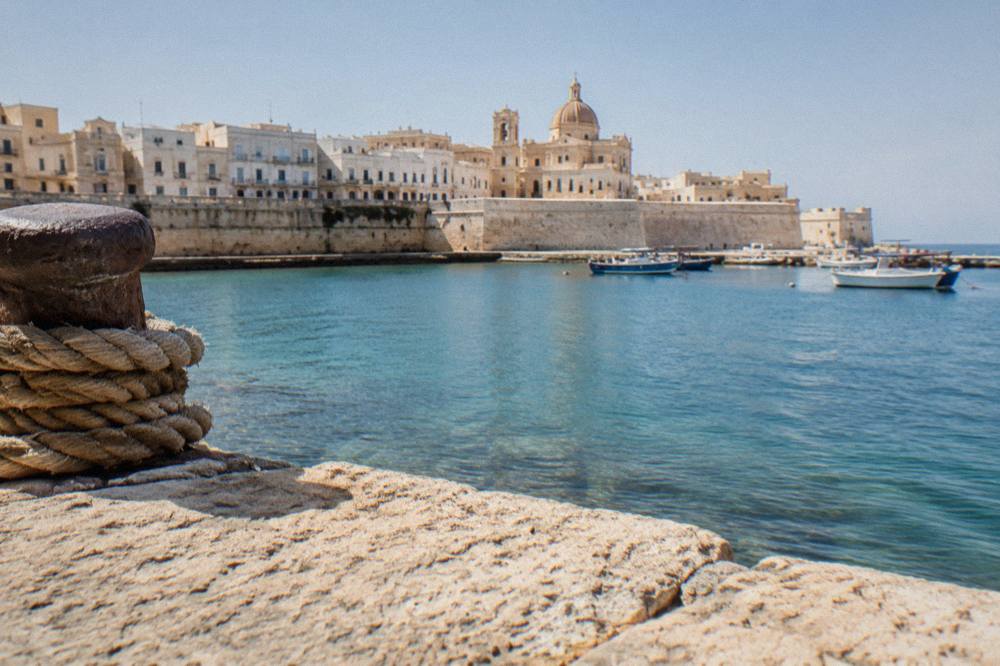
The castle sits at the island's edge, but unlike Otranto's it has no fixed published ticket: prices move with the exhibitions inside, so the honest instruction is to confirm at the entrance. What Gallipoli does have over its rival is the direct FSE train from Lecce, the sandy coast on its own doorstep and a nightlife scene that runs late into summer, covered in full in is Gallipoli a party town.
Which Town Has The Better Beaches?
Gallipoli wins on quantity and convenience, Otranto on scenery, and the gap is narrow. Gallipoli has sandy reaches close to town, including Baia Verde south of the centre and reachable on the Gallipoli rail line, while the wider Ionian coast runs south to Pescoluse, billed as the Maldives of Salento and flying a Blue Flag in 2026. Otranto counters with Baia dei Turchi through the pinewood and with rocky, swimmable coves.
The Ionian coast around Gallipoli is low and sandy, and the water stays shallow a long way out. The Adriatic coast around Otranto alternates sand with limestone, which is the same rock that makes the coves and the caves so dramatic, and the pine forest at Baia dei Turchi shades the walk in from the road.
| Coastal spot | Near which town | Coast | Access notes |
|---|---|---|---|
| Baia dei Turchi | Otranto | Adriatic | Park on the SP366 at 4 to 8 euro per day in high season, then a 10 to 15 minute walk through the pinewood |
| Grotta Zinzulusa | Castro, south of Otranto | Adriatic | Guided visits year-round, 7 euro full, 4 euro reduced |
| Baia Verde | Gallipoli | Ionian | South of the centre, on the Gallipoli rail line plus local connections |
| Pescoluse | Marina di Salve, south of Gallipoli | Ionian | Fine white sand and dunes, Blue Flag 2026 |
Anyone ranking the coastlines more widely can also read the most beautiful beach town in Puglia, which puts both of these ports into the regional field.
Can You See Both Towns On One Trip From Lecce?
Yes, but not comfortably in one day by public transport, and the honest answer is to give each town its own day. A private tour from Lecce can string Otranto, Leuca and Gallipoli together with a driver, and the summer Salento in Bus network ran lines 101 and 104 to Otranto and Gallipoli respectively from 13 June to 13 September 2026.
Two days is the shape that works: Otranto on one, Gallipoli on the other, each with a full afternoon on the coast and a return train that does not rush the evening. A single day split between them means two legs each way and barely three hours in either town, which wastes both.
For one-day travellers the driven option is the Private 4-Town Salento Tour, which runs Otranto, Santa Maria di Leuca, Gallipoli and Galatina into a single loop from Lecce: Check availability.
Galatina, the fourth stop on that route, is the town the pasticciotto story belongs to, and its Basilica of Santa Caterina d'Alessandria is free to enter in split morning and afternoon hours. It is a fair consolation prize for a day that has to choose between the two ports.
Beyond the driven day, three more ways to spend a Salento afternoon from Lecce:
Common Questions About Gallipoli And Otranto
Which is better, Gallipoli or Otranto?
Otranto for history and coastal drama, with the 1163 to 1165 mosaic floor and the seafront castle; Gallipoli for the island old town, the sandy coast and the nightlife. Give each its own day if the trip allows.
Is Otranto Cathedral free to enter?
Independent visitors enter free. Since 1 March 2026 groups and visitors with a licensed guide pay 2 euro each, with the Museo Diocesano at 3 euro and a combined cathedral, museum and San Pietro ticket at 5 euro.
Can you visit both towns without a car?
Yes. Gallipoli has a direct FSE train from Lecce, Otranto is reached by FSE with a change at Maglie, and the summer Salento in Bus network ran lines to both in 2026 from 13 June to 13 September.
Which town is closer to Lecce?
Gallipoli, by a small margin: about 41 km and 41 minutes by road, against Otranto's about 46.7 km and 44 minutes from Piazza Sant'Oronzo.
Do both towns have beaches?
Yes. Gallipoli has sand close to town at Baia Verde and south along the Ionian coast to Pescoluse; Otranto has Baia dei Turchi behind the pinewood, with parking on the SP366 at 4 to 8 euro per day in high season, plus rocky coves.
Is Gallipoli good for a night out?
Its summer nightlife scene runs late and is the louder of the two towns; Otranto's evenings are quieter and centred on the old-town lanes.
The short version: base in Lecce, give Otranto the history day and Gallipoli the water day, and let the mosaic decide the first one.