Which Is Better, Lecce Or Otranto?
A sourced comparison of Lecce and Otranto in Salento: baroque city against seaside town, with verified travel times, ticket facts and itinerary advice.
Lecce, in Puglia, southern Italy, is the baroque capital of Salento: a city of 94,387 residents built from honey-coloured pietra leccese limestone, sitting a few kilometres inland, with San Cataldo, its nearest beach, about 13 km away. Otranto is a small town on the Adriatic coast about 47 km east by road, famous for its cathedral floor mosaic and its sea. The two are not really rivals. One is a city of churches, pastry shops and workshops; the other is a walled seaside town at Italy's heel. This comparison lays out what the sources actually say about each, so the choice can be made on facts rather than slogans. For a fuller picture of the city side, the Lecce Travel Guide covers every sight, ticket and season in detail.
Which Is Better, Lecce Or Otranto?
Lecce is better as a base and for architecture, food and craft, while Otranto is better for the sea, and the honest answer is that a Salento trip normally includes both: Lecce has the LeccEcclesiae church circuit at 11 euro, Museo Faggiano at 5 euro and the Castello Carlo V tour at 10 euro, while Otranto has a free cathedral for independent visitors, a seafront and beaches within walking distance, and the drive between them takes about 44 minutes.
The question usually hides a planning decision. Travellers with three or four days in Salento can sleep in either place and reach the other easily, because the drive from Piazza Sant'Oronzo to Otranto is 46.7 km, about 44 minutes in free-flow traffic. By public transport the FSE railway runs Lecce to Otranto with a change at Maglie, about 1 hour 33 minutes to 2 hours or more, with fares from about 4 to 5 euro. So neither choice strands you.
What changes is the texture of the stay. Lecce fills evenings: bars in Piazza Sant'Oronzo, a historic cafe culture, and a university population of about 20,000 that keeps the centre alive outside August. Otranto is quieter out of season and intensely beach-focused in it. The Otranto day-trip guide covers the town on its own terms.
What Kind Of Place Is Each One?
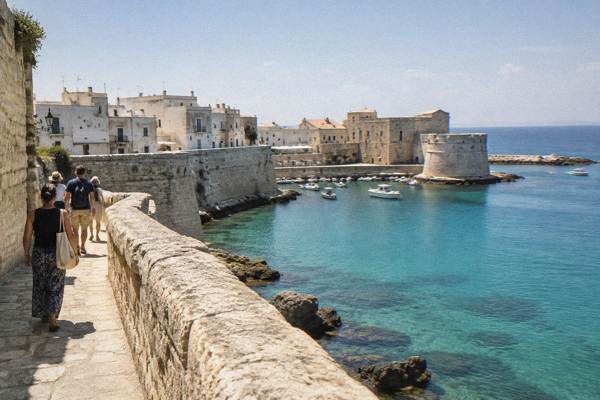
Lecce is an inland baroque city of pietra leccese limestone, often called the Florence of the South, with no beach of its own; Otranto is a coastal town on the Adriatic whose old centre sits inside Aragonese walls beside a harbour, with the easternmost point of mainland Italy nearby. The two towns share a region, a dialect culture and a love of Negroamaro wine, but almost nothing else about the visit feels the same.
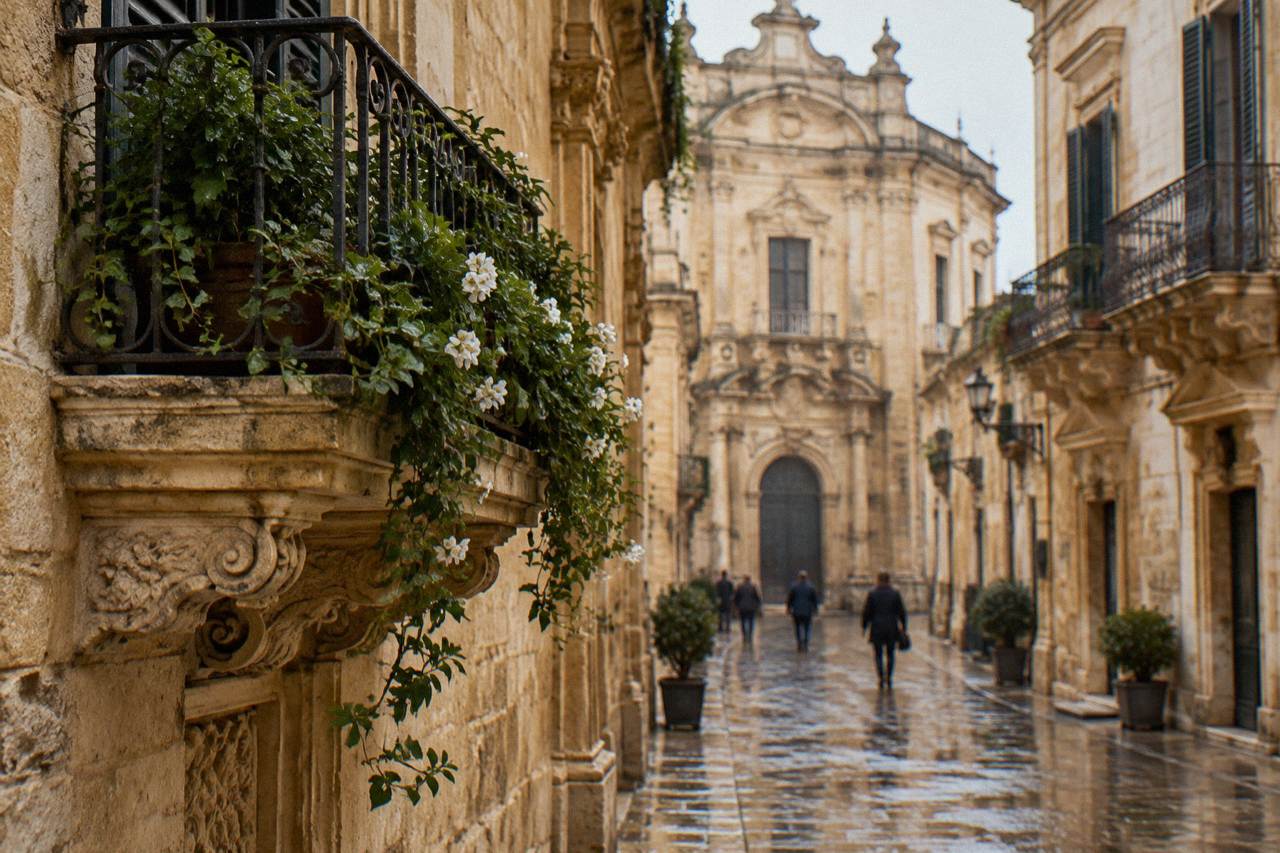
Lecce's identity is stone. Pietra leccese is a Miocene limestone, soft when quarried and hardening on exposure, which is why the facades of the Duomo and the Basilica di Santa Croce carry such dense carving. The same stone fed the papier-mache tradition, cartapesta, because sculptors could practise on cheap layered paper what the stone masons did in limestone. The city is not on the UNESCO World Heritage List; "Salento and the Barocco Leccese" sits on Italy's Tentative List, submitted in 2006, and that is the accurate way to describe its standing.
Otranto's identity is the sea and a single astonishing interior. The cathedral floor mosaic was laid between 1163 and 1165 by a priest named Pantaleone, and it runs the whole nave: a tree of life crowded with animals, figures and myth, described by sources as one of the largest medieval mosaics in Europe. Entry to the cathedral is free for independent visitors, though since 1 March 2026 groups and visitors with a licensed guide pay 2 euro per person, with a combined cathedral, museum and San Pietro ticket at 5 euro, per the Diocese of Otranto's notice.
It helps to be blunt about scale. Lecce is a provincial capital with a full resident life, a hospital, a university and a working class of stonemasons and bakers. Otranto is a small town whose economy tilts hard toward summer. Neither is "authentic" and the other not; they are simply different sizes doing different jobs.
What Can You Actually See And Do In Each Town?
In Lecce the core sights are the Duomo and its crypt, the Basilica di Santa Croce, the Roman amphitheatre in Piazza Sant'Oronzo, Museo Faggiano and the Castello Carlo V; in Otranto they are the cathedral mosaic, the Aragonese castle, the seafront and nearby beaches such as Baia dei Turchi, with the Cave di Bauxite lake inland whose access rules should be confirmed on arrival. Lecce needs two full days to be seen at all properly; Otranto can be walked in half a day, and that difference drives every itinerary decision.
The Lecce church circuit, LeccEcclesiae, covers five sites: the Duomo with its crypt, the Basilica di Santa Croce, the Chiesa di San Matteo, the Chiesa di Santa Chiara, and the Antico Seminario with the MuDAS art museum. The standard ticket is 11 euro full, 5 euro reduced for ages 12 to 17, valid 15 days, with under-12s free; the version including the bell tower costs more. Museo Faggiano, a house excavated down through layer upon layer of city history, is 5 euro. The Castello Carlo V interior is visitable only on a guided tour at 10 euro full, with the courtyard free; the amphitheatre is visible free from the square and entry inside is 5 euro. Details for each are in the three-day Lecce itinerary.
Otranto's sight list is shorter but concentrated. The cathedral with its mosaic and martyrs' chapel is the reason the town appears in guidebooks at all. The Castello Aragonese charges seasonal tickets reported at about 6 euro in low season rising to about 12 euro in high season. The beaches begin at the edge of town: Baia dei Turchi sits behind protected pinewood, reached by parking on the SP366 for 4 to 8 euro a day in high season and walking 10 to 15 minutes. The red-lake quarries of the Cave di Bauxite are close by, but no verified access rules exist for them, so confirm locally.
The comparison table makes the contrast concrete:
| Factor | Lecce | Otranto |
|---|---|---|
| Character | Inland baroque city, provincial capital | Walled Adriatic seaside town |
| Headline sight | Basilica di Santa Croce and the Duomo circuit | Cathedral floor mosaic, 1163 to 1165 |
| Core ticket | LeccEcclesiae 11 euro, valid 15 days | Cathedral free for independent visitors, 2 euro with a guide or group |
| Sea access | Nearest beach San Cataldo, about 13 km | Beaches at the town edge, walkable |
| Drive between | 46.7 km, about 44 minutes | Same, in reverse |
| Train | FSE via Maglie, about 1h33 to 2h+, from about 4 euro | Same |
Which Town Is Better For Food And Evenings?
Lecce is clearly the stronger food town, with a named pastry culture, historic cafes with roots back to about 1880, and the caffè in ghiaccio con latte di mandorla credited to Antonio Quarta in the 1940s to 1950s, while Otranto leans toward seafood restaurants by the harbour and simple beach-town evenings, with no verified venue price list for either town, so meal budgets should be planned from local menus rather than from this page.
Lecce's food identity is documented. The pasticciotto, custard and shortcrust, is claimed by Pasticceria Ascalone in Galatina with a 1745 date, though historians dispute it and the shop is not even in Lecce; what matters on the ground is that every pasticceria in the city bakes them, and Pasticceria Natale, family-run since 1978, lists one at 2.20 euro. Caffè Alvino on Piazza Sant'Oronzo traces its roots to about 1880. The caffè in ghiaccio con latte di mandorla, iced espresso with almond milk, is credited to Antonio Quarta of Quarta Caffè in the 1940s to 1950s and entered Italy's PAT traditional-products list in 2026. Around all of this sits the Salento wine world: Negroamaro-based Salice Salentino DOC, established in 1976.
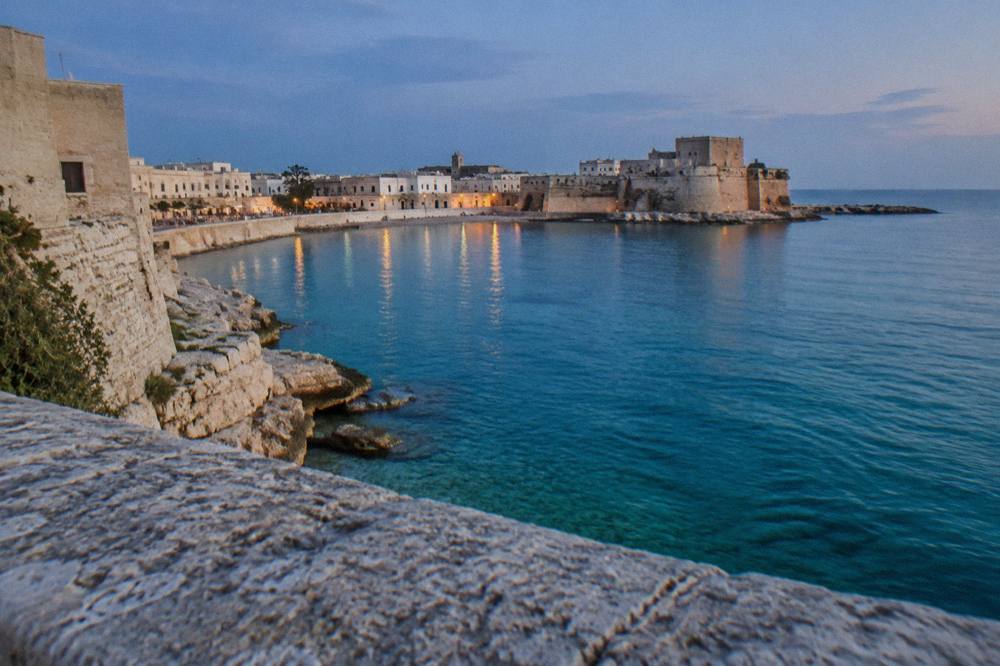
Otranto's food story is the sea. No verified restaurant list exists for the town in the sources behind this site, so nothing specific should be promised here beyond the obvious: a harbour town cooks what the boats bring. Confirm venues and prices locally.
Evenings follow the same split. Lecce has a resident population and a student one, so bars and squares stay lively through the shoulder months. Otranto in July and August is a full resort town, and outside that window it slows sharply. If an October or February trip is on the table, the city wins on atmosphere by a wide margin.
Where Should You Sleep, And Can You Do Both?
Sleeping in Lecce and day-tripping to Otranto is the pattern the transport facts support best: the drive is about 44 minutes, the FSE train via Maglie takes about 1h33 to 2h+, and in summer the Salento in Bus network, which ran 13 June to 13 September in 2026, connects the two directly, while basing in Otranto suits a beach-first holiday and makes Lecce, with its five-site church circuit and museums, harder to see without rushing.
Practical costs sit on the Lecce side of the ledger. The city's tourist tax, collected by accommodation, runs up to 5 euro per person per night at the top reported rate depending on category and season; confirm the exact amount at booking. No verified hotel price ranges by season exist for either town, so compare actual rates for your dates rather than trusting a rule of thumb. Parking in Lecce is metered, with the underground Park Liberty offering 466 spaces near the centre, and the historic centre is a camera-policed ZTL, so any stay with a car means asking the accommodation to register the plate.
Doing both is genuinely easy, and tours exist that remove the driving entirely. The full-day tour from Lecce to Otranto, Santa Maria di Leuca, Gallipoli and Galatina covers the town plus three more stops in one loop, and Check availability for your dates. Its operator's live listing carries current times and prices.
One more angle is worth a look: if the real question is which coastal town to pick, the Gallipoli or Otranto comparison handles that pairing directly, and whether Lecce is worth visiting covers the city case on its own.
Common Questions About Lecce And Otranto
Which Is Better, Lecce Or Otranto?
Lecce for architecture, food, craft and evening life, and as a base; Otranto for the sea and a slower small-town rhythm. With about 44 minutes of road between them, a Salento trip usually includes both rather than choosing one.
Is one day enough for Otranto from Lecce?
Yes. The old centre, cathedral and seafront can be walked in half a day, and the drive is about 44 minutes each way. The FSE train via Maglie takes about 1 hour 33 minutes to 2 hours or more, so a car or a tour makes the day more relaxed.
Does Otranto Cathedral cost money?
Independent visitors enter free. Since 1 March 2026, groups and visitors with a licensed guide pay 2 euro per person, with a combined cathedral, Museo Diocesano and San Pietro ticket at 5 euro.
Is Lecce near the sea?
Not on it. San Cataldo, the nearest beach, is about 13 km east, reachable on SGM bus line 32 in about 20 minutes. The Adriatic and Ionian coasts both sit within an hour's drive.
Which town is better in winter?
Lecce. Its sights are buildings and museums open year-round, and the resident and student population keeps the centre active. Otranto's beach economy contracts sharply outside the warm months.
The short version: sleep in Lecce unless the trip is specifically a beach holiday, see Otranto as the finest day trip the region offers, and if the dates fall in midsummer, book the coastal accommodation early and let the city wait a day.