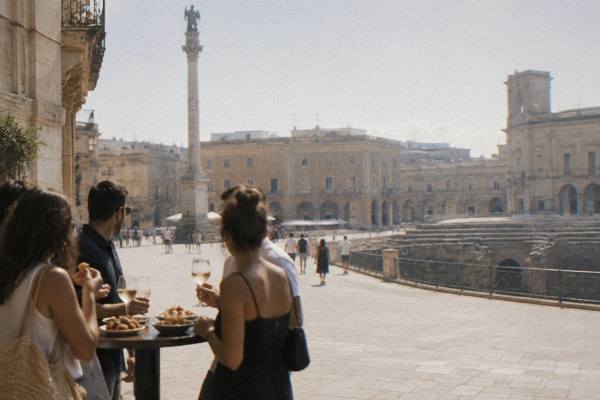
Puglia Food: What Changes When You Reach Salento
Puglia food changes once you pass south of Brindisi and reach Lecce, the baroque capital of Salento: the olive oil gets deeper, the wine turns to Negroamaro, and the pastry case fills with pasticciotto. Here is what the sources actually say about the region's table.
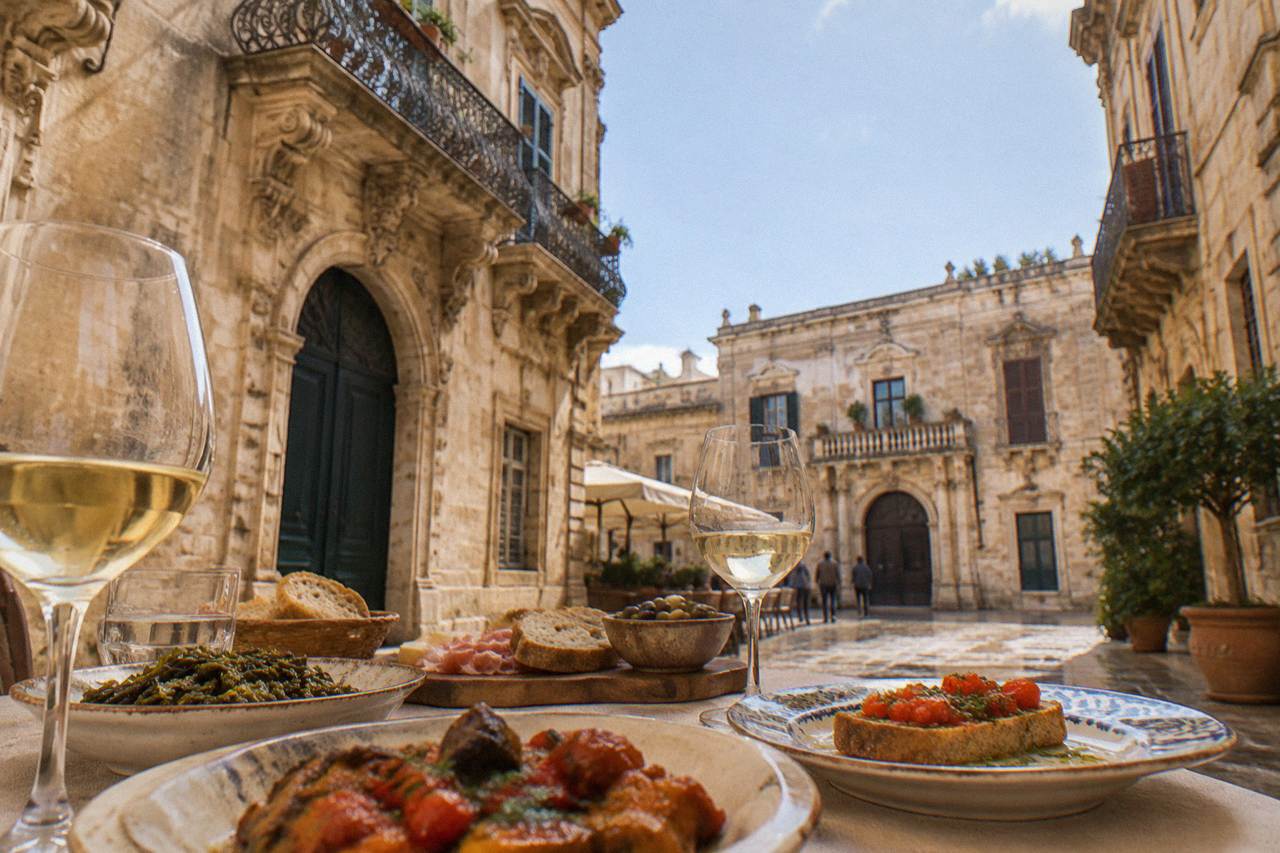
Short answer
Puglia food around Lecce is Salento cooking: orecchiette, ciceri e tria, frisa, puccia, rustico leccese, pasticciotto and caffe in ghiaccio con latte di mandorla, washed down with Negroamaro-based Salice Salentino DOC. Lecce, about 13 km inland, is the natural base for eating the region.
Puglia is Italy's heel, and its food reputation rests on olive oil, wheat and vegetables, but the region is not one table. South of Brindisi the cooking becomes Salento's, and Lecce, the baroque capital built in honey-coloured pietra leccese limestone about 13 km inland from the nearest beach, is where that shift is easiest to taste. The city is often called the Florence of the South for its architecture; the plate makes a parallel case. This guide, from the Lecce Travel Guide editorial desk, reports what primary and reported sources say about the dishes, the wines and the disputes, and where the verified facts stop.
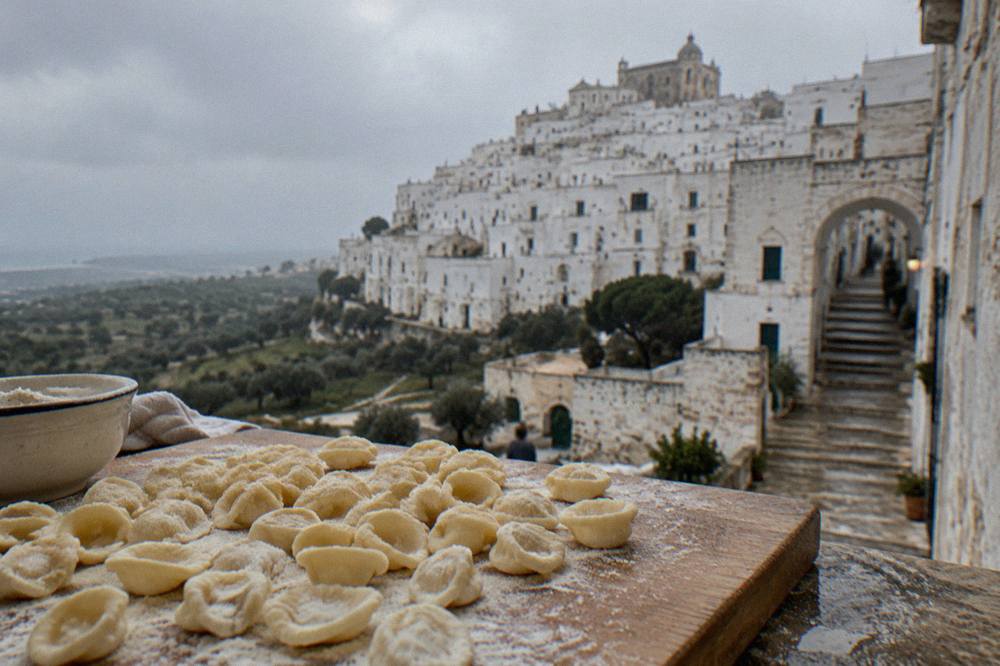
What Is Puglia Food, And What Makes Salento Different Around Lecce?
Puglia food is the cooking of a wheat, olive and vegetable economy, and in Salento, the sub-region around Lecce at the heel's tip, it sharpens into a specific repertoire: orecchiette pasta, ciceri e tria, frisa rusks, puccia bread, rustico leccese, pasticciotto and caffe in ghiaccio con latte di mandorla, paired with Negroamaro-based wines such as Salice Salentino DOC. Lecce, the provincial capital, sits inland and serves as the region's eating base.
The difference is partly agricultural. Salento is one of Italy's great olive-oil zones, and the landscape between Lecce and the coast on both sides, the Adriatic to the east and the Ionian to the west, is a continuous grove of old trees. The wheat tradition shows up in the bread basket rather than in fancy pastry: frisa is a hard twice-baked rusk that gets soaked before eating, and puccia is a flat, pizza-like bread that carries salami, cheese or vegetables. Ciceri e tria, chickpeas with a mix of boiled and fried pasta, is the region's signature peasant dish, fried pasta being the part that survives every modern revision.
The baroque city matters to this story because Lecce concentrates the region's cafés, pastry shops and cooking culture in a walkable historic centre. The frisa and puccia tradition deserves its own reading, and the wider Salento context explains how the peninsula's two coasts feed one kitchen. Two long-running institutions anchor the sweet side: Caffè Alvino on Piazza Sant'Oronzo traces its roots to about 1880, and Pasticceria Natale has been family-run since 1978, both figures from reported sources rather than official archives.
| Dish | What It Is | Where It Fits |
|---|---|---|
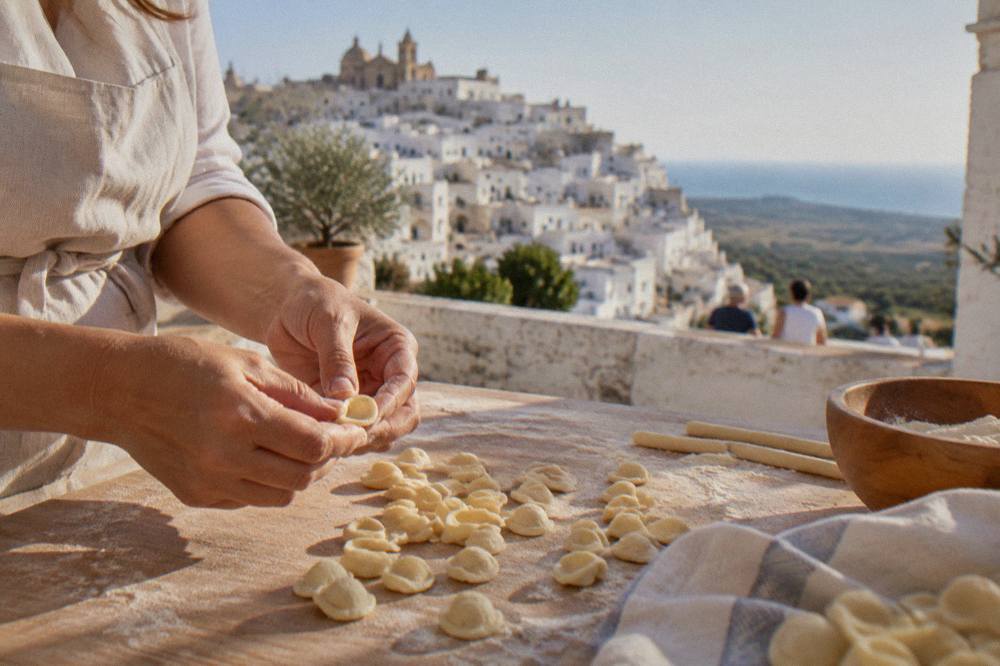
| Orecchiette | Hand-shaped "little ears" of durum wheat pasta, classically with cime di rapa | Everyday primi, taught in local cooking classes |
| Ciceri e tria | Chickpeas with pasta, part of it fried | The historic Salento peasant dish |
| Frisa | Twice-baked rusk, soaked in water then dressed with tomato, oil, oregano | Summer staple of the Salento table |
| Puccia | Soft flatbread pocket filled with salami, cheese or vegetables | Street food and lunch |
| Rustico leccese | Savoury puff pastry with bechamel, mozzarella and tomato | Lecce's savoury snack, origins uncertain |
| Pasticciotto | Shortcrust custard tart | The Salento breakfast pastry |
| Caffe in ghiaccio con latte di mandorla | Iced espresso with almond milk | Lecce's signature summer coffee |
What Should You Actually Eat First In Lecce?
Start with the three things the sources tie most firmly to the city itself: a rustico leccese or a pasticciotto from a historic pastry counter, a caffe in ghiaccio con latte di mandorla, the iced espresso with almond milk credited to Antonio Quarta of Quarta Caffe in the 1940s or 1950s, and an orecchiette dish or a full Salento lunch in a family setting. The coffee alone is a reason to plan a Lecce morning.
The rustico is the savoury counterpoint to all that custard: puff pastry holding bechamel, mozzarella or fior di latte, tomato and pepper. Its origins are uncertain, likely late in the region's history and possibly influenced by French vol-au-vent cooking, so treat any older dating you read with caution. No verified inventor exists and none is needed; the combination speaks for itself. It is a snack, not a meal, and it is sold by weight or by the piece across the city's bakeries.
For the sit-down side of Salento cooking, hosted meals and guided tasting walks are the practical route for a visitor, and this site's featured experience is a lunch or dinner built on the typical products of Salento in a local family home near Lecce. You can Check availability on the operator's live listing, and the same decision moment covers alternatives: a history and street food walk covers the old town's sights alongside its counters, while a cooking class in a family home turns the recipes into a takeaway skill.
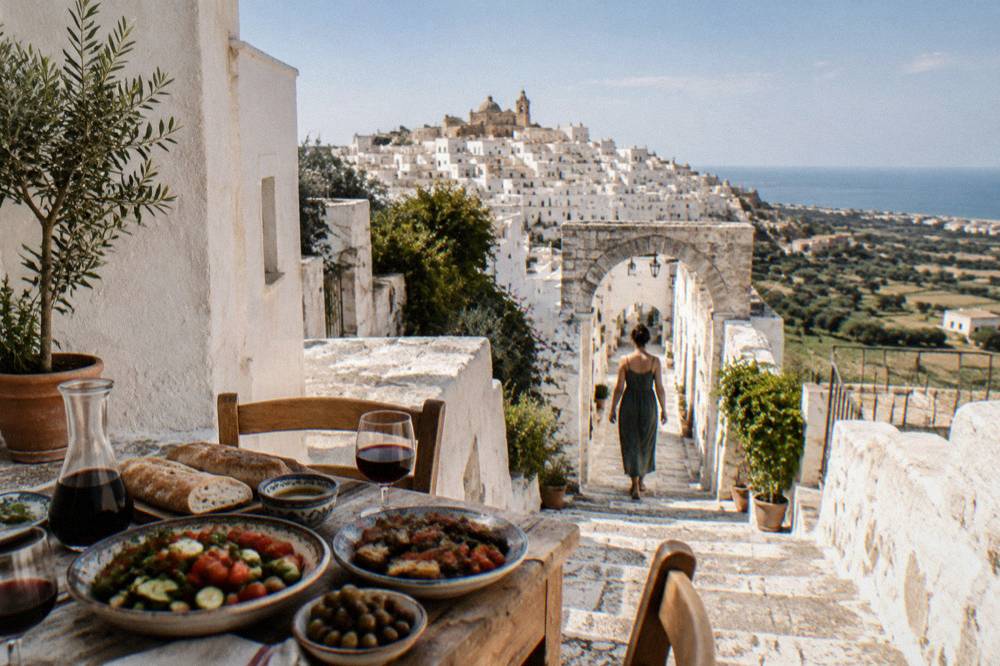
The restaurant question has its own page: the best restaurants in Lecce covers where the verified information points, and the broader what to eat in Lecce guide goes dish by dish. What a guide can honestly do here is name the long-standing institutions the sources support and leave ranking to nobody: Caffè Alvino, Pasticceria Natale and Quarta Caffe are the three named venues with reported histories, and no meal price, address or phone number for any venue belongs on this page.
| Institution | Reported Fact | Source Basis |
|---|---|---|
| Caffe Alvino, Piazza Sant'Oronzo | Roots to about 1880; run by the Catamo family since 2007 | Reported (Corriere Salentino) |
| Pasticceria Natale | Family-run since 1978, founded by Fernando Natale | Reported (Natale, Visitlecce) |
| Quarta Caffe / Bar Avio | Bar Avio opened about 1978; Quarta credited with iced coffee with almond milk | Reported (Quotidiano di Puglia, Corriere Salentino) |
| Pasticceria Ascalone, Galatina | Claims the 1745 pasticciotto invention; historians dispute it | Reported (Wikipedia, La Cucina Italiana) |
Where Does Lecce Sit In The Wider Puglia Food Map?
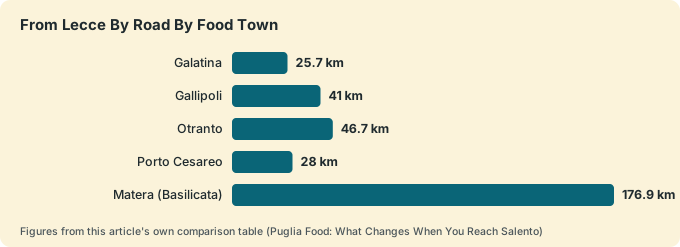
Lecce is the inland capital of Salento, roughly 40 minutes by train from Brindisi and about 29 minutes by road from Galatina, and it works as a base for eating across the southern half of Puglia: Otranto is about 44 minutes away by road, Gallipoli about 41, and the region's food towns all sit within a day trip. The verified travel figures below are free-flow drive times and rail connections from the sources.
The peninsula's shape is the cook's friend. From Lecce you can eat iced coffee at breakfast, reach an Adriatic fishing town for lunch and an Ionian one for dinner, though doing all three in a day is a plan for the ambitious rather than a recommendation. Galatina, 25.7 km and about 29 minutes by road, or 38 to 55 minutes on the direct FSE train from about 3 euro, is the pasticciotto town, and the Basilica of Santa Caterina d'Alessandria there is free to enter. Gallipoli's old town, on a limestone island joined to the mainland by a bridge, brings the fish market tradition. Otranto, about 44 minutes by road or 1h33 to 2h and more by train with a change at Maglie, pairs its cathedral, free for independent visitors since the 2 euro group charge began on 1 March 2026, with the seafood of the Adriatic.
| Food Town | From Lecce By Road | By Rail | What The Food Case Rests On |
|---|---|---|---|
| Galatina | 25.7 km, about 29 min | 38-55 min, from about 3 euro (FSE) | Pasticiotto origin claim, historic centre |
| Gallipoli | 41.0 km, about 41 min | 1h18-1h43, from about 5 euro (FSE) | Island old town, fish tradition |
| Otranto | 46.7 km, about 44 min | 1h33-2h+, change at Maglie | Adriatic seafood, cathedral mosaics of 1163 to 1165 |
| Porto Cesareo | 28.0 km, about 34 min | Summer bus line 104 | Ionian fish, shallow sandy coast |
| Matera (Basilicata) | 176.9 km, about 161 min | Bus 3h30-4h10, 11-37 euro | Outside Puglia, bread and peasant cooking of another region |
For moving between these without a car, the summer Salento in Bus network and the general getting around Lecce guide carry the detail. The question of which town in Puglia has the best food is answered elsewhere on this site, and honestly: no verified ranking exists.
What Is Pasticciotto, And Who Really Invented It?
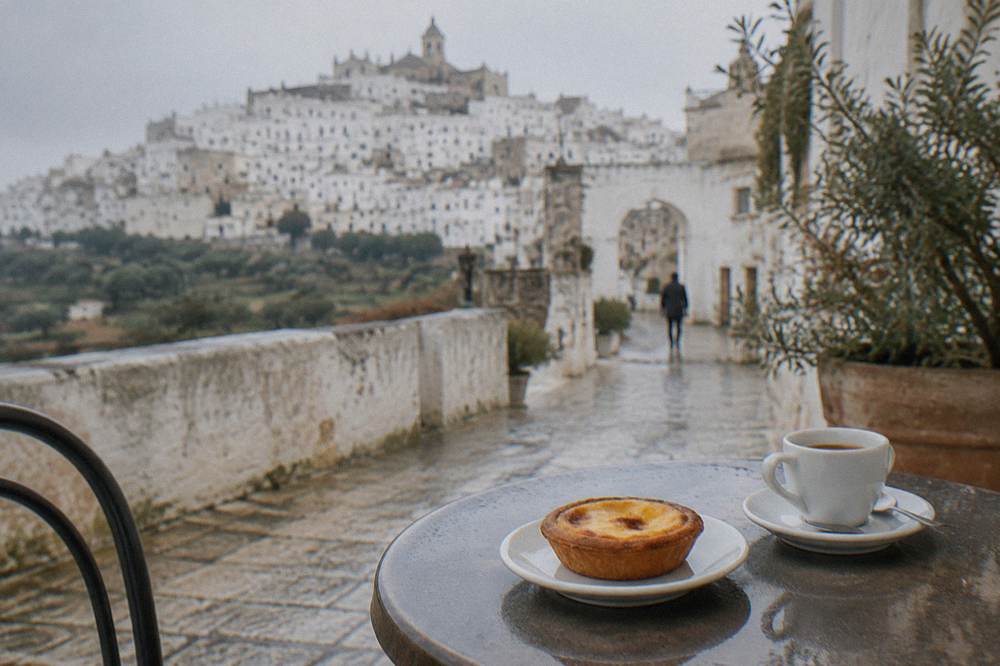
Pasticciotto is a small shortcrust tart filled with custard, and the famous 1745 invention story belongs to Pasticceria Ascalone in Galatina, not Lecce: the shop says the tart was born from leftover pastry and custard during a patron saint feast, but historians dispute the date and the claim, so no page should print 1745 as settled fact. A reported price point is Natale's "Santo Pasticciotto" at 2.20 euro.
That dispute is worth knowing before you argue pastry in a queue. The Ascalone account has the first pasticciotto served to a local nobleman during the feast, and it is a good story precisely because it is a shop's own legend rather than a documented date. Wikipedia and La Cucina Italiana both record the dispute. What is not disputed is the tart's dominance: in Salento it is breakfast, eaten warm if you are lucky, and every pastry counter in Lecce keeps a tray.
The custard is the test. A pasticciotto should have a firm shortcrust that does not collapse and a cream that is set rather than poured, and the difference between a morning batch and an afternoon one is the difference the locals will tell you about unprompted. Whether Lecce or Galatina does it better is an argument with no verified answer, and the pasticciotto guide on this site goes deeper into the history.
Around it sits the rest of the sweet counter: purceddhruzzi at Christmas, the almond-and-honey end of the repertoire, and the caffè in ghiaccio that turns any pastry stop into a full Lecce ritual. That coffee has its own history, and it is better documented than the pastry's.
What Role Does Coffee Play, And What Is Caffe In Ghiaccio Con Latte Di Mandorla?
Caffe in ghiaccio con latte di mandorla is an iced espresso served over ice cubes with almond milk syrup, traditionally unsweetened, and it is credited to Antonio Quarta of Quarta Caffe in Lecce in the 1940s or 1950s as a local variant of iced coffee; the drink entered Italy's PAT traditional-products list around 2026, per Corriere Salentino's reporting on its recognition.
The technique matters more than the recipe sounds. The espresso is poured over the ice first, then the almond milk, so the layers stay separate until the drinker stirs them, and the almond milk carries the sweetness so sugar is not the default. Salento's almond tradition supplies the syrup, the same orchard economy that produces the region's almond pastries. It is a summer drink by nature, which in Salento means a long season.
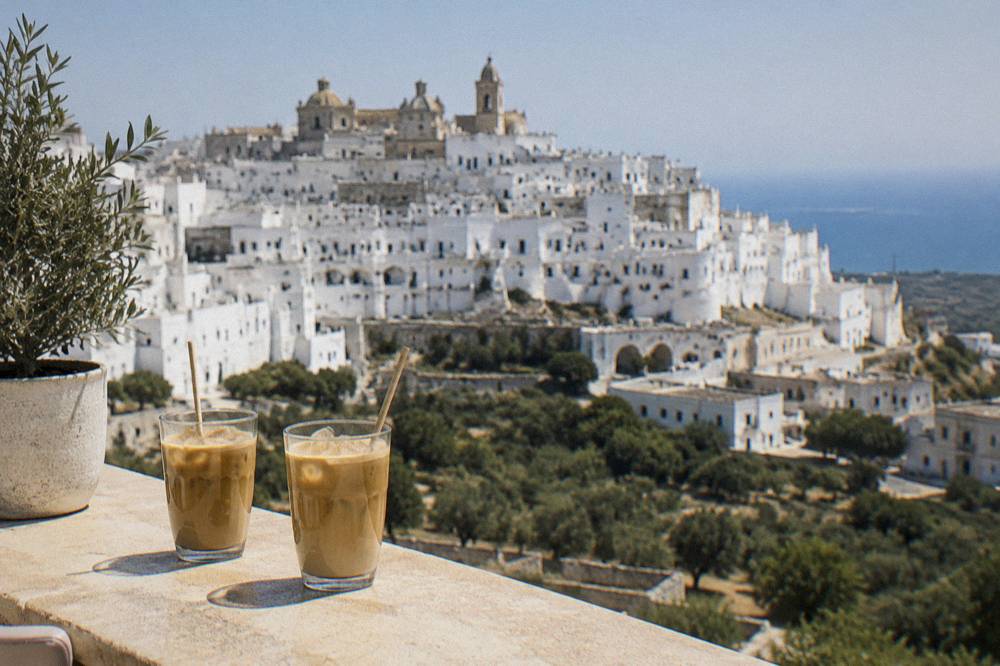
The city's café culture runs older than the drink. Caffè Alvino's roots reach back to about 1880 on the main square, and the university's roughly 20,774 enrolled students keep the espresso economy running through the year. The caffe in ghiaccio guide and the wider Lecce cafés page carry the sourced detail.
What Wines Belong On A Salento Table?
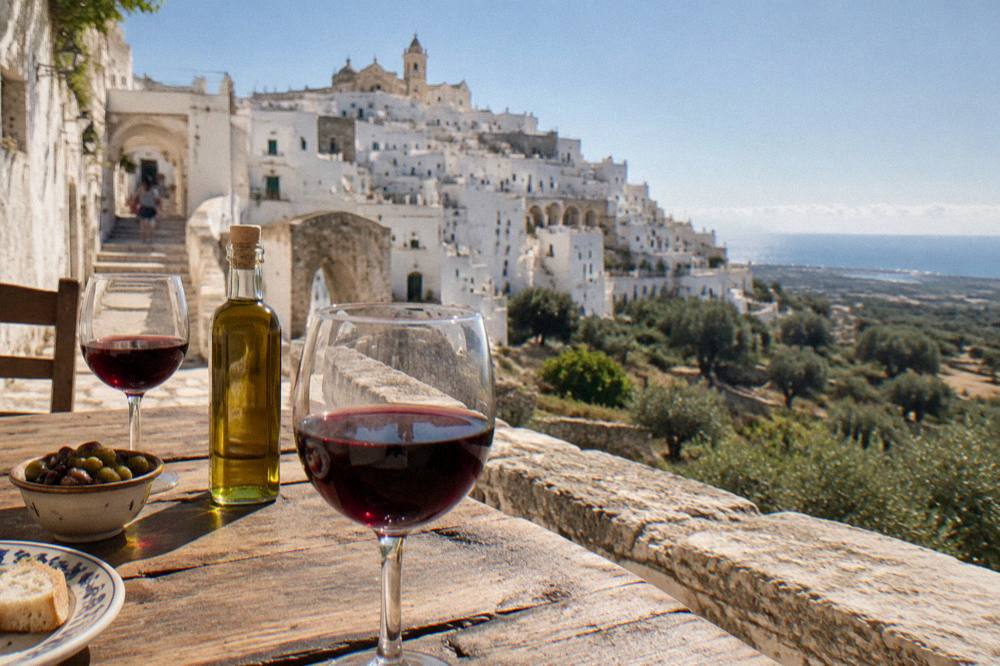
Salice Salentino DOC, established in 1976 and Negroamaro-based across the provinces of Lecce and Brindisi, is the region's signature red, with Primitivo di Manduria DOC as the other pillar of Salento winemaking; Negroamaro is the key local grape and appears in most of the peninsula's denominations, per the Puglia region's own quality-productions pages.
The names describe grapes and places more than styles, because each producer ranges from easy reds to serious aged bottles. Negroamaro, the "dark and bitter" name that suits the grape, gives the region its backbone: plummy, earthy, built for the olive-oil cooking around it. Primitivo, the same grape family as Zinfandel, ripens early around Manduria in Taranto province and goes richer and more alcoholic. Whites exist, principally from Verdeca and Chardonnay blends, but the region's reputation is red and rosato, and the rosato tradition here is serious rather than an afterthought.
| Wine | Grape Base | Established | Zone |
|---|---|---|---|
| Salice Salentino DOC | Negroamaro, minimum share per current disciplinare | 1976 | Lecce and Brindisi provinces |
| Primitivo di Manduria DOC | Primitivo | not sourced here | Manduria, Taranto province |
| Salento rosato IGT | Negroamaro and blends | not sourced here | Salento peninsula |
Tasting is the practical way in. The Salento wine guide covers the denominations, and the region's wineries and masserie can be reached on organised trips: an e-bike ride to Galatina with an olive-mill visit and wine tasting is one structured option, and the same operators run tasting sessions of Negroamaro flights in and around Lecce.
How Do You Build A Food-Focused Trip Around Lecce?
Plan Lecce as the base, eat the city's counters and one hosted meal or class, then fan out on single-food days: Galatina for pastry, Gallipoli or Otranto for fish, an inland masseria for oil and cheese, with the e-bike and van tours covering the logistics. Two or three days is the working minimum, and the site's itinerary pages break that down day by day.
The order matters less than the mix. A first day inside Lecce's walls covers the baroque sights and the café stops, since pastry counters and basilicas share the same squares. The second day goes out: an olive-mill and wine loop by e-bike, or a van day along the coast towns. If the trip is longer, the Salento itinerary extends the same logic across the peninsula, and where to stay in Lecce settles the base question. Note the practicalities: Lecce's historic centre is a camera-policed ZTL, so accommodation inside it should be told your plate.
| Day Plan | Food Focus | Base Logistics |
|---|---|---|
| Day 1, Lecce old town | Caffè in ghiaccio, pasticciotto, rustico, an evening wine tasting | Walkable, ZTL rules apply to cars |
| Day 2, Galatina and inland | Pasticiotto town, olive mill, Salice Salentino tasting | FSE train 38-55 min or e-bike tour with taxi return |
| Day 3, Gallipoli or Otranto | Fish lunch, island old town or cathedral | FSE train or about 41-44 min by road |
| Day 4, coast option | Beach lido and seafood, San Cataldo 12.9 km from the centre | SGM line 32, about 20 min |
Cooking classes compress the learning. An orecchiette class with wine, a pasta class in a 1400s-era courtyard, or a private class in a family home all turn one evening into a recipe you keep, and the blocks below and above render their live prices and ratings.
When Is The Best Season For Eating Your Way Around Puglia From Lecce?
The eating is best in the shoulder months: the ERA5 reanalysis for Lecce, 1991-2020, shows mean daily highs of about 21.8 C in October and 23.4 C in May with 39.9 mm and 91.3 mm of rain respectively, against about 31 C in July and August, and November carries the highest monthly rainfall at 93.7 mm, so May, June and September to October balance terrace weather, harvests and crowds.
Summer brings the full coastal machinery, the Salento in Bus shuttle network among it, plus the prickly pear and tomato peak and the fish grills of the lidi, but the July and August heat pushes lunch late and the mean high of about 31 C belongs to the beach rather than the dining room. Autumn is the wine region's own season: the Negroamaro harvest runs through September and October, and the September mean high of about 26.4 C still supports lunch outdoors. The best time to visit Lecce and Lecce weather pages carry the full tables.
Winter eating is its own tradition, not a poor relation. The Fiera dei Pupi, the papier-mache Christmas fair in Lecce, traditionally runs from early December to the 24th, and the season's sweets, from purceddhruzzi to the dried-fruit end of the repertoire, appear with it. Ciceri e tria and frisa with winter oil do not need a beach.
Common Questions About Puglia Food Around Lecce
What food is Puglia most known for?
Orecchiette with cime di rapa, olive oil, frisa, puccia, burrata from the northern part of the region, and in Salento specifically ciceri e tria, rustico leccese, pasticciotto and caffe in ghiaccio con latte di mandorla, with Negroamaro-based Salice Salentino DOC as the signature wine.
Is Lecce good for food?
Yes, as a base and as a table in its own right: the historic centre concentrates long-running pastry shops and cafes, Caffè Alvino traces its roots to about 1880 and Pasticceria Natale has been family-run since 1978, and the city hosts cooking classes, wine tastings and hosted family meals.
Where was pasticciotto invented?
The claim belongs to Pasticceria Ascalone in Galatina, not Lecce, and the shop dates it to 1745 during a patron saint feast; historians dispute the date, so treat 1745 as the shop's story rather than documented fact.
What wine should you drink in Lecce?
Salice Salentino DOC, established in 1976 and Negroamaro-based across the Lecce and Brindisi provinces, is the local answer, with Primitivo di Manduria DOC as the other regional pillar and Negroamaro rosato in warm weather.
What is caffe in ghiaccio con latte di mandorla?
An iced espresso poured over ice cubes with almond milk syrup, traditionally unsweetened, credited to Antonio Quarta of Quarta Caffe in Lecce in the 1940s or 1950s and recognised on Italy's PAT traditional-products list around 2026.
How many days do you need to eat around Salento from Lecce?
Two days covers the city plus one food town such as Galatina or Gallipoli; four lets you add an olive-mill and wine loop and a coastal fish day. The site's answer on how many days are needed in Salento breaks down the trade-offs.
Eat the pastry in the morning, drink the coffee over ice, argue about Galatina politely, and let the Negroamaro decide the evening. That sequence, more than any single dish, is what changes when Puglia food becomes Salento food and the table lands in Lecce.