Frisa And Puccia: The Breads Of Salento
Frisa and puccia are the two working breads of Salento, the peninsula that Lecce anchors as its baroque capital in Puglia, southern Italy. One is a hard twice-baked ring built for olive oil and tomato, the other a soft pocket loaf built for almost anything.
Short answer
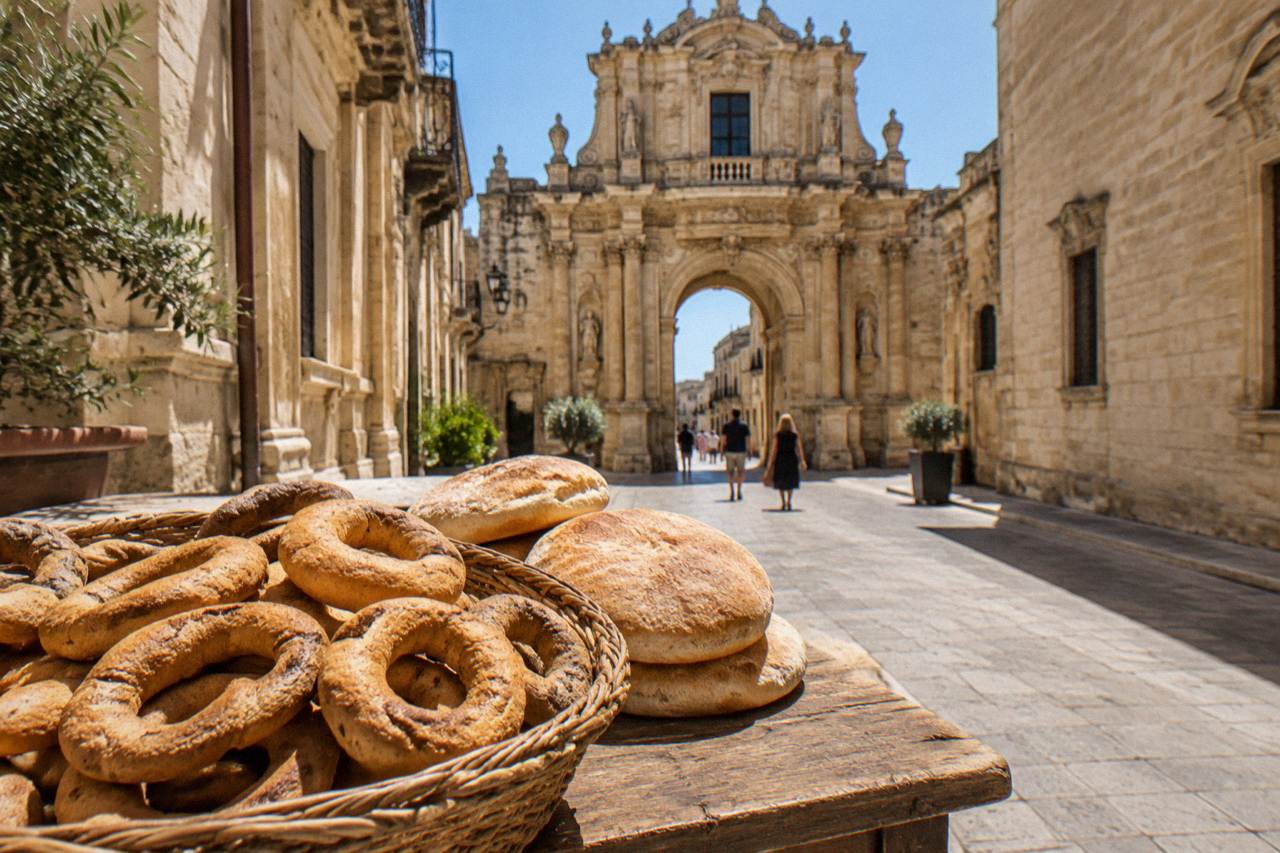
A frisa is a hard, dry, twice-baked ring of bread (usually durum wheat or barley) that is soaked in water, dressed with olive oil, tomato and salt, and eaten as a summer dish. Puccia is a small soft round loaf, baked once, split and filled like a sandwich. Both are everyday Salento staples found in and around Lecce.
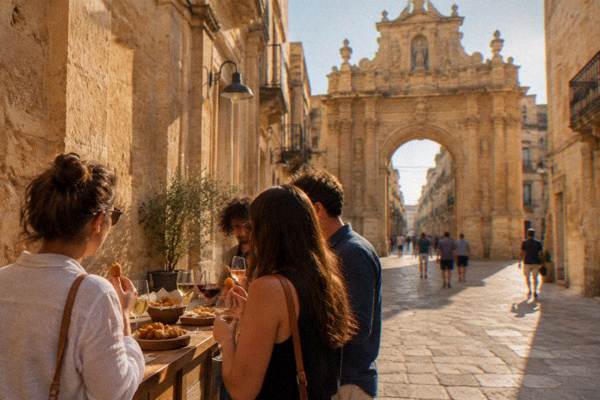
In Lecce, the baroque capital of Salento in Puglia, southern Italy, two breads quietly do the work that pastry cabinets and restaurant menus get the credit for. The frisa is a hard, dry, twice-baked ring, usually of durum wheat or barley flour, made to be soaked in water and dressed with olive oil, tomato and salt. Puccia is its soft opposite: a small round loaf, baked once, split open and filled with whatever the Salento pantry offers, from salumi to stracchino to grilled vegetables. This page explains what each one is, how the dish called friseddhu is assembled, what goes inside a puccia in Lecce, and how to taste both on a visit, with context from the site's guide to Puglia food and the wider Salento guide.
What Is A Frisa, The Twice-Baked Bread Of Salento?
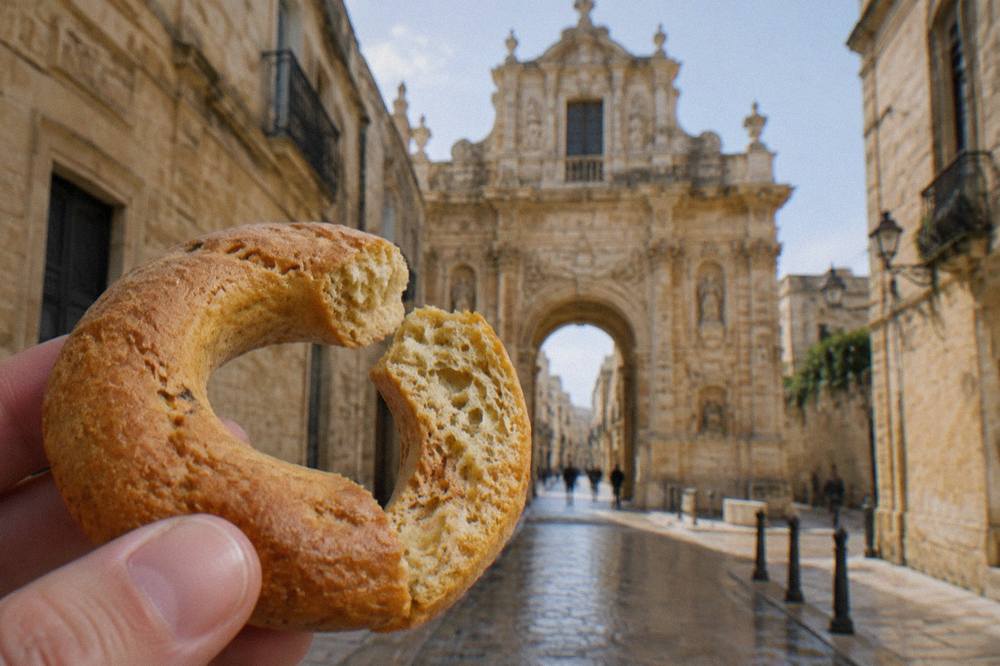
A frisa is a ring-shaped bread from Salento that is baked twice, which drives out nearly all its moisture and leaves it hard and dry, and it is therefore always eaten after a brief soak in water, dressed with extra virgin olive oil, ripe tomato, salt and sometimes oregano. It is the standard summer bread of the Lecce area, sold in bakeries and supermarkets across the province in string-tied stacks.
The double bake is the whole idea. The dough, typically durum wheat (grano duro) or a barley blend (frisa d'orzo), is first baked as a ring, then sliced horizontally and baked again until it is biscuit-dry. That dryness was originally preservation: a frisa keeps for weeks where a soft loaf would go mouldy in days, which is why the bread became the ration of farmers and fishermen across the Salento plain long before refrigeration. In the local dialect the dish is friseddhu or frisa, and around Lecce the word covers both the bread itself and the salad built on it.
What the sources are careful about is origin mythology. The frisa belongs to a broad southern Italian family of twice-baked breads, and its history in Salento is folk knowledge rather than documented record, so this page describes the bread as it is made and eaten today rather than dating it. The one hard regional fact nearby is agricultural: Salento's olive-oil culture, Negroamaro vines and durum wheat are the pantry the frisa was built to carry, and they still are.
Barley versions deserve a sentence of their own. Frisa d'orzo has a darker crumb and a faintly bitter edge that stands up well to strong oil and salted fish, and many leccesi households keep both types in the cupboard, reaching for the barley one when the dressing is austere and the wheat one when tomatoes dominate. Supermarket packs rarely say more than the flour type on the label, so the difference is easiest to learn by eating both in the same week.
What Is Puccia, And How Is It Different From Frisa?
Puccia is a small, soft, round flatbread from the Salento area around Lecce, baked once like ordinary bread, then cut open and eaten as a filled sandwich at any time of day. Unlike the frisa, it is never soaked, never dry, and never twice-baked; the two breads differ in bake, texture, and role, with puccia serving as fast food and frisa as a sit-down summer salad base.
The puccia has more in common with pizza dough than with a frisa. It is a lean dough, often with a little olive oil in it, shaped into palm-sized rounds, and baked until the crust is golden but the crumb stays soft and hollow enough to pocket a filling. In Lecce, puccia stalls are lunch institutions, and the classic fillings are simple: the local salumi, cheeses, grilled or fried vegetables, and sometimes a fried pasticciotto-shaped surprise in the sweet versions sold at fairs.
| Feature | Frisa | Puccia |
|---|---|---|
| Bake | Twice-baked, fully dried | Baked once, soft |
| Shape | Ring with a hole in the middle | Solid round loaf |
| Typical flour | Durum wheat or barley | Wheat bread dough |
| How it is eaten | Soaked in water, then dressed | Split and filled like a sandwich |
| Texture | Hard, brittle, porous | Soft crust, hollow crumb |
| Keeping quality | Weeks at room temperature | Best eaten the same day |
| Typical moment | Summer lunch or dinner | Anytime, especially lunch |
| Role | Base for a salad | Street food sandwich |
The pairing logic of Salento is on display in the difference. Frisa belongs to August, to tomato juice and oil running down the plate; puccia belongs to a market morning or a late evening, eaten standing or on a bench near Piazza Sant'Oronzo. A visitor who tries only one gets half the story, and both cost a fraction of a restaurant plate. The best restaurants in Lecce serve both, but the honest versions of each are as likely to come from a bakery counter.
How Do You Eat A Frisa The Traditional Way In Lecce?
The traditional method is to dip or briefly soak the frisa in cold water until it softens but does not collapse, drain it, then dress it with extra virgin olive oil, salt, halved cherry tomatoes squeezed so their juice soaks in, and oregano, finishing with anything from cucumber and onion to anchovies, capers or ricotta salata. The soaking step is not optional; an unsoaked frisa is inedibly hard.
Timing the soak is the only skill involved. A thin wheat frisa needs under a minute; a thick barley frisa can take several, and some households run it briefly under the tap rather than bathing it. The bread should end up yielding but still hold its shape, because the dressing continues to soften it on the plate. After that, the frisa becomes a framework rather than a recipe. Summer versions stay vegetarian, with tomatoes as the engine. Winter versions switch to chicory or boiled greens, oil and salt, or to beans. The frisa with tomatoes is the one that appears on nearly every Salento table between June and September, alongside the iced espresso with almond milk that the sources credit to Antonio Quarta of Quarta Caffè in Lecce, in the 1940s or 1950s.
| Season | Base soaking liquid | Classic dressing | Common additions |
|---|---|---|---|
| Early summer | Cold water | Oil, salt, cherry tomatoes, oregano | Cucumber, red onion |
| High summer | Cold water | Oil, tomato, basil | Capers, anchovy, tuna |
| Autumn | Water | Oil, salt | Boiled chicory, beans |
| Winter | Water, sometimes warmed | Oil, salt | Leaf greens, preserved vegetables |
| Festive versions | Water | Oil and tomato | Ricotta salata, olives, dried sausage |
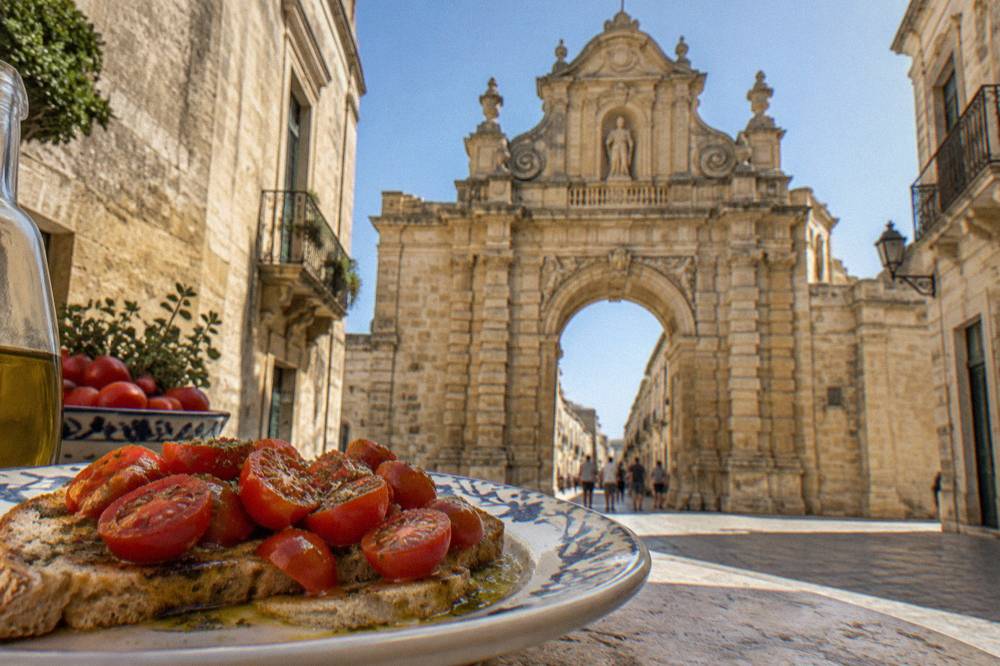
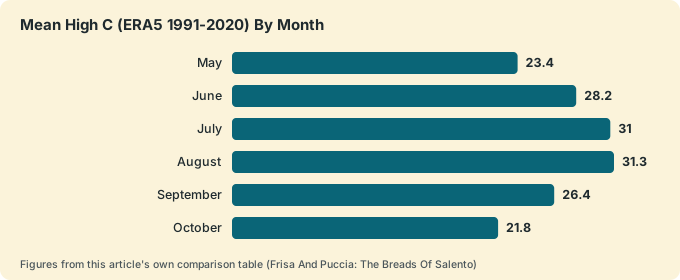
The reason the dish peaks in summer is agricultural, not sentimental. The ERA5 reanalysis, 1991-2020, puts Lecce's mean daily high at 31.0 C in July and 31.3 C in August with only 15 to 18 mm of rain per month across the two, exactly the weather that ripens field tomatoes and makes a no-cook lunch attractive. By November the rainfall figure rises to 93.7 mm, the highest month of the year, and the frisa migrates indoors toward greens and beans.
A note on manners at a shared table: the soaked frisa is eaten with a fork once dressed, because the ring has been deliberately softened past finger food, and the tomato-and-oil pool at the bottom of the plate is treated as the best part, mopped afterwards with ordinary bread. Asking for the frisa to be dressed rather than soaking it yourself is normal in trattorie; doing it yourself is normal at home and in self-catering accommodation, where a packet of frisa, a bottle of local oil and a kilo of tomatoes is the cheapest legitimate dinner in the province.
What Goes Inside A Puccia In Lecce?
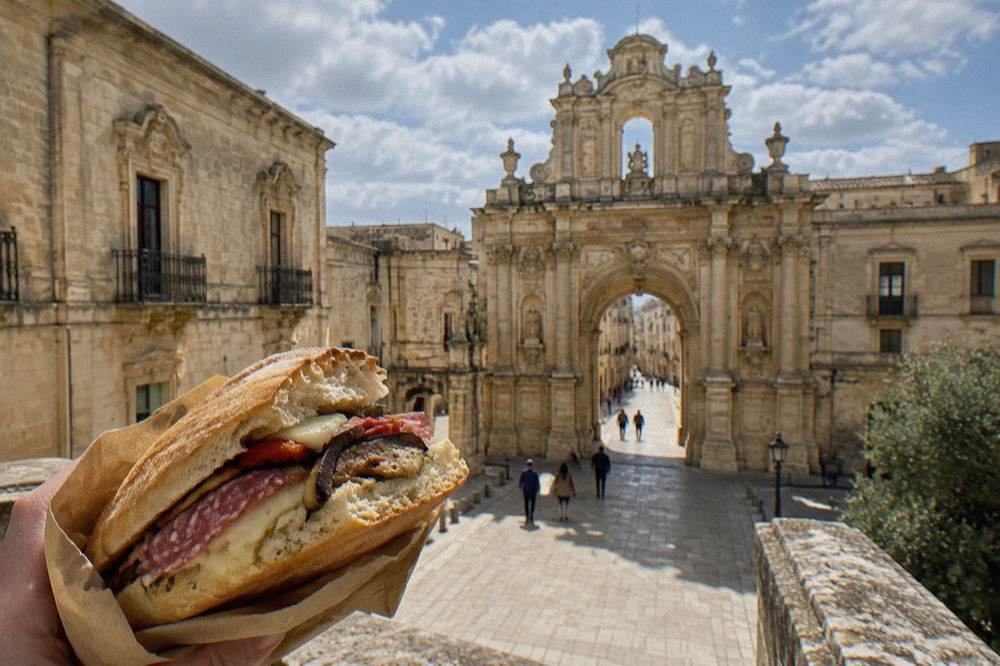
The standard puccia fillings in Lecce are the Salento salumi and cheeses: mortadella, prosciutto crudo, salame, capocollo, stracchino or mozzarella, grilled zucchini and peppers, tuna and tomato, and the classic puccia bare of everything but oil and salt or a crushed tomato. Sweet versions at fairs are filled with cream or chocolate. The bread is neutral, so the filling defines the sandwich.
Every puccia counter has its own short list, but the grammar is consistent. There is almost always a vegetarian line built on grilled vegetables and cheese, a salumi line, and a tuna-and-tomato line that functions as the local default. The puccia itself is sometimes baked with olives or cherry tomatoes pressed into the dough, which turns the bread into its own seasoning. Portions are generous, and a single puccia is routinely a full lunch. Other pages covering the same trip are gathered on Lecce Travel Guide.
| Filling family | Typical contents | Usual character |
|---|---|---|
| Salumi | Prosciutto crudo, salame, capocollo, mortadella | Savoury, oil-rich |
| Cheese | Stracchino, mozzarella, ricotta salata | Mild, soft |
| Vegetarian | Grilled zucchini, peppers, aubergine, tomato | Summer-forward |
| Sea | Tuna, tomato, onion, capers | Everyday classic |
| Plain | Oil, salt, sometimes oregano baked in | Bread-first |
| Sweet | Custard cream or chocolate | Fair and festival food |
The puccia also connects to the region's celebration calendar. At village feasts, including the late-summer patronal festivals across Salento, bread stalls bake puccia in quantity, and sweet versions appear alongside the savoury. Visitors planning around the August festivals can read the site's coverage of the Festa dei Santi Patroni and other events for context on how food and feste interlock in the province.
One practical distinction matters at the counter: a puccia ordered simple, with oil and salt or a crushed tomato, is a different object from the loaded version, and it exists partly because the bread itself is worth tasting plain. The plain puccia is also the vegetarian's and the child's default, and it is the version most often baked with olives in the dough, so it carries flavour without a single filling.
Can You Taste Frisa And Puccia On A Guided Food Experience In Lecce?
Yes: guided food experiences in Lecce include Salento bread as part of broader tastings, and family-table experiences put bread, olive oil and vegetable dishes in front of guests directly, though a dedicated frisa-and-puccia-only tour is not the norm. Cooking classes in the city teach the pasta side of the pantry rather than the bread oven, and the honest way to taste both breads with explanation is a food walk or a home-meal experience.
The site's featured option for this page is a lunch-and-dinner experience in a local family home, where the typical products of Salento are served in their ordinary setting. Bread is the constant of that kind of table: the operator's listing describes the meal as built on local products, and Check availability shows dates and the current price. It is also the page's related tour, covered in more detail in the site's overview of things to do in Lecce.
For visitors who want the breads explained street-side, a guided street food walk samples the savoury side of the old town, and the site's Lecce food tour guide sets out what those walks cover.
Can You Make Frisa Or Puccia At Home Around Lecce?
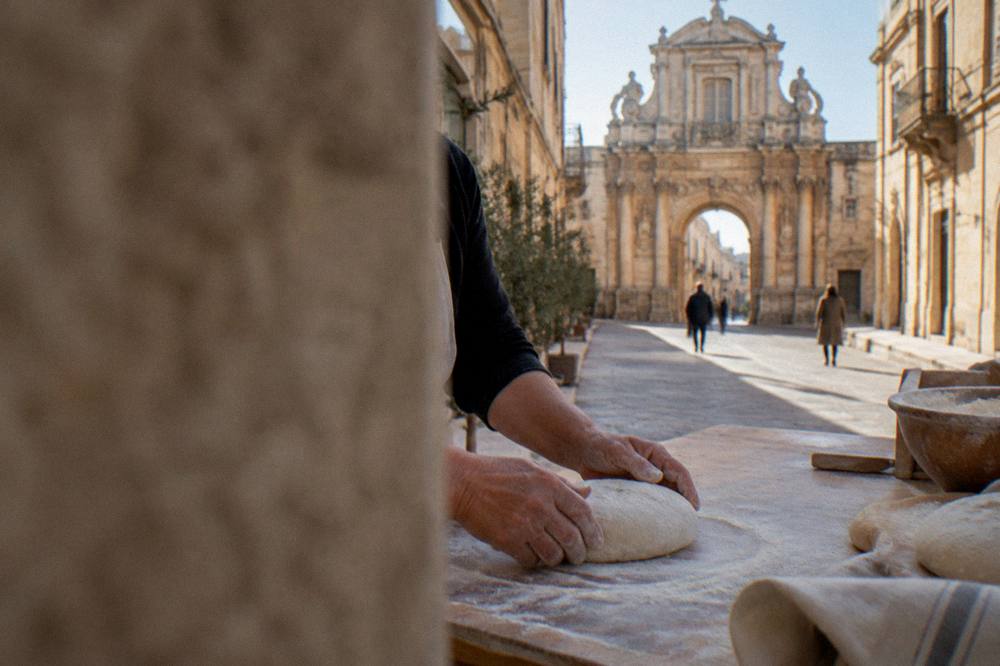
You can make puccia at home in a domestic oven because it is a single-bake bread, and pasta-and-bread-focused cooking classes around Lecce cover the dough skills that transfer to it; a true frisa is harder at home because the second bake needs long, low, even drying that domestic ovens approximate poorly. Classes in the city teach orecchiette and pasta shapes with wine, which is the accessible half of the Salento pantry.
The practical route for a visitor is a cooking class. Two options in the site's roster fit: a Salento pasta class with local flavours, and a family-home cooking class outside the city. Both teach dough work, and both sit in the same food culture that produces puccia and frisa, even where bread itself is not the syllabus. Their prices and ratings render from the product blocks below and on their own pages.
| Home project | Feasibility in a domestic oven | Notes |
|---|---|---|
| Puccia dough | Good | Single bake, normal bread temperatures |
| Puccia with olives baked in | Good | Add olives or tomato before shaping |
| Frisa first bake | Good | Ring shape bakes like a roll |
| Frisa second bake | Poor to fair | Needs extended low drying, easily uneven |
| Frisa dressing (friseddhu) | Excellent | No oven required at all |
How Do Frisa And Puccia Fit Into The Wider Puglia Pantry?
Frisa and puccia are the bread corner of a pantry built on durum wheat, extra virgin olive oil, vegetables and wine: the same ingredients behind orecchiette, the pasticciotto, the rustico leccese and the caffe in ghiaccio con latte di mandorla served in Lecce's bars. Every Salento dish leans on olive oil, and the frisa is effectively that oil delivered on bread, which is why the two breads anchor the regional table rather than padding it.
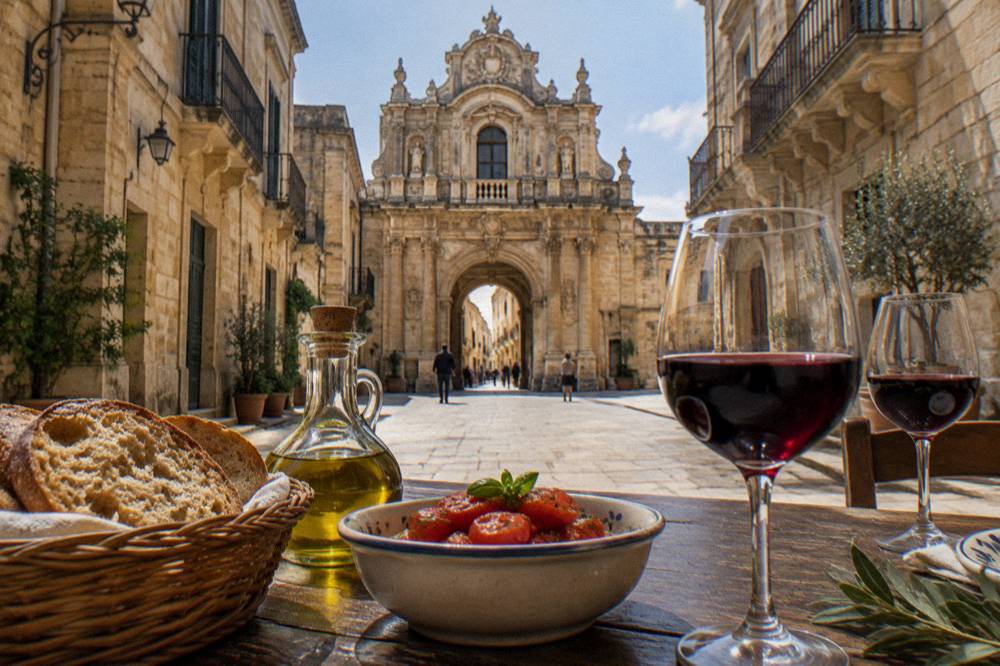
The connections run in every direction. Extra virgin olive oil from Salento's ancient groves is the single ingredient that appears in both breads' serving styles, and the region's wine culture, centred on Negroamaro and the Salice Salentino DOC established in 1976 across the provinces of Lecce and Brindisi, supplies what is poured alongside. The site's Salento wine guide covers that side. On the sweet side, the pasticciotto's 1745 invention date is Pasticceria Ascalone's own claim from Galatina, and historians dispute it, so it stays a shop's story rather than a fact here. The rustico leccese, a savoury puff-pastry pocket of bechamel, tomato and mozzarella, is the puccia's closest relative in spirit: handheld, filling-led, and sold on the same counters.
| Salento staple | Category | Relationship to frisa and puccia |
|---|---|---|
| Extra virgin olive oil | Condiment | The default dressing for both |
| Durum wheat | Base | Flour for frisa, orecchiette, bread |
| Negroamaro / Salice Salentino DOC | Wine | Poured alongside both breads |
| Orecchiette | Pasta | Same wheat, same pantry |
| Rustico leccese | Savoury pastry | Handheld counterpart to puccia |
| Pasticciotto | Sweet pastry | Galatina's claimed invention, disputed |
| Caffe in ghiaccio con latte di mandorla | Drink | Credited to Quarta Caffè, Lecce, 1940s or 1950s |
When And Where In Lecce Should You Seek Out These Breads?
Buy frisa in any Lecce bakery or supermarket, in string-tied stacks, and dress it yourself, ideally between June and September when local tomatoes are ripe and the ERA5 reanalysis, 1991-2020, shows mean highs of 26.4 to 31.3 C and rainfall of just 18 to 59 mm from June through September; buy puccia hot from a market or old-town stall at lunch. Season matters more for frisa than for any other Salento food.
The city itself makes this easy. Lecce's centro storico, described in detail across the site's Lecce guides, has bakery counters within a short walk of every major square, and the student population of the Università del Salento, about 20,774 enrolled, keeps cheap bread-and-filling lunches in constant demand. Visitors staying outside the centre can use the where to stay in Lecce guide to pick a base near a market street, and anyone heading to the coast can pack a dressed frisa for the beach, following the site's Salento beaches guide for where to lay the towel.
| Month | Mean high C (ERA5 1991-2020) | Rain mm | Frisa season |
|---|---|---|---|
| May | 23.4 | 39.9 | Early, greenhouse tomatoes |
| June | 28.2 | 18.0 | Start of the classic season |
| July | 31.0 | 15.3 | Peak |
| August | 31.3 | 18.1 | Peak |
| September | 26.4 | 58.9 | Late season, still strong |
| October | 21.8 | 91.3 | Greens and beans versions |
Off-season visitors lose nothing by the calendar shift. A frisa dressed with chicory and oil in February, beside a glass of Negroamaro, is a legitimate experience of the same tradition, and puccia does not have a season at all. Travellers working out the timing of a wider trip can start from the site's best time to visit Lecce and Lecce weather pages, which carry the full monthly picture.
Common Questions About Frisa And Puccia In Lecce
What is the difference between frisa and puccia?
A frisa is a hard, twice-baked ring that must be soaked in water before eating, while a puccia is a soft, once-baked round loaf split and filled like a sandwich. Frisa is a salad base; puccia is a sandwich bread.
Do you have to soak a frisa before eating it?
Yes. A frisa is baked dry on purpose, and it is too hard to bite without soaking. Dip it in cold water briefly, drain, then dress it with olive oil, tomato and salt.
Is frisa the same as friselle?
Frisa is the Salento and Puglian dialect name for the bread also sold elsewhere in Italy as frisella. The Salento version is often made with barley flour as well as durum wheat, and the dressing customs around Lecce are local.
What is traditionally served with frisa in Salento?
Olive oil, salt, ripe tomato and oregano are the base. Cucumber, onion, capers, anchovies, tuna and ricotta salata are common additions, and in cooler months boiled greens or beans replace the tomato.
What do you put in a puccia?
The usual fillings are Salento salumi such as prosciutto and salame, soft cheeses like stracchino or mozzarella, grilled vegetables, or tuna with tomato. Some puccia dough has olives or tomato baked into it.
Where can I buy frisa and puccia in Lecce?
Both are everyday items: frisa is sold in bakeries and supermarkets in tied stacks, and puccia is sold at bakery counters and market stalls, especially around lunch. No specific venue is recommended beyond the long-running names the sources verify.
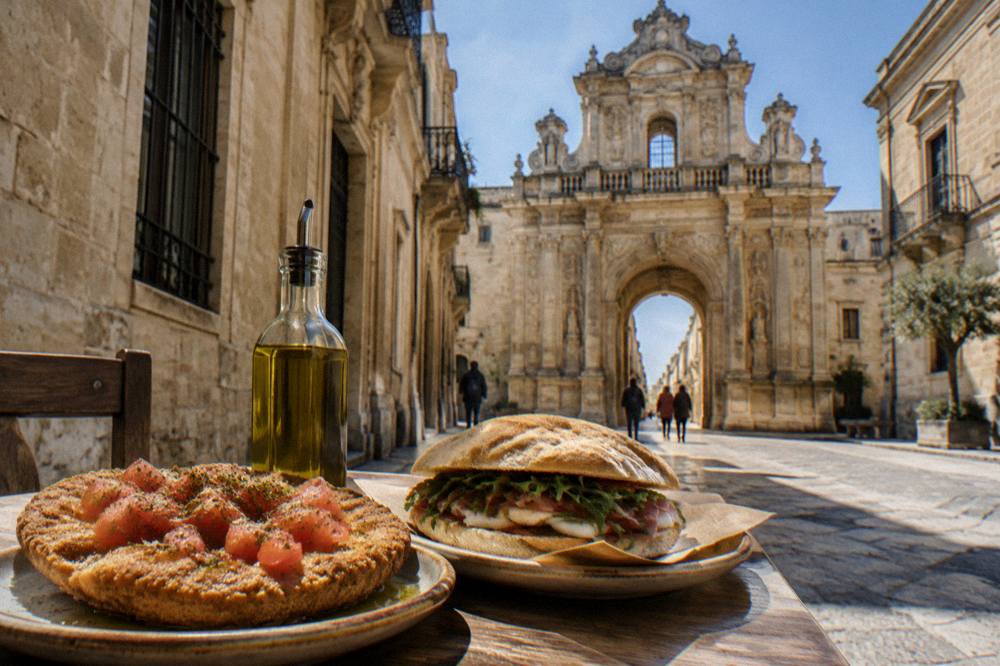
Bread is the least photographed and most constant pleasure of the Salento table, and the frisa and puccia pair shows the region's logic in miniature: preserve hard, soften on purpose, and let olive oil and the season's vegetables carry the flavour. Taste both while the tomatoes are ripe, and the Lecce Travel Guide's food pages will take care of everything else on the plate.