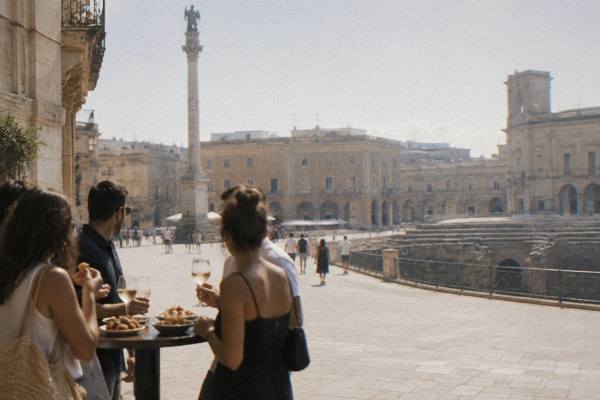
Which Town In Puglia Has The Best Food?
Puglia has many food towns, from Bari's raw seafood to Galatina's pasticciotto. This guide compares them and makes the sourced case for Lecce as the region's food base.
Puglia is a region that eats seriously, and Lecce, its baroque capital in the heel of Italy, sits at the centre of that appetite. The city itself is a few kilometres inland from the Adriatic, built in honey-coloured pietra leccese limestone, and its kitchens turn out caffe in ghiaccio con latte di mandorla, rustico leccese, pasticciotto and the Negroamaro-based wines of the Salice Salentino DOC. The question of which town in the region eats best is a fair one, because Bari, Galatina and Otranto each hold a card or two of their own. This page compares what each town is actually known for, dish by dish, and sets out where the weight of evidence lands for a food-focused trip, including the longer Puglia food guide for the regional picture.
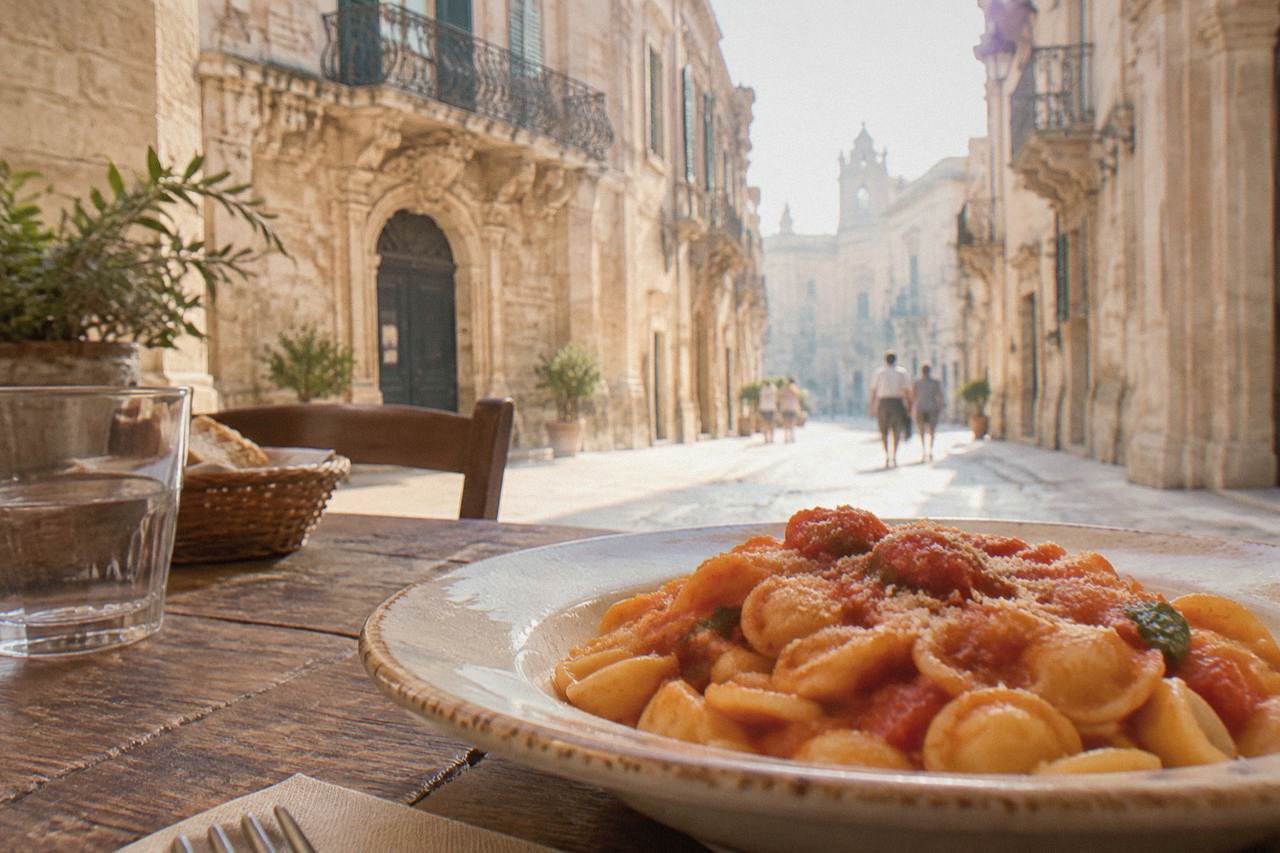
Which Town In Puglia Has The Best Food?
Lecce has the strongest overall claim to being Puglia's best food town, because it combines the region's signature dishes, its own inventions, two historic cafes, and the Salice Salentino wine country on its doorstep, all inside a compact, walkable centre. Bari beats it for raw seafood, and Galatina claims the pasticciotto, but no other town matches Lecce's spread of sweets, savoury dishes, coffee culture and wine access.
That answer deserves unpacking rather than a shrug. Every food town in Puglia is anchored to a handful of verifiable facts, and the comparison below sticks to them. The caffe in ghiaccio con latte di mandorla, espresso over ice with almond milk syrup, is credited to Antonio Quarta of Quarta Caffe in the 1940s or 1950s, per Corriere Salentino's account, and it is a Lecce invention that has spread across the whole peninsula. Caffe Alvino on Piazza Sant'Oronzo traces its roots to about 1880, and Pasticceria Natale has been family-run since 1978, so the city's cafe lineage runs deep on paper, not just in marketing copy.
The honest rival cases are these. Bari, the regional capital about 152.6 km north by road, is the standard answer for raw fish eaters and for the orecchiette-makers of the old quarter. Galatina, 25.7 km from Lecce and about 38 to 55 minutes by direct FSE train, is the town where Pasticceria Ascalone says it invented the pasticciotto in 1745; the shop says so, and historians dispute the date, so the claim is presented here as a claim. Otranto leans on Adriatic fish and its own coast. And the countryside around all of them grows the vegetables, durum wheat and olives that make the regional table what it is.
| Town | Signature foods and drinks | What the sources actually say |
|---|---|---|
| Lecce | Caffe in ghiaccio con latte di mandorla, rustico leccese, pasticciotto, cartapesta craft quarters beside the food stops | Quarta Caffe credited with the iced coffee, 1940s to 1950s (Corriere Salentino); Caffe Alvino roots to about 1880; Salice Salentino DOC country within easy reach |
| Bari | Raw seafood, orecchiette, focaccia barese | Regional capital, about 152.6 km from Lecce by road (OSRM routing) |
| Galatina | Pasticciotto | Pasticceria Ascalone, in Galatina, claims the 1745 invention; historians dispute the date |
| Otranto | Adriatic fish, coastal dishes | About 46.7 km and 44 minutes by car from Lecce (OSRM routing) |
| Porto Cesareo | Fish and seafood on the Ionian side | About 28.0 km and 34 minutes by car from Lecce (OSRM routing) |
What Does Each Puglian Food Town Actually Do Better Than Lecce?
Bari does raw seafood better than Lecce, Galatina holds the pasticciotto origin story, Otranto and Porto Cesareo serve the freshest boat-to-table fish, and the Itria Valley towns hold their own on cheese and grilled meat, while Lecce's edge is the combination of street food, sweets, coffee and wine rather than any single category. No town in Puglia wins every round, and a food trip that only sees one of them will miss part of the picture.
Start with Bari, because it is the rival people name first. It is a big port city with a raw-fish tradition Lecce cannot match, being inland, and its old quarter is famous for pasta made in the street. What Bari cannot offer is Lecce's density: in Lecce the rustico leccese, a savoury puff-pastry pocket of bechamel, mozzarella and tomato, the iced coffee with almond milk, and a Santo Pasticciotto reported at 2.20 euro by Pasticceria Natale all sit within a short walk of each other in the centro storico. The wine question settles further in Lecce's favour. Salice Salentino DOC, established in 1976 and built on the Negroamaro grape across the provinces of Lecce and Brindisi, has its heart in the Salento lowlands around the city, and Primitivo di Manduria country lies a reasonable drive west.
Galatina deserves its own paragraph because the pasticciotto question trips up even careful writers. The 1745 date belongs to Pasticceria Ascalone's own account, the shop is in Galatina rather than Lecce, and historians dispute the exact origin. The dessert itself, a shortcrust pastry case filled with custard, is baked everywhere in Salento now, and Lecce's own pasticcerie, Natale among them, are part of that tradition. So Galatina wins the plaque, and Lecce eats just as well. Anyone weighing the two towns for a base can read the wider Lecce or Otranto comparison for the coastal side of that trade-off.
The fish towns round out the field. Otranto, Gallipoli and Porto Cesareo all sit on the water and serve accordingly, and Gallipoli's old town on its limestone island is a fish-market setting in stone. Lecce's answer to all of them is logistical rather than culinary: the sea is close enough that fish arrives daily, roughly 34 minutes by car to Porto Cesareo, without the town itself needing a port.
Why Does Lecce Work So Well As A Food Base?
Lecce works as a food base because its old centre is compact and walkable, its cafe and pastry institutions are documented back decades, the Salento wine zone surrounds it, and it is the region's rail hub, with direct FSE trains to Galatina in about 38 to 55 minutes and to Gallipoli in about 1h18 to 1h43, so the other food towns become easy excursions rather than rivals. That last point is the quiet argument that settles the question for a trip built around eating.
The practical numbers back this up. From Lecce, Galatina is a direct FSE train ride of about 38 to 55 minutes from about 3 euro, Gallipoli about 1h18 to 1h43 from about 5 euro, and Otranto reachable with a change at Maglie in about 1h33 to 2 hours or more. Bari is about 1h19 to 1h24 on the fastest trains. In other words, a visitor sleeping in Lecce can eat the pasticciotto claim in Galatina at lunch and be back for dinner. The city's walkability is covered in detail in Is Lecce A Walkable City?, and how long to allow for the whole stay is covered in How Many Days Do You Need In Lecce?.
The food itself deserves a slower description. The caffe in ghiaccio con latte di mandorla is built in layers, espresso poured over ice cubes with almond milk syrup added, traditionally unsweetened, and stirred only at the table. The rustico leccese is a Savoie of a snack: puff pastry holding bechamel, mozzarella or fior di latte, tomato and pepper. Frisa, the hard wheat rusk softened with water, oil and tomato, and puccia, the local flatbread pocket, carry the wheat-field half of the regional table, and ciceri e tria, chickpeas with partly fried pasta, belongs to the same family. None of these need a fancy room; they are street and home food, which is exactly why the town centre's density matters. The full index of guides sits on Lecce Travel Guide.
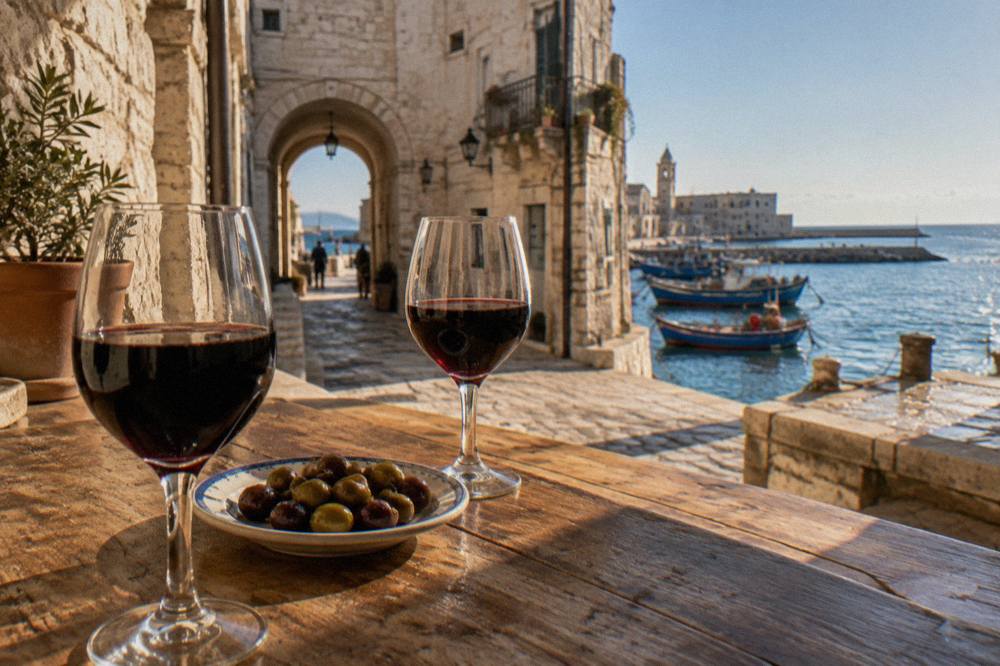
Wine is the second pillar. Negroamaro is the workhorse grape of Salento, and Salice Salentino DOC, established in 1976, covers parts of both Lecce and Brindisi provinces. Primitivo di Manduria, from the Ionian side, is the region's other headline red. Tastings of both are bookable from Lecce without a car, and the city's own enoteche pour them by the glass.
Can You Taste Lecce's Food Scene Without Researching It Yourself?
Yes, because Lecce's food is unusually easy to access through guided formats: a walking tour with tastings covers the historic centre and its underground rooms while sampling local products, cooking classes teach orecchiette and pasta from scratch, and wine tastings pour Negroamaro and its neighbours, so a visitor can eat well on day one without a spreadsheet of addresses. The site's own food tour pages collect these options.
The featured option on this page is a walking tour of Lecce and its undergrounds with food tasting: it moves through the centro storico and its subterranean rooms while stopping to taste local products along the way, which pairs the two things Lecce does best, baroque architecture above ground and layered history below it, with the third thing, the food. Check availability to see the operator's live listing.
Cooking classes are the other format worth flagging. Pasta-making sessions in and around Lecce teach the orecchiette shape that defines the region, some in historic courtyards, some in family homes outside the city, and a handful finish with wine. For visitors who want the recipes to travel home with them, a class beats another restaurant meal, and the operators' listings carry the current prices and schedules.
Which Puglia Town Should A Food-Lover Choose For A Trip?
Choose Lecce if the goal is the widest eating experience in one base, with every other major food town of Puglia within a day trip by train or car; choose Bari for a short seafood-first city break, Galatina for a pasticciotto pilgrimage, and a coastal town like Otranto or Gallipoli if fish at the water's edge matters more than range. The deciding factor is usually trip length, and it is worth being honest about the trade-offs.
A two-night trip can happily sit in one town and eat superbly. A week in Puglia argues strongly for Lecce, because from there the trains and the roads reach everywhere: the FSE network runs to Galatina, Gallipoli and, with a change, Otranto, while the summer Salento in Bus network, which ran 13 June to 13 September in 2026, added coastal links. Bari, Ostuni and Polignano a Mare sit on the main Trenitalia line north. The comparative question of Bari as a base is treated in Which Is Nicer, Bari Or Lecce?, and the case for the region as a whole in Is Lecce Italy Worth Visiting?.
There is also a seasonal angle. Sea temperatures run about 22.5 C in June, 25 to 27 C at the August peak and 20 to 22 C in October, and the eating year turns with them: summer means iced coffee and fried things at the beach towns, while autumn and winter pull the focus back to the town centres, the pasta dishes and the red wines. The best month question covers that calendar in detail.
Common Questions About Food In Puglia
Which Town In Puglia Has The Best Food?
Lecce has the strongest all-round claim, combining its own inventions, historic cafes and wine access with a walkable centre and rail links to every other food town. Bari leads for raw seafood and Galatina claims the pasticciotto, but neither matches Lecce's range as a base.
Is Bari Better Than Lecce For Food?
Bari is better for raw seafood and has the larger port-city restaurant scene. Lecce counters with its street food, pasticcerie, the caffe in ghiaccio tradition and the Salento wine country, plus easier access to Galatina, Gallipoli and Otranto by train.
Where Was The Pasticciotto Invented?
Pasticceria Ascalone in Galatina says it invented the pasticciotto in 1745. Historians dispute the date, and the shop is in Galatina, not Lecce, so the 1745 figure should be treated as the shop's own claim rather than settled fact.
What Food Is Lecce Itself Known For?
Lecce is known for caffe in ghiaccio con latte di mandorla, credited to Antonio Quarta of Quarta Caffe in the 1940s or 1950s, the rustico leccese, pasticciotto, frisa, puccia and ciceri e tria, with Negroamaro-based Salice Salentino wines from the surrounding province.
Can You Visit Galatina From Lecce For The Pasticciotto?
Yes. Direct FSE trains run between Lecce and Galatina in about 38 to 55 minutes, with fares from about 3 euro, so the trip fits easily into a morning or lunch window. Schedules should be checked on the operator's site before travelling.
The final word belongs to the traveller's appetite. A visitor who wants one fish dinner at the port should book the port. A visitor who wants to spend a week eating their way through a region, sweets in the morning, street food at noon, pasta and Negroamaro at night, with every rival food town a train ride away, will find the answer to this question is Lecce.