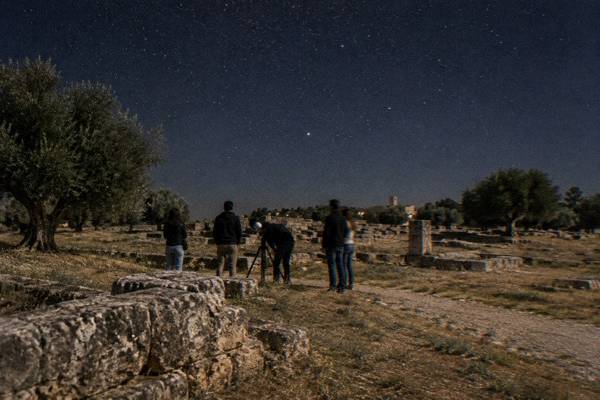
Piazza Mazzini: Shops And Evenings In The Modern Centre
Piazza Mazzini is Lecce's modern face: the commercial heart outside the baroque old town, where the leccesi shop, take aperitivo and start their evenings.
Short answer
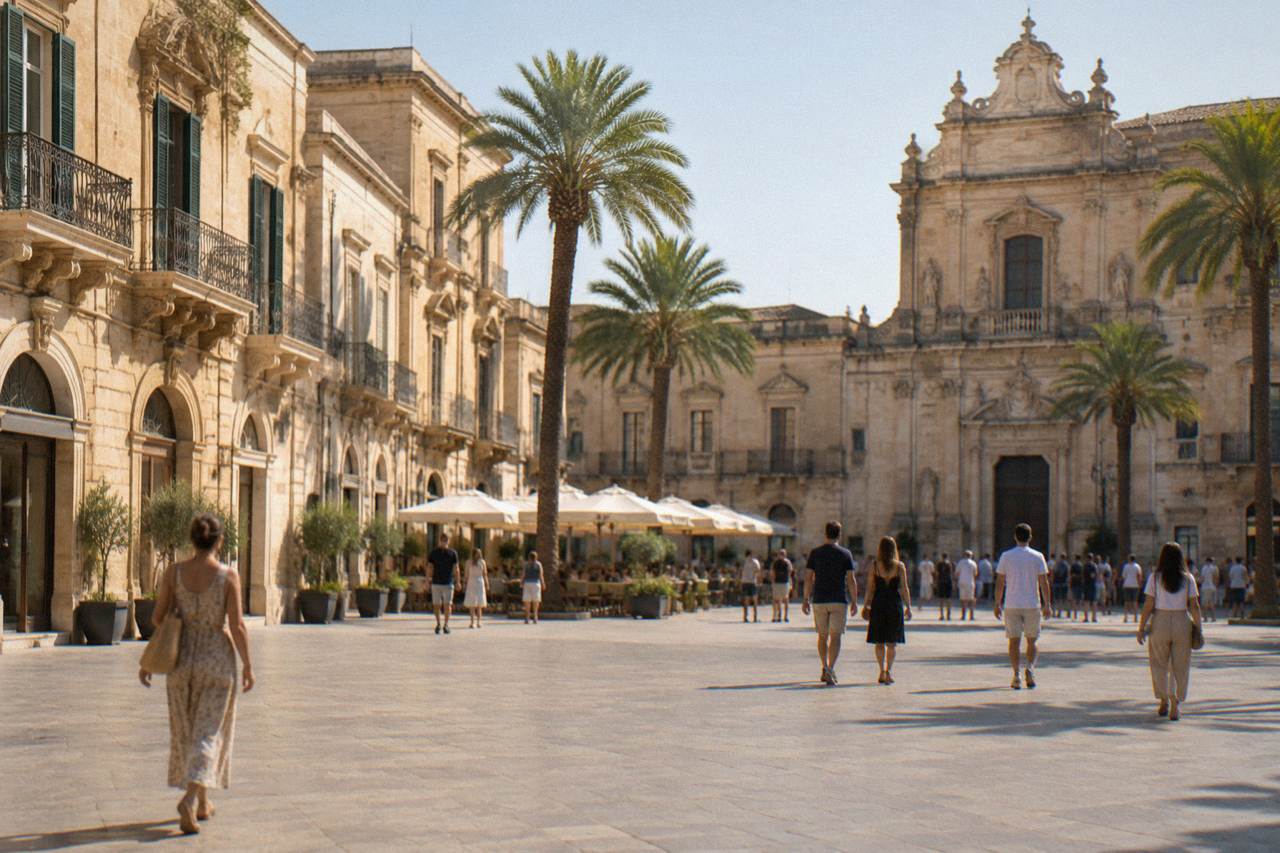
**Piazza Mazzini is Lecce's modern commercial square, the shopping and evening district that sits outside the historic centre in the part of the city built after the baroque era. It is where department stores, chain and independent shops, bars and restaurants cluster, a short walk or bus ride from Piazza Sant'Oronzo, and it comes alive at the passeggiata hour when the leccesi move out for the evening.**
Piazza Mazzini is the modern centre of Lecce, in Puglia, southern Italy: the baroque capital of Salento a few kilometres inland from the Adriatic, a city of honey-coloured pietra leccese limestone whose old town draws the photographers, and whose commercial pulse beats here instead. Where the centro storico is a compact maze of churches and palazzi, the Mazzini district is the Lecce the leccesi use daily, the shopping streets, the department stores, the bars where the evening aperitivo begins. The tourist itineraries in one day in Lecce rarely linger here, which is precisely why an evening in this quarter tells a visitor what the city is when the sightseeing stops.
This page covers what the modern centre actually is, how it differs from the old town, how to reach it, when the weather suits an evening outdoors, and how the shopping and after-dark hours work. The facts come from the city's own published material, transport operators and climate data, reported here by the Lecce Travel Guide editorial desk.
What Is Piazza Mazzini In Lecce?
Piazza Mazzini is Lecce's principal modern square and commercial district, the shopping and administrative heart of the city that developed outside the historic walls rather than inside them. It gathers department stores, fashion chains, independent shops, banks, bars and restaurants in a grid of wider streets, and it functions as the everyday centre for a city of 94,387 residents and roughly 20,774 university students at the Università del Salento.
The contrast with the old town is the whole point of the quarter. The centro storico grew around churches, convents and aristocratic palazzi built from pietra leccese, the soft Miocene limestone that hardens on exposure, and its fabric was largely fixed before the modern era. The Mazzini district belongs to the city's expansion: straighter streets, larger shopfronts, buildings that prioritise floor space over ornament. A visitor who walks from Piazza Sant'Oronzo towards the modern quarter crosses a visible boundary, and the change of scale is immediate.
That everyday character is what fills the district in the late afternoon and evening. The Italian passeggiata, the traditional early-evening stroll, and the aperitivo, the pre-dinner drink with small snacks, are general Italian customs rather than Lecce inventions, and the modern centre is where the leccesi practise both on ordinary weeknights. Shops stay open into the evening on the commercial streets, and bars and restaurants fill the hours between shopping and dinner.
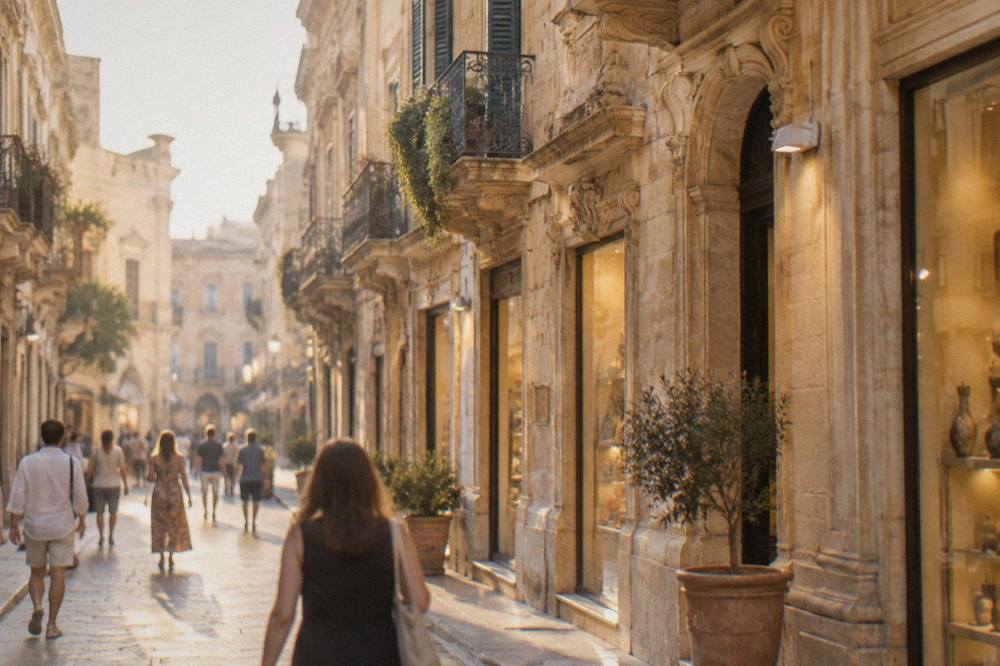
No shop, bar or venue in this district had its hours, prices or address checked for this page, so nothing here is named as a recommendation. What can be said is structural: the quarter is the city's commercial core, it is fully part of the urban fabric rather than a tourist zone, and its rhythms follow the retail and dining calendar of a southern Italian provincial capital, with opening times that shift with the season.
How Far Is Piazza Mazzini From Lecce's Historic Centre?
Piazza Mazzini sits immediately beyond the edge of the historic centre, close enough that the walk between the modern shopping streets and Piazza Sant'Oronzo, the baroque heart of the old town, is a short level stroll through city streets rather than a journey. The two faces of Lecce, baroque and modern, sit side by side, and no transport is needed to move between them on foot.
The practical geography works like this. The visitor's landmarks, the Duomo, Basilica di Santa Croce, the Roman Amphitheatre and Piazza Sant'Oronzo, all sit inside the compact old town, whose streets are partly restricted by the ZTL, the camera-policed limited traffic zone. The modern centre lies outside that zone, which is exactly why the shopping district could grow wide and car-friendly around it.
For a visitor planning the day, the natural shape is mornings and afternoons in the old town, at the Piazza del Duomo or the Castello Carlo V, and the late afternoon and evening in the modern quarter once the shops and the aperitivo hour take over. The best time to visit Lecce question matters here too, because the evening outdoors only works comfortably for part of the year, a point the climate table further down this page covers with real numbers.
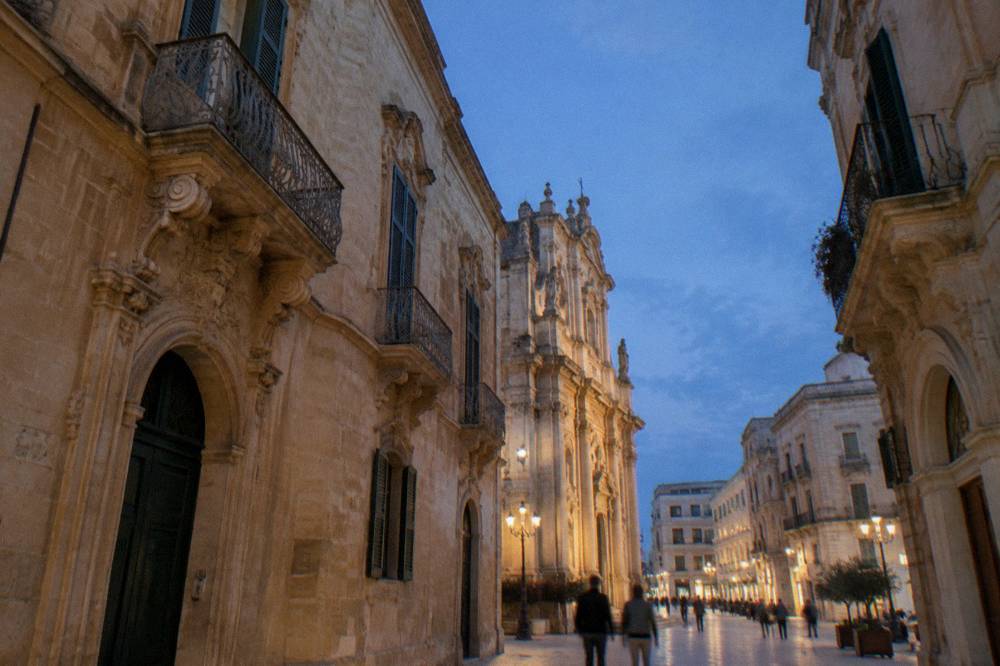
A guided walk is one way to anchor the old-town side of that split before the evening begins. The Baroque Architecture and Underground Rooms walking tour covers the historic centre's facades and the spaces beneath it, and it pairs naturally with a free evening in the modern district afterwards.
How Do You Get To Piazza Mazzini Without A Car?
Piazza Mazzini is served by the SGM city bus network, whose ordinary single ticket costs about 1.20 EUR bought in advance and about 1.50 EUR on board, with a day ticket at about 3 EUR, and the wider city network also connects the district to the station and the historic gates. Driving in is possible but the adjacent historic centre is a camera-policed ZTL, so parking outside the restricted streets and walking in is the practical pattern.
The bus fares are the operator's own published figures. SGM runs the city network, its tickets are sold through the operator's app as well as in person, and the same network covers the useful visitor routes, including line 32 from the City Terminal towards San Cataldo and the coast, a ride of about 20 minutes according to the comune's own description of the service.
| SGM ticket type | Price | Notes |
|---|---|---|
| Ordinary single, 60 minutes | about 1.20 EUR | bought in advance |
| Ordinary single, on board | about 1.50 EUR | from the driver |
| Daily ticket | about 3 EUR | unlimited same-day travel |
| Weekly ticket | about 12 EUR | per operator tariff page |
| Line 32 to San Cataldo | included in ordinary fare | about 20 minutes |
For drivers, the constraint that shapes everything is the ZTL. The historic centre's restricted zone is enforced by cameras, with hours that are reported rather than guaranteed, and fines that run from 83 to 332 EUR according to the municipal ordinances. Porta Napoli is always closed to unauthorised traffic. The standing advice is to ask the accommodation to register a number plate where that is possible, and to park outside the restricted streets. The Park Liberty underground car park, with 466 spaces near the centre, is one published option, and SGM's blue-zone street parking is charged by the hour with rates that vary by zone.
The district is also the natural base for reaching the coast in summer. The Salento in Bus seasonal network ran from 13 June to 13 September in 2026, with lines 101, 104, 107 and 108 fanning out from Lecce to Torre dell'Orso, Otranto, Porto Cesareo, Gallipoli and Leuca, at fares from 1.10 to 5 EUR. The 2027 dates had not been announced, so summer visitors should check the operator's channels before planning around it.
When Is The Best Time Of Year For Evenings In Lecce?
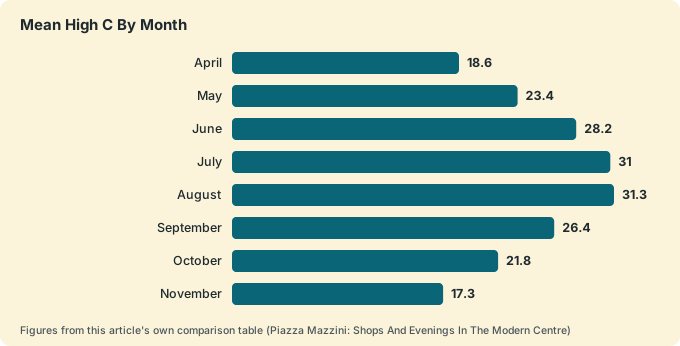
Evenings outdoors in Lecce work best from late spring to early autumn: the ERA5 reanalysis for Lecce, 1991-2020, puts the mean daily high at 23.4 C in May, 28.2 C in June and 31.3 C in August, with July and August nights averaging 21.7 and 22.2 C, comfortably warm for the passeggiata. Winter evenings are mild rather than cold by northern standards, with January mean lows of 6.7 C, but October and November bring the heaviest rain of the year.
The rainfall pattern matters as much as the temperature for anyone planning an evening in the squares. November carries the highest monthly total in the record at 93.7 mm, October follows at 91.3 mm, and July and August are the driest months at 15.3 and 18.1 mm. The sea nearby, for evenings that turn into a coastal detour, runs about 25 to 27 C at the August peak and 20 to 22 C in October.
| Month | Mean high C | Mean low C | Rain mm |
|---|---|---|---|
| April | 18.6 | 10.7 | 54.6 |
| May | 23.4 | 14.7 | 39.9 |
| June | 28.2 | 19.1 | 18.0 |
| July | 31.0 | 21.7 | 15.3 |
| August | 31.3 | 22.2 | 18.1 |
| September | 26.4 | 19.0 | 58.9 |
| October | 21.8 | 15.4 | 91.3 |
| November | 17.3 | 11.7 | 93.7 |
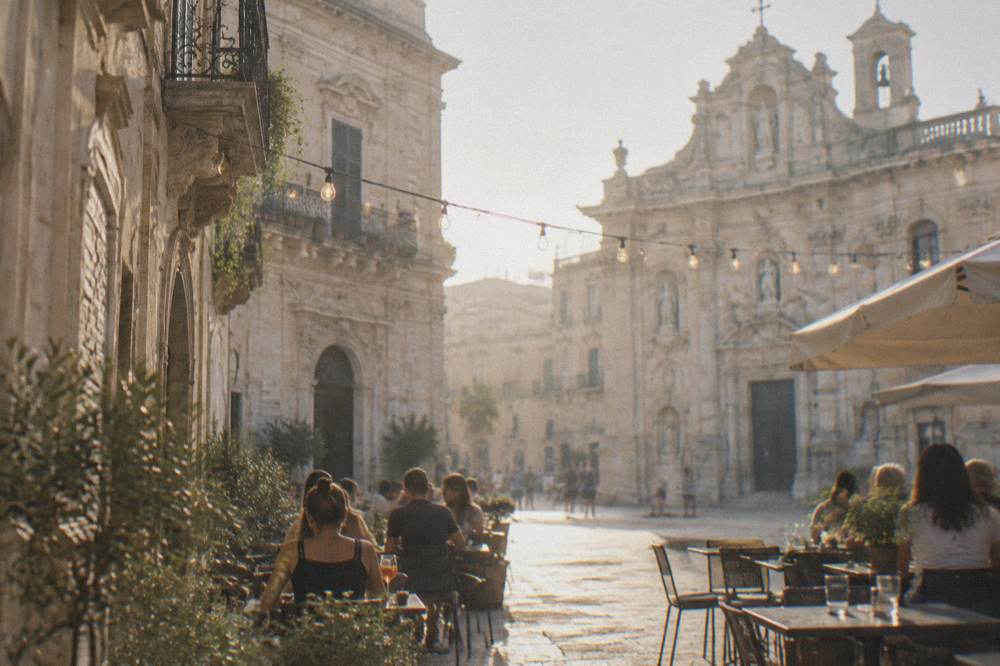
Figures are ERA5 reanalysis, 1991-2020, a modelled grid cell rather than a weather station record, and they describe climate normals, not a forecast for any given week. What they show is the shape of the year: a long warm season in which the evening economy of the squares runs outdoors, a short damp shoulder in late autumn, and winter nights that are cool but rarely punishing. The Christmas period is its own case, with the Fiera dei Pupi, the traditional papier-mache fair in Lecce, running on the early-to-late December pattern in recent editions, though the 2026 dates had not been published.
What Can You Shop For Around Piazza Mazzini In Lecce?
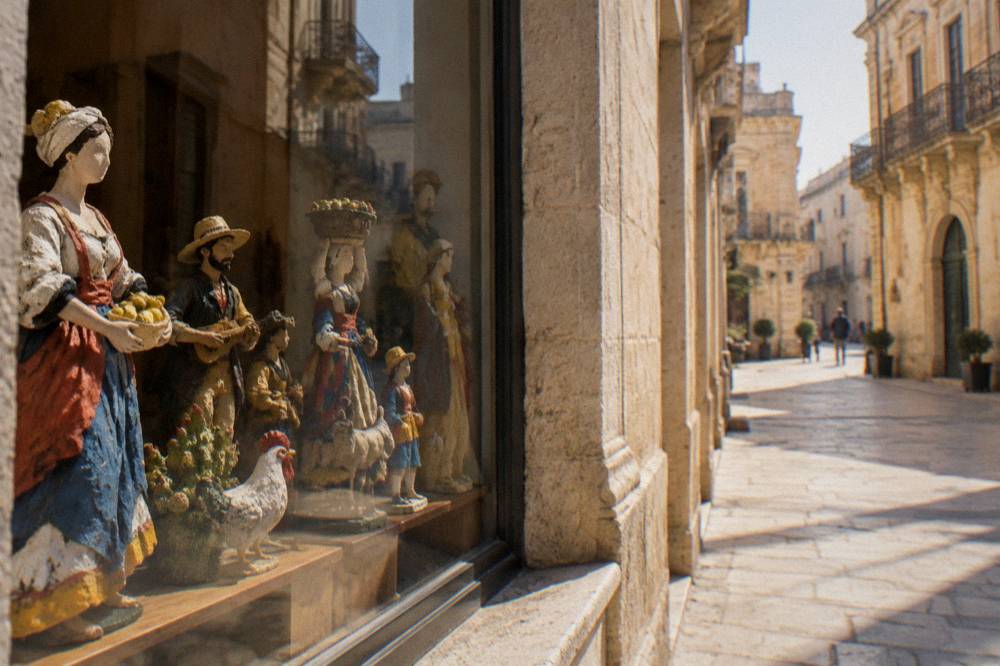
Shopping around Piazza Mazzini is mainstream city-centre retail, fashion, homeware, department stores and everyday goods, alongside the food shops and pasticcerie that serve the whole city, while the craft most specific to Lecce, papier-mache or cartapesta, belongs to the workshops of the historic centre rather than the modern quarter, and no individual shop, address or price in either district has been checked for this page.
The honest division of labour is this: the modern centre sells what a city of this size sells everywhere in Italy, and the old town holds the local specialities. Cartapesta, the traditional craft of religious figures and nativity scenes made from paper and glue, is worked in botteghe in and around the historic centre, and the city's own material describes practical sessions with masters using paper, glue and moulds. Bookable workshops in the craft are sold through this site's product blocks, and the papier-mache guide covers the tradition in detail.
Food shopping follows the same split. The named historic cafes of the city, Caffe Alvino on Piazza Sant'Oronzo with roots to about 1880, Bar Avio opened around 1978, and the family-run Pasticceria Natale since 1978, sit at the old-town end of the scale, and the Santo Pasticciotto at Natale is listed at 2.20 EUR. No price for any other venue appears on this page, because none was checked. The modern quarter's food offering is the ordinary retail and dining of an Italian city centre, and its details change with the season.
Shopping hours follow southern Italian custom. Many shops close for a mid-afternoon pause, roughly in the 13:00 to 16:00 or 17:00 window, and reopen into the evening, especially in the warmer months, though individual businesses vary and tourist-oriented stores may keep different hours. The practical rule is to treat late morning and early evening as the reliable shopping windows and to confirm anything specific locally.
What Is There To Do In Lecce In The Evening?
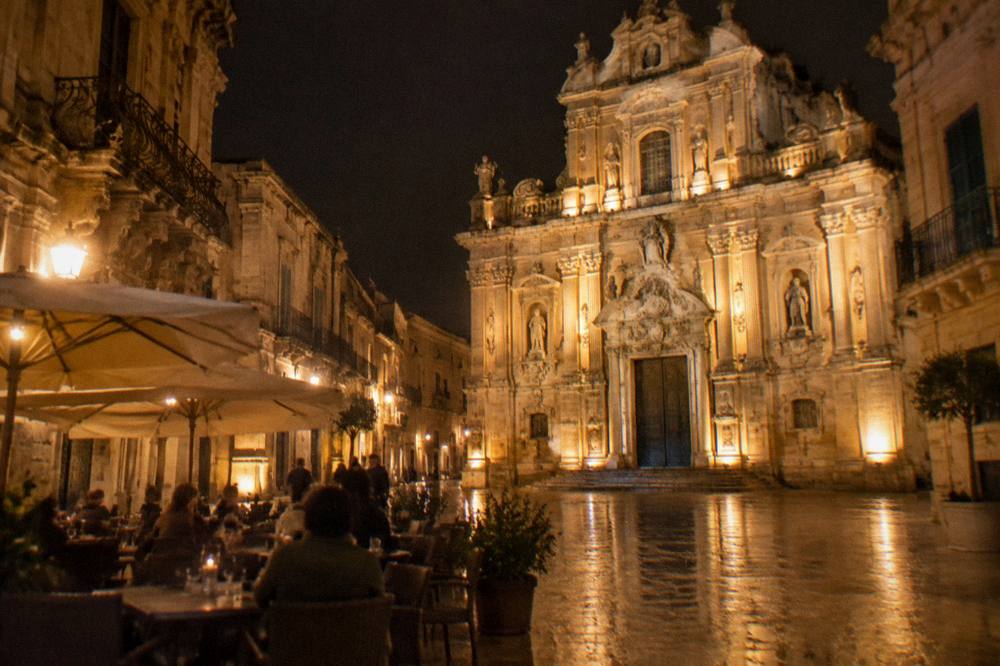
Evening in Lecce means the passeggiata through the lit squares, an aperitivo at a bar table, dinner late by northern European habits, and the facades of the old town in artificial light, including the summer weekend openings that keep some churches accessible until 22:00, and the shape of the night is set by Italian custom rather than by any single venue, since no bar, club or event night in the city had its hours or prices checked for this page.
The sequence is general Italian custom, described here as such. The passeggiata fills the late afternoon and early evening: families and friends walk the main streets, the shop windows are lit, and the bars fill. The aperitivo follows, a drink with small savoury snacks that takes the edge off before dinner. Dinner itself starts late, often after 20:30. None of this belongs to a named venue, and none is priced here, but the rhythm is dependable because it is cultural rather than commercial.
The squares carry the evening. In the old town, the baroque facades of the centre, lit at night, are the spectacle, and in summer the churches have opened on weekend evenings until 22:00 in published patterns, with visitor access paused during services and a dress code of covered shoulders and knees enforced at all times. In the modern quarter, the evening is brighter, busier and more commercial, the shop-lit streets rather than the floodlit limestone.
For an evening with a guide rather than alone, a night tour is one structured option, and this site lists one that runs in an ancient site near the city. A tasting is another way to spend an early evening, and Salento's own wines give that a local angle.
August evenings in the city carry the patronal festival. The Festa dei Santi Patroni, honouring Oronzo, Giusto and Fortunato, ran 23 to 26 August in 2026 with processions, luminarie, concerts and a funfair, per the comune's own programme. Further afield in Salento, the Notte della Taranta Concertone in Melpignano was held on 22 August 2026, in its 29th edition, and the 2027 date had not been announced. An August visitor can plan around these as annual events with the latest editions as the reference point.
How Does Piazza Mazzini Fit Into A Lecce Itinerary?
Piazza Mazzini fits an itinerary as the evening and practical layer of a Lecce stay: mornings in the baroque old town with the churches and the underground sites, afternoons either in the museums or out towards the coast, and the late afternoon onward in the modern quarter for shopping, aperitivo and dinner, a pattern that works equally in a one-day visit and a longer stay built on the Salento day trips that leave from the city.
The one-day version keeps it simple. A morning walk through the old town, covering the Duomo square, Santa Croce and the amphitheatre, an afternoon in the modern quarter or at a museum such as the Museo Faggiano, and the evening back in the lit streets for dinner. The two-day itinerary adds depth, and a fuller Salento itinerary uses Lecce as the base with the evenings in the city between the coastal days.
The day-trip layer is where the modern quarter's position helps. The station and the bus network put Otranto, Gallipoli, Porto Cesareo and Santa Maria di Leuca within reach by train or bus, and the drive times from the old town run about 44 minutes to Otranto, 41 to Gallipoli, 34 to Porto Cesareo and 78 to Leuca in free-flow traffic. A shopping stop or an aperitivo in the modern centre slots naturally into the return leg.
| Destination from Lecce | Drive time, free flow | Public transport option |
|---|---|---|
| Otranto | about 44 min | FSE train via Maglie, about 1h33 to 2h+ |
| Gallipoli | about 41 min | direct FSE train, about 1h18 to 1h43 |
| Porto Cesareo | about 34 min | Salento in Bus line 104, summer |
| Santa Maria di Leuca | about 78 min | bus, about 2h to 2h15 |
| San Cataldo beach | about 14 min | SGM line 32, about 20 min |
| Brindisi airport | about 43 min by road | Terravision bus 6.50 EUR, about 40 min |
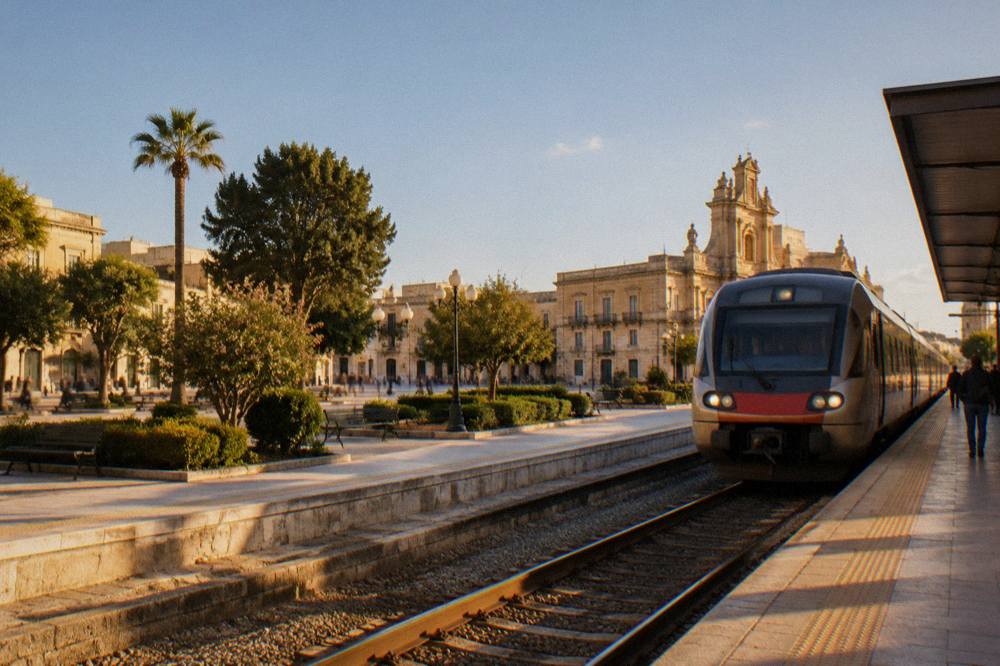
Two practical notes complete the picture. First, the tourist tax: Lecce collects an imposta di soggiorno per person per night through the accommodation, by category and season, with a top reported rate of 5 EUR for five-star high-season stays from 1 April 2026, and the standing advice is to confirm the exact amount at booking. Second, luggage: for visitors filling a last evening after checkout, app-based storage networks operate near the station at roughly 2.50 to 3.50 EUR per day.
Is Piazza Mazzini In The Old Town Of Lecce?
Is Piazza Mazzini In The Old Town Of Lecce?
No. Piazza Mazzini belongs to the modern commercial centre that developed outside the historic core. The baroque old town, with the Duomo, Santa Croce and Piazza Sant'Oronzo, sits a short walk away, and the two districts sit side by side rather than one inside the other.
Can You Walk From Piazza Mazzini To Piazza Sant'Oronzo?
Yes. The distance between the modern shopping district and the baroque heart of the old town is short and level, and the walk passes the boundary between the modern city and the historic centre on ordinary city streets. No transport is needed.
Is Piazza Mazzini Good For Shopping In Lecce?
It is the city's principal mainstream shopping district, with department stores, fashion retail and everyday commerce. The craft most specific to Lecce, papier-mache or cartapesta, is worked in the historic centre's workshops rather than the modern quarter. No individual shop was checked for this page, so treat it as a district to browse rather than a list of addresses.
What Is There To Do In Lecce At Night?
The evening centres on the passeggiata, the aperitivo and a late dinner, with the old town's baroque facades in artificial light and, in summer, weekend church openings into the late evening. August brings the patronal festival of Santi Oronzo, Giusto e Fortunato with processions and luminarie. No bar or venue had its hours or prices checked, and opening times change with the season.
How Do You Park Near Piazza Mazzini?
The adjacent historic centre is a camera-policed ZTL with fines from 83 to 332 EUR, and Porta Napoli is always closed to unauthorised traffic. Park outside the restricted streets: SGM tariffed blue zones and the 466-space Park Liberty car park near the centre are the published options, and visitors should ask their accommodation about plate registration.
When Are The Shops Open Around Piazza Mazzini?
Many shops observe a mid-afternoon pause roughly between 13:00 and 16:00 or 17:00 and reopen into the evening, with hours varying by business and season. Late morning and early evening are the reliable windows, and anything specific should be confirmed locally.
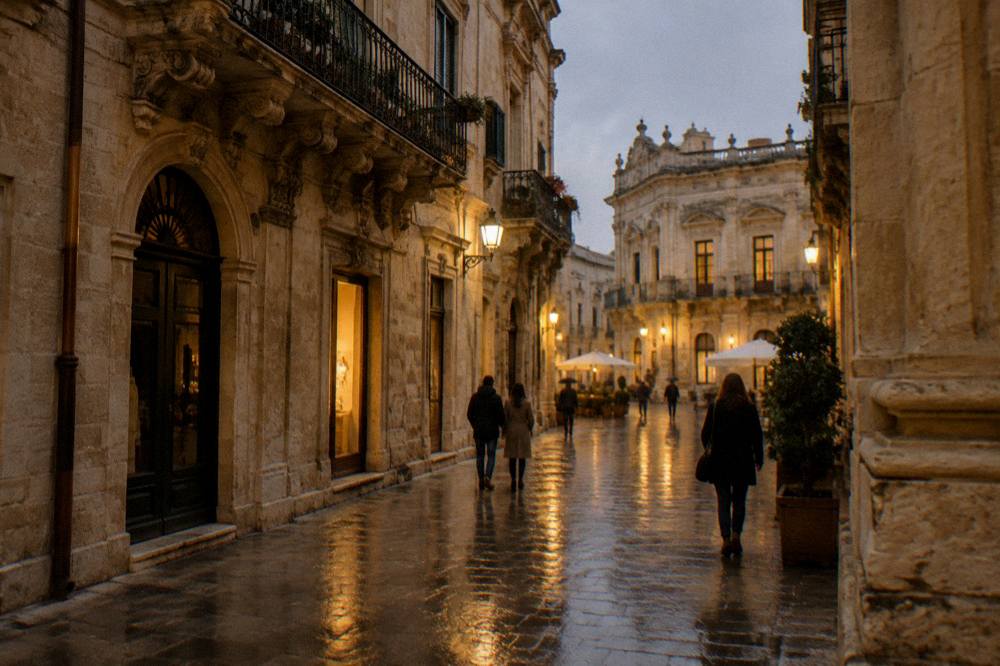
The modern centre is the part of Lecce that keeps working when the sightseeing ends: the shops open, the bars fill, the streets carry the passeggiata. Pair it with the old town, let the evening run long, and the city shows both of its faces in a single day.