Two Days In Lecce: The City Then The Coast
Two days split the Lecce visit cleanly: the baroque old town on day one, the Salento coast on day two. Here is what each day holds, with verified tickets, hours and transport.
Short answer
Two days is enough for Lecce's old town plus one coastal excursion. Day one covers Piazza Sant'Oronzo, the Duomo, Basilica di Santa Croce and the underground sights; day two goes out to Gallipoli, Galatina or Otranto by train, bus or tour.
Lecce, the baroque capital of Salento in Puglia, southern Italy, is a compact honey-stone city a few kilometres inland from the Adriatic, and that geography is exactly why two days works so well here. The old town is small enough to walk end to end in an afternoon, and the coast it sits behind, Gallipoli to the west, Otranto to the east, is reachable in under an hour. The plan this page lays out spends day one inside the city walls among the churches, squares and underground rooms carved out of pietra leccese, and day two out on the Salento coast. The closest beach, San Cataldo, is about 13 km away, so the sea is never more than a short hop from the baroque.
Is Two Days In Lecce Enough?
Two days is enough to see Lecce's old town properly and to make one coastal excursion, which is the split this itinerary follows: day one for the baroque city on foot, day two for the Salento coast at Gallipoli, Galatina or Otranto. A third day would add a second coast or a northern Puglia town, but the core of Lecce itself fits comfortably into one full day of walking.
The city's sights cluster within a rectangle roughly bounded by Porta Napoli, Piazza Sant'Oronzo, the Duomo and the Villa Comunale. Nothing in that rectangle is more than a ten minute walk from anything else. What eats time is the queue of churches worth entering, and the LeccEcclesiae combined ticket, 11 euro standard and valid 15 days, exists precisely so a short visit can cover five of them on one pass.
The honest trade-off is the coast. Salento has two shorelines, the cliffier Adriatic and the sandier Ionian, and a two-day stay forces a choice between them. The question of how many days the wider region deserves has its own answer, but for a first visit built around Lecce, one coast day is a solid return. Readers with three days should read the three-day Lecce itinerary instead, and anyone stretching to the whole region can follow the Salento itinerary.
Day One In Lecce: How Should You Structure The First Day?
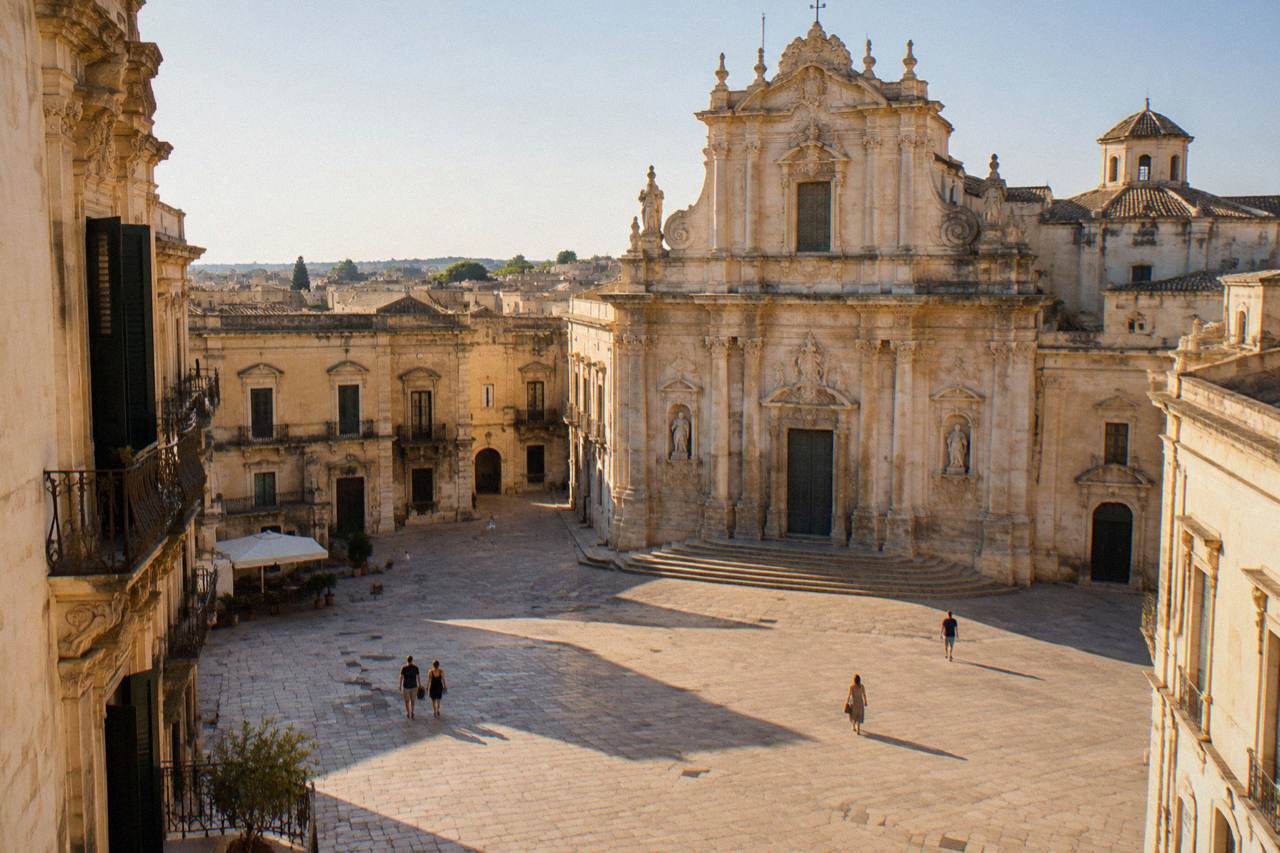
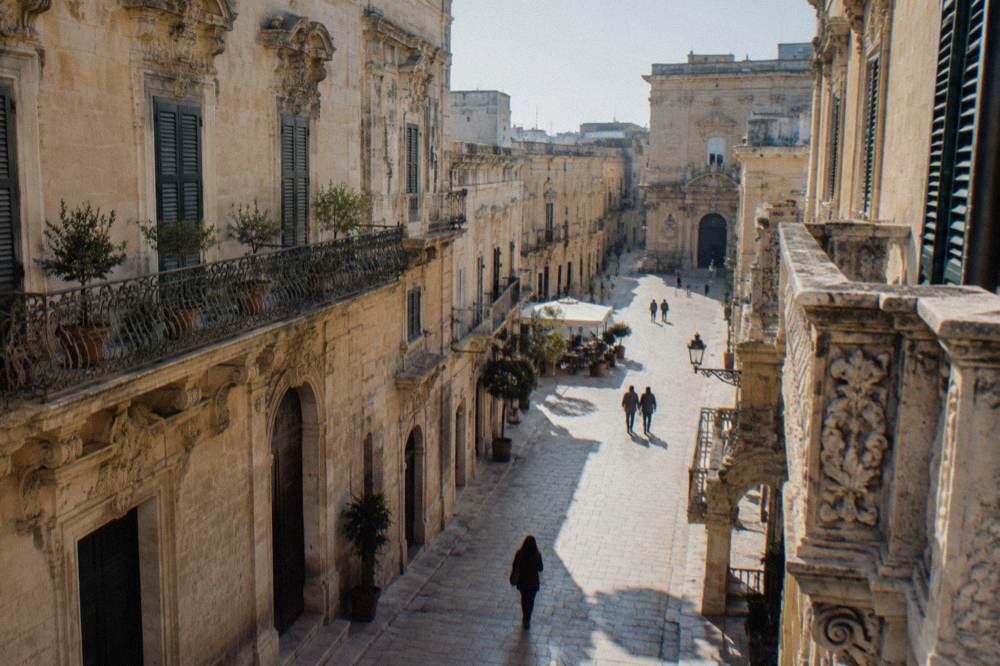
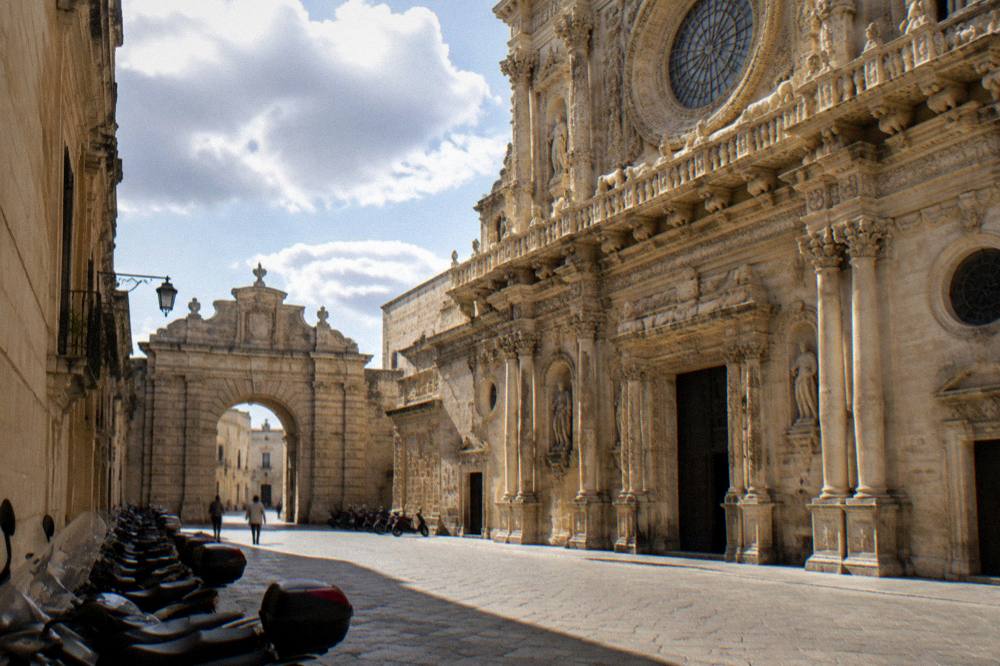
Start at Piazza Sant'Oronzo for the Roman Amphitheatre, walk north to Piazza del Duomo when it opens at 9:00, then cut south to Basilica di Santa Croce, Palazzo dei Celestini and Porta Napoli, and finish underground at Museo Faggiano or the synagogue basement before an evening passeggiata through the centro storico. Every step of that loop is under fifteen minutes on foot.
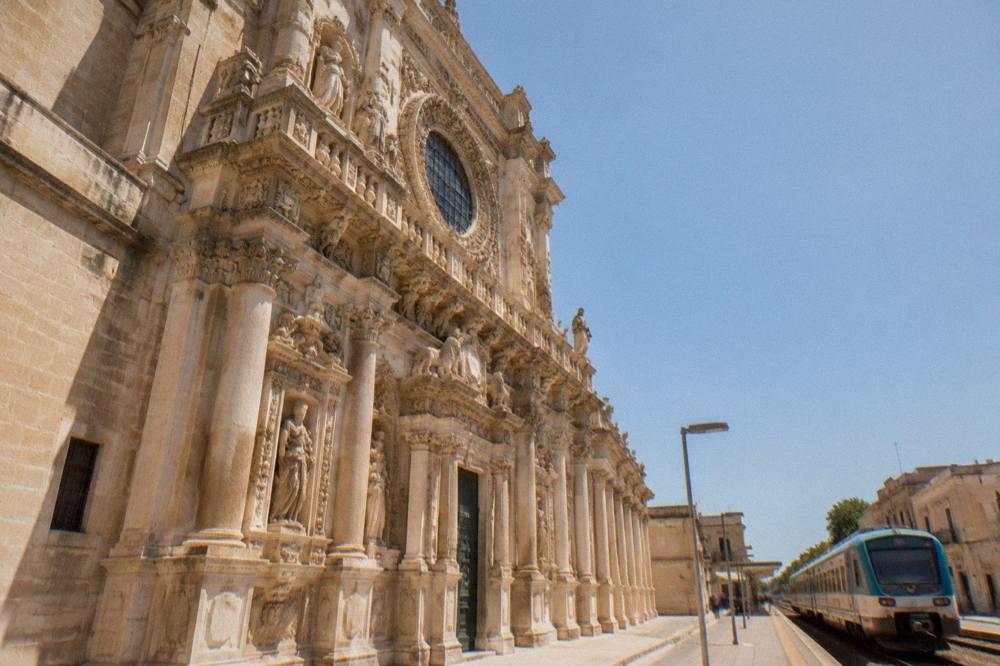
The amphitheatre in Piazza Sant'Oronzo is visible free from the square, and since the post-2025 restoration it is also visitable up close: winter hours (1 October to 31 March) run Tuesday to Sunday 10:00 to 17:00 at 5 euro full, 2 euro reduced, closed Monday. From there the day bends towards Piazza del Duomo, the enclosed cathedral square that is arguably the single best composition of Lecce Baroque. The Duomo, its crypt, Santa Croce, San Matteo, Santa Chiara and the Antico Seminario with its sacred art museum are all on the LeccEcclesiae ticket; winter hours are 9:00 to 18:00, and the ticket runs 11 euro standard, 21 euro with the bell tower elevator, under 12s free.
Afternoon belongs to the underground. Museo Faggiano is the famous one: a family house whose drainage works uncovered layers of Messapian, Roman and medieval remains beneath the floors. It is open every day 9:30 to 20:00 at 5 euro, children aged 0 to 8 free, 8 to 16 at 3 euro. The ancient synagogue basement visit, offered as a guided walk, covers the city's Jewish quarter history in the Giudecca streets around it.
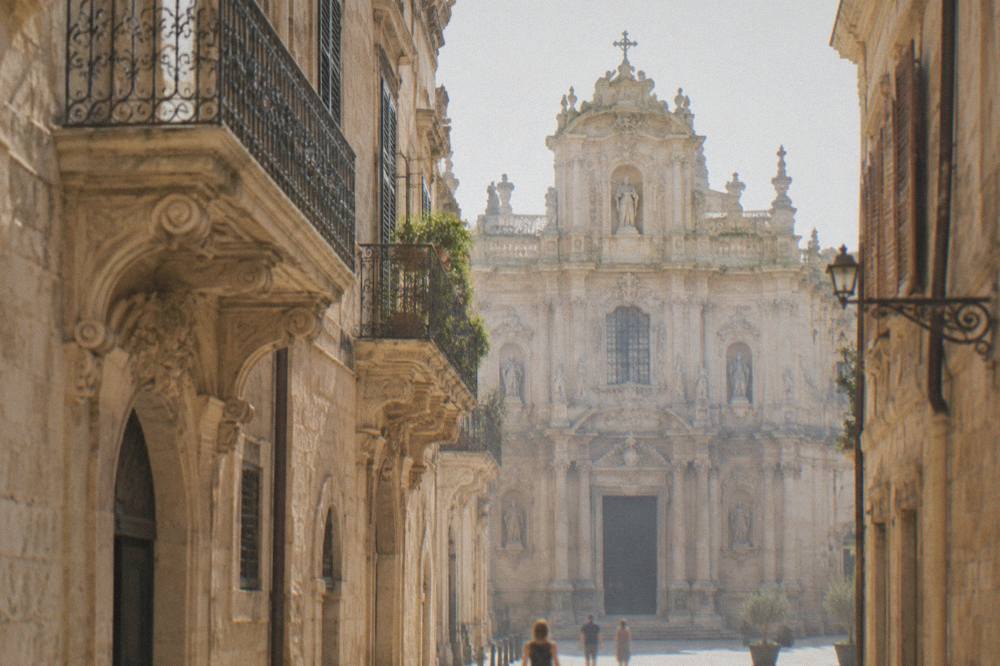
A note on timing the churches: tourist access pauses during services, and shoulders and knees must be covered. The ticket office sits at Piazza Duomo 5 or at Santa Croce. The Castello Carlo V is a short walk north; its interior is guided-tour only, 10 euro full, with the courtyard free to enter, and it is closed Monday, so a two-day visit that includes a Monday needs to shuffle the castle to day two's morning or drop it.
Here is the day-one skeleton with the verified opening figures:
| Stop | Hours | Ticket | Notes |
|---|---|---|---|
| Piazza Sant'Oronzo and amphitheatre | Amphitheatre Tue-Sun 10:00-17:00 (winter) | Free from square; 5 EUR to enter | Closed Monday |
| LeccEcclesiae churches (Duomo, Santa Croce, San Matteo, Santa Chiara, Seminario) | Daily 9:00-18:00 winter, 9:00-21:00 summer | 11 EUR standard, 21 EUR with bell tower | Valid 15 days, under 12 free |
| Museo Faggiano | Daily 9:30-20:00 | 5 EUR, 8-16 yrs 3 EUR | No booking needed |
| Castello Carlo V | Tue-Sun, guided tours | 10 EUR full, courtyard free | Closed Monday |
| Palazzo dei Celestini courtyard | Weekday daytime | Free | Prefecture seat, courtyard only |
Walking covers all of it. Lecce is flat, the historic centre is pedestrian-scaled, and a guided walking tour of the historic centre is the alternative to finding your own way from church to church; several bookable walks include the underground rooms and the Duomo entry in one loop. For readers who prefer the overview-plus-depth pattern, a solo pick:
If more depth on the style itself is wanted before the afternoon, the Lecce Baroque walk page maps the facades stone by stone, and the wider things to do in Lecce index lists every sight this page compresses.
Where Should You Eat On Day One In Lecce?
Day one eats on Lecce's own street food: a rustico leccese or pasticciotto from a historic pastry shop in the centre, iced coffee with almond milk in the afternoon, and an evening meal built around Salento pasta, Negroamaro wine and the trattorie of the centro storico. The named historic venues are Caffe Alvino on Piazza Sant'Oronzo, Bar Avio and Pasticceria Natale.
The city's food identity is cheap by design. The rustico, a warm puff-pastry disc of bechamel, mozzarella and tomato, is a breakfast-and-standing-lunch food; the pasticciotto, custard in shortcrust, is its sweet twin, and the caffe in ghiaccio con latte di mandorla, espresso over ice with almond milk, is the drink the city claims as its own, credited to Antonio Quarta of Quarta Caffe in the 1940s to 1950s. A listed price example is Natale's "Santo Pasticciotto" at 2.20 euro. Caffe Alvino traces its roots to about 1880; Pasticceria Natale has been family-run since 1978.
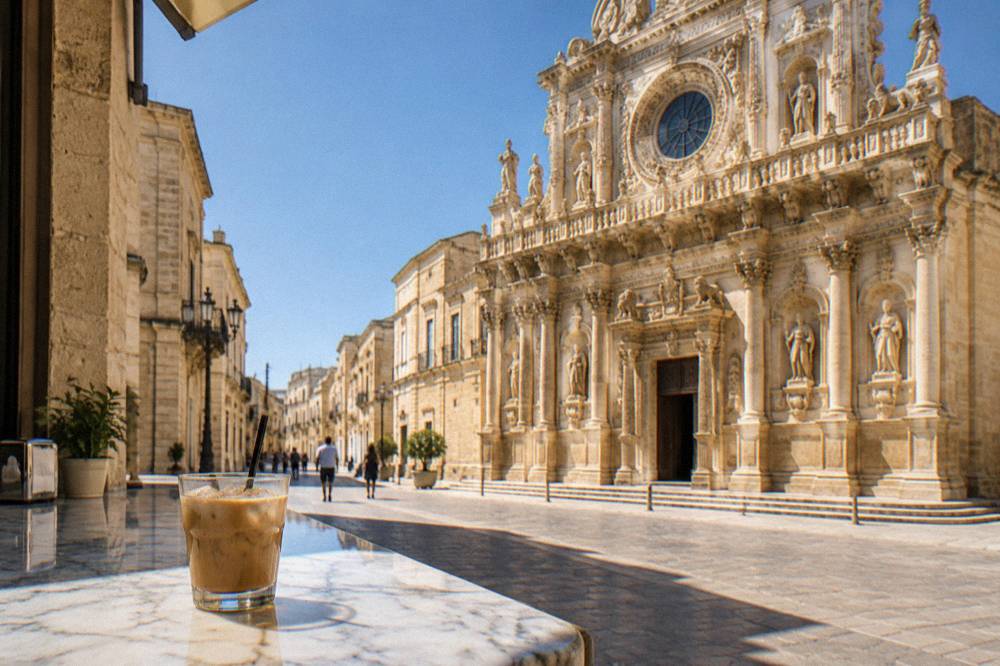
For a sit-down taste of Salento in the evening, a guided food walk bundles the rustico stops with wine:
The fuller food picture, dish by dish, sits on the what to eat in Lecce page, and the cafe culture has its own page too. One structural warning: many central shops close for riposo in the early afternoon, roughly 13:00 to 16:00 or 17:00, so a late-lunch pasticciotto hunt can come up against shutters. Plan the sweet stops for morning or evening.
Day Two From Lecce: Which Coast Should You Choose?
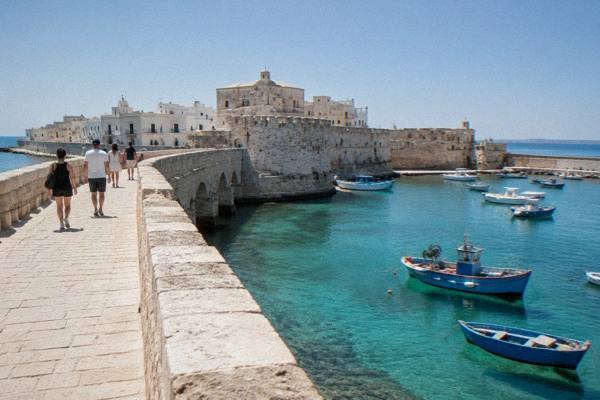
For a single coast day from Lecce, the Ionian option is Gallipoli, an old town on a limestone island reached by a direct FSE train in about 1h18 to 1h43, while the Adriatic option is Otranto, with its 1163-1165 cathedral mosaic, reached by train with a change at Maglie in about 1h33 to 2 hours. A guided day trip can combine Gallipoli, Galatina and the coast without any timetable work.
The two shorelines have different characters and no ranking belongs here: the Adriatic side is the cliffier, rockier coast, the Ionian the sandier, shallower one. Gallipoli's old town stands on its island joined to the mainland by a bridge; Galatina, ten minutes further on by train from Lecce (about 38 to 55 minutes direct, from about 3 euro), holds the Basilica of Santa Caterina d'Alessandria, free to enter with split morning and afternoon hours. Otranto's cathedral floor mosaic, by the priest Pantaleone and dated 1163 to 1165, is free for independent visitors, though since 1 March 2026 groups and visitors with a licensed guide pay 2 euro.
The comparison between Lecce and Otranto as bases is a separate question, but as a day target Otranto rewards the whole day. Drivers should know the distances from Piazza Sant'Oronzo: Gallipoli about 41 km and 41 minutes, Otranto about 47 km and 44 minutes, Leuca about 83 km and 78 minutes.
| Day-two destination | How to get there | Journey | Verified entry costs |
|---|---|---|---|
| Gallipoli | Direct FSE train | About 1h18-1h43, from about 5 EUR | Old town free; Castello ticket not published |
| Galatina | Direct FSE train | About 38-55 min, from about 3 EUR | Basilica Santa Caterina free |
| Otranto | FSE train, change at Maglie | About 1h33-2h+ | Cathedral free solo, 2 EUR with guide; Castello Aragonese about 6-12 EUR by season |
| Gallipoli + Galatina + coast | Guided day trip | Door-to-door | Included in tour |
| San Cataldo beach | SGM bus line 32 | About 20 min | Free beach; lidos 15-35 EUR/day |
The guided option this site features is the full-day Gallipoli, Galatina, coast and winery tour, which folds the train timetable, the basilica hours and a beach stop into one booked day. The tour's live listing carries the current price and dates:
Inline, readers can also Check availability beside the tour's own page on this site. Travellers who would rather stay on the water than on the sand can look at the boat options further down, and anyone puzzling over whether the city itself counts as coastal should read is Lecce near the coast, whose answer is that San Cataldo sits about 13 km away.
What If You Want A Boat Instead Of A Beach Town?
A boat day from Lecce means travelling to the coast first, and the verified options are the Santa Maria di Leuca cave rides, about 3 hours with swimming stops and an aperitif, or snorkelling trips out of Porto Cesareo and San Foca on the two shorelines; all are bookable tours, since no Leuca public boat service or operator price list was found in official sources.
Leuca is the long option, about 83 km and 78 minutes by road from the centre of Lecce, where the Adriatic and Ionian seas meet under the basilica at De Finibus Terrae. The summer Salento in Bus network ran lines 107 and 108 from Lecce to Leuca in the 2026 season, which ran 13 June to 13 September; the 2027 dates had not been announced. The boat tours themselves run from Leuca's harbour:
For a shorter sea fix that fits inside a two-day plan, the Porto Cesareo snorkel trip with aperitif stays on the Ionian side, and the canoe cave adventure out of the same area paddles the cliffs at a slower pace. A boat half-day pairs well with a morning in Gallipoli, since both sit on the same coastline.
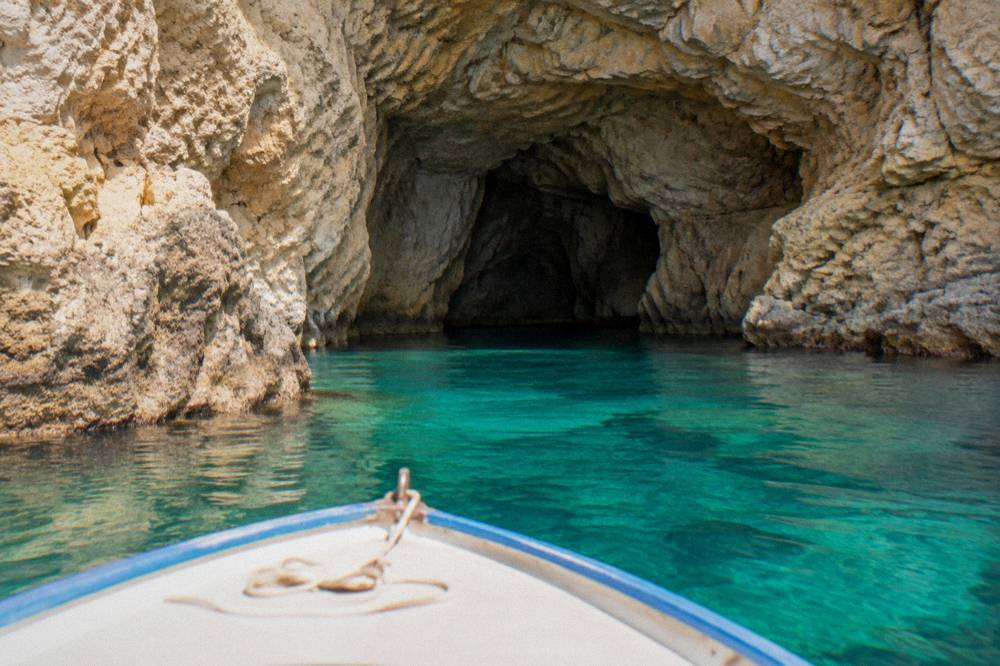
One summer caution that changed recently: Grotta della Poesia at Roca Vecchia banned bathing and diving in summer 2026, and non-residents of Melendugno paid a 5 euro ticket to view it; the 2027 rules had not been announced. The Torre dell'Orso page covers that stretch of the Adriatic in detail.
What Will Two Days In Lecce Cost?
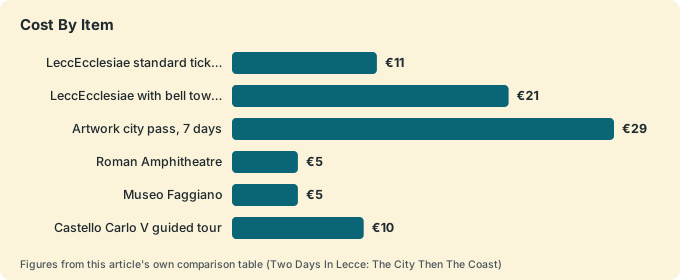
Sight tickets for two days run about 26 to 36 euro per adult if you buy the 11 euro LeccEcclesiae ticket plus the amphitheatre, Museo Faggiano and the Castello tour individually, or 29 euro for the seven-day Artwork city pass covering the LeccEcclesiae sites with the bell tower and extras; transport adds a few euro per train leg, and the tourist tax is collected by your accommodation.
The city pass, at 29 euro for seven days, suits exactly this kind of short stay: it outlives the visit window, which matters if a return trip happens within the week. Buying piecemeal is cheaper only if the bell tower and the extras are skipped. Food is modest: the named pasticciotto price is 2.20 euro, and lido days on the coast, if day two turns into a beach day, ran 15 to 35 euro per day for an umbrella and two sunbeds at San Cataldo in 2026 and 25 to 60 euro at Torre dell'Orso, per the Udicon and Adoc consumer surveys, with prices changing by year.
| Item | Cost | Basis |
|---|---|---|
| LeccEcclesiae standard ticket | 11 EUR | Official chieselecce.it tariff |
| LeccEcclesiae with bell tower | 21 EUR | Official tariff |
| Artwork city pass, 7 days | 29 EUR | Omnia listing |
| Roman Amphitheatre | 5 EUR | Musei Puglia listing |
| Museo Faggiano | 5 EUR | Museum tariff page |
| Castello Carlo V guided tour | 10 EUR | Castle site |
| Lido day, umbrella and 2 beds, San Cataldo | 15-35 EUR | 2026 Udicon/Adoc surveys |
| Tourist tax | Top reported rate 5 EUR/night | Comune di Lecce; confirm at booking |
No hotel rate belongs on this page: verified seasonal ranges for Lecce accommodation were not found, so the accommodation line stays open and readers should compare live prices at booking. The how expensive is Lecce page gathers what is known.
When Is The Best Time For A Two-Day Lecce Trip?
The sweet spots for a two-day Lecce trip are May to June and September to October, when the ERA5 reanalysis 1991-2020 shows mean highs of 23 to 28 C in May and June and 21 to 26 C from September to October, with rainfall falling to 18 to 40 mm in the dry months against 91.3 mm in October and 93.7 mm in November; July and August bring 31 C highs and the coastal crowds of the Salento summer.
November carries the highest monthly rainfall in the table, 93.7 mm, and July the lowest, 15.3 mm. Winter visits are perfectly workable for the baroque, with January mean highs of 12.4 C, but the sea drops to about 14 C in February, against 25 to 27 C at the August peak. The best time to visit Lecce and Lecce weather pages carry the full monthly table.
| Period | Mean high (ERA5 1991-2020) | Rain | Two-day fit |
|---|---|---|---|
| March-April | 15.4-18.6 C | 54.6-64.9 mm | Good for churches, cool sea |
| May-June | 23.4-28.2 C | 18.0-39.9 mm | City and coast both work |
| July-August | 31.0-31.3 C | 15.3-18.1 mm | Sea at 25-27 C, busiest coast |
| September-October | 21.8-26.4 C | 58.9-91.3 mm | Sea still 20-22 C in October |
| November-February | 12.4-17.3 C | 59.0-93.7 mm | City-only plan, low light |
What Should You Know Before Arriving In Lecce?
Before arriving, know that Lecce has no commercial airport and the gateway is Brindisi (BDS), about 47.6 km and 43 minutes by road, with an airport bus at 6.50 euro one way in about 40 minutes; the historic centre is a camera-policed ZTL on weekdays and all day Sunday, so a rental car should be parked outside the centre and your accommodation asked about plate registration.
The ZTL cameras run on weekdays from about 20:00 to 10:00 and 13:00 to 16:30, and all day on Sundays and holidays, with fines of 83 to 332 euro; the hours are reported rather than guaranteed, and Porta Napoli's varco is always closed. The practical fix is the Park Liberty car park, 466 spaces near the centre, or the SGM blue zones at roughly 1.10 euro an hour. The ZTL and parking page and the getting around Lecce page carry the detail.
Two more planning facts. The emergency number in Italy is 112, and the country is a Schengen member using the euro. The FSE regional trains that carry day two, to Gallipoli, Otranto via Maglie and Galatina, charge 1.30 euro for a 1 to 10 km hop rising to 5.40 euro for 51 to 60 km, so the coast legs are pocket change by rail standards.
Common Questions About Two Days In Lecce
Is two days in Lecce enough?
Yes, for the city itself plus one coastal excursion. The old town's churches, squares and underground sights fit into one full walking day, and day two covers Gallipoli, Galatina or Otranto by train, bus or guided trip. A third day adds a second coastline or a northern Puglia town.
What is the best two-day Lecce itinerary?
Day one: Piazza Sant'Oronzo and the amphitheatre, Piazza del Duomo on the LeccEcclesiae ticket, Santa Croce, Palazzo dei Celestini and Porta Napoli, then Museo Faggiano or the synagogue basement. Day two: Gallipoli and Galatina on the Ionian side, or Otranto on the Adriatic, by FSE train or a guided day trip.
Can you visit the coast from Lecce in one day?
Yes. Direct FSE trains reach Gallipoli in about 1h18 to 1h43 and Galatina in about 38 to 55 minutes, and Otranto is reachable with a change at Maglie in about 1h33 to 2 hours. In summer the Salento in Bus network adds coastal lines; it ran 13 June to 13 September in 2026.
Do you need to book LeccEcclesiae tickets in advance?
The ticket is sold at Piazza Duomo 5 and at Basilica di Santa Croce, and tourist access pauses during services. In the shoulder and summer seasons, buying at the quieter opening hour of 9:00 shortens the wait; there is no timed entry requirement published.
Is Lecce walkable in two days?
Entirely. The historic centre is flat and compact, with no sight more than about fifteen minutes on foot from another. Bikes and rickshaw tours exist for the outer reaches such as the Villa Comunale and the city gates.
What does a day trip to Gallipoli from Lecce cost by train?
The direct FSE train from Lecce to Gallipoli starts at about 5 euro each way, with journeys of about 1h18 to 1h43. The old town and its bridge are free to wander; the Castello di Gallipoli's ticket price was not published in the sources checked, so confirm locally.
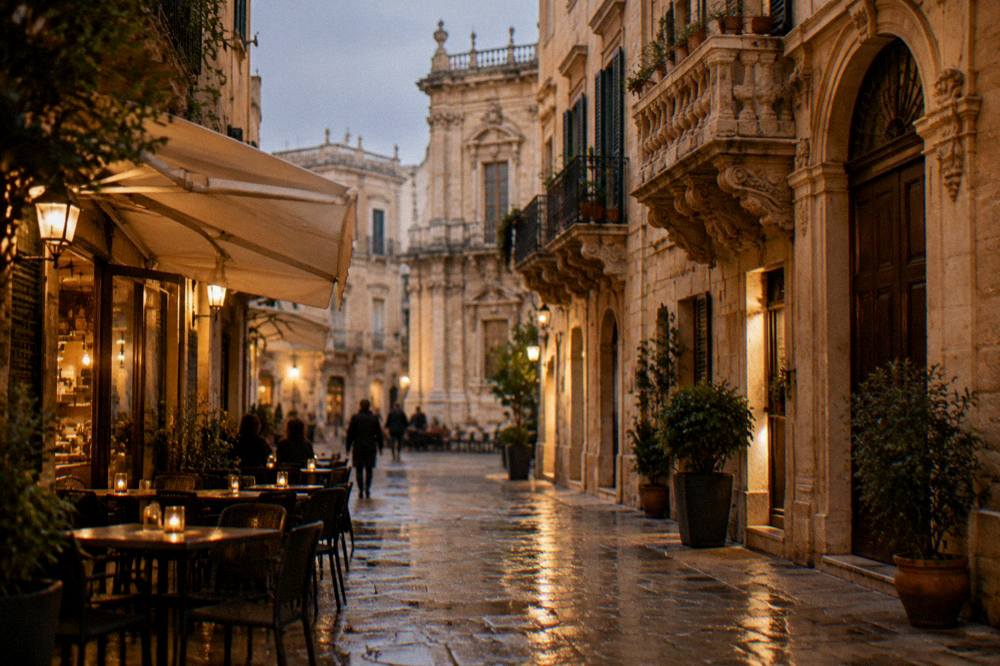
The final evening of a two-day stay belongs to the passeggiata: Piazza Sant'Oronzo under the lights, a caffe in ghiaccio from a bar with roots in the 1880s, and the facades of the centro storico doing what pietra leccese does at dusk, glowing. Readers extending the trip should compare the one-day Lecce itinerary for a compressed version, the Puglia itinerary for the regional picture, or the answers page on how many days Lecce needs. Whatever the length, Lecce Travel Guide keeps the verified hours, tickets and transport for every stop on this plan.