How Many Days Are Needed In Salento?
A planning answer for Salento, the peninsula around Lecce in Puglia: how many days you need, what fits in three, five and seven, and how the seasons change the maths.
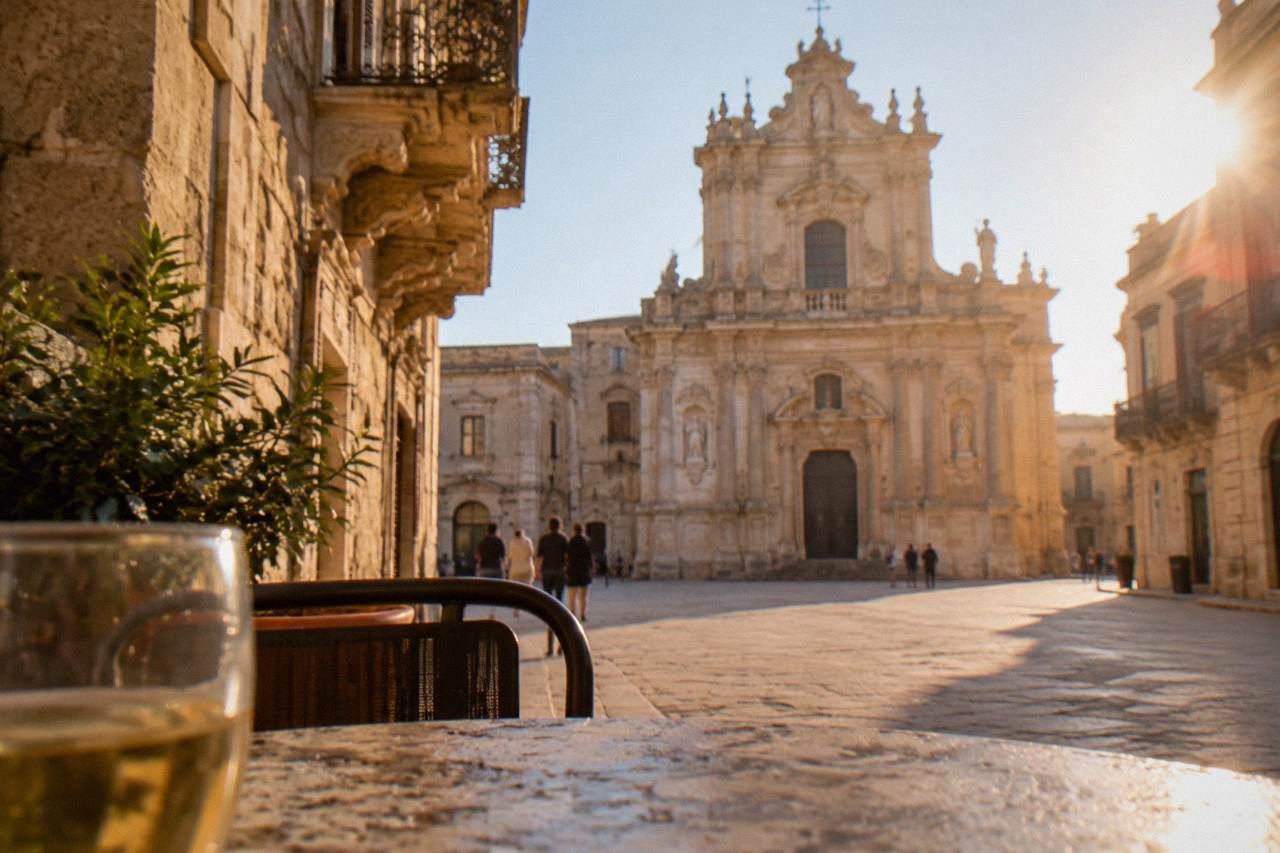
Salento is the southern half of Puglia, the flat peninsula that forms the heel of Italy, and Lecce is its capital: a baroque city of honey-coloured pietra leccese limestone that sits a few kilometres inland, with the Adriatic to the east and the Ionian to the west. That geography is the whole answer to the days question. The old town of Lecce itself is compact, but the peninsula it anchors runs from Ostuni country in the north to Santa Maria di Leuca at the southern tip, roughly 83 km and about 78 minutes of free-flow driving from Piazza Sant'Oronzo, and the distances add up faster than a map suggests.
How Many Days Are Needed In Salento?
Five days is the number that fits Salento comfortably: two for Lecce itself, including its churches and underground sights, then one day each for the Adriatic side, the Ionian side, and one inland town such as Galatina or Specchia. Three days works if you cut one coast entirely, and a week is the version that adds beach time without rushing. Anything under three days and you are really visiting Lecce, not Salento.
The distinction matters because Lecce and Salento are not the same trip. Lecce's historic centre can be walked end to end in under half an hour, but the region's highlights are scattered across two coastlines and a dozen small towns. The Salento itinerary planner breaks the peninsula into sequential days, and its structure reflects the reality: each day is built around one direction of travel, because criss-crossing the peninsula wastes hours.
Distances explain the arithmetic. Otranto is 46.7 km and about 44 minutes from central Lecce, Gallipoli 41.0 km and about 41 minutes, and Leuca 83.2 km and about 78 minutes. Those are free-flow drive times, computed by routing engine, not summer traffic. Add parking, and a two-town day is realistic while a four-town day is a blur.
What Can You Realistically See In Three Days In Salento?
Three days covers Lecce plus one coast and one inland town: day one for the historic centre and the LeccEcclesiae church circuit, day two for either Otranto or Gallipoli with a swim stop, and day three for Galatina and a second look at whichever coast you skipped or a slower morning in Lecce. You will not do both seas justice in three days, so pick the Adriatic or the Ionian and commit.
Day one belongs to the city. The LeccEcclesiae combined ticket covers the Duomo and crypt, the Basilica di Santa Croce, San Matteo, Santa Chiara and the Antico Seminario with its sacred art museum, 11 euro standard and valid 15 days, per the official chieselecce.it ticket page. The Castello Carlo V interior is guided-tour only at 10 euro, and the Roman Amphitheatre, visible free from Piazza Sant'Oronzo, charges 5 euro to enter. That is a full day on its own, and it is the day that justifies the Lecce Travel Guide treatment of the city rather than a drive-by.
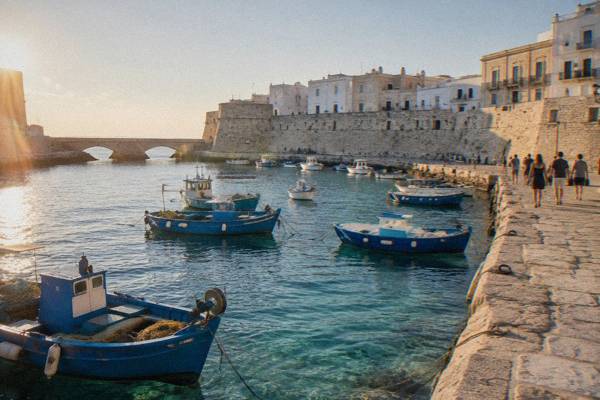
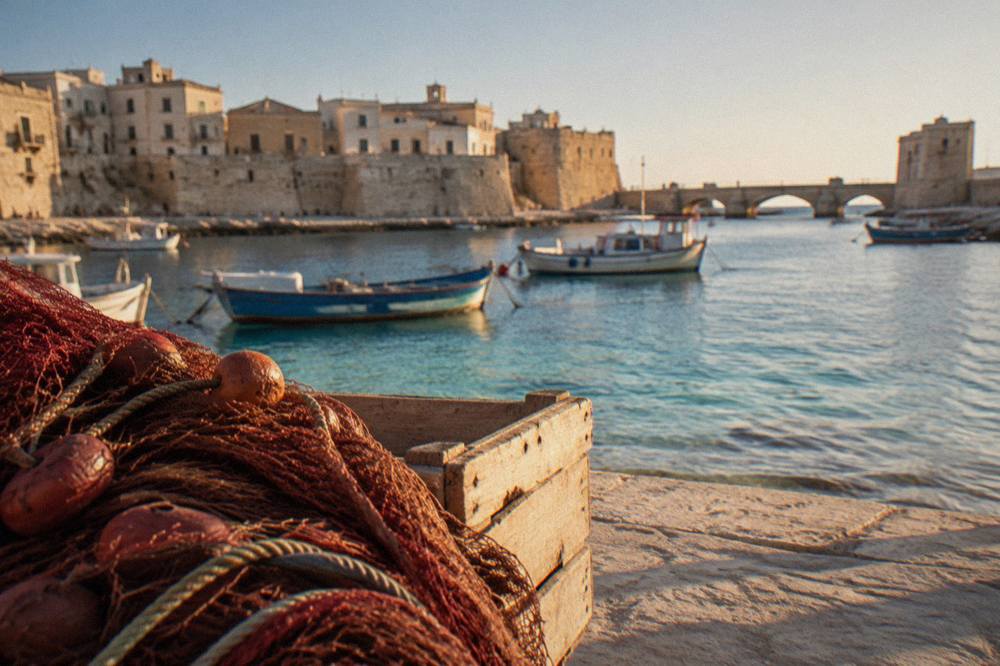
Day two is the coast choice. Otranto, on the Adriatic, pairs its cathedral, with the floor mosaic dated 1163 to 1165 by the priest Pantaleone, with the seafront and the Castello Aragonese, whose seasonal tickets run about 6 euro in low season to about 12 euro in high season per the comune's listing. Gallipoli, on the Ionian, is an old town on a limestone island joined to the mainland by a bridge. Both are under 45 minutes from Lecce by car.
Day three closes the loop. Galatina is 25.7 km and about 29 minutes from Lecce, and its Basilica of Santa Caterina d'Alessandria is free to enter, with split morning and afternoon hours. If a third day feels thin for one town, the answer at the end of this page's planning chain, how many days do you need in Lecce, argues for giving the city the extra time instead.
Without a car, the maths tightens further. The FSE rail network reaches Gallipoli direct in about 1h18 to 1h43 and Otranto with a change at Maglie in about 1h33 to 2h or more, per the operator's schedules. A guided day tour is the other car-free route: the full-day Gallipoli, Galatina and Otranto tour loops all three towns in one departure, and its live listing carries the current price and calendar.
Is Five Days The Right Balance For Lecce And The Coast?
Five days is the balance point: it gives Lecce two unhuried days, one day to the Adriatic towns of Otranto and Castro, one to the Ionian around Gallipoli and Pescoluse, and one flexible day for Galatina, a boat trip or a beach afternoon. Five days also absorbs the things that eat short itineraries, like the midday pause when shops close and churches restrict visits during services.
The structure writes itself once you accept one coast per day. An Adriactic day can chain Otranto, the Grotta Zinzulusa at Castro, which runs guided visits year-round at 7 euro full and 4 euro reduced per the cave's own page, and, in summer, the Torre dell'Orso beaches. An Ionian day chains Gallipoli's island old town with the sands south of it, including Pescoluse, the Blue Flag 2026 stretch marketed as the Maldives of Salento, with free sections alongside lidos.
The fifth day is where Salento's character lives: the inland. Specchia and Galatina are the two names that keep coming up, and both are short hops. Specchia is inland Salento's decorated village; Galatina holds the frescoed basilica and the pasticciotto origin claim, which belongs to Pasticceria Ascalone, in Galatina itself, and which historians dispute, so treat 1745 as the shop's story rather than settled fact.
Beach days deserve honest budgeting too. Lido prices from the 2026 consumer surveys run 15 to 35 euro for an umbrella and two beds in June on the Lecce-adjacent Adriatic stretches, rising to 50 to 60 euro in August at Torre dell'Orso and San Foca, with the Ionian generally dearer. Free beach access exists along both coasts, so a five-day plan can mix paid lido days with free ones.
Is A Week In Salento Too Long?
A week in Salento is not too long, and in July or August it is arguably the right length: three days of towns and sights, two full beach days on separate coasts, one day for the southern tip at Santa Maria di Leuca, and one spare day for weather, festas or simply repeating what worked. Outside summer, five days plus a Matera extension is a stronger week than seven inside the peninsula.
The southern tip is the part short trips lose. Leuca is where the two seas meet, 83.2 km from Lecce, and the basilica at De Finibus Terrae is free to enter on split hours. Boat trips along the Leuca caves run from the harbour, though operators and prices were not found in official sources, so confirm on the quay. Pairing Leuca with Gallipoli on a single southern day is feasible at 42 km apart, but it is a driving day, not a lingering one.
A July or August week also collides with the festival calendar, in a good way. The Notte della Taranta Concertone in Melpignano ran on 22 August 2026 in its 29th edition, Lecce's Festa dei Santi Patroni ran 23 to 26 August 2026, and the San Rocco festa at Torrepaduli ran 14 to 17 August 2026. The 2027 dates had not been announced. A week is the minimum stay that can absorb one of these without sacrificing a planned day.
The non-summer alternative extends outward. Matera, in neighbouring Basilicata, is 176.9 km and about 161 minutes by road from Lecce, or roughly 3h30 to 4h10 by bus, and the Lecce and Matera itinerary shows how the two pair. Travellers weighing the wider region should also read how many days in Puglia is enough, since Puglia beyond Salento adds Alberobello, Ostuni and the Itria Valley, each 66 to 91 minutes away by car.
How Do The Seasons Change The Number Of Days You Need?
Summer needs more days than the shoulder months, because beach days, festival evenings and slower midday hours all compete for the same hours; May, June after mid-month, September and October deliver the same town itinerary in three to five days with cooler walking. The Salento in Bus network only runs mid-June to mid-September, so a car-free trip outside that window must lean on the FSE trains and lose the beach shuttle advantage.
The climate table is the planning tool. The ERA5 reanalysis for Lecce, 1991-2020, shows mean daily highs of 28.2 C in June, 31.0 C in July and 31.3 C in August, with rainfall collapsing to 15.3 mm in July and 18.1 mm in August. September stays warm at 26.4 C but rain jumps to 58.9 mm, and October's 91.3 mm makes it a two-activity-per-day month rather than a beach month, though the sea is still 20 to 22 C.
| Month | Mean High C | Rain mm | What It Means For The Day Count |
|---|---|---|---|
| May | 23.4 | 39.9 | Full town itinerary plus beach afternoons, three to four days |
| July | 31.0 | 15.3 | Add beach days and evening festas, six to seven days |
| August | 31.3 | 18.1 | Peak season: lido prices peak and patronal festas fill late August |
| September | 26.4 | 58.9 | Shoulder sweet spot, four to five days, sea still warm |
| October | 21.8 | 91.3 | Towns only, three to four days, winter church hours apply |
Winter is a different product. Lecce's Fiera dei Pupi, the papier-mache Christmas fair, traditionally runs early to late December at the ex-Convento dei Teatini on the 2025 pattern, and the LeccEcclesiae sites switch to winter hours, 9:00 to 18:00. A cold-month Salento trip is really a Lecce trip with occasional town hops, and three days does it.
Common Questions About Days In Salento
How Many Days Are Needed In Salento?
Five days is the comfortable answer: two in Lecce, one per coast, and one flexible day inland or on the water. Three days works for Lecce plus a single coast; a week suits July and August, when beach days and festival evenings justify the extra time.
Can You See Salento In Two Days?
Only its outline. Two days covers Lecce's centre plus one full-day loop, either Otranto-side or Gallipoli-side, and nothing more. Treat two days as a Lecce trip with one excursion, and see the guides on getting around Salento's towns for what is reachable without a car.
Is Salento Doable Without A Car?
Partly. FSE trains reach Gallipoli direct in about 1h18 to 1h43 and Otranto with a change at Maglie, and the summer-only Salento in Bus network, which ran 13 June to 13 September in 2026, links the beach towns for 1.10 to 5 euro. Leuca by bus takes roughly 2h to 2h15. Outside summer, a car or guided day tours cover far more ground; the getting around Lecce guide has the detail.
Should You Stay In Lecce Or On The Coast?
For a trip under a week, Lecce is the practical base: it is the region's rail hub, holds the evening life, and sits roughly equidistant from both coasts, about 40 minutes by car to either Otranto or Gallipoli. For a pure beach week in July or August, a coastal base on one sea is calmer, and the Salento beaches guide compares the two shorelines.
Is One Day Enough For The Southern Tip At Leuca?
One long day, yes. Leuca is about 78 minutes by car from Lecce, the basilica is free, and cave boats run from the harbour, though their prices are not published in official sources and should be confirmed at the quay. Pair it with Gallipoli or Otranto on the way back, since both sit on the return axis.
For a five-day stay with only a day or two of the peninsula's roads available, the guided loops below compress what would otherwise be three separate driving days into single departures, and their live listings carry current prices and dates.
Between the two group departures, one slower option deserves its own slot on a five-day plan.
Whichever count you settle on, book the town-loop days before the beach days: the coast forgives a change of plan, but a cathedral mosaic, a cave visit and a baroque sunset over Piazza Sant'Oronzo are the appointments worth locking in first.