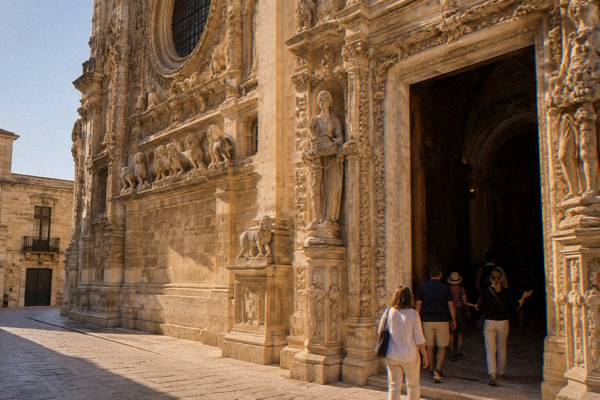
Villa Comunale: The Public Gardens Of Lecce
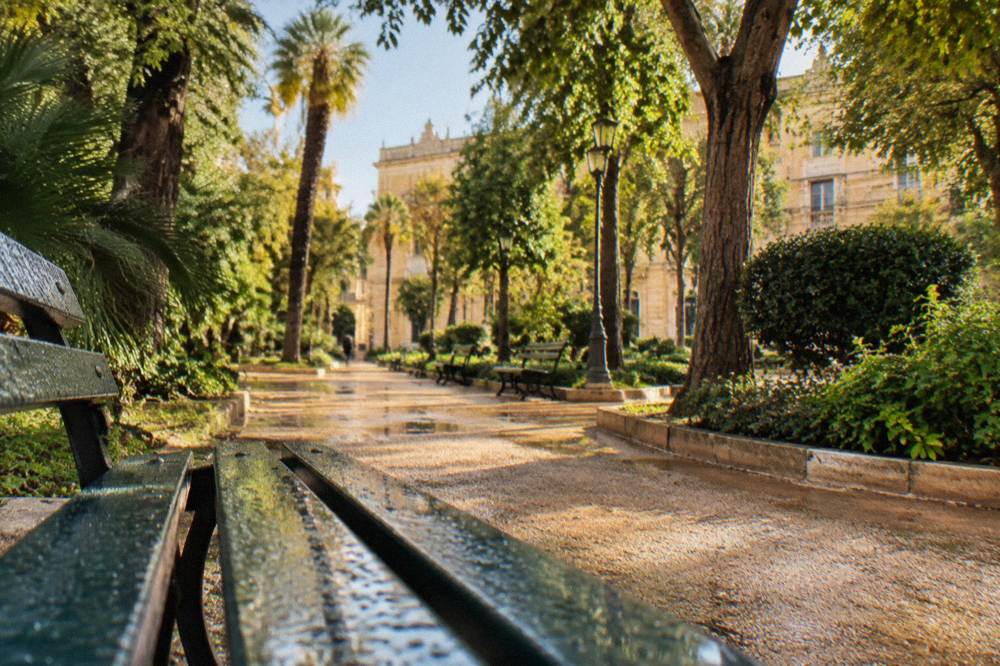
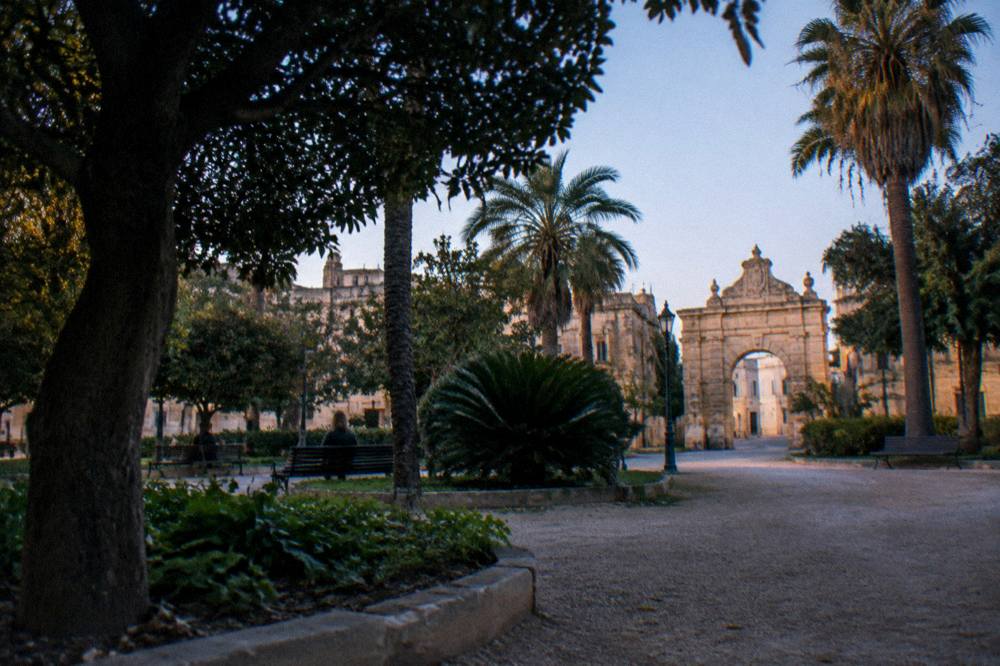
The Villa Comunale, formally the Giardini Pubblici Giuseppe Garibaldi, is Lecce's main public garden: a free, unticketed green space at the edge of the historic centre, next to Porta Napoli and the Palazzo dei Celestini.
Short answer
The Villa Comunale in Lecce is a free public garden open as open urban space, with no ticket, no queue and no dress code. It sits beside Porta Napoli and Piazza Sant'Oronzo is a short walk away, which makes it the natural mid-morning pause on any baroque itinerary.
The Villa Comunale in Lecce, formally the Giardini Pubblici Giuseppe Garibaldi, is the city's principal public garden, a free open green space at the western edge of the historic centre of this baroque Salento capital in Puglia, southern Italy. The comune of Lecce lists it among the city's open public spaces with no ticket and no restricted access, alongside Porta Napoli and Piazza Sant'Oronzo. It lies a few steps from the Triumphal Arch of Porta Napoli and the flank of the Palazzo dei Celestini, which makes it the natural breathing space between two of the city's stone landmarks. This page covers what the gardens are, what surrounds them, when to walk them, and how they fit into a day in Lecce.
What Is The Villa Comunale In Lecce?
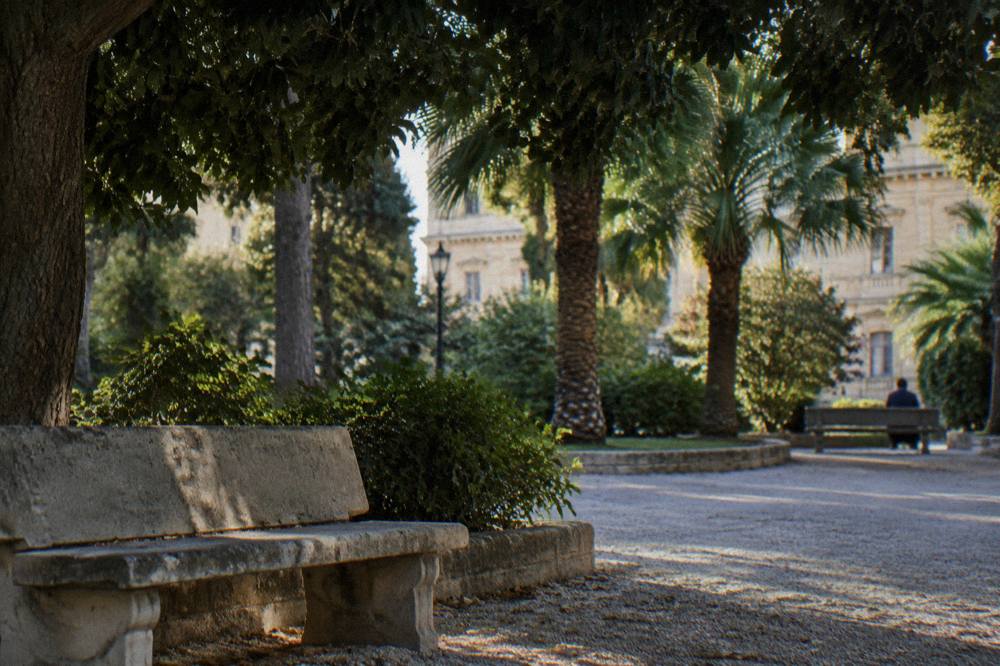
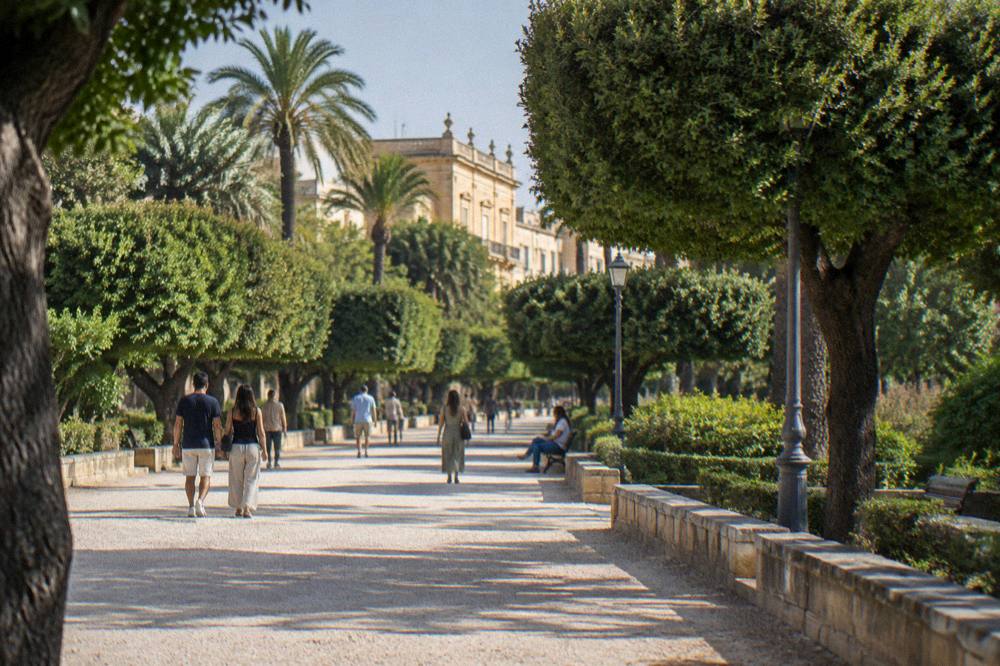
The Villa Comunale is Lecce's main public garden, a free and unticketed municipal green space laid out with tree-lined avenues, benches and planted beds, sitting directly beside Porta Napoli at the boundary between the baroque historic centre and the nineteenth-century expansion towards the station. The comune's own listings describe it as open public space, the same category as the piazze and the city gates, with no hours board of the kind ticketed monuments keep, no entry fee and no guided-tour requirement. In a city whose church circuit and castle both run on timed tickets, that matters for planning.
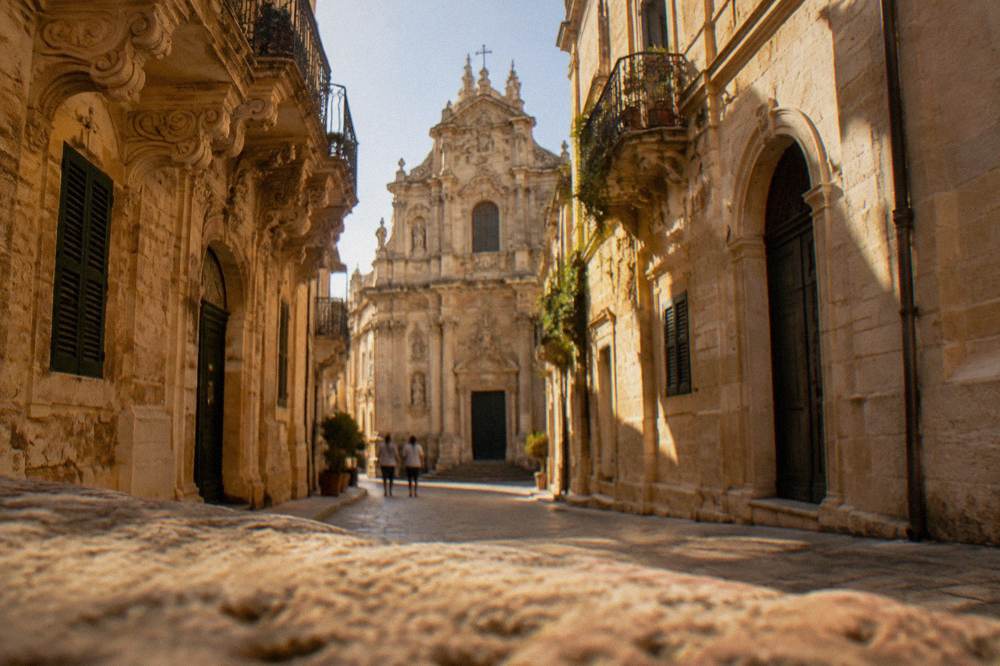
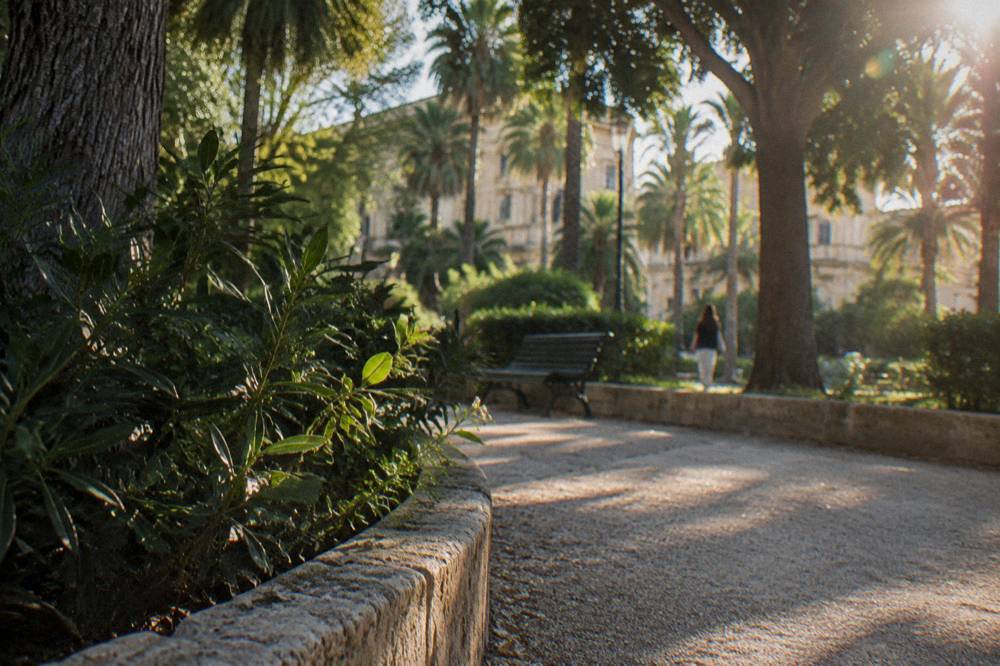
The garden is the city's front room in a practical sense. Lecce is built of pietra leccese, a soft Miocene limestone that hardens on exposure, and nearly every surface in the historic centre is that honey-coloured stone. The Villa Comunale is where the stone gives way to green: gravel walks, mature Mediterranean planting, and shade.
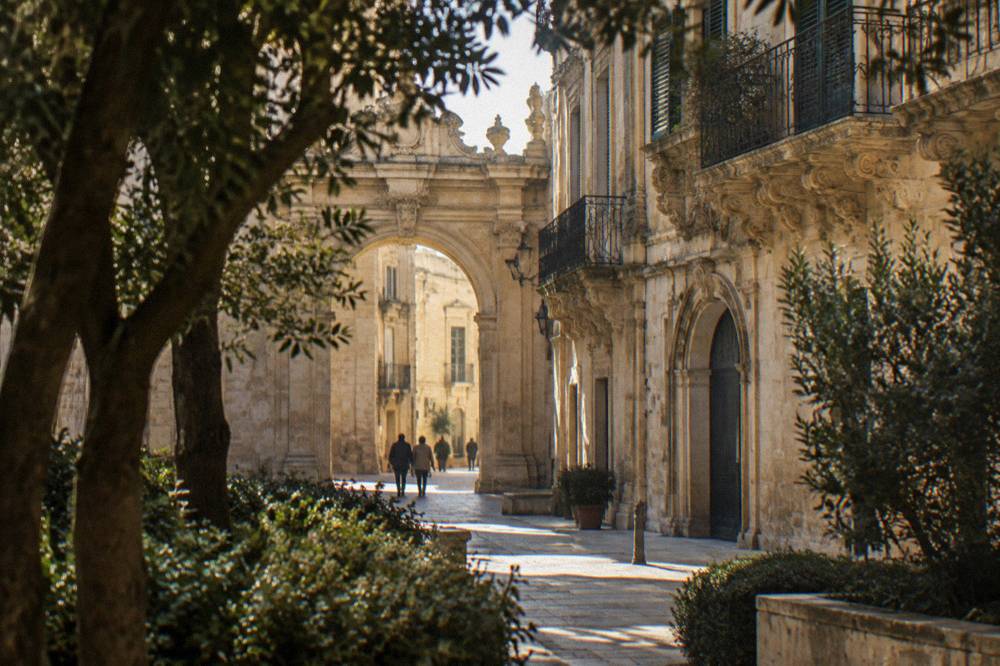
What the gardens do have, verifiably, is position. Porta Napoli, the triumphal arch raised in honour of Charles V, stands at the garden's edge. The facade of the Palazzo dei Celestini, now the seat of the prefecture, closes the view on the historic-centre side, its courtyard free to enter during administrative hours. The garden therefore works as the hinge between an entire baroque walk and the nineteenth-century city, and it is the point where a visitor arriving on foot from the station first meets the old town's stone.
For context on the city around it, the Lecce Travel Guide homepage gathers the main sightseeing pages, and the overview of things to do in Lecce places the gardens among the free sights.
Is The Villa Comunale Free, And When Can You Walk In?
Yes, the Villa Comunale in Lecce is free, and the comune lists it as open public space with no ticket, no booking and no guided-tour requirement, which distinguishes it from the city's two flagship interiors: LeccEcclesiae churches run on a combined ticket and Castello Carlo V admits the interior by guided tour only. No published opening or closing hours for the garden appear in the official sources this site uses, and Italian municipal gardens of this type typically follow daylight; the practical rule is to treat it as a daytime space and confirm locally if an evening visit matters.
The contrast with the neighbours is the useful planning fact. The comune's free list runs: Villa Comunale, Porta Napoli, Piazza Sant'Oronzo, the Roman Amphitheatre seen from above in the piazza, and the exterior facades generally. Everything with a door, more or less, has a tariff. The garden is where a day in Lecce costs nothing, needs nothing and cannot be sold out.
A note on the word "free" in Lecce: a free walking tour on a tip basis is a service local guides offer, but this desk found no verified tip-based walk listing for Lecce, so no platform is named here and no tip amount is printed. Confirm with the guide directly if you meet one.
The paid neighbours, for comparison, with figures from their own pages:
| Sight beside or near the gardens | Access model | Ticket |
|---|---|---|
| Villa Comunale | Open public space | Free |
| Porta Napoli | Open public space | Free |
| Palazzo dei Celestini courtyard | Prefecture seat, courtyard access | Free |
| LeccEcclesiae churches (Duomo, Santa Croce, San Matteo, Santa Chiara, Antico Seminario) | Combined ticket, 15 days valid | 11 EUR standard, 21 EUR with bell tower |
| Castello Carlo V | Guided tour only, courtyard free | 10 EUR full tour |
| Museo Faggiano | Ticketed museum | 5 EUR |
What Sits Around The Villa Comunale In Lecce?
Within a short walk of the Villa Comunale stand Porta Napoli at the garden's edge, the Palazzo dei Celestini and its free courtyard, Piazza Sant'Oronzo with the Roman Amphitheatre, the MUST city museum, and the whole ticketed church circuit of the historic centre, so the garden functions as the pivot of a walking loop rather than a destination in itself. The comune's own itineraries treat the area around Porta Napoli and the Celestini as one continuous sightseeing zone, and the garden is the green interval inside it.
Starting from the garden's southwest corner, Porta Napoli is the immediate landmark, a single triumphal arch in pietra leccese that once carried the city walls' ceremonial entrance. Crossing towards the centre brings you to the Palazzo dei Celestini, whose courtyard is free during weekday administrative hours; the interior is a government seat and not a visitor attraction. Continue east and the streets open onto Piazza Sant'Oronzo, where the Roman Amphitheatre is visible free from the piazza and visitable below street level on a 5 EUR ticket outside Monday. The comune's pages on the amphitheatre note its new accessible entrance following the recent PNRR-funded restoration.
The church circuit clusters within the same walking radius. The Duomo complex closes Piazza del Duomo to traffic, Santa Croce's facade rises off Via Giuseppe Libertini, and San Matteo, Santa Chiara and the Antico Seminario with its MuDAS museum complete the LeccEcclesiae set. All are covered by the combined ticket described below. Deeper background on individual buildings sits in the site's pages on the Basilica di Santa Croce and Piazza del Duomo, and the story of the amphitheatre on the Roman Amphitheatre page.
If you prefer a guide to the stone rather than a map, a private baroque and underground tour of Lecce covers the facades and the subterranean rooms in one walk; Check availability if that format suits your group.
Sights Within An Easy Walk Of The Gardens
The distances here are all inside the historic centre, where the whole sightseeing zone is compact:
| Sight | Relation to the gardens | Ticket model |
|---|---|---|
| Porta Napoli | At the garden's edge | Free |
| Palazzo dei Celestini courtyard | One block into the centre | Free courtyard |
| Piazza Sant'Oronzo and amphitheatre view | Short walk east | Free from above, 5 EUR inside |
| MUST, Museo Storico Città di Lecce | Inside the centre, closed Monday | 5.50 EUR full |
| Duomo, crypt and bell tower | Piazza del Duomo | LeccEcclesiae ticket |
| Basilica di Santa Croce | Off the Celestini axis | LeccEcclesiae ticket |
| Museo Faggiano | Historic-centre lanes | 5 EUR |
How Does The LeccEcclesiae Ticket Work For The Churches Near The Gardens?
The LeccEcclesiae combined ticket, sold at Piazza Duomo 5 and at the Basilica di Santa Croce, covers the Duomo with its crypt, Santa Croce, San Matteo, Santa Chiara and the Antico Seminario with the MuDAS art-sacra museum, costs 11 EUR standard or 21 EUR including the bell tower, stays valid for 15 days, and admits children under 12 free, according to the chieselecce.it information page. Reduced rates apply for ages 12 to 17 and a family option exists, and the same page lists daily hours of 9:00 to 21:00 in summer and 9:00 to 18:00 in winter, with last entry fifteen minutes before close.
The 15-day validity is the detail worth underlining. A visitor who walks the gardens on a Monday, when the castle and the amphitheatre are closed, can still hold an open church ticket and return across successive days. The Diocese of Lecce also pauses tourist visits during religious services and enforces a shoulders-and-knees dress code, both stated on its access information.
| LeccEcclesiae option | Full | Reduced (12 to 17) | Family |
|---|---|---|---|
| Standard (no bell tower) | 11 EUR | 5 EUR | 24 EUR |
| Full ticket with bell tower "Up!" | 21 EUR | 13 EUR | 48 EUR |
A separate Artwork city pass at 29 EUR adds the LeccEcclesiae sites, the bell tower and extras such as the Palazzo Vernazza experience across seven days, per the pass issuer's listing. Whether that pays off depends on how many of the extras a trip includes; the churches alone are cheaper on the standard ticket.
A guided option that bundles the walk with free entry to the Duomo and the Basilica di Santa Croce also exists:
When Is The Best Time Of Day To Walk The Villa Comunale In Lecce?
The practical answer comes from the climate normals: the ERA5 reanalysis for Lecce, 1991-2020, puts the mean daily high at about 31 C in July and August, so in high summer the garden's shade is a mid-morning and late-afternoon pleasure, while from November through February, when mean highs sit between about 12 and 15 C and monthly rainfall peaks at 93.7 mm in November, any daylight hour works but a rain jacket matters more than shade. The garden's role in an itinerary shifts with those numbers rather than with any published schedule.
In July and August the whole centre of Lecce reorganizes its day around heat. Church sites on the LeccEcclesiae circuit keep long summer hours to 21:00, the amphitheatre splits its summer day into morning and evening openings, and the garden's benches and tree cover slot naturally into the dead hours of the early afternoon, when shops observe the riposo pause and stone surfaces hold the day's heat. The sea at San Cataldo, the nearest beach about 13 km east, runs about 25 to 27 C at the August peak, which is one reason the coast pulls visitors out of the city at midday in summer.
Spring and autumn are the seasons the numbers argue for. May's mean high is about 23 C on about 40 mm of rain for the month; October's is about 22 C, but on 91 mm. September cools to a mean high near 26 C. Winter visits are perfectly workable, and the site's page on Lecce in winter covers what stays open; the garden in December sits beside the Fiera dei Pupi, the papier-mache Christmas fair that ran on an early-to-24-December pattern in its latest edition.
| Month | Mean high C | Mean low C | Rain mm |
|---|---|---|---|
| Jan | 12.4 | 6.7 | 63.1 |
| Mar | 15.4 | 8.3 | 64.9 |
| May | 23.4 | 14.7 | 39.9 |
| Jul | 31.0 | 21.7 | 15.3 |
| Sep | 26.4 | 19.0 | 58.9 |
| Nov | 17.3 | 11.7 | 93.7 |
Figures are ERA5 reanalysis, 1991-2020, a modelled grid cell rather than a weather-station record.
Can You Visit The Villa Comunale With Kids Or On A Rest Day?
Yes, and that is largely what it is for: as a free, open, vehicle-light green space beside Porta Napoli, the Villa Comunale works as the reset button of a Lecce itinerary, the place where a family with children, a tired walker or anyone between timed tickets can stop without a tariff, a booking or a dress code. The comune categorizes it with the city's open public spaces, and no source this site uses lists any restriction on casual use, picnicking customs aside, which in Italy are governed by local ordinance rather than by the garden itself.
Lecce as a whole is a walkable, low-stress city for families. The historic centre is compact and largely pedestrianized, the sea is a bus ride away on SGM line 32 to San Cataldo, about 20 minutes from the City Terminal, and the summer Salento in Bus network, which ran 13 June to 13 September in 2026, extends the reach to the beaches of the peninsula. A morning of baroque facades, an hour in the garden, and an afternoon bus to the coast is a realistic family day, and the site's Lecce in one day itinerary builds exactly that kind of loop through the centro storico.
For children old enough to enjoy making something, Lecce's papier-mache craft is the city's signature hands-on activity, taught in workshops in the historic centre using paper, glue and molds in the traditional manner:
Between the garden, the free piazze and a craft session, a rest day in Lecce can be built almost entirely outside the ticketed circuit. The free things to do in Lecce page rounds up the rest of that list.
What Craft And Food Traditions Grow Around The Gardens' City?
The city around the Villa Comunale is the home of two living traditions: cartapesta, the papier-mache craft of Lecce, whose workshops cluster in the historic centre near Santa Croce and whose museum sits inside Castello Carlo V on the guided tour, and the Salento table, from the pasticciotto that Pasticceria Ascalone of Galatina says it created in 1745 to the caffe in ghiaccio con latte di mandorla credited to Antonio Quarta of Lecce's Quarta Caffe from the 1940s to the 1950s. Both are documented traditions with named claimants, and both are within walking distance of the garden's benches.
The cartapesta connection is physical. The Castello Carlo V's Museo della Cartapesta is included in the castle's 10 EUR guided tour, and the comune's cultural listings describe practical workshops with masters using the traditional materials. The Fiera dei Pupi, the Christmas fair of papier-mache figures, runs in December in the ex-Convento dei Teatini on the early-to-24-December pattern of its latest edition. The full story sits on the site's page on Lecce papier-mache. The Ascalone 1745 date is the shop's own claim, and historians dispute it, so it is reported here as exactly that.
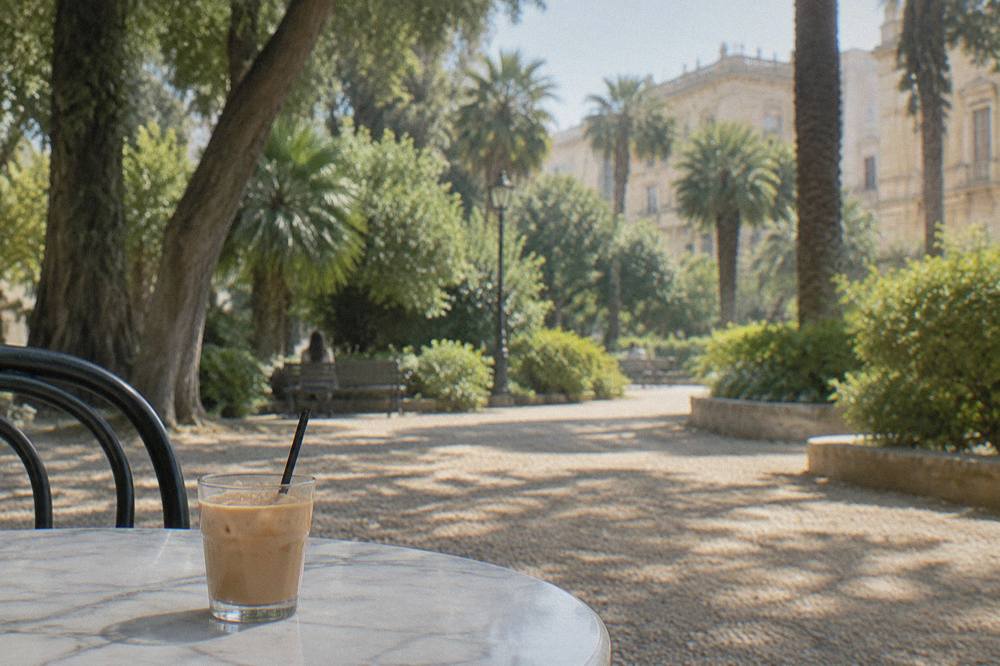
The food traditions are equally local. Pasticceria Natale, family-run since 1978, lists a Santo Pasticciotto at 2.20 EUR, and Caffe Alvino in Piazza Sant'Oronzo traces its roots to about 1880; both are a few minutes' walk from the garden. The caffee in ghiaccio con latte di mandorla, espresso over ice with almond milk, entered Italy's traditional-products list in 2026, per the regional press coverage of the recognition. After a garden pause, a tasting of the local Negroamaro-based Salento wines rounds out the city's flavours:
| Tradition | Where it lives | Access |
|---|---|---|
| Cartapesta museum | Castello Carlo V | Included in 10 EUR guided tour |
| Cartapesta workshops | Historic centre, near Santa Croce | Bookable classes |
| Fiera dei Pupi | Ex-Convento dei Teatini, December | Public fair |
| Pasticciotto | Pasticceria Natale and city bakeries | Santo Pasticciotto 2.20 EUR at Natale |
| Caffe in ghiaccio con latte di mandorla | City bars including Caffe Alvino | Traditional product, PAT-listed 2026 |
| Salento wine, Negroamaro and Salice Salentino | Tastings in the old town | Bookable tastings |
How Do You Reach The Villa Comunale From The Station Or By Bus?
Lecce's historic centre, including the Villa Comunale and Porta Napoli, is reached on foot from Lecce train station in a walk across the nineteenth-century city, or on the SGM city buses, whose ordinary 60-minute ticket costs about 1.20 EUR, or about 1.50 EUR bought on board, with a day ticket at about 3 EUR, per the SGM tariff pages, and the ZTL camera zone keeps the historic centre largely closed to non-resident cars on weekdays and all day Sundays. The garden's position at the old town's western edge makes it the natural first stop when arriving from the station side.
The road facts matter more here than anywhere else in the centre. The comune's ordinances define a camera-policed ZTL with restricted windows on weekdays and 24-hour control on Sundays and holidays, Porta Napoli's gate is always closed to unauthorized traffic, and fines run from 83 to 332 EUR. Anyone driving in should ask their accommodation to register the plate, use a peripheral car park such as Park Liberty with 466 spaces near the centre, and walk in. The site's pages on car rental and driving in Lecce and the Lecce ZTL and parking rules carry the detail.
From farther afield, the rail and bus figures in the site facts apply: Brindisi airport connects to Lecce by airport bus in about 40 minutes at 6.50 EUR one way, and Trenitalia links Lecce to Bari, Brindisi, Ostuni and Rome, while the FSE regional lines serve Gallipoli, Galatina and Otranto with a change at Maglie for the last. The station-side arrival walk then delivers you almost directly to the gardens before the baroque circuit begins.
A relaxed way to cover the centre's lanes and the underground rooms in one guided pass:
What Else Should You Know Before You Go?
Three practical facts shape a visit around the Villa Comunale: Lecce has no commercial airport, so Brindisi (BDS) is the gateway; the city is not a UNESCO World Heritage Site, as "Salento and the Barocco Leccese" sits only on Italy's Tentative List from 2006; and the tourist tax exists, collected by accommodation at rates that from 1 April 2026 top out at 5 EUR per person per night in the highest category in high season, so confirm the amount for your booking at check-in. None of these affects the garden itself, which costs nothing, but all three affect the trip around it.
The city's event calendar also brushes the gardens' neighbourhood. The Festa dei Santi Patroni, honouring Oronzo, Giusto and Fortunato, filled the centre with processions and illuminations from 23 to 26 August in 2026, and the Notte della Taranta Concertone in nearby Melpignano closed the same month on 22 August. December brings the Fiera dei Pupi. None of the 2027 dates had been announced, so check the comune's calendar before planning around a festival.
The garden, in the end, is the pause in that calendar: free, open, shaded and positioned exactly where the nineteenth-century city hands you over to the baroque one. Walk it between Porta Napoli and the Celestini courtyard, then let the church circuit, the amphitheatre and a pasticciotto fill the rest of the day.
Common Questions About The Villa Comunale In Lecce
Is the Villa Comunale in Lecce free?
Yes. The comune of Lecce lists the gardens, formally the Giardini Pubblici Giuseppe Garibaldi, as open public space with no ticket, alongside Porta Napoli and Piazza Sant'Oronzo. There is no booking and no guided-tour requirement.
What is the Villa Comunale in Lecce?
It is the city's principal public garden, a green space of tree-lined avenues and benches at the western edge of the historic centre, beside Porta Napoli and the Palazzo dei Celestini. It marks the boundary between the baroque old town and the nineteenth-century expansion towards the station.
How far is the Villa Comunale from Piazza Sant'Oronzo?
The garden sits a short walk west of Piazza Sant'Oronzo, past the Palazzo dei Celestini and Porta Napoli, all within the compact historic centre where the whole sightseeing zone is covered on foot.
When is the best time to visit the Villa Comunale in Lecce?
In July and August, when the ERA5 reanalysis for Lecce, 1991-2020, puts the mean daily high at about 31 C, use the shade in mid-morning and late afternoon. From November to February, mean highs sit between about 12 and 15 C and November is the wettest month at 93.7 mm, so any daylight hour works with a jacket.
Can children enjoy the Villa Comunale in Lecce?
Yes. As a free, open green space it works as the rest stop of a family itinerary, between the church circuit, the papier-mache workshops of the historic centre and the SGM line 32 bus to San Cataldo beach, about 20 minutes from the City Terminal.
Is the Villa Comunale listed as a UNESCO site?
No, and neither is Lecce. "Salento and the Barocco Leccese" sits on Italy's UNESCO Tentative List from 2006 only; the city is not inscribed on the World Heritage List.