Lecce In Winter: What Stays Open
Lecce in winter is mild, damp and quietly open: the baroque churches switch to shorter hours, the beaches empty out, and the old town keeps going. Here is what stays open.
Short answer
Lecce in winter stays largely visitable: the LeccEcclesiae church circuit runs daily 9:00 to 18:00, Castello Carlo V keeps guided tours, and mean highs sit around 12 to 18 C between December and February, with November the dampest month at 93.7 mm of rain.
Lecce, the baroque capital of Salento in Puglia, southern Italy, does not shut between November and February. The honey-coloured pietra leccese facades stay exactly where they are, the churches switch to a shorter winter timetable, and the restaurants keep serving pasticciotto warm from the oven. What changes is the rhythm: fewer daylight hours, the possibility of rain, and a coast that swaps sunbeds for empty sand. This page sets out, from primary sources and modelled climate data, what a winter visit to Lecce actually looks like, beginning with the things to do in Lecce that survive the season intact.
How Cold And Wet Is Lecce In Winter?
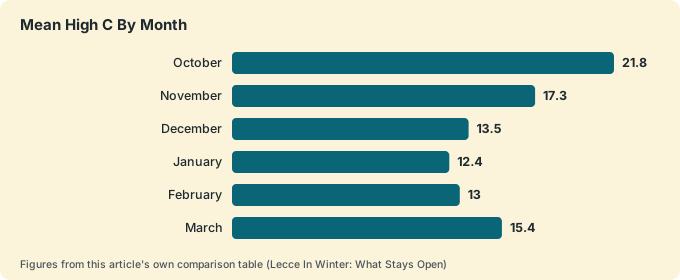
Lecce winters are mild and damp, not frozen: the ERA5 reanalysis for 1991 to 2020 puts the January mean high at 12.4 C with a mean low of 6.7 C, rising to a February mean high of 13.0 C, while December brings 75.5 mm of rain and November carries the highest monthly total of the year at 93.7 mm. The same reanalysis totals about 652 mm of rain across the full year. These are modelled grid-cell normals, not weather-station records.
In practice that means layers, a real coat for the evenings, and something waterproof from late October onwards. Rain in Salento tends to arrive in heavy spells rather than all-day drizzle, and the same month can hold both bright, still afternoons and soaked mornings. October already averages 91.3 mm in the ERA5 table, so the damp season starts well before winter proper.
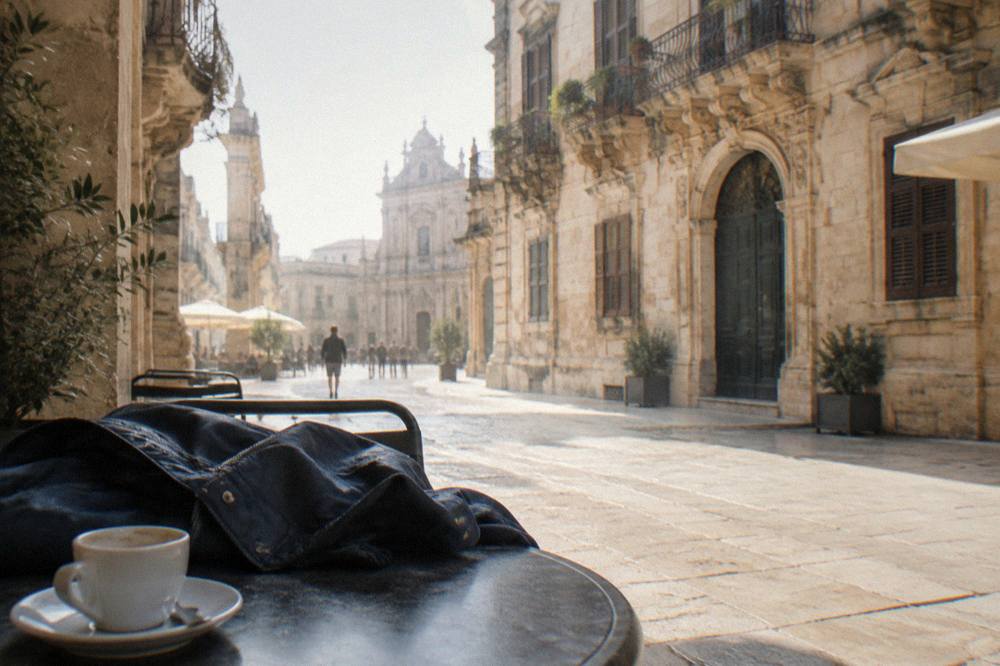
Daylight is the other constraint. By late December the sun sets early enough that facades photographed at 17:00 sit in blue shadow, and churches that close at 18:00 leave little slack after a long lunch. Planning the outdoor sightseeing before the middle of the afternoon, and moving to museums, tastings and dinners afterwards, is the single most useful winter adjustment.
The full monthly picture, from the same ERA5 reanalysis, 1991 to 2020:
| Month | Mean High C | Mean Low C | Rain mm |
|---|---|---|---|
| October | 21.8 | 15.4 | 91.3 |
| November | 17.3 | 11.7 | 93.7 |
| December | 13.5 | 8.2 | 75.5 |
| January | 12.4 | 6.7 | 63.1 |
| February | 13.0 | 6.8 | 59.0 |
| March | 15.4 | 8.3 | 64.9 |
For a deeper monthly breakdown, see the site's Lecce weather guide, and for how winter compares with the rest of the year, the best time to visit Lecce.
What Stays Open In Lecce In Winter?
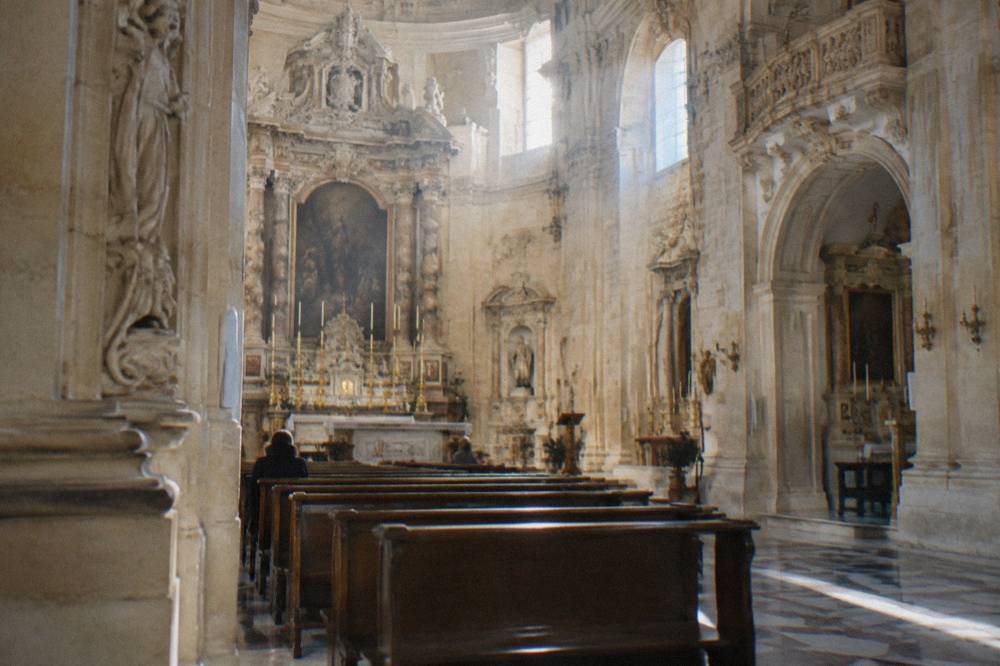
The core sights keep winter hours: the LeccEcclesiae church circuit (Duomo, Santa Croce, San Matteo, Santa Chiara and the Antico Seminario) runs daily 9:00 to 18:00 from October to March, Castello Carlo V continues guided tours with winter slots from 10:30, and Museo Faggiano keeps its year-round 9:30 to 20:00 day. The standard church ticket is 11 euro, valid 15 days, with under 12s free.
That church circuit is the backbone of a Lecce trip and it does not pause for the season, only shortens its evening. Chieselecce's own info page sets the winter timetable and the last entry 15 minutes before closing. During religious services tourist access is limited, and the dress rule, shoulders and knees covered, applies year-round. The mechanics of the ticket are covered in detail in the site's LeccEcclesiae ticket guide.
The Castello is a guided-tour visit, never a free wander: the castle's own page gives a 10 euro full tour price and winter tour times of 10:30, 11:30, 12:30, 16:00, 17:00, 18:00 and 19:00 from October to May, closed Mondays. Only the courtyard is free. The papier-mâché museum inside is part of the tour.
| Sight | Winter Hours | Ticket | Notes |
|---|---|---|---|
| LeccEcclesiae churches | Daily 9:00 to 18:00 | 11 euro full, 5 euro reduced 12-17 | Valid 15 days, under 12 free |
| Castello Carlo V | Tue to Sun, winter tour slots | 10 euro full tour | Courtyard free, closed Mon |
| Museo Faggiano | Daily 9:30 to 20:00 | 5 euro | Year-round hours |
| Roman Amphitheatre | Tue to Sun 10:00 to 17:00 | 5 euro full, 2 euro reduced | Closed Mon in winter |
| MUST | Tue to Sun, 9:00 to 20:00 Fri-Sun | 5.50 euro | Closed Mon |
| Museo Castromediano | Tue to Sun 9:00 to 19:00 | Reported free | Closed Mon |
A rainy winter afternoon is also the right moment for the indoor circuit: Museo Faggiano's layered archaeology under one palazzo, the amphitheatre seen from Piazza Sant'Oronzo for free, and the museums above. Several of these appear on the site's list of free things to do in Lecce.
What Are The Best Things To Do In Lecce In Winter?
The best winter activities in Lecce are the ones that pair short daylight with indoor depth: a guided baroque and underground walking tour, a wine tasting in a 15th-century courtyard, and a papier-mâché workshop, all of which run as bookable products year-round and none of which depends on beach weather or long evenings. The baroque facades themselves are best seen in low-angle winter light.
The baroque walk is the natural first move. Lecce's signature architecture rewards an interpreter, and the underground rooms add a layer the street cannot show. The related tour on this site covers exactly that combination, and its listing shows current price, rating and availability:
Wine is the second winter anchor. Salento's Negroamaro-based reds, including the Salice Salentino DOC established in 1976, are cold-season wines, and a seated tasting turns a short afternoon into something substantial. A tasting held in a 15th-century courtyard in the old town is listed below.
Then there is the craft. Lecce's cartapesta tradition, the papier-mâché of religious figures built up from paper, glue and molds, is a workshop practice as much as a museum subject, and the site's papier-mâché guide covers its history. Winter, with its closed evenings, is when a hands-on class makes most sense.
Three winter-friendly picks from the site's roster:
Beyond booked products, plain walking fills a winter day well. The old town is compact and the baroque detail rewards slow looking; the site's free things to do in Lecce list and the broader baroque guide map the facades worth seeking out on foot. For food-led wandering, the restaurants guide and the what to eat in Lecce page carry the winter menu.
Can You Swim Near Lecce In Winter?
No, realistically: reported sea temperature is about 14 C in February against 25 to 27 C at the August peak, and the lido services that define the Salento beach day operate around the summer season, with free beach access open year-round where beaches are open. San Cataldo, the nearest beach to Lecce, is about 13 km away on the Adriatic.
The Salento in Bus beach shuttles, lines 101, 104 and 107/108 among them, ran only 13 June to 13 September in 2026. In winter the coast is a destination for walking and photography rather than swimming, and reaching it means the ordinary transport network. The sites' beaches near Lecce and Salento beaches guides cover the full picture.
| Period | Reported Sea Temperature | Swimming Realism |
|---|---|---|
| August peak | 25 to 27 C | Full beach season |
| October | 20 to 22 C | Mild, lidos closing |
| February | About 14 C | Dry-land visits only |
| June | About 22.5 C | Season restarting |
What the coast offers in winter instead is emptiness. An off-season walk along the sand at San Cataldo or the low sandy shore towards Torre Chianca is a short bus or car trip, and it is one of the few times the Salento shoreline is quiet. Confirm any winter access arrangements locally, since services and parking rules follow the season. The full index of guides sits on Lecce Travel Guide.
What Should You Eat In Lecce In Winter?
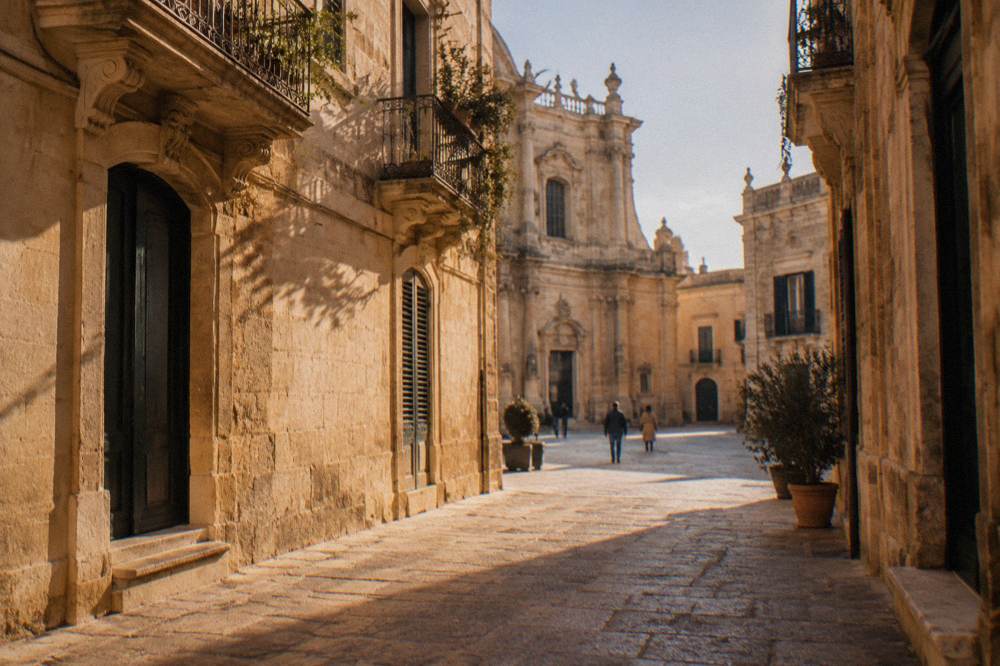
Winter eating in Lecce means the warm and heavy end of the Salento repertoire: pasticciotto served hot from the oven, rustico leccese as a savoury pastry snack, ciceri e tria chickpeas with fried pasta, and puccia bread, alongside the region's Negroamaro and Primitivo reds that suit cold evenings, with the iced caffè in ghiaccio con latte di mandorla remaining the year-round local coffee ritual.
Pasticciotto is the signature. Custard and shortcrust, best when the crust is still warm, it is claimed as a 1745 invention by Pasticceria Ascalone, a shop in nearby Galatina, though historians dispute the date; treat it as the shop's story rather than settled fact. The site's dedicated pasticciotto guide unpacks the history and where the pastry sits in the local day.
The wine side deserves equal winter weight. Salice Salentino, the DOC established in 1976 across the Lecce and Brindisi provinces, is built on Negroamaro, and a structured tasting is one of the few indoor activities that improves with early darkness. This courtyard tasting is the related pick:
For the full menu, from rustico to frisa soaked and dressed the Salento way, the what to eat in Lecce guide carries the detail.
Is Christmas A Good Time To Visit Lecce?
Christmas is one of Lecce's distinctive seasons: the Fiera dei Pupi, the traditional papier-mâché and Christmas fair, runs in early to mid December following the pattern of early to 24 December in 2025, the churches hold their winter timetable with services taking precedence, and the light installations of the period give the baroque centre a second evening life, though 2026 fair dates had not been published at the point of the latest available listings.
The Fiera dei Pupi is the headline. Held at the ex-Convento dei Teatini in past editions, it is the shop window of the cartapesta craft that fills Lecce's workshops with nativity figures and saints all year. The comune's participation notices confirm the fair's December window; the site's papier-mâché guide explains what the craft actually involves.
| Winter Period | What Happens In Lecce |
|---|---|
| Early to mid December | Fiera dei Pupi and Christmas artisan fairs, per the 2025 pattern |
| Late December | Christmas services in the Duomo; tourist access pauses during them |
| 23 to 26 August | Festa dei Santi Patroni Oronzo, Giusto and Fortunato (for contrast planning) |
| February | Carnival events in the Lecce area |
Holy Week is the other liturgical season worth noting, with Good Friday processions in the city, though winter visitors should remember these follow the Easter calendar rather than a fixed date. Dress rules in the churches apply throughout, and service times pause tourist entry.
What Day Trips Work From Lecce In Winter?
The inland and small-city day trips all work in winter: Galatina is 25.7 km away, about 29 minutes by car, with a direct FSE train in 38 to 55 minutes; Gallipoli is 41.0 km, about 41 minutes by car or 1h18 to 1h43 by direct FSE train; and Otranto is 46.7 km, about 44 minutes by car, with a train change at Maglie taking 1h33 or more. Matera, in neighbouring Basilicata, is a bus trip of about 3.5 to 4 hours.
Galatina is the easy one: the Basilica of Santa Caterina d'Alessandria is free to enter, with split morning and afternoon hours, and the town is also the pasticciotto claim's home. Otranto's cathedral mosaic, dated 1163 to 1165 by the priest Pantaleone, is if anything better in winter light, and independent visitors enter free while groups and guided visitors pay 2 euro under the rule in force since 1 March 2026. Gallipoli's old town, on its limestone island linked by a bridge, is a working fishing centre rather than a summer-only stage set.
| Destination | Distance From Lecce | Car, Free Flow | Public Transport |
|---|---|---|---|
| Galatina | 25.7 km | About 29 min | Direct FSE, 38 to 55 min |
| Gallipoli | 41.0 km | About 41 min | Direct FSE, 1h18 to 1h43 |
| Otranto | 46.7 km | About 44 min | FSE via Maglie, 1h33 or more |
| Castro | 47.4 km | About 48 min | FSE connections via Maglie |
| Brindisi | 39.8 km | About 35 min | Train, about 18 to 24 min |
| Ostuni | 78.3 km | About 66 min | Direct train, 39 to 51 min |
Grotta Zinzulusa at Castro runs guided visits year-round, at 7 euro full and 4 euro reduced, with winter visiting hours of roughly 10:00 to 15:00 or 16:30, which makes it one of the few coastal winter attractions. Opening hours for individual towns' sights are best confirmed locally before a winter trip, since timetables tighten outside the season. A guided day trip covering several towns in one loop is another winter option that removes the timetable question entirely; the site's day-trip pages list what runs.
Is Lecce In Winter Worth It Compared With Summer?
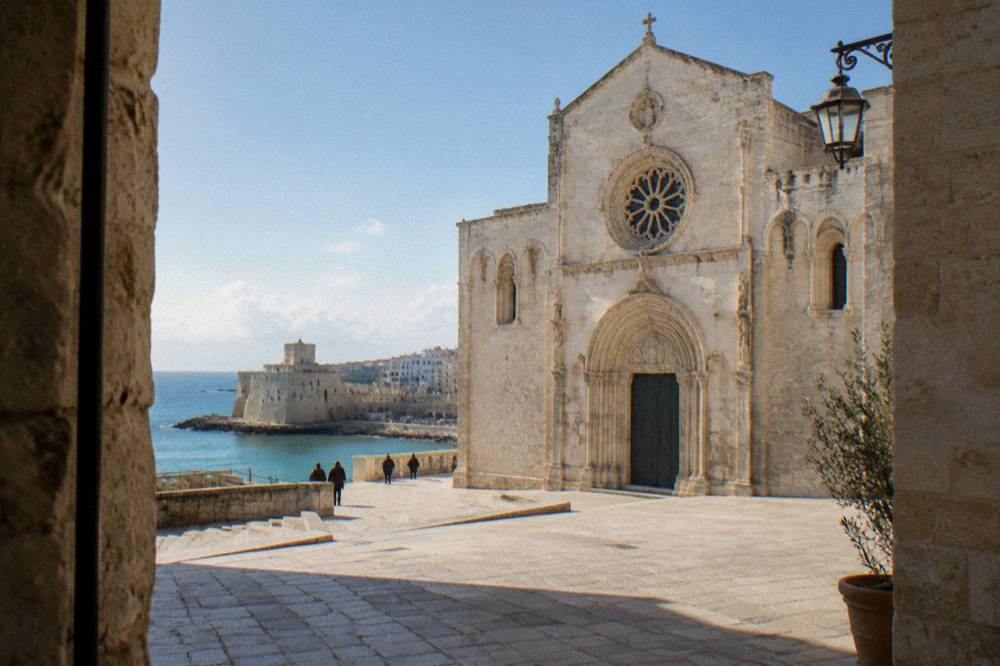
Winter Lecce trades beach weather for low crowds, shorter church hours and a calendar built around food, craft and indoor sightseeing, with mean highs of 12.4 to 15.4 C from December to March against 31.3 C in August; it suits travellers who come for the baroque architecture, the wine and the pastry rather than the coast, and who accept monthly rainfall that runs from 59.0 mm in February to 93.7 mm in November across the dampest stretch.
The trade is real on both sides. Summer brings the Notte della Taranta Concertone in nearby Melpignano, held 22 August 2026 in its 29th edition, and the patronal festa of 23 to 26 August, plus the full beach infrastructure. Winter brings quiet streets, unobstructed views of facades that in August sit behind festival crowds, and restaurant tables without contention. For a fuller comparison, the site's best time to visit Lecce page weighs the seasons month by month, and the warmest winter regions question addresses where Puglia sits in the national picture.
One cost note that applies regardless of season: Lecce charges a tourist tax, the imposta di soggiorno, collected by the accommodation per person per night, by category and season, from 1 April 2026; the top reported rate is 5 euro for 5-star high season, with short lets reported at 2.50 or 1.50 euro. Confirm the exact amount at booking, since nightly accommodation rates themselves are not published in a form this site can quote.
How Do You Get Around Lecce In Winter?
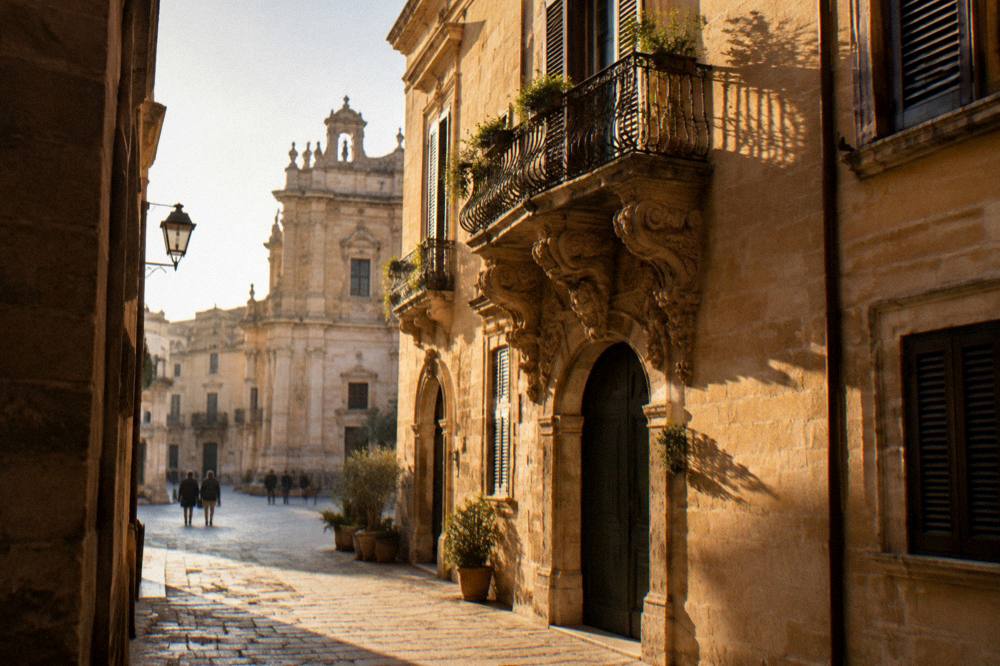
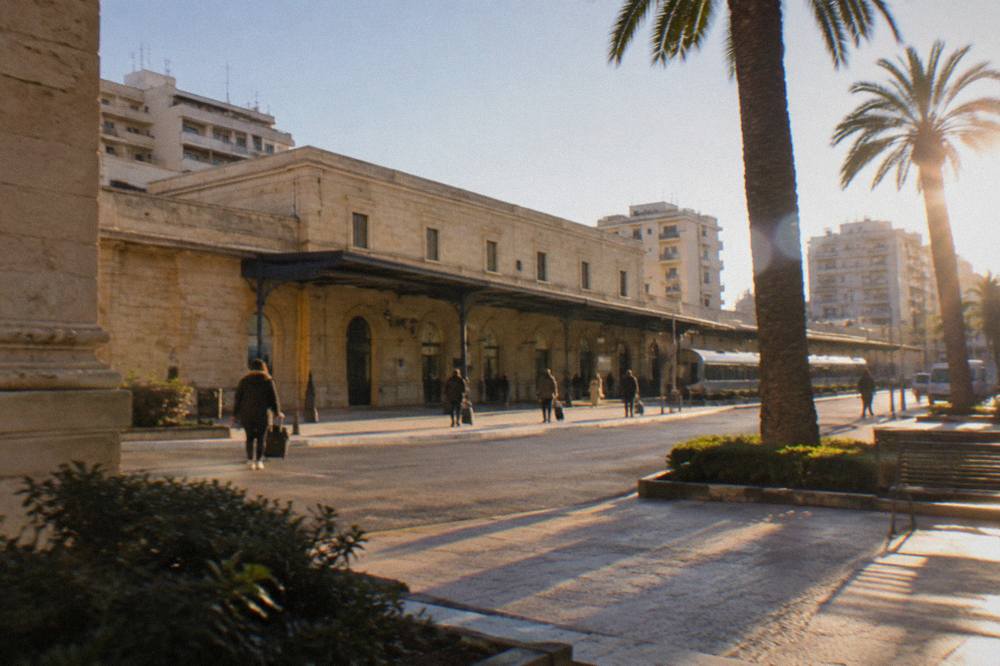
The compact historic centre is walkable and winter makes walking the default, with the ZTL camera zone restricting car entry to the old town, Park Liberty offering 466 underground spaces near the centre, SGM city buses running at about 1.20 euro for a 60-minute ticket, and the train station connecting to Bari in about 1h19 to 1h24 on fast trains and to Brindisi in 18 to 24 minutes, with Brindisi Airport reached by a 6.50 euro shuttle bus taking about 40 minutes.
The car question matters most at the edges of the day. The ZTL cameras run on weekdays in the reported midday and overnight windows, and Sundays and holidays around the clock, with fines of 83 to 332 euro; the hours are reported rather than guaranteed, so the standing advice is to ask the accommodation about plate registration before driving in. The site's getting around Lecce and driving and parking guides carry the detail.
Arriving in winter is the same operation as any other season: fly to Brindisi and take the shuttle, or ride the rails. The site's Brindisi airport to Lecce, how to get to Lecce, Bari to Lecce, Rome to Lecce and train station pages cover every common route.
What Should You Pack For Lecce In Winter?
Pack for mild, damp and changeable conditions rather than Alpine cold: a proper rain layer, warm layers for evenings that average 6.7 to 8.3 C as mean lows from December to February, comfortable waterproof-capable shoes for cobblestones, and one smarter outfit for restaurants and tastings, with nothing needed for beach or swim use given a reported February sea temperature of about 14 C.
The layering logic follows the tables above. A January afternoon can feel pleasant in sun at 12.4 C mean high and then drop fast after sunset. Churches require covered shoulders and knees, which in winter is a non-issue but still worth remembering for anyone planning a warm layer indoors. An umbrella that survives wind is worth more than a cheap folding one.
Late in any winter visit, once the days stretch, the same walking routes that carry this guide's picks start doubling as evening routes again. The trio below covers the indoor spine of a winter stay:
Common Questions About Lecce In Winter
Is Lecce worth visiting in winter?
Yes, for baroque architecture, food, wine and craft rather than beaches. The church circuit, the Castello tours, Museo Faggiano and the restaurants all keep winter hours, and the ERA5 reanalysis puts mean highs at 12.4 to 15.4 C from December to March.
Is Lecce warm in winter?
Mild rather than warm. ERA5 reanalysis for 1991 to 2020 gives mean highs of 12.4 C in January and 13.0 C in February, with mean lows of 6.7 to 6.8 C, and 59.0 to 75.5 mm of rain per month across December to February.
Are the churches in Lecce open in winter?
Yes. The LeccEcclesiae circuit runs daily 9:00 to 18:00 from October to March, with last entry 15 minutes before closing. Tourist access pauses during services, and the standard 11 euro ticket is valid 15 days.
Does it rain a lot in Lecce in winter?
November is the dampest month at 93.7 mm in the ERA5 reanalysis, with 75.5 mm in December, 63.1 mm in January and 59.0 mm in February. Rain tends to arrive in heavy spells.
Can you swim in Lecce in winter?
Not realistically. Reported sea temperature is about 14 C in February, and the summer lido services and the Salento in Bus beach shuttles, which ran 13 June to 13 September in 2026, do not operate in winter.
Is Christmas a good time in Lecce?
Yes. The Fiera dei Pupi, the papier-mâché Christmas fair, follows an early to mid December pattern, and the city's light installations extend the evenings, though the 2026 dates had not been published in the latest available listings.
Lecce in winter rewards exactly the travellers it suits: people who come for stone, food and short, serious evenings rather than sand. The churches open at nine, the last guided castle tour leaves in the early evening, and the pasticciotto comes out warm either way.