Lecce Baroque: How To Read A Facade
Lecce, the baroque capital of Salento in Puglia, southern Italy, dresses an entire old town in carved honey-coloured limestone. Here is how to look at it with a trained eye.
Short answer
Lecce Baroque is the local 17th-century architectural style carved from soft pietra leccese limestone, at its richest on the Basilica di Santa Croce, the Duomo and the churches of the centro storico; the LeccEcclesiae combined ticket covers five of the main church sites for 11 EUR and stays valid 15 days.
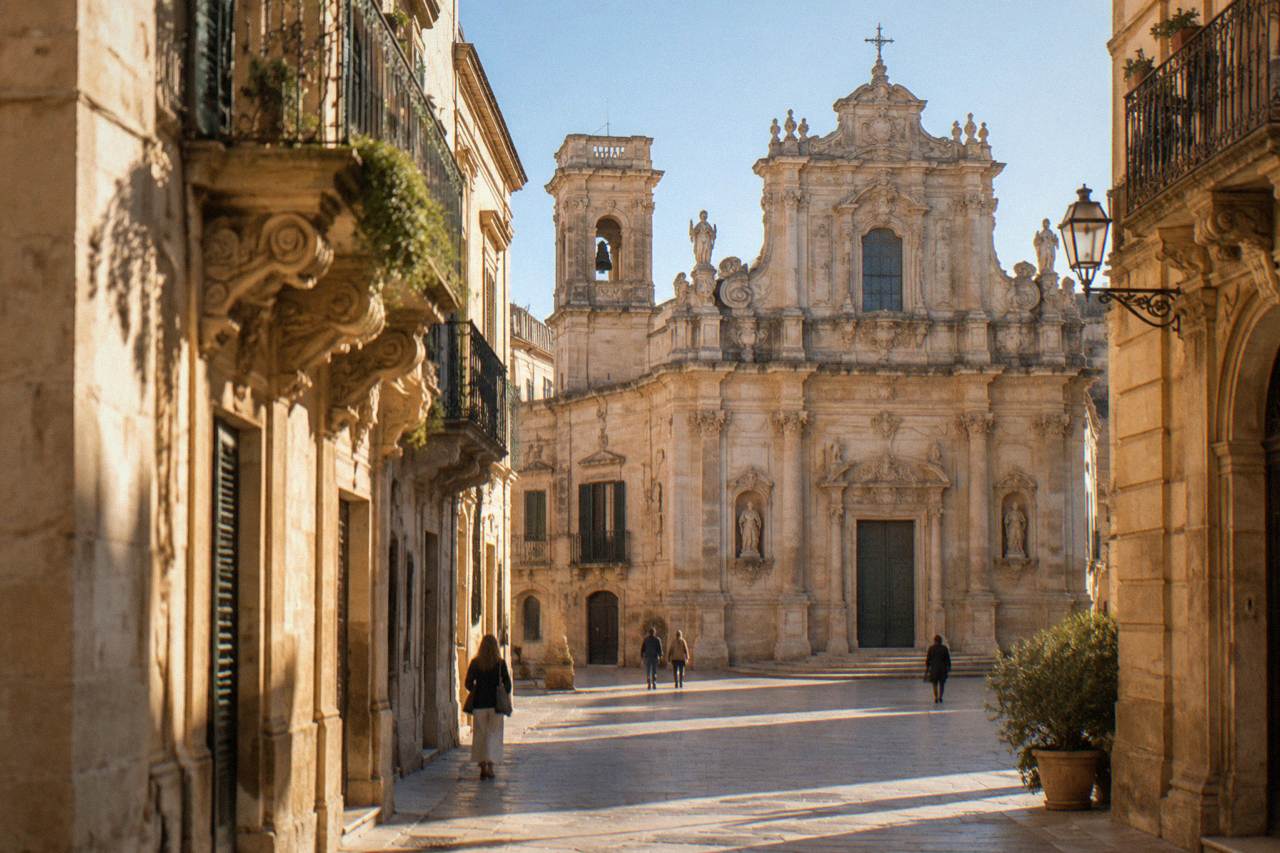
Lecce, in Puglia at the heel of Italy, is the baroque capital of Salento, and its old town is a single continuous display of carved limestone. The style the locals call barocco leccese turns window frames into garlands, pediments into waves and columns into stacked leaves, all cut from a stone soft enough to carve like wood. This guide explains what the style is, how to read a facade feature by feature, which buildings carry the richest work, and what the combined church ticket covers, so the city reads like a book rather than a blur of decoration. For the wider picture of the city, start with things to do in Lecce and the Lecce history overview.
What Is Lecce Baroque?
Lecce Baroque is the local version of the seventeenth-century baroque style, executed almost entirely in pietra leccese, a soft Miocene limestone that hardens on exposure, which allowed carvers to cut florid garlands, cherubs and animal masks on a scale and with a freedom that harder stones do not permit. The result is a dense, sunny, sometimes playful decoration that covers churches, palaces and gates across Lecce's historic centre. The city is often called the Florence of the South for this architecture, though who first coined the nickname is contested, so no single attribution is reliable here. What is not contested is the material: the geological reports on file with the comune describe pietra leccese as a calcarenite, soft and workable at the quarry, and it is that softness that made the style possible.
The decoration is not random. It follows the baroque logic of persuasion: surfaces that move, light that shifts across deep carving, and boundaries between storeys, windows and doors that dissolve into vines and scrolls. In Lecce the vocabulary leans further toward the grotesque and the natural world than in Rome or Naples, with grotesque masks, dolphins, bees and sunflowers recurring across facades. Scholars of the style note that this is decoration in the service of the Counter-Reformation church: abundance meant conviction.
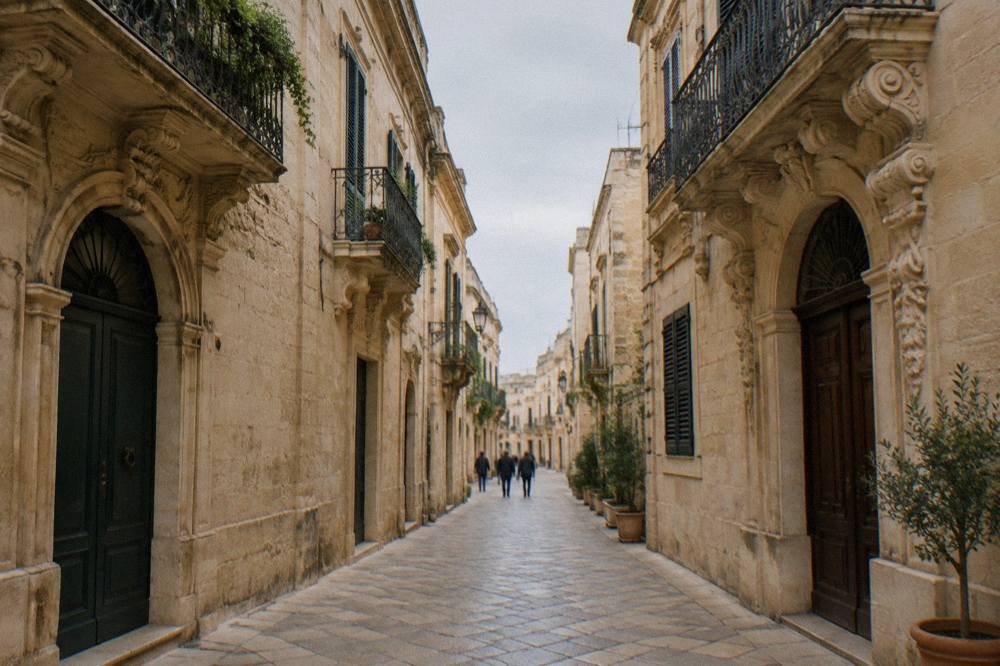
Two practical points follow for a visitor. First, the style is genuinely everywhere in the centro storico, so it costs nothing to walk it. Second, because the stone hardens only slowly, the carving reads differently at different times of day; late afternoon light rakes across the relief and doubles the depth of every garland.
How Do You Read A Baroque Facade In Lecce?
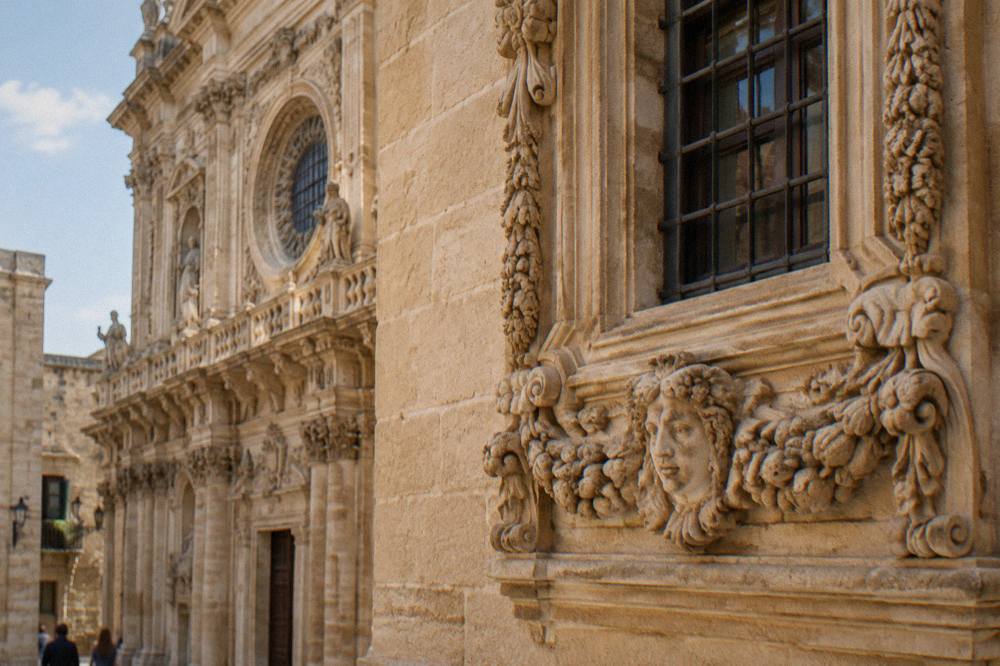
Read a Lecce Baroque facade from the bottom up in four layers: the portal and its columns, the window openings with their alternating straight and curved pediments, the connecting decoration of garlands and putti that dissolves the wall surface, and the crowning balustrade with its statues and vases. Once you can name those four layers, almost any facade in the old town becomes legible rather than merely ornamental.
The portal is the anchor. It is usually the deepest carving on the building, flanked by columns that are often stacked or twisted, and framed by an broken-scroll pediment whose two halves curl outward like waves. Above it, look at how the pediment deliberately fails to close: the gap, often filled with a crest, a statue or a window, is a signature baroque gesture that keeps the eye climbing.
The windows come next, and here Lecce has a trick worth knowing: on many facades the pediments over the windows alternate, one straight-sided triangle, then one curved segmental form, then straight again. That rhythm breaks the monotony of a long upper storey and is one of the quickest ways to confirm you are looking at the local style rather than a Renaissance palazzo.
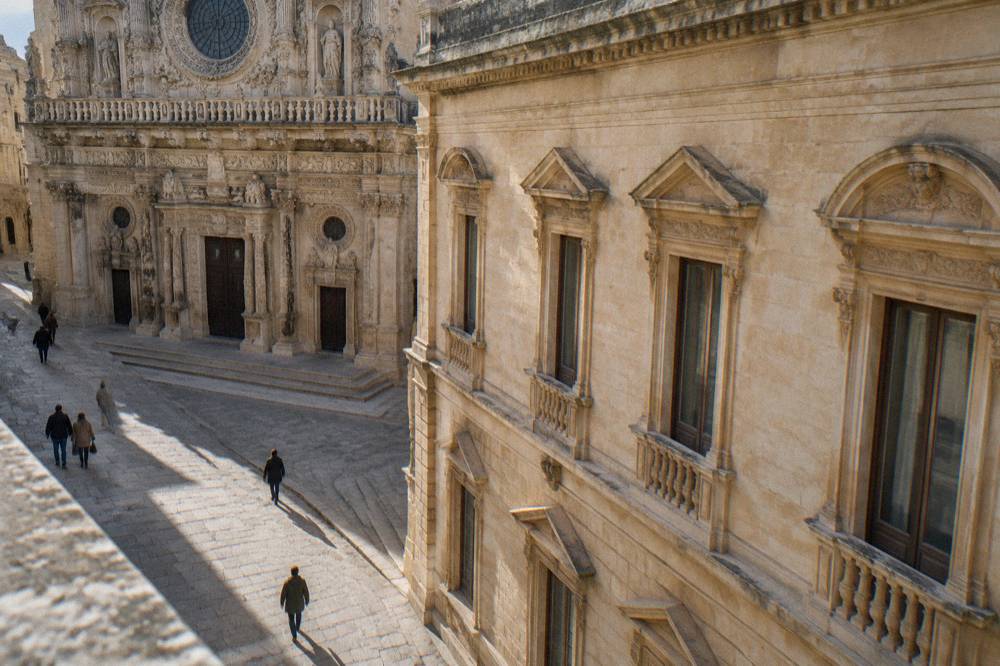
Between the openings, the wall itself is worked. Garlands of fruit, putti, grotesque masks with distended features, dolphins and sunflowers spill across the surface, and on the richest facades the carving is dense enough that the wall reads as fabric rather than masonry. The material makes this possible: the comune's own geological documentation notes that pietra leccese is soft when freshly quarried, then hardens with exposure, which is why the detail survived centuries of weathering.
| Facade layer | What to look for | What it tells you |
|---|---|---|
| Portal | Stacked or twisted columns, broken-scroll pediment | The building's main statement; deepest carving |
| Windows | Alternating straight and curved pediments | Local rhythm signature of barocco leccese |
| Wall surface | Garlands, putti, grotesque masks, animals | Dissolves the wall into continuous decoration |
| Crown | Balustrade with statues, vases, obelisks | Pulls the eye past the roofline into the sky |
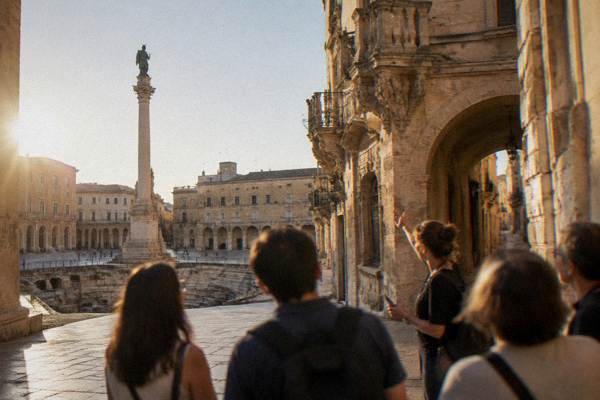
A guided walk shortens the learning curve considerably, because a guide points at the masks and motifs you would otherwise walk past. The baroque architecture and underground rooms walking tour pairs the facades with the vaulted rooms beneath them, and it can be reserved with Check availability before you travel.
Which Lecce Buildings Carry The Richest Baroque Work?
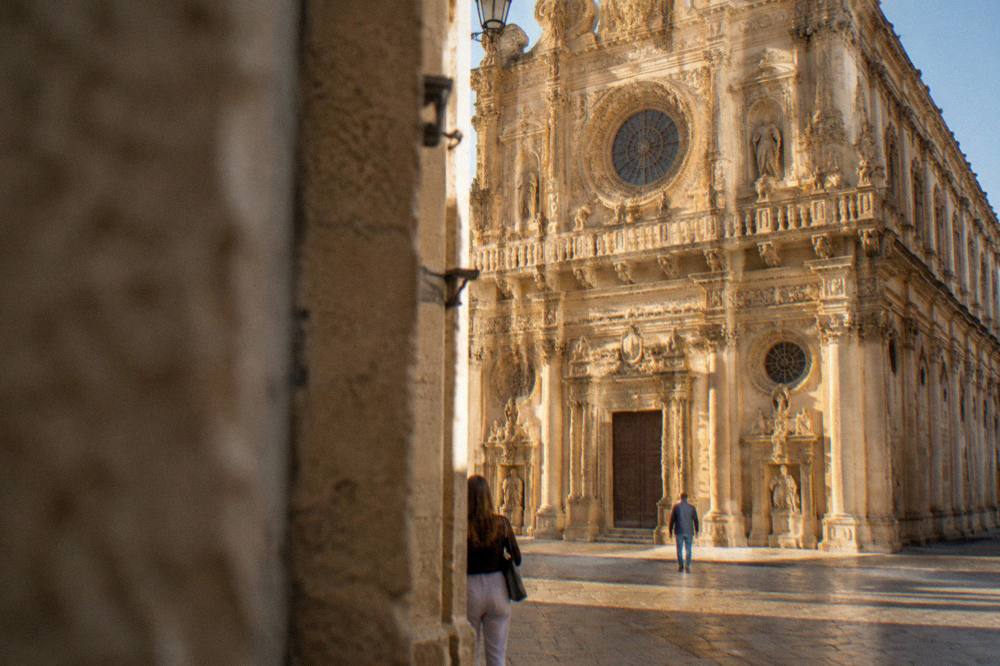
The fullest displays of the style are the Basilica di Santa Croce with its famous facade in the old centre, the Duomo and its bell tower in Piazza del Duomo, the Chiesa di San Matteo with its concave-convex facade, and the Chiesa di Santa Chiara, all four of them included in the LeccEcclesiae combined ticket alongside the Antico Seminario and its sacred art museum. Santa Croce is the conventional starting point, and its facade rewards a long look: a lower order of columns and niches, then an explosion of putti, garlands and animals across the upper storey, topped by a balustrade crowded with figures. The dedicated Santa Croce page covers it in detail.
San Matteo works differently. Its facade undulates, concave where its neighbours are flat, and the alternation of convex and concave surfaces is the clearest single lesson in how baroque architects made a stone wall move. Santa Chiara, smaller and quieter, shows the same vocabulary at an intimate scale, and the monastic interior keeps the carved altars that the street view promises.
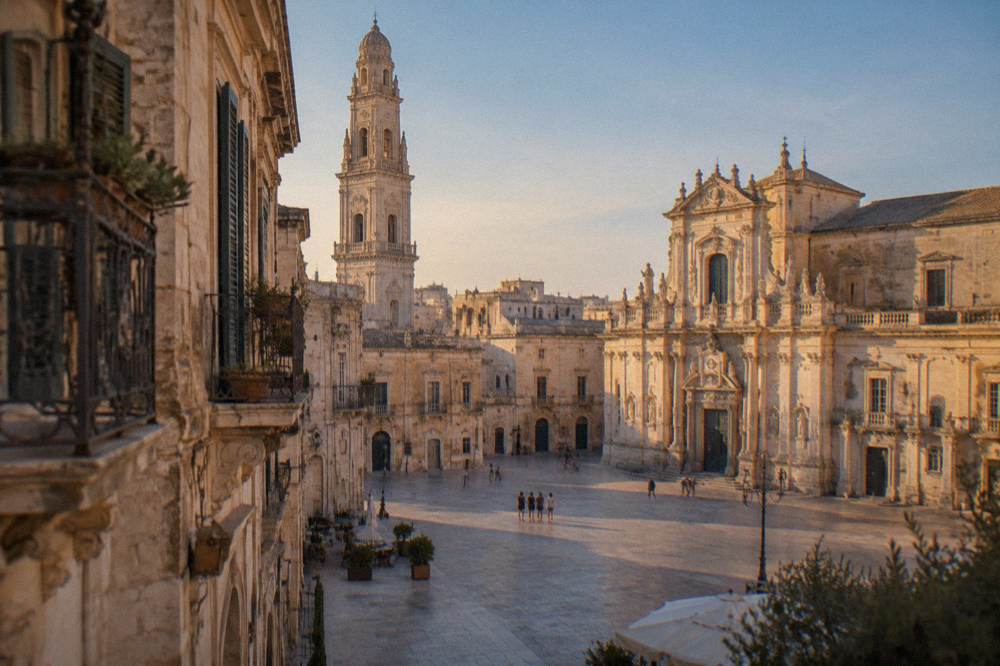
The Duomo complex in Piazza del Duomo is a composed whole rather than a single facade, and the bell tower's staged openings show the alternating-pediment rhythm stacked five levels high. All of these sit within a few minutes' walk of one another, which is why the Lecce baroque walk itinerary strings them into one route.
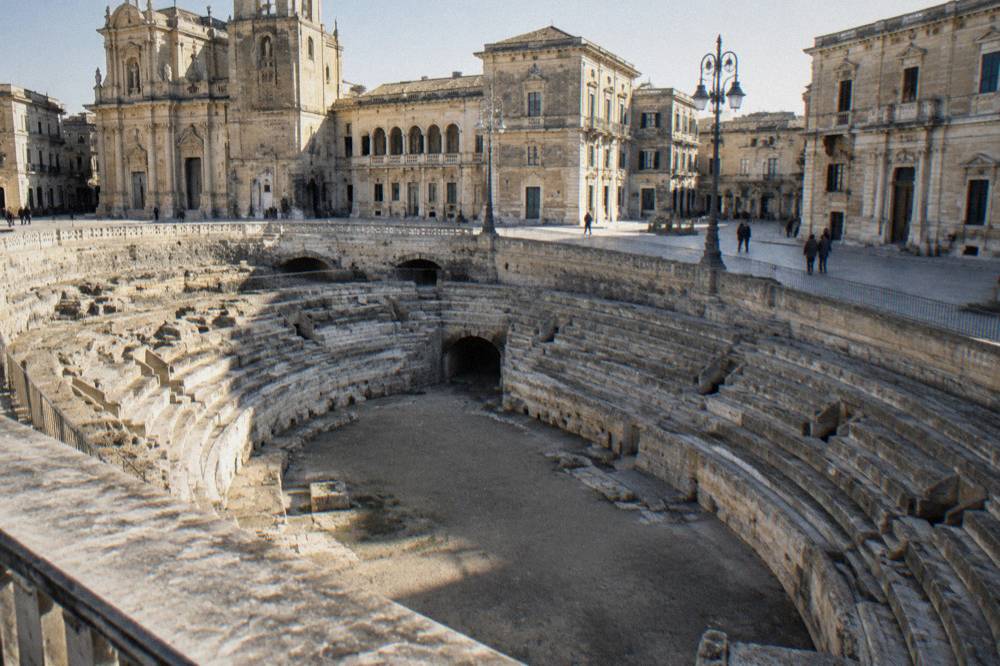
Public-space baroque matters too. Porta Napoli, the triumphal arch on the western edge of the centre, and Piazza Sant'Oronzo, with the Roman Amphitheatre exposed in its floor, mix imperial Roman stone with seventeenth-century carving and show that the style was civic as much as ecclesiastical. The amphitheatre itself received a 1,500,000 euro PNRR restoration and reopened with a new accessible entrance, per the regional museums directorate.
What Does The LeccEcclesiae Ticket Cover, And What Does It Cost?
The LeccEcclesiae combined ticket covers five baroque sites, the Duomo with its crypt, the Basilica di Santa Croce, the Chiesa di San Matteo, the Chiesa di Santa Chiara and the Antico Seminario with the Museo d'Arte Sacra, at 11 EUR standard, 5 EUR reduced for ages 12 to 17 and 24 EUR for a family of two adults plus minors, with the ticket valid for 15 days and children under 12 free. The official chieselecce.it ticket page lists those prices, and a full version with bell tower access, called Up!, is sold at 21 EUR full, 13 EUR reduced and 48 EUR family, with tower ascents running roughly every 20 minutes.
| Ticket | Full | Reduced (12 to 17) | Family | Validity |
|---|---|---|---|---|
| LeccEcclesiae standard | 11 EUR | 5 EUR | 24 EUR | 15 days |
| LeccEcclesiae with bell tower (Up!) | 21 EUR | 13 EUR | 48 EUR | 15 days |
Opening hours follow the season: 9:00 to 21:00 from April to September and 9:00 to 18:00 from October to March, with last entry 15 minutes before closing, per the ticket page. Visitors are free during services, and access for sightseeing is limited while mass is running. Shoulders and knees must be covered. A separate Lecce Artwork city pass at 29 EUR bundles the LeccEcclesiae sites, the bell tower and extras such as Palazzo Vernazza over seven days, per the card's own listing.
Other baroque-era ticketed sites in the centre round out the picture:
| Site | Hours | Ticket |
|---|---|---|
| Castello Carlo V | Tue to Sun, guided tours only, Oct to May at 10:30, 11:30, 12:30, 16:00, 17:00, 18:00, 19:00 | 10 EUR full, 6 EUR reduced, courtyard free |
| Museo Faggiano | Daily 9:30 to 20:00 | 5 EUR, ages 8 to 16 pay 3 EUR, under 8 free |
| Roman Amphitheatre | Winter Tue to Sun 10:00 to 17:00 | 5 EUR full, 2 EUR reduced |
| Palazzo Vernazza | Daily 15:30 to 21:00 | 10 EUR full, 8 EUR reduced |
If one day is all you have, the one-day Lecce itinerary sequences the ticketed churches and the free squares so nothing doubles back.
Why Did Pietra Leccese Make The Style Possible?
Pietra leccese is a Miocene calcarenite, a limestone soft enough to carve with fine detail straight from the quarry and hardening on exposure to weather, and that single property explains why Lecce's facades carry deeper, denser and more fantastical relief than buildings in marble or granite cities, where the cost of every extra curl is measured in the carver's effort. The comune's geological documentation, prepared for coastal and building works, classifies the stone precisely, and the historic quarries that supplied the old town are still traceable in the area around the city.
The consequence for a reader of facades is tactile as much as visual. Details that in other cities would be cast in stucco or carved in shallow relief, fruit garlands, feathers, the curls of a putto's hair, exist here in deep, undercut stone that throws real shadow. That depth is what changes character through the day: flat and graphical at noon, sculptural in the low light of early morning and evening.
The stone also links the architecture to the craft of cartapesta, papier mache. When carving in stone was too slow or too costly, leccesi artisans modelled the same saints and figures in paper paste, and the two traditions shared workshops, motifs and clients. The Museo della Cartapesta inside Castello Carlo V is included in the castle's guided tour and tells that side of the story.
| Property of pietra leccese | Effect on the architecture |
|---|---|
| Soft when freshly quarried | Fine, deep, undercut carving at achievable cost |
| Hardens on exposure | Detail survives weathering over centuries |
| Warm honey colour | Facades glow in raking light; the city's signature tone |
| Locally quarried | Whole old town built from one material, one palette |
How Does Baroque Fit With Lecce's Roman Layers?
Lecce's old town sits on visible Roman remains, a Roman amphitheatre in Piazza Sant'Oronzo and a Roman theatre a short walk away, so baroque carving and imperial stonework share the same streets, and the contrast is the point: where Rome cut restrained moldings, the seventeenth century buried surfaces in flora and fauna. The amphitheatre, free to view from the piazza above and ticketed for entry below, was restored with a 1,500,000 euro PNRR investment and reopened with an accessible ramp entrance, per the regional museums authority.
The theatre survives semiburied in the block around Via del Teatro Romano, and the small Museo del Teatro Romano displays finds from the site on weekday mornings. Rudiae, on the edge of the modern city, is a Messapian-and-Roman archaeological park visited on weekend guided tours and by weekday booking, per the comune's itinerary pages.
For readers who want the full timeline, the Lecce history guide sets the Roman, medieval and baroque layers in order. In reading a facade it helps to remember that baroque builders reused and built over these older layers, so a single church wall can contain stones cut a millennium and a half apart.
What Is The Best Time Of Day And Year To See The Facades?
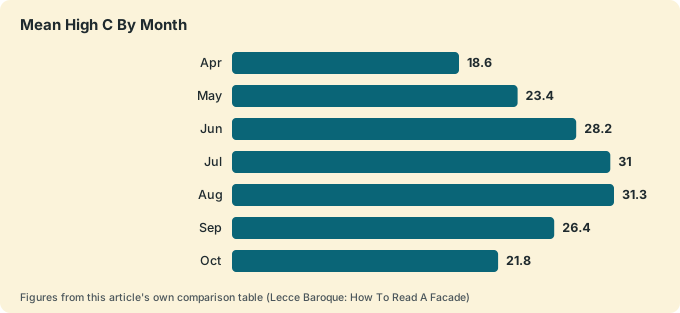
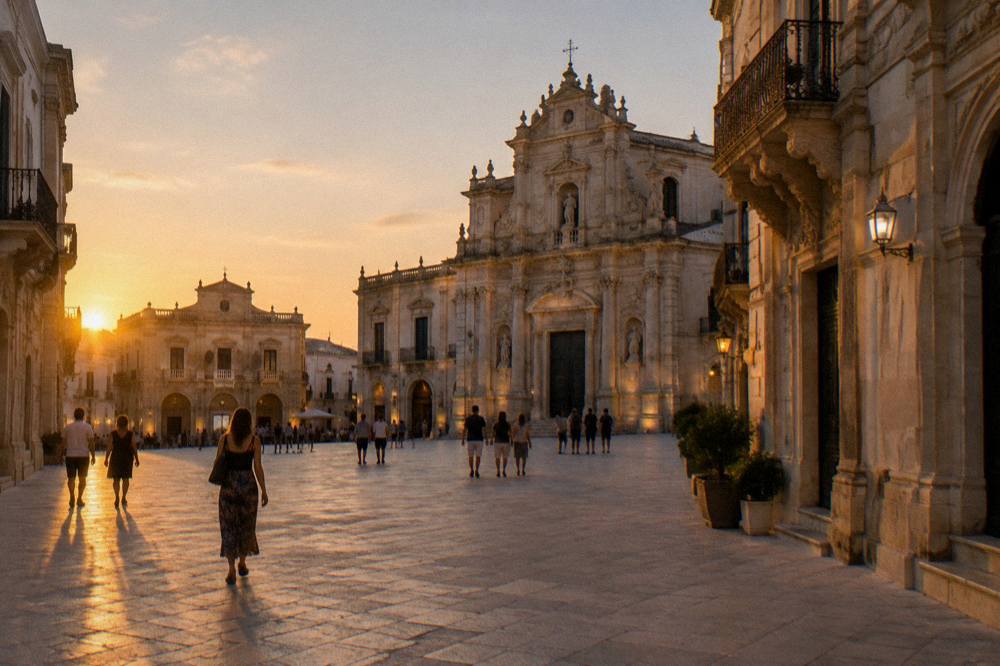
The strongest light on Lecce Baroque carving comes in the last two hours before sunset, when low sun rakes across the relief and every garland and mask casts its own shadow, while the most comfortable months for long outdoor looking are April, May, October and the cooler edge of summer, according to the ERA5 reanalysis 1991-2020, which puts mean highs at 31 C in July and 31.3 C in August against 18.6 C in April and 21.8 C in October. Rainfall is lowest in July at 15.3 mm and highest in November at 93.7 mm, so the shoulder months combine readable light with dry days.
| Month | Mean high C | Mean low C | Rain mm |
|---|---|---|---|
| Apr | 18.6 | 10.7 | 54.6 |
| May | 23.4 | 14.7 | 39.9 |
| Jun | 28.2 | 19.1 | 18.0 |
| Jul | 31.0 | 21.7 | 15.3 |
| Aug | 31.3 | 22.2 | 18.1 |
| Sep | 26.4 | 19.0 | 58.9 |
| Oct | 21.8 | 15.4 | 91.3 |
Figures are ERA5 reanalysis, 1991-2020, a modelled grid cell rather than a weather-station record. Planning notes live on the best time to visit Lecce and Lecce weather pages.
One scheduling caution belongs here: the churches pause tourist access during services, and the Chiesa di San Matteo is among the sites where midday closures and service times shape the day, so the San Matteo guide is worth a look before you plan a tight circuit.
What Baroque Events Fill The Churches And Squares?
The baroque setting hosts an annual cycle of events, anchored by the Festa dei Santi Patroni from 23 to 26 August with processions and illuminations through the old centre, the Notte della Taranta Concertone in nearby Melpignano held on 22 August in its 2026 edition, and the Fiera dei Pupi, the papier mache Christmas fair that traditionally runs from early December to 24 December at the ex-Convento dei Teatini. The comune's own programme pages carry the patronal feast, and the Taranta foundation's site carries the concert; dates beyond 2026 had not been announced.
The Castello Carlo V, itself a baroque-era landmark visited by guided tour, hosts temporary exhibitions inside; its own site lists the exhibition La materia dei sogni, running 17 July 2026 to 10 January 2027 at 8 EUR, alongside the standard 10 EUR castle tour. Notti Sacre, a series of concerts in the historic churches, has used baroque interiors as venues in autumn editions.
| Event | Latest known dates | Setting |
|---|---|---|
| Festa dei Santi Patroni | 23 to 26 August 2026 | Processions through the centro storico |
| Notte della Taranta Concertone | 22 August 2026, 29th edition | Melpignano, outside Lecce |
| Fiera dei Pupi | Early to 24 December pattern | Ex-Convento dei Teatini |
| La materia dei sogni exhibition | 17 July 2026 to 10 January 2027 | Castello Carlo V |
Craft runs alongside the calendar: the papier mache tradition that filled the baroque churches with statues is still taught in workshops in the historic centre, per local craft listings, and a hands-on class connects the facade grammar above ground to the modelling hands that produced it.
Is Lecce Baroque UNESCO Listed?
Lecce is not a UNESCO World Heritage Site: Salento and the Barocco Leccese sits on Italy's Tentative List, submitted in 2006, which is a candidacy stage and not an inscription, so any guide or brochure calling the city UNESCO-listed is wrong, and the correct formulation is that the baroque heritage is proposed for inscription. The UNESCO tentative list page carries the entry, and regional efforts continue toward recognition, including for the intangible craft heritage around the style.
For a visitor this changes nothing on the ground but everything in the phrasing. The facades, the ticketing and the walkability are the same either way, and the absence of inscription arguably keeps the experience quieter than it would otherwise be. What the candidacy does signal is that the architecture is formally assessed as of outstanding interest, which supports the case for giving it more than a passing afternoon.
The city's walkability matters here. Lecce's baroque core is compact, flat and closed to through traffic much of the day by a camera-policed ZTL, so the standard pattern is to arrive, park outside the centre and read the facades on foot, exactly as the getting around Lecce guide describes.
What Should You Bring To Walk The Baroque Core?
Bring covered shoulders and knees for the churches, flat shoes for cobbled lanes, a water bottle in summer when ERA5 reanalysis 1991-2020 puts mean highs above 31 C, and either the LeccEcclesiae ticket bought at Piazza Duomo 5 or the Basilica di Santa Croce, or a booked guided walk if you want the facades explained rather than just seen. Camera batteries benefit from the golden hour: the honey tone of pietra leccese changes character between noon and sunset more than in most stone cities.
A guided introduction also unlocks the underground rooms that many baroque buildings conceal beneath them, from cisterns to repurposed vaults, and the pairing of facade and cellar is the quickest way to understand how the city was actually built. The Lecce baroque walk remains the free alternative for readers who prefer to go alone.
Common Questions About Lecce Baroque
What is Lecce Baroque?
Lecce Baroque, or barocco leccese, is the local seventeenth-century baroque style carved in soft pietra leccese limestone, marked by dense garlands, putti, grotesque masks and alternating window pediments across the churches and palaces of the old town.
Which building shows Lecce Baroque at its fullest?
The Basilica di Santa Croce is the conventional answer, with a facade that piles decoration across two storeys and a balustrade crowded with figures; the Duomo complex, San Matteo and Santa Chiara complete the core circuit, all included in the LeccEcclesiae ticket.
How much does the LeccEcciae ticket cost?
The standard combined ticket is 11 EUR full, 5 EUR for ages 12 to 17 and 24 EUR for a family, valid 15 days; the version with bell tower access is 21 EUR full, per the official chieselecce.it ticket page. Children under 12 enter free.
Is Lecce a UNESCO World Heritage Site?
No. Salento and the Barocco Leccese is on Italy's Tentative List, submitted in 2006, which is a candidacy and not an inscription.
Why is the stone in Lecce so carved?
Pietra leccese, a Miocene calcarenite, is soft at the quarry and hardens on exposure, so carvers could undercut deep relief at a cost and speed impossible in harder stone; the comune's geological documentation describes the material.
Can you see Lecce Baroque for free?
Yes: the facades are public, Porta Napoli and Piazza Sant'Oronzo are open space, the amphitheatre is visible from the piazza above, and Galatina's Basilica di Santa Caterina d'Alessandria, reachable by FSE train, is free to enter, per local listings.
Read the facades bottom up, check the light before you set out, and buy the combined ticket only once you know whether the bell tower matters to you; the rest of the style gives itself away for free, one garland at a time, as this Lecce Travel Guide keeps cataloguing it.