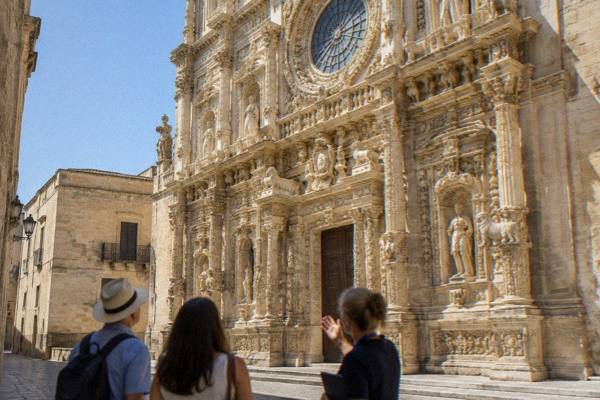
Palazzo Dei Celestini: The Courtyard Next To Santa Croce
Palazzo dei Celestini is the grand civic palace that closes one side of Piazza Umberto I in Lecce, in Puglia, sharing its square with the Basilica di Santa Croce. It is a working government seat, so the visit is the courtyard and the facade, and both cost nothing.
Short answer
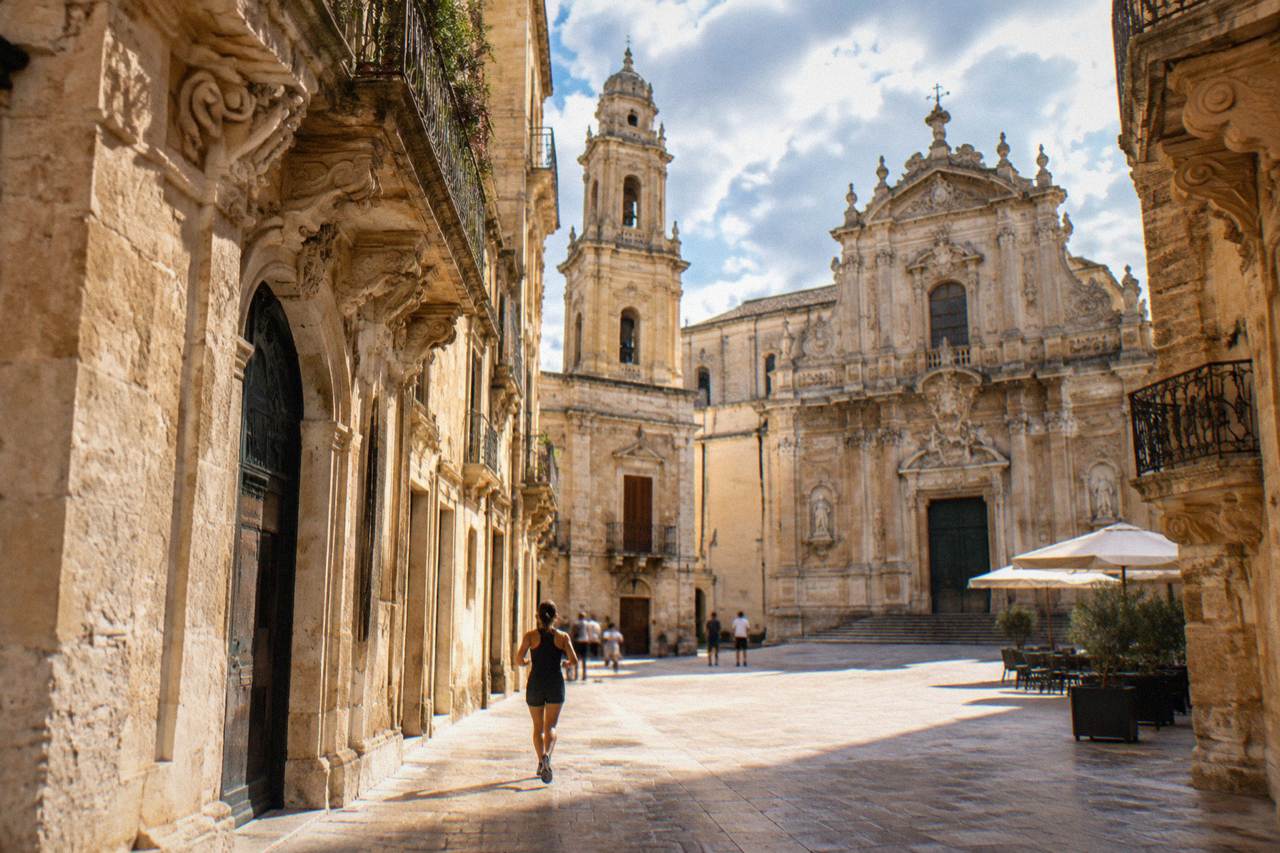
Palazzo dei Celestini in Lecce is a baroque palace built in pietra leccese, seat of the provincial administration and Prefecture. Visitors can enter the courtyard free of charge; the interior is not a museum. It stands directly beside the Basilica di Santa Croce, and the two are usually seen together in one stop of 15 to 30 minutes.
Palazzo dei Celestini stands on Piazza Umberto I in Lecce, the baroque capital of Salento in Puglia, southern Italy, a few kilometres inland from the Adriatic. The palace closes the square on the side opposite the Basilica di Santa Croce, and the two buildings together form one of the city's most photographed architectural set pieces. Both are carved from pietra leccese, the soft Miocene limestone that hardens on exposure and gives Lecce its honey colour. The palace is a working seat of government, the Prefecture and the provincial administration, which shapes what a visit actually is: a free look at a courtyard and a famous facade rather than a furnished museum.
The name refers to the Celestine order, the monastic community that occupied the site before the palace took its present form. No architect attribution or construction date appears in this site's sources, so none is printed here. What the sources do support is the building's role today and its setting, and those are the parts a traveller can plan around. This page lays out what the palace is, what you can see for free, how it fits with the church next door, and how to fold it into a day in the old town, with the ticket facts that matter for the neighbouring LeccEcclesiae circuit.
What Is Palazzo Dei Celestini In Lecce?
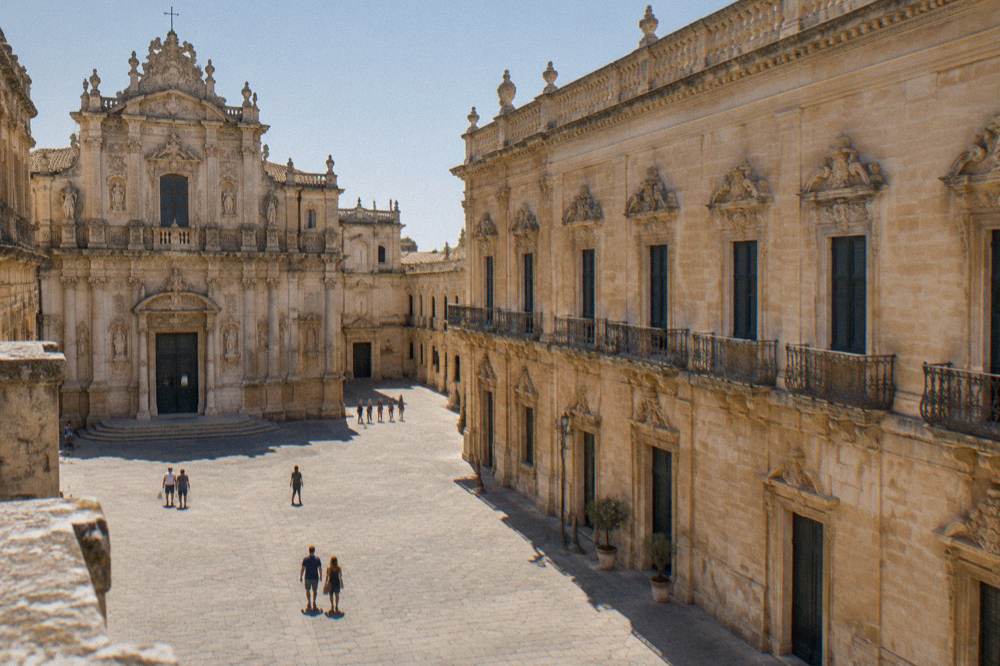
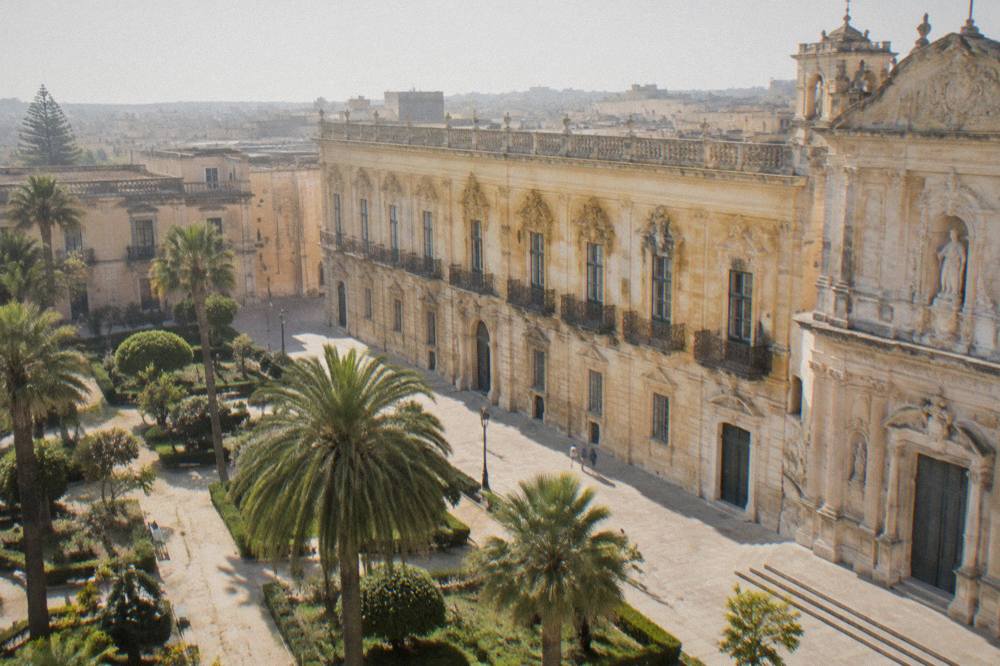
Palazzo dei Celestini is a baroque civic palace on Piazza Umberto I in Lecce, the seat of the Prefecture and the provincial administration. It is built of pietra leccese, the local limestone, and it occupies the side of the square facing the Basilica di Santa Croce. Because it is a government building, it has no museum interior; the visitable part is the courtyard, which is free, and the facade, seen from the square at any hour.
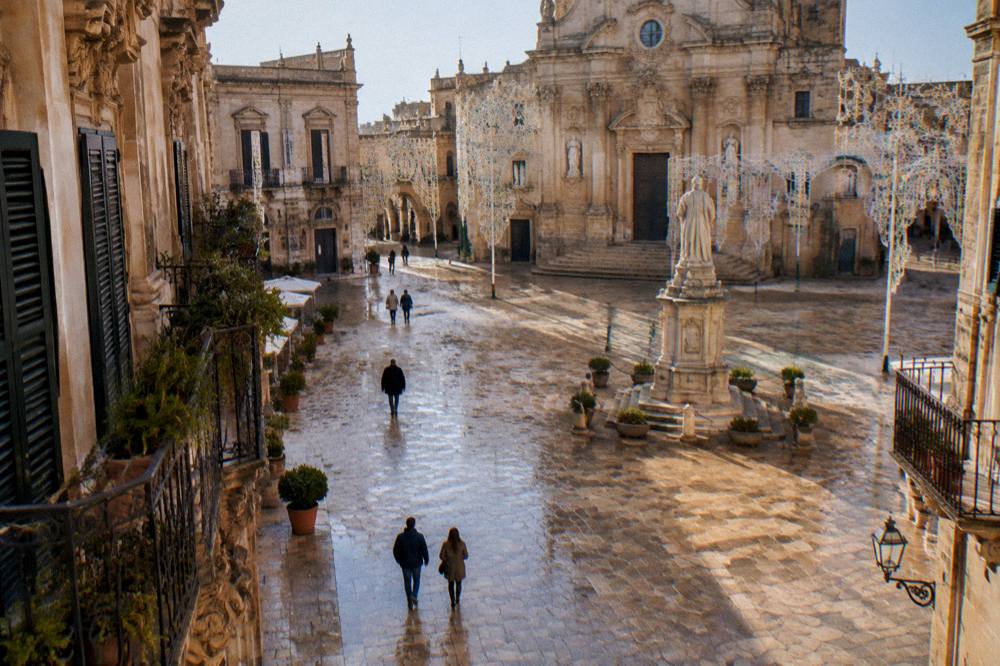
The palace is best understood as half of a pair. Piazza Umberto I is a single architectural composition: church on one side, palace on the other, both in the same honey-coloured stone, both carrying the dense carving that defines Lecce Baroque. The city's historic centre is compact and flat, and this square sits at its heart, steps from Piazza Sant'Oronzo and the Roman Amphitheatre and a short walk from Piazza del Duomo. A traveller moving between those landmarks passes through it almost inevitably.
The building's civic function matters for planning. As a Prefecture seat it hosts offices rather than exhibits, and access beyond the courtyard is not part of any tourist offer described in this site's sources. Visitors should treat the facade and the courtyard as the sight, budget a short stop rather than an hour, and confirm opening arrangements locally on the day, since the courtyard follows administrative rather than museum schedules. There is no ticket desk, no queue system and no timed entry to plan around.
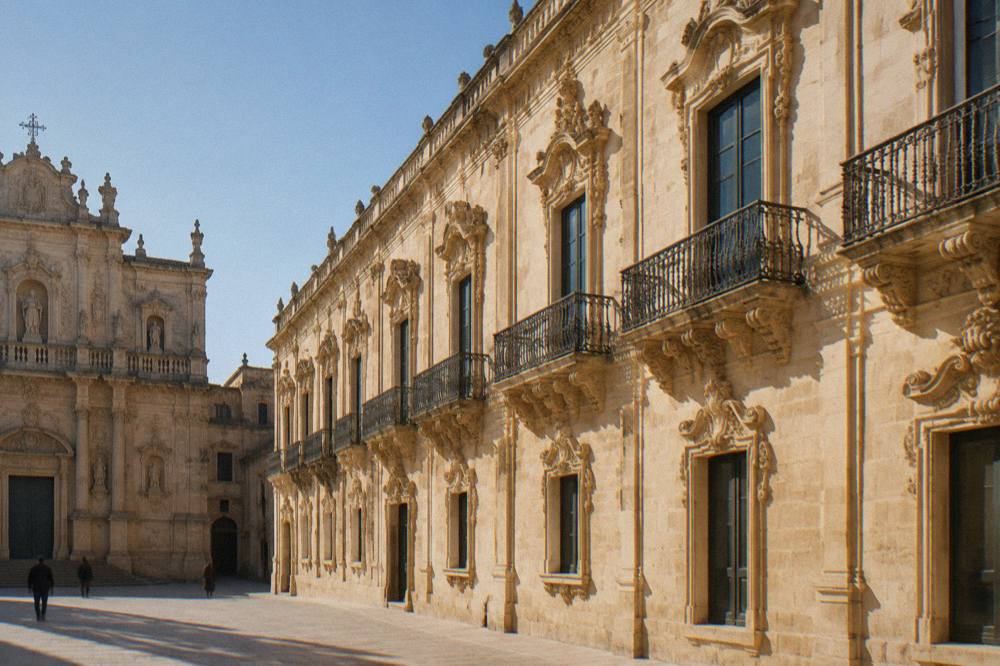
What the palace adds to a Lecce visit is context. The stonework on display outside is the same craft tradition that fills the city's churches, and reading it here, in a civic rather than sacred building, shows how far the barocco leccese style reached beyond religious architecture. The decorative carving, the window frames, the play of light across pale limestone in late afternoon: these are the reasons photographers gather on the square toward sunset, when the stone glows warmest.
Can You Go Inside Palazzo Dei Celestini In Lecce?
The interior of Palazzo dei Celestini in Lecce is not open as a visitor attraction, because the building houses the Prefecture and provincial offices. The courtyard is the accessible part, and entry to the courtyard is free. Published accounts describe access during weekday office hours, but this site's sources do not carry verified hours, so the practical advice is to confirm locally, expect a weekday daytime visit, and treat the palace as a short stop beside Santa Croce.
That framing is worth stating plainly because generic guides sometimes list the palace as a walk-in monument. It is a working government building. Security and administrative needs govern the doors, not a ticketing policy. Nothing in the sources suggests a fee for the courtyard, and the free-access listing in the city's own materials supports that, but hours are the variable to check on the spot.
The surrounding square makes even a brief visit rewarding. Piazza Umberto I is open public space with no ticket at any hour, so the facade can be photographed early in the morning, at midday or after dark. The exterior view is the part that never closes. Evening is when the crowds thin and the limestone photographs with the fewest people in frame, and Lecce's old town is generally regarded as safe to walk at night, with ordinary city caution for belongings.
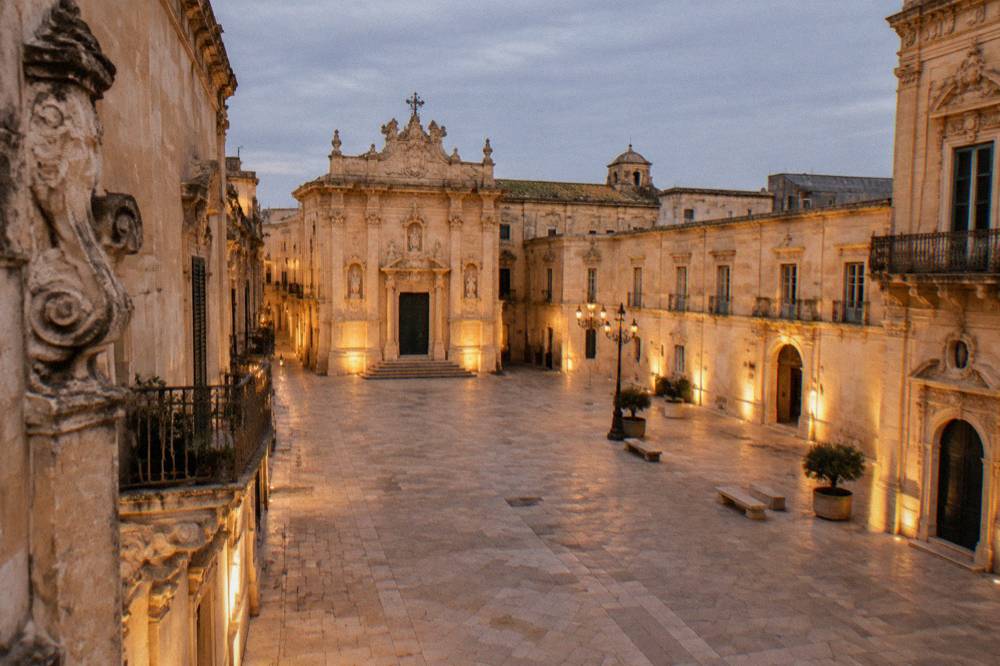
A sensible pattern is to combine the palace courtyard with the church next door and the street behind it. The square connects directly to the route between Piazza Sant'Oronzo and the Duomo quarter, so no dedicated trip is needed. Walk the square, step into the courtyard if it is open, then continue to the church with a LeccEcclesiae ticket in hand. Guides running old-town walks include the palace facade as a standard stop, which is a low-effort way to hear the history told aloud: the listing for the guided tour with free entry to the Duomo and Santa Croce covers the circuit, and Check availability shows current times.
How Does The Palace Connect To The Basilica Di Santa Croce?
The Basilica di Santa Croce and Palazzo dei Celestini face each other across Piazza Umberto I in Lecce, forming one baroque ensemble in matching pietra leccese. The basilica is a ticketed church on the LeccEcclesiae combined circuit, while the palace courtyard is free, so the pairing gives visitors a paid interior and a free exterior within twenty paces of each other. The two are normally seen together in a single stop.
Santa Croce is the headline monument of the pair, and it is covered in detail on the Basilica di Santa Croce page. The LeccEcclesiae ticket, sold by the Diocese of Lecce, includes the Duomo with its crypt, Santa Croce, the Chiesa di San Matteo, the Chiesa di Santa Chiara and the Antico Seminario with the MuDAS museum. A standard ticket costs 11 euro full, 5 euro reduced for ages 12 to 17 and 24 euro for a family, valid for 15 days, with under 12s free. The version with the bell tower costs 21 euro full and 13 euro reduced.
| What | Ticket | Notes |
|---|---|---|
| Palazzo dei Celestini courtyard | Free | Weekday access per office schedules, confirm locally |
| Palazzo facade from Piazza Umberto I | Free | Open public space, viewable any hour |
| Basilica di Santa Croce | LeccEcclesiae ticket | Standard 11 euro full, 5 euro ages 12 to 17 |
| LeccEcclesiae full circuit | 11 euro / 24 euro family | 5 sites plus the Antico Seminario, valid 15 days |
| Circuit with bell tower "Up!" | 21 euro / 13 euro / 48 euro | Adds the Duomo bell tower ascent |
Church hours on the circuit run 9:00 to 21:00 daily in summer and 9:00 to 18:00 in winter, with last entry 15 minutes before closing. Access pauses during religious services, and the dress expectation is shoulders and knees covered. Tickets are bought at Piazza Duomo 5 or at Santa Croce itself, so a visitor starting on Piazza Umberto I can buy on the spot before entering the basilica.
The palace adds something the church cannot: a secular counterweight. Standing in the middle of the square, you see the same stone, the same vocabulary of pilasters and carved detail, applied to state power on one side and religious power on the other. That side-by-side reading is the square's real lesson, and it costs nothing.
Where Does The Palace Fit On A Walk Through Lecce?
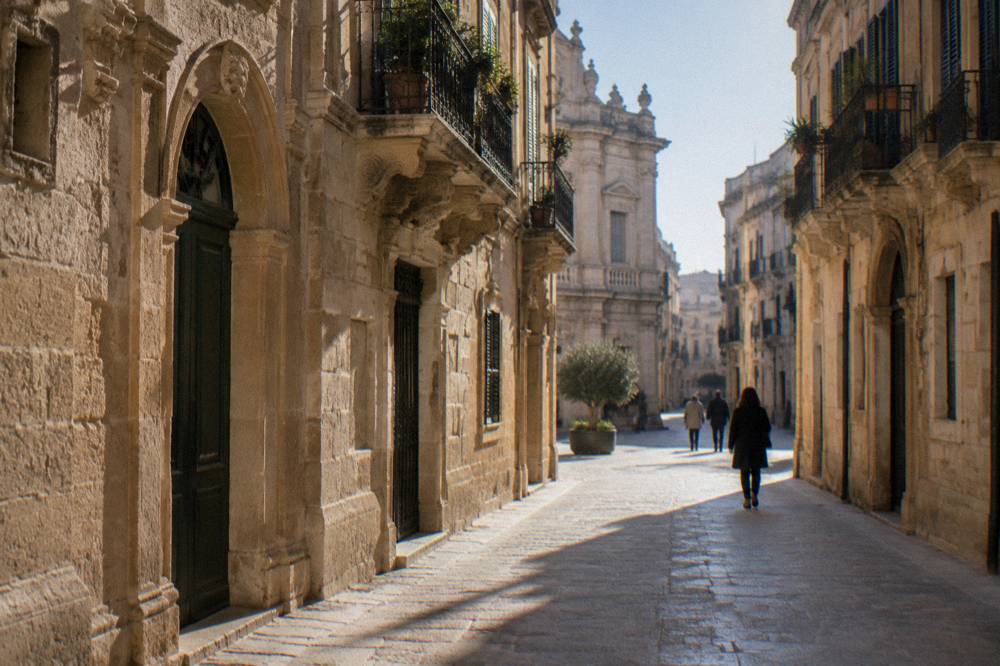
Palazzo dei Celestini sits on the natural walking route through Lecce's old town, between Piazza Sant'Oronzo and the Duomo quarter, roughly five minutes on foot from each. The palace, Santa Croce, Piazza Sant'Oronzo with its Roman Amphitheatre, and Piazza del Duomo form a compact cluster that covers the city's core sights in under an hour of walking, all on flat ground with no transport needed.
Lecce is a walkable city, and the palace is one of the fixed points around which any route organises itself. A typical morning begins at Piazza Sant'Oronzo, where the amphitheatre is visible free from the piazza, continues to Piazza Umberto I for the palace and Santa Croce, then follows Via Umberto I or the parallel lanes to the Duomo square. From there the walk can extend to the Chiesa di Santa Chiara, the Chiesa di San Matteo or, in another direction, to the Villa Comunale gardens and Porta Napoli.
| Stop | Segment | Ticket |
|---|---|---|
| Piazza Sant'Oronzo and amphitheatre view | Start | Free |
| Palazzo dei Celestini courtyard | About 5 min east | Free |
| Basilica di Santa Croce | Same square | LeccEcclesiae |
| Piazza del Duomo and Duomo | About 5 min south | LeccEcclesiae |
| Villa Comunale and Porta Napoli | About 10 min west | Free |
Times between stops are approximate walking times on flat streets; distances in the old centre are short enough that landmarks alone do the wayfinding. The full sequence, with a church interior or two, makes a comfortable half day. The site's Lecce walking tour page maps a complete route, and the centro storico guide covers the surrounding lanes.
For travellers who want the stories without planning the route, guided walks stitch these squares together. The walking tour of Lecce and its undergrounds with tastings pairs the above-ground baroque with the city beneath it, and Check availability lists live departures.
What Is The Architecture And Stone Of The Palace?
The palace is a Lecce Baroque building in pietra leccese, the local Miocene limestone that is soft and easy to carve when quarried and hardens with exposure to air. Its facade carries the same ornamental language as the basilica opposite: pilasters, elaborate window surrounds and densely carved detail. This site's sources supply no architect's name and no construction date for the palace, so the stonework, not an attribution, is what the visitor reads on the square.
Pietra leccese is the material explanation for the whole city. Because the stone was workable in the quarry, artisans could cut deep, flowing ornament relatively cheaply, and the barocco leccese style that resulted covers facades, altars, balconies and doorways across the old town. The palace shows that language in a civic register: formal, symmetrical, grand, but recognisably the same craft as the church beside it. The Lecce stone and Lecce Baroque pages go deeper into the material and the style.
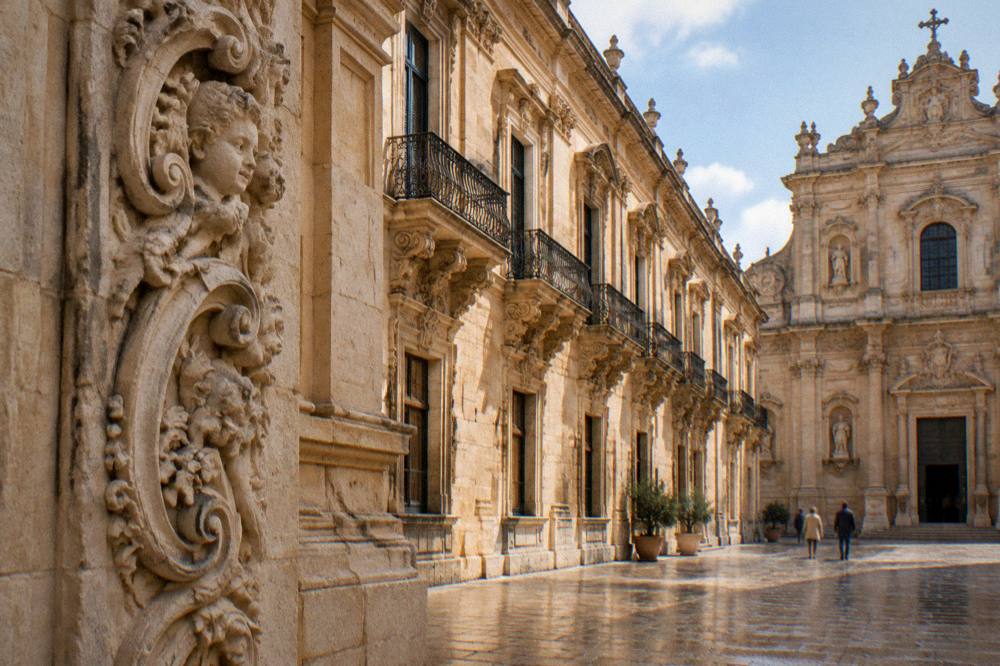
Light does most of the work on this square. The limestone is pale, almost cream, and it changes character through the day: flat and bright at noon, golden toward evening. Photographers who want the warm version plan for late afternoon, when the sun angles across the carving and the relief deepens. Morning light is softer and the square is quieter. Other pages covering the same trip are gathered on Lecce Travel Guide.
The carving tradition connects directly to the city's other famous craft, cartapesta, papier mache, which developed partly because the stone carving tradition created a culture of figurative ornament. The Lecce papier mache guide covers that story, and the Museo della Cartapesta inside the Castello Carlo V is included in the castle's guided tour.
What Is Free Around Palazzo Dei Celestini In Lecce?
Around Palazzo dei Celestini in Lecce, the free sights are the palace facade and courtyard, Piazza Umberto I itself, Piazza Sant'Oronzo with the Roman Amphitheatre seen from above, Porta Napoli, the Villa Comunale gardens and the exteriors of the baroque churches. Only the church interiors on the LeccEcclesiae circuit, the museums and the castle's guided tour carry tickets. A visitor can spend a full day in Lecce's centre spending little beyond food.
The palace courtyard belongs to a cluster of no-cost views that define a budget day in the city. The amphitheatre in Piazza Sant'Oronzo can be appreciated from street level without paying, and the facades of Santa Croce, the Chiesa di Sant'Irene and the Duomo's dramatic front are all visible from public space. The full list, with the paid options separated out, is on the free things to do in Lecce page.
| Sight | Cost | Access |
|---|---|---|
| Palazzo courtyard | Free | Weekday office hours, confirm on the day |
| Palazzo and Santa Croce facades | Free | Any hour, public square |
| Roman Amphitheatre from the piazza | Free | Public square |
| Villa Comunale | Free | Public gardens |
| Porta Napoli | Free | Public space |
| Church interiors (LeccEcclesiae) | From 11 euro | Daily, pausing for services |
Tip-based free walks are a service local guides offer in many Italian cities, but this site has no verified platform listing for one in Lecce, so no operator is named here; if a guide offers such a walk in the square, confirm the arrangement directly with them.
When Is The Best Time To See The Palace And The Square?
The best time to see Palazzo dei Celestini in Lecce is late afternoon for the facade, when low sun warms the pietra leccese, and weekday daytime for the courtyard, which follows office schedules. Weather rarely decides the visit: the ERA5 reanalysis for Lecce, 1991 to 2020, shows mean daily highs of about 31 C in July and August and about 12 C in January, with November the wettest month at 93.7 mm of rain.
Because the sight is an exterior and an open square, it works year-round, in every season. Summer visitors benefit from the long evening light and the city's festival calendar; the Festa dei Santi Patroni, held 23 to 26 August in 2026, fills the centre with processions and lights, though that edition is past and later dates follow the annual pattern. December brings the Fiera dei Pupi, the papier mache Christmas fair, traditionally held in the first weeks of the month.
| Period | Mean high (ERA5, 1991-2020) | Notes for the square |
|---|---|---|
| January | 12.4 C | Quiet, mild by northern standards |
| April | 18.6 C | Comfortable walking weather |
| July | 31.0 C | Plan the facade for evening |
| October | 21.8 C | Warm days, thinner crowds |
| November | 17.3 C | Wettest month, 93.7 mm |
Seasonal detail, including the Lecce at Christmas period and the shoulder months, is covered on the best time to visit Lecce page. For the palace itself, the only seasonal variable is the courtyard's administrative schedule, which is likelier to be open mid-week outside Italian public holidays.
How Do You Combine The Palace With The Rest Of Lecce In A Day?
Palazzo dei Celestini takes 10 to 15 minutes as a stop, so it slots easily into a one-day Lecce itinerary built around Piazza Sant'Oronzo, the Duomo circuit and Santa Croce, with time left for a food stop or a museum such as Museo Faggiano. With two or three days, the palace day stays in the city and the other days reach the coast or the Salento towns, using the trains and buses described on this site.
A realistic single day pairs the morning church circuit with an afternoon of lanes, cafes and one underground sight. The city's cafe culture is part of the draw: the caffe in ghiaccio con latte di mandorla, iced espresso with almond milk, is a Lecce institution, and the Lecce cafes page names the historic addresses. Longer stays are mapped on the Lecce in one day, two day and three day pages.
For travellers who prefer a guide's narrative over self-direction, the small-group history walk covers the old town's squares and stories in one outing, and the Understand Lecce small group tour page lists what it includes. Whatever the plan, the palace asks nothing of the itinerary except a pause on one of the most complete baroque squares in southern Italy, next to a basilica that is on the same ticket as the Duomo. Pause, look up at the carving, step into the courtyard if the doors are open, and move on.
More on the surrounding sights sits on the Piazza del Duomo, Piazza Sant'Oronzo and Museo Faggiano pages, and the wider region on the Salento itinerary guide.
Common Questions About Palazzo Dei Celestini In Lecce
Is Palazzo dei Celestini free to visit?
The courtyard is free and the facade is viewable at any hour from the public square. The building is a government seat, so there is no museum interior or ticket. Confirm courtyard access locally, as it follows office schedules.
How long does a visit to Palazzo dei Celestini take?
The palace itself is a short stop of about 10 to 15 minutes: the facade from the square and the courtyard if it is open. It is commonly combined with the Basilica di Santa Croce next door on the same square.
Can you go inside Palazzo dei Celestini?
Only the courtyard is accessible to visitors. The interior houses Prefecture and provincial offices and is not a visitor attraction. There is no guided tour of the interior listed in this site's sources.
Do you need a ticket for the Basilica di Santa Croce next door?
Yes. Santa Croce is part of the LeccEcclesiae combined ticket, which costs 11 euro full, 5 euro for ages 12 to 17 and 24 euro for a family, valid 15 days, with under 12s free. Tickets are sold at Piazza Duomo 5 and at Santa Croce.
What is the nearest landmark to Palazzo dei Celestini?
The palace faces the Basilica di Santa Croce across Piazza Umberto I. Piazza Sant'Oronzo and the Roman Amphitheatre are about five minutes away on foot, and Piazza del Duomo about the same in the other direction.
Who built Palazzo dei Celestini?
This site's sources carry no verified architect attribution or construction date for the palace, so none is stated. The building takes its name from the Celestine monastic order that occupied the site before the palace's present form.