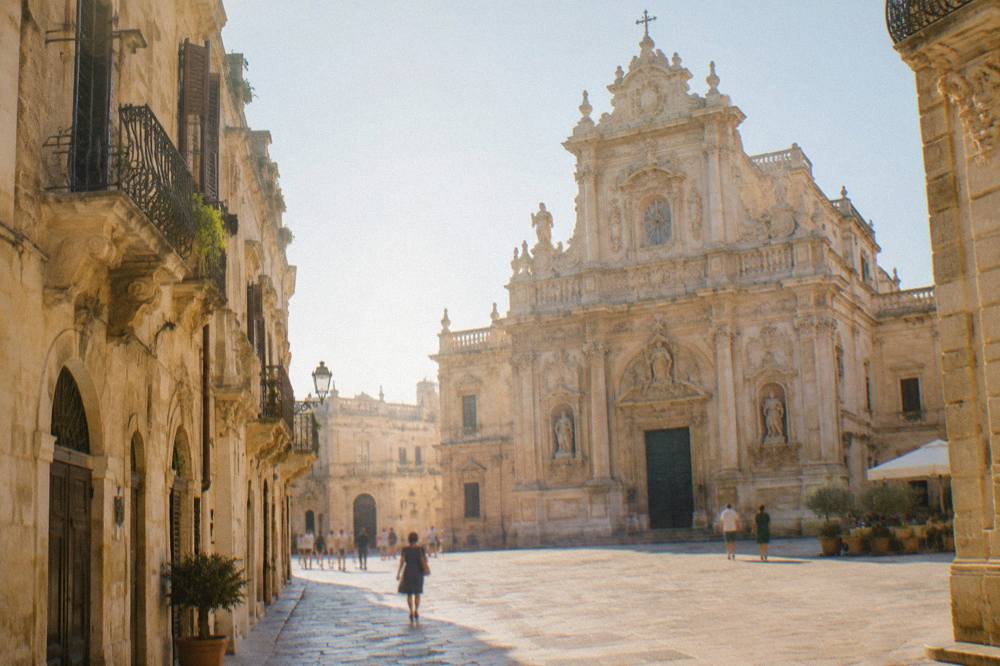
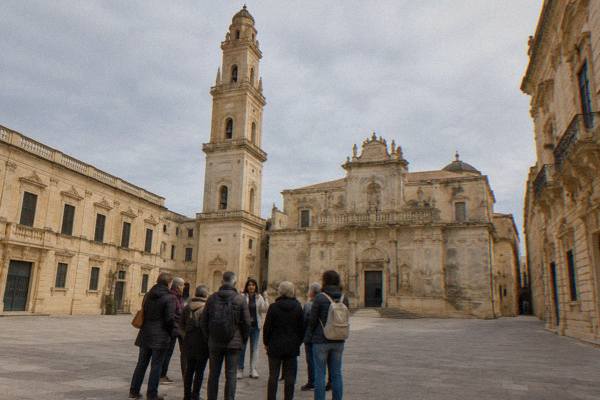
Chiesa Di Sant Irene: The Theatine Church On Via Vittorio Emanuele
The Chiesa di Sant'Irene stands on Lecce's main old-town street, a Theatine church dedicated to the city's patron saint, and one of the quieter stops among the baroque monuments of Puglia.
Short answer
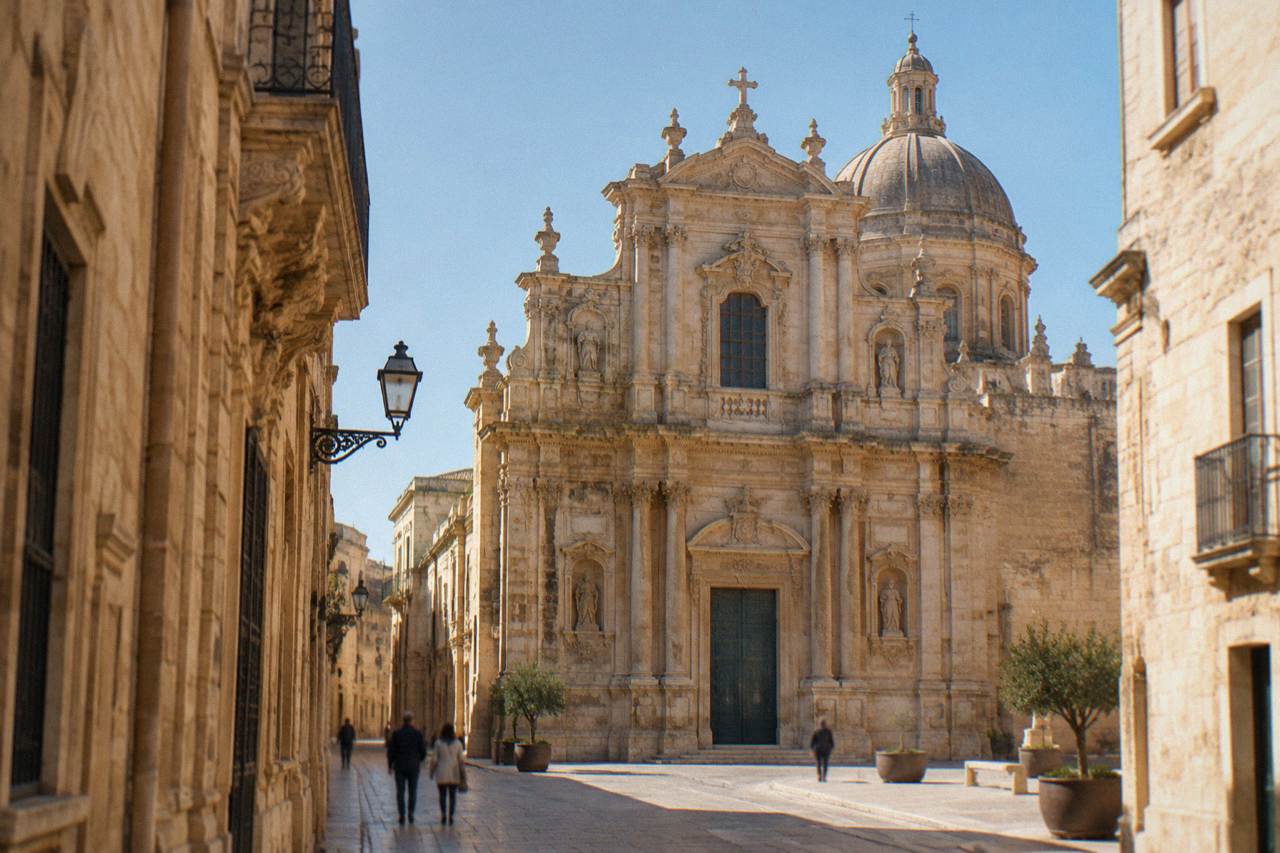
The Chiesa di Sant'Irene is a Theatine church on Via Vittorio Emanuele in the historic centre of Lecce, dedicated to Sant'Irene, the city's patron saint. It is not part of the LeccEcclesiae combined church ticket, and no verified opening hours or admission price are published for it, so confirm locally before visiting.
The Chiesa di Sant'Irene in Lecce, the baroque capital of Salento in Puglia, southern Italy, is the Theatine church that anchors the stretch of Via Vittorio Emanuele where the old town's evening stroll, the passeggiata, actually happens. The city is built of honey-coloured pietra leccese, a soft Miocene limestone that hardens on exposure, and this church is carved from the same stone as the Basilica di Santa Croce and the Duomo a short walk away. It is dedicated to Sant'Irene, the patron saint of Lecce, the figure whose statue still watches over the city from the top of the column in Piazza Sant'Oronzo.
This page from the Lecce Travel Guide covers what the church is, what is inside, how it relates to the other church monuments of the city, and how to fit it into a visit, without inventing the opening hours or ticket prices that no official source publishes for it.
What Is The Chiesa Di Sant Irene In Lecce?
The Chiesa di Sant'Irene is a Theatine church on Via Vittorio Emanuele in the historic centre of Lecce, dedicated to Sant'Irene, a patron saint of the city. It was built for the Theatine order in Lecce's characteristic pietra leccese limestone in the barocco leccese style, and it stands a few minutes' walk from Piazza Sant'Oronzo and the Roman Amphitheatre.
The Theatines were a Catholic religious order of regular clerics, and Lecce was one of the southern Italian cities where they settled and built. The church belongs to the same flowering of Lecce Baroque architecture that produced the Basilica di Santa Croce and the facades around Piazza del Duomo, a style built on the workability of pietra leccese: the stone is soft when quarried, which lets carvers cut deep foliage, putti and scrollwork, and it hardens once exposed to air. That single material property explains why Lecce's facades carry decoration that would be ruinously expensive to cut in harder stone.
The dedication matters locally. Sant'Irene is one of the protectors the leccesi have historically invoked for the city, and her statue stood for a long period atop the column in Piazza Sant'Oronzo before the figure of Sant'Oronzo was raised there. The church on Via Vittorio Emanuele is her principal monument inside the old town.
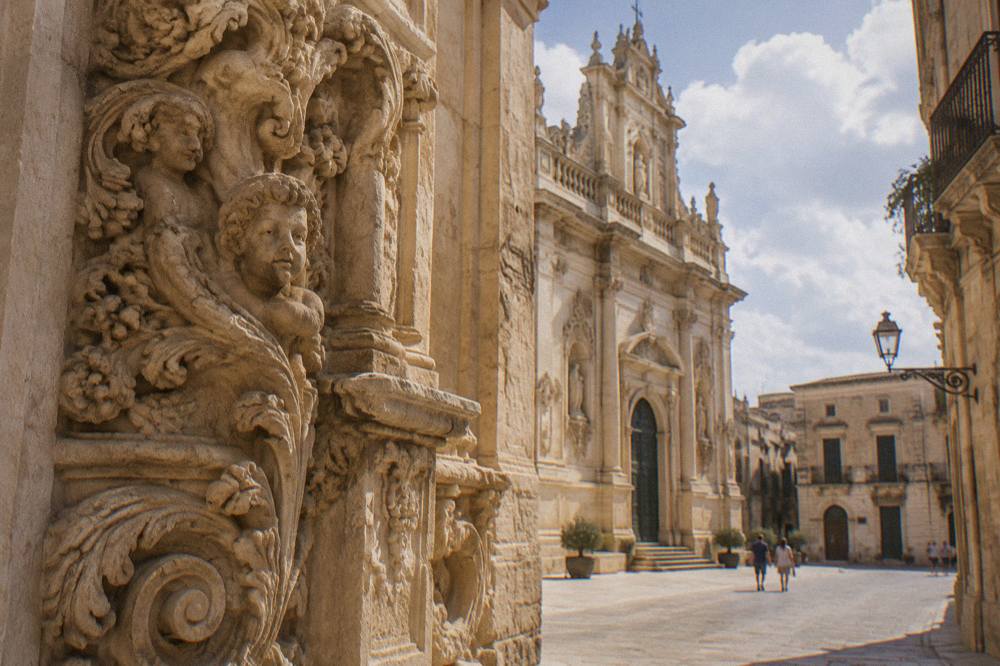
Unlike the Duomo, the Basilica di Santa Croce, San Matteo and Santa Chiara, the Chiesa di Sant'Irene is not listed among the sites covered by the LeccEcclesiae combined ticket, the church pass sold through the Diocese of Lecce's own channels. That ticket covers five monuments for 11 euro standard, valid 15 days, with under 12s free, according to the chieselecce.it listing. Sant'Irene sits outside that circuit, which shapes how a visitor plans around it: it is a stop you fit between the ticketed landmarks rather than a destination the pass delivers you to.
What Can You See Inside The Chiesa Di Sant Irene?
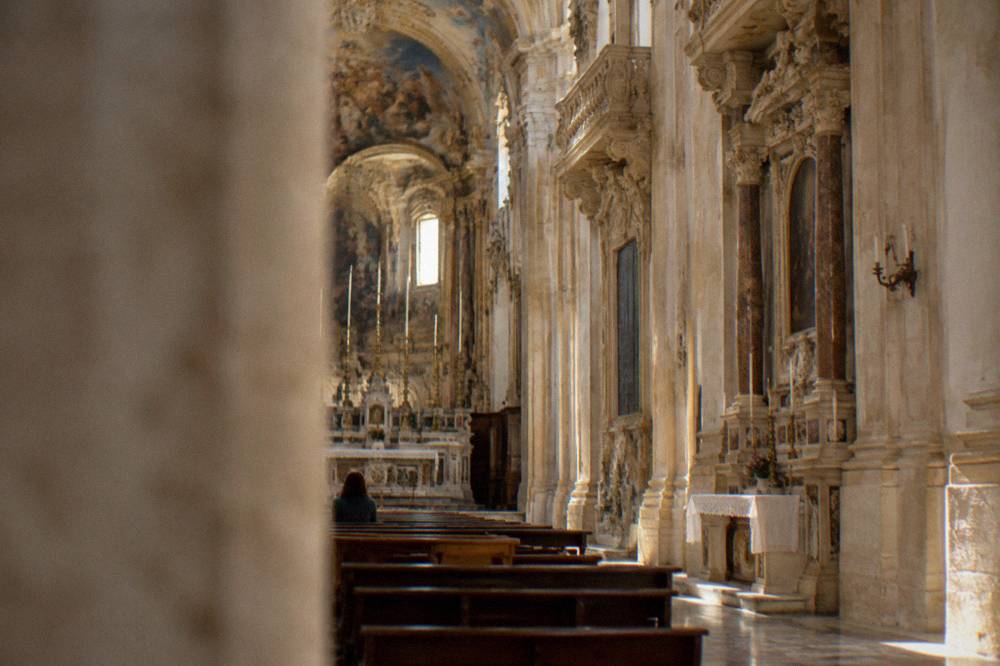
Inside, the Chiesa di Sant'Irene follows the single-nave baroque plan typical of Lecce's religious buildings, with side altars in carved pietra leccese, painted decoration, and a high altar area dedicated to Sant'Irene herself. The interior is dim, gilded in parts, and built for preaching and processions rather than vast scale.
The order that built it, the Theatines, were a reforming preaching order, and the interior layout reflects that purpose: a clear nave, sightlines to the pulpit and altar, side chapels that carry devotional images rather than competing with the main axis. The side altars follow the Lecce Baroque vocabulary of twisted columns, heavy cornices and dense floral carving, the same grammar visible at the Basilica di Santa Croce and Chiesa di Santa Chiara.
Painted and stucco work fills the upper walls and ceiling in the manner of counter-reformation churches across Puglia and the whole Mezzogiorno, using illusion and light to focus attention on the altar. The dedication to Sant'Irene recurs in the imagery: the saint is iconographically associated with Lecce's protection, and her cult is tied to the city's history of invoking protectors against calamity.
No verified opening hours or admission price are published for this church on official channels, and the LeccEcclesiae ticket does not cover it. The practical rule for churches in Lecce is the one the Diocese applies to its own monuments: tourist visits pause during religious services, and visitors should have shoulders and knees covered. Confirm hours locally, and if the doors are shut, the exterior on Via Vittorio Emanuele rewards a slow look on its own.
Where Is The Chiesa Di Sant Irene And How Do You Reach It In Lecce?
The Chiesa di Sant'Irene fronts Via Vittorio Emanuele II, the main street running through Lecce's historic centre from Piazza Sant'Oronzo toward Porta Napoli, roughly in the middle of the old town. Everything in Lecce's centro storico is walkable, and the church sits between the two great public spaces of the city, Piazza Sant'Oronzo and Piazza del Duomo.
Lecce is compact. The whole of the historic centre fits inside the line of the old walls, and the distances between the major monuments are a few hundred metres each. From Piazza Sant'Oronzo, with its Roman Amphitheatre visible below street level, Via Vittorio Emanuele runs northwest; the church is on this axis before the street reaches Porta Napoli, the triumphal arch that marks one of the old gates. Piazza del Duomo, the cathedral square, lies a short block to the southeast.
Drivers should note the ZTL before anything else. Lecce's historic centre is a camera-policed limited traffic zone, active on weekdays across the afternoon and overnight stretches and around the clock on Sundays and holidays, with fines running from 83 to 332 euro. The reported hours change by ordinance, so ask your accommodation whether they register your plate. The practical alternative is parking outside the zone, for example at Park Liberty, an interred car park with 466 spaces near the centre, and walking in.
| Starting point in Lecce | Direction | Walking character |
|---|---|---|
| Piazza Sant'Oronzo | Northwest along Via Vittorio Emanuele | Level, shop-lined main street |
| Piazza del Duomo | Southeast to the main street, then northwest | One block, then the same axis |
| Porta Napoli | Southeast along Via Vittorio Emanuele | Straight run down the main street |
| Lecce train station | West into the centre, then north | Level, about a flat 20-minute walk across the centre |
| Park Liberty car park | East then south into the ZTL edge | Short walk to the main street |
The church's position on the main street is exactly why it gets seen at all: even visitors who never plan a church itinerary pass its facade on the walk from Piazza Sant'Oronzo toward Porta Napoli or the Villa Comunale gardens. The card below pairs the neighbourhood with a food walk, since the street and its side lanes are also where the old town's café life concentrates.
Is The Chiesa Di Sant Irene Included In The LeccEcclesiae Ticket?
No. The LeccEcclesiae combined ticket covers the Duomo with its crypt, the Basilica di Santa Croce, the Chiesa di San Matteo, the Chiesa di Santa Chiara and the Antico Seminario with the MuDAS museum, and the Chiesa di Sant'Irene is not on that list. The ticket costs 11 euro standard, is valid 15 days and admits children under 12 free, per the chieselecce.it listing.
This matters for planning because the LeccEcclesiae circuit is the efficient way to see the five covered monuments: one purchase, fifteen days of validity, and openings that run daily from 9:00 to 21:00 in the April-to-September season and 9:00 to 18:00 from October to March. A traveller building a churches-of-Lecce day around the ticket will find that Sant'Irene and the Basilica del Rosario sit outside it, and both of those must be confirmed locally.
| Monument | Covered by LeccEcclesiae | Notes |
|---|---|---|
| Duomo and crypt | Yes | Cathedral square, bell tower on the higher "Up!" tier |
| Basilica di Santa Croce | Yes | The city's landmark baroque facade |
| Chiesa di San Matteo | Yes | Concave baroque facade off the centre |
| Chiesa di Santa Chiara | Yes | Monastic church near Piazza del Duomo |
| Antico Seminario and MuDAS | Yes | Museum of sacred art, Piazza del Duomo |
| Chiesa di Sant'Irene | No | No verified hours or price; confirm locally |
| Basilica del Rosario | No | No verified hours or price; confirm locally |
| Castello Carlo V | No | Separate: guided tour only, 10 euro full, courtyard free |
There is also the Lecce Artwork city pass, reported at 29 euro for seven days, which bundles the LeccEcclesiae sites including the bell tower with extras such as Palazzo Vernazza. That pass likewise has no bearing on Sant'Irene. If the Theatine church is on your list, treat it as an opportunistic stop: walk past, try the door, and move on to the ticketed circuit if it is closed.
Who Was Sant'Irene And Why Does Lecce Honour Her?
Sant'Irene is one of the patron saints of Lecce, honoured by the leccesi as a protector of the city, and her cult in Lecce long predates the dominance of Sant'Oronzo in the city's iconography. The main street church carries her name.
Her church on the main street carries civic weight as well as religious weight: she is not a secondary dedication but a protector of the city.
The Theatine order's presence gives the church its second layer of meaning. Preaching orders in the counter-reformation era were instruments of Catholic reform, and their churches were designed for sermons, catechism and confraternity devotion. Inside the barocco leccese envelope, the plan of Sant'Irene serves that programme: an audible, visible space where the word and the altar dominate.
Hagiography around Sant'Irene varies by source and region, and this page does not adjudicate it. What is documented on the ground in Lecce is the cult itself: a patron saint, a namesake church on the principal street, and a civic tradition that continues in the annual feast days of the city's patrons, covered in the Festa di Sant'Oronzo guide.
How Does Sant'Irene Compare With Lecce's Other Baroque Churches?
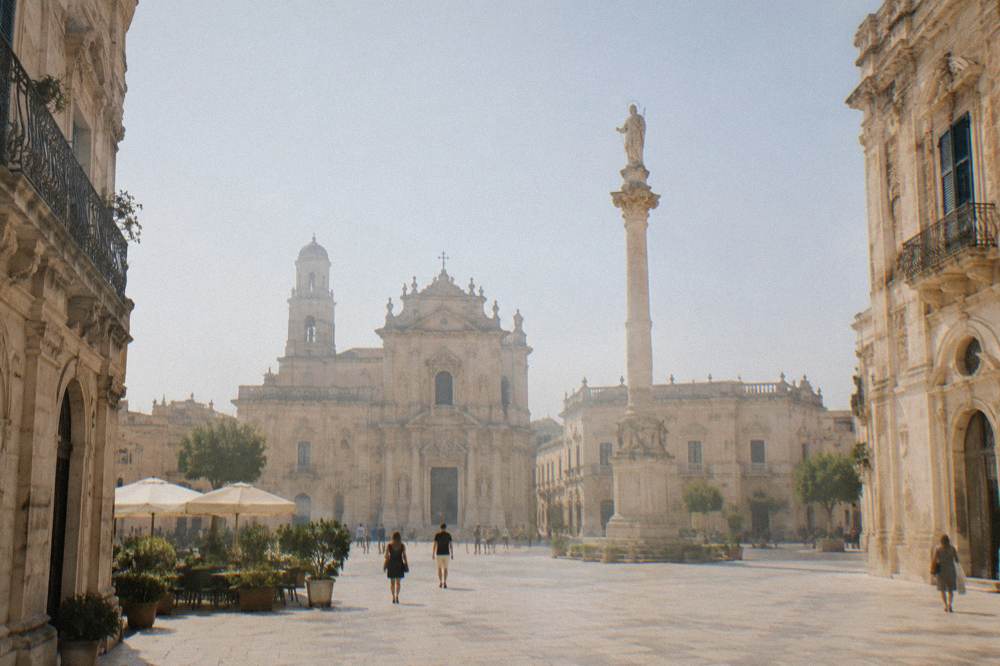
Sant'Irene is a street-facing Theatine church on the main axis, smaller in civic weight than the Basilica di Santa Croce, outside the Duomo's cathedral complex, and outside the LeccEcclesiae ticket, which makes it a quieter, less programmed stop than the five ticketed monuments. Its interest is architectural and positional: a working baroque church you encounter on the passeggiata street rather than queue for.
Lecce's church landscape divides into three practical tiers. The first tier is the LeccEcclesiae five, the ticketed circuit anchored by the Duomo and Santa Croce. The second tier is everything with separate administration: the Castello Carlo V with its papier-mâché museum on a guided tour, the Museo Faggiano's layered underground archaeology at 5 euro, the Museo Ebraico's guided visits in the former Jewish quarter. The third tier is churches like Sant'Irene and the Basilica del Rosario, which have no published visiting arrangements on official channels and are seen opportunistically.
| Church or monument | Style character | Access model |
|---|---|---|
| Basilica di Santa Croce | The landmark Lecce Baroque facade, dense ornament | LeccEcclesiae ticket |
| Duomo and crypt | Cathedral complex, enclosed piazza | LeccEcclesiae ticket |
| Chiesa di San Matteo | Strongly concave baroque facade | LeccEcclesiae ticket |
| Chiesa di Santa Chiara | Monastic interior, delicate stucco | LeccEcclesiae ticket |
| Chiesa di Sant'Irene | Theatine preaching church on the main street | Confirm locally |
| Basilica del Rosario | Dominican church near the centre | Confirm locally |
For a reader comparing baroque facades, the useful exercise on Via Vittorio Emanuele is contrast: the shopfronts and café terraces of the modern street against a church front built for a preaching order in carved limestone. The same contrast repeats across the centro storico, and it is the reason the Lecce Baroque walk through the old town works as an itinerary: the style is not confined to two monuments but is the ordinary fabric of the streets.
What Is The Best Way To Visit Sant'Irene On A Day In Lecce?
The practical approach is to fold the church into a main-street walk from Piazza Sant'Oronzo to Porta Napoli and back, pairing it with Piazza del Duomo and one or two ticketed monuments in the same loop, and to keep church etiquette in mind: covered shoulders and knees, no visits during services, and a check on whether the door is open.
A one-day circuit that takes in Sant'Irene naturally looks like this: start at Piazza Sant'Oronzo, where the Roman Amphitheatre is visible free from above and the square's cafés, including Caffe Alvino, whose roots trace to about 1880, line the edges. Walk northwest up Via Vittorio Emanuele, stopping at the Chiesa di Sant'Irene on the way to Porta Napoli. Return via Piazza del Duomo for the cathedral, the bell tower and the seminary, all on the LeccEcclesiae ticket. The full Lecce in one day guide expands this into a complete schedule.
| Stop on the loop | What it is | Ticket situation |
|---|---|---|
| Piazza Sant'Oronzo | Civic square, amphitheatre view, cafés | Free public space |
| Roman Amphitheatre | Roman remains below street level | 5 euro full, 2 euro reduced, closed Mondays |
| Chiesa di Sant'Irene | Theatine church on the main street | Confirm locally |
| Porta Napoli | Triumphal gate at the top of the street | Free exterior |
| Piazza del Duomo | Cathedral, crypt, seminary, MuDAS | LeccEcclesiae 11 euro |
| Museo Faggiano | Layered underground archaeology | 5 euro, open daily |
Timing follows the seasons. Lecce's climate, per the ERA5 reanalysis for 1991-2020, runs from a mean high of 12.4 C in January to 31.3 C in August, with the warm months dry: July averages just 15.3 mm of rain against November's 93.7 mm. In July and August the middle of the day is for shade and long lunches, with churches and the passeggiata in the evening, when the LeccEcclesiae sites stay open until 21:00. From October to March the same sites close at 18:00 and the light on the limestone is lower and softer.
What Else Is Near The Chiesa Di Sant Irene?
Within a few minutes' walk of Sant'Irene are Piazza Sant'Oronzo and the Roman Amphitheatre to the southeast, Porta Napoli and the Villa Comunale gardens to the northwest, the whole Piazza del Duomo complex to the south, and the shopping streets around Piazza Mazzini just beyond the old core, all reachable on foot in a city whose historic centre is flat and compact.
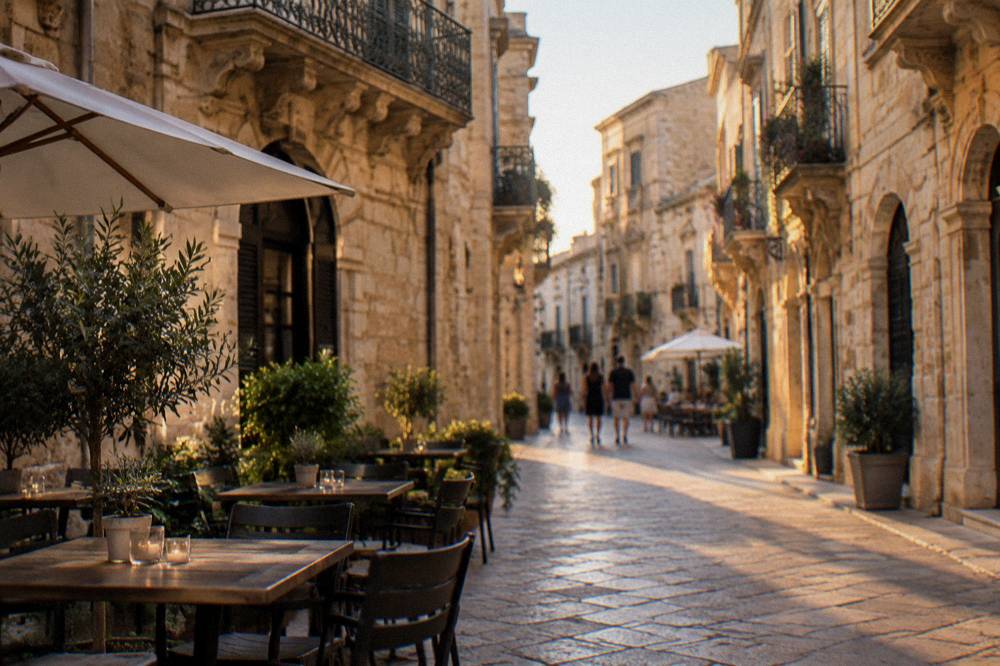
The immediate street, Via Vittorio Emanuele, is itself the attraction for many visitors: it is the spine of the evening passeggiata, lined with shops and cafés, and it connects the two halves of the monumental old town. The Villa Comunale, the public gardens, sits toward the Porta Napoli end and is the standard place to rest between church visits.
For depth rather than breadth, two museums reward the walk. The Museo Faggiano, a 5 euro ticket, shows the layered archaeology beneath an ordinary palazzo: Messapian, Roman, medieval and later remains stacked in one building's basement. The Museo Ebraico tells the story of Lecce's Jewish quarter, one of the most significant in southern Italy before the expulsion of the Jews from the Kingdom of Naples, and is visited by guided tour.
Beyond the city, the same railway and road spine that brings visitors in carries them out: Otranto is about 44 minutes by car, Gallipoli about 41, and both are reachable on the FSE regional lines, with Otranto requiring a change at Maglie. Those trips are covered in the Salento itinerary guide.
What Should You Know Before Visiting Churches In Lecce?
Dress and service times govern every church visit in Lecce: shoulders and knees must be covered, tourist access pauses during religious services, and opening patterns vary between the Diocese-run ticketed sites, which publish daily hours, and parish or order churches like Sant'Irene, whose hours are not centrally published, so the door itself is the information.
The Diocese of Lecce's arrangements for the LeccEcclesiae circuit are the clearest published standard in the city: daily opening, a 15-day ticket validity, free entry for under 12s and for Diocese residents with ID, and restricted access during worship. Sant'Irene is outside that administration, so none of those specifics transfer. What transfers is the etiquette: modest dress, silence during services, and no photography where signage prohibits it.
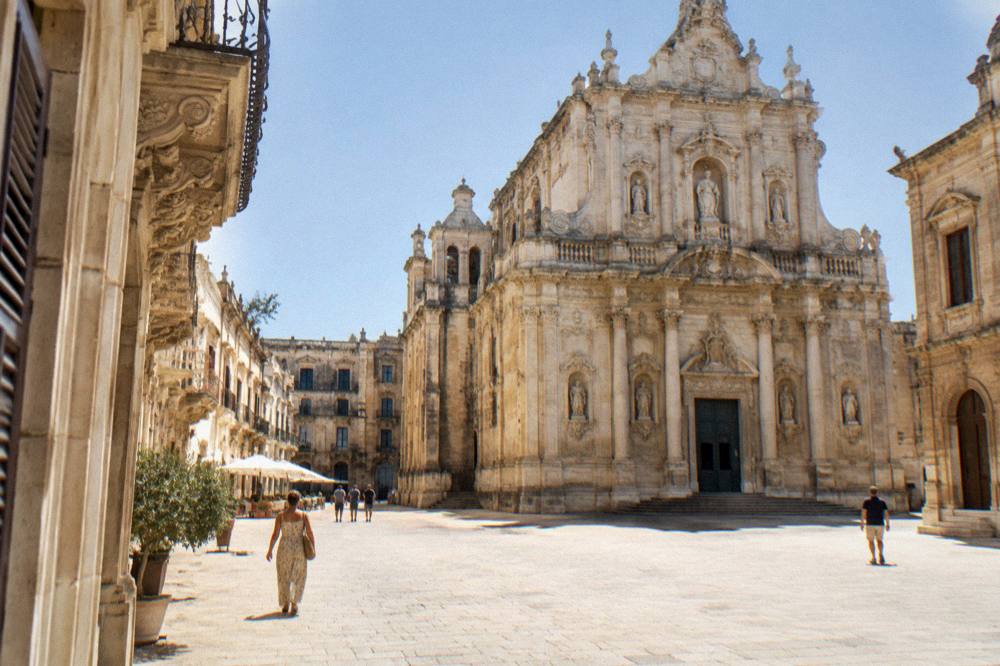
For visitors building a trip around the church architecture, the honest planning rule is to hold plans loosely outside the ticketed circuit. If the Theatine church is open, it is a genuine reward on the main street; if it is not, the facade, the carved portal and the position on Via Vittorio Emanuele still deliver the essential experience of Lecce Baroque as a living street architecture rather than a museum set.
The Lecce churches ticket guide breaks down the LeccEcclesiae pass, the Artwork city pass and the single-site tickets in full, and the free things to do in Lecce guide lists what costs nothing, from the public squares to the amphitheatre view from above.
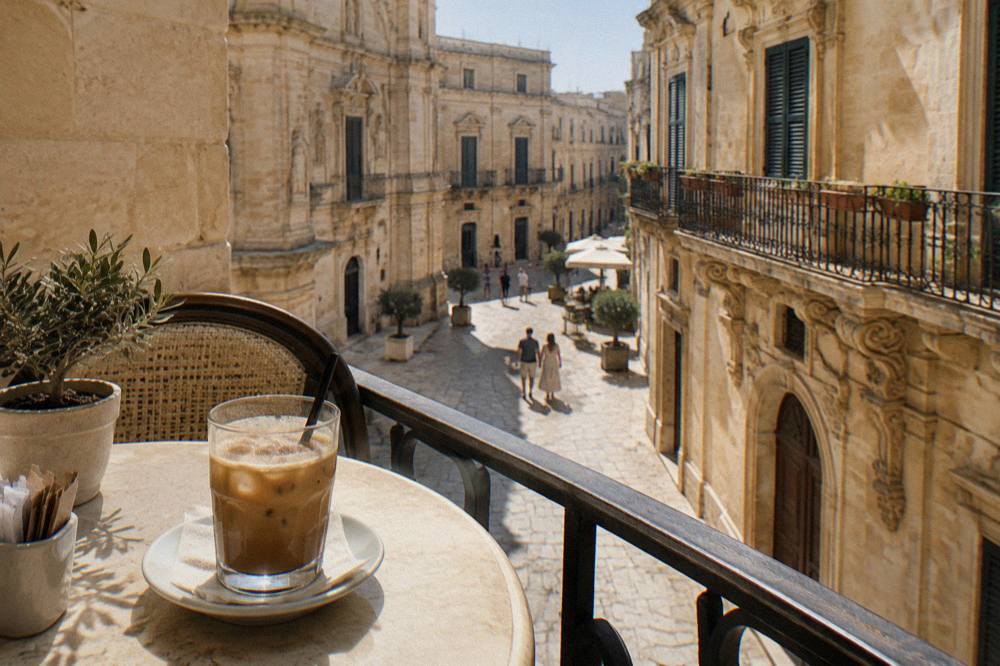
A street food walk along this same axis pairs the monuments with what the city actually tastes like: the caffe in ghiaccio con latte di mandorla, espresso over ice with almond milk, credited to Antonio Quarta of Quarta Caffe in the 1940s or 1950s, and the pasticciotto, whose 1745 invention date is Pasticceria Ascalone's own claim, from a shop in Galatina, disputed by historians. The full story of both is in the caffe in ghiaccio and pasticciotto guides.
Common Questions About The Chiesa Di Sant Irene In Lecce
Is the Chiesa di Sant'Irene in Lecce included in the LeccEcclesiae ticket?
No. The combined ticket covers the Duomo with its crypt, the Basilica di Santa Croce, San Matteo, Santa Chiara and the Antico Seminario with MuDAS. Sant'Irene is not on the list, and no verified hours or price are published for it, so confirm locally.
What are the opening hours of the Chiesa di Sant'Irene in Lecce?
No official opening hours are published for this church on verified channels. The Diocese's ticketed sites publish hours, daily 9:00 to 21:00 in summer and 9:00 to 18:00 in winter, but Sant'Irene sits outside that circuit. Try the door on a walk up Via Vittorio Emanuele, and expect visits to pause during services.
Who is Sant'Irene in Lecce?
Sant'Irene is one of the patron saints of Lecce, invoked historically as a protector of the city. Her statue stood on the column in Piazza Sant'Oronzo before the figure of Sant'Oronzo was placed there, and the Theatine church on Via Vittorio Emanuele carries her name.
Is there an entry fee for the Chiesa di Sant'Irene?
No admission price is published on verified official channels, and the church is not part of the LeccEcclesiae combined ticket. Confirm on arrival. For comparison, the LeccEcclesiae standard ticket costs 11 euro and the Museo Faggiano charges 5 euro.
How far is the Chiesa di Sant'Irene from Piazza Sant'Oronzo?
The church stands on Via Vittorio Emanuele, the street that runs northwest from Piazza Sant'Oronzo toward Porta Napoli, a short flat walk through the middle of the old town. Lecce's historic centre is compact and entirely walkable.
What should you wear to visit churches in Lecce?
Shoulders and knees should be covered, the standard rule the Diocese of Lecce applies across its own monuments. Tourist visits pause during religious services, so check service times if a particular church matters to your itinerary.
The Chiesa di Sant'Irene is a fitting reminder of what makes Lecce distinct among Italian art cities: a patron saint's church in carved pietra leccese, standing not behind a barrier but on the main street where the whole city walks in the evening, a few minutes from the amphitheatre, the Duomo and a café serving iced coffee with almond milk.