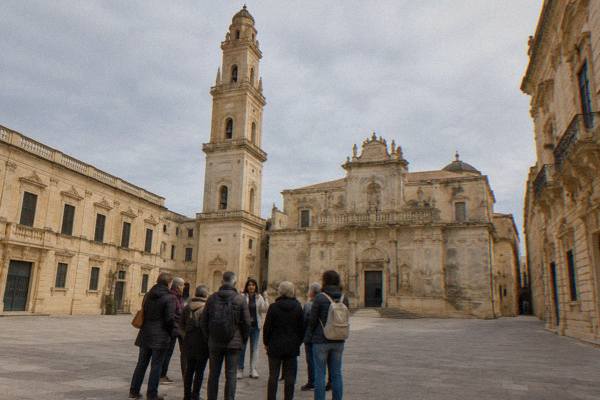
Festa Di Sant Oronzo: Lecce In Late August
Each late August, Lecce stops for four days to honour its patron saint. Here is what the feast involves, what it costs and how to plan around it.
Short answer
The Festa dei Santi Patroni honours Sant'Oronzo, San Giusto and San Fortunato in Lecce each late August. The 2026 edition ran 23 to 26 August with processions, luminarie, concerts and a funfair, mostly free to watch.
Lecce, the baroque capital of Salento in Puglia, southern Italy, pauses each late August for the Festa dei Santi Patroni, the feast of Sant'Oronzo, San Giusto and San Fortunato. The comune's own notice for the 2026 edition describes processions, luminarie, concerts, a fair and a luna park spread across four days. This guide explains what the feast is, what happens day by day, where it centres, and how to plan a visit around it, in the reporting voice of the Lecce Travel Guide editorial desk.
What Is The Festa Di Sant Oronzo In Lecce?
The Festa di Sant'Oronzo, formally the Festa dei Santi Patroni, is Lecce's annual feast honouring its three patron saints, Oronzo, Giusto and Fortunato, held in late August each year with religious processions, illuminated archways, concerts, a street fair and a funfair. The comune's notice for the 2026 edition confirms the full programme of processions, luminarie, concerts, fair and Luna Park.
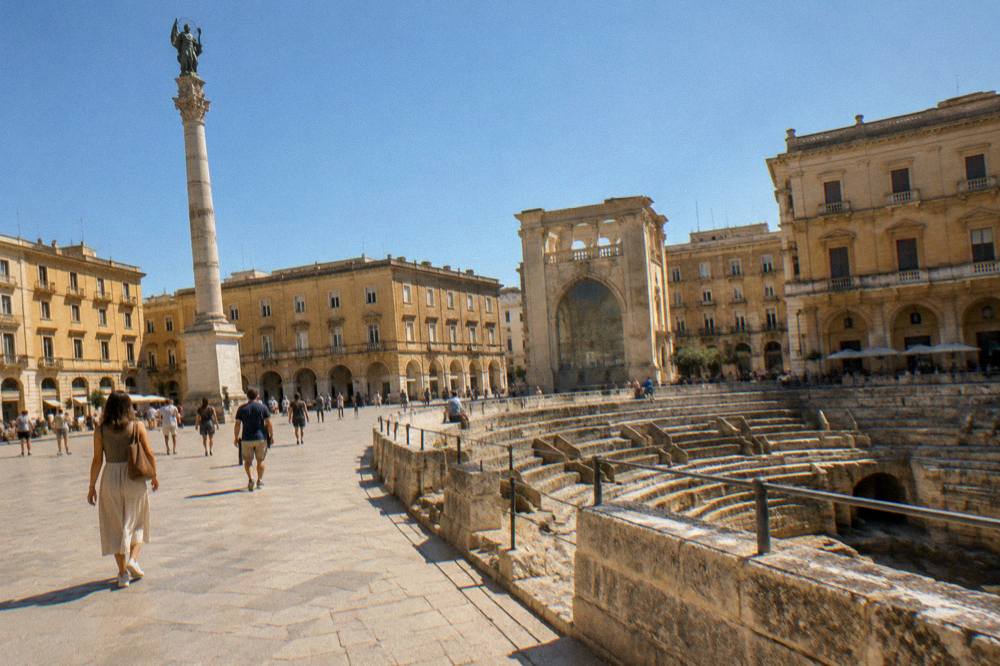
Sant'Oronzo holds a particular place in the city's identity. The column bearing his statue rises in the piazza that carries his name, and the saint is treated as Lecce's protector. San Giusto and San Fortunato share the patronage, which is why the official name of the feast is plural: the Festa dei Santi Patroni.
The feast is both religious and civic. The processions, including one carrying the saints' statues through the historic centre, sit at the core, but the comune's programme frames the whole as a city festival: bands, lights, fireworks and a funfair. Residents, leccesi, treat the days as the heart of the local summer, and the city's student population, about 20,774 enrolled at the Università del Salento, is largely still away, leaving the stage to families and returning locals.
When Does The Festa Di Sant Oronzo Take Place In Lecce?
The feast falls in late August each year. The 2026 edition ran from 23 to 26 August, per the Comune di Lecce's official notice, which framed it as four days of festivities in honour of Oronzo, Giusto and Fortunato, with processions, luminarie, concerts, a fair and a luna park. Dates for the 2027 edition had not been announced when this page was prepared.
The fixed pattern matters for planning. The comune's 2026 notice places the main festivities on 23 to 26 August, and the feast follows a similar late-August window year on year, so a visit planned for the last week of August has a strong chance of coinciding with it. Confirm the exact dates for your year on the comune's site before booking travel, because the religious calendar can shift individual ceremonies by a day.
Late August in Lecce is also, climatically, a serious proposition. The ERA5 reanalysis, 1991-2020, puts the mean daily high at 31.3 C in August with only 18.1 mm of rain across the whole month, and evenings around 22 C. Processions and concerts run into the night partly because of this. For wider planning, our best time to visit Lecce and Lecce weather pages carry the full monthly picture.
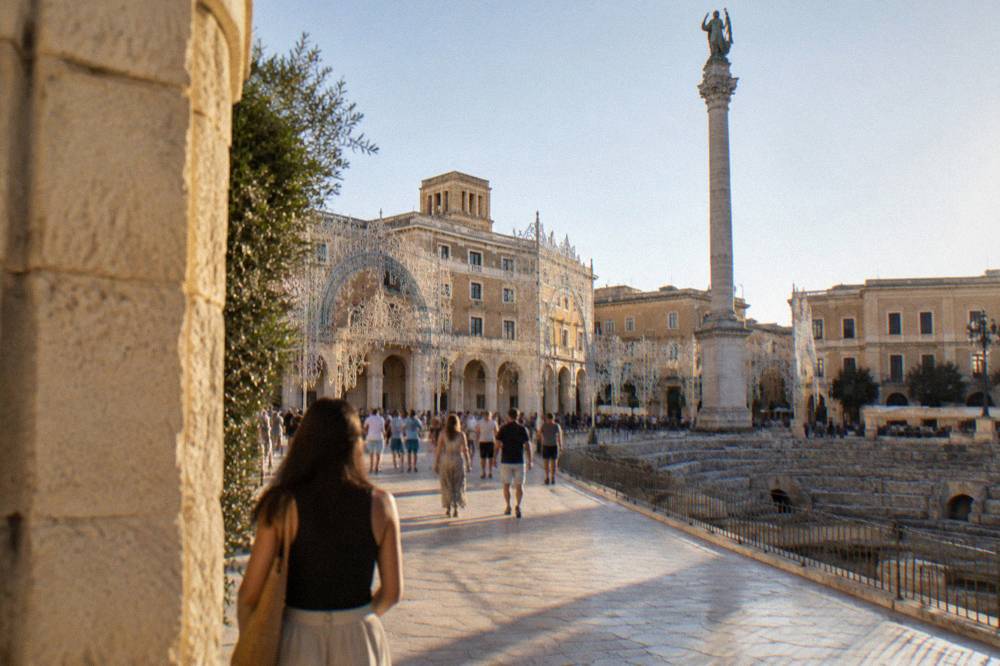
The feast weekend also rewards a slower daytime rhythm. Church visits, aperitivo in the shade, and an evening back in the squares when the luminarie switch on is the shape of a good day here. Two experiences that fit that rhythm well:
The papier-mache connection is not incidental: the craft of cartapesta, which you can read about alongside the Fiera dei Pupi tradition, has supplied devotional statues to Salento's churches and feasts for centuries, and the workshop above teaches it hands-on.
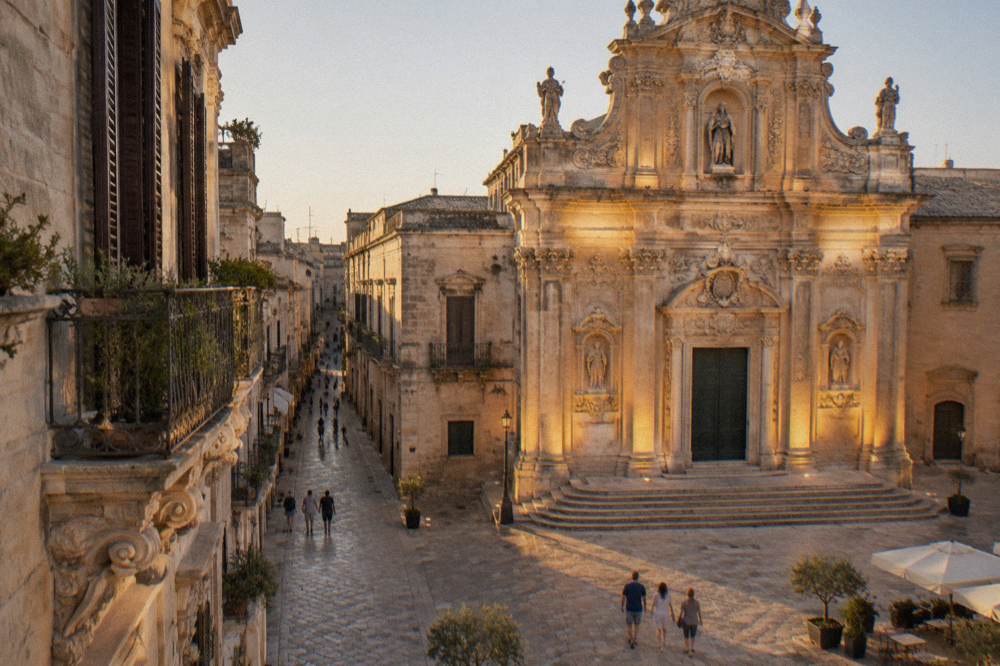
What Happens During The Feast Days In Lecce?
The 2026 programme, per the Comune di Lecce, combined religious ceremonies with public entertainment: processions of the saints' statues through the streets, illuminated archways across the centre, concerts, a fair and a Luna Park funfair. The processions are the spiritual core; the luminarie, music and rides turn the whole historic centre into an evening festival ground.
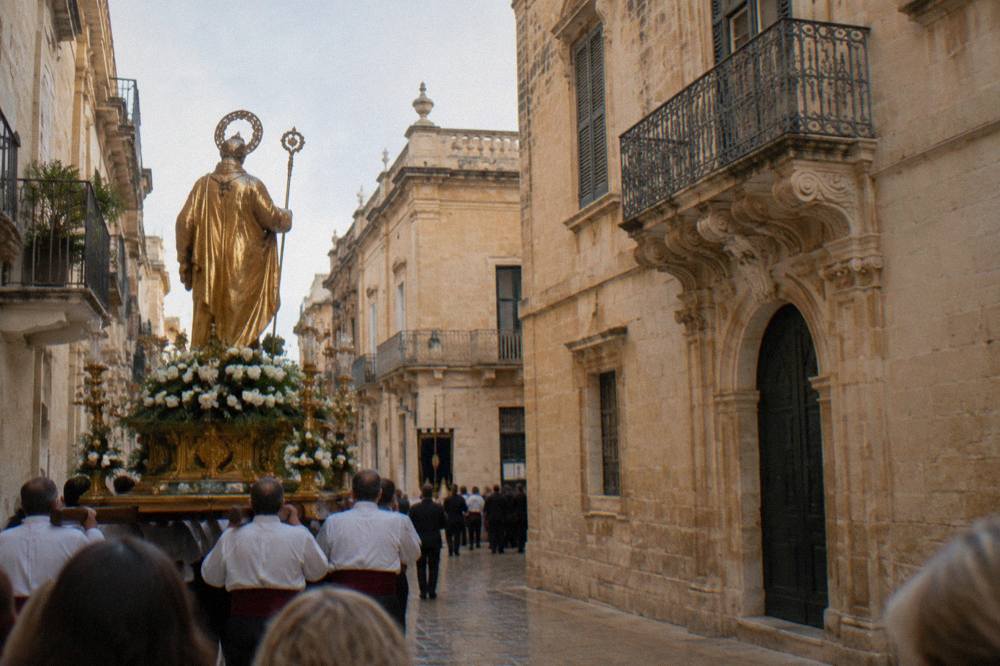
The processions are the moments the city organises itself around. Statues of the patrons are carried through the streets accompanied by clergy, brass bands and civil authorities, with residents lining the route. The comune's notice describes the processions as the anchor of the four days. Exact routes and timings for a given year are published in the official programme close to the date, so check the comune's news pages in the week before you travel.
Between the ceremonies, the tone is a street fair. Luminarie, the architectural light canopies southern Italian towns mount for patronal feasts, span the central streets; the Luna Park funfair sets up on the edge of the festivities; and concerts and band performances fill the evenings. None of this requires a ticket: the processions, lights and outdoor music are all free public events, with only the funfair rides and whatever you eat and drink costing money.
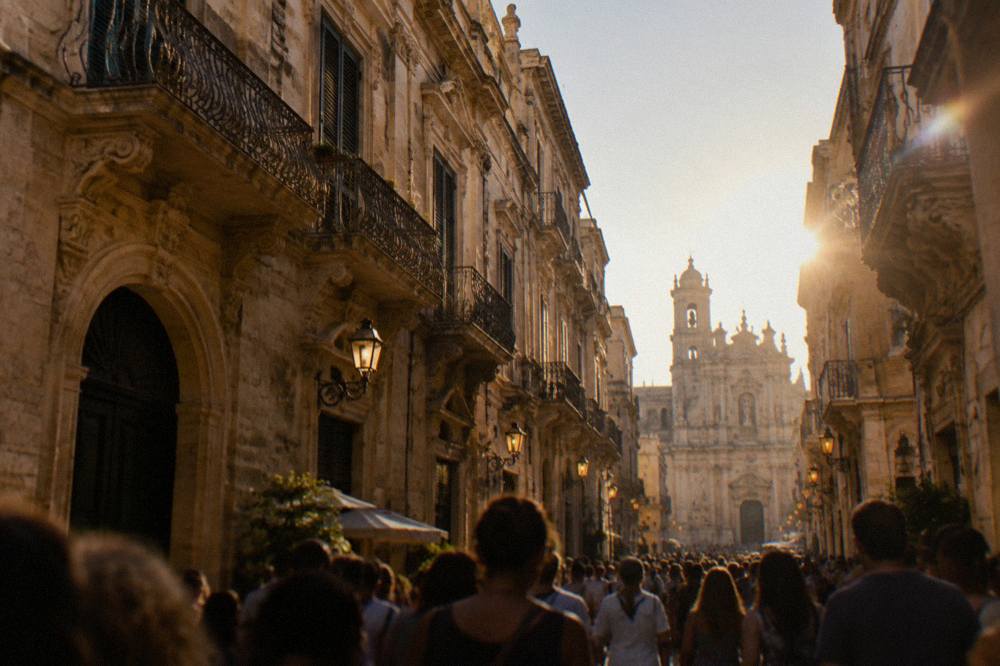
A practical note on timing: the evenings are the peak. The passeggiata, the Italian evening stroll, swells massively during the feast, and the luminarie read best at full dark. Daytime, by contrast, is hot and quieter, which makes it the right slot for the churches. Visits are paused during religious services, and a dress code of covered shoulders and knees applies, per the diocese's visitor information.
| Element of the feast | What it involves | Cost |
|---|---|---|
| Processions of the saints | Statues carried through the historic centre with clergy and bands | Free to watch |
| Luminarie | Illuminated light canopies over central streets | Free |
| Concerts and band performances | Live music on staged evenings, per the 2026 programme | Free unless stated |
| Fair and Luna Park | Street fair stalls and a funfair | Rides paid individually |
| Fireworks and light displays | Evening displays framing the final nights, per the 2026 programme | Free |
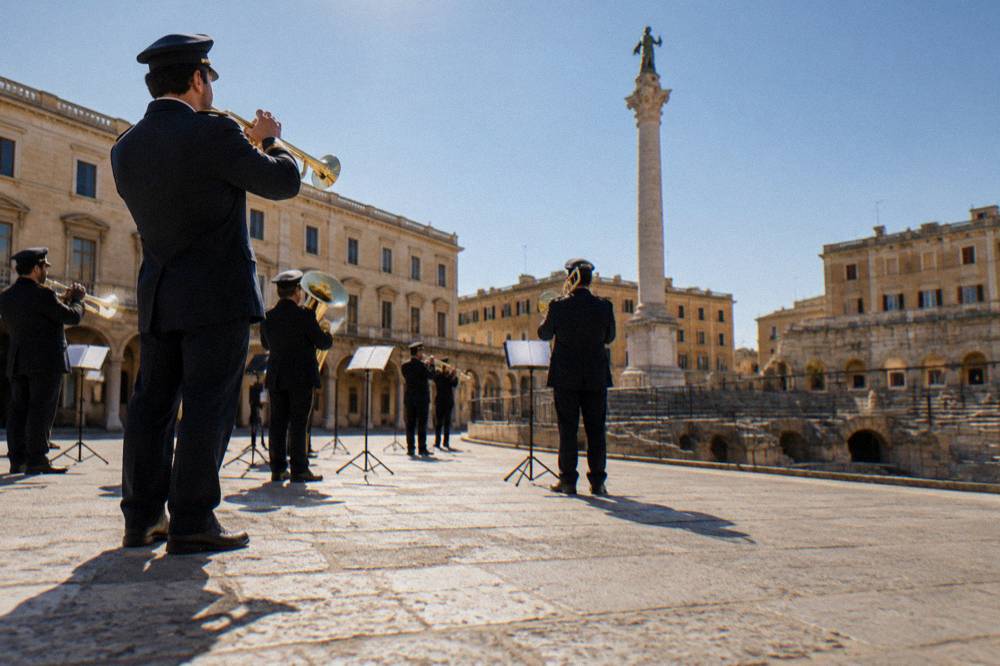
Where Do The Celebrations Centre In Lecce?
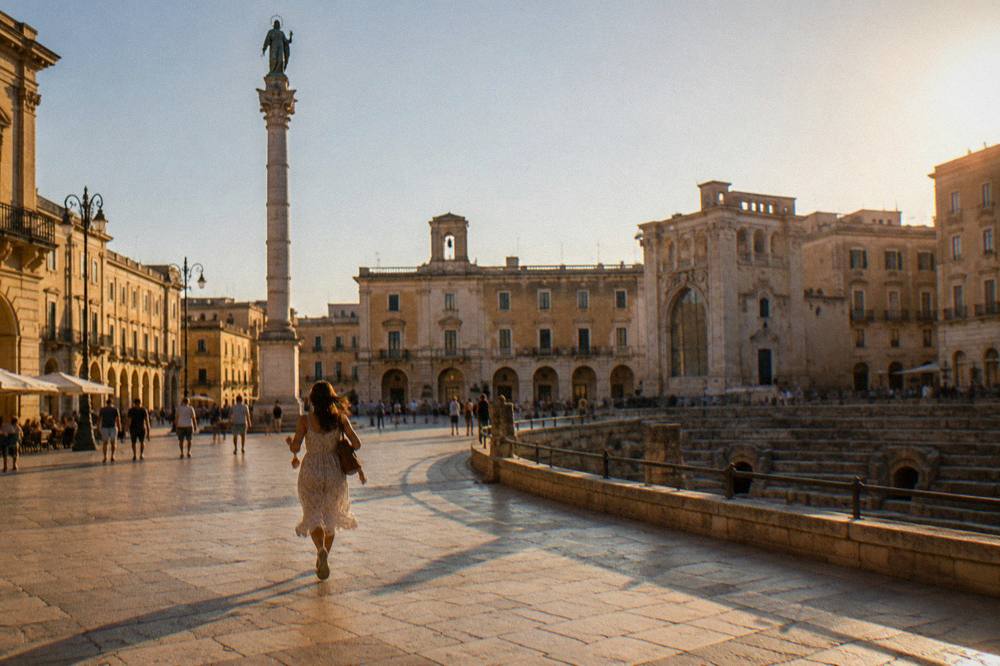
The celebrations centre on the historic centre, with Piazza Sant'Oronzo, the square that holds the saint's column, as the natural focal point, and the processions threading the baroque streets around it. The comune's programme spreads events across central squares and streets, all within walking distance of each other, since the feast is designed for a pedestrian city.
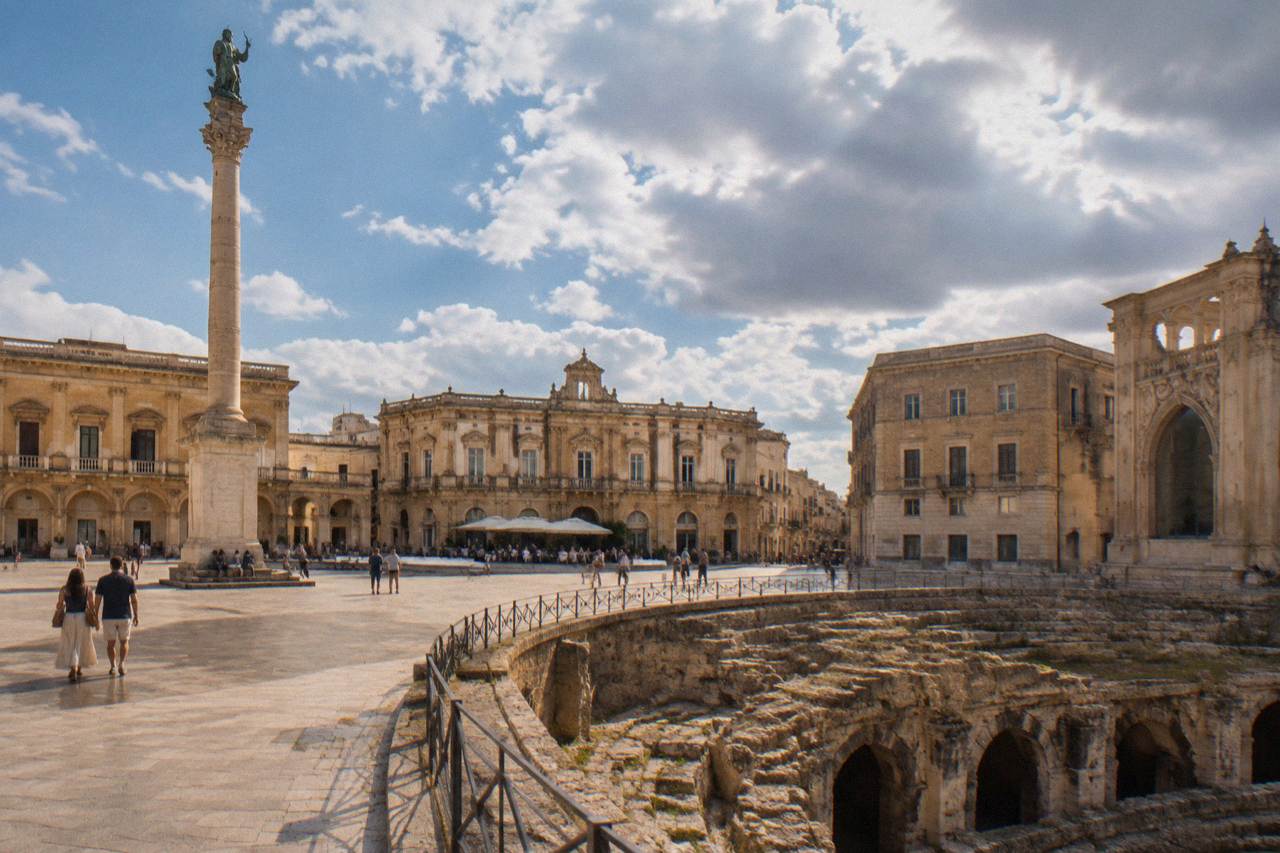
Piazza Sant'Oronzo is the symbolic heart. The square holds the column of Sant'Oronzo and sits beside the Roman amphitheatre, whose arcades are visible from the paving, and it anchors the processional routes. Our Piazza Sant'Oronzo page covers the square itself in detail.
From there the feast radiates through the old town. Processions typically pass the Duomo and the great baroque facades of the centre, and the luminarie follow the main shopping streets. The churches the feast connects to are covered in our own pages: the Basilica di Santa Croce, the Chiesa di Sant'Irene, the Chiesa di San Matteo and the Chiesa di Santa Chiara. If church interiors are on your list, the LeccEcclesiae combined ticket covers several of them; the ticket's own site lists 11 euro standard, valid 15 days, with under-12s free.
Because the whole footprint is pedestrian, the feast is easy to experience without any transport beyond your feet. The one caution is the ZTL, the camera-policed limited traffic zone over the historic centre: driving into it without authorisation carries fines of 83 to 332 euro. Ask your accommodation to register your plate if you have a car, and otherwise arrive on foot or by taxi from outside the ring.
What Food And Drink Mark The Feast In Lecce?
The feast is a street-eating occasion built on Salento staples rather than special festival dishes: pasticciotto, the custard pastry the region claims through a Galatina shop's own 1745 story, rustico leccese, the savoury béchamel and tomato pastry, iced coffee with almond milk, and fairground food from the stalls the comune's programme includes. Nothing on the religious programme is ticketed, and the food is pay-as-you-go.
The classic pairing for a hot feast evening is caffè in ghiaccio con latte di mandorla, espresso poured over ice with almond milk, a drink credited to Antonio Quarta of Quarta Caffè in the 1940s to 1950s and now on Italy's traditional-food list. Our caffe in ghiaccio page tells that story fully. Alongside it, pasticciotto from the city's historic pastry shops makes the rounds; Pasticceria Natale, family-run since 1978, is one long-standing name, and Caffè Alvino in Piazza Sant'Oronzo has roots to about 1880. Our Lecce cafes page has the fuller background, and what to eat in Lecce covers the whole table.
For a sit-down meal between processions, the best restaurants in Lecce page is the place to start, though the feast evenings push demand high and reservations become essential. The Salento wine that pairs with the region's food, Negroamaro-based and bottled under the Salice Salentino DOC since 1976, appears on every list.
| Feast food or drink | What it is | Where it sits in the feast |
|---|---|---|
| Pasticciotto | Shortcrust custard tart, a Galatina claim of 1745 | Pastry shops and stalls all weekend |
| Rustico leccese | Puff pastry with béchamel, tomato and mozzarella | Bakeries, eaten on the move |
| Caffè in ghiaccio con latte di mandorla | Iced espresso with almond milk, credited to Quarta Caffè | The late-August default drink |
| Fairground stalls | Street food and sweets at the fair, per the 2026 programme | Around the Luna Park |
| Negroamaro wines | Salice Salentino DOC, established 1976 | Bars and restaurants |
A tasting that fits the feast's own rhythm:
Is The Festa Di Sant Oronzo Free To Watch In Lecce?
Yes, the core of the feast is free: the processions, the luminarie, the concerts and the outdoor ceremonies cost nothing to watch, and no ticket is sold for the public programme, per the comune's framing of the 2026 festivities as a city celebration. What costs money is the funfair, the food and drink, and any churches or museums you visit separately under their own ticketing.
That makes the feast one of the great free spectacles of the southern Italian summer. You can walk under the luminarie, follow a procession and hear a concert without spending anything beyond an espresso. The funfair rides are paid individually at the Luna Park, and prices are set by the operators on site, so confirm at the ride.
The separate ticketed sights around the feast have their own rules. The LeccEcclesiae church ticket lists 11 euro standard, 21 euro with the bell tower, valid 15 days. Museo Faggiano is 5 euro. Castello Carlo V is visited by guided tour only, 10 euro full, with only the courtyard free. None of these close for the feast, though hours can shift around services; no closures were reported for Santa Croce, the Duomo, the Castello or the amphitheatre in October 2026, and service times suspend tourist visits inside working churches.
| Part of the feast weekend | Ticket or cost | Notes |
|---|---|---|
| Processions, luminarie, concerts | Free | Public programme, no ticket |
| Luna Park funfair | Paid per ride | Prices set at the fair |
| LeccEcclesiae churches | 11 euro standard, 21 euro with bell tower | Valid 15 days, under 12 free |
| Museo Faggiano | 5 euro | Open daily 9:30 to 20:00 |
| Castello Carlo V tour | 10 euro full | Guided tour only, courtyard free |
How Busy Is Lecce During The Feast, And When Should You Book?
Lecce fills sharply for the feast weekend: the 2026 programme ran four days of processions, lights and concerts in late August, a period already deep in the Salento summer season, so accommodation in and around the centre should be booked well ahead. No verified crowd figures or hotel price ranges exist for the feast, so confirm rates and availability directly at booking.
What can be said with figures is climate and calendar. The ERA5 reanalysis, 1991-2020, shows August as the peak of the local summer, with a mean high of 31.3 C and the year's lowest monthly rainfall outside July, and the sea at its 25 to 27 C peak on both coasts. The feast sits on top of that: it is both the city's own holiday and a draw for returning leccesi. Treat it like a holiday-weekend city anywhere in Italy: book early, expect full restaurants, and expect the historic centre to be loud and lit until late.
For where to base yourself, the where to stay in Lecce page maps the neighbourhoods. During the feast, the trade-off sharpens: staying inside the historic centre puts you inside the celebration, with everything that implies for noise, while the ring just outside keeps you a ten-minute walk from the lights with more quiet. The tourist tax, collected by accommodation, runs up to a reported top rate of 5 euro per person per night in high season; confirm at booking.
What Else Happens In Salento In Late August?
Late August is Salento's festival peak: the Notte della Taranta Concertone at Melpignano closed its 29th edition on 22 August 2026, the Festa di San Rocco ran at Torrepaduli from 14 to 17 August 2026, and the two sit either side of Lecce's own patronal feast, making the last ten days of August a single festival corridor across the peninsula. No 2027 dates had been announced for any of them when this page was prepared.
The Notte della Taranta is the biggest of these, a pizzica music festival whose closing concert in Melpignano, about half an hour's drive inland from Lecce, draws the region's largest festival crowd. Its 2026 edition ran on Saturday 22 August, the night before Lecce's feast opened, which in practice means many visitors do both. The Notte della Taranta page covers it, and the pizzica tradition behind it, fully; the tarantula legend that explains the dance's origins is folklore and should be read as tradition, not medicine.
Further out, the coast calls. The feast's heat makes the sea part of any sensible itinerary, and our beaches near Lecce and Salento beaches pages map both the Adriatic and Ionian sides, while day trips to Santa Maria di Leuca and the marine di Lecce extend the festival corridor into a full week.
| Late-August event | Where | Latest edition |
|---|---|---|
| Festa di San Rocco | Torrepaduli, Ruffano | 14 to 17 August 2026 |
| Notte della Taranta Concertone | Melpignano | 22 August 2026, 29th edition |
| Festa dei Santi Patroni | Lecce | 23 to 26 August 2026 |
| Fiera dei Pupi | Lecce, ex-Convento dei Teatini | Early December to 24 December in the 2025 pattern; 2026 dates not yet published |
A guided walk anchors the feast in the city's fabric:
How Do You Get To Lecce For The Feast?
Lecce has no commercial airport; the gateway is Brindisi (BDS), about 47.6 km and roughly 43 minutes by road from the city, with airport buses costing 6.50 euro one way and taking about 40 minutes, per the operator's own listing. By train, Lecce has direct Trenitalia services from Bari in about 1h19 to 1h55 and from Rome in about 5h58 to 6h16, and the station sits a short walk from the historic centre.
The practical advice is to arrive by rail or airport bus and not move the car again until you leave. The ZTL cameras over the historic centre operate on weekday afternoons and overnight, and around the clock on Sundays and holidays, with fines from 83 to 332 euro; the feast days themselves will be pedestrian-heavy regardless. Our getting around Lecce, Brindisi airport to Lecce, how to get to Lecce and car rental and driving in Lecce pages carry the full detail, and the Lecce train station page covers arrivals.
If the feast is the reason for the trip, build the itinerary so the drive-free days fall on it. Our things to do in Lecce page is the general starting point, and the festival corridor above means a car-free week centred on the feast, with FSE trains to Gallipoli, Otranto and Galatina on either side, works without ever needing a steering wheel.
For visitors who want to take something of the feast home beyond photographs, the craft behind it offers that. The devotional statues carried in the processions belong to the same cartapesta tradition that fills Lecce's churches, and a workshop is the one way to handle that tradition directly.
Common Questions About The Festa Di Sant Oronzo In Lecce
When is the Festa di Sant'Oronzo in Lecce?
Late August each year. The 2026 edition ran 23 to 26 August, per the Comune di Lecce. The 2027 dates had not been announced; check the comune's site before booking.
Is the Festa di Sant'Oronzo free?
Yes, the processions, luminarie, concerts and outdoor ceremonies are free public events. Only the funfair rides, food and separately ticketed sights cost money.
Where does the feast take place in Lecce?
Across the historic centre, centred on Piazza Sant'Oronzo and the baroque streets around it, with processions passing the Duomo and the main churches. Everything is within walking distance.
Who is Sant'Oronzo?
Lecce's principal patron saint, honoured with San Giusto and San Fortunato. His column stands in Piazza Sant'Oronzo.
Can you drive into Lecce during the feast?
The historic centre sits inside a camera-policed ZTL with fines from 83 to 332 euro, and feast days are heavily pedestrian. Ask your accommodation about plate registration, or arrive by train and walk.
What else happens in Salento in late August?
The Notte della Taranta Concertone at Melpignano, on 22 August 2026, and the Festa di San Rocco at Torrepaduli, 14 to 17 August 2026, sit either side of Lecce's feast, forming a festival corridor across the peninsula.