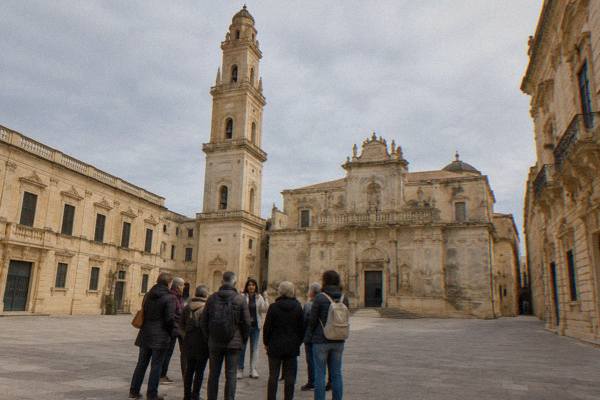
Rudiae: The Messapian City And Its Amphitheatre
Rudiae is the Messapian and Roman archaeological park on the southwestern edge of Lecce, a short way outside the baroque old town, visited on guided tours at weekends or by booking on weekdays.
Short answer
Rudiae is a Messapian-and-Roman archaeological park in Lecce, reached from the city centre in minutes. Visits are guided: weekends on a schedule, weekdays by booking, at 5 euro full and 4 euro reduced, free for children under 7.
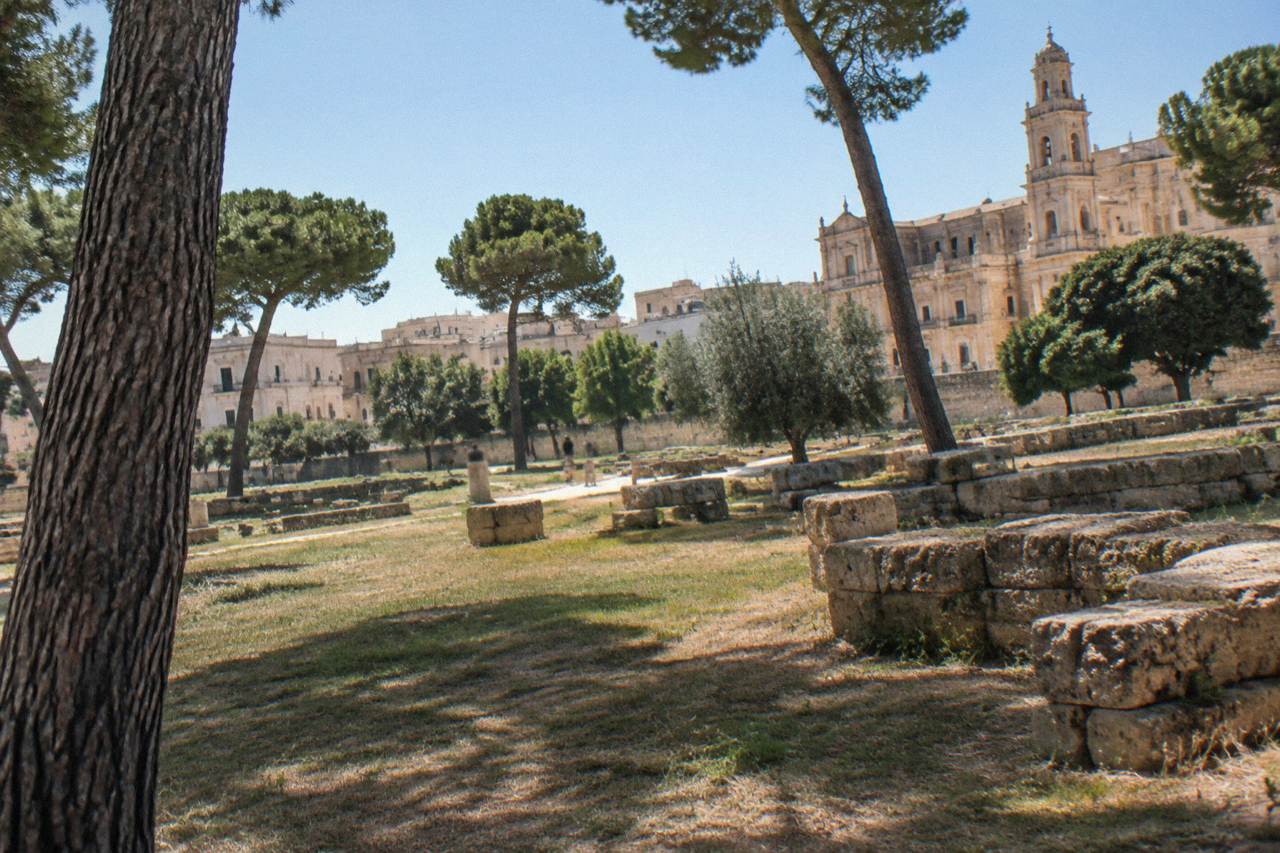
Rudiae is the archaeological park on the southwestern side of Lecce, the baroque capital of Salento in Puglia, southern Italy, and it preserves the remains of the ancient settlement that stood here long before the palazzi and the churches of the old town were carved from pietra leccese. The comune's own itinerary pages list it as the Parco archeologico di Rudiae, a Messapian-and-Roman site with an amphitheatre, visited on guided tours at weekends and by reservation on weekdays. It is one of the few places in the city where the layers under the baroque are the point rather than the backdrop.
What Is Rudiae And Why Does Lecce Have Two Ancient Sites?
Rudiae is a Messapian-and-Roman archaeological park on the southwestern edge of Lecce, in Puglia, southern Italy, holding the remains of a settlement that predates the baroque city by many centuries, including a Roman amphitheatre. It is separate from the Roman Amphitheatre in Piazza Sant'Oronzo, which sits in the middle of the old town. Visits at Rudiae are guided only: scheduled tours at weekends and visits by booking on weekdays.
The two sites are easy to confuse because guidebooks often merge them into a single "Roman Lecce" story. They should not be. The amphitheatre in the centre, described on the Roman Amphitheatre guide, was built into the fabric of the medieval and baroque city and today sits half-sunk in Piazza Sant'Oronzo, next to the Museo Castromediano end of the square. Rudiae, by contrast, lies outside the old walls along the road that leads toward the Porta Rudiae gate, in open ground where excavations have uncovered a wider settlement story: Messapian phases first, then Roman reuse of the same land.
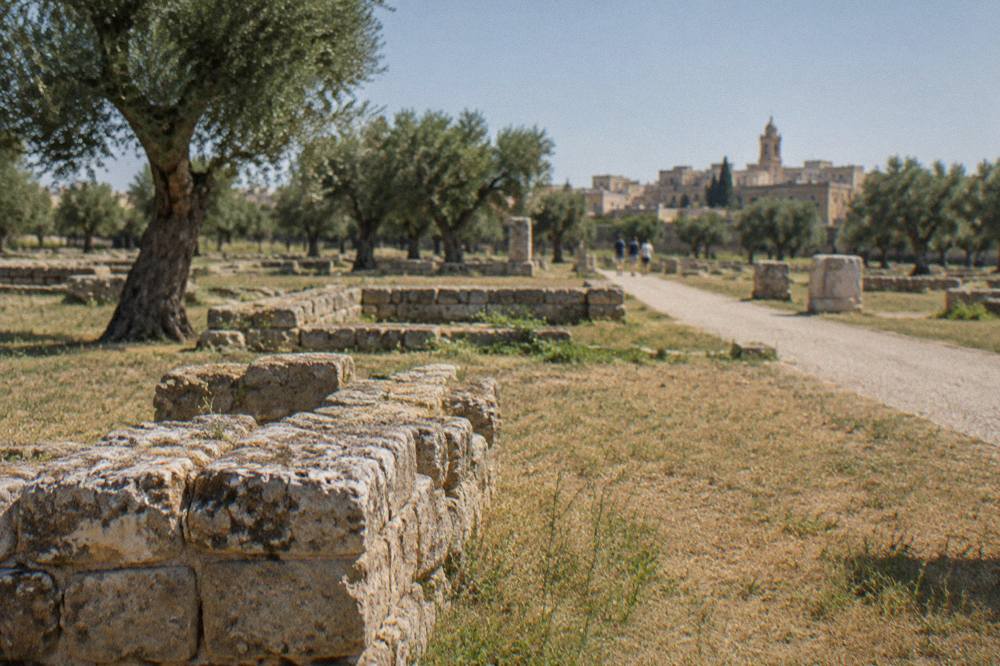
The Messapians were the pre-Roman people of this part of Salento, and their settlements dot the peninsula between the Adriatic and the Ionian seas. Rudiae is the example closest to Lecce itself, which is what gives the park its weight in the city's story: the baroque capital did not appear from nothing, and the soft limestone that made the facades of the Basilica di Santa Croce possible was being quarried and worked on this land long before any of those facades existed. What the visitor sees at Rudiae is low masonry, ground plans and the amphitheatre's footprint, read best with a guide, which is one reason the site is not a wander-in ruin.
No construction date for the amphitheatre at Rudiae is given in the sources this site works from, so none is printed here. Describe it by what stands in front of you rather than by a century, and let the guide on the day supply the dating debate.
How Do You Get To Rudiae From Lecce City Centre?
Rudiae sits on the southwestern edge of Lecce, outside the old town, along the axis that runs from the Porta Rudiae gate, and it is a short trip from the centre rather than a day excursion. No bus route, walking time or cycle time for this exact journey appears in the sources this site uses, so none is quoted. Visitors staying in the historic centre should ask their accommodation about the best approach for their dates.
What can be said with confidence is the geography. The old town of Lecce is compact and largely pedestrian in feel, bounded by walls and gates; Porta Rudiae is one of those gates, and the road beyond it gives the park its direction. The nearest beach at San Cataldo is about 13 km away to the east, which is a reminder of how inland Lecce sits: Rudiae is a city-edge ruin, not a coastal one. Anyone planning a day that pairs the park with the old town's sights, from Piazza del Duomo to Piazza Sant'Oronzo, is working with short distances inside a single small city, and the centro storico guide maps that core in detail.
Two practical notes travel with any visit to this side of Lecce. First, the historic centre has a camera-policed ZTL, a limited traffic zone; the reported hours are reported rather than guaranteed, and the standard advice is to ask your accommodation to register your plate if you drive. Second, if you are relying on public transport in the city, the SGM network runs the local buses, with a 60-minute ticket at about 1.20 euro bought in advance. Neither of these figures is specific to Rudiae, but both shape the drive or ride to the park's entrance. Confirm the current visiting arrangements when you book, because a site seen only with a guide has a gate, a meeting point and a start time, not a turnstile.
What Does A Visit To The Rudiae Amphitheatre Look Like?
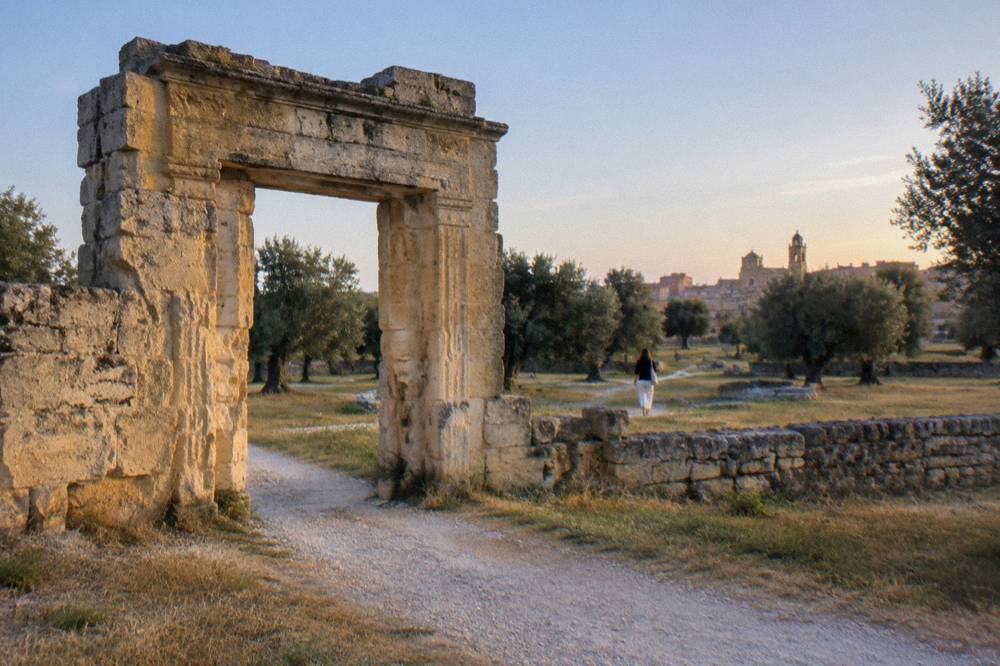
A visit to Rudiae is a guided walk through an excavated Messapian-and-Roman park: low stone foundations, settlement remains and the oval footprint of the amphitheatre, read aloud by the guide rather than by panels and gift shops. The comune's itinerary page gives weekend guided visits and weekday visits by booking, at 5 euro full, 4 euro reduced, and free entry for children under 7. Tour times shift with the seasons.
That is a different experience from the monuments in the centre. The Teatro Romano is tucked into the street fabric of the old town, the amphitheatre in Piazza Sant'Oronzo is visible from the square itself, and the Museo Faggiano layers centuries below a single palazzo. Rudiae is the only one of the four that reads as an open-field excavation. Come for the quiet, the scale of the ground plans and the sense that the dig is the whole story, not a basement beneath a living building.
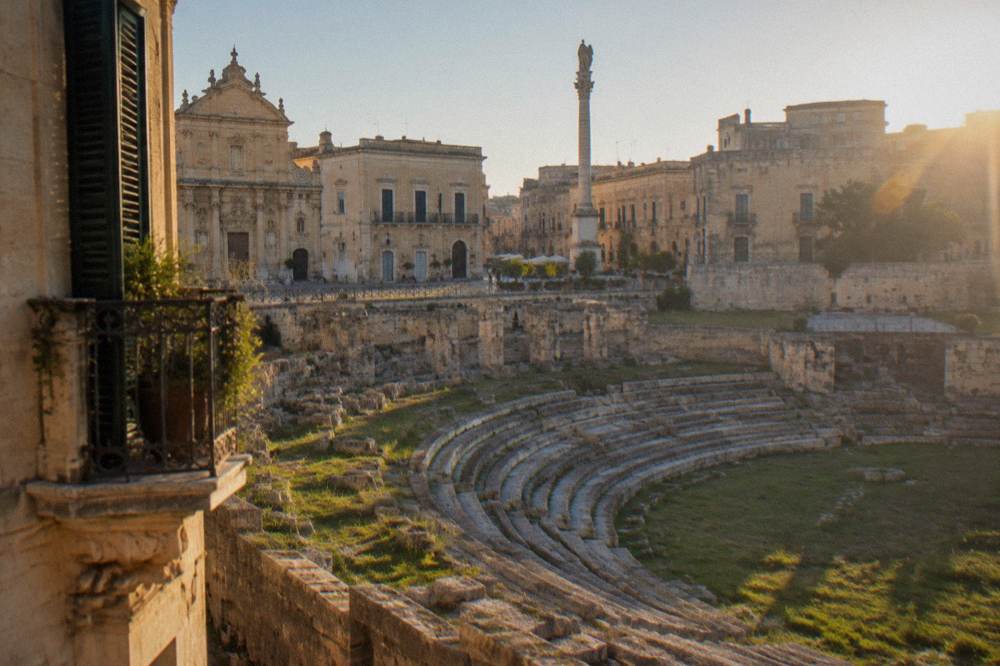
Because access is guided, the visit rewards a little preparation. The park's own listing with the comune is the place to confirm the weekend schedule and to make a weekday booking; hours in the sources shift between afternoon slots in cooler months and later evening slots in summer, matching the pattern seen across Salento's seasonal sites. Wear shoes for unpaved ground, bring water in the warmer months, and treat the guide's commentary as the site's real interpretive layer. Photography is of open air and low masonry, so low light early or late in the day does the most for the stones.
What Are The Rudiae Tickets, Hours And Booking Rules?
The Parco archeologico di Rudiae charges 5 euro for a full ticket and 4 euro reduced, with children under 7 free, per the comune di Lecce's itinerary page. Visits are guided: scheduled at weekends and by booking on weekdays. Seasonal tour times apply and the current schedule should be confirmed with the booking contact before travel, as with every seasonal site in Salento.
That price point sits among the smaller Lecce sites rather than the headline ones. The LeccEcclesiae combined church ticket, covering the Duomo, Santa Croce and the other baroque churches, is 11 euro standard; the Castello Carlo V guided tour is 10 euro; Museo Faggiano is 5 euro. Rudiae's 5 euro is therefore in the same band as the city's intimate museums, and the guide is included rather than optional, which is the practical difference. There is no reported combined ticket that bundles Rudiae with the city-centre monuments, so budget it as a separate line. The full index of guides sits on Lecce Travel Guide.
| Site in Lecce | Reported ticket | Access style | Source status |
|---|---|---|---|
| Parco archeologico di Rudiae | 5 euro full, 4 euro reduced, under 7 free | Guided visits, weekends scheduled, weekdays by booking | Comune itinerary page, reported |
| Roman Amphitheatre, Piazza Sant'Oronzo | 5 euro full, 2 euro reduced | Entry in visiting hours, winter Tue to Sun 10:00 to 17:00 | Regional museums site, reported |
| Museo Faggiano | 5 euro, ages 8 to 16 pay 3 euro, under 8 free | Open entry, every day 9:30 to 20:00 | Museum tariff page |
| Museo del Teatro Romano | About 3 euro | Mon to Sat 9:30 to 13:00, afternoons on request | Comune listing, price secondary |
| Castello Carlo V | 10 euro tour full, 6 euro reduced | Guided tour only, Tue to Sun | Castle's own page |
Bookings and opening patterns deserve a second sentence of caution. The comune page is the primary reference this site cites for the park's arrangements, and seasonal sites across the province adjust their schedules between the summer pattern and the October-to-March pattern without much publicity. If Rudiae is the anchor of your morning, book it first and build the day around the confirmed start time, then fill the rest with the old town, which needs no booking at street level.
How Does Rudiae Fit Into One Day In Lecce?
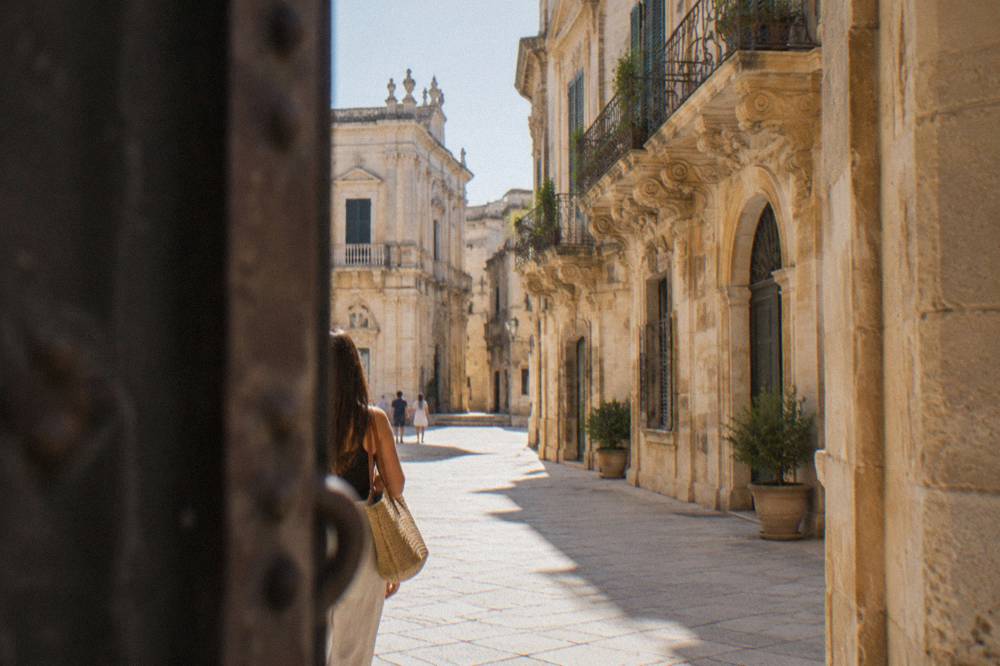
Rudiae works best as the first stop of a Lecce day, taken on a weekend guided slot or a booked weekday visit, followed by the old town's walkable core: Piazza Sant'Oronzo and the amphitheatre, Piazza del Duomo, Santa Croce, and the layered underground of Museo Faggiano. The distances inside Lecce are small, and the park's guided format gives the day a fixed starting time that the rest of the itinerary can hang from.
A sample shape for the day, assuming a morning slot at the park: the guided walk at Rudiae first, then the short trip back inside the walls, entering the old town through the Porta Rudiae side. From there the standard sequence holds: Piazza Sant'Oronzo with the amphitheatre's arcades, the Castello Carlo V courtyard, then the sequence of the Piazza del Duomo and the LeccEcclesiae churches. An afternoon inside the churches pairs naturally with a morning in an excavation: two speeds of the same city, one baroque and one ancient. The Lecce in one day itinerary carries the fuller sequence with timings.
| Part of the day | Suggested stop | What it gives you | Booking needed |
|---|---|---|---|
| Morning | Parco archeologico di Rudiae | Messapian and Roman layers, guided | Yes, weekend schedule or weekday booking |
| Late morning | Piazza Sant'Oronzo and Roman Amphitheatre | The city-centre amphitheatre, street life | No for the square; ticketed to enter the site |
| Early afternoon | Piazza del Duomo and LeccEcclesiae churches | The baroque core, combined ticket | Ticket at Piazza Duomo 5 or Santa Croce |
| Late afternoon | Museo Faggiano | Centuries of layering under one palazzo | No, open entry 9:30 to 20:00 |
| Evening | Aperitivo in the old town | caffe in ghiaccio con latte di mandorla | No |
If the day is generous, the MUST museum adds the city's historical collection, and the Villa Comunale gives a green pause between monuments. With two full days, the second can leave the city entirely: Otranto is about 44 minutes away by car, Gallipoli about 41, both with their own coasts and old towns, and the FSE trains reach Gallipoli and Galatina directly from Lecce station.
What Should You Know About The Messapian Side Of Rudiae?
The Messapian layer is what separates Rudiae from every other ancient site in Lecce: this was a settlement of the Messapians, the pre-Roman people of Salento, before Roman building reshaped the same ground, and the amphitheatre belongs to that later phase. No founding date, population figure or construction year for the site appears in the sources this site works from, so none is printed. The guided visit is where the chronology is explained.
That restraint matters, because popular writing about Rudiae tends to reach for big numbers and confident dates. The honest position is simpler: a Messapian settlement existed on this ground, the Romans built over and around it, and the excavation now shows both. The visitor who wants the fuller picture of what pre-Roman Salento looked like can pair the park with the Museo Castromediano in the city, whose archaeological collections carry the region's longer story, and with the Giudecca and old-town walks that show how later Lecce reused its own inheritance.
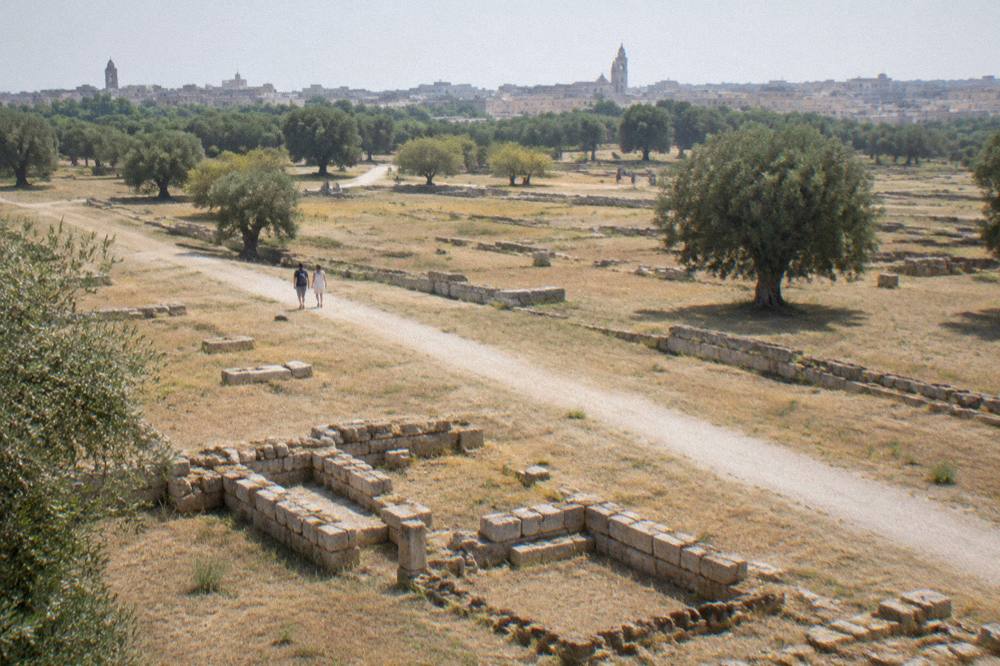
The stone itself is part of the story. Pietra leccese, the Miocene limestone that softens in the quarry and hardens in the air, was the building material of the baroque city and of the ancient one before it; the facades of the Palazzo dei Celestini and the churches around Santa Chiara are late expressions of a tradition of working this soft local stone that the Messapian and Roman builders began. Seeing the raw, unadorned stone at Rudiae first, then the carved facades in the centre, is one of the more satisfying sequences a visitor to Lecce can run, and it needs no ticket beyond the two sites already on the list.
When Is The Best Time Of Year To Visit Rudiae?
The best time to visit Rudiae is spring or autumn, when the ERA5 reanalysis 1991-2020 shows Lecce at mean highs of 18.6 C in April and 21.8 C in October, because the park is open ground with little shade and the visit is a walking one. Summer mean highs reach 31.0 C in July and 31.3 C in August, and November carries the year's heaviest rain at 93.7 mm. Winter visits are mild but damp, with a January mean low of 6.7 C.
An open excavation behaves differently from a museum. Museo Faggiano keeps its 9:30 to 20:00 hours every day of the year regardless of weather, but a guided walk through Rudiae in the August midday heat is a different proposition from the same walk in April, and the site's seasonal tour times, later in the day in summer, reflect exactly that. If your trip falls in the hot months, take whatever late slot the schedule offers and spend the middle of the day inside the churches, which stay cool in their own stone.
| Month | Mean high C | Mean low C | Rain mm | Rudiae note |
|---|---|---|---|---|
| January | 12.4 | 6.7 | 63.1 | Mild but damp; weekend slots may be fewer |
| April | 18.6 | 10.7 | 54.6 | Comfortable walking weather |
| July | 31.0 | 21.7 | 15.3 | Take a late slot; little shade on site |
| August | 31.3 | 22.2 | 18.1 | Peak heat; combine with indoor afternoon |
| October | 21.8 | 15.4 | 91.3 | Pleasant air, rising rain risk |
| November | 17.3 | 11.7 | 93.7 | Wettest month; bring a rain layer |
Figures are ERA5 reanalysis, 1991-2020, a modelled grid cell near Lecce, not a weather station record. Seasonal scheduling cuts both ways: the summer pattern usually means more guided slots, while the winter pattern from October to March trims the calendar at the same time as the air cools. Check the schedule for your exact dates when you book.
What Should You Combine With Rudiae On A Longer Stay?
On a stay of two or three days, Rudiae slots in as a half-morning anchor, and the rest of Salento does the heavy lifting: Otranto about 44 minutes away by car or an FSE train via Maglie, Gallipoli about 41 minutes by car or direct FSE train, Galatina about 29 minutes by car, and the beaches of both coasts within an hour. The park's guided format means it books like an appointment, so fix it first and arrange the coast around it.
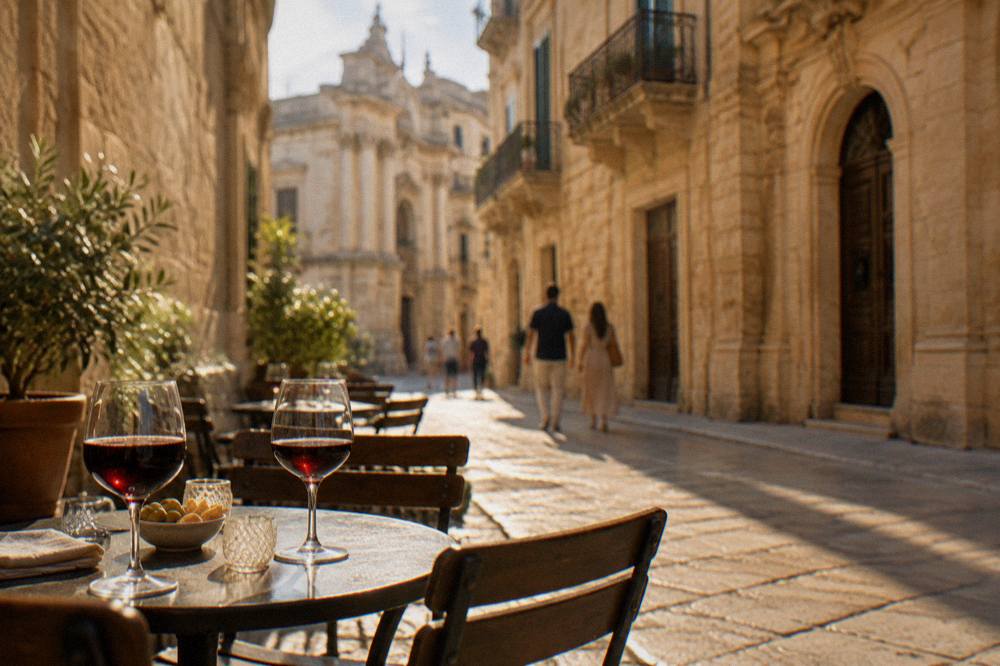
The pattern that suits the site's character is ancient-mornings and baroque-evenings. Give Rudiae an early slot, then the Roman Amphitheatre and the Teatro Romano in the old town on another day, and let the evenings belong to the passeggiata and the food of the city. Lecce's food culture is the natural counterpart to a morning of ruins: the caffe in ghiaccio con latte di mandorla, espresso over ice with almond milk, is credited to Antonio Quarta of Quarta Caffe in the 1940s or 1950s, and a pasticciotto from a historic pasticceria closes the loop. The site's old-town tasting walk, Wine and Food Tasting in Lecce old town, covers exactly this ground, and Check availability if that pairing suits your dates.
For the coast, the geography is friendly. San Cataldo, Lecce's nearest beach, is about 13 km away on the Adriatic side, reached by the SGM line 32 bus from the City Terminal in about 20 minutes in the summer pattern. Further out, the Salento in Bus summer shuttles, which ran 13 June to 13 September in 2026, connected Lecce with Torre dell'Orso, Otranto, Porto Cesareo, Gallipoli and Leuca, but they are a summer-only service and the 2027 dates had not been announced. Outside that window, the FSE trains and a car do the work.
| Destination from Lecce | How to get there | Reported time | Notes |
|---|---|---|---|
| Otranto | Car, or FSE train changing at Maglie | About 44 min by car; about 1h33 to 2h+ by train | Cathedral mosaic dated 1163 to 1165 |
| Gallipoli | Car, or direct FSE train | About 41 min by car; about 1h18 to 1h43 by train | Old town on an island linked by a bridge |
| Galatina | Car, or direct FSE train | About 29 min by car; about 38 to 55 min by train | Basilica di Santa Caterina, free entry |
| San Cataldo beach | SGM bus line 32 from City Terminal | About 20 min | Summer frequency increases |
| Brindisi airport | Terravision bus | About 40 min | 6.50 euro one way per the operator |
Common Questions About Rudiae In Lecce
What is Rudiae in Lecce?
Rudiae is a Messapian-and-Roman archaeological park on the southwestern edge of Lecce, in Puglia, preserving the remains of the ancient settlement that stood on this ground before the baroque city, including a Roman amphitheatre. It is visited on guided tours, at weekends on a schedule and on weekdays by booking.
How much does it cost to visit Rudiae?
The comune di Lecce's itinerary page lists 5 euro for a full ticket, 4 euro reduced, and free entry for children under 7. Visits are guided, so the tour is part of the ticket rather than an extra.
Can you visit Rudiae without a guide?
No. The park runs guided visits at weekends and takes weekday bookings, per the comune's page. There is no reported unguided access, so confirm the schedule and reserve before travelling.
Is Rudiae the same as the Roman Amphitheatre in Piazza Sant'Oronzo?
No. The amphitheatre in Piazza Sant'Oronzo sits in the middle of the old town and is a separate site with its own ticket, while Rudiae lies outside the walls toward Porta Rudiae and holds the remains of the earlier Messapian-and-Roman settlement.
When is Rudiae open?
Visits run on scheduled weekend tours and weekday bookings, with tour times that shift seasonally, in the pattern seen across Salento's sites. The current schedule is on the comune's itinerary page and should be confirmed at booking, since seasonal sites adjust hours between summer and the October-to-March pattern.
How long should I allow for Rudiae?
Allow a morning or an afternoon block anchored on the booked tour time, plus the short trip between the park and the old town. Pair it with the city-centre amphitheatre and the baroque churches for a full picture of ancient and baroque Lecce in one day.
The stones at Rudiae are the quietest pages in Lecce's story, and the guided visit is what makes them legible: book the slot, take the walk, then let the carved facades in the centre look a little less like the beginning of things and a little more like the newest layer of a much older ground, on a site a short way from the gates of the baroque capital of Salento.