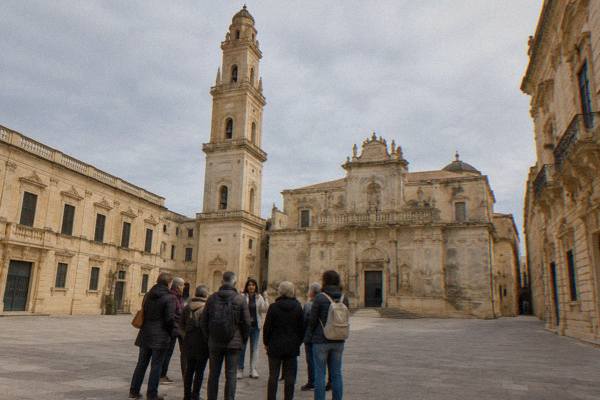
Porta Rudiae: The Oldest Gate And The Road To Rudiae
Porta Rudiae is the southern gate of Lecce's old city, the one that points toward the ancient Messapian and Roman site of Rudiae. This guide covers what the gate is, what a visitor actually sees, and how to combine it with the archaeological park and the museums around it.
Short answer
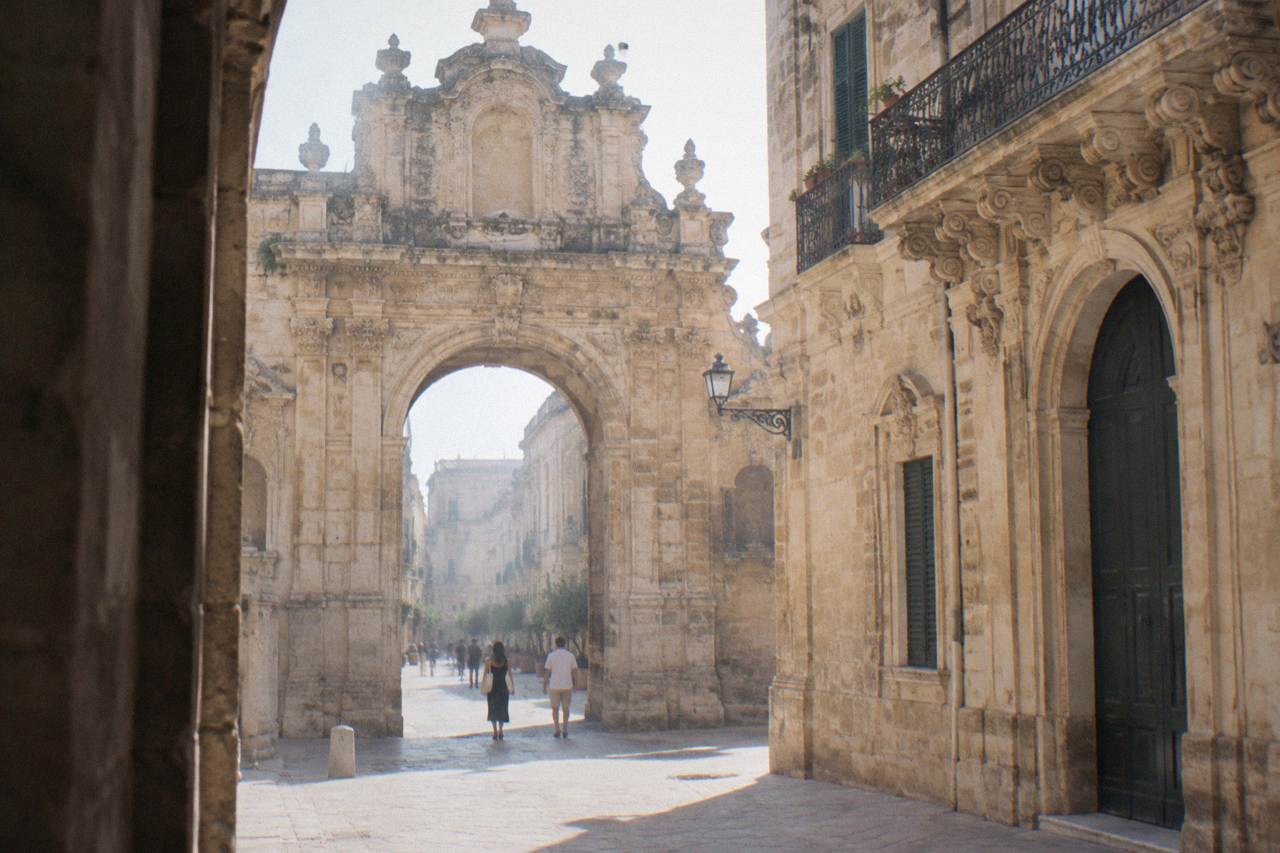
Porta Rudiae is one of the historic gates of Lecce's walled centre, billed as the oldest of the city's gates, and it stands where the old road south toward the archaeological park of Rudiae begins. The gate itself is a free, always-visible monument; the park is visited on weekend guided tours or by weekday booking.
Porta Rudiae stands on the southern edge of Lecce's old city, in Puglia, southern Italy, where the historic centre opens toward the plain that hides one of the region's most important archaeological sites. The gate is built of the same honey-coloured pietra leccese limestone that carries the whole city, the soft Miocene stone that hardens on exposure and gave the Lecce Baroque its carve-everything freedom. Billed as the oldest of Lecce's gates, a claim repeated on the approved record rather than a dated fact, Porta Rudiae is the one that points at Rudiae, the Messapian-and-Roman park a short drive south where the poet Ennius's hometown is being excavated. Unlike the ticketed churches and castles inside the walls, the gate costs nothing and asks nothing: it is a piece of street architecture you pass through, photograph and read. This guide from the Lecce Travel Guide editorial desk sets out what the sources say about the gate, the park it names, and the museums and tours that fill a day around it.
What Is Porta Rudiae In Lecce?
Porta Rudiae is one of the historic gates punched through the walls of Lecce's centro storico, the southern entrance that gave the gate its name because the road leaving it ran toward the ancient settlement of Rudiae. It is a free, open-air monument in pietra leccese, visible at any hour, with no ticket, no desk and no queue, and it sits at the edge of the old town rather than at its baroque heart.
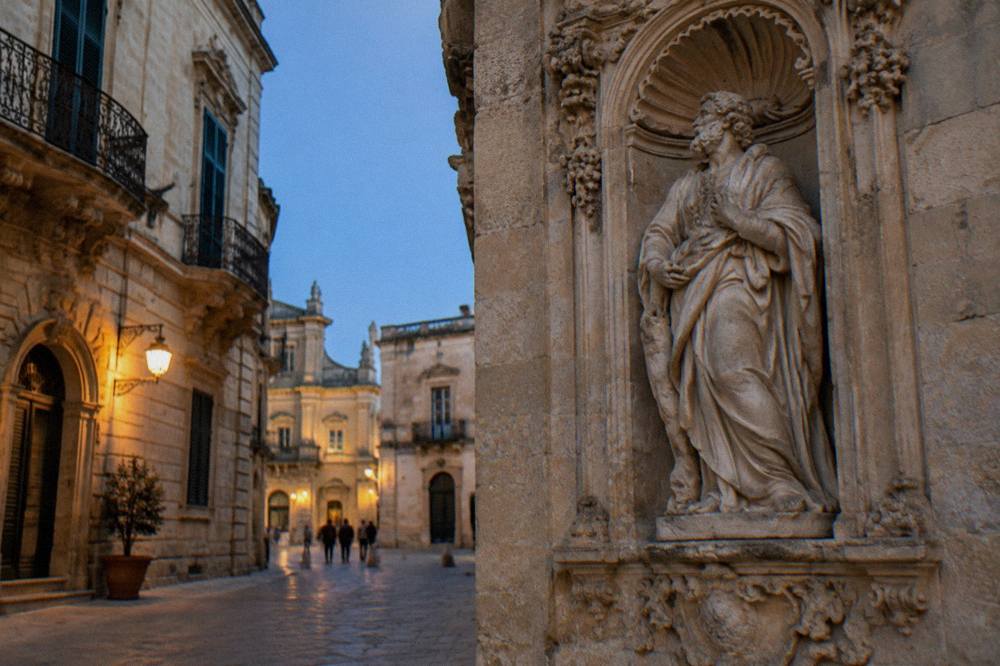
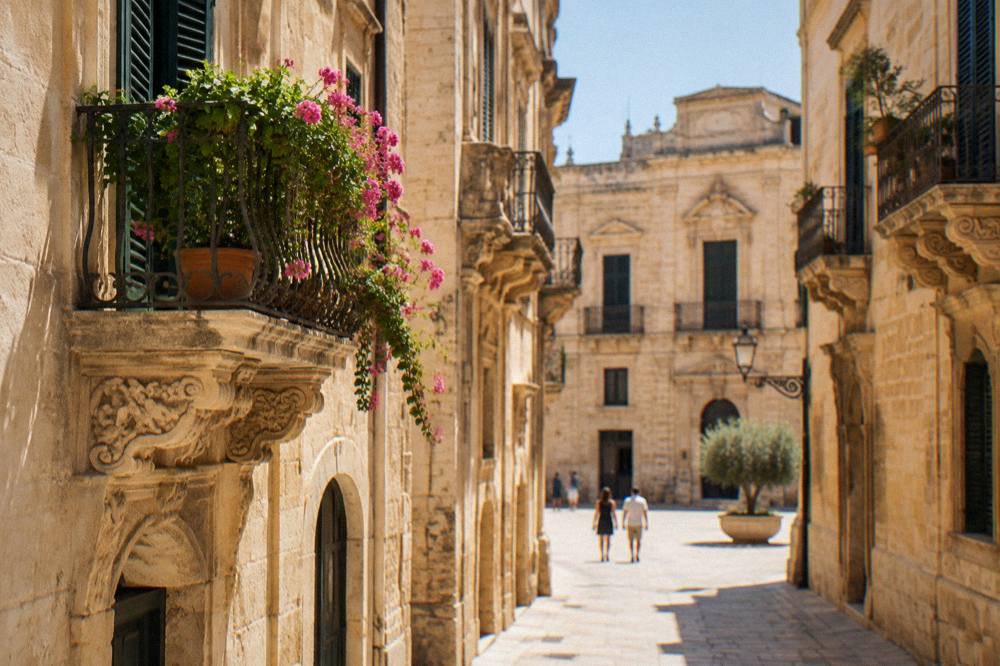
Lecce keeps three named gates from its walled past, and each one answered a direction. Porta Napoli faces west toward Naples, Porta Rudiae faces south toward Rudiae and the Salento interior, and the third opens toward the sea road. The gates were the toll and customs points of a living city, not museum pieces, and the streets around them still carry ordinary Lecce life: apartment doors, scooters, café tables. What a visitor sees at Porta Rudiae today is a layered stone facade, statues set in niches, and the warm colour that pietra leccese takes on after centuries of weather. The building stone is the city's signature: quarried locally, soft enough to carve when fresh, hardening as it dries, which is why Lecce's facades carry fruit, monsters and saints in densities other cities reserved for altars.
The gate also works as an orientation tool. Stand under it and the grid of the centro storico runs away north toward Piazza Sant'Oronzo and the Duomo, while the road south leads out of the tourist core toward the archaeological park of Rudiae, whose Roman amphitheatre remnants and Messapian walls sit in a quiet field edge. For a first walk of the city, things to do in Lecce itineraries usually start at the gates and spiral inward, and Porta Rudiae is the calmest of them: fewer crowds than Porta Napoli, and a straight line into the medieval street pattern.
Why Is Porta Rudiae Billed As The Oldest Gate Of Lecce?
Porta Rudiae is described as the oldest of Lecce's gates in the city's own tourism tradition, which is why the approved title of this page carries the word, but no verified construction date or architect attribution exists in the sources this site reports, so the claim stays a billing rather than a fact. What is verifiable is the gate's role: it marked the southern road toward Rudiae, the Messapian and Roman site that predates Lecce's baroque era by many centuries.
That distinction matters for how you read the monument. Guides and plaques may attach a century or a ruler to the gate, and the internet repeats several versions, but this desk reports only what a primary source confirms, and none of the date claims survive that test. What does survive is the logic of the name: Rudiae was a settlement of the Messapians, then a Roman municipium, and the road from Lecce to it was a real axis that the gate served. The archaeological park at the far end, Rudiae, is the physical anchor of that story, with visible remains of an amphitheatre and the ancient street layout.
The stone tells its own story without dates. Pietra leccese weathers into rounded edges and a deep honey tone, and the gate's sculpture shows the same workshop culture that later exploded across the facades of the Basilica di Santa Croce and the Piazza del Duomo. Look for the mix of figures in niches and the layered rebuilding that any working gate accumulates: arch frames adjusted, niches recut, masonry patched. A gate that stayed in daily use for centuries carries its history as visible seams, not as a single design.
For travellers who want the layers explained rather than guessed at, a guided walk is the efficient route, and the trio below includes the walks that cover the gate and the old city's deeper stories, including the Jewish quarter that lies within walking distance of the southern walls.
The related walk for this page is the Jewish Quarter Guided Walk, which covers the quarter nearest the southern edge of the centre; its full tour page is at Lecce Ancient Synagogue and Jewish Quarter guided tour.
What Can You See Near Porta Rudiae On Foot?
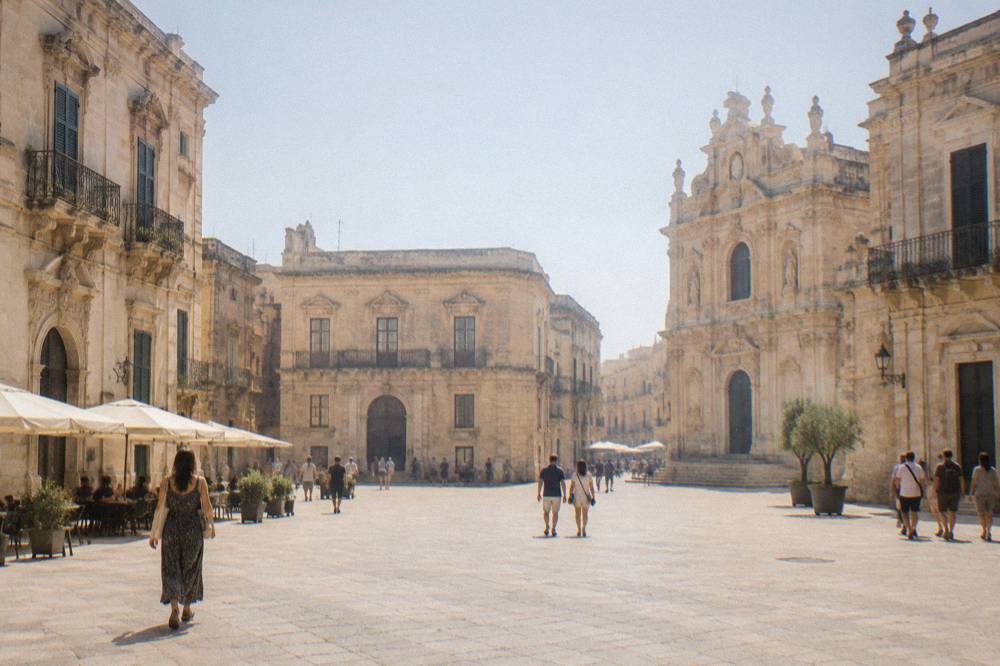
Within the streets north of Porta Rudiae a visitor reaches the whole concentration of Lecce's baroque core, including the Duomo, the Basilica di Santa Croce, the Roman Amphitheatre in Piazza Sant'Oronzo and the Museo Castromediano, all inside the walkable walled centre; south of the gate the sights thin out and the draw becomes the Rudiae park itself. No sourced walking time exists for these segments, so plan on the centro storico being compact rather than on a timed circuit, and treat the gate as your southern anchor.
Inside the walls, the density is unusual. The Roman Amphitheatre is visible free from Piazza Sant'Oronzo, and after a 1,500,000 euro PNRR restoration it reopened with an accessible entrance; winter hours are Tuesday to Sunday 10:00 to 17:00, closed Monday, at 5 euro full and 2 euro reduced, per the regional museums' pages. The Piazza Sant'Oronzo around it is the city's living room. From there the streets climb to the Duomo and to Santa Croce, both covered by the LeccEcclesiae combined ticket: 11 euro standard, 21 euro with the bell tower, valid 15 days, under 12 free, per the official chieselecce.it listing.
Two museums sit close to the gate's side of town and reward the detour. The Museo Castromediano, the provincial archaeological museum on Viale Gallipoli, is reported free by a secondary source, open Tuesday to Sunday with winter hours of 9:00 to 19:00, closed Monday. The Museo Faggiano, the layered under-house excavation, is open every day 9:30 to 20:00 at 5 euro, children 0 to 8 free and 8 to 16 at 3 euro, per the museum's own tariff page. The table below gathers the reported figures in one place.
| Site | Hours (as reported) | Ticket (as reported) | Source basis |
|---|---|---|---|
| Roman Amphitheatre | Winter Tue to Sun 10:00 to 17:00; summer 10:00 to 13:00 and 17:00 to 21:00; closed Mon | 5 euro full, 2 euro reduced | Regional museums site (GROK) |
| Museo Faggiano | Daily 9:30 to 20:00 | 5 euro; 0 to 8 free, 8 to 16 pay 3 euro | Museum tariff page (verified) |
| Museo Castromediano | Winter Tue to Sun 9:00 to 19:00; closed Mon | Reported free (secondary source) | cultura.gov.it (GROK) |
| MUST | Winter Tue to Thu 9:00 to 19:00, Fri to Sun 9:00 to 20:00; closed Mon | 5.50 euro full, 3.50 reduced, under 10 free | mustlecce.it (GROK) |
| LeccEcclesiae churches | Daily 9:00 to 21:00 summer, 9:00 to 18:00 winter | 11 euro standard, 21 euro with bell tower, under 12 free | chieselecce.it (verified) |
| Castello Carlo V | Guided tours Tue to Sun | 10 euro tour, courtyard free | Castle site (verified) |
Hours shift with the seasons and exhibitions, so confirm each site's own page before locking a day plan. A practical sequence that keeps the gate in play: start at Porta Rudiae in the morning light, walk north through the centro storico to Piazza Sant'Oronzo and the Duomo, loop back past the Chiesa di Santa Chiara or the Chiesa di San Matteo, and finish with an afternoon museum. For readers weighing a deeper dive into the old city's layered underground and hidden quarters, the desk suggests pairing the gate with a guided option, and the box below handles the practical reassurance.
How Do You Visit The Parco Archeologico Di Rudiae?
The Parco archeologico di Rudiae is visited on guided visits at weekends, with weekday access by booking only, at 5 euro full and 4 euro reduced with under 7s free, per the Comune di Lecce's itinerary pages, which are the reporting basis here. The park preserves the Messapian and Roman remains of the settlement the gate is named for, including amphitheatre remains, and it is a field site rather than a museum, so a booked guide is the only way in.
Rudiae is the reason the gate carries its name, and the park is the substance behind the billing. The site holds evidence of the Messapian settlement and its Roman successor, and visits run as guided walks across the exposed remains. Because access is by booking on weekdays and guided slots at weekends, the practical advice is simple: treat Rudiae as a planned half of a day rather than a spontaneous stop, and check the comune's pages or the park's own channels for current times before travelling, since archaeological sites in Italy adjust slots seasonally and around excavation work.
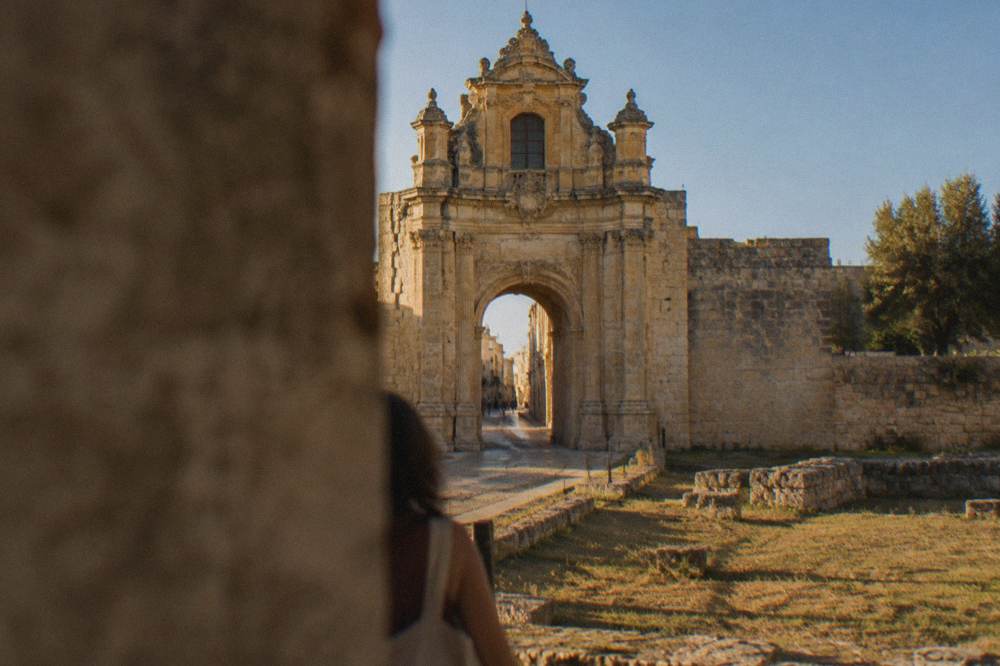
No verified public transport time from Lecce to the park entrance appears in the sources this site reports, so the desk gives none. What the pack does verify is the geography: the park sits south of the city on the axis the gate names, and the drive-time table computed for this destination gives free-flow road times from Piazza Sant'Oronzo to surrounding towns, which helps frame a car-based day that bundles Rudiae with points south. The comune's own itinerary listing pairs Rudiae with the city's other archaeological stops, and the combination of the Teatro Romano in the centre plus Rudiae at the edge is the natural Roman-themed day.
| Rudiae visit question | What the sources report |
|---|---|
| Access | Weekend guided visits; weekdays by booking only |
| Ticket | 5 euro full, 4 euro reduced, under 7 free |
| What you see | Messapian and Roman remains, amphitheatre remnants |
| Source | Comune di Lecce itinerary pages (GROK) |
| Best pairing | Porta Rudiae in the centre, then the park by car or booked visit |
Visitors without a car can still cover the Roman story inside the walls: the Roman Theatre, whose small museum runs Monday to Saturday 9:30 to 13:00 with afternoons on request at about 3 euro, per the comune's museum listing, and the amphitheatre in Piazza Sant'Oronzo cited above. The Roman Amphitheatre and the theatre are two different monuments, a confusion the ticket desks see daily, and both predate the baroque city that surrounds them by a millennium and a half.
Which Other Gates And Monuments Complete A Gate-To-Gate Walk In Lecce?
A gate-to-gate circuit of Lecce runs from Porta Napoli in the west, through the baroque core at Piazza Sant'Oronzo and the Duomo, to Porta Rudiae in the south, and the sources support each stop: Porta Napoli is a free open-air gate, Porta Rudiae is the southern counterpart, and between them sit the LeccEcclesiae churches and the amphitheatre with their reported tickets. No sourced walking duration exists for the circuit, so this desk gives none and describes it as a compact walk through a small walled centre.
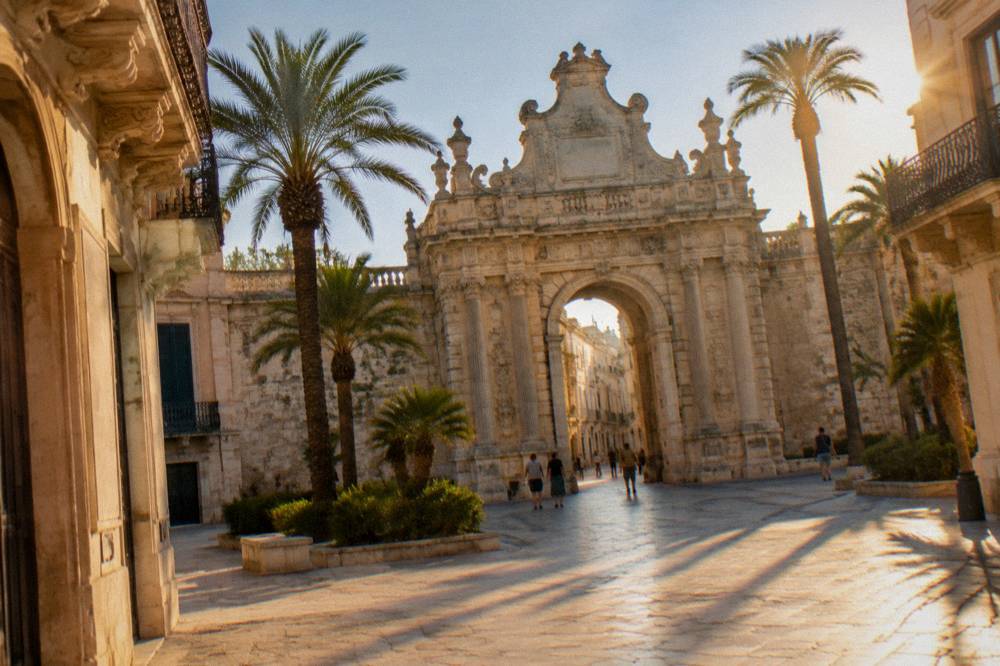
Porta Napoli is the formal counterpoint: a triumphal arch on the western side, free to see, and permanently closed to through traffic under the ZTL rules reported by the comune. The two gates bracket the old city, and the run between them passes the Palazzo dei Celestini, the Prefecture seat whose courtyard is reported free to enter, the Villa Comunale gardens, and the shopping streets around Piazza Mazzini on the new-town side. Drivers should note the ZTL before attempting any of this by car: the historic centre is camera-policed, with reported restrictions on weekday afternoons and evenings and around the clock on Sundays and holidays, and fines reported from 83 to 332 euro. Ask your accommodation about plate registration; that is the local custom and the safest instruction this desk can give.
| Stop on the gate-to-gate walk | What it is | Cost as reported |
|---|---|---|
| Porta Napoli | Western triumphal gate, open-air monument | Free |
| Piazza Sant'Oronzo and amphitheatre view | City square, amphitheatre visible from above | Free to view |
| Roman Amphitheatre interior | Restored Roman site, accessible entrance | 5 euro full, 2 reduced |
| Duomo and Piazza del Duomo | Cathedral square, LeccEcclesiae circuit | 11 euro standard ticket |
| Basilica di Santa Croce | Baroque basilica on the same ticket | Included in LeccEcclesiae |
| Palazzo dei Celestini courtyard | Prefecture seat, courtyard access | Reported free |
| Porta Rudiae | Southern gate, open-air monument | Free |
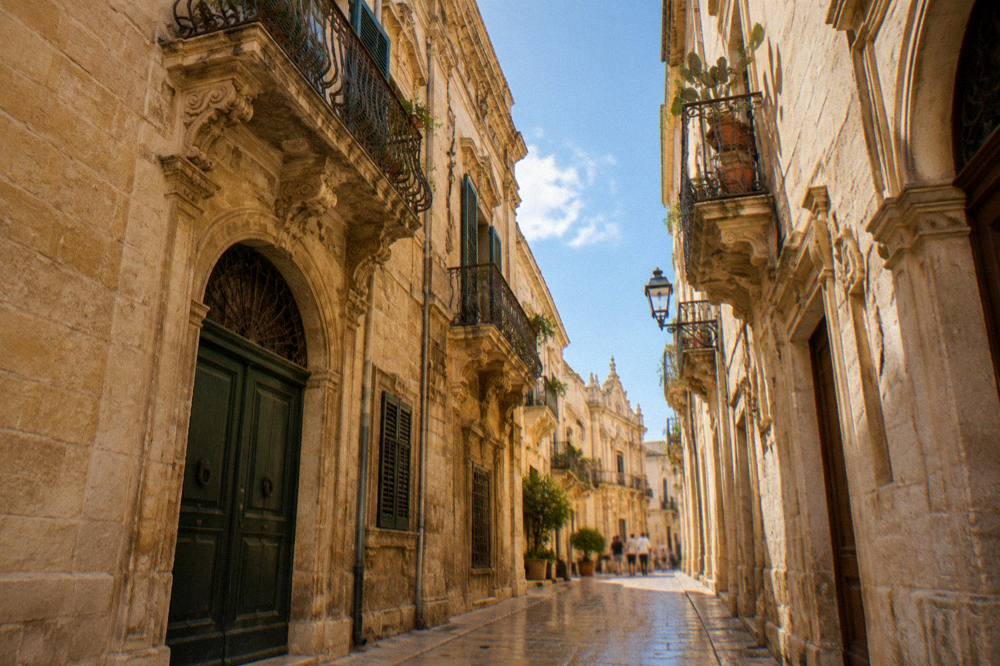
The circuit also explains why the gates matter as a pair of bookends. Porta Napoli faces the old road toward the kingdom's capital; Porta Rudiae faces a road that was already ancient when that kingdom existed. Between the two, the baroque city grew fat on pietra leccese and clerical patronage, and the contrast between the plain field gate at Rudiae's end and the carved showpiece at the western end tells the city's social history better than any single monument. Readers building a wider southern itinerary can extend the same logic with the Puglia road trip planner.
When Is The Best Time To See Porta Rudiae And Rudiae?
The gate itself is visible at any hour and any season, but the comfortable visiting window for both the gate and the Rudiae park runs from late April to June and into September, when the ERA5 reanalysis 1991-2020 normals for Lecce show mean daily highs of about 23 C in May, 28 C in June and 26 C in September, with the highest monthly rainfall in November at 93.7 mm and July and August the warmest pair at about 31 C.
Those figures come from a modelled grid cell, the ERA5 reanalysis for 1991-2020, not a weather station record, and this desk labels them accordingly. What they mean for planning: an open-air gate and a field-site park are both fair-weather propositions, and the shoulder months buy you the same light on the limestone with lower heat. July and August combine the highest mean highs, 31.0 and 31.3 C, with the lowest rainfall, 15.3 and 18.1 mm, which suits early-morning photography of the gate and booked early slots at Rudiae. October stays mild at a 21.8 C mean high but rainfall climbs to 91.3 mm, and November, at 93.7 mm the wettest month in the table, is the month to give outdoor archaeology a miss.
| Month | Mean high C | Mean low C | Rain mm | Gate and park notes |
|---|---|---|---|---|
| April | 18.6 | 10.7 | 54.6 | Comfortable walking weather |
| May | 23.4 | 14.7 | 39.9 | Prime month for photography |
| June | 28.2 | 19.1 | 18.0 | Warm, dry, book morning slots |
| July | 31.0 | 21.7 | 15.3 | Heat, visit early or late |
| August | 31.3 | 22.2 | 18.1 | Peak heat, city busy with festivals |
| September | 26.4 | 19.0 | 58.9 | Good balance of warmth and quiet |
| October | 21.8 | 15.4 | 91.3 | Mild but wetter |
| November | 17.3 | 11.7 | 93.7 | Highest rainfall of the year |
August brings a different reason to time a visit: the Festa dei Santi Patroni ran 23 to 26 August in 2026, per the comune's programme, and the Notte della Taranta Concertone in Melpignano fell on 22 August 2026, with 2027 dates not announced. Summer evenings also bring the Salento in Bus network, which ran 13 June to 13 September in 2026 on lines 101, 104, 107 and 108 toward the coasts, though it serves the beaches rather than the Rudiae park. Winter has its own draw in the Fiera dei Pupi, the papier-mache Christmas fair that followed an early-to-24 December pattern in 2025, with 2026 dates not yet published, and the cartapesta craft tradition connects straight back to the artisans' workshops of the old city.
Which Tours Around Lecce Pair Well With Porta Rudiae?
The tours that pair naturally with Porta Rudiae are the guided walks that cover the southern old city and the Jewish quarter, the papier-mache workshop that keeps the city's craft tradition in your hands, and the food walks that use the streets around the gates as their route, with all prices, ratings and durations rendered live from the operators' listings rather than typed here. Booking figures shift, so this desk describes coverage and lets the listing carry the numbers.
The first pairing is the related tour for this page, the Jewish quarter guided walk, whose route covers the quarter that grew along the southern side of the centre within reach of the gate. The desk renders it below as the solo pick, with the operator's live listing carrying the current price and terms.
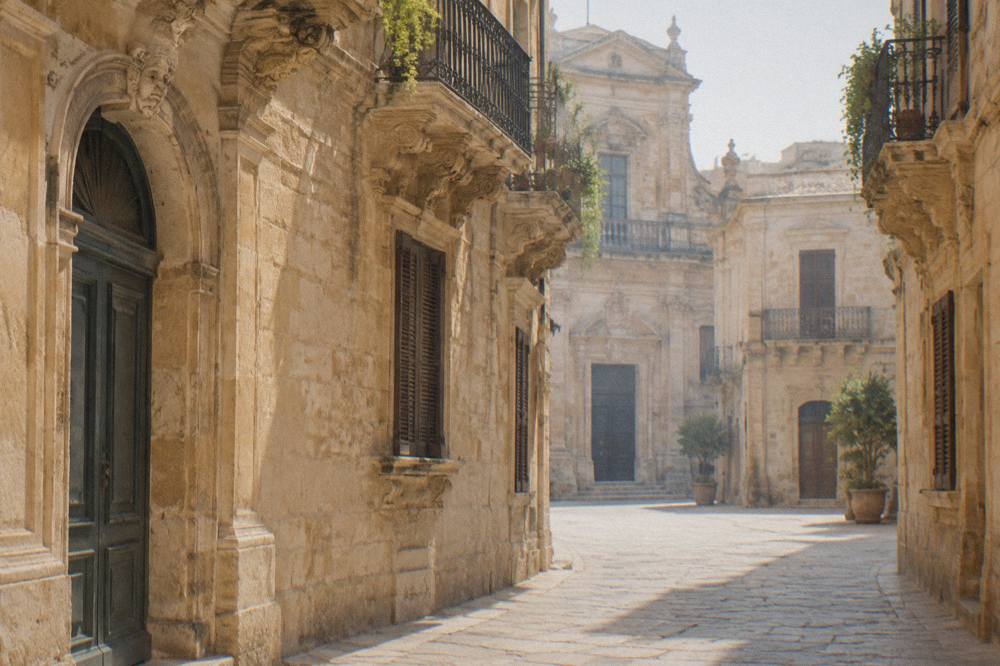
The second pairing suits families and craft-curious travellers: the papier-mache workshop, a hands-on session with the cartapesta tradition that gave Lecce its religious statuary and its Christmas fair. The third is the history-and-street-food walk, which turns the streets between the gates into a tasting route and covers the rustico, the pasticciotto and the caffe in ghiaccio con latte di mandorla, the iced coffee credited to Quarta Caffe in the 1940s and 1950s, per regional food reporting. All three appear in the band below with live figures.
For visitors who prefer to walk free of a booking, tip-based walks run locally in Lecce; confirm arrangements and expectations with the guide directly, as this desk reports no verified operator for them. The self-guided alternative costs nothing but time: the gate-to-gate circuit described above, the amphitheatre from Piazza Sant'Oronzo, and the free reported courtyard of the Prefecture give a full day without a single ticket, and the LeccEcclesiae ticket adds the interiors when the weather turns.
Common Questions About Porta Rudiae In Lecce
Is Porta Rudiae free to visit?
Yes. The gate is an open-air monument on a public street, with no ticket, desk or opening hours. Only the archaeological park it points toward, Rudiae, requires a booked or guided visit.
Is Porta Rudiae really the oldest gate in Lecce?
The gate is billed and described as the oldest of Lecce's gates in the local tradition, which is why this page's title carries the word. No verified construction date or architect attribution exists in the sources this site reports, so treat the claim as tradition rather than documented fact.
How far is the Rudiae archaeological park from Porta Rudiae?
The park lies south of the city on the road axis the gate names. No verified public transport time or walking time appears in this site's sources, so plan it as a short drive or a booked visit and confirm logistics with the park's own channels.
Can you drive through Porta Rudiae into the old city?
No. Lecce's historic centre is a camera-policed ZTL, with reported restrictions on weekday afternoons and evenings and around the clock on Sundays and holidays, and reported fines from 83 to 332 euro. Ask your accommodation about registering your plate before driving anywhere near the walls.
What else is near Porta Rudiae?
The whole baroque core sits north of the gate: Piazza Sant'Oronzo and the Roman Amphitheatre, the Duomo, the Basilica di Santa Croce on the LeccEcclesiae ticket, the Museo Castromediano and the Museo Faggiano, all inside the compact walled centre.
When is the best time to photograph the gate?
The gate faces the southern light, and the ERA5 reanalysis 1991-2020 normals put July and August mean highs at about 31 C, so early morning or late afternoon in the May-to-June or September window gives the softest light on the pietra leccese and the comfortable temperatures for a walk.
Porta Rudiae rewards exactly the kind of slow reading this page suggests: a free monument that names a road, a road that leads to a booked archaeological park, and a walled centre between them dense enough to fill two days. Confirm hours and bookings with each site's own channels, and the gate will still be standing at any hour you choose to pass through it.