Puglia Itinerary: Ten Days Ending In Lecce
Ten days is enough to cross Puglia from Bari to the bottom of the Salento peninsula and finish in Lecce, the baroque capital of Salento, with no single hop longer than about two hours.
Short answer
Run the route south: Bari and Polignano a Mare first, then Alberobello, then Ostuni, then Otranto, Gallipoli and Porto Cesareo across Salento, and finish with three full days in Lecce, using Lecce as the rail hub and Brindisi Airport as the gateway.
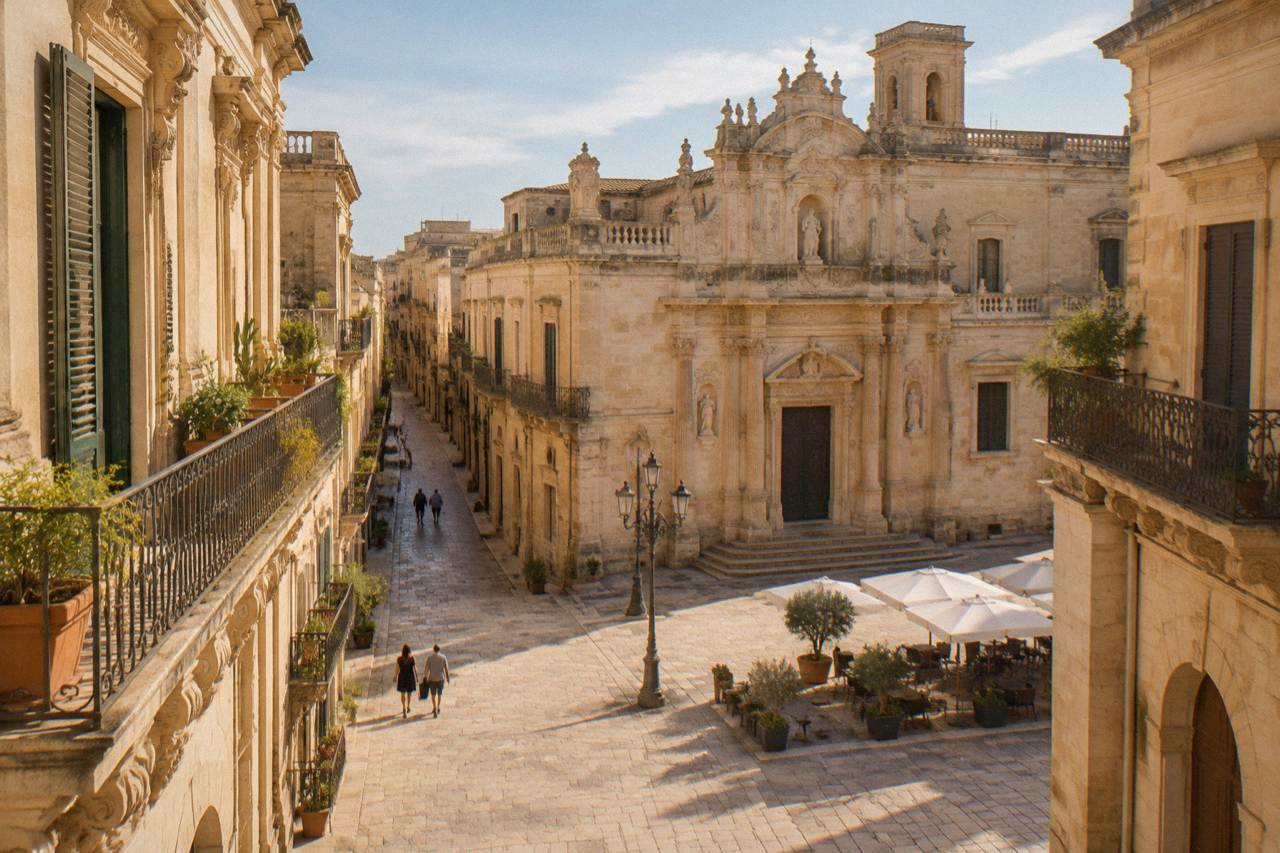
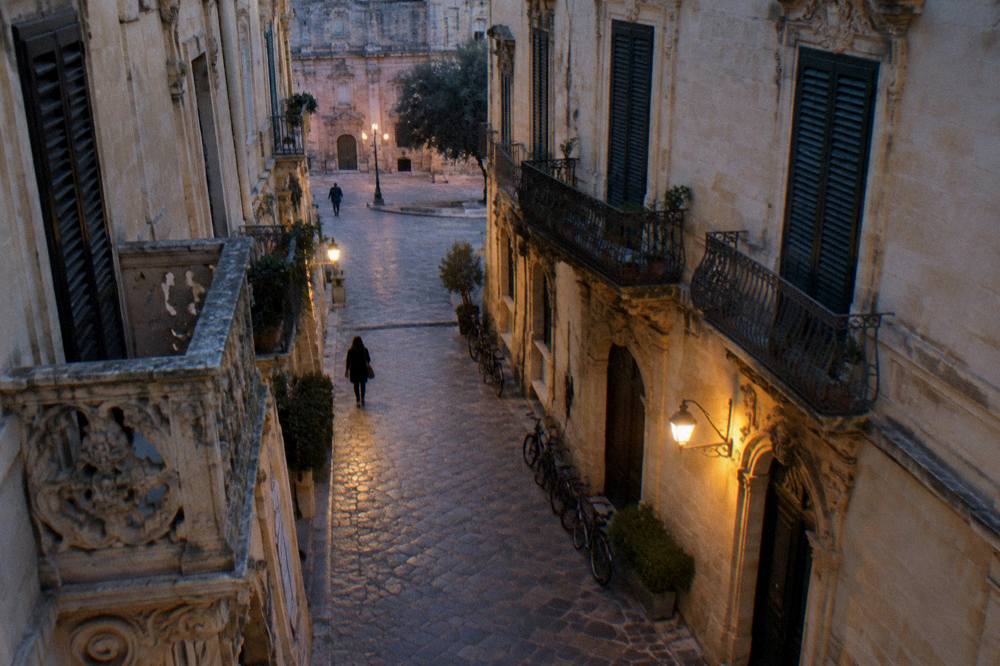
Ten days is the comfortable length for a Puglia itinerary: long enough to run from Bari down the Adriatic coast, through the inland trulli country, and into the Salento peninsula at the heel of Italy, without a single travel day that eats an afternoon. This route ends in Lecce, the baroque capital of Salento, a honey-coloured city built from pietra leccese limestone a few kilometres inland, with the Adriatic to the east and the Ionian to the west across the peninsula. Ending here is practical as well as scenic. Lecce is the provincial capital and the southern rail hub of the region, and Brindisi Airport, the nearest commercial gateway, is about 43 minutes away by road from the centre of the city.
How Does A Ten Day Puglia Itinerary That Ends In Lecce Actually Work?
The shape that works is one base for every two or three nights, moving south in hops of an hour or less by car or train, and finishing with three nights in Lecce so the city gets full days rather than leftovers. Lecce is the natural terminus: it is the capital of the Province of Lecce, the rail hub for the whole Salento peninsula, and about 43 minutes by road from Brindisi Airport.
The logic behind the shape is simple. Puglia is long and thin, and the distances that look small on a map still add up: from Lecce, Bari is 152.6 km away by road, and the drive runs about 118 minutes in free-flowing traffic. Trying to day-trip from a single base for ten days burns hours on the SS16 every morning. Two or three bases, each held for a few nights, keeps every move short.
The route below uses four bases. Bari first, because that is where the main airport and the main rail line sit. Then the trulli country around Alberobello. Then the Salento coast, either Otranto or Gallipoli, for the middle of the trip. Lecce last, for three nights, because the city repays full days and because departing from Brindisi is easy from there.
| Day | Base | What The Day Covers |
|---|---|---|
| 1 | Bari | Arrival, first evening in the regional capital |
| 2 | Bari or Polignano a Mare | Adriatic coast, move south by regional train |
| 3 | Alberobello | Trulli country, overnight in the Itria Valley area |
| 4 | Ostuni, then south | The white hill town, then the drive or rail crossing into Salento |
| 5 | Otranto | Cathedral, castle, Baia dei Turchi pinewood |
| 6 | Gallipoli | Island old town, Ionian coast |
| 7 | Porto Cesareo and Galatina | Beaches, the basilica, the pasticciotto town |
| 8 | Lecce | LeccEcclesiae churches circuit |
| 9 | Lecce | Amphitheatre, museums, Castello Carlo V |
| 10 | Lecce | San Cataldo or a spare morning, then departure via Brindisi |
Readers who prefer to cut the north and go deep on Salento can compress days 1 to 4 into two days and add a second coastal base. The full Salento itinerary covers that version in detail, and how many days Puglia needs works through the trade-offs.
What Are The Distances And Train Times Between The Main Puglia Stops?
Salento is compact: from Lecce, Otranto is about 44 minutes by road, Gallipoli about 41, Porto Cesareo about 34, and Ostuni about 66, while Alberobello and Polignano a Mare sit around 90 minutes up the coast. Rail covers the same spine: Trenitalia runs direct to Bari in as little as about 1 hour 19 minutes, and the FSE network reaches Gallipoli, Otranto via a change at Maglie, and Galatina from Lecce station.
The figures below are free-flow drive times computed from Piazza Sant'Oronzo, the centre of Lecce, so treat them as planning floors rather than promises. Summer traffic on the coastal roads adds time, and the Salento roads are single carriageway for long stretches.
| Stop | Road Distance From Lecce | Free-Flow Drive Time |
|---|---|---|
| San Cataldo | 12.9 km | about 14 min |
| Galatina | 25.7 km | about 29 min |
| Porto Cesareo | 28.0 km | about 34 min |
| Brindisi | 39.8 km | about 35 min |
| Gallipoli | 41.0 km | about 41 min |
| Otranto | 46.7 km | about 44 min |
| Castro | 47.4 km | about 48 min |
| Ostuni | 78.3 km | about 66 min |
| Santa Maria di Leuca | 83.2 km | about 78 min |
| Alberobello | 114.1 km | about 91 min |
| Polignano a Mare | 116.3 km | about 88 min |
| Bari | 152.6 km | about 118 min |
Rail is a genuine alternative for the whole spine, and the FSE network, Ferrovie del Sud Est, is what reaches the Salento towns that Trenitalia does not. FSE fares in 2026 run on a distance scale, from 1.30 euro for a 1 to 10 km trip up to 5.40 euro for 51 to 60 km. Check live timetables on the operator's own site before committing to a connection, because some segments run rail replacement buses in some periods.
| Route | Typical Time | Fare From |
|---|---|---|
| Lecce to Brindisi (Trenitalia) | about 18 to 24 min | about 3.40 euro |
| Lecce to Ostuni (Trenitalia) | about 39 to 51 min | about 7 euro |
| Lecce to Polignano a Mare (Trenitalia) | about 1 h 09 to 1 h 21 | varies by train |
| Lecce to Bari (Trenitalia) | fastest about 1 h 19 to 1 h 24 | about 9 to 24 euro |
| Lecce to Gallipoli (FSE) | about 1 h 18 to 1 h 43 | about 5 euro |
| Lecce to Galatina (FSE) | about 38 to 55 min | about 3 euro |
| Lecce to Otranto (FSE, change at Maglie) | about 1 h 33 to 2 h or more | varies by connection |
| Lecce to Alberobello (Trenitalia plus FSE) | about 2 h 30 to 3 h or more | varies by connection |
A car earns its keep on this itinerary for three things: the trulli country, where the towns are small and the trains are thin; the Salento coves, where buses are seasonal; and the flexibility to stop between towns. It is not required. Every base on this route is reachable by rail, and the summer Salento in Bus network fills the coastal gaps, running in 2026 from 13 June to 13 September with fares from 1.10 to 5 euro and free travel for children under 10.
For travellers who would rather not drive the northern stretch at all, three guided options from Lecce cover the same ground, and the Puglia road trip plan works through the driving version in full.
Where Do Days One To Four Of The Puglia Itinerary Go?
Days one and two go to Bari and Polignano a Mare, day three to Alberobello, and day four to Ostuni before the run south into Salento. The hops are short by regional train: Ostuni is about 39 to 51 minutes from Lecce, Polignano a Mare about 1 hour 9 to 1 hour 21 minutes, and Alberobello needs a change of trains, typically about 2 hours 30 minutes to 3 hours or more in total.
Day one is an arrival day. Bari is the regional capital and the main rail and air gateway, and the point of the day is simply to land, settle and eat. Day two moves down the Adriatic coast to Polignano a Mare, a short hop by regional train, and the town is small enough that an afternoon and an evening are the right dose.
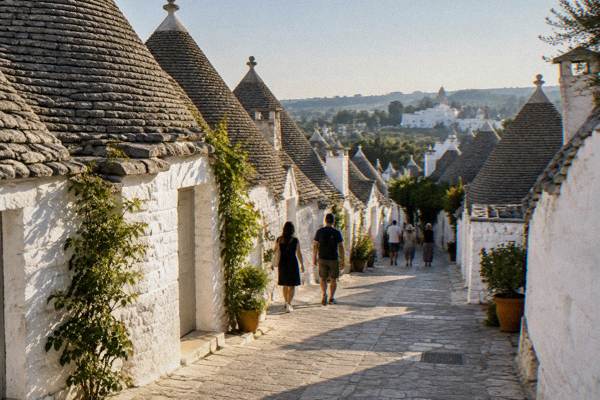
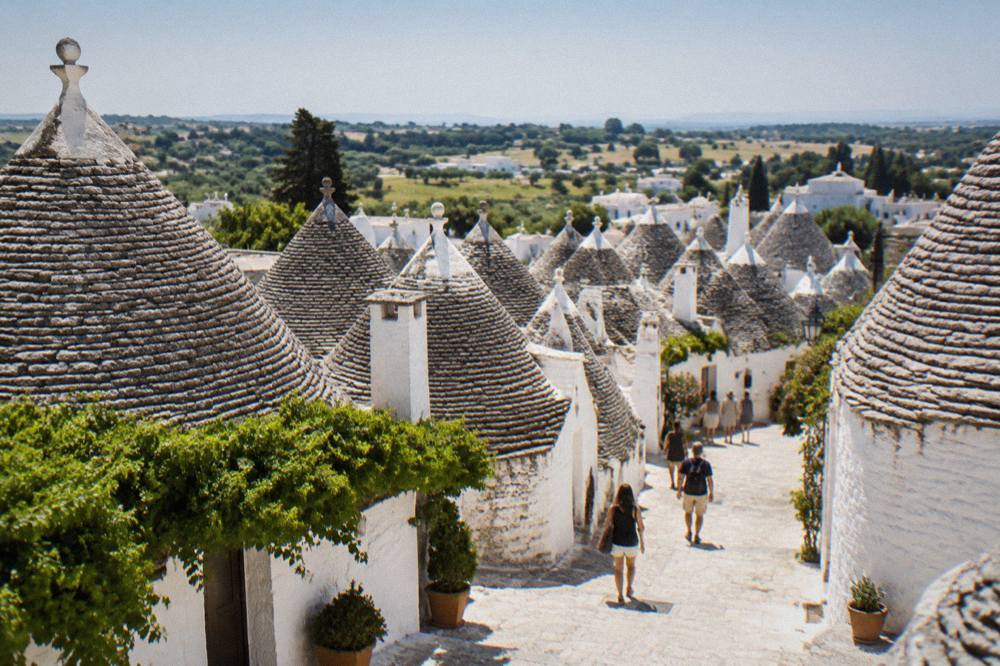
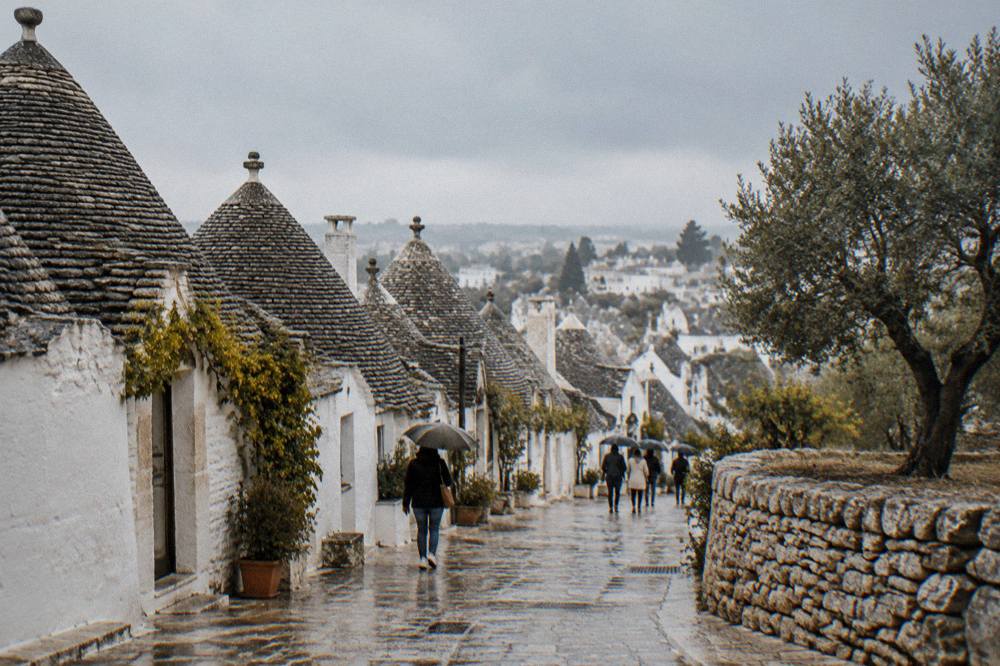
Day three turns inland. Alberobello is the trulli town, and the Itria Valley around it is the part of Puglia that most rewards having a car or joining a tour, because the valley towns are scattered and the rail connections are indirect. The direct figures from Lecce tell the story: 114.1 km and about 91 minutes by road, or a rail journey with a change that runs about 2 hours 30 minutes to 3 hours or more. Basing here for a night, rather than returning to the coast, is what keeps the itinerary calm.
Day four is Ostuni, about 78.3 km and 66 minutes by road from Lecce, or a direct train of about 39 to 51 minutes. From Lecce the fare runs from about 7 euro. After Ostuni the route crosses into Salento, and the sensible move is to carry on the same day to the Otranto side, so day five starts on the coast rather than in transit.
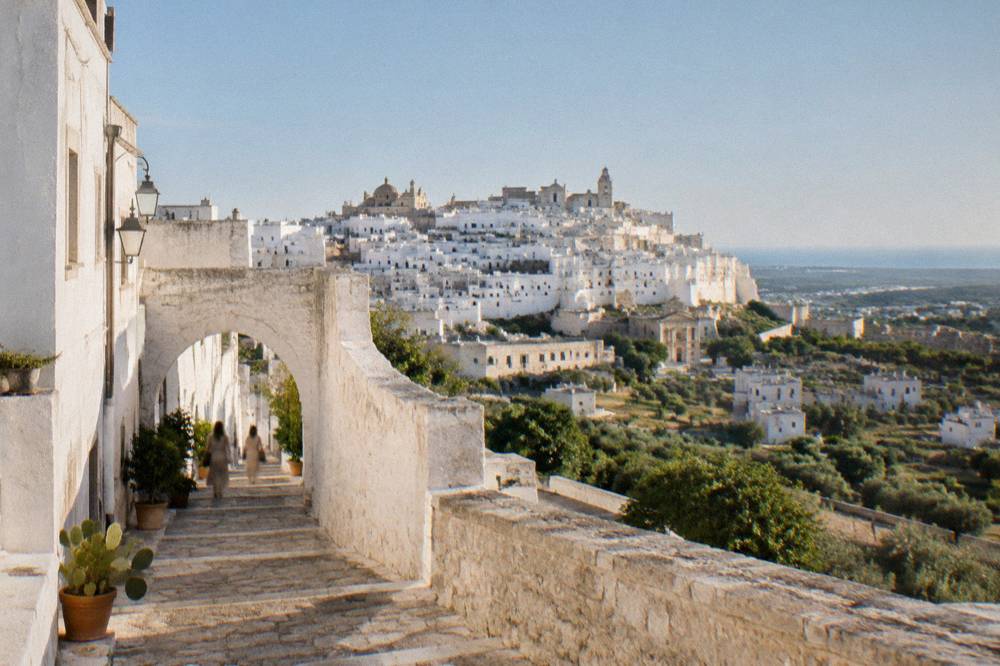
One honest note on the northern stretch. The figures in this itinerary are anchored to Lecce, because that is where the sourced drive and rail tables sit. Travelling the route north to south, the same lines and roads apply in reverse, but the pack does not carry a sourced time for, say, Bari to Polignano a Mare or Ostuni to Otranto, so this page prints none. Confirm those legs on the rail operator's own timetable before booking.
Travellers who want the three northern towns without the logistics can also take them as a single guided day out of Lecce later in the trip. The Ostuni, Alberobello and Polignano a Mare day trip departs from Lecce and covers all three in one move: Check availability.
What Do Days Five To Seven Cover Across The Salento Coast?
Day five is Otranto, about 44 minutes by road from Lecce or a change of trains at Maglie; day six is Gallipoli, whose old town stands on a limestone island joined to the mainland by a bridge, about 41 minutes by road; day seven splits between Porto Cesareo, about 34 minutes, and Galatina, about 29. Otranto Cathedral is free for independent visitors, though groups and visitors with a licensed guide pay 2 euro since 1 March 2026.
Otranto is the Adriatic highlight of Salento and deserves the full day. The cathedral's floor mosaic dates from 1163 to 1165 and is by the priest Pantaleone, and the Diocese of Otranto's notice sets the access rules: independent visitors enter free, while groups and visitors with a licensed guide pay 2 euro per person since 1 March 2026, with the Museo Diocesano at 3 euro, San Pietro at 3 euro, and a combined Cathedral, Museum and San Pietro ticket at 5 euro. The Castello Aragonese runs seasonal tickets, about 6 euro in low season up to about 12 euro in high season. Baia dei Turchi, the protected pinewood beach nearby, limits vehicle access: parking on the SP366 runs 4 to 8 euro per day in high season, followed by a walk of about 10 to 15 minutes through the pines.
Gallipoli, on the Ionian side, is day six. The old town sits on a limestone island connected to the mainland by a bridge, and the FSE train from Lecce runs about 1 hour 18 to 1 hour 43 minutes, from about 5 euro. The Castello di Gallipoli's ticket price is not in the verified sources, so confirm at the castle before visiting.
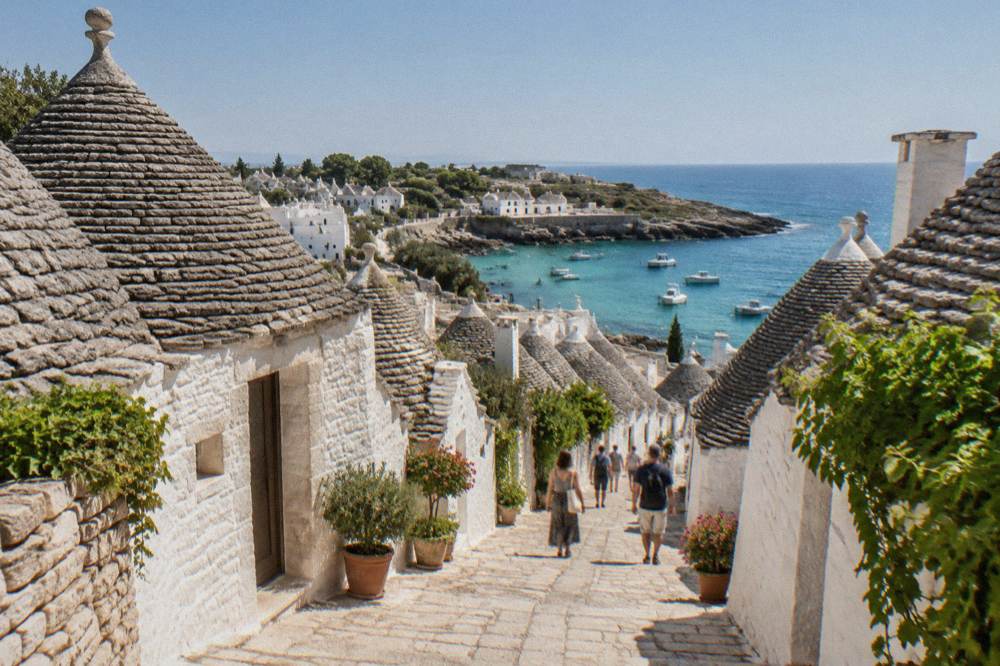
Day seven is the beach and pastry day. Porto Cesareo, 28.0 km and about 34 minutes from Lecce, is the closest of the Ionian beach towns, and the water is shallow and pale. A guided snorkel outing with an aperitif runs from the area: Check availability.
Galatina, 25.7 km and about 29 minutes from Lecce by road, or about 38 to 55 minutes by FSE train from about 3 euro, is the inland counterweight. The Basilica of Santa Caterina d'Alessandria is free to enter, with split morning and afternoon hours, and the town is the home of the pasticciotto: Pasticceria Ascalone claims the pastry was invented there in 1745, a claim historians dispute, and the shop itself, not Lecce, is where the story belongs. An e-bike tour from Lecce to Galatina with an olive mill visit and a wine tasting, with a taxi back, is another way to take the same countryside: Check availability.
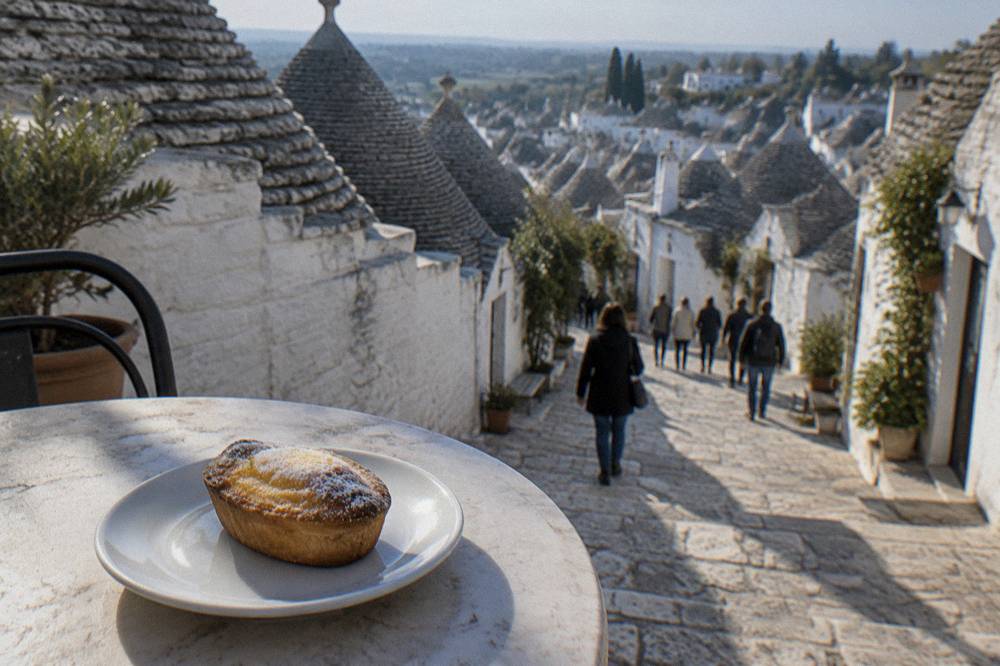
Two coastal rules matter in summer. Grotta della Poesia, the karst pool at Roca Vecchia near Torre dell'Orso, has banned bathing and diving since summer 2026: non-residents of Melendugno paid a 5 euro ticket in the 2026 season, and the pool is viewed from the paths only. Further south at Castro, Grotta Zinzulusa runs guided visits year-round at 7 euro full and 4 reduced, and the drive from Lecce is 47.4 km, about 48 minutes. For readers extending to the deep south, Pescoluse on the Ionian side is billed as the Maldives of Salento and flew a Blue Flag in 2026, and Santa Maria di Leuca is 83.2 km and about 78 minutes from Lecce by road.
Lido prices are a real line in a Salento budget. The 2026 surveys of umbrella plus two beds per day put San Cataldo at 15 to 25 euro in June and 33 to 35 euro in August, Torre dell'Orso and San Foca at 25 to 35 euro in June rising to 50 to 60 euro in August, and Otranto at 20 to 50 euro across the season. These are planning ranges from consumer association surveys, not operator quotes: check the individual lido.
| Area | Umbrella Plus Two Beds, June | Peak, August |
|---|---|---|
| San Cataldo | 15 to 25 euro | 33 to 35 euro |
| Torre dell'Orso and San Foca | 25 to 35 euro | 50 to 60 euro |
| Otranto | 20 to 30 euro | 30 to 50 euro |
How Do You Spend The Final Three Days In Lecce?
Give Lecce three full days: one for the LeccEcclesiae circuit, whose standard combined ticket costs 11 euro and covers the Duomo and crypt, the Basilica di Santa Croce, San Matteo, Santa Chiara and the Antico Seminario with MuDAS, valid for 15 days; one for the Roman amphitheatre, the Museo Faggiano at 5 euro and the Castello Carlo V, whose interior is by guided tour at 10 euro; and one for a day trip or the beach at San Cataldo, 12.9 km away.
Day eight is the church day, and the LeccEcclesiae ticket is the mechanism. The standard ticket costs 11 euro full, 5 euro reduced for ages 12 to 17, and 24 euro for a family of two adults plus minors aged 12 to 17, and it is valid for 15 days, so it does not have to be spent in one morning. The full ticket with the bell tower, billed as Up!, costs 21 euro full, 13 reduced, 48 for the family version. Children under 12 enter free, and access is limited during services. Hours run 9:00 to 21:00 in the April to September summer and 9:00 to 18:00 in the October to March winter, with last entry 15 minutes before closing. Tickets are sold at Piazza Duomo 5 and at the Basilica di Santa Croce, and the Piazza del Duomo is where the circuit starts.
Day nine is the layers-of-history day. The Roman amphitheatre in Piazza Sant'Oronzo is visible free from the square, and entry inside costs 5 euro full and 2 reduced, on winter hours of 10:00 to 17:00 from Tuesday to Sunday, closed Monday. The Museo Faggiano is 5 euro and opens every day from 9:30 to 20:00. The Castello Carlo V is a guided-tour visit, 10 euro full and 6 reduced, Tuesday to Sunday, with only the courtyard free, and the Museo della Cartapesta inside is included in the tour. The MUST, the city history museum, runs 5.50 euro full and 3.50 reduced, free under 10, and the Teatro Romano museum is about 3 euro on weekday mornings. A combined option across several of these is the Lecce Artwork City Pass at 29 euro over 7 days.
| Site | Ticket | Opening |
|---|---|---|
| LeccEcclesiae standard | 11 euro full, 5 reduced, 24 family | daily, 9:00 to 18:00 winter |
| LeccEcclesiae with bell tower | 21 euro full, 13 reduced, 48 family | as above, tower ascents about every 20 min |
| Museo Faggiano | 5 euro | every day, 9:30 to 20:00 |
| Castello Carlo V tour | 10 euro full, 6 reduced | Tue to Sun, courtyard free |
| Roman Amphitheatre | 5 euro full, 2 reduced | Tue to Sun, 10:00 to 17:00 winter |
| MUST | 5.50 euro full, 3.50 reduced | Tue to Thu 9:00 to 19:00, Fri to Sun to 20:00 |
| Lecce Artwork City Pass | 29 euro, 7 days | aligns with member sites |
Day ten is the flex day. San Cataldo, the nearest beach to Lecce at 12.9 km and about 14 minutes by road, is the easy morning, and the SGM line 32 bus runs from the City Terminal in about 20 minutes. Or spend the morning inside the Lecce historic centre, from Porta Napoli through the Teatro Romano streets, before the run to Brindisi Airport. The fuller city walkthroughs are three days in Lecce and the Lecce walking tour, and the complete sight list sits on the full things to do in Lecce page. What to eat, from the rustico to the caffe in ghiaccio con latte di mandorla, credited to Antonio Quarta of Quarta Caffe, is covered in what to eat in Lecce.
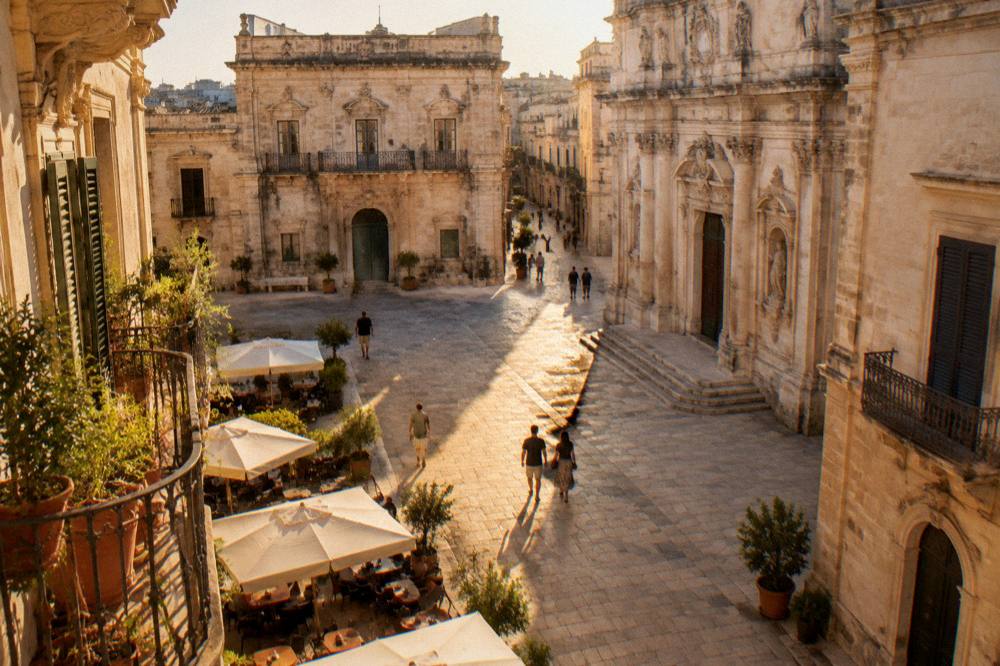
What Does A Puglia Itinerary Cost In Tickets And Transport?
Fixed sightseeing costs are modest: the LeccEcclesiae standard ticket at 11 euro, the Castello Carlo V guided tour at 10 euro, the Museo Faggiano at 5 euro, against transport costs set by the airport bus at 6.50 euro and FSE rail fares from 1.30 euro for 1 to 10 km up to 5.40 euro for 51 to 60 km.
The tourist tax is collected by the accommodation at a top reported rate of 5 euro per night for a five-star in high season from 1 April 2026.
The airport transfer is the first fixed cost. The Terravision bus between Brindisi Airport and Lecce runs 6.50 euro one way and about 40 minutes, per the operator's own listing. Within Lecce, an SGM city bus ticket valid 60 minutes costs about 1.20 euro, or 1.50 euro bought on board, and a day ticket runs about 3 euro.
| Item | Cost |
|---|---|
| Brindisi Airport to Lecce bus | 6.50 euro one way, about 40 min |
| SGM city bus, 60-minute ticket | about 1.20 euro, 1.50 on board |
| SGM day ticket | about 3 euro |
| Salento in Bus coastal fares | 1.10 to 5 euro, plus 1 euro on board |
| FSE rail, 1 to 10 km | 1.30 euro |
| FSE rail, 51 to 60 km | 5.40 euro |
| Luggage storage near Lecce station | about 2.50 to 3.50 euro per day |
| Tourist tax, top reported rate | 5 euro per night, five-star high season |
The tourist tax deserves its own sentence. It exists, it is collected by the accommodation rather than paid at a desk, and the top reported rate from 1 April 2026 is 5 euro per person per night for a five-star property in high season, with lower categories and seasons priced lower. Confirm the exact amount for your property at booking.
The honest budgeting frame is that the fixed costs above are small, that lido prices in August run two to three times their June level, and that the tourist tax is a small per-night addition. Everything else scales with the season.
Matera, it should be said, does not fit inside ten days alongside this route. It is in Basilicata, a different region, 176.9 km and about 161 minutes by road from Lecce, or a bus journey of about 3 hours 30 minutes to 4 hours 10 at fares from 11 to 37 euro. The pairing Lecce with Matera page covers that as a separate trip.
Which Month Should A Ten Day Puglia Itinerary Target?
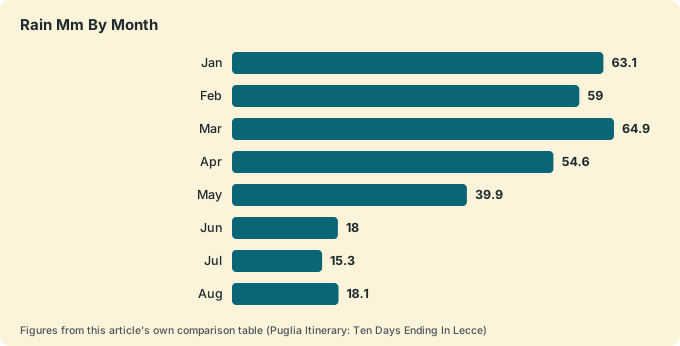
The ERA5 reanalysis for 1991 to 2020 puts Lecce's mean daily high at about 31 C in July and August with only 15 to 18 mm of rain, while May and June sit at 23 to 28 C with 18 to 40 mm, and October still reaches a mean high of about 22 C against 91 mm of rain. November carries the highest monthly rainfall total at 93.7 mm. The sea reads about 22.5 C in June and 25 to 27 C at the August peak.
The climate table below is modelled data, an ERA5 reanalysis grid cell for the period 1991 to 2020, not a weather station record, and it is the right tool for choosing a month rather than predicting a week.
| Month | Mean High C | Mean Low C | Rain Mm |
|---|---|---|---|
| Jan | 12.4 | 6.7 | 63.1 |
| Feb | 13.0 | 6.8 | 59.0 |
| Mar | 15.4 | 8.3 | 64.9 |
| Apr | 18.6 | 10.7 | 54.6 |
| May | 23.4 | 14.7 | 39.9 |
| Jun | 28.2 | 19.1 | 18.0 |
| Jul | 31.0 | 21.7 | 15.3 |
| Aug | 31.3 | 22.2 | 18.1 |
| Sep | 26.4 | 19.0 | 58.9 |
| Oct | 21.8 | 15.4 | 91.3 |
| Nov | 17.3 | 11.7 | 93.7 |
| Dec | 13.5 | 8.2 | 75.5 |
May and June are the sweet spot for this route: the sea is warming, the rain is low, the lidos charge their June rates, and the summer buses have started, since Salento in Bus ran from 13 June in 2026. Late August is the festival window, if that is the draw. September keeps warm sea at about 24 to 25 C with roughly double July's rainfall. October is a sightseeing month rather than a beach month, and November is the wettest month on the table.
August travellers should book the coastal bases early and expect the lido prices in the peak column. May and September travellers get the same roads with less traffic. The trade-offs between the months for the wider region are worked through in how many days Salento needs, and the seasonal split also decides whether the beaches on day seven are warm enough to swim, which the sea temperatures above answer.
For travellers who prefer to let someone else run the Salento logistics, a guided multi-town day out of Lecce covering Otranto, Leuca, Gallipoli and Galatina is one option, and the coastal boat and bike picks above are the other two.
What Practical Rules Catch Visitors Out On A Puglia Itinerary?
Three rules do the catching: Lecce's historic centre is a camera-policed ZTL, active on weekdays roughly from 13:00 to 16:30 and overnight from 20:00, around the clock on Sundays and holidays, with fines from 83 to 332 euro, so ask your accommodation about registering your plate; Grotta della Poesia has banned bathing and diving since summer 2026 and charged non-residents of Melendugno a 5 euro ticket in that season; and churches pause tourist visits during services and expect shoulders and knees covered.
The ZTL is the one that costs money. The historic centre of Lecce is closed to unauthorised traffic by camera, with reported weekday windows of roughly 13:00 to 16:30 and 20:00 to 10:00, and 24 hours on Sundays and holidays, and Porta Napoli is reported as always closed. The hours are reported rather than guaranteed, so the working rule is simple: ask your accommodation about plate registration before you drive in, and use the Park Liberty car park, 466 spaces near the centre, or the SGM blue zones outside the ring.
The country basics: Italy uses the euro, it is a Schengen member, the language is Italian, and the emergency number is 112. Lecce has no commercial airport, so Brindisi is the gateway for the whole region, and the airport bus is the 6.50 euro, 40-minute ride described above. Luggage storage near Lecce station runs about 2.50 to 3.50 euro per day through the app-based networks.
Dress and services are the church rules. Shoulders and knees covered is the expectation at the working churches, and tourist visits pause during services, with the calendar on the Diocese's own site. The LeccEcclesiae ticket limits access during worship, which is a scheduling fact rather than a problem: plan church visits for mornings.
Finally, the honest-labels. Lecce is often called the Florence of the South, a nickname whose origin is contested between two names, so this page credits neither. The city is not inscribed on the UNESCO World Heritage List: Salento and the Barocco Leccese sits on Italy's Tentative List, submitted in 2006. And the pasticciotto's 1745 birthdate is Pasticceria Ascalone's own claim, made in Galatina, and disputed. The Lecce Travel Guide site keeps these distinctions across every page, because a guide that repeats a comfortable myth is worse than no guide at all.
Common Questions About A Ten Day Puglia Itinerary
The short answers: ten days is comfortable and a car is useful but not required; Lecce has no airport, so Brindisi is the gateway; and Lecce is not a UNESCO World Heritage Site, it sits on Italy's Tentative List. Direct trains from Rome run about 6 hours.
Is ten days enough for a Puglia itinerary?
Ten days covers the full southbound line, Bari to Lecce, with three nights in Lecce at the end and no travel day longer than about two hours. It does not cover Matera, which is in Basilicata and needs its own trip.
Do you need a car for this Puglia itinerary?
No. Every base on the route is reachable by rail, Trenitalia down the Adriatic spine and FSE across Salento, and the summer Salento in Bus network fills the coastal gaps. A car earns its keep in the trulli country and the Salento coves, which is why the itinerary suggests one for days three and seven.
What is the nearest airport to Lecce?
Brindisi, BDS, about 47.6 km and 43 minutes by road from the centre of Lecce. The Terravision airport bus runs 6.50 euro one way and about 40 minutes, per the operator's listing. Bari Airport is the other gateway, with no direct bus: rail via Bari Centrale is the standard route.
Can you run this Puglia itinerary in reverse, starting in Lecce?
Yes, and it works well for travellers landing at Brindisi. Start with the three Lecce days while the legs are fresh, run Salento in the middle, and finish north so the last night sits near Bari for the departure. All the drive and rail figures above are symmetric.
How do you reach Lecce from Rome without flying?
Direct Trenitalia trains run the route in about 5 hours 58 minutes to 6 hours 16 minutes, from fares of about 32 euro, with several departures a day. It is a long sit, but it lands in the centre of Lecce, a short walk from the historic centre.
Is Lecce a UNESCO World Heritage Site?
No. Salento and the Barocco Leccese sits on Italy's Tentative List, submitted in 2006, which is a candidacy rather than an inscription. Any guide that says otherwise is repeating a claim the official record does not support.
The route, in one line: land at Bari, move south in short hops, give Salento its four days, and let Lecce close the trip with three full ones.