Which Town In Puglia Is The Best To Stay As A Base For A Trip?
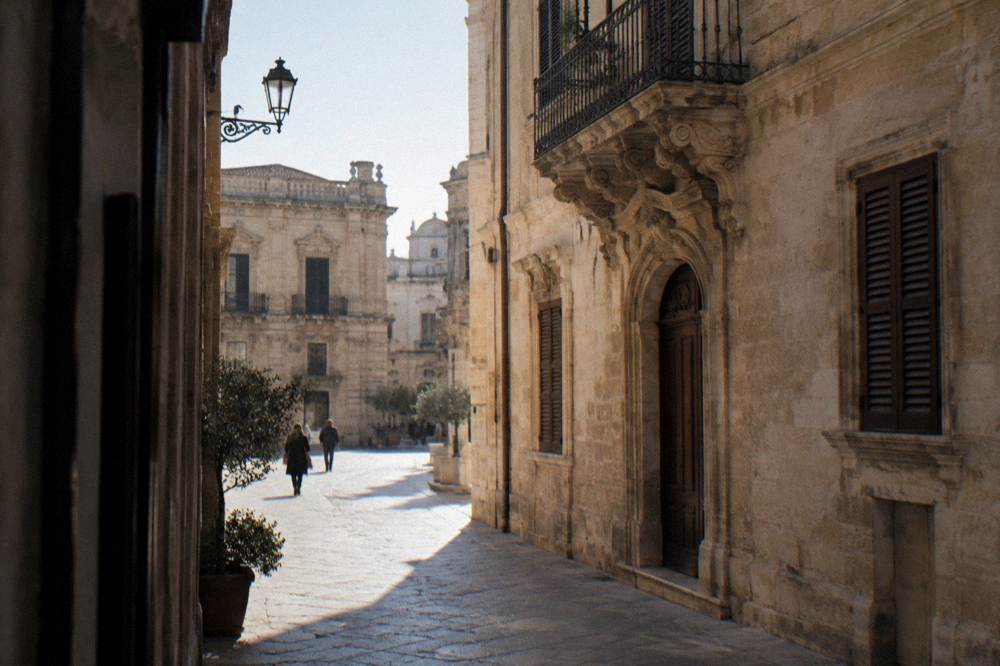
Lecce is the base this guide recommends for a Puglia trip: sourced rail times, drive times from the city, and what the baroque capital of Salento offers as a hub.
Lecce, in Puglia (Apulia), southern Italy, is the base town this guide recommends for a trip across the region, and the reason is logistical before it is aesthetic. The city is the capital of the Province of Lecce, at the heart of the Salento peninsula, with 94,387 residents on 1 January 2026 and about 20,774 university students keeping its old town lively outside August. It is a rail junction: Trenitalia's Adriatic line runs north to Bari, Brindisi, Ostuni and Polignano a Mare, while the Ferrovie del Sud Est (FSE) network fans out across Salento to Gallipoli, Otranto via Maglie, and Galatina. This page covers Lecce only; the attractions, prices and character of other candidate bases were not part of this site's research, so the comparison below rests on transport times and what Lecce itself offers.
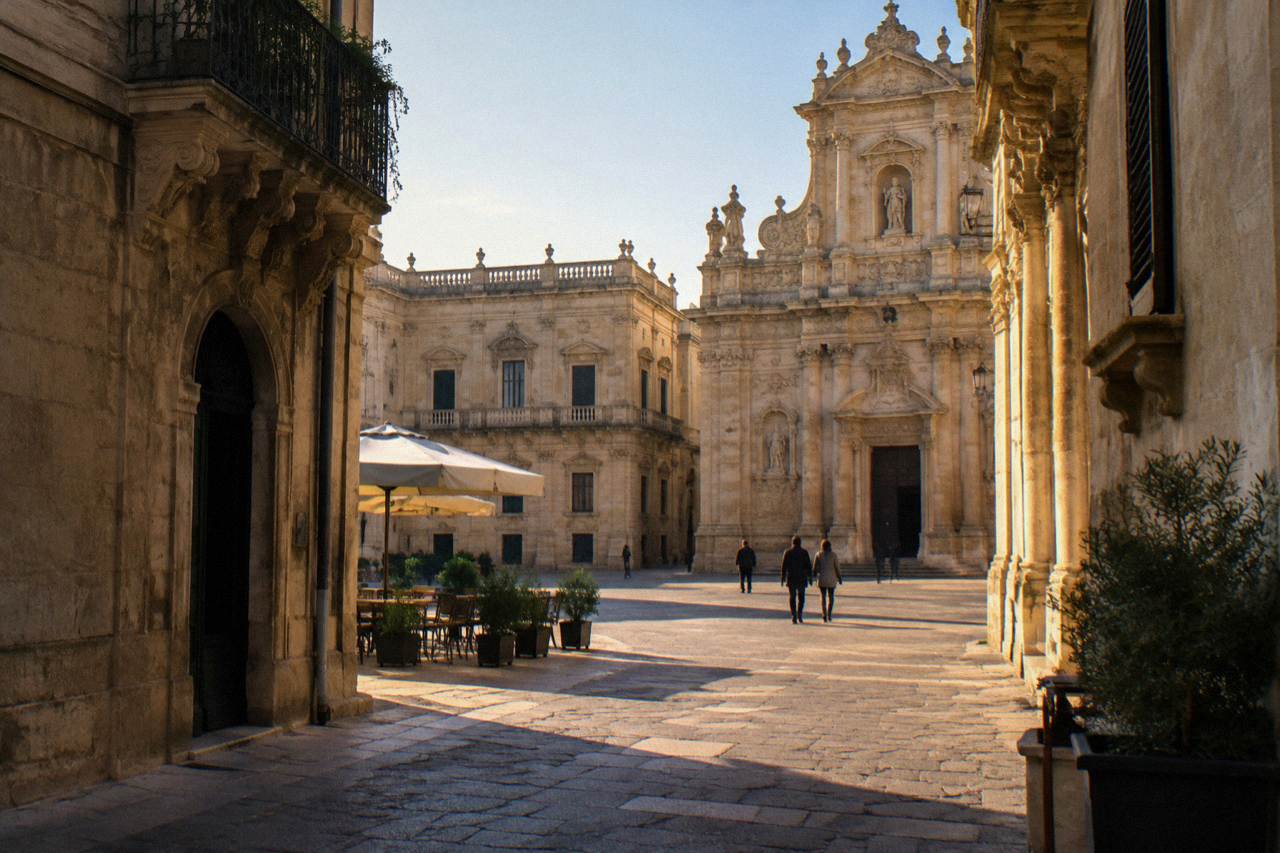
For planning where to sleep, the Lecce neighbourhoods and accommodation areas guide breaks the city down street by street, and how many days you need in Lecce helps size the stay before you bolt day trips onto it.
Which Town In Puglia Is The Best To Stay As A Base For A Trip?
Lecce is the best base for a Puglia trip centred on Salento, because it is the only town on the peninsula where the national rail network and the regional FSE lines meet, it lies within about 45 minutes by road of both the Adriatic and Ionian coasts, and it holds the region's densest cluster of ticketed sights, from the LeccEcclesiae churches to the Castello Carlo V. For a trip weighted to northern Puglia, a northern base shortens those drives but lengthens every Salento day trip.
Start with the rail junction point, because it is the one fact that survives every season. From Lecce station, Trenitalia reaches Brindisi in about 18 to 24 minutes, Ostuni in 39 to 51 minutes, Polignano a Mare in about 1h09 to 1h21, Bari Centrale in as little as 1h19 on the fastest trains, and Rome in about 6 hours on direct services. The FSE network adds Gallipoli in about 1h18 to 1h43 direct, Galatina in 38 to 55 minutes, and Otranto with a change at Maglie in about 1h33 to 2 hours. No other Salento town offers that spread without a car.
That matters doubly in summer, when the Salento in Bus network runs from Lecce: line 101 to Torre dell'Orso and Otranto, line 104 to Porto Cesareo and Gallipoli, lines 107 and 108 toward Santa Maria di Leuca. The service ran 13 June to 13 September in 2026, with fares from 1.10 to 5 euro, and the 2027 dates had not been announced. A car-free base in Lecce can still reach the coast. Outside the summer window the beaches get harder without wheels, so an autumn or spring stay should either rent a car for coastal days or accept a slower rhythm built around the train lines, which run all year.
For readers weighing the whole peninsula against a northern hub, is Lecce Italy worth visiting and the Salento itinerary lay out what a Lecce-centred week actually contains.
How Do Drive And Train Times From Lecce Compare Across Puglia?
Measured from Piazza Sant'Oronzo in Lecce, free-flow drive times run about 14 minutes to San Cataldo beach, 29 to Galatina, 35 to Brindisi, 41 to Gallipoli, 44 to Otranto, 48 to Castro, 66 to Ostuni, 78 minutes to Santa Maria di Leuca, and 91 minutes to Alberobello, with Bari at about 118 minutes and Matera, in Basilicata, about 161 minutes away.
Those figures come from routing-engine computations and describe distance, not traffic. The pattern they draw is plain: Lecce dominates the south and holds its own as far as Brindisi and Ostuni, but the northern highlights, Alberobello, Polignano a Mare, Bari itself, sit at 90 minutes and beyond. A traveller whose trip is really about the trulli and the Bari coast may prefer sleeping north and visiting Salento once.
| Destination from Lecce | Drive time | Train time |
|---|---|---|
| San Cataldo (nearest beach) | about 14 min | bus line 32, about 20 min |
| Galatina | about 29 min | 38 to 55 min (FSE) |
| Brindisi | about 35 min | 18 to 24 min |
| Gallipoli | about 41 min | 1h18 to 1h43 (FSE) |
| Otranto | about 44 min | 1h33 to 2h (change at Maglie) |
| Ostuni | about 66 min | 39 to 51 min |
| Santa Maria di Leuca | about 78 min | bus, about 2h to 2h15 |
| Alberobello | about 91 min | 2h30 to 3h with a change |
| Matera (Basilicata) | about 161 min | bus, 3h30 to 4h10 |
The bus option for Alberobello and Matera softens the northern problem without moving the base. FlixBus, Itabus and similar operators run Lecce to Matera in about 3h30 to 4h10, and there are day-trip products that leave the driving to someone else, which matters because parking and the old-town streets of the north differ from anything in flat, compact Lecce.
What Does Lecce Itself Offer As A Base, Day And Night?
Lecce keeps a visitor busy on the days with no excursion: the LeccEcclesiae combined ticket covers the Duomo with its crypt, the Basilica di Santa Croce, San Matteo, Santa Chiara and the Antico Seminario with MuDAS for 11 euro over 15 days, the Castello Carlo V is visitable by guided tour at 10 euro, the Roman Amphitheatre reopened with a new accessible entrance at 5 euro, and Museo Faggiano, a stratified archaeological house, costs 5 euro.
That density is the argument for sleeping in the city rather than commuting into it. The official chieselecce.it listing gives 9:00 to 21:00 opening in summer and 9:00 to 18:00 in winter across the ticketed churches, with children under 12 free. Museo Faggiano opens daily 9:30 to 20:00. The Castello runs guided tours Tuesday to Sunday and closes Monday, as do the Amphitheatre and the MUST, so a Monday in Lecce is a day for piazzas, Porta Napoli and the public spaces, which cost nothing. The full index of guides sits on Lecce Travel Guide.
Lecce is not on the sea, which surprises some arrivals. The nearest beach is San Cataldo, 12.9 km east, reached by SGM bus line 32 in about 20 minutes. The city compensates with evenings: a student population of roughly 20,774 and a walkable centro storico mean the after-tour hours are not dead ones. Eating is part of the base case too, since the city is the acknowledged home of the caffe in ghiaccio con latte di mandorla, iced espresso with almond milk, credited to Antonio Quarta of Quarta Caffe in the 1940s to 1950s, and the pasticciotto is within an easy FSE hop of its claimed birthplace in Galatina, where Pasticceria Ascalone says the custard tart dates to 1745, a claim historians dispute.
Do You Even Need To Change Base To Cover Puglia?
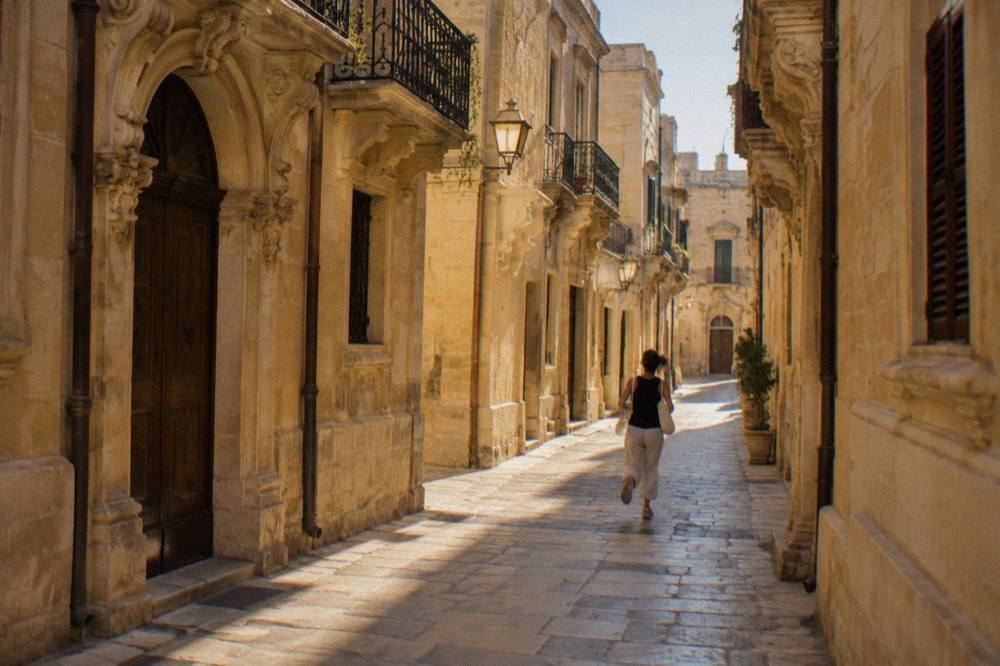
For a trip of about a week centred on Salento, no: a single base in Lecce covers Otranto, Gallipoli, Galatina, Castro and both coasts inside an hour by car or regional train, and even Alberobello and Matera sit inside day-trip range at 91 and 161 minutes respectively by road, so the honest answer is that only a trip weighted heavily toward Bari and the northern coast justifies a second base.
The counterargument is fatigue. Three hours of driving each way to Matera eats a day, and the northern trulli towns cluster far better around a base near Bari or Monopoli. A reasonable split is Lecce for the south, then two or three nights north. The Puglia road trip itinerary sequences exactly that shape.
One practical wrinkle deserves a table of its own, because it bites drivers who base inside Lecce's walls: the ZTL, the camera-policed limited traffic zone in the historic centre, active on weekdays roughly 13:00 to 16:30 and overnight, and around the clock on Sundays and holidays, with fines of 83 to 332 euro. The hours are reported rather than guaranteed. Ask your accommodation to register your plate. Arriving by air is simpler than it sounds: Brindisi airport, the gateway since Lecce has no commercial airport of its own, connects to Lecce by bus in about 40 minutes at 6.50 euro one way, so the base is reachable without touching Bari at all.
| Base question | Lecce answer |
|---|---|
| Nearest airport | Brindisi (BDS); bus about 40 min at 6.50 euro one way |
| On the sea? | No; San Cataldo beach is 12.9 km away, bus about 20 min |
| Rail connections | Trenitalia north plus FSE across Salento |
| Summer beach buses | Salento in Bus lines 101, 104, 107, 108 (ran 13 June to 13 Sept 2026) |
| Tourist tax | Imposed per night by category and season; top reported rate 5 euro, confirm at booking |
| Car needed? | No for Salento by train and summer bus; useful for northern loops |
Common Questions About Basing A Puglia Trip In Lecce
Is Lecce or Bari the better base?
This site's research covers Lecce, not Bari's attractions or prices, so no character comparison is offered. On transport alone, Lecce owns Salento and Bari owns the north: Ostuni is 39 to 51 minutes by train from Lecce, while Bari Centrale is 1h19 to 1h55 away.
Can you day trip to the beaches from Lecce without a car?
Yes. San Cataldo is about 20 minutes on SGM bus line 32, and in summer the Salento in Bus network, which ran 13 June to 13 September in 2026, connects Lecce with Torre dell'Orso, Otranto, Porto Cesareo, Gallipoli and Leuca for fares from 1.10 to 5 euro.
How many days should a Lecce base trip be?
Two days cover the city's ticketed sights; a week lets you add Otranto, Gallipoli, Galatina and one northern loop. The internal guide to days needed in Lecce breaks the trade-off down.
Is it expensive to stay in Lecce?
Nightly accommodation rates by season were not found in this site's sources, so none are quoted. Lecce does levy a tourist tax, collected by the accommodation per person per night by category and season from 1 April 2026, with a top reported rate of 5 euro; confirm at booking.
Is Lecce a UNESCO World Heritage Site?
No. "Salento and the Barocco Leccese" sits on Italy's Tentative List (2006) only, which is a candidacy, not an inscription.
Lecce is where the trains, the buses, the baroque and the students all converge, and that convergence, not any ranking, is what makes it this guide's base of record for a Puglia trip aimed at the heel of Italy.