Is Lecce, Italy Worth Visiting?
A source-based answer to whether Lecce, the baroque capital of Salento in Puglia, is worth visiting: sights, tickets, costs, transport and day trips.
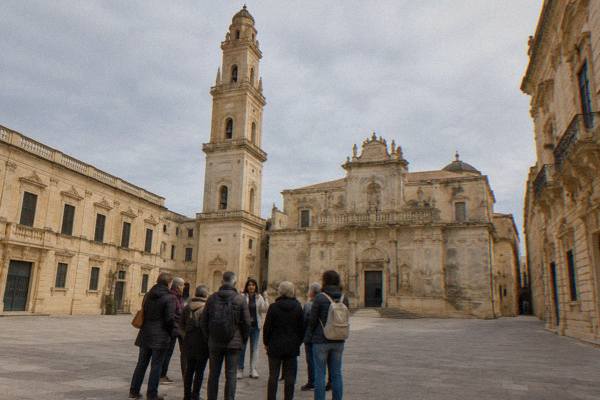
Lecce, in Puglia, southern Italy, is the baroque capital of Salento, the flat heel of the Italian peninsula. It is a city of about 94,387 people built almost entirely from pietra leccese, a honey-coloured Miocene limestone that is soft when quarried and hardens on exposure, which is why its facades carry such dense carving. The nearest beach, San Cataldo, is about 13 km away on the Adriatic, and the city is often called the Florence of the South. This page sets out, from primary sources rather than impressions, what Lecce offers, what it costs and who it suits.
Is Lecce, Italy Worth Visiting?
Yes, for travellers who want a walkable baroque city of carved limestone, layered history from Roman amphitheatre to underground museum, and a base between two seas, Lecce justifies the trip, and the LeccEcclesiae combined ticket alone covers five church sites for 11 euro. What Lecce does not offer is a beach resort: it sits inland, so sea-based plans need transport.
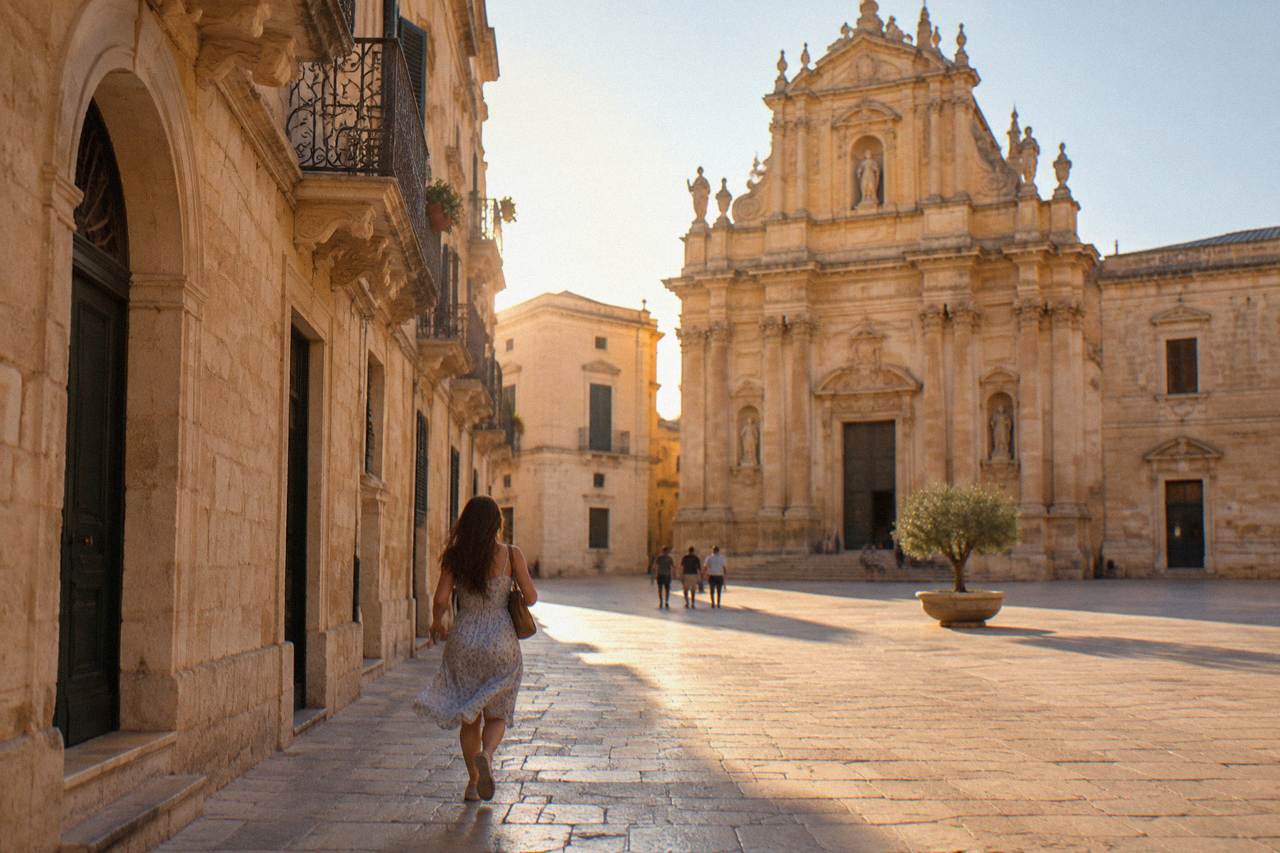
The honest case rests on density. Within a few hundred metres of Piazza Sant'Oronzo, the sources place a Roman amphitheatre visible free from the square, a Roman theatre a short walk away in Via degli Ammirati, the Duomo complex in Piazza del Duomo, and the Basilica di Santa Croce, whose facade is the single most photographed piece of Lecce Baroque. The chieselecce.it network sells one ticket covering the Duomo and crypt, Santa Croce, San Matteo, Santa Chiara and the Antico Seminario with its sacred art museum, valid for 15 days, which turns church visiting into a single decision rather than five.
What the city is not also matters. Lecce is not a UNESCO World Heritage Site, whatever repeated web claims say: "Salento and the Barocco Leccese" sits on Italy's Tentative List, submitted in 2006, which is a candidacy, not an inscription. It has no commercial airport; Brindisi (BDS) is the gateway, about 43 minutes away by road. Neither fact makes the city less worth visiting, but both change how a trip should be planned.
For a fuller rundown by sight, see the site's things to do in Lecce overview, and for how the city sizes up against its regional rival, the comparison Bari or Lecce covers the differences between the two cities.
What Makes Lecce Different From Other Puglia Cities?
Lecce's distinction is architectural and geological: an entire historic centre carved from pietra leccese in a consistent baroque style, a soft local limestone that let artisans cut friezes, capitals and putti as if it were wood, and which hardens after quarrying. No other Puglian city has this concentration of the style now called Lecce Baroque.
The stone is the practical explanation for the look. The geological record describes pietra leccese as a Miocene calcarenite, workable when freshly cut, and it was quarried locally around the city. That workability fed a second craft for which Lecce is known, cartapesta, or papier mache, developed by artisans who could not afford stone and copied its effects in paper and glue; the Museo della Cartapesta inside Castello Carlo V covers the tradition, and working botteghe still cluster in the historic centre.
The scale is compact. Lecce functions as a university town of roughly 20,774 enrolled students at the Universita del Salento inside a city of 94,387 residents, which keeps the centre lived-in outside the August patronal feast. The city's own tourism pages organise the old town around a handful of squares and gates, all walkable, and the centro storico guide maps them. For background on what the city is known for, what Lecce is famous for lists the claims that survive checking.
For a first orientation, a guided walk with church entries folded in is the lowest-friction option: the Duomo-included guided tour covers the centre with entry to the Duomo and the Basilica di Santa Croce, and Check availability shows the operator's live listing.
How Many Days Does Lecce Need?
Two full days cover the core: day one for Piazza Sant'Oronzo, the amphitheatre, Santa Croce and the Duomo complex on the LeccEcclesiae ticket, day two for Castello Carlo V, Museo Faggiano and the churches left from the 15-day ticket window. A third day is only needed if Salento day trips are part of the same stay.
The 15-day validity of the LeccEcclesiae ticket is the key planning fact, because it decouples the churches from a rigid schedule. Castello Carlo V runs guided tours only, Tuesday to Sunday, with winter tour times at 10:30, 11:30, 12:30 and afternoon slots from 16:00, and only the courtyard is free. Museo Faggiano, the excavated house-turned-museum layered over Messapian, Roman and later remains, is open every day 9:30 to 20:00.
The site's own planning pages go deeper: Lecce in one day for a compressed route, and the answer to how many days you need in Lecce for the fuller argument.
What Does It Cost To Visit Lecce's Sights?
The main ticketed sights total modestly: the LeccEcclesiae standard ticket is 11 euro full, 5 euro reduced for ages 12 to 17 and free under 12; Castello Carlo V's guided tour is 10 euro full; Museo Faggiano is 5 euro; the Roman Amphitheatre is 5 euro. A 29 euro, 7-day Artwork city pass bundles the church circuit with extras.
The full priced picture from the primary sources:
| Sight | Ticket | Notes |
|---|---|---|
| LeccEcclesiae (5 church sites) | 11 euro full, 5 euro reduced, 24 euro family | Valid 15 days; 21 euro with bell tower |
| Castello Carlo V | 10 euro full, 6 euro reduced | Guided tour only, Tue to Sun |
| Museo Faggiano | 5 euro full, 3 euro ages 8 to 16 | Daily 9:30 to 20:00 |
| Roman Amphitheatre | 5 euro full, 2 euro reduced | Tue to Sun, closed Mon |
| MUST history museum | 5.50 euro full, 3.50 euro reduced | Free under 10 |
| Artwork city pass | 29 euro | 7 days, churches plus extras |
Two budget notes follow the same sources. A tourist tax exists and is collected by the accommodation, with a top reported rate of 5 euro per night for five-star high-season stays from 1 April 2026; confirm your category and season at booking. And the climate is free: the ERA5 reanalysis, 1991-2020, puts the mean daily high at about 31 C in July and August, with November the wettest month at 93.7 mm, so shoulder months trade heat for some rain. The wider set of guides lives on Lecce Travel Guide.
Is Lecce Easy To Reach And Walk Without A Car?
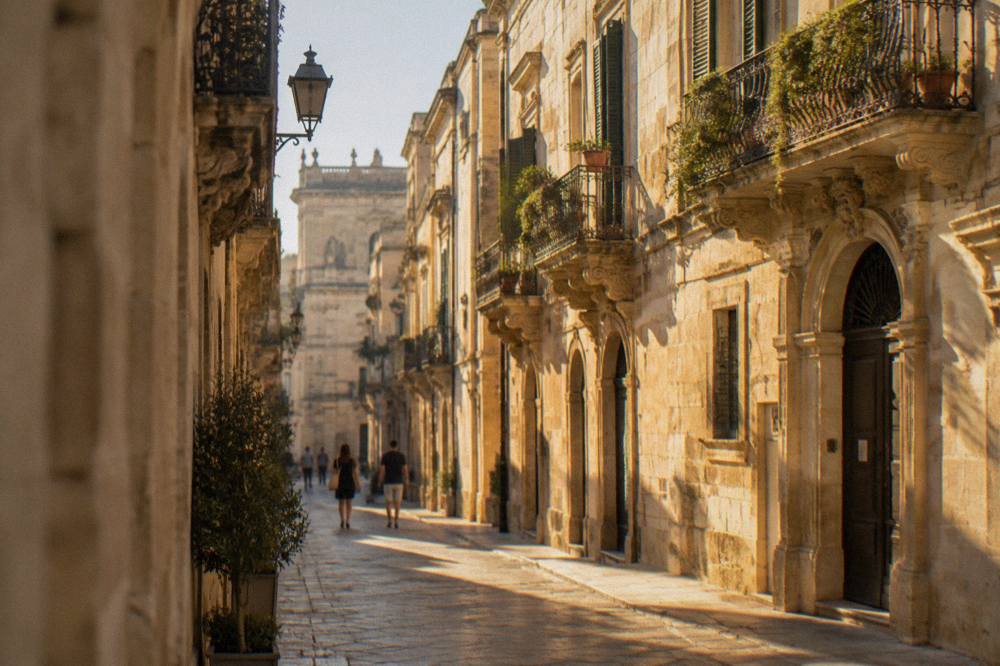
Lecce is a rail terminus reachable by direct Trenitalia trains from Bari in about 1h19 to 1h55 and from Rome in about 6 hours, with Brindisi airport 40 minutes away by a 6.50 euro one-way bus, and the historic centre itself is flat and compact enough that the whole sightseeing core is walkable in ordinary shoes.
The city has no airport of its own; that claim recurs online and is false. Brindisi (BDS) is the gateway, and the Terravision airport bus lists a 6.50 euro one-way fare, about 40 minutes. From Bari airport the route is a train to Bari Centrale then a direct service south. Once in Lecce, the FSE regional network reaches Gallipoli direct in about 1h18 to 1h43, Otranto with a change at Maglie, and Galatina direct in about 38 to 55 minutes.
Driving into the centre has one trap: a camera-policed ZTL over the historic core, with Porta Napoli always closed and fines reported from 83 to 332 euro. Travellers who drive should ask their accommodation about plate registration before arrival. The site's pages on getting around Lecce and the ZTL and parking cover the detail, and is Lecce a walkable city answers the pedestrian question directly.
Does Lecce Work As A Base For The Rest Of Salento?
Yes, and this is where the case strengthens: free-flow drive times from Piazza Sant'Oronzo run about 44 minutes to Otranto, 41 to Gallipoli, 34 to Porto Cesareo and 78 to Santa Maria di Leuca, while a summer-only Salento in Bus network, which ran 13 June to 13 September in 2026, links Lecce to the beaches without a car.
The bus network matters for car-free travellers. Its 2026 season ran 13 June to 13 September, with line 101 serving Torre dell'Orso and Otranto, line 104 Porto Cesareo and Gallipoli, and lines 107 and 108 reaching Leuca, at fares from 1.10 to 5 euro. The 2027 dates had not been announced, so anyone planning around it should check the operator before committing. Outside summer, the FSE trains and the regular bus operators carry the load.
The day-trip roster is real. Otranto's cathedral floor carries the 1163 to 1165 mosaic by the priest Pantaleone, and independent visitors enter free while groups with a guide pay 2 euro since 1 March 2026. Gallipoli's old town sits on a limestone island linked by a bridge. Galatina's Basilica di Santa Caterina d'Alessandria is free with split morning and afternoon hours. Castro's Grotta Zinzulusa runs guided visits year-round at 7 euro full. For the car-free version, day trips from Lecce without a car lists what is genuinely reachable.
Organised day trips also run from the city, and the trio below covers the three most useful shapes of that offer.
For a single first-evening decision, this is the related walk again:
Who Should Skip Lecce?
Travellers whose priority is swimming from a hotel doorstep should base on the coast instead, since San Cataldo is about 13 km away and the beaches need a bus, train or car; anyone expecting a UNESCO inscription or a major-airport city hub will also be reading the wrong destination, because Lecce has neither.
That is the whole counter-case, and it is narrow. The city's weakness is not the sights, the food culture around pasticciotto, rustico and caffe in ghiaccio con latte di mandorla, or the craft traditions; it is purely geography. The sea is close, roughly 20 minutes by the SGM line 32 bus to San Cataldo, but it is not in the city. The is Lecce near the coast page measures the gap precisely.
Safety, for what the record shows, is not a reason to skip: the city is generally reported as low-crime with petty theft as the main tourist concern. The emergency number is 112.
Common Questions About Visiting Lecce
Is Lecce, Italy Worth Visiting?
Yes, if a compact baroque city of carved pietra leccese, a five-site combined church ticket and a central position between the Adriatic and the Ionian fit the trip. It is not a beach town and it has no airport, but Brindisi is 40 minutes away by bus.
Is Lecce A UNESCO World Heritage Site?
No. "Salento and the Barocco Leccese" is on Italy's Tentative List since 2006, which is a candidacy rather than an inscription. Any source calling Lecce UNESCO-listed is wrong.
What Is The Best Time Of Year To Visit Lecce?
The ERA5 reanalysis, 1991-2020, shows mean daily highs of about 31 C in July and August and 93.7 mm of rain in November, the wettest month. May, June and September balance warmth against rainfall, and the full month-by-month figures are on the site's weather page.
Can You Visit Lecce Without A Car?
Yes. Direct trains reach Lecce from Bari and Rome, the FSE network serves Gallipoli, Otranto via Maglie and Galatina, and the summer Salento in Bus network, which ran 13 June to 13 September in 2026, connects the beaches. Check the seasonal schedule before planning.
How Many Days Are Enough In Lecce?
Two full days cover the amphitheatre, the LeccEcclesiae churches, Castello Carlo V and Museo Faggiano. A third day makes sense when Salento day trips share the same stay.
The short version: Lecce earns its place on a Puglia itinerary on architecture, density and logistics alone, and the sources behind every figure above are the same ones a careful traveller would check before booking.