What Is Lecce, Italy Famous For?
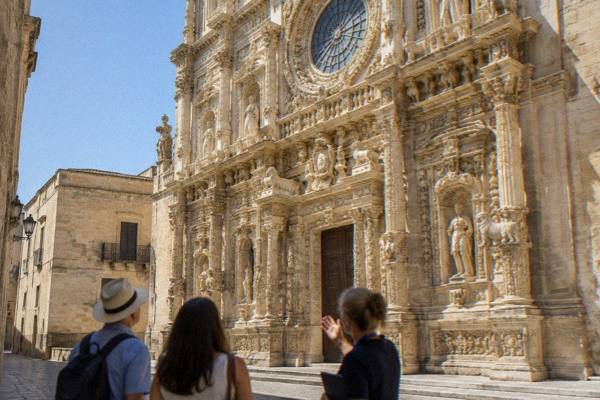
Lecce is famous for its Lecce Baroque architecture in pietra leccese limestone, its churches, papier mache craft, pasticciotto and iced coffee with almond milk, and as the capital of Salento in Puglia.
Lecce, a city of about 94,387 residents in Puglia, southern Italy, is famous for Lecce Baroque: a dense, exuberant architecture carved from the local pietra leccese limestone, which gives the old town its honey colour. The city is often called the Florence of the South, a nickname whose origin is contested and which no source in this guide attributes to a single person. Lecce is also the capital of the Province of Lecce and the reference point for the whole Salento peninsula, the heel of Italy, though the city itself sits inland: the nearest beach, San Cataldo, is about 13 km away. This page lays out, claim by claim, what Lecce is genuinely known for.
The province behind the city is large: 761,927 residents across Salento, and the Universita del Salento adds about 20,774 enrolled students, which keeps the centre lively outside the summer months. Italy's country basics frame everything else: the euro as currency, Italian as the language, and Schengen membership, so no visa hedging applies to European visitors. Lecce has no commercial airport of its own; Brindisi, BDS, is the gateway, about 47.6 km and roughly 43 minutes by road from Piazza Sant'Oronzo.
What Is Lecce, Italy Famous For?
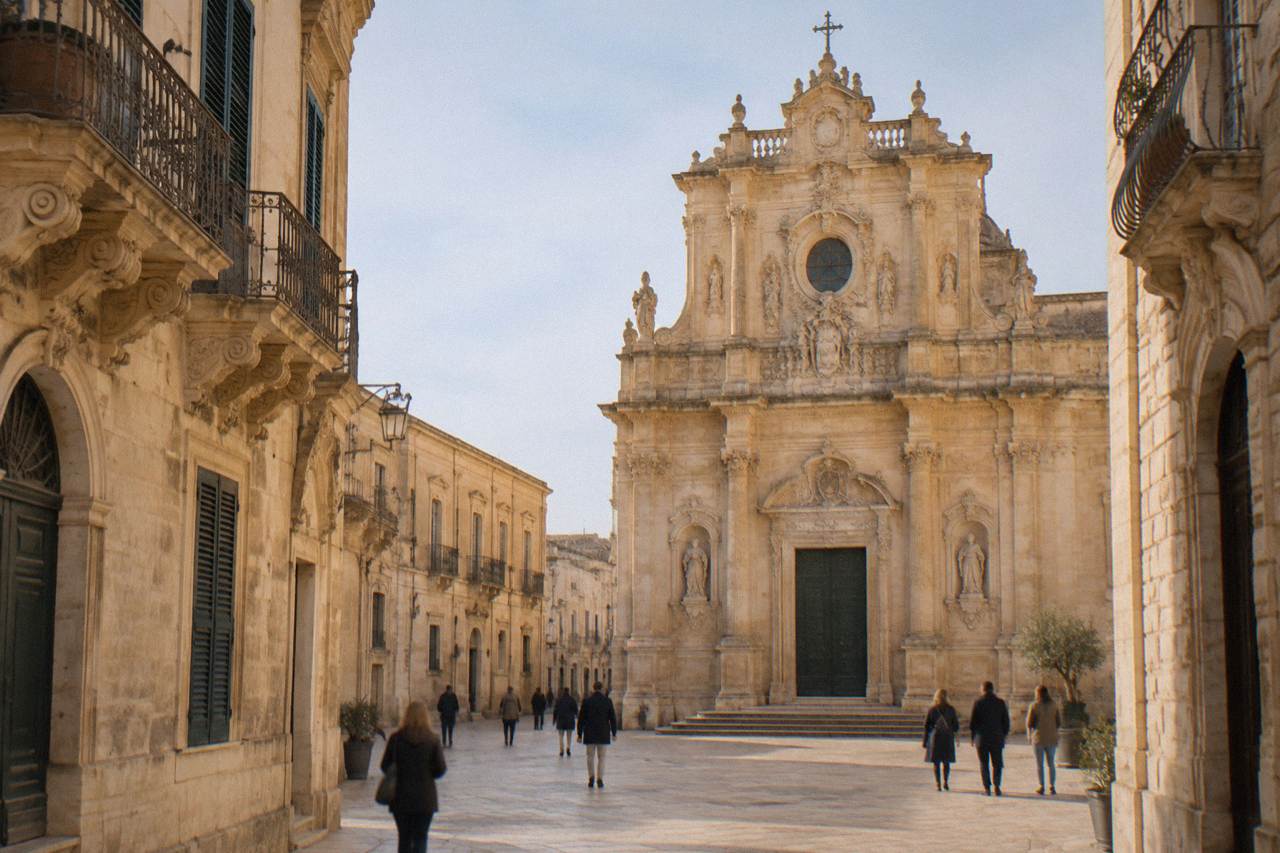
Lecce is famous for Lecce Baroque, a 17th-century architectural style carved from soft local pietra leccese limestone, visible across the old town in churches, palaces and facades, and for being the capital of Salento in Puglia. The city is also known for its papier mache craft tradition, its food and wine, and its nickname, the Florence of the South. The Basilica di Santa Croce and Piazza del Duomo are the headline buildings, and the combined LeccEcclesiae ticket covers five churches plus the diocesan museum. If you want the full sight-by-sight rundown, the things to see across Lecce page lists them in order.
Pietra leccese is a Miocene limestone that is soft when quarried and hardens on exposure, which is why the city's carvers could cut friezes, capitals and cherubs in such detail. The style that resulted, Lecce Baroque, fills the historic centre: the basilica, the Duomo and its bell tower, the Chiesa di San Matteo, the Chiesa di Santa Chiara, and civic buildings such as the Palazzo dei Celestini. Chieselecce.it, the Diocese's ticketing site, lists the standard combined ticket at 11 euro, valid 15 days, with under 12s free. The full ticket adds the bell tower, at 21 euro full price, with ascents running roughly every 20 minutes. The same ticket's opening hours shift by season: 9:00 to 21:00 from April to September, 9:00 to 18:00 from October to March, with last entry 15 minutes before close.
A guided walk is the practical way to read the facades, since the carving is dense with symbolism a first-time reader will miss. The baroque architecture and underground rooms walking tour pairs the above-ground churches with the excavated rooms beneath them, which is where the city's Roman and medieval layers show. Check availability
The Roman layer deserves its own mention, because it surprises visitors who arrive expecting only baroque. The Anfiteatro Romano sits squarely in Piazza Sant'Oronzo, visible free from above, and following a restoration funded through a 1,500,000 euro PNRR project it has reopened with a new accessible entrance and ramp. Winter hours run 10:00 to 17:00, Tuesday to Sunday, at 5 euro full price. The smaller Teatro Romano hides a few streets away, its museum open Monday to Saturday mornings. There is also a Museo Faggiano, a house-turned-museum where layer upon layer of the city's past sits in one basement at 5 euro entry.
Is Lecce Famous For Its Churches And Stone?
Yes: the churches carved in pietra leccese are the single thing Lecce is most famous for, and the LeccEcclesiae combined ticket covers the Duomo with its crypt, the Basilica di Santa Croce, San Matteo, Santa Chiara and the Antico Seminario with its sacred art museum, on one 11 euro standard ticket. The same stone built the whole old town, and no official count of the city's churches exists, despite the round numbers repeated in tourist copy. For what the stone itself is, geologically, see the pietra leccese limestone explained guide.
The city's UNESCO status is often overstated in travel copy. Lecce is not inscribed on the World Heritage List: "Salento and the Barocco Leccese" sits on Italy's Tentative List, submitted in 2006. That is a meaningful gap, and it is one reason the architecture itself, rather than a badge, carries the city's reputation. Regional efforts continue toward recognition of the Barocco Leccese, but nothing on the official list has changed, and any copy claiming otherwise should be read with caution.
Papier mache, cartapesta, belongs in the same story. Artisans in the historic centre have long made religious figures and nativity scenes from paper, glue and molds, and the Museo della Cartapesta inside Castello Carlo V is included in the castle's guided tour. The cartapesta craft tradition guide covers the workshops and the annual Fiera dei Pupi Christmas fair, which traditionally runs from early December to 24 December at the ex-Convento dei Teatini. The castle itself is worth flagging: ilcastellodilecce.it states the interior is visitable by guided tour only, at 10 euro full price, Tuesday to Sunday, while the courtyard is free.
The festival calendar reinforces the same identity. The Festa dei Santi Patroni, honouring Oronzo, Giusto and Fortunato, ran 23 to 26 August 2026 with processions and illuminations across the centre, and the city's baroque churches host concert series through the autumn. The Lecce events calendar guide tracks the year.
Is Lecce Famous For Food And Wine?
Lecce is famous for pasticciotto, a custard-filled shortcrust pastry; rustico leccese, a savoury puff-pastry pocket of bechamel, mozzarella and tomato; and caffe in ghiaccio con latte di mandorla, iced espresso with almond milk, credited to Antonio Quarta of Quarta Caffe in the 1940s and 1950s. Salento wine, above all Negroamaro-based Salice Salentino DOC, established in 1976, rounds out the table. One caution: the 1745 invention date for pasticciotto is Pasticceria Ascalone's own claim, and the shop is in Galatina, not Lecce.
The iced coffee is the item with the tightest local identity. Corrieresalentino.it reports it entered Italy's PAT traditional-products list, and the drink is assembled in layers, espresso over ice with almond milk syrup, traditionally without sugar. Historic cafes anchor the habit: Caffe Alvino on Piazza Sant'Oronzo has roots to about 1880, and Pasticceria Natale has been family-run since 1978. Natale's own menu lists its "Santo Pasticciotto" at 2.20 euro, one of the few printed pastry prices available. The full index of guides sits on Lecce Travel Guide.
| What Lecce is known for | The specific item | The sourced detail |
|---|---|---|
| Architecture | Lecce Baroque in pietra leccese | Soft Miocene limestone that hardens on exposure |
| Churches | LeccEcclesiae circuit | 11 euro standard ticket, 15-day validity, under 12 free |
| Craft | Cartapesta (papier mache) | Museo della Cartapesta inside Castello Carlo V tour |
| Pastry | Pasticciotto | 1745 origin is Ascalone's claim, in Galatina |
| Drink | Caffe in ghiaccio con latte di mandorla | Credited to Antonio Quarta, 1940s to 1950s |
| Wine | Salice Salentino DOC | Established 1976, Negroamaro-based |
Food-focused visitors can go deeper with a food tour of the old town, and the full Salento food glossary covers frisa, puccia and ciceri e tria as well. The wider regional table, burrata and olive oil included, is set out in the Puglia food guide, and the Salento wine guide explains the Negroamaro grape and its DOCs. Primitivo di Manduria, centred on Manduria in Taranto province, is the other regional heavyweight.
Is Lecce Famous As A Base For Salento?
Lecce is famous as the capital and transport hub of Salento: direct FSE trains run to Gallipoli in about 1 hour 18 minutes and, with a change at Maglie, to Otranto in about 1 hour 33 minutes, and summer Salento in Bus shuttles ran 13 June to 13 September 2026 on lines reaching Torre dell'Orso, Porto Cesareo and Leuca. The city is inland, about 13 km from the Adriatic at San Cataldo, so beach days are day trips rather than doorstep swims.
The question of how long to stay comes up immediately, and the answer is settled in how many days you need in Lecce: the baroque core rewards two full days, and Salento's coasts add more. Whether Lecce or a coastal town works better as a base depends on the trip, and the trade-offs are laid out in choosing a base town in Puglia. Trenitalia's main line also starts here: Bari Centrale is about 1 hour 19 minutes away on the fastest trains, and direct services to Rome take about 6 hours.
Day trips fan out in every direction: Otranto and Gallipoli each sit under 47 km away by road, Galatina is 25.7 km, and Alberobello, Ostuni and Matera are reachable by train or bus with the times listed in the Salento itinerary and Puglia road trip guides. The Notte della Taranta, the pizzica festival whose Concertone is held in Melpignano on 22 August in the 2026 edition, draws the whole peninsula into motion each August, and Lecce is the natural departure point for it. The Notte della Taranta guide covers getting there.
Climate shapes when that fame is best sampled. The ERA5 reanalysis, 1991-2020, puts the mean daily high at about 31 C in July and August with only 15 to 18 mm of rain per month, while November carries the heaviest monthly rainfall at 93.7 mm. Practicalities are mild: the city is regarded as safe, with petty theft the main concern, and a tourist tax is collected by accommodation at rates set by category and season, top rate 5 euro per night, confirm at booking.
Common Questions About What Lecce Is Famous For
What Is Lecce, Italy Famous For?
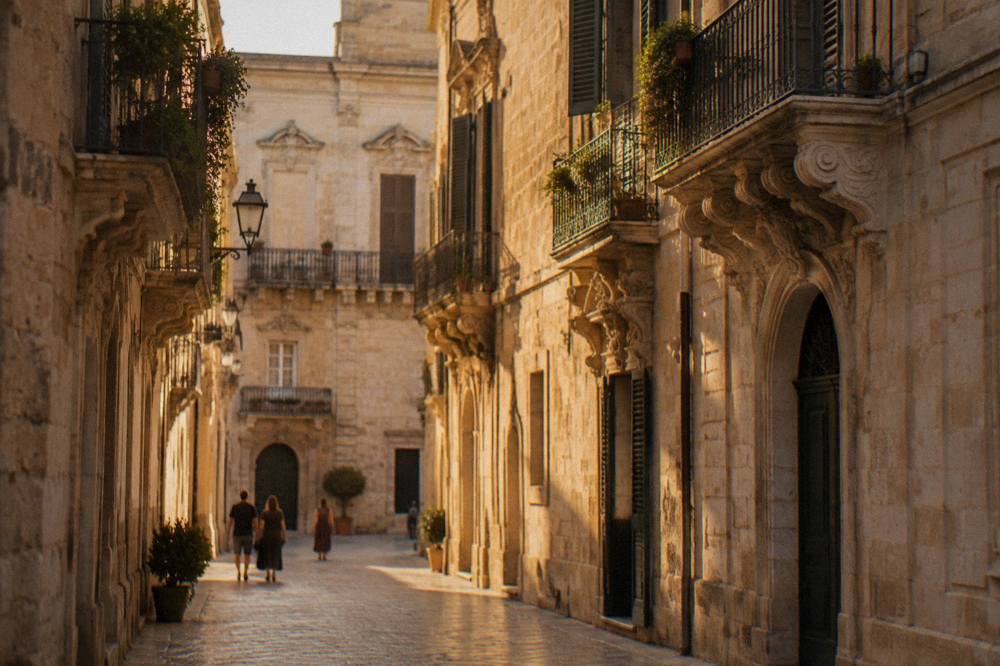
Lecce is famous for Lecce Baroque, the honey-coloured architecture carved from local pietra leccese limestone, for its church circuit and papier mache craft, for pasticciotto and iced coffee with almond milk, and as the capital of Salento in Puglia.
Is Lecce a UNESCO World Heritage Site?
No. "Salento and the Barocco Leccese" is on Italy's Tentative List, submitted in 2006, but the city is not inscribed on the World Heritage List.
Is Lecce on the coast?
No. Lecce sits inland; the nearest beach, San Cataldo on the Adriatic, is about 13 km away, and coastal towns such as Otranto and Gallipoli are day trips by train, bus or car.
Why is Lecce called the Florence of the South?
For its baroque architecture in carved limestone. The attribution is contested between two historical figures, so this guide says only "often called" and names neither.
What food is Lecce famous for?
Pasticciotto, rustico leccese, and caffe in ghiaccio con latte di mandorla, plus the wider Salento table and Negroamaro-based wines such as Salice Salentino DOC, established in 1976.
Does Lecce have an airport?
No. The nearest commercial airport is Brindisi, BDS, about 47.6 km away, connected to Lecce by bus in about 40 minutes for 6.50 euro one way per the operator's site.
The short version: Lecce is famous for a stone, a style, a pastry and a peninsula, and nearly all of it sits within walking distance inside the old town walls.