Which Is Nicer, Bari Or Lecce?
An honest, sourced comparison of Bari and Lecce for travellers choosing a base in Puglia: architecture, scale, coast access, transport and what each city is actually for.
The question "which is nicer, Bari or Lecce?" really asks which city suits the trip being planned, because the two are not close substitutes. Lecce, in Puglia, southern Italy, is the baroque capital of Salento: a compact, honey-coloured old town built in pietra leccese limestone, a few kilometres inland, with the Adriatic about 13 km away at San Cataldo and the Ionian across the peninsula. Bari is the region's largest city and its transport hub, about 152.6 km and 118 minutes away by road, or about 1h19 to 1h24 by the fastest trains from Lecce. This guide is published by a Lecce specialist site, so it compares on what the sources actually support and says plainly where it does not cover Bari.
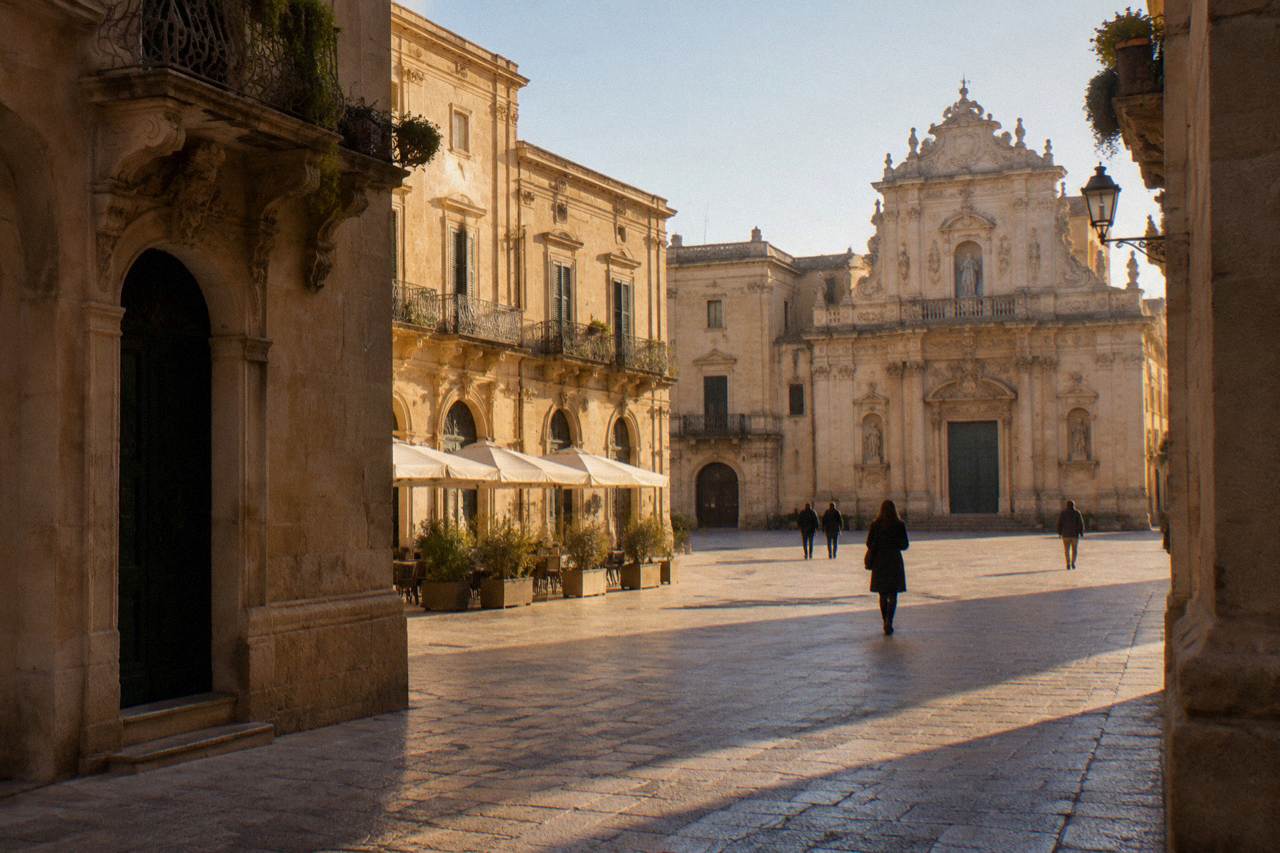
Lecce's case rests on concentration and coherence. The LeccEcclesiae combined ticket alone covers the Duomo and its crypt, the Basilica di Santa Croce, San Matteo, Santa Chiara and the Antico Seminario with its sacred art museum, at 11 euro standard, valid 15 days, per the ticket page at chieselecce.it. A city where five major churches, a Roman amphitheatre dug into the main square, and a castle with a papier-mache museum sit within a short walk of each other is a city built for staying a while and wandering. The Lecce Travel Guide covers that city in depth; this page narrows to the comparison.
Which Is Nicer, Bari Or Lecce?
Lecce is nicer for architecture, atmosphere and a car-free base focused on the old town and the Salento peninsula; Bari suits travellers who want a big working port city, an international airport on the spot, and faster rail links north. No source ranks one above the other, and this guide verifies only the Lecce side: its sights, tickets and transport, plus the train and drive times between the two. Nicer is a judgement; the facts below let a reader make it.
Start with scale. Lecce counted 94,387 residents on 1 January 2026, plus roughly 20,774 university students at the Universita del Salento, which keeps the centre lively in term time without making it a metropolis. Bari is the regional capital and considerably larger; this site has verified nothing about Bari's population, sights or prices, so no figure is offered here.
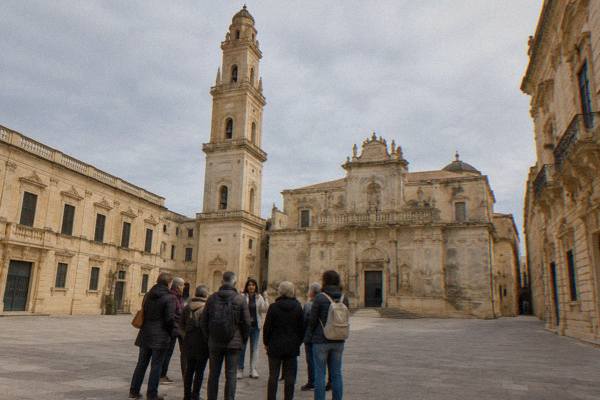
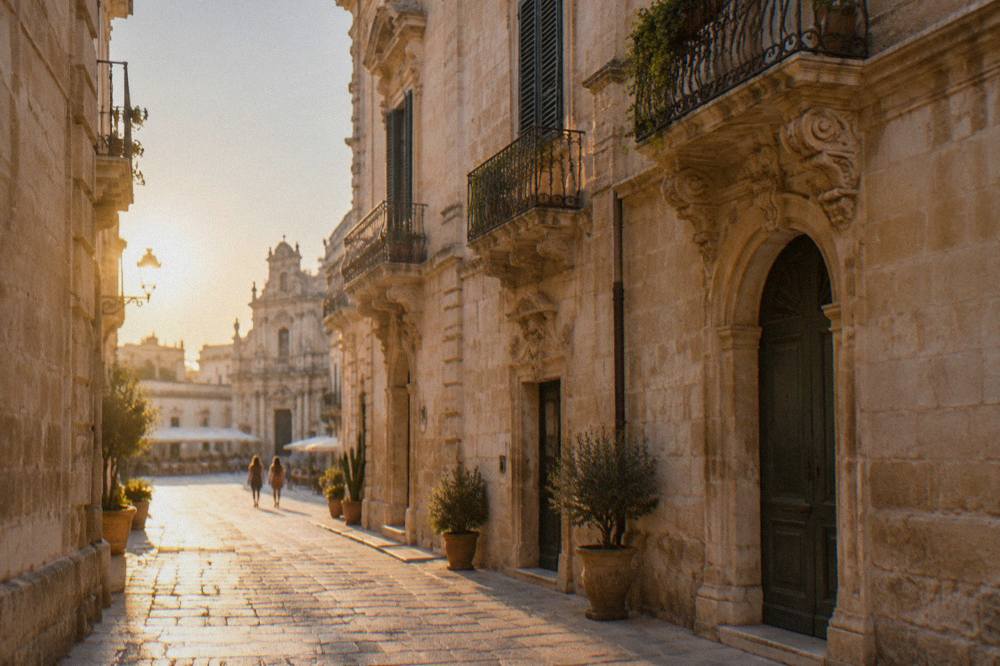
Architecture is where the sources let a real comparison happen, at least on Lecce's side. The barocco leccese style, carved from pietra leccese, a Miocene limestone soft when quarried and hardening on exposure, gives the old town its homogenous golden look. "Salento and the Barocco Leccese" sits on Italy's UNESCO Tentative List (2006); Lecce is not an inscribed World Heritage Site. On Bari's own buildings this guide has no verified detail and prints none.
How Do The Two Cities Compare On Transport And Access?
Bari wins on arrival logistics: it has Puglia's main airport and the faster rail spine north, while Lecce has no commercial airport at all and is reached via Brindisi (BDS), 47.6 km and about 43 minutes away by road. From Brindisi airport to Lecce, Terravision's bus costs 6.50 euro one way and takes about 40 minutes. From Bari, trains to Lecce run direct, fastest about 1h19 to 1h24, with regional fares from about 9 euro and fast trains about 18 to 24 euro.
Once arrived, the comparison flips. Lecce is a base for the Salento peninsula: FSE trains run direct to Gallipoli in about 1h18 to 1h43 and to Galatina in about 38 to 55 minutes, with Otranto a change at Maglie away in about 1h33 to 2 hours in total. In summer the Salento in Bus network (13 June to 13 September in 2026) added lines 101, 104 and 107/108 to the coast, with fares from 1.10 to 5 euro. Drive times from Piazza Sant'Oronzo tell the same story: Otranto 44 minutes, Gallipoli 41, Porto Cesareo 34, Leuca 78.
Bari's advantage works in the other direction: it sits on the Adriatic line north, with trains from Lecce to Rome direct in about 5h58 to 6h16 and to Ostuni in about 39 minutes. Travellers flying into Bari and heading straight for Salento will find the Bari to Lecce leg a short one.
The practical point for a base decision: Lecce's ZTL camera zone restricts cars in the historic centre on weekday afternoons and overnight, and all day Sundays and holidays, with fines of 83 to 332 euro, so anyone staying inside the walls should ask their accommodation about plate registration. Park Liberty, with 466 spaces near the centre, is the main covered option. Bari's parking and restricted-zone rules are outside what this site has verified.
Which City Is Better For A Beach Trip?
Neither city is a beach town, but Lecce is the better launchpad for swimming, because it sits between two coasts of the Salento peninsula: the nearest beach at San Cataldo is about 13 km east, and the Ionian side, Porto Cesareo at 34 minutes by car, is also in range. Bari has its own seafront, but this site has verified nothing about Bari's beaches and prints no detail about them.
The sourced numbers all point one way. SGM bus line 32 runs from Lecce's City Terminal to San Cataldo in about 20 minutes. Sea temperatures around Puglia run about 22.5 C in June and 25 to 27 C at the August peak, per seatemperature.org figures. Lido prices in 2026 (umbrella plus two beds per day) ran 15 to 25 euro in June and 33 to 35 euro in August at San Cataldo, rising to 50 to 60 euro in August at Torre dell'Orso and San Foca, per the Udicon and Adoc consumer surveys.
For travellers who prefer organised water days over self-guided beaches, the Snorkel Mini Cruise with aperitif at Porto Cesareo is a typical product, and Check availability at the operator's live listing for current dates.
One caution for the 2027 season: Grotta della Poesia, the famous karst pool near Roca Vecchia, banned bathing and diving in summer 2026 and charged non-residents of Melendugno a 5 euro ticket; the 2027 rules are not yet published, so confirm locally before planning a swim there.
How Do Costs And Practical Daily Life Compare?
On what this site's sources support, only Lecce's figures can be printed: the LeccEcclesiae ticket at 11 euro, Museo Faggiano at 5 euro, Castello Carlo V tours at 10 euro, and a city tourist tax from 1 April 2026 with a top reported rate of 5 euro per night at five-star high-season properties, to confirm at booking. No verified Bari price data exists, so no cost comparison is offered beyond Lecce's own numbers.
The tourist tax is the item travellers overlook. Rates vary by accommodation category and season, short lets sit at 2.50 euro high and 1.50 euro low season, and collection happens at the property, so the amount due is worth confirming when booking either way.
Food differences are real but only partially sourced. Lecce's own items are documented: the pasticciotto, whose 1745 invention date is Pasticceria Ascalone's own claim from Galatina, disputed by historians; the rustico leccese, a savoury puff-pastry parcel; and the caffe in ghiaccio con latte di mandorla, credited to Antonio Quarta of Quarta Caffe in the 1940s to 1950s. Salice Salentino DOC, Negroamaro-based and established 1976, anchors the local wine list. Bari's food specialities are outside this site's verified coverage.
| Comparison Point | Lecce (sourced) | Bari (what this build can say) |
|---|---|---|
| Role | Baroque capital of Salento, provincial capital of 94,387 residents | Regional capital of Puglia and main transport hub |
| Airport | None; Brindisi (BDS) 47.6 km, bus 6.50 euro, about 40 min | Main regional airport in the city |
| Rail north | Direct to Rome about 5h58 to 6h16 from Lecce | On the Adriatic main line north |
| Old-town vehicle access | Camera ZTL, fines 83 to 332 euro; Park Liberty 466 spaces | Not verified in this build |
| Signature sights | LeccEcclesiae churches 11 euro; amphitheatre 5 euro; Castello tours 10 euro | Not verified in this build |
| Nearest verified beach | San Cataldo, about 13 km, bus about 20 min | Not verified in this build |
Which Is The Better Base For Exploring Puglia?
Lecce is the better base for the Salento half of Puglia, with Otranto, Gallipoli, Galatina and Leuca all inside about 78 minutes by road and served by FSE trains and summer buses; Bari is the better base for the northern half, including Ostuni at 39 to 51 minutes and Polignano a Mare at about 1h09 to 1h21 by direct train from Lecce, but that logic reverses when starting from Bari. A split stay is the usual resolution for a two-week trip.
The Salento network is genuinely fine-grained from Lecce. FSE fares in 2026 run from 1.30 euro for 1 to 10 km up to 5.40 euro for 51 to 60 km. Galatina's Basilica of Santa Caterina d'Alessandria is free to enter; Otranto's cathedral floor mosaic, dating from 1163 to 1165 by the priest Pantaleone, is free for independent visitors, with a 2 euro charge for groups and guided visitors since 1 March 2026. The full-day four-town tour from Lecce covers Otranto, Leuca, Gallipoli and Galatina in one loop for travellers who would rather not drive it.
For the wider regional question, the site's Puglia road trip guide covers the full itinerary, and the answer page on choosing a Puglia base town works through the trade-offs in detail.
Common Questions About Bari Or Lecce
Which Is Nicer, Bari Or Lecce?
There is no sourced ranking, and this guide verifies only the Lecce side. Lecce suits travellers who want a compact baroque old town and a base for the Salento peninsula; Bari suits travellers who want a large port city, an airport on arrival and faster links north.
Is Lecce cheaper than Bari?
No verified Bari price data is available, so no comparison is printed. Lecce's own sourced figures include the 11 euro LeccEcclesiae church ticket, the 5 euro Museo Faggiano and the city tourist tax from 1 April 2026, top reported rate 5 euro per night, to confirm at booking.
Can you visit Bari and Lecce on the same trip?
Yes, easily. Direct trains between the two cities take about 1h19 to 1h24 at the fastest, with regional fares from about 9 euro, and the drive is about 118 minutes in free-flow traffic.
Which city is closer to the beaches?
Lecce, on the sources this site holds. San Cataldo, the nearest beach, is about 13 km away with a roughly 20-minute bus ride on SGM line 32, and the Ionian coast at Porto Cesareo is 34 minutes by car. Nothing about Bari's beaches is verified here.
Is Lecce walkable without a car?
The historic centre is compact and pedestrian in character, and the camera-enforced ZTL discourages driving inside it anyway. Sights, trains and summer beach buses are covered in the site's guide to getting around Lecce.
The honest answer to "which is nicer" is that Bari and Lecce do different jobs. A traveller whose holiday is baroque facades, pasticciotto, two coasts inside an hour and evenings in a golden old town will find Lecce the tighter fit. A traveller who wants a big city, a flight home from the same airport they landed at, and quick hops to Ostuni and Polignano a Mare will find Bari the tighter fit. Many people do both, and the 79-minute fast train makes that painless.